
资产配置

Search documents
国泰海通|金工:波动率策略在A股市场的配置价值——期权研究系列(三)
国泰海通证券研究· 2025-09-12 08:52
Core Insights - The article discusses the integration of a volatility timing straddle option strategy into common stock-bond asset allocation portfolios, resulting in a reduction of maximum drawdown by approximately 5% and an increase in the Calmar ratio by over 0.1 [1][2] Group 1: Volatility Timing Strategy - The article highlights that the performance of long-term option buying strategies, such as directly purchasing put protection options, has been subpar in both domestic and international markets [1] - It emphasizes that while the A-share market lacks direct trading tools based on volatility indices, investors can still construct equivalent volatility strategies using existing ETF options [1][2] - The article notes that single-leg strategies involving 300ETF options exhibit high volatility and drawdown, making them unsuitable for risk-averse allocation funds [1] Group 2: Straddle Option Strategy - The straddle strategy is found to have lower volatility and drawdown compared to single-leg strategies, with annualized volatility generally below 0.1 [2] - Selling straddle options can provide relatively stable excess returns, while buying options does not yield long-term excess returns due to high premiums and infrequent large market movements [2] - The article suggests that extreme volatility often follows periods of historically low volatility, indicating a potential "coiling" effect before significant market movements [2] Group 3: Implementation and Results - The article proposes a timing mechanism where buying straddle options is preferred when volatility drops to historically low levels (thresholds of 5%, 10%, 15%) to mitigate the risk of sudden volatility spikes [2] - The implementation of the volatility timing straddle option strategy into a common stock-bond asset allocation portfolio, allocating 10% of stock weight to the option strategy, results in a reduction of maximum drawdown from 21.4% to 13.5% and an increase in annualized return from 3.5% to 5.8% [2]


2025年,财富分化加速:穷人拼命存钱,富人悄悄在配置
Sou Hu Cai Jing· 2025-09-12 08:19
Group 1 - The core observation is the growing wealth gap between ordinary people who prefer saving money in banks and the wealthy who diversify their assets into stocks, gold, overseas funds, and emerging assets [1][12] - Saving money has become a form of "chronic depreciation" due to continuously declining interest rates, making it less effective as a stable investment strategy [3][4] - The wealthy focus on making their money work for them, emphasizing asset liquidity and diversification, which allows them to thrive amid market fluctuations [5][6] Group 2 - The difference between the rich and the poor is not merely the amount of capital but rather their mindset and cognitive approach to wealth [8][9] - Ordinary individuals are encouraged to change their thinking to seize opportunities, such as not solely relying on savings and understanding the balance of risk and reward [10] - Practical steps for ordinary people include diversifying investments, maintaining liquidity, adopting a long-term perspective, and considering allocations in gold or overseas assets [10]

以客户需求为圆心,民生加银FOF团队打造跨周期资产配置解决方案
Sou Hu Wang· 2025-09-12 06:28
Core Insights - The Chinese asset management industry is undergoing significant transformation by 2025, with Fund of Funds (FOF) gaining strategic importance as a professional asset allocation tool due to declining interest rates and increased market volatility [1] - Minsheng Jianyin Fund is focusing on a strategy of "fixed income as the cornerstone, FOF with characteristics, and equity breakthroughs," aiming to provide long-term stable wealth solutions for investors [1] Company Strategy - The FOF team at Minsheng Jianyin Fund emphasizes a "customer demand-centered" allocation philosophy, offering absolute return strategies for risk-averse investors and flexible configurations for those seeking long-term growth [1][2] - The team has established a robust research framework that integrates macro judgment, asset allocation, and sub-fund selection, driven by a "composite talent team" [1][2] Performance Metrics - The Minsheng Jianyin Kangning Stable Pension One-Year Holding Period Mixed (FOF) A product has shown a net value growth rate of 4.61% over the past six months and 8.35% over the past year, outperforming its benchmark [2] - Historical performance data for the fund from 2020 to 2024 indicates varying annual returns, with a cumulative net value growth rate of 24.93% since inception [3]
多家银行推出手续费优惠政策,黄金价格飙升深度影响积存金业务
Hua Xia Shi Bao· 2025-09-12 05:28
Core Viewpoint - The recent surge in gold prices has led to increased investment interest, prompting multiple banks to promote gold accumulation services with various fee waivers and incentives for long-term holding [2][3][4]. Group 1: Gold Price Surge - Gold prices have reached historic highs, with COMEX gold futures exceeding $3,690 per ounce and Shanghai Gold Exchange AU9999 hitting 836 yuan per gram [2][3]. - The rise in gold prices is attributed to three main factors: expectations of Federal Reserve interest rate cuts, increased gold purchases by central banks, and heightened geopolitical risks [5]. Group 2: Bank Promotions - Several banks, including Industrial and Commercial Bank of China and Nanjing Bank, are offering promotional activities for gold accumulation, such as waiving fees for active accumulation and providing discounted buy/sell rates [3][4]. - Banks are emphasizing the benefits of long-term gold holding, with some offering rebates and fee waivers for clients who hold gold for over a year [2][3]. Group 3: Investor Behavior and Risks - While banks are promoting long-term holding through fee waivers, experts caution that these measures alone may not significantly encourage a long-term investment mindset [4]. - Banks have issued risk warnings regarding gold accumulation products, highlighting that gold prices can be volatile and investors should be aware of potential losses [6].






达利欧:黄金是对抗美国抵御债务风险的盾牌
美股IPO· 2025-09-11 16:03
Core Viewpoint - Ray Dalio warns that the increasing debt burden in the U.S. is pushing the market towards a risk edge, suggesting that investors should allocate 10% to 15% of their portfolios to gold as a hedge against potential systemic crises [3][4]. Group 1: Debt Concerns - Dalio compares the rising debt service costs in the U.S. to plaque clogging blood vessels, indicating that this will "squeeze out other necessary government spending," potentially leading to a "heart attack" in the economy [3][4]. - The warning comes as U.S. stock markets are reaching new highs due to cooling inflation data and expectations of interest rate cuts [3][4]. Group 2: Gold as a Hedge - Dalio emphasizes that gold has a low correlation with other asset classes and tends to rise in value during crises when other assets decline [4]. - He advises that in a "debt-laden" world with increasing geopolitical tensions, investors should reflect on the nature of their investments and consider a diversified portfolio with 10% to 15% in gold [4]. Group 3: Global Market Perspectives - Bill Winters from Standard Chartered notes that while European markets like the UK and France face similar debt issues, they are under stricter market constraints compared to the U.S., suggesting that the U.S. market may not have fully absorbed its long-term fiscal risks [6].

暴涨40%!金价创新高 还能“上车”么?
Zhong Guo Ji Jin Bao· 2025-09-11 14:37
在多重因素推动下,国际金价近期持续上涨。9月10日,伦敦现货黄金价格报3650.75美元/盎司,年内 累计涨幅超40%,突破历史高位。 【导读】国际金价持续上涨,多家理财子公司密集"上架"黄金理财 金价持续上涨也促使银行理财子公司加大对黄金理财产品的布局。自9月以来,招银理财、光大理财等 多家理财子公司相继趁势密集发行挂钩黄金的理财产品。据统计,截至目前,市场上存续黄金理财有48 只,其中14只为理财子公司于年内发行。 在业内人士看来,受市场投资与避险需求的双重推动,国际金价中长期仍处于震荡上行通道。当前,理 财子公司参与黄金业务的公司数量还较少,预计未来会有更多公司参与,并探索更多黄金配置策略,相 关"黄金+"理财产品的发行节奏也将明显加快。 黄金理财发行"热潮"再现 趁着国际金价持续上涨,黄金理财发行"热潮"再现。 9月3日,招银理财发布产品成立公告,招银理财招睿焦点联动黄金5号固收类理财计划于9月2日成立, 挂钩标的为SGE黄金9999。此前,8月中旬,招银理财已发行了一只挂钩黄金的理财产品。 9月4日,光大理财阳光青臻盈7期(黄金挂钩策略)固定收益类理财产品也进入募集期。 中国理财网信息显示,截至9月 ...
3克拉以上天然钻石成资产配置优选,多场景消费助2025天然钻石回暖
Sou Hu Cai Jing· 2025-09-11 13:11
Core Insights - The natural diamond market demonstrates strong resilience amid global economic adjustments, with significant growth in imports and value reassessment due to supply constraints and recovering demand [1][6] - The scarcity of natural diamonds is a key factor supporting their value, with global production declining to the lowest level since 1995, highlighting the increasing rarity of these assets [1][6] - The long-term price stability of natural diamonds is evident, with a historical average annual growth rate of approximately 3% over the past 35 years, and future projections indicate a continued increase in value [1][6] Market Dynamics - In the first half of 2025, China's imports of finished diamonds surged by 93.8% year-on-year, reflecting a robust demand recovery [1] - The consumer market is diversifying, with younger consumers seeking personalized designs and high-net-worth individuals showing strong demand for investment-grade diamonds [3][6] - The investment appeal of natural diamonds is becoming more pronounced, especially during economic fluctuations, positioning them as a viable asset class [3][6] Competitive Landscape - The introduction of a grading system by GIA for lab-grown diamonds marks a significant shift, reinforcing the unique value of natural diamonds and promoting rational market development [6] - The production of lab-grown diamonds has rapidly expanded, leading to a significant price decline, which contrasts with the stable value of natural diamonds [4][6] - The long-term growth potential for natural diamonds remains high, driven by supply constraints and diversified demand, solidifying their status in the luxury goods market [6]

30岁程序员,攒了300万做投资!反复亏损后,终于悟了:原来越简单越稳妥...
雪球· 2025-09-11 13:00
Core Viewpoint - The article emphasizes the importance of simplicity in investment strategies, suggesting that a straightforward approach can lead to more stable and successful outcomes [2][18]. Group 1: Personal Investment Journey - The protagonist, a 30-year-old programmer in Beijing, has accumulated approximately 3 million yuan in cash, free of loans, but feels anxiety about the "35-year career crisis" [2][14]. - Initially, the protagonist's investment strategy was basic, relying on low-risk products like Yu'ebao and fixed-income products, aiming only to cover daily expenses [3][14]. - The first experience with mutual funds was profitable initially, but subsequent market fluctuations led to significant losses, highlighting the unpredictability of even seemingly stable investments [4][5]. Group 2: Lessons Learned - The protagonist experienced multiple losses in the stock market, which led to a deeper understanding of human psychology and the nature of risk in investing [6][7]. - The realization that overthinking and excessive trading often result in losses, while a more patient approach could yield better results [5][7]. - Acknowledgment of the importance of risk management and the need for a diversified investment strategy to mitigate potential losses [17]. Group 3: Investment Philosophy - The article advocates for a balanced asset allocation strategy, suggesting a mix of 70% bond funds, 10% stock funds, and 20% gold to manage risk effectively [8][15]. - Emphasizes the significance of setting realistic expectations and understanding personal limitations in investment capabilities [15][16]. - The concept of "embracing asset allocation" is presented as a way to acknowledge one's limitations and manage expectations in the pursuit of wealth [15][16]. Group 4: Practical Investment Strategies - The article outlines a simple four-step approach for new investors: assess risk tolerance, select recommended funds, set investment amounts, and establish a flexible investment timeline [18]. - Encourages new investors to focus on consistent and disciplined investment practices rather than overcomplicating their strategies [18]. - The importance of using reliable tools and platforms for investment management is highlighted, with a recommendation for the Snowball platform for its user-friendly features [11][20].

达利欧:黄金是对抗美国抵御债务风险的盾牌
Hua Er Jie Jian Wen· 2025-09-11 12:05
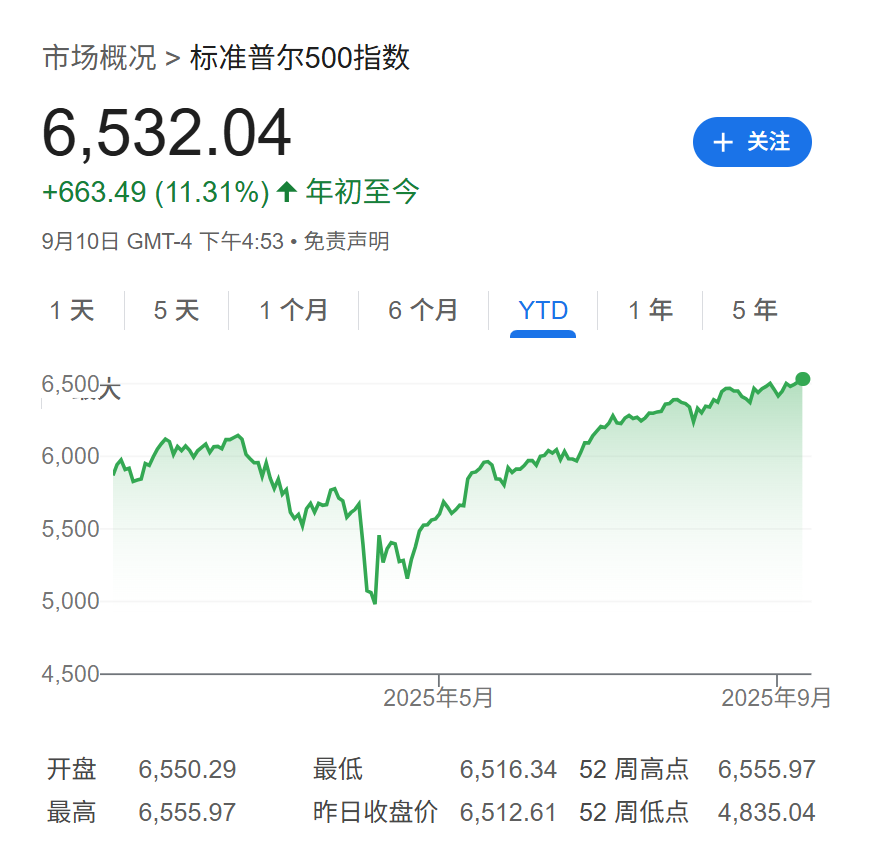
Core Viewpoint - Ray Dalio, founder of Bridgewater Associates, warns that the increasing debt burden in the U.S. is pushing its markets towards risk, suggesting that investors should allocate 10% to 15% of their portfolios to gold as a hedge against potential systemic crises [1][3]. Group 1: U.S. Debt Concerns - Dalio compares the rising debt service costs in the U.S. to plaque clogging blood vessels, indicating that this will "crowd out other spending" and could lead to a "heart attack" in the economy [1][3]. - He emphasizes that as a country spends more on debt repayment, it inevitably squeezes other necessary government expenditures, which poses significant risks [3]. Group 2: Gold as a Hedge - Dalio advocates for gold due to its low correlation with other asset classes, noting that its value often rises during crises when other assets decline [3]. - He suggests that in a "debt-laden" world with increasing geopolitical tensions, investors should reflect on the nature of their holdings and consider gold as a critical component of a diversified portfolio [3]. Group 3: Market Context - The S&P 500 and Nasdaq Composite indices have risen over 11% and 13% respectively this year, reaching all-time highs, driven by lower-than-expected inflation data and expectations of interest rate cuts by the Federal Reserve [3]. - Bill Winters, CEO of Standard Chartered, points out that while European markets are not as highly valued as the U.S., they face similar debt issues, indicating that the U.S. market may not have fully absorbed its long-term fiscal risks [2][6].
暴涨40%!金价创新高,还能“上车”么?
Zhong Guo Ji Jin Bao· 2025-09-11 12:02
Core Viewpoint - The international gold price has been continuously rising, leading to a surge in the issuance of gold-linked wealth management products by various financial institutions, with a year-to-date increase of over 40% as of September 10, reaching a historical high of $3,650.75 per ounce [1][2]. Group 1: Market Dynamics - The rise in gold prices is driven by dual factors of investment demand and risk aversion, suggesting a long-term upward trend in gold prices [1][5]. - As of September 11, there are 48 existing wealth management products linked to gold, with 14 of these issued in the current year by wealth management subsidiaries of banks [2][3]. - The two main methods for banks to include gold in their wealth management products are through "fixed income+" products and structured products linked to gold derivatives [2]. Group 2: Investment Strategies - Wealth management companies are increasing their focus on gold to diversify asset allocation, as gold serves as a hedge against inflation and market volatility [3][5]. - The demand for gold-linked products is expected to rise as more wealth management subsidiaries explore "gold+" product strategies to cater to varying risk appetites among investors [5]. Group 3: Investor Sentiment - Investors are cautious about entering gold investments at current high prices, anticipating potential short-term fluctuations, but remain optimistic about gold's long-term value as a hedge [4]. - The financial attributes of gold are perceived to be increasing, with expectations of a long-term price rise due to factors such as anticipated interest rate cuts and ongoing geopolitical tensions [5].