绿色低碳

Search documents
X @外汇交易员
外汇交易员· 2025-08-21 13:28
Funding & Investment - A new RMB 500 billion (approximately USD 69 billion) policy-driven financial tool is being launched [1] - The tool will focus on strategic sectors including emerging industries and infrastructure [1] - Key investment areas include digital economy, artificial intelligence, low-altitude economy, consumption, green and low-carbon initiatives, agriculture and rural areas, transportation and logistics, and urban infrastructure [1] Regional Activity - Multiple regions have been holding policy seminars and project preparation meetings related to the new policy-driven financial tools since May [1] - Some local governments are compiling project lists and specifying the amounts of funds to be applied for [1]
5000亿“准财政”工具将出,重点支持新兴产业、基础设施等
2 1 Shi Ji Jing Ji Bao Dao· 2025-08-21 12:37
Core Insights - The new policy financial tools are aimed at stabilizing investment and promoting innovation, with a total funding scale of 500 billion yuan, focusing on emerging industries and infrastructure [1][6][8] - Local governments are actively preparing and identifying projects for funding, with a focus on high-tech and socially beneficial projects [3][4][5] Group 1: Policy and Funding Mechanism - The new policy financial tools are classified as "quasi-fiscal" instruments, with project lists screened by development and reform departments, and funding provided by policy banks [2][8] - The tools are designed to address capital shortages for project construction, lower financing thresholds, and expand effective investment [6][8] Group 2: Project Identification and Preparation - Various regions, including Hubei and Guangdong, are conducting project preparation meetings to align with national strategies and identify high-quality projects [3][5] - Specific projects have been identified, such as 11 projects in Shanxi with a total investment of 13.369 billion yuan, requiring 2.186 billion yuan from the new financial tools [4][6] Group 3: Economic Context and Challenges - The introduction of these tools comes in response to declining investment growth, with fixed asset investment growth slowing to 1.6% in July [8][9] - There are concerns regarding the effectiveness of policy banks in investing in emerging industries, which require specialized judgment [9]
中油工程: 中油工程2025年半年度报告
Zheng Quan Zhi Xing· 2025-08-21 11:10
Core Viewpoint - The report highlights the financial performance and strategic direction of China Petroleum Engineering Co., Ltd. for the first half of 2025, emphasizing revenue growth, project execution, and market expansion in both domestic and international sectors [1][2]. Financial Performance - The company reported a revenue of 36.29 billion yuan, a 12.18% increase compared to the same period last year [2][6]. - Total profit amounted to 767.71 million yuan, reflecting an 8.31% decrease year-on-year [2][6]. - Net profit attributable to shareholders was 470.12 million yuan, down 10.87% from the previous year [2][6]. - The net cash flow from operating activities was -1.53 billion yuan, showing significant improvement compared to -7.05 billion yuan in the previous year [2][6]. Business Operations - The company aims to become a world-class energy engineering service provider, focusing on traditional oil and gas engineering while expanding into LNG, marine engineering, and environmental engineering [3][4]. - The operational model includes comprehensive project management from consulting to execution, covering the entire value chain of engineering services [3][4]. Market Development - New contracts signed totaled 734.01 billion yuan, a 3.10% decrease year-on-year, with domestic contracts accounting for 68.42% and international contracts 31.58% [6][7]. - The company successfully secured significant projects in high-end chemicals and new materials, reinforcing its market position [7][8]. Industry Context - The domestic economy showed a robust growth of 5.3%, with a focus on new energy and materials, driven by government policies supporting green and digital transformation [4][5]. - Internationally, oil prices remained stable amid geopolitical tensions, providing opportunities for engineering service providers [5][6]. Technological Innovation - The company has made strides in technology development, with 124 research achievements and 105 new patents granted, including 58 invention patents [10][11]. - Emphasis on digital transformation and AI applications in engineering projects has been a key focus area [10][11]. Governance and Risk Management - The company has implemented reforms to enhance governance, including the establishment of an ESG management framework, which has improved its ESG rating to "AA" [11][12]. - Risk management strategies have been strengthened, particularly in quality, health, safety, and environmental (QHSE) aspects, achieving a 100% acceptance rate for engineering quality [12][13].

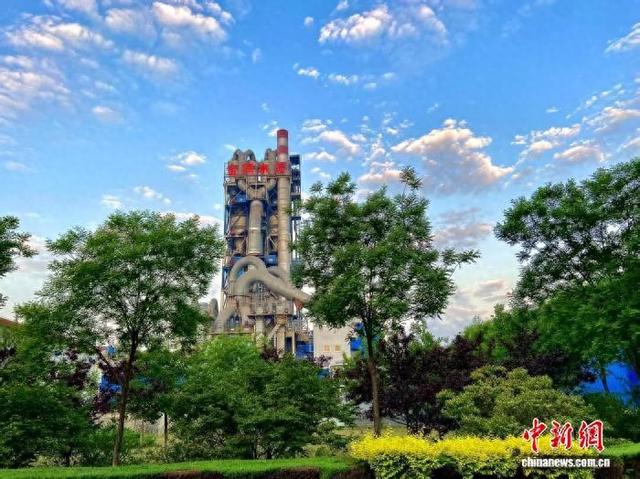
“水泥灰”变身“环保绿” 新材料与特种水泥引领行业转型
Zhong Guo Xin Wen Wang· 2025-08-21 09:16
Core Insights - The cement industry is undergoing significant transformation with a focus on "green low-carbon," "new materials," and "special cement" as key drivers of change [1][4]. Group 1: Industry Transformation - The cement factories visited have shifted from a traditional "dirty" image to a cleaner, greener environment, featuring closed transportation and storage systems, clean roads, and greenery [2]. - Digitalization and automation are enhancing operational efficiency, reducing safety risks, and improving employee health by minimizing manual labor [2]. Group 2: Waste Management and Material Innovation - Cement companies are taking on the role of urban "cleaners" by processing solid waste, utilizing industrial by-products like blast furnace slag and fly ash for land reclamation [4]. - The production of new binding materials from waste not only reduces costs but also helps eliminate millions of tons of urban waste annually, supported by local government subsidies [4]. Group 3: Special Cement Development - Special cement is emerging as a crucial area for transformation, with applications in nuclear, military, and large infrastructure projects, and is gradually entering the consumer market for customized solutions [5]. - Despite the advantages of special cement, traditional cement remains irreplaceable due to its widespread use, with ongoing efforts to expand traditional cement markets internationally, including regions like Africa and the EU [5].

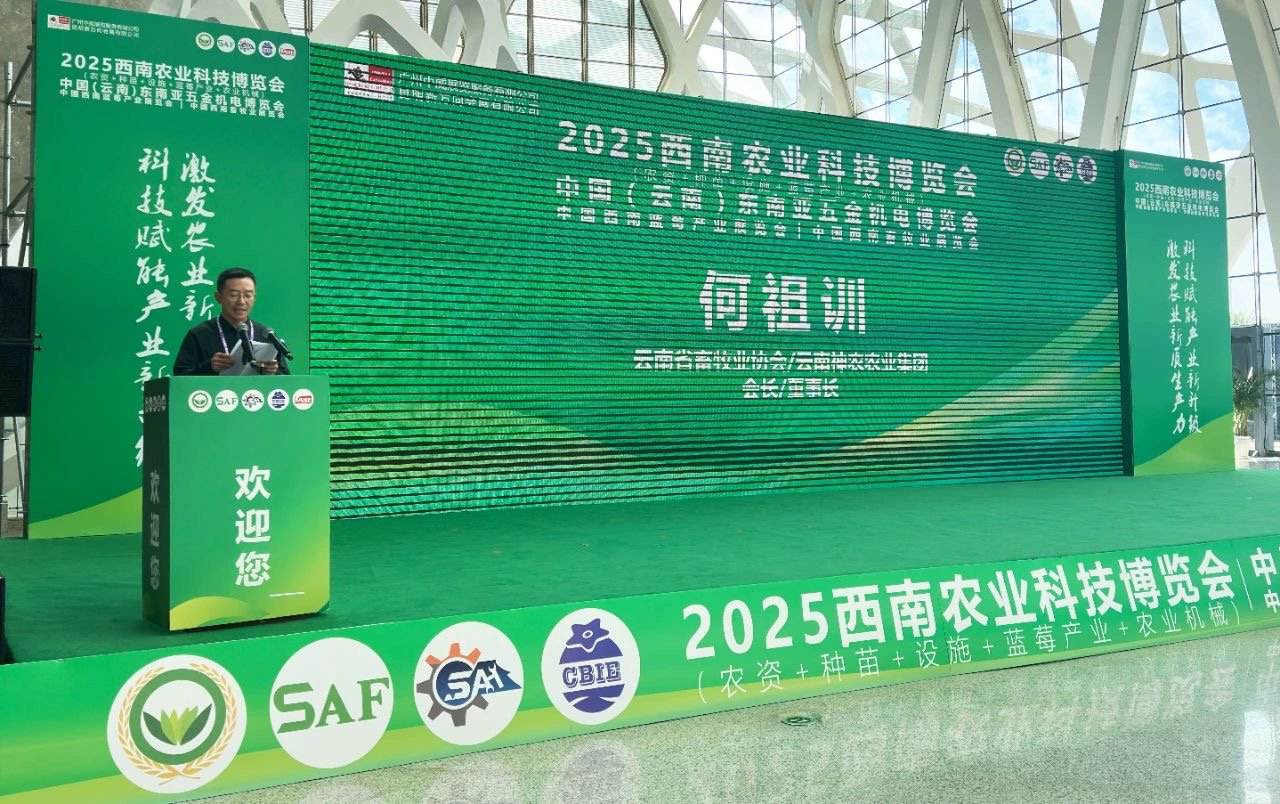
神农集团何祖训:创新与绿色是畜牧业发展的永恒航标
Xin Lang Cai Jing· 2025-08-21 07:37
Group 1 - The Yunnan livestock industry is experiencing rapid growth and has significant potential for cooperation in the Southwest region of China [1][3] - The exhibition held from August 20 to 21 in Kunming focused on "green ecology and smart livestock," attracting various industry participants [3] - Yunnan's livestock sector benefits from unique highland characteristics, rich genetic resources, and advantageous geographical positioning, emphasizing "green ecology and smart innovation" [3] Group 2 - Significant breakthroughs have been made in Yunnan regarding the protection and development of highland livestock resources, standardized large-scale breeding, major animal disease prevention, deep processing of livestock products, and regional brand building [3] - The demand for high-quality and safe animal protein is increasing, and technological innovation is seen as crucial for addressing challenges posed by resource and environmental constraints [3] - The industry is urged to focus on technological innovation and green low-carbon development to accelerate biological breeding and enhance product safety and sustainability [3]

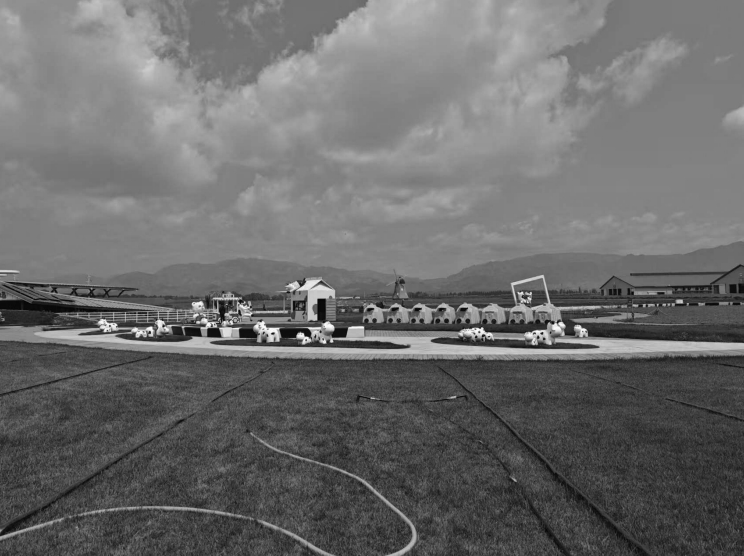
智能化全产业链引领世界品质
Xiao Fei Ri Bao Wang· 2025-08-21 02:38
Core Insights - The report from the 16th China Dairy Conference highlights the significant advancements in China's dairy industry over the past two decades, particularly in milk source construction, yield levels, and product quality, with key indicators surpassing EU standards [1] Group 1: Industry Developments - China's dairy industry has seen continuous improvements in milk quality, with protein, fat, somatic cell counts, and total bacterial counts all exceeding EU standards [1] - The industry leader, Yili, has demonstrated superior raw milk quality, particularly in bacterial counts [1] Group 2: Technological Innovations - Yili's Chulu Ecological Smart Ranch employs fully automated management systems, including automatic feeding, milking, and waste management, ensuring optimal conditions for dairy cows [2] - The ranch utilizes a green circular economy model, converting waste into organic fertilizers for pasture cultivation, and incorporates renewable energy sources to promote sustainable practices [2] Group 3: Manufacturing Efficiency - Yili's Global Smart Manufacturing Base features advanced production technologies, including the world's largest pre-pasteurization machine and high-speed packaging systems, achieving a 20% reduction in operational costs [5] - The facility's production capacity has increased dramatically, with milk powder production scaling from 0.5 tons/hour to 10 tons/hour, representing a 20-fold efficiency improvement [5] Group 4: Research and Development - The National Dairy Technology Innovation Center, as China's only national-level platform, focuses on key research areas and has made significant breakthroughs in critical technologies, such as the extraction of lactoferrin [8] - The center's innovations have improved the retention rate of lactoferrin in milk from 10% to 90%, overcoming previous technological barriers [8] Group 5: Overall Industry Impact - The integration of ecological ranching, intelligent manufacturing, and cutting-edge research is transforming China's dairy industry into a complete, green, and sustainable value chain [9] - The rapid advancements in the industry have significantly narrowed the gap with developed dairy nations, achieving in two decades what took others over a century [9]

巩固“双水源”优质供水新格局!东莞芦花坑水厂试运行供水
Nan Fang Du Shi Bao· 2025-08-21 02:37
Core Viewpoint - The trial operation of the Luhuakeng Water Plant in Humen Town, Dongguan marks a significant achievement in establishing a dual water source supply system, utilizing both the Xijiang and Dongjiang rivers for high-quality water supply [1][2]. Group 1: Project Overview - The Luhuakeng Water Plant has a designed total capacity of 500,000 cubic meters per day and a total investment of 1.28 billion yuan, playing a crucial role in Dongguan's dual water source security system [2]. - The plant is strategically located near the Luhuakeng Reservoir and is part of the Pearl River Delta water resource allocation project [2]. Group 2: Technological and Environmental Innovations - The water plant features a three-tier water quality monitoring system and employs a comprehensive water treatment process that includes pre-treatment, conventional treatment, ozone activated carbon deep treatment, and safety disinfection [3]. - A smart water management system has been developed, utilizing data models and automated control programs for efficient operation and emergency response to water source pollution [3]. - The facility incorporates green and low-carbon development principles, integrating modern water treatment technology with natural landscapes, and includes a wastewater recycling process to reduce resource consumption [3]. - The plant also features a high-efficiency hydropower generation and rooftop photovoltaic project with a capacity of 3.8 megawatts, contributing to energy self-sufficiency and cost reduction [3].
大渡口由锈变绿
Jin Rong Shi Bao· 2025-08-21 02:34
Group 1: Industry Overview - Chongqing's Dadu River District is recognized as an "old industrial base" and has transformed into a hub for high-quality enterprises focusing on green and low-carbon initiatives following the relocation of Chongqing Steel's production processes in 2011 [1] - The glass fiber industry is one of the three key industries prioritized for development in Chongqing [3] Group 2: Company Highlights - Chongqing International Composite Materials Co., Ltd. (International Composite) is a key subsidiary of Yuntianhua Group, established in 1991, and was recognized as one of the first "green factories" by the Ministry of Industry and Information Technology in 2017 [2] - International Composite has implemented advanced dry ceramic filter technology for flue gas treatment, eliminating wastewater generation and reducing environmental impact [2] - The company has achieved a 50% reduction in wastewater generation through recycling and has built wastewater treatment stations that allow for 70% reuse of incoming wastewater, leading the industry [2] Group 3: Product Applications and Environmental Impact - International Composite's glass fiber products are widely used in green sectors such as wind power and energy-efficient windows, with a 20% to 30% reduction in energy consumption for buildings using their glass fiber-enhanced windows compared to traditional options [3] - If adopted nationwide, these energy-efficient windows could save millions of tons of standard coal annually and significantly reduce carbon dioxide emissions [3] Group 4: Waste Management and Environmental Contributions - Chongqing Sanfeng Environment Group focuses on waste-to-energy projects and has invested in 57 waste incineration power projects across 16 provinces, processing 61,000 tons of waste daily [4] - The company has processed over 124 million tons of waste by the end of 2024, resulting in a reduction of approximately 43.36 million tons of carbon dioxide emissions and providing 44.5 billion kWh of green electricity [4] - Sanfeng Environment employs advanced pollution control technologies, ensuring emissions meet national standards, with 11 incineration plants certified as "AAA-level" [4] Group 5: Business Expansion and Innovations - Sanfeng Environment is expanding its business to include waste heat and energy supply, as well as collaborative treatment of kitchen waste, sludge, and industrial waste [5] - The company has developed unique leachate treatment processes and holds patents for its containerized operation systems, providing integrated waste management solutions [5]

2025年中国氟化铝产业供需及价格概况:需求端推动行业再度进入涨价周期[图]
Chan Ye Xin Xi Wang· 2025-08-21 01:42
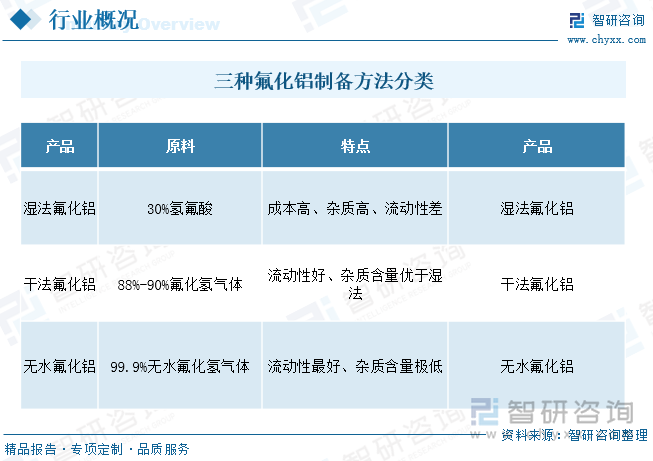
Core Viewpoint - The aluminum fluoride industry in China is experiencing structural fluctuations in supply and demand from 2018 to 2024, with continuous capacity expansion but actual production being adjusted due to environmental policies and technological upgrades. Domestic demand is primarily driven by the electrolytic aluminum industry, which accounts for over 70% of the demand, while export fluctuations significantly impact the supply-demand balance [1][9]. Industry Development Overview - Aluminum fluoride (AlF₃) is a stable inorganic compound primarily used in electrolytic aluminum production. There are three main preparation methods for aluminum fluoride, with dry methods being preferred due to lower impurity content and better flow properties compared to wet methods, which have been largely phased out [2]. Policy Background - Local policies in provinces like Hubei, Henan, and Zhejiang focus on the comprehensive utilization of fluorine resources, development of high-value-added fluorinated products, and promoting technological innovation to drive industry upgrades towards low-energy and low-emission processes [4][5]. Industry Chain - The upstream of the aluminum fluoride industry includes the extraction and processing of raw materials such as fluorite and hydrofluoric acid, concentrated in resource-rich areas like Hunan and Zhejiang. The midstream involves the production of aluminum fluoride, while the downstream applications are primarily in electrolytic aluminum, glass manufacturing, ceramics, pharmaceuticals, and electronics [7][8]. Current Industry Status - From 2018 to 2024, the supply-demand relationship in the aluminum fluoride industry has shown structural fluctuations, with production capacity expanding but actual output being affected by environmental policies and technological upgrades. In 2024, the production and demand of aluminum fluoride in China are projected to be 790,000 tons and 656,000 tons, respectively, showing slight growth compared to 2023 [9][11]. Import and Export Dynamics - In 2024, China's aluminum fluoride import and export volumes are expected to be 0.02 million tons and 13.41 million tons, respectively. The export market faces challenges from low-price competition from emerging countries and green trade barriers from developed nations, while domestic companies are focusing on strategies like long-term contracts and cost control to stabilize exports [13]. Competitive Landscape - The aluminum fluoride industry in China is characterized by a highly concentrated competitive landscape, dominated by a few specialized production companies that integrate the entire industry chain, from core technology research and development to large-scale production and diversified market sales [15][16]. Development Trends - The aluminum fluoride industry is accelerating its transition towards green and low-carbon practices, with companies developing clean production technologies and circular economy models to reduce energy consumption and pollution emissions. There is also a focus on high-value-added products to meet the demands of high-end markets such as new energy batteries and semiconductor materials [17].
链接新能源与工程机械 三一集团用微电网“点亮”全球矿山
Shang Hai Zheng Quan Bao· 2025-08-21 00:38
Core Insights - The company is experiencing significant growth in its microgrid projects, with approximately 20 projects underway or about to start, leading to a production line operating at nearly 200% capacity [1][2] - The microgrid business was elevated to a core business in the second half of last year, which has opened new opportunities for the company [2] - The company is focusing on deep collaboration between its new energy and engineering machinery sectors, aiming to create a comprehensive low-carbon industrial development framework [2][9] Microgrid Projects - The first phase of the microgrid project in Guinea's Saint-Toumin mining area has been successfully launched, providing a full-load green electricity supply with a configuration of 7MWp solar and 7MW/21MWh storage [1] - The company has signed nearly 20 microgrid projects across seven African countries, with an investment of approximately 1.7 billion RMB, of which 11 projects are under construction and 3 are operational [8] - The microgrid solutions are designed to integrate solar, wind, storage, and diesel power, addressing the high costs and pollution associated with traditional diesel generators in African mining operations [6][7] Production and Technology - The company has established a highly automated production line for silicon wafers, capable of producing over 1.8 million wafers daily with a maximum efficiency of over 26.5% for TOPCon solar cells [4][10] - The production process includes multiple stages such as crystallization, slicing, and various treatments to convert silicon into solar cells, showcasing a vertically integrated supply chain [4][5] - The company is also developing advanced microgrid systems that combine solar, storage, and diesel power, achieving a green electricity ratio of over 95% in some projects [7] Global Expansion and Strategy - The company is expanding its global footprint, with products and services reaching over 180 countries, and aims for overseas business to contribute nearly half of its revenue by 2024 [11] - In Africa, the company has established a strong presence with 15 subsidiaries and over 23,000 units of equipment sold, positioning itself as a leader in the engineering machinery export market [11] - The company plans to enhance local manufacturing and talent development in Africa, transitioning from simple product exports to a more integrated industrial export strategy [11]