
人工智能泡沫

Search documents
谷歌CEO发出AI泡沫警告,行业未来路径引分歧
Sou Hu Cai Jing· 2025-11-19 04:10
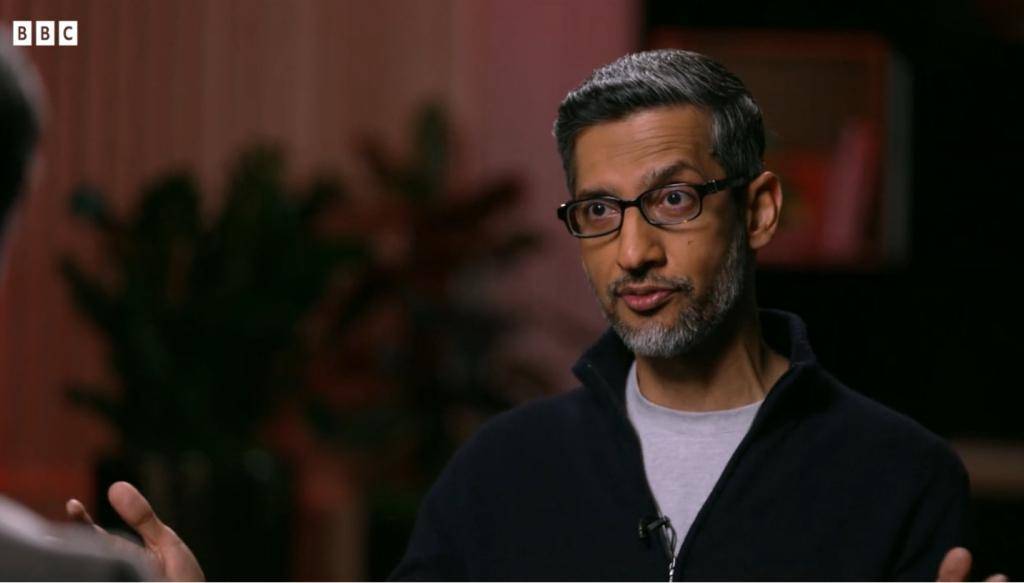
与此相对,Hugging Face 首席执行官克莱姆・德兰格提出了不同见解。他认为当前不存在全面的 AI 泡沫,而是特定的"大语言模型泡沫",并预测这个泡沫 可能在明年破裂。他指出,未来趋势将是从追求通用大模型转向开发更多专用化的小型模型,这种转变将更符合实际商业需求。 【太平洋科技快讯】11 月 19 日消息,谷歌母公司 Alphabet 首席执行官桑达尔・皮查伊近日在接受 BBC 采访时指出,当前人工智能投资热潮中存在一定程 度的"非理性"成分。他警告称,若 AI 泡沫破裂,所有企业都将受到波及,无一能够幸免,即便是拥有全栈技术优势的谷歌也不例外。这番表态正值 AI 公司 估值持续飙升之际,引发了市场对行业过热的高度关注。 然而,AI 的快速发展也带来了严峻挑战。皮查伊特别指出,AI 已占全球电力消耗的 1.5%,这种"巨大"的能源需求可能成为经济发展的瓶颈。他承认公司气 候目标因此受到影响,但承诺仍将坚持 2030 年净零排放目标。在就业方面,他认为 AI 将是"最具变革性的技术",善于运用 AI 工具的人将在各个职业中脱 颖而出。 皮查伊将当前状况与 1996 年互联网泡沫时期的"非理性繁荣"相提并论 ...



巨头组局“循环交易”,近期科技股股价下跌加剧美股投资者担忧
Di Yi Cai Jing· 2025-11-19 04:07
Group 1 - The core viewpoint of the articles highlights a significant surge in AI infrastructure spending, with Amazon, Microsoft, Meta, and Oracle collectively exceeding $300 billion by August this year, indicating a supercycle in AI investments [1][5] - Major tech companies like Microsoft and Nvidia are investing heavily in AI startups, with a recent partnership with Anthropic involving up to $15 billion, potentially doubling Anthropic's valuation from $180 billion to over $350 billion [3][4] - OpenAI has also seen its valuation soar past $500 billion after receiving substantial investments from tech giants, with agreements for over $1 trillion in computing power purchases this year [3][4] Group 2 - Concerns are rising among investors regarding the sustainability of AI valuations, as the market experiences significant fluctuations, evidenced by stock declines in Nvidia, Microsoft, and Amazon on November 18 [4][5] - Google’s CEO Sundar Pichai warned that if the AI bubble bursts, no company would be immune, drawing parallels to the irrational exuberance seen during the internet bubble [5] - The current AI investment wave is described as a "remarkable moment," but it is acknowledged that both rational and irrational factors are influencing the market [5]


谷歌推出“最强模型”Gemini 3,但CEO坦言AI投资存在“非理性”
Sou Hu Cai Jing· 2025-11-19 03:12
当地时间11月18日,谷歌母公司Alphabet正式发布新一代AI模型Gemini 3,其首席执行官桑达尔·皮查伊(Sundar Pichai)将该模型定义为"行业顶 尖",但与此同时,他在接受BBC新闻独家专访时直言,当前AI投资热潮中存在非理性成分,若AI泡沫破裂,没有任何一家公司能独善其身。 据介绍,Gemini 3在核心能力上实现显著突破,皮查伊在发布声明中提到,该模型"在推理能力上达到行业领先水平,可精准把握问题深度与细微 差别",且能更好解读用户需求背后的语境与真实意图,用户无需反复提示即可获取所需结果。 更受关注的是,围绕OpenAI展开的1.4万亿美元复杂交易,与其不足千分之一投资规模的年度预期营收形成鲜明反差,市场普遍担心这会重蹈上世 纪90年代末互联网泡沫"先飙升后崩盘"的覆辙,届时企业破产、员工失业、民众储蓄受损等问题或再度出现。 当被问及谷歌能否抵御AI泡沫破裂的冲击时,皮查伊坦言"没有一家公司可以幸免,包括我们自己",但他同时强调,公司"从芯片到YouTube数 据,再到AI模型与前沿科研"的全栈技术布局,能帮助其更好应对潜在的市场动荡。 AI发展的现实挑战也被皮查伊提及。他表示,A ...
铜冠金源期货商品日报-20251119
Tong Guan Jin Yuan Qi Huo· 2025-11-19 02:31
1. Report Industry Investment Rating No relevant content provided. 2. Core Views of the Report - Overseas risk appetite is continuously contracting, and the domestic stock and bond markets are both weak. There is a risk of a phased correction in the A - share market, and the bond market is likely to maintain a relatively strong and volatile pattern in the short term [2][3]. - The resumption of US official data may intensify short - term fluctuations in precious metals prices, and attention should be paid to the Fed's meeting minutes and non - farm payrolls report [4][5]. - There are risks in the artificial intelligence bubble, and copper prices will continue to adjust. Aluminum prices are expected to continue to adjust, and alumina will maintain a weak and volatile state [6][7][8]. - Cast aluminum prices will follow the market for a correction with limited amplitude. Zinc prices have support below, and lead price declines will slow down. Tin prices will oscillate in the short term and have room for growth in the long term [11][12][13]. - Industrial silicon prices are expected to enter a weak and volatile phase. Lithium carbonate prices will fluctuate widely, and nickel prices will be in a weak and volatile state [15][16][17]. - The prices of soda ash and glass will oscillate at a low level. Steel prices will oscillate, and iron ore prices will mainly oscillate. Coking coal and coke prices will oscillate weakly [21][22][23]. - Bean and rapeseed meal prices will oscillate, and palm oil prices will oscillate and strengthen in the short term [27][28][29]. 3. Summaries According to Relevant Catalogs 3.1 Macro - Overseas: US employment data is weak, risk appetite is contracting, the US dollar index is oscillating strongly, US bond yields are falling, US stocks are generally down, and gold and oil prices are rising while copper prices are falling. Attention should be paid to non - farm payrolls data and technology sector earnings reports this week [2]. - Domestic: The A - share market has fallen for three consecutive days, the two - market trading volume remains above 1.9 trillion yuan, and small - cap stocks have adjusted more significantly. The margin balance has cooled down, and there is a risk of a phased correction. The bond market is also weak, and the long - term interest rate has risen slightly, maintaining a volatile pattern [3]. 3.2 Precious Metals - On Tuesday, international precious metal futures prices first declined and then rose. The latest US employment data is weak, which boosts the expectation of interest rate cuts. The resumption of official data may intensify short - term price fluctuations. Attention should be paid to the Fed's meeting minutes and non - farm payrolls report [4][5]. 3.3 Copper - On Tuesday, Shanghai copper and LME copper both adjusted downward. There are risks in the artificial intelligence bubble. More Fed officials are questioning the December interest rate cut. With the end of the government shutdown, attention should be paid to unemployment claims and CPI data. Copper prices are expected to maintain a high - level decline in the short term [6][7]. 3.4 Aluminum - On Tuesday, Shanghai aluminum and LME aluminum prices both fell. The US initial jobless claims reached a two - month high, and the Fed's interest rate cut expectation has slightly increased. The market is waiting for more key data. Aluminum prices are expected to continue to adjust [8]. 3.5 Alumina - On Tuesday, the alumina futures price fell. The spot price has declined, and the expectation of production cuts has increased. However, there is still an oversupply in reality, and it will maintain a low - level and volatile state [9][10]. 3.6 Cast Aluminum - On Tuesday, the cast aluminum alloy futures price fell. The cost side has support, the supply has little change, the demand is stable, and the price will follow the market for a correction with limited amplitude [11]. 3.7 Zinc - On Tuesday, Shanghai zinc and LME zinc showed different trends. The US employment data is poor, the Fed's interest rate cut expectation has slightly increased, and the market is waiting for NVIDIA's earnings report. Zinc prices have support below, and the short - term price trend depends on the macro situation [12]. 3.8 Lead - On Tuesday, Shanghai lead and LME lead both showed a weak trend. Affected by the Fed's interest rate cut expectation and LME inventory accumulation, lead prices have support from the cost side and slow inventory accumulation, and the decline will slow down [13]. 3.9 Tin - On Tuesday, Shanghai tin and LME tin oscillated. The US dollar is strong, and the market is waiting for more macro guidance. There are concerns about the supply side, and the demand is strong. Tin prices will oscillate in the short term and have room for growth in the long term [14]. 3.10 Industrial Silicon - On Tuesday, industrial silicon oscillated narrowly. The supply side has a marginal convergence, the demand side is weak, and the price is expected to enter a weak and volatile phase [15][16]. 3.11 Lithium Carbonate - On Tuesday, lithium carbonate prices oscillated downward, and the spot price rose. The futures market has strong selling pressure, and the spot trading is poor. With the arrival of imported resources, the supply shortage may be alleviated, and the price will fluctuate widely [17][18]. 3.12 Nickel - On Tuesday, nickel prices were weak. The terminal demand is low, the inventory is at an absolute high, and the price is expected to be in a weak and volatile state. Attention should be paid to changes in upstream supply [19][20]. 3.13 Soda Ash and Glass - On Tuesday, the prices of soda ash and glass futures both oscillated weakly. The downstream demand is not improving, and the prices will oscillate at a low level [21][22]. 3.14 Steel (Screw and Coil) - On Tuesday, steel futures oscillated. The spot market trading and prices are stable, the supply pressure has decreased after steel mill production cuts, but the demand is still weak, and steel prices will oscillate [23][24]. 3.15 Iron Ore - On Tuesday, iron ore futures oscillated. The port inventory has slightly decreased, the supply is still high, the demand has a short - term rebound but the medium - term reduction expectation remains unchanged, and the price will mainly oscillate [25]. 3.16 Coking Coal and Coke (Double - Coking) - On Tuesday, coking coal and coke futures oscillated weakly. The coal mine production has increased, the coke price increase has limited improvement in coking enterprise losses, and the downstream demand is expected to weaken. The price will oscillate weakly [26]. 3.17 Bean and Rapeseed Meal - On Tuesday, bean and rapeseed meal futures fell. China has purchased 792,000 tons of US soybeans. The US soybean harvest is nearing completion, and the Brazilian soybean sowing progress is over 90%. The supply is loose, and the price will oscillate [27][28]. 3.18 Palm Oil - On Tuesday, palm oil futures rose. The US biodiesel policy may exceed market expectations, and India's vegetable oil inventory is at a low level, with potential import demand. Palm oil prices will oscillate and strengthen in the short term [29][30].
富达、安联启齐发声:英伟达财报前暴跌是陷阱,“AI泡沫论”可休矣!
Zhi Tong Cai Jing· 2025-11-19 02:20
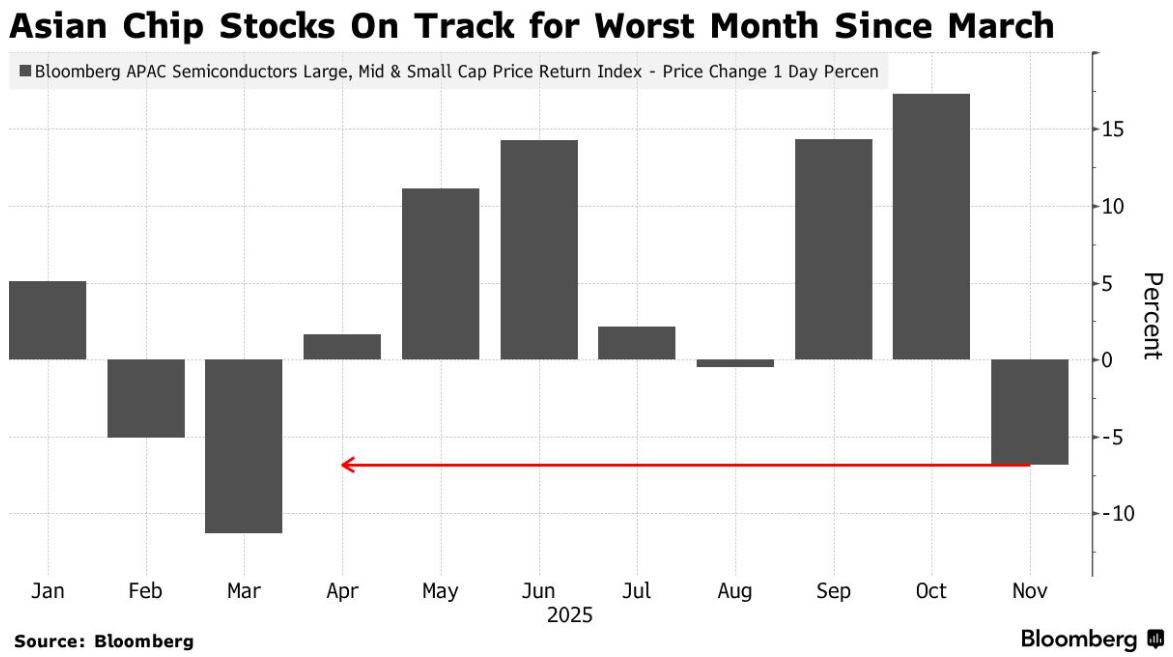
智通财经APP注意到,富达国际和安联全球投资的基金经理表示,尽管存在泡沫担忧,但AI开发者雄心勃勃的支出计划和快速用户增长表明,其全球股票涨 势将持续。 富达国际的投资组合经理Joseph Zhang认为,在本周晚些时候英伟达公司备受关注的财报发布之前,全球半导体股最近的下跌可能是暂时的。除非AI资本支 出或使用量放缓,否则他预计此类回调后会出现反弹。"这场盛宴仍处于早期阶段,"在富达共同管理超过100亿美元资产的Zhang表示,"过早离场将是错误 的。" 随着软银集团和彼得.蒂尔等投资者减少风险敞口,对泡沫的担忧困扰着市场。然而,基金经理的观点表明看涨者并未退缩,而杰夫.贝索斯新AI风险投资等 重要承诺也提供了支撑。支持者将这股热潮视为一代人一次的技术革命,因此很难将其仅仅视为另一种股票趋势而忽视。 在经历了六个月的上涨后,在美上市的半导体股票在11月遭遇获利了结。一项美国芯片指数本月下跌9.4%,料将创下自3月以来最差单月表现,而一项亚洲 同类指数也下跌约7.3%——这迫使许多投资者思考AI交易是否已失去动力。"我认为对于AI,总的来说我们可能有点过于乐观了,"Pictet Asset Managemen ...
利空突袭,全线大跌!
天天基金网· 2025-11-19 01:15
Core Viewpoint - The article discusses the recent downturn in the U.S. stock market, particularly focusing on technology stocks, driven by concerns over high valuations, economic uncertainty, and the Federal Reserve's interest rate policies [3][5][8]. Group 1: Market Performance - U.S. major indices experienced a collective decline, with the Dow Jones and Nasdaq dropping over 1%, and the S&P 500 falling by 0.83% [3][4]. - The technology sector faced significant losses, with the "seven giants" of tech down nearly 2% and the Philadelphia Semiconductor Index down 2.3% [3][4]. - Individual stocks such as Nvidia, Micron Technology, and Amazon saw declines of nearly 3%, over 5%, and over 4% respectively [3][4]. Group 2: Investor Sentiment - Analysts attribute the sell-off in tech stocks to multiple factors, including persistent concerns over inflated AI valuations and a cooling expectation for Federal Reserve interest rate cuts [5][6]. - A recent Bank of America survey indicated that investor cash allocation has dropped below a critical threshold, triggering a "sell signal" for stocks [8][9]. - The survey revealed that 45% of respondents view a potential AI bubble as the biggest tail risk, with 53% believing AI stocks are already in a bubble [9]. Group 3: Economic Outlook - Investors are reassessing economic growth prospects, which is putting broader pressure on financial markets [6]. - Concerns about the Federal Reserve not implementing a third rate cut in December are increasing, contributing to ongoing pressure on risk assets [6][7]. - The anticipated capital expenditures by major tech companies for AI infrastructure are projected to reach $371 billion this year, with a total need of $5.2 trillion by the end of the decade [6].
经济日报:投资者对美股人工智能泡沫担忧升温
Sou Hu Cai Jing· 2025-11-19 00:28
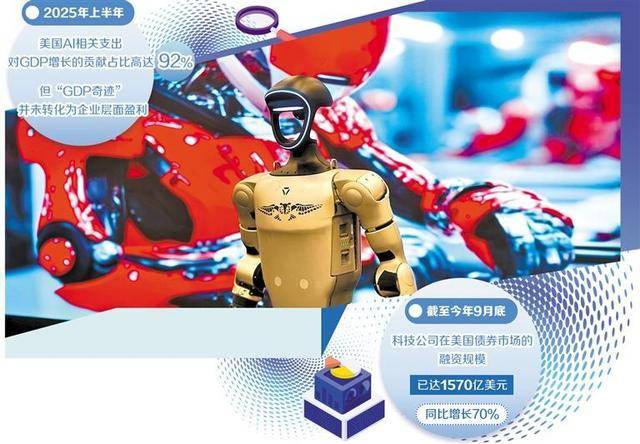
Core Viewpoint - The article discusses the increasing volatility of AI concept stocks in the US market, highlighting concerns about an "AI bubble" as major firms like Nvidia see soaring valuations while others, including SoftBank and Citadel, reduce their stakes in these stocks [2][3][4]. Group 1: Valuation Concerns - AI concept stocks are perceived to have inflated valuations that may not be sustainable, with Nvidia's stock price increasing approximately 11 times since the launch of ChatGPT in November 2022, while the S&P 500 index rose about 70% during the same period [2][3]. - Nvidia's market capitalization recently surpassed $5 trillion, exceeding Germany's annual GDP, raising questions about the sustainability of such valuations [2]. - Oracle's stock surged 41% after announcing a $300 billion order from OpenAI, yet its latest financial report revealed an AI cloud service gross margin of only 14%, indicating potential profitability issues [2]. Group 2: Infrastructure Investment - Major tech companies, including OpenAI, Microsoft, Google, Meta, and Amazon, are engaged in a significant "AI arms race," with projected capital expenditures on AI infrastructure reaching $1.4 trillion from 2025 to 2027 [3]. - In 2023 alone, investments in the AI sector amounted to $500 billion, but returns have yet to materialize, suggesting a risk of sunk costs if technology becomes outdated [3]. Group 3: Financing Risks - The current financing model among AI giants involves mutual investments and high-value contracts, which may inflate revenue figures artificially, creating a risk of collapse if any part of the chain falters [3][4]. - The shift from light-asset to heavy-asset models among tech companies is leading to increased debt reliance, with $157 billion raised in the US bond market by tech firms as of September 2023, a 70% year-on-year increase [5]. Group 4: Profitability Challenges - There is a significant mismatch between the costs associated with AI and the value generated, with nearly 80% of companies deploying AI failing to achieve net profit increases [4]. - OpenAI reported $4.3 billion in revenue in the first half of 2023 but incurred a net loss of $13.5 billion, highlighting the profitability challenges in the sector [5]. Group 5: Market Sentiment and Future Outlook - Some industry leaders, including Bill Gates and IMF President Kristalina Georgieva, warn that the current AI investment frenzy resembles the late 1990s internet bubble, suggesting potential for significant losses [5][6]. - Supporters of AI argue for its vast demand and potential, with Nvidia's CEO asserting that current AI technology is actively utilized, and capital expenditures among major cloud providers are expected to rise to $632 billion by 2027 [6]. - The article emphasizes the need to differentiate between short-term market fluctuations and the long-term innovative potential of AI, suggesting that while market corrections may occur, the fundamental advancements in productivity driven by AI remain promising [7][8].
深夜!全线大跌!美股利空来袭!
Zheng Quan Shi Bao Wang· 2025-11-18 23:51
个股方面,大型科技股全线下挫,亚马逊跌超4%,英伟达跌2.81%,微软跌2.7%,特斯拉跌1.88%, Meta跌0.72%,谷歌A跌0.26%,苹果微跌0.01%。半导体板块重挫,迈威尔科技跌近6%,美光科技跌超 5%,AMD(超威半导体)跌超4%,ARM跌3%,阿斯麦、台积电、英特尔跌超1%。 英伟达即将在周三美股收盘后公布财报,投资者期待依据其财报评估AI资本支出和收入的可持续性。 在当前强劲财报季尾声公布业绩的该公司,一直处于关于今年人工智能(AI)推动的市场上涨力度的 辩论中心。而由于多家科技巨头债务发行激增,市场对科技股昂贵的估值和AI基本面稳健性的担忧日 益加剧。 分析人士指出,此轮科技股的抛售潮,受到多重因素叠加的影响。一是,市场对AI估值过高的担忧持 续,尤其是在英伟达财报披露前,投资者保持谨慎。二是美联储的降息预期大幅降温,对风险资产的价 格造成了打压。三是,对宏观环境不确定的担忧笼罩市场。 美股科技股继续回调! 当地时间周二,美股三大指数集体下挫。截至收盘,道指、纳指跌超1%,标普500指数跌0.83%。科技 股集体大跌,美股科技股七巨头指数跌近2%,费城半导体指数跌2.3%。英伟达跌近 ...

投资者对美股人工智能泡沫担忧升温
Jing Ji Ri Bao· 2025-11-18 22:07
Core Viewpoint - The article discusses the increasing volatility of AI concept stocks in the US market, highlighting the growing concerns about a potential "AI bubble" as major firms like Nvidia reach unprecedented market valuations while others, including SoftBank and Bridgewater, significantly reduce their holdings in these stocks [1][4]. Group 1: Valuation Concerns - The high valuations of AI concept stocks are seen as overextending performance expectations, with Nvidia's stock price increasing approximately 11 times since the launch of ChatGPT in November 2022, while the S&P 500 index rose about 70% during the same period [1]. - Nvidia's market capitalization recently surpassed $5 trillion, exceeding Germany's annual GDP, raising questions about the sustainability of such valuations [1]. - Oracle's stock surged 41% after announcing a $300 billion order from OpenAI, yet its latest financial report revealed an AI cloud service gross margin of only 14% and a quarterly loss of $100 million from leasing Nvidia chips [1]. Group 2: Infrastructure Investment - Major tech companies, including OpenAI, Microsoft, Google, Meta, and Amazon, are engaged in a fierce "AI arms race," with capital expenditures on AI infrastructure projected to reach $1.4 trillion from 2025 to 2027 [2]. - The World Economic Forum noted that AI investments reached $500 billion this year, but returns have yet to materialize, indicating a risk of significant sunk costs if technology becomes outdated [2]. Group 3: Financing Risks - AI giants are using a cycle of mutual investments and high-value contracts to inflate their revenue and valuation, raising concerns about the sustainability of this model [2]. - Nvidia's $100 billion investment in OpenAI and OpenAI's $300 billion order from Oracle exemplify this interconnected financing, which could collapse if any part of the chain falters [2]. Group 4: Profitability Challenges - The costs associated with AI investments do not align with the value created, posing a significant challenge to current business models [3]. - Data indicates that 80% of companies deploying AI have not seen net profit increases, and 95% of generative AI pilot projects have not yielded direct financial returns [3]. - OpenAI reported $4.3 billion in revenue but a net loss of $13.5 billion in the first half of the year, with a quarterly loss exceeding $11.5 billion [3]. Group 5: Economic Implications - The massive investments in AI infrastructure are pushing tech companies towards a heavy asset model, increasing reliance on debt financing, with US tech companies raising $157 billion in the bond market by September, a 70% year-on-year increase [4]. - The deep integration of AI investments into the US economy has raised concerns that a downturn in AI investment could adversely affect overall economic growth [6]. Group 6: Market Comparisons - Industry experts draw parallels between the current AI stock frenzy and the internet bubble of the late 1990s, warning of potential financial fallout [4]. - Supporters of AI argue for its vast demand and potential, with Nvidia's CEO asserting that current AI technology is actively utilized, contrasting with the past internet bubble [4]. Group 7: Future Outlook - The article suggests a long-term perspective on the current debates surrounding AI investments, emphasizing the transformative potential of AI in enhancing productivity across various sectors [5][6]. - The contrasting strategies of US tech giants and Chinese AI companies highlight different approaches to market dominance, with the latter adopting more open-source strategies [7].
美股“七巨头”承压 港股科企AI投入节奏受关注
Zhong Guo Zheng Quan Bao· 2025-11-18 20:05
Core Viewpoint - The ongoing high investment in AI by US tech giants is facing valuation pressure, leading to increased scrutiny and debate over the potential AI bubble, while Hong Kong's internet companies are becoming a focal point for investors [1][2]. Group 1: US Tech Sector Performance - The US tech sector has seen significant gains this year, with the Nasdaq 100 index reaching new highs, driven by major players like Nvidia and Apple. However, as of November, the sector is under pressure, with a notable drop of over 2% in the US tech giants index on November 13 [1]. - Wall Street executives from firms like Goldman Sachs and Morgan Stanley have issued warnings about potential market corrections, predicting a 10% to 20% pullback in the next 12 to 24 months [1][2]. - Concerns about the fundamentals of tech stocks have been raised, particularly by prominent short-seller Michael Burry, who warns of a possible AI bubble and suggests that some companies may be overstating profits through accounting practices [1][2]. Group 2: AI Investment and Market Sentiment - There is a divided opinion on whether the AI sector is in a bubble, with some analysts believing that AI investments are still in a mid-term phase with strong long-term potential, while others see recent market corrections as a reflection of adjusted profit expectations [2]. - The risk of a tech bubble in the US is seen as more related to macroeconomic and political cycles rather than stock fundamentals, with some analysts suggesting that the bubble may still have room to grow until 2026 [2]. Group 3: Hong Kong Tech Sector Developments - In the context of ongoing debates abroad, the development cycle of the AI industry in Hong Kong is under scrutiny, particularly during the earnings season where capital investment and business progress are key evaluation metrics [3]. - Tencent Holdings reported a revenue of 192.9 billion yuan for Q3 2025, a 15% year-on-year increase, while capital expenditure decreased by 24% due to supply chain impacts. The company has significantly increased its AI R&D investment, achieving record-high R&D expenses in Q3 [3]. - The current valuation of the Hang Seng Tech Index is at a low point, with a price-to-earnings ratio of 21.5, which is below that of other major global tech indices [3][4]. Group 4: Future Outlook - The tech sector in Hong Kong is expected to face challenges regarding valuation elasticity and earnings stability amid increased external market volatility. The discussion around the AI bubble continues, with short-term fluctuations likely to intensify [4]. - Despite the ongoing debates, the foundational infrastructure for AI is still developing, and downstream applications are gradually emerging. Major companies like Microsoft, Google, and Meta maintain strong free cash flow, indicating no immediate pressure on static valuations and cash flows [4].

