
品牌出海

Search documents
从热带岛屿到世界餐桌:“海南鲜品”的全球“鲜”行记
Zhong Guo Xin Wen Wang· 2025-12-17 08:17
Core Viewpoint - The article highlights the global journey of "Hainan Fresh Products," showcasing their transition from local products to internationally recognized brands, driven by the unique advantages of Hainan's tropical climate and supportive policies from the Hainan Free Trade Port [1][12]. Group 1: Natural Endowments - Hainan, as China's only tropical island province, benefits from a long summer and abundant sunlight, providing unique flavors and off-season advantages for its agricultural products [3]. - The region's mangoes and lychees have gained international market share due to their early harvest and superior quality, with lychee prices serving as a price indicator for the entire country [3]. - In the first five months of the year, Hainan's fruit exports reached 110 million RMB, marking a 75.39% increase year-on-year, with products entering over ten new markets [3]. Group 2: Quality Control - Full-chain quality control is essential for maintaining freshness, with leading companies implementing standardized management practices [4]. - Hainan's leading enterprises, such as Qinfushi Food Co., have adopted a "six unifications" management model to ensure quality from production to processing [4]. - Innovative preservation technologies, such as modified atmosphere packaging, have extended the shelf life of products like lychee to 20 days [6]. Group 3: Brand Empowerment - The "Hainan Fresh Products" regional public brand was established to enhance market presence and consumer trust, addressing the previous issue of high-quality products not being recognized internationally [7][8]. - The brand's unified image and international certifications have become crucial in negotiations, allowing Hainan enterprises to secure higher-value contracts with major retailers [8]. - Collective participation in trade shows has replaced individual efforts, with associations organizing groups of companies to showcase their products [8]. Group 4: Deep Processing Transformation - The deep processing sector is emerging as a new opportunity for Hainan's agricultural products, shifting from raw material sales to product and brand sales [10]. - There is a growing demand for processed products, such as fruit cuts and snacks, which can enhance value and reduce spoilage during export [10]. - Companies are actively developing new products, with plans to leverage free trade policies to expand their processing capabilities and market reach [10]. Group 5: Policy Support - The Hainan Free Trade Port policies provide significant incentives for companies, including tax exemptions and trade facilitation, which are crucial for attracting businesses and buyers [12]. - These policies allow for competitive processing costs, enabling companies to expand their operations and enhance their global presence [12]. - Future plans include focusing on agricultural brand standards and exploring emerging markets along the Belt and Road Initiative [12].


花西子宣布正式入驻美国Ulta Beauty线上美妆零售平台
Huan Qiu Wang· 2025-12-17 03:15
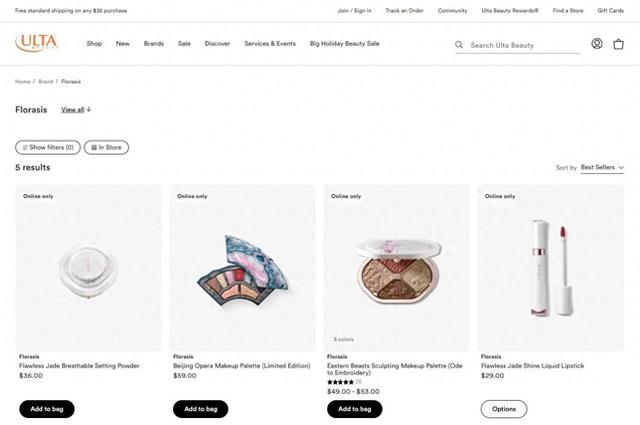
Core Insights - Huaxizi has officially entered the U.S. market by partnering with Ulta Beauty, becoming the first Chinese beauty brand to do so [1][3] - This move follows previous international expansions, including openings in Japan and France, marking a significant step in Huaxizi's global strategy [1][6] Company Overview - Ulta Beauty, established in 1990, is the largest beauty specialty retailer in the U.S., with over 1,300 stores and extensive online channels [3] - Ulta and Sephora are recognized as the "dual giants" of beauty retail in the U.S. market [3] International Expansion Strategy - The U.S. is a key strategic market for Huaxizi's global development, focusing on high-quality products and unique cultural aesthetics to drive long-term growth [5] - Since its establishment in 2018, Huaxizi has expanded its international presence, initially entering the market through Amazon Japan in 2021 [5] - The brand has since launched physical stores in Japan, including a seasonal store in Isetan Shinjuku and a flagship store in Ginza Six, Tokyo [5][6] Product and Quality Standards - Huaxizi has implemented an international quality management system, known as the Huaxizi Standard, which aligns with various global standards to ensure product compliance [6] - The brand has developed an "Oriental Beauty R&D System" that integrates traditional Chinese culture with modern beauty technology, enhancing its competitive edge in international markets [6] Cultural Aesthetics - Huaxizi aims to showcase the essence of Chinese culture through its products, incorporating traditional craftsmanship into modern makeup items [6] - The brand emphasizes the unique charm of Eastern aesthetics and the value of Chinese cultural confidence in its marketing strategy [6]
湾财专访巨星科技李锋:一把锤子缘何撬开百亿营收?
Nan Fang Du Shi Bao· 2025-12-17 00:57
Core Insights - The global hand tools market is experiencing steady growth, with cross-border e-commerce becoming a significant engine for China's foreign trade transformation. The total revenue of the global DIY and hardware store market reached $285.7 billion in 2023, with the core tools category estimated at $85 billion, projected to grow at a CAGR of 2.48% in the coming years [2][3]. Company Overview - Juxing Technology, founded in 1993, has become the largest hand tools company in Asia and ranks among the top three globally. The company, headquartered in Hangzhou, offers a wide range of products including hand tools, power tools, and laser measuring tools, with sales in over 180 countries and regions. In 2024, the company achieved a revenue of 14.795 billion yuan, a year-on-year increase of 35.37%, and a net profit of 2.304 billion yuan, up 36.18%, both hitting historical highs [2][3]. Strategic Transformation - The transition from OEM to self-owned brands was driven by the need to overcome the limitations of the OEM model, which lacked pricing power. Juxing Technology recognized that to achieve sustainable growth and maximize profits, expanding into overseas markets and building its own brands was essential [5][6][14][16]. Market Insights - Juxing Technology's deep understanding of international market demands, product categories, and pricing strategies, gained from its experience as an OEM, laid a solid foundation for its subsequent research and innovation efforts. The company has made strategic acquisitions to enhance its capabilities, including acquiring stakes in laser measurement tool companies and American brands [6][10][16]. Brand Development - Since entering Amazon in 2015, Juxing Technology has accelerated its brand globalization. The company relies heavily on Amazon's logistics services, with over 90% of its goods shipped through Amazon's Global Logistics (AGL), which enhances delivery speed and reduces costs [7][9][22][23]. Product Innovation - Juxing Technology emphasizes product innovation and regional customization as core strategies. The company has over 600 engineers in China and local engineers in various countries to tailor products to local consumer preferences. Approximately 80% of its products are designed in-house, allowing for greater pricing autonomy and improved profit margins [10][11][19][20]. Future Outlook - The company plans to continue its collaboration with Amazon to leverage market data and develop products that meet consumer needs in emerging markets such as Latin America, the Middle East, and Australia. Juxing Technology believes that economic downturns can present opportunities for growth and innovation [20][21].


东兴证券:制造业出口向“品牌出海”升级 建议关注人形机器人等细分机会
Zhi Tong Cai Jing· 2025-12-16 07:36
Group 1: Mechanical Sector Performance - The mechanical sector is expected to see significant growth in 2025, with a projected increase in revenue and profit compared to 2024 [1] - The Shenwan Mechanical Equipment Index is forecasted to rise by 36.11% in 2025, outperforming the Shanghai Composite Index by 19.74 percentage points and the Shenzhen Component Index by 8.78 percentage points [1] - For the first three quarters of 2025, the mechanical industry reported operating revenue of 15,135.34 billion yuan, a year-on-year increase of 7.35%, and a net profit attributable to shareholders of 1,080.76 billion yuan, up 16.80% year-on-year [1] Group 2: Export Resilience in Equipment Manufacturing - The equipment manufacturing industry has maintained export resilience through diversified market strategies, technological innovation, and policy support [2] - From January to October 2025, the export delivery value for general equipment, specialized equipment, and transportation equipment reached 6,173.20 billion yuan, 5,319.30 billion yuan, and 4,124 billion yuan respectively, with year-on-year growth rates of 5.5%, 9.3%, and 24.20% [2] - Engineering machinery and motorcycles are highlighted as strong sectors for China's manufacturing industry, expected to enhance brand effects and transition from "manufacturing going abroad" to "branding going abroad" [2] Group 3: Systemic Ecological Transformation - The emergence of new manufacturing scenarios signifies a profound shift from single technology upgrades to systemic ecological restructuring, driven by technological revolutions, policy initiatives, and market demands [3] - These new scenarios are enhancing production efficiency, product quality, and innovation capabilities, thereby promoting industrial transformation and high-quality economic development [3] - Key areas for investment include humanoid robots, smart logistics, non-power nuclear technology applications, low-altitude economy, deep-sea technology, ice and snow economy, and high-end measurement and testing [3] Group 4: High-Quality Development in Key Industries - The 2025 Central Financial Committee meeting emphasized "anti-involution" as a crucial task for building a unified national market, focusing on addressing low-price disorderly competition and phasing out outdated capacity [4] - The anti-involution policy aims to reshape industry ecology through market-oriented measures, restoring pricing power and promoting sustainable long-term growth [4] - The lithium battery, photovoltaic, and semiconductor equipment industries are expected to transition from extensive growth to high-quality development, enhancing overall competitiveness and sustainability [4]

重估东南亚市场:品牌出海的“第一关”,没有简单模式
创业邦· 2025-12-16 03:43
Core Viewpoint - Southeast Asia is viewed as a primary market for Chinese brands seeking international expansion, but the reality is more complex than it appears, with significant challenges that require a deep understanding of local markets and consumer behavior [5][8][9]. Market Characteristics - The Southeast Asian market is characterized by its diversity in religion, ethnicity, and language, leading to fragmented channels and varying consumer purchasing power [8][9]. - There is no unified market or "one-size-fits-all" approach; brands must adapt to local conditions and consumer preferences [8][9]. Consumer Behavior - Traditional shopping habits remain strong, with physical retail still holding significant sway over online shopping, particularly in Malaysia and Singapore [11]. - The convenience of shopping malls, which are prevalent in urban areas, often rivals online shopping experiences due to underdeveloped electronic payment systems [11]. Brand Presence - Successful Chinese brands in Southeast Asia are predominantly found in the food and beverage sector, with notable examples including Haidilao and various tea brands [12][15]. - Non-food brands are also expanding, with significant activity in the toy, apparel, and electronics sectors, showcasing a growing presence in physical retail spaces [15][17]. Challenges Faced by Brands - Despite a strong presence, many Chinese brands struggle with visibility and profitability, often using stores more as brand showcases than for actual sales [19][20]. - The majority of Chinese brands occupy less favorable retail locations, often in higher floors of shopping malls, limiting their exposure to potential customers [20][21]. Market Dynamics - The rapid turnover of brands in Southeast Asia resembles a "fast-growing rainforest," where many brands can quickly rise to prominence but also face swift declines [23][24]. - The high turnover rate is exacerbated by a lack of long-term strategic planning among many brands, leading to unsustainable growth patterns [24][26]. Competitive Landscape - Korean and Japanese brands dominate the market, often employing a more cohesive and strategic approach to brand building compared to their Chinese counterparts [27][28]. - Chinese brands frequently rely on low pricing strategies, which can lead to intense competition and diminished profitability [28]. Brand Recognition - Many Chinese brands struggle with brand identity and recognition in Southeast Asia, often failing to leverage their Chinese heritage effectively [30][31]. - Successful brands, like Skintific, have managed to establish themselves without overtly emphasizing their Chinese origins, focusing instead on local market integration [30][31]. Marketing Strategies - Innovative marketing strategies, such as "store broadcasting" and enhanced offline distribution channels, are emerging as key tactics for brands looking to establish a foothold in the market [33][36]. - The integration of online and offline sales strategies is crucial for maximizing brand exposure and consumer engagement [35][36]. Distribution Challenges - Entering retail channels in Southeast Asia can be challenging due to the closed nature of many distribution networks, particularly in larger retail chains [37][38]. - However, the relatively low complexity of establishing physical retail locations in Southeast Asia presents opportunities for brands willing to invest in local market strategies [38].

我国每10把刀具,就有7把来自广东这座城市!
Zhong Guo Xin Wen Wang· 2025-12-16 00:34
Core Insights - Yangjiang produces 70% of China's knives, with a total output value exceeding 55 billion yuan, accounting for 75% of national production and 85% of exports [3][9] - The knife-making industry in Yangjiang has a history of over 1,400 years, with significant growth during the Republic of China era and a resurgence post-reform and opening-up [5][9] - The industry has evolved into a complete industrial chain, including raw material production, manufacturing, and logistics, with a focus on digital transformation and automation [9][11] Industry Overview - Yangjiang is known as the "Knife Capital of China," with products sold in over 130 countries [1] - The city has established a robust industrial cluster with well-known brands like Yatongzi, Jinhui, and Zhang Xiaoqian [3][9] - The Yangdong Industrial Park accounts for 35% of national production and 51% of exports, housing 18 of the top 30 knife enterprises in China [8] Historical Context - The knife-making tradition in Yangjiang dates back to the military production of weapons by the national hero Xianfu [5] - The industry saw a boom in the late Qing and early Republic periods, with the "Jifu Knife" gaining significant popularity [5] Technological Advancements - The industry is undergoing a digital transformation, with automation and digital control being implemented in core processes [11][13] - The introduction of advanced technologies has led to improved production efficiency and product quality [11][13] Brand Development - Yangjiang's knife industry is shifting from OEM to brand development, with initiatives to promote regional brands and collective trademarks [14] - The acquisition of the Wang Mazi brand has led to significant sales growth, with plans for international market expansion [14] E-commerce Growth - The cross-border e-commerce sector for Yangjiang's knife products has seen rapid growth, with transaction volumes exceeding 3.46 billion yuan in the first three quarters of 2025 [16] - The rise of e-commerce platforms has enabled many knife enterprises to expand their market reach domestically and internationally [19] Future Directions - The industry aims to extend its technology into household appliances and kitchen products, exploring new market opportunities [19]

品牌出海手册2.0:2026关键趋势+全链路策略
Sou Hu Cai Jing· 2025-12-15 05:40
Core Insights - The globalization process of Chinese brands is accelerating, with the "AI Empowering Brand Going Overseas" theme providing comprehensive guidance for enterprises [1] - The past year has seen trade frictions and regulatory changes increase costs and entry barriers for companies, but also create structural opportunities in emerging markets [1] - Key trends for 2025-2026 include a shift from "product going overseas" to "brand going overseas," AI-driven marketing intelligence, and a focus on market diversification and localization [1] Group 1: Impact of Trade and Regulations - Trade wars and new compliance regulations have significantly impacted cross-border e-commerce, with reliance on the US market declining by 10-15% [5] - Increased tariffs have raised costs by 15-20% for companies in sectors like medical devices and electronics, affecting profit margins and operational stability [7] - Compliance challenges have become critical, with many small sellers facing difficulties in meeting stringent regulations, leading to a significant portion of inquiries related to compliance issues [7] Group 2: Opportunities Arising from Challenges - The challenges have prompted companies to explore new markets, with rapid growth in regions like Southeast Asia, the Middle East, and Latin America [6] - The Belt and Road Initiative has shifted focus towards favorable policies in emerging markets, providing new opportunities for brand expansion [6] - AI tools are being utilized to enhance compliance capabilities, reducing the time needed for certification processes and enabling companies to gain market access more efficiently [7] Group 3: AI's Role in Brand Globalization - AI is becoming central to brand globalization, aiding in market insights, cultural adaptation, strategy optimization, and content generation [1][39] - Companies are encouraged to establish a "human + AI" collaborative decision-making mechanism to enhance market scanning, consumer understanding, and compliance management [1] - The integration of AI into marketing strategies is seen as essential for overcoming traditional barriers to international expansion [39] Group 4: Key Trends for Future Brand Expansion - The transition from "selling products" to "building brands" is crucial, as global consumers increasingly value brand culture and values [19] - AI-driven marketing intelligence and content production are reshaping the advertising industry, enhancing efficiency and effectiveness [20] - Companies should focus on market diversification and localization, particularly in emerging markets, to build resilience and adaptability [21] Group 5: Strategic Recommendations - Companies should embrace AI as a core tool for enhancing operational efficiency and market responsiveness [24][25] - Compliance with data security and environmental standards is becoming a competitive necessity, with proactive measures being essential for brand trust [26] - Building a localized brand presence through deep cultural understanding and tailored marketing strategies is vital for long-term success in international markets [23]
交银国际_消费行业2026年展望:新常态下的消费新动能_
2025-12-15 02:13
Summary of the Conference Call Transcript Industry Overview - **Industry**: Consumer Sector - **2025 Performance**: The consumer market in mainland China has shown a mild recovery, with a year-on-year growth of 4.3% in retail sales from January to October 2025, indicating a steady recovery path [1][6][29]. - **2026 Outlook**: The consumer market is expected to continue its moderate growth, characterized by slower overall demand growth but increasing rational consumption and demand tiering, which will drive structural differentiation and become a key growth driver in niche markets [1][6][7]. Key Insights Consumer Behavior - **Consumer Confidence**: The consumer confidence index has gradually improved but remains below the neutral level of 100, indicating cautious consumer sentiment regarding future income and employment [7][13]. - **Spending Trends**: Consumers are increasingly focused on value for money and emotional value, with a high willingness to pay for emotional experiences, which is reshaping brand competition [26][31][32]. Market Dynamics - **Segment Performance**: Different segments are recovering at varying paces. Categories like home appliances, jewelry, and food staples have shown strong growth, while others like dining and personal care have seen slight declines [23][62]. - **Channel Evolution**: The integration of online and offline channels is deepening, with online growth slightly outpacing offline. New retail formats are emerging, focusing on consumer-centric approaches [37][28]. Technological Impact - **AI Integration**: Artificial intelligence is increasingly being integrated into various industry segments, enhancing operational efficiency and potentially reshaping competitive dynamics [49][50]. Investment Strategy - **2026 Investment Focus**: A balanced strategy is recommended, combining defensive sectors with stable cash flows and high-growth potential opportunities. Key sectors to focus on include: - Defensive companies benefiting from supply-demand improvements, such as Shenzhou (2313 HK) and Yili (600887 CH) [56]. - Fast-growing niche leaders like Pop Mart (9992 HK) and Miniso (9896 HK) [56]. - Industry leaders with strong growth foundations and resilience, such as Anta (2020 HK) and China Resources Beer (291 HK) [56]. Risks - **Macro Uncertainties**: Potential risks include macroeconomic uncertainties, commodity inflation exceeding expectations, international trade uncertainties, and insufficient consumer stimulus policies [57]. Additional Insights - **Emerging Trends**: The rise of emotional consumption is driving growth in categories like trendy toys and cultural products, with brands leveraging IP ecosystems for rapid revenue growth [68][70]. - **Global Expansion**: Chinese consumer brands are increasingly looking to expand internationally, particularly in Southeast Asia, to tap into new growth opportunities [35][36]. This summary encapsulates the key points from the conference call, highlighting the current state and future outlook of the consumer sector, along with strategic investment recommendations and associated risks.
“深圳跨境大卖”立体传播启航
Shen Zhen Shang Bao· 2025-12-14 22:52
Core Insights - Shenzhen's cross-border e-commerce has seen a remarkable revenue increase of 33 times over the past decade, with annual revenue exceeding 20 billion yuan, showcasing a strong entrepreneurial spirit among the "post-90s" generation [1] - The "Shenzhen Cross-Border Big Sale" initiative aims to comprehensively showcase Shenzhen's innovative practices in cross-border e-commerce through in-depth analyses of listed companies and feature stories on unique sellers [2] - Shenzhen has been recognized as the "capital of cross-border e-commerce" in China, leading the nation in cross-border e-commerce import and export volume for three consecutive years, projected to reach 372 billion yuan in 2024, accounting for nearly 40% of the national total [1] Group 1 - The "Shenzhen Cross-Border Big Sale" initiative will include a series of news reports that deeply analyze the brand journeys of listed companies, highlighting the global success of Shenzhen brands [2] - Shenzhen currently hosts 17 listed cross-border e-commerce companies, including notable names such as Anker Innovations and Ugreen Technology, which serve as benchmarks for other brands looking to expand internationally [2] - Unique sellers, referred to as "dark horse" sellers, are also key subjects of reporting, with examples including a flying camera company generating 1 billion yuan in annual sales and a lawnmower robot that tops Amazon sales charts [2] Group 2 - The initiative will produce supplementary materials such as case studies, quarterly rankings, and brand competitiveness white papers, alongside brand activity systems like offline salons and factory tours to enhance industry collaboration [3] - The campaign will leverage multi-channel dissemination through digital platforms and social media to amplify its reach, utilizing the authoritative media platform of Shenzhen Business News and the digital capabilities of the Read Creation client [3] - The comprehensive approach aims to present a complete picture of Shenzhen's cross-border e-commerce landscape and provide high-quality information services and resource connection platforms for industry development [3]

信达证券:中国制造业进入全球化发展周期 结构性发展领域涌现更多机会
智通财经网· 2025-12-12 01:31
Core Viewpoint - The pricing logic of Chinese stocks is subtly changing, with China taking a more proactive role in global trade, and the manufacturing sector entering a globalization development cycle. The real estate market is stabilizing, leading to a shift in economic thinking, while macro tail risks are decreasing. New technologies and industries are emerging, creating more opportunities in structural development areas [1]. Group 1: New Consumption Trends - The pet food industry is experiencing a simultaneous increase in volume and price, driven by diversified growth and strong brand loyalty, suggesting significant potential for leading brands [2]. - The gold and jewelry sector is expected to maintain a favorable outlook through 2026, with a focus on the value retention of gold jewelry and the strengthening of leading brands [2]. - The collectible toy market is evolving towards a global business model, transitioning from a single product focus to an integrated IP and ecosystem approach, highlighting the importance of strong brand positioning [2]. - The new tobacco sector is seeing stricter regulations but a steady recovery in the compliant market, with increased penetration of heated tobacco products (HNB) [2]. - The AI smart glasses market is projected to grow significantly, with sales expected to reach 1.8 million units by 2026, indicating a shift in product development priorities [2]. - The two-wheeler market is undergoing regulatory changes that are optimizing the industry structure, with leading companies expected to benefit from improved product offerings [2]. Group 2: Cyclical Opportunities - The home furnishings sector is anticipated to remain in an adjustment phase until 2026, with growth driven by demand for soft and smart home products [3]. - The paper industry is facing a tightening supply of wood chips, which may support a gradual recovery in pulp prices, with leading companies expected to enhance their competitive advantages [3]. - The metal packaging industry is seeing increased concentration, with expectations of slight price increases in 2026, while the paper and plastic packaging sectors are maintaining stable demand [3]. Group 3: Export Dynamics - Following the US interest rate cuts, expectations for real estate improvement are rising, and corporate orders are showing signs of recovery, with leading companies benefiting from localized production strategies [5]. - Companies with global layouts, such as home furnishings and automotive brands, are demonstrating resilience and expanding their brand influence through mature local operations [5]. Group 4: Textile and Apparel - The outdoor apparel market is projected to grow significantly, with a CAGR of 9.6% for outdoor clothing and 9.2% for footwear from 2025 to 2029, driven by product innovation [6]. - The men's clothing and home textile sectors are showing resilience, with leading companies benefiting from high dividend yields and online sales growth [6]. - The textile manufacturing sector is optimistic about external demand, with healthy channel inventories and improving orders, particularly in Indonesia as a key production destination [6].
