日元贬值

Search documents
日元与美元在走向“双输”?
日经中文网· 2025-07-24 02:24
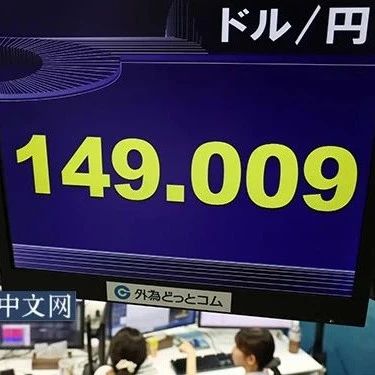
Core Viewpoint - The article discusses the potential depreciation of the Japanese yen and the U.S. dollar due to economic concerns, highlighting a shift in market focus from Japan's fiscal issues to the economic outlook of the U.S. [1][4] Group 1: Japanese Yen and U.S. Dollar Dynamics - The recent Japanese Senate election results have led to predictions of significant yen depreciation and further dollar appreciation, yet the forex market remains calm [1][3] - There is a historical correlation between the interest rate differential between Japan and the U.S. and the yen's exchange rate, with a tendency for yen depreciation when the differential widens [3] - Despite the yen weakening to around 149 yen per dollar, market participants predict a stabilization around 140 yen per dollar by year-end, indicating a potential reversal in yen appreciation [3][4] Group 2: Economic Policies and Market Sentiment - Trump's economic policies, including tariffs and tax cuts, may increase domestic inflationary pressures and contribute to concerns about the U.S. economic outlook [4] - Investment funds are shifting from the yen and dollar towards the euro, with the euro seen as a safer option amid signs of recovery in the German economy [4][5] - The Japanese government's recent economic outlook indicates a deterioration for the first time in nearly five years, complicating governance as the ruling party loses majority control [5]

日元暂时回避暴跌,但政局风险仍难消除
日经中文网· 2025-07-21 07:22
Core Viewpoint - The recent defeat of Japan's ruling party in the House of Councillors election has led to a cautious but stable reaction in the yen exchange rate, with market participants remaining vigilant about potential future depreciation due to fiscal expansion and high tariffs from the U.S. [1][3] Group 1: Election Impact on Yen - The ruling coalition of the Liberal Democratic Party and Komeito failed to secure a majority in the House of Councillors, which has raised concerns about the government's ability to pass legislation and budgets without relying on opposition parties [3][4] - Despite the ruling party's loss, the market reaction was relatively calm as the defeat was not as severe as anticipated, leading to some short-term buying of yen [3][4] Group 2: Fiscal Policy Concerns - The main opposition party, the Constitutional Democratic Party, has proposed expanding subsidies and temporarily reducing the food-related tax rate from 8% to 0%, which could lead to increased fiscal spending [3][4] - The likelihood of fiscal expansion is increasing, raising concerns about "malicious interest rate hikes" and potential long-term depreciation of the yen, with forecasts suggesting it could weaken to 150 yen per dollar [4][5] Group 3: Tariff Negotiations and Market Sentiment - Upcoming negotiations regarding a potential 25% tariff on Japanese imports are causing additional anxiety in the market, as Japan may struggle to secure favorable terms [4][5] - The uncertainty surrounding the political landscape and the potential for a no-confidence motion in the minority government could exacerbate market tensions [5]

通胀与贸易战夹击 日元汇率波动加剧
Jin Tou Wang· 2025-07-21 03:04
Group 1 - The core point of the news highlights the decline of the USD/JPY exchange rate, currently trading around 148, influenced by rising inflation in Japan and potential changes in monetary policy by the Bank of Japan [1] - Tokyo's core CPI rose by 3.6% year-on-year, marking a two-year high, which strengthens market expectations for a potential interest rate hike by the Bank of Japan [1] - The U.S. decision to impose a 25% tariff on Japanese goods, particularly automobiles, casts a shadow over Japan's economic outlook, potentially limiting export growth and overall economic performance [1] Group 2 - The USD/JPY has key support levels between 148.00 and 148.70, with a potential drop below 148.70 leading to a retest of earlier upward trends or the 147.54 level [2] - Resistance levels are identified at the 200-day moving average (149.63) and the psychological level of 150.00, with a further target at the March high of 151.30 if momentum continues [2] - Current indicators such as the Relative Strength Index (RSI) and MACD show bullish signals, suggesting a short-term upward momentum, with a recommendation for buying on dips while being cautious of potential overbought conditions near 151.30 [2]
德商银行:日本即将举行的选举可能导致日元贬值
news flash· 2025-07-18 12:27
Core Viewpoint - The upcoming elections in Japan may lead to a depreciation of the yen due to potential loss of majority seats by the government and increased uncertainty in fiscal policy [1] Group 1: Election Impact - The Japanese government faces the risk of losing its majority in the upcoming Sunday Senate elections, which could be a turning point for the country [1] - There is a possibility of new elections in the House of Representatives, further complicating the political landscape [1] Group 2: Economic Consequences - Increased uncertainty in fiscal policy may hinder trade negotiations with the United States, which is expected to weaken the yen [1] - Even without changes, if the government introduces new fiscal measures in response to the election results but fails to address structural issues, the yen may still decline [1]
选举焦虑叠加财政隐忧,日元面临多重压力,关键点位150恐难守
智通财经网· 2025-07-17 07:12
Group 1 - The Japanese yen may weaken further if Prime Minister Shigeru Ishiba's ruling coalition loses its majority in the upcoming Senate elections, with currency strategists preparing for this scenario [1][2] - Polls indicate that the ruling coalition led by the Liberal Democratic Party (LDP) may not secure enough seats to maintain a majority, leading to increased government spending commitments [1][3] - The yield on Japanese government bonds has risen to multi-year highs due to fiscal concerns, while election anxiety has pressured the yen, which recently fell to its lowest level since April [1][2] Group 2 - If the ruling coalition loses a significant number of seats, the yen could depreciate to 155 yen per dollar, a level not seen since February [2][3] - Analysts suggest that the rapid depreciation of the yen may lead to a loss of confidence in the currency and interest rates, with the 150 yen per dollar level acting more as a speed bump than a resistance level [3] - The outcome of the elections and subsequent trade negotiations with the U.S. will significantly influence the yen's future, with potential for appreciation if the ruling coalition performs better than expected [3]
日元一度贬值至149,3个月来最低
日经中文网· 2025-07-16 03:16
Group 1 - The uncertainty surrounding the ruling party's ability to secure a majority in the upcoming July 20 Senate elections has led to selling pressure on the yen [1] - The yen's exchange rate against the dollar fell to the 149 yen range for the first time in three months, indicating market concerns about the ruling party's potential loss of majority [1] - A survey conducted by the Nikkei on July 13-15 revealed that the ruling coalition's ability to secure the necessary 50 seats has become precarious, raising fears of increased government debt if they need to cooperate with opposition parties advocating for expansionary fiscal policies [1] Group 2 - The U.S. Labor Department reported a 2.7% year-on-year increase in the Consumer Price Index (CPI) for June, up from 2.4% in May, which has cooled expectations for an early interest rate cut by the Federal Reserve [2] - The confirmation of accelerating inflation has contributed to a stronger dollar against various currencies, further exacerbating the selling pressure on the yen [2]
日元对主要货币“一家独输”
日经中文网· 2025-07-15 07:03
Group 1 - The core viewpoint of the article highlights the significant depreciation of the Japanese yen against major currencies, particularly the US dollar, due to new tariffs imposed by the US government and concerns over Japan's economic slowdown [1][3][5] - The yen's depreciation against the Swiss franc reached a historical low, while it also fell to a one-year low against the euro, indicating widespread selling pressure on the yen [1][3] - The new tariff rate announced by Trump, which is set to take effect on August 1, is expected to have a severe impact on Japan's economy, with predictions of a GDP decline of up to 1% [5][6] Group 2 - The market sentiment is increasingly pessimistic regarding Japan's economic prospects, with expectations that the Bank of Japan will not raise interest rates in the near term due to ongoing economic concerns [5][6] - Speculative positions in the yen have decreased significantly, indicating a reduction in bullish sentiment towards the currency [5][6] - The upcoming US consumer price index (CPI) data release on July 15 is anticipated to influence market perceptions of inflation and interest rate expectations, potentially leading to further yen depreciation [6][8] Group 3 - Japanese companies are forecasting an average exchange rate of 143 yen per dollar for the fiscal year 2025, suggesting a potential appreciation of the yen if current trends continue [7] - However, the depreciation of the yen could lead to increased import prices, negatively impacting consumer spending and overall economic conditions in Japan [8]
【BCR研究精选】日元走软背后的推手:高企能源成本与迟缓政策节奏
Sou Hu Cai Jing· 2025-07-04 02:18
Group 1 - The core viewpoint is that rising energy costs are the primary driver of the recent depreciation of the Japanese yen, which has been further exacerbated by inflationary pressures and market uncertainties [2][3][6] - Japan's reliance on imported oil has led to increased foreign exchange demand, weakening the yen's market liquidity, and contributing to a widening trade deficit [3][6] - The market anticipates potential adjustments to Japan's negative interest rate policy due to rising corporate goods prices, which could provide some support for the yen in the medium term [4][6] Group 2 - There is a growing contradiction between policy interventions and market expectations, as public criticism from U.S. officials regarding the yen's exchange rate has heightened vigilance within the Japanese government [5][6] - The interplay between rising energy import costs and expectations of a policy shift creates a complex environment for the yen, which is likely to face continued pressure in the short term [6]

日本央行新管委Kazuyuki Masu:日元(走势)总是同时存在上行和下行影响因素。很多公司从日元贬值中受益。我的立场既非鹰派也非鸽派。
news flash· 2025-07-01 08:33
Core Viewpoint - The new Bank of Japan Governor Kazuyuki Masu indicates that the yen's movement is influenced by both upward and downward factors, suggesting a complex economic environment for companies [1] Group 1: Impact on Companies - Many companies benefit from the depreciation of the yen, highlighting a potential opportunity for growth in certain sectors [1] Group 2: Monetary Policy Stance - The stance of the new governor is neither hawkish nor dovish, indicating a balanced approach to monetary policy that may affect market expectations and investment strategies [1]
没有人能拦得住不停上涨的日本物价了……
Sou Hu Cai Jing· 2025-06-30 17:20
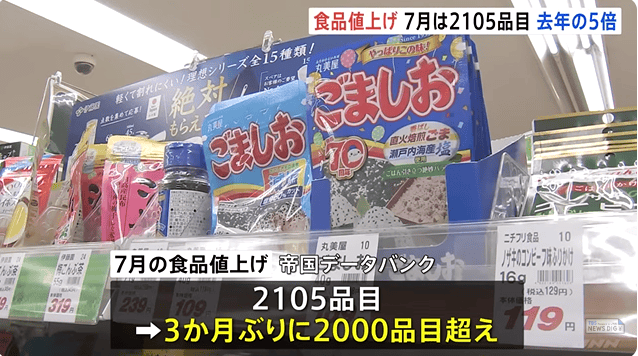
Core Viewpoint - Japan is experiencing a significant price increase in various consumer goods, with 2,105 items set to rise in price in July, marking a fivefold increase compared to the same period last year [1][3]. Price Increase Details - The majority of the price hikes are in seasonings, with 1,445 items affected, followed by beverages like coffee (206 items), snacks such as chocolate and gum (196 items), and processed foods like packaged rice (117 items) [5]. - The primary reasons for these price increases are rising raw material costs and increased production costs due to higher energy prices [9]. Historical Context - Japan began experiencing price increases in 2022, breaking a 40-year trend of stable prices, influenced by global instability, yen depreciation, and rising costs of electricity and grains [11]. - The price index for various food items has significantly increased from 1994 to 2023, with items like chicken eggs rising by approximately 92% and pork by about 65% [12]. Food Supply and Import Dependency - Japan's food self-sufficiency rate is low at 38%, the lowest among G7 countries, meaning 62% of its food supply relies on imports, which becomes more expensive with yen depreciation [17]. - In 2024, Japan is expected to face rice shortages, with rice prices in the Tokyo market increasing by 93.2% year-on-year [13]. Wage Trends - Despite rising prices, many large companies have increased starting salaries for new graduates significantly, sometimes exceeding the salaries of employees with ten years of experience [19].