自主创新

Search documents
一家企业“虹吸”一条产业链昆山布局基础设施“算”出区域高地
Xin Hua Ri Bao· 2025-12-11 23:12
Core Viewpoint - The rapid development of Zhongke Controllable Information Industry Co., Ltd. in Kunshan highlights the significant advancements in the domestic advanced computing industry, showcasing high automation and production capacity in server manufacturing. Group 1: Company Development - Zhongke Controllable has achieved a production capacity of 500,000 high-end server units annually, with plans to double this to 1 million units, resulting in an expected additional output value of 20 billion yuan [1] - The company has reached a 95% automation rate in its production line, with a 100% localization rate for servers and electronic components, marking it as a leader in domestic intelligent manufacturing [1] Group 2: Industry Ecosystem - The establishment of a 6 square kilometer advanced computing industrial park in Kunshan has attracted numerous enterprises, creating a complete industrial chain from design to manufacturing and testing [2] - The revenue of enterprises within this innovation cluster has reached 35 billion yuan, indicating a robust economic impact [2] Group 3: Technological Advancements - The focus on autonomous and controllable core technologies, particularly in chip development, is crucial for establishing a secure technological foundation in the competitive landscape of intelligent computing [2] - Companies like Zhongke Jing Shang are shifting their business focus from 5G to AI, reflecting the industry's adaptation to emerging technological trends [3] Group 4: Regional Development - Kunshan is positioning itself as a regional hub for computing power, with several computing centers, including the Bohao Intelligent Computing Center, which will achieve a computing power scale of 5000 PFlops [3] - The integration of autonomous innovation and ecosystem development has propelled Kunshan from a follower to a competitor in the advanced computing industry [4]
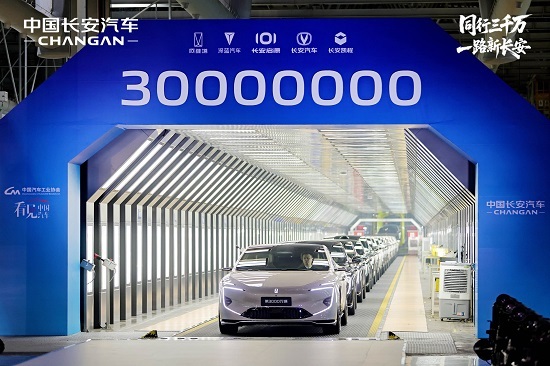
将安全刻进品牌基因,中国长安第3000万辆中国品牌汽车下线
Zhong Guo Jing Ji Wang· 2025-12-11 07:41
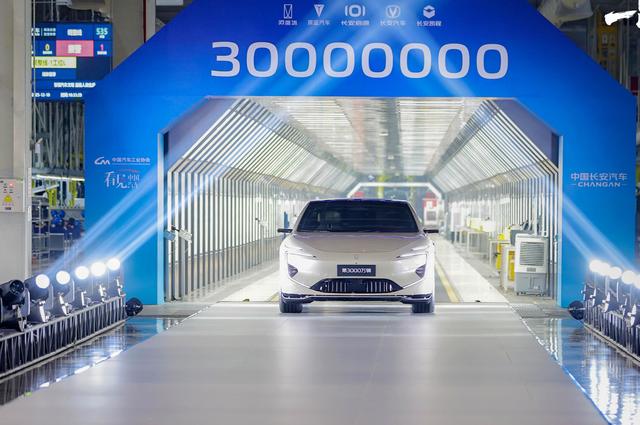
Core Insights - China Changan Automobile Group has achieved a significant milestone by producing its 30 millionth vehicle, marking it as the fastest automotive company to reach this achievement in China [1][3][6] - The accomplishment reflects China's transition from a major automotive nation to a strong automotive power, emphasizing the importance of independent innovation and core technology development in the automotive industry [3][6] Milestone Achievement - The 30 millionth vehicle, an Avita 12 laser version, rolled off the production line on December 10, 2023, at the Chongqing Avita Smart Factory [1] - The timeline for reaching milestones has significantly shortened: it took 30 years to produce the first 10 million vehicles, 7 years for the second, and only 4.5 years for the third [3] Future Goals - By 2030, Changan aims to achieve an annual production and sales volume of 5 million vehicles, with over 60% being new energy vehicles and over 30% from overseas markets [3][18] - The company is committed to transforming into a smart low-carbon travel technology company, focusing on three major plans: "Shangri-La" for new energy, "Beidou Tianshu" for intelligence, and "Haina Baichuan" for globalization [18][19] Innovation and Safety - Changan emphasizes safety as a core value, integrating it into its brand DNA through rigorous testing and advanced safety protocols [10][11] - The company invests 5% of its annual revenue into research and development, establishing a global R&D network with over 24,000 personnel across 31 countries [13] Competitive Edge - Changan's success is supported by five core competitive strengths: technology, products, marketing, service, and brand [14] - The company has formed partnerships with over 50 global enterprises, enhancing its industry network and collaborative capabilities [16] Brand Development - Changan has developed a diverse brand matrix, including Avita, which has maintained sales exceeding 10,000 units for nine consecutive months, and Deep Blue, which has attracted over 700,000 young global users [16] - The company aims to sell over 1 million new energy vehicles by 2025, leveraging its brand synergy [16]


亲手斩断美国锁喉之手!特朗普主动送大礼,助力中国军事发展
Sou Hu Cai Jing· 2025-12-11 07:23
Group 1: Trade Policy and Tariffs - The U.S. Supreme Court may rule on the legality of tariffs imposed by the Trump administration under Section 232 of the Trade Expansion Act of 1962, which could lead to the collapse of a tariff system worth hundreds of billions of dollars if deemed unlawful [1] - Trump expressed concerns that an unfavorable ruling could threaten U.S. finances and highlighted that Europe is seeking to impose tariffs on China, suggesting that the U.S. should not follow suit [1] Group 2: Semiconductor Exports to China - Trump approved NVIDIA's export of high-end AI chips (H200) to China, which has sparked significant debate, with NVIDIA's stock rising by 1.2% following the announcement [3] - The decision faced criticism from Democratic lawmakers who argue that the H200 chip could enhance China's military capabilities and AI development, while many Republican lawmakers supported the move as a means to improve U.S.-China relations [3] Group 3: China's Strategic Position - China maintains a strategic focus on self-reliance and the stability of global supply chains, emphasizing that it will not alter its long-term innovation strategy due to U.S. policy changes [5] - The U.S. attempts to maintain economic dominance through tariffs while struggling with the repercussions of decoupling from the Chinese market, indicating a complex relationship where the U.S. fears accelerating China's self-sufficiency [5] Group 4: Shift in U.S. Policy Towards China - Trump's approach to China is evolving from viewing it as a primary strategic threat to recognizing it as a long-term economic competitor, indicating a shift towards limited cooperation to alleviate economic pressures [6] - This change is reflected in U.S. strategies regarding Taiwan and Japan, focusing on crisis management and dialogue to avoid miscalculations, moving from aggressive competition to risk management in sensitive areas [6]


最快达成!中国长安第3000万辆中国品牌汽车下线
Huan Qiu Wang· 2025-12-11 01:24
Core Insights - China Changan has achieved the milestone of producing its 30 millionth vehicle, becoming the fastest Chinese brand to reach this figure, taking just over four years from 20 million to 30 million [1][3] - The company emphasizes that its success is rooted in independent innovation and the development of key core technologies, which are essential for the high-quality growth of China's automotive industry [3] Group 1: Production Milestones - The first 10 million vehicles were produced in 30 years, the second 10 million in 7 years, and the third 10 million is projected to be achieved in just 4.5 years [3] - Changan has undergone three entrepreneurial phases over its 41-year history, consistently focusing on technology-driven innovation [3] Group 2: Research and Development - Changan has established a global R&D network with over 24,000 personnel from 31 countries, and has built more than 200 laboratories across 16 major fields [3] - In the past three years, the company has filed over 14,000 patents, averaging 19 new patents daily, leading to significant technological advancements [3] Group 3: Strategic Partnerships - Changan has formed strategic partnerships with over 50 global companies, including Huawei and CATL, and collaborates with 40 universities and 11 research institutions [3] Group 4: Brand Development and Sales - The company has developed a matrix of five brands, with notable sales achievements such as Avita maintaining over 10,000 units sold for nine consecutive months and Deep Blue being the top-selling NEV among state-owned enterprises [5] - Changan aims to sell over 1 million NEVs by 2025, leveraging the strength of its five brands and the launch of new products [5] Group 5: Future Strategy - Changan has outlined a strategic blueprint focusing on three main plans: "Shangri-La" for new energy, "Beidou Tianshu" for intelligence, and "Haina Baichuan" for globalization [5] - The company targets to achieve a total production and sales volume of 5 million vehicles by 2030, with over 60% being new energy vehicles and over 30% from overseas markets [5]
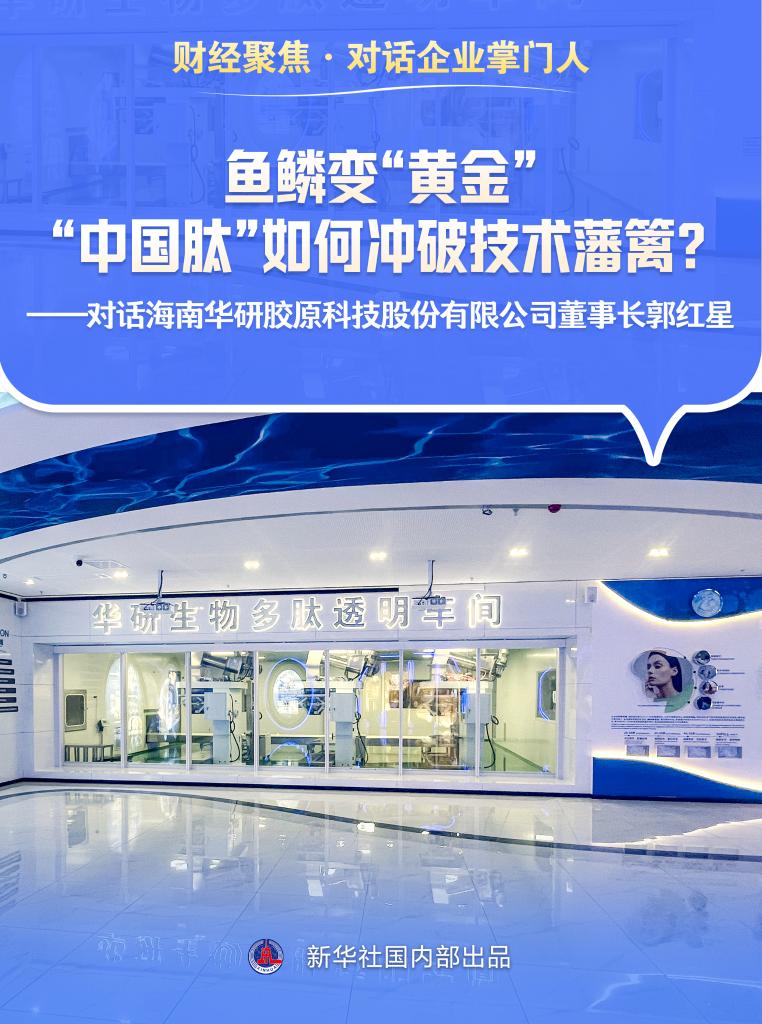
财经聚焦·对话企业掌门人丨鱼鳞变“黄金”,“中国肽”如何冲破技术藩篱?——对话海南华研胶原科技股份有限公司董事长郭红星
Xin Hua Wang· 2025-12-10 11:39
Core Viewpoint - Hainan Huayan Collagen Technology Co., Ltd. has made significant strides in its global expansion by partnering with Thai Wan Sheng Group to invest in a marine collagen peptide factory in Thailand, emphasizing its commitment to independent innovation in the biopetide industry [2] Group 1: Company Overview and Innovations - Hainan Huayan is recognized as a national high-tech enterprise focusing on the biopetide industry, aiming to break through technological barriers and achieve deep integration of technology and industry [2][3] - The company has developed a range of innovative products, including the first domestic collagen tripeptide and elastic protein peptide, and has filed nearly 200 patents [6][9] - The firm has established a dual-wheel model of "raw materials + customization" to cater to different market demands, ensuring a strong connection between technology and market needs [9] Group 2: Challenges and Responses - The company faced significant early challenges, including reliance on imported equipment and strict patent barriers, which fueled its determination for independent research and development [3][4] - After two years of research, the company successfully localized fish collagen peptide production in 2007, marking a critical technological breakthrough [4] - The team has developed a mass production technology for cyclic collagen peptides, overcoming the absence of mature international processes [4] Group 3: Strategic Vision and Market Positioning - Hainan Huayan aims to lead the global biopetide market by pushing for high-purity, high-activity products with clinical evidence, while also participating in international standard-setting [10] - The company is expanding its production bases in multiple regions, including Hainan, Henan, Shandong, and Thailand, with products exported to over 50 countries [9][10] - Future strategies include capacity expansion, technological iteration, and brand building, focusing on enzyme engineering and high-value utilization of marine by-products [10][11]
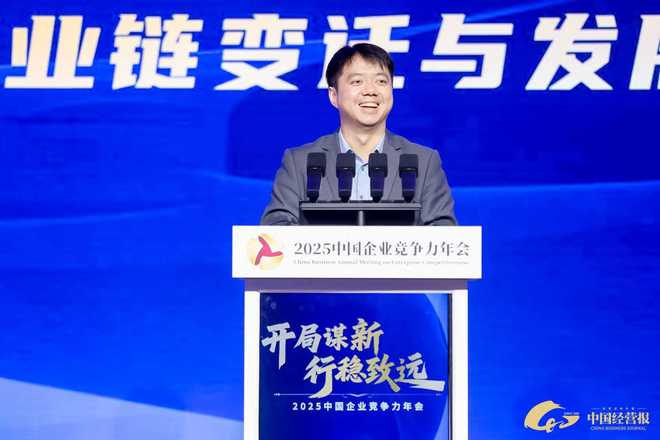
王文:“十五五”时期全球产业链的变迁与发展机遇
Zhong Guo Jing Ying Bao· 2025-12-10 08:13
Core Insights - The ongoing great power competition is profoundly reshaping the global landscape, necessitating companies to focus on risk defense and flexible responses in the short term, while emphasizing independent innovation and global integration in the medium to long term [2][3] Group 1: Global Landscape and Strategic Signals - The U.S.-China competition has entered a prolonged phase, accelerating the profound restructuring of global industrial and value chains [3] - The 20th National Congress of the Communist Party of China has indicated that the development environment during the 14th Five-Year Plan will be complex and uncertain, but China's economic foundation remains strong with significant potential for long-term growth [3] - Three key signals from the Congress include: responding to external uncertainties with internal certainties, leveraging independent innovation to break through competitive barriers, and countering protectionism through openness [3][4] Group 2: Industrial Layout and Global Economic Impact - The 14th Five-Year Plan's industrial layout will significantly impact the global economic structure by promoting supply chain diversification, providing alternative sources of technology, products, and capital beyond traditional Western centers [4] - It will accelerate the democratization of technology, allowing more countries to access advanced technologies at lower costs, while intensifying global competition in cutting-edge fields [4] - The plan aims to establish new paradigms in green and digital sectors, with China's large green industry driving global low-carbon transitions and setting new benchmarks for supply chain efficiency through the integration of digital technology and the real economy [4] Group 3: Corporate Strategies in Response to Great Power Competition - Companies should adapt to the changing landscape by focusing on risk defense and flexible strategies, including establishing backup supply chains for critical sectors, tariff hedging through overseas production, and prioritizing compliance in cross-border mergers and investments [5][6] - In the medium to long term, companies should emphasize independent innovation in key areas such as AI, chips, and new energy, while deepening global operations and promoting Chinese technology standards internationally [6] - The rise of the "Global South" and the increasing influence of regional trade agreements indicate a shift towards a more fragmented but potentially fairer global trade environment [5][6] Group 4: Personal Development and Investment Strategies - Individuals are encouraged to integrate into global value networks, enhance their skills to improve competitiveness, and diversify investments across various asset classes to mitigate risks associated with market volatility [6]
记者观察:松绑H200对华出口难挡国产芯片破局决心
Zhong Guo Jing Ying Bao· 2025-12-10 08:13
中经记者 秦枭 北京报道 "变天了,变天了"!一觉醒来,AI 芯片圈的风向突然反转——特朗普政府批准英伟达向中国出售H200 芯片的消息,瞬间引发热议。不少人第一反应是"利好降临",但剥开表象会发现,这更像是一场精心布 局的战略博弈,特朗普的"一箭三雕"算盘打得响亮,而中国 AI产业的破局之路,早已在自主创新的浪 潮中铺就。 这第一"雕",直指美国国库的"钱袋子"。根据规定,美国政府要从H200的销售收入中抽取25%的分成, 这可不是一笔小数目。参考英伟达2026财年第三财季财报,其中国区(含香港)单季度收入就约30亿美 元,仅这一季度,特朗普政府就能坐收7.5亿美元的"红利"。要知道H200本身毛利率极高,25%的抽成 比例背后,是美国政府对这笔"稳赚不赔的买卖" 的精准算计,既盘活了巨头收入,又充实了财政,何 乐而不为? 第二"雕",是给陷入困境的英伟达"雪中送炭"。自美国出台芯片禁令以来,英伟达与华尔街可谓损失惨 重——中国作为全球重要的AI市场,失去这片阵地让其营收承压,资本市场信心受挫。此时开放H200 的对华出售,无疑是给英伟达送上了一份"救命大礼",既能挽回巨额营收损失,又能稳住华尔街的预 期, ...
德国车企员工下午三点半下班,孔辉科技郭川感慨:很震撼,坚信全球汽车未来在中国
Xin Lang Cai Jing· 2025-12-10 05:56
专题:2025《中国企业家》影响力企业家年会 谈及对未来的思考,郭川表示,孔辉将继续坚持自主创新,技术创新,打造链条化的多领域创新能 力。"一点的创新能力还不足以保持竞争力。" 如何建设研发体系?郭川谈到,针对国内市场,公司要和注重新产品研发的企业来联合。在海外市场, 要从政治环境稳定、消费能力高、员工素质较高、成本低的海外市场切入,加强与国际零部件的合作。 最后,他还提到了自己了经历。"上个月底我去了慕尼黑等五个德国城市,我走访了宝马和奥迪。当地 时间下午三点半左右,我们去BBA当中的一个企业做交流的时候,发现德国车企的员工就开始纷纷下 班了,当时我是很震撼的。由此我觉得,全球的汽车产业的未来应该是我们中国人的。" 12月5日-7日,由《中国企业家》杂志社主办的"2025(第二十三届)《中国企业家》影响力企业家年 会"(原中国企业领袖年会)在北京举行,主题为"涌现·无限——共创智能商业新形态"。孔辉科技董事 长兼CEO郭川出席并演讲。 为何新孔辉创业五年能成为国内的行业龙头?郭川解释到,原因有多方面。外在原因是国家针对新能源 汽车产业的战略很正确,促进中国车企高端向上发展,才有了自主品牌跻身Tier 1的机 ...
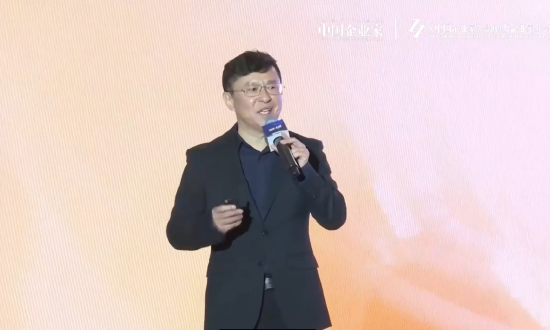
孔辉科技郭川:未来将打造多领域创新能力,单一创新能力不足以保持竞争力
Xin Lang Cai Jing· 2025-12-10 05:56
专题:2025《中国企业家》影响力企业家年会 12月5日-7日,由《中国企业家》杂志社主办的"2025(第二十三届)《中国企业家》影响力企业家年 会"(原中国企业领袖年会)在北京举行,主题为"涌现·无限——共创智能商业新形态"。孔辉科技董事 长兼CEO郭川出席并演讲。 为何新孔辉创业五年能成为国内的行业龙头?郭川解释到,原因有多方面。外在原因是国家针对新能源 汽车产业的战略很正确,促进中国车企高端向上发展,才有了自主品牌跻身Tier 1的机会。内在原因在 于郭院士及其弟子的贡献,团队的技术积累和优秀人才的积淀,以及二次创业的清晰战略,坚持自主创 新,不断反思不断进步。 此外,他指出,除了各方的支持,还有一个重要因素,"就是国外竞争对手当时忽略了中国的国内市 场,没有重视,现在他们反应过来已经来不及了。" 此外,他指出,除了各方的支持,还有一个重要因素,"就是国外竞争对手当时忽略了中国的国内市 场,没有重视,现在他们反应过来已经来不及了。" 如何建设研发体系?郭川谈到,针对国内市场,公司要和注重新产品研发的企业来联合。在海外市场, 要从政治环境稳定、消费能力高、员工素质较高、成本低的海外市场切入,加强与国际零部 ...
“十四五”收官 中国一汽拿下“关键之年”
Zhong Guo Qi Che Bao Wang· 2025-12-10 04:05
Core Insights - The article highlights the significant achievements of China FAW Group (China First Automobile Works) in the automotive industry as it approaches the end of the 14th Five-Year Plan, showcasing its sales growth and strategic advancements in technology and product innovation [1][2][24]. Sales Performance - In November, China FAW sold 306,000 vehicles, with 85,000 from its own brands, and a total of 2.995 million vehicles sold from January to November, marking a 4.8% year-on-year increase [1]. - The Hongqi brand achieved notable success, selling 40,506 units in November, with a 60.8% year-on-year increase in sales of its new energy products [1]. Strategic Development - China FAW is committed to the "SUCCEED (成事) 531" strategic plan, focusing on deep integration into the domestic and international dual circulation development pattern, emphasizing self-innovation, product iteration, digital transformation, and green development [2][24]. - The company aims to transition from "scale expansion" to "quality improvement" in the automotive industry, positioning itself as a leader in the sector [2]. Technological Innovation - China FAW emphasizes self-innovation as a core strategy to overcome international technological barriers, focusing on key areas to build a complete innovation chain [3][6]. - The company has made significant advancements in technology, including the development of the first domestically produced automotive-grade advanced process chip and a hydrogen engine with a thermal efficiency exceeding 55% [4][6]. Collaborative Ecosystem - China FAW has established a global R&D network with a "1+12+X" model, enhancing collaboration with universities and research institutions to foster innovation [5][23]. - The company has engaged in partnerships to develop core components and technologies, contributing to a collaborative innovation ecosystem [23]. Product Development - During the 14th Five-Year Plan, China FAW has expanded its product matrix across various segments, including passenger and commercial vehicles, to meet changing consumer demands [7][27]. - The Hongqi brand is set to achieve significant sales milestones, with plans to sell over 400,000 units in 2024 and expand its presence in the European market with new electric models [11][17]. International Expansion - China FAW actively participates in the "Belt and Road" initiative, with overseas operations covering over 100 countries and regions, enhancing its global supply chain [17][29]. - The company has successfully launched the "Changchun-Manzhouli-Europe" international freight train service, improving delivery times for its products to Europe [19][29]. Sustainable Development - China FAW is committed to green development, implementing strategies to reduce carbon emissions and enhance energy efficiency in its manufacturing processes [22][28]. - The company has integrated low-carbon practices into its operations, with several factories recognized as national green factories [22][28].