
AI营销

Search documents
看完再入局GEO:用AI营销薅友商羊毛?法院判了!
2 1 Shi Ji Jing Ji Bao Dao· 2025-12-31 08:12
Core Viewpoint - A recent court ruling determined that a company engaged in unfair competition by using AI to generate misleading content aimed at diverting traffic from a competitor's website [1][3]. Group 1: Case Details - The defendant company produced over ten thousand AI-generated articles that superficially reviewed the plaintiff's products while embedding advertisements for its own products [1][2]. - The court ruled that the defendant must cease its unfair competition practices and compensate the plaintiff for damages incurred [3]. Group 2: Legal and Market Implications - The judge identified three key points: the articles lacked genuine user experience, the defendant exploited the plaintiff's brand recognition, and the practice contributed to data pollution by increasing the volume of low-quality information available [3]. - This case serves as a warning to SEO and GEO service providers, indicating that traditional strategies of content flooding are no longer viable in the AI era [3][4]. - The GEO market in China is projected to grow from 2.1 billion yuan this year to 24.2 billion yuan by 2027, surpassing the SEO market size [3]. Group 3: Future Considerations - Companies leveraging AI for marketing must continuously optimize their content production methods to avoid disrupting market order and infringing on competitors' traffic [4]. - The advancement of AI does not exempt companies from legal accountability; innovation must operate within the framework of the law [5].
利欧股份:利欧数字再次参与牵头AI营销新标准立项 持续引领行业发展
Zheng Quan Shi Bao Wang· 2025-12-31 07:09
Core Insights - The recent meetings held by the China Communications Standards Association (CCSA) and the China Advertising Association (CAA) resulted in the approval of two new standard projects, including the Model Context Protocol (MCP) for programmatic advertising, which aims to enhance standardization and intelligence in the advertising industry [2][3] Group 1: Standardization and Security - The MCP standard addresses industry pain points such as chaotic permission allocation and lack of security verification in programmatic advertising, which can lead to risks like data leakage and parameter tampering [3] - The standard establishes a three-tier control system for permissions, requiring OAuth 2.0 digital signature authentication and operation log retention, thereby filling a gap in security standards for programmatic advertising tools [3] Group 2: AI Integration and Innovation - The implementation of the "Guidelines for Metadata Management of Creative Materials Based on Generative AI" in January 2025 marks the first recommended standard for AI in advertising creative material management, laying the groundwork for large-scale AI applications in internet advertising [4] - In April 2025, the company will launch the first MCP service, providing standardized system integration capabilities for AI models and agents, enhancing collaboration in programmatic advertising [4] Group 3: Market Position and Strategy - The company has positioned itself as a leading AI-driven digital marketing group, restructuring the entire marketing chain into a matrix of dedicated intelligent agents, thus creating a closed loop from models to tool services [5] - The company has become a core agent for major media platforms and has expanded its service reach to small and medium clients on new media platforms, improving service accessibility and profit structure [6] Group 4: Future Directions - The establishment of the MCP service endpoint security standard represents a significant milestone in the company's efforts to drive intelligent transformation in the marketing industry [6] - The company plans to continue participating in the advertising joint working group to enhance AI marketing standards and address important issues such as privacy protection and compliance governance [6]


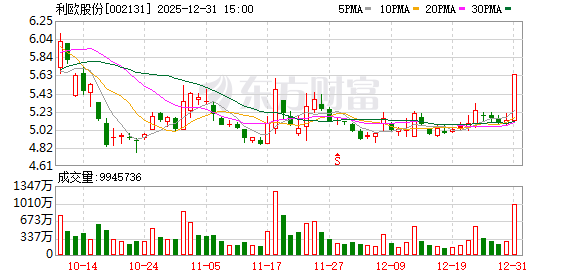
蓝色光标暴涨20%!AI智能体风口引爆,赴港上市叠加Meta收购催化
Jin Rong Jie· 2025-12-31 06:11
Group 1 - The stock of BlueFocus has increased by 20.00%, reaching a price of 11.52 yuan and a total market capitalization of 41.359 billion yuan, with a trading volume of 10.32 billion yuan and a turnover rate of 27.44% [1] - Market speculation is focused on BlueFocus's business layout in the AI agent field and the progress of AI marketing scenarios, alongside the overall catalytic effect of the AI agent sector and the company's related dynamics regarding its listing in Hong Kong [1] - On December 30, BlueFocus submitted its listing application to the Hong Kong Stock Exchange, with joint sponsors including Huatai International, Guotai Junan International, and Huaxing Capital [1] Group 2 - BlueFocus has launched an AI application engine called Blue AI, specifically designed for the marketing industry, which has incubated multiple AI agents that can be implemented in real-world scenarios, showing significant progress in AI-driven business [1] - The commercialization process of AI marketing is accelerating, providing development opportunities for companies in this field, with BlueFocus deepening its global layout in cross-border marketing and possessing strong competitive advantages [1]

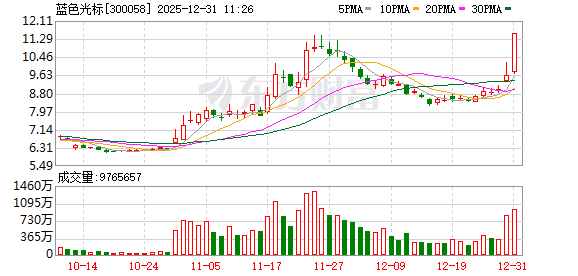
蓝色光标20cm涨停创10年新高,成交超104亿
Cai Jing Wang· 2025-12-31 04:01
Core Viewpoint - BlueFocus, a leading AI marketing company, has reached a 20% limit-up, marking a new high since November 2015, with a total market value exceeding 40 billion and a trading volume surpassing 10.4 billion [1] Company Summary - On December 30, BlueFocus submitted a listing application to the Hong Kong Stock Exchange [1] - According to Frost & Sullivan, BlueFocus is the largest marketing company in China based on projected 2024 revenue and is the only Chinese company among the top ten global marketing communication firms, ranking tenth [1]

蓝色光标20%涨停,成交超104亿元
Mei Ri Jing Ji Xin Wen· 2025-12-31 03:25
Group 1 - The core viewpoint of the article highlights that BlueFocus, a leader in AI marketing, has reached a 20% limit-up, marking its highest point since November 2015, with a total market capitalization exceeding 40 billion yuan and a trading volume surpassing 10.4 billion yuan [2]
拼情绪价值、打动年轻人,什么样的品牌更有未来?
Sou Hu Cai Jing· 2025-12-30 13:13
Core Insights - The article discusses the evolving landscape of brand marketing, emphasizing the shift from traditional marketing strategies to more personalized and emotionally resonant approaches. Brands must adapt to fragmented consumer attention and leverage technology, particularly AI, to create meaningful connections with users [2][3][6]. Group 1: Brand Marketing Evolution - Young consumers are increasingly selective, favoring brands that resonate with their personal values rather than those with high market visibility [3]. - Brands need to focus on creating a sense of "human connection" with users, moving beyond mere exposure to genuine engagement [3][5]. - Emotional value is becoming a critical component of consumer decision-making, with brands required to understand and fulfill both functional and emotional needs [5][10]. Group 2: Utilizing Technology and AI - AI is seen as a valuable tool for brands, enabling them to break traditional boundaries of creativity and engage users in innovative ways [6]. - Brands like Coca-Cola have successfully utilized AI to analyze global taste trends and involve consumers in product creation, enhancing brand engagement [6]. - The rise of social media and fragmented media consumption presents challenges for brands in delivering effective messaging [6][10]. Group 3: Creating Hit Products - The emergence of hit products is linked to brands' ability to understand and address consumer pain points, as demonstrated by various case studies [8][9]. - Anta's SV brand exemplifies a successful strategy of targeting younger consumers through high-end, trendy products, showcasing the importance of clear positioning in niche markets [8][9]. - Brands must embrace experimentation and innovation in product design and marketing strategies to create high-value offerings that resonate with consumers [9][10]. Group 4: Future Brand Strategies - The market is experiencing significant changes, with a focus on consumer engagement and interaction becoming essential for brand success [10]. - Brands are encouraged to create social currency and meaningful conversations around their products to build long-term value [10]. - The future of brand marketing will involve multi-dimensional, cross-platform strategies that cater to diverse consumer needs and emotional values [10].


2025营销大共识:裸泳者离场,专业主义复利兑现
Sou Hu Cai Jing· 2025-12-30 07:49
Core Insights - The market in 2025 is characterized by a balancing act between contradictions, with a focus on long-term value in advertising and a search for high-quality emotional satisfaction in consumer markets [1] - Consumers exhibit a dual demand, being both rational and emotional, leading to a K-shaped differentiation in consumption patterns [2][5] Group 1: Consumer Behavior - Consumers are increasingly rational yet emotional, leading to a phenomenon of "dual demand" where basic needs are prioritized alongside emotional investments in products [2][4] - The rise of private labels and white brands reflects a shift towards value-driven consumption, while premium products that evoke emotional connections continue to thrive [1][2] - The demand for experiences, whether through live events or instant retail, highlights the importance of emotional satisfaction in consumer choices [15][17] Group 2: Marketing Strategies - The year 2025 marks a turning point for traditional marketing approaches, with a shift away from "old-school" marketing tactics [5][6] - Brands are redefining their narratives, focusing on sustainability and technology to resonate with consumers, moving away from arrogance in marketing [8][11] - Centralized advertising strategies are gaining traction as brands seek to establish a strong presence amidst market uncertainties, with significant increases in advertising spend on brand image [18][20] Group 3: Value Perception - The concept of value-for-money (quality-price ratio) is becoming increasingly nuanced, varying significantly across different consumer segments [12][13] - The focus on quality-price ratio is shifting, with consumers prioritizing convenience and efficiency in their purchasing decisions [13][14] Group 4: Experience Economy - The consumer market is witnessing a resurgence in out-of-home spending, with a reported 8.7% increase in foot traffic in the first half of 2025 [14] - Instant retail is also experiencing explosive growth, driven by the convenience of integrated shopping experiences [15][16] Group 5: AI Integration - The integration of AI in retail and fast-moving consumer goods is becoming prevalent, with 89% of companies actively using or evaluating AI projects [21][22] - AI is transforming marketing practices, with a significant shift towards AI-driven advertising and consumer engagement strategies [22]
2026品牌营销:不投“广告”,投资“生活”
Sou Hu Cai Jing· 2025-12-30 05:59
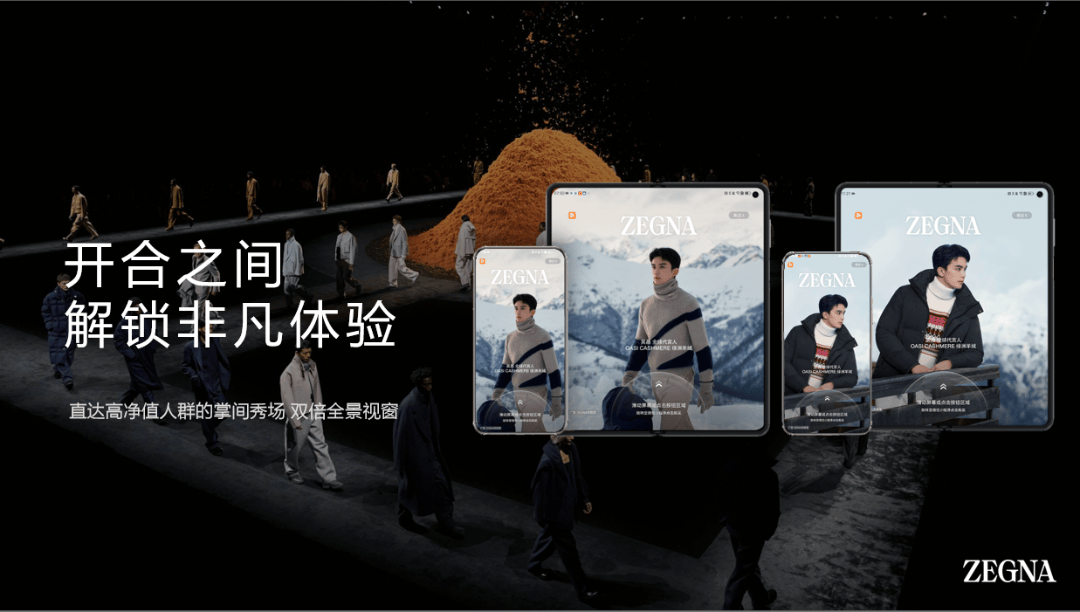
Core Insights - Marketing is undergoing a historic shift from chasing traffic to integrating into consumers' daily lives, as brands face growth anxiety amid a saturated market and changing consumer values [1] Group 1: Trends in Scene Revolution - Trend 1: Multi-Screen Interaction - Brands are creating continuous narratives across multiple screens to maintain user engagement, exemplified by ZEGNA's collaboration with Huawei to enhance user experience through immersive storytelling [2][3] - Trend 2: Content Customization - Brands are focusing on niche communities rather than broad audiences, using tailored content to build trust, as seen with Grab's travel show in China [9][11] - Trend 3: AI with Empathy - AI is being utilized to provide personalized and responsive services, transforming user interactions into meaningful experiences, demonstrated by Abu Dhabi Tourism's smart travel project [13][14] - Trend 4: Ecological Co-Creation - Brands are forming alliances to create a shared narrative ecosystem, as illustrated by the "Scar Advocacy" initiative involving multiple partners to address maternal health issues [17][19] Group 2: Marketing Evolution - The marketing landscape is shifting from disruptive advertising to seamless integration into daily life, emphasizing the importance of understanding consumer needs and emotions across various contexts [22][23] - Brands must enhance their internal value propositions while leveraging external partnerships to navigate the evolving marketing environment effectively [22][23]
从“广撒网”到“效果涌现”:百度AI营销2025攻坚之路
Zhong Guo Jing Ying Bao· 2025-12-29 08:13
Core Insights - Baidu held a significant AI marketing year-end communication meeting, revealing strategic advancements in AI-driven marketing amidst a challenging external environment and slowing internet advertising growth [1] - The company emphasized the need for a fundamental restructuring of its marketing system to meet evolving user demands, moving from traditional advertising methods to AI-enhanced solutions [1][2] Group 1: AI Marketing Evolution - Baidu's AI marketing team has transitioned from "frontier exploration" to "effect emergence," focusing on integrating large model capabilities into commercial products [1] - The introduction of the "New Search" feature allows users to receive structured summaries and interact with AI sales agents, enhancing user experience and conversion rates [2][3] Group 2: Comprehensive Marketing System - Baidu has developed an AI marketing system centered around "New Search, New Infrastructure, and New System," which includes various interconnected products designed to improve efficiency for B2B clients [3] - The system enables small business owners to set budgets and goals, automatically generating marketing materials and managing inquiries through AI [3][4] Group 3: Cost Reduction and Efficiency Gains - The AI sales agent has become a standard tool for businesses, significantly increasing customer engagement and lead generation, with daily service numbers reaching 33,000 [4][5] - The "Steering Wheel" platform utilizes AIGC technology to enhance video content production efficiency, generating over 1 million marketing materials daily [5][6] Group 4: Financial Performance and Future Outlook - Baidu's AI native marketing service revenue reached 2.8 billion yuan, marking a 262% year-on-year increase, indicating a successful transition from technical feasibility to commercial viability [6] - The company recognizes ongoing challenges, including the need for continuous optimization of large models and balancing the needs of large and small clients [6] - Looking ahead to 2026, Baidu aims to shift its focus from efficiency improvement to comprehensive business management, exploring dynamic communication strategies based on user profiles [6]

百度AI营销实现规模化实效落地 商家智能体日均服务超3.3万客户
Zheng Quan Ri Bao Wang· 2025-12-29 07:49
Core Insights - By 2025, AI marketing has transitioned from concept to practical application, becoming a new driving force for enterprise growth, with Baidu's AI native marketing achieving significant revenue growth [1] - Baidu's AI native marketing service revenue reached 2.8 billion yuan, a year-on-year increase of 262%, indicating strong market acceptance of AI marketing tools [1] - The new search feature transforms advertising into a native service entry, addressing user intent more effectively and reducing traditional keyword ad reliance [1][2] Group 1: AI Marketing Growth - Baidu's AI marketing capabilities now cover over 30 primary industries, demonstrating its scalability and effectiveness [1] - The company emphasizes continuous product iteration and deepening capabilities, with client investment being a direct measure of effectiveness [1] Group 2: New Search Product - The new search product has significantly improved user engagement, with daily exposure increasing by 26% and click-through rates rising by 59% for clients like China Oriental Education [2] - This product dynamically assembles content based on user intent, providing tailored responses without requiring users to navigate away from the search page [2] Group 3: Merchant Intelligent Agents - Merchant intelligent agents have become standard for small and medium enterprises, serving an average of 33,000 customers daily and acting as an "AI sales team" [3] - These agents utilize vertical capabilities to provide specialized responses based on industry-specific knowledge, enhancing user engagement and conversion rates [3] Group 4: Comprehensive AI Marketing Ecosystem - Baidu's AI marketing has developed a full-chain system covering content generation, user engagement, conversion, and management, enhancing overall return on investment for clients [3] - The company focuses on practical innovation, validating each feature in real customer scenarios for over three months before market launch [4]