AI训练

Search documents
资金动向 | 北水狂买中国人寿超13亿,减仓腾讯近12亿
Ge Long Hui· 2025-08-14 12:08
Group 1 - Southbound funds net bought Hong Kong stocks worth 1.034 billion HKD on August 14 [1] - Major net purchases included China Life Insurance (1.353 billion HKD), Alibaba-W (455 million HKD), Li Auto-W (352 million HKD), and others [1] - Xiaomi has seen continuous net buying from southbound funds for six consecutive days, totaling 3.37216 billion HKD [3] Group 2 - Tencent Holdings experienced a net sell-off of 1.197 billion HKD, while Meituan-W saw a net sell of 386 million HKD [2] - Tencent's stock slightly increased by 0.68%, reaching a peak of 600 HKD, with the company indicating sufficient chip supply for AI training [3] - Alibaba's stock declined by 1.54%, following the restructuring of its internal organization, merging Feizhu and Ele.me into its China e-commerce segment [3]

增长迅猛如火箭!网络业务成英伟达(NVDA.US)AI芯片霸主地位隐形支柱
智通财经网· 2025-08-11 02:41
Core Viewpoint - The focus of investors on NVIDIA's Q2 earnings report will be on its data center business, which is crucial for revenue generation through high-performance AI processors [1] Group 1: Data Center Business - NVIDIA's data center segment generated $115.1 billion in revenue last fiscal year, with the network business contributing $12.9 billion, surpassing the gaming segment's revenue of $11.3 billion [1] - In Q1, the network business contributed $4.9 billion to the data center revenue of $39.1 billion, indicating strong growth potential as AI computing power expands [2] Group 2: Network Technology - NVIDIA's network products, including NVLink, InfiniBand, and Ethernet solutions, are essential for connecting chips and servers within data centers, enabling efficient AI application performance [1][2] - The three types of networks—NVLink for intra-server communication, InfiniBand for inter-server connections, and Ethernet for storage and system management—are critical for building large-scale AI systems [3] Group 3: Importance of Network Business - The network business is considered one of the most undervalued parts of NVIDIA's operations, with its growth rate described as "rocket-like" despite only accounting for 11% of total revenue [2] - Without the network business, NVIDIA's ability to meet customer expectations for computing power would be significantly compromised [3] Group 4: AI Model Development - As enterprises develop larger AI models, the need for synchronized GPU performance is increasing, particularly during the inference phase, which demands higher data center system performance [4] - The misconception that inference is simple has been challenged, as it is becoming increasingly complex and similar to training, highlighting the importance of network technologies [5] Group 5: Competitive Landscape - Competitors like AMD, Amazon, Google, and Microsoft are developing their own AI chips and network technologies, posing a challenge to NVIDIA's market position [5] - Despite the competition, NVIDIA is expected to maintain its lead as demand for its chips continues to grow among tech giants, research institutions, and enterprises [5]

神州数码涨3.09%,成交额21.13亿元,近5日主力净流入2.20亿
Xin Lang Cai Jing· 2025-08-06 07:32
Core Viewpoint - The company, Digital China, has shown significant growth in its stock performance and has been recognized for its advancements in AI and cloud services, indicating a strong position in the IT services industry. Company Performance - On August 6, Digital China’s stock rose by 3.09%, with a trading volume of 2.113 billion yuan and a turnover rate of 8.76%, bringing its total market capitalization to 29.176 billion yuan [1] - For the first quarter of 2025, Digital China reported a revenue of 31.778 billion yuan, representing a year-on-year growth of 8.56%, while the net profit attributable to shareholders decreased by 7.51% to 217 million yuan [8] Industry Recognition - Digital China was listed in IDC's "2024 Q2 Generative AI Ecosystem Map" and received the "2024 China AI Platform Layer Innovation Enterprise" award, showcasing its leadership in AI solutions [2] - The company has achieved multiple certifications and partnerships, including being the only domestic company to hold the highest-level partnership status with AWS, Azure, and Alibaba Cloud, as well as being a strategic partner with Huawei [3] Product Development - The company is currently developing liquid cooling cabinet products, focusing on the cold plate solution, which is suitable for various data center scenarios [2] - Digital China has completed three investment and acquisition projects in 2023, enhancing its business layout in the network security sector [3] Shareholder Information - As of July 31, Digital China had 139,300 shareholders, a decrease of 6.20% from the previous period, with an average of 4,266 circulating shares per person, an increase of 6.60% [8] - The company has distributed a total of 1.388 billion yuan in dividends since its A-share listing, with 771 million yuan distributed over the past three years [8]

北美AI军备竞争2
2025-07-29 02:10
Summary of Conference Call Notes Industry Overview - The conference call discusses the North American AI industry, particularly focusing on the transition from AI training to AI inference, which has led to a surge in computing power demand [1][3][4]. Key Points and Arguments - **Capital Expenditure Growth**: Google reported a capital expenditure (CAPEX) of $22.4 billion in Q2 2025, a nearly 70% year-over-year increase, significantly exceeding Wall Street expectations [1][5]. Meta is also aggressively expanding its data center capabilities [1][5]. - **ASIC's Rising Importance**: The share of ASIC (Application-Specific Integrated Circuit) in the AI industry is expected to increase from 13% in 2025 to 18% in 2026 in terms of FLOPS (floating-point operations per second) and from 6% to 8% in CAPEX [1][6]. ASIC is becoming a critical tool for cloud providers to achieve a sustainable business cycle [1][6]. - **Cost Efficiency of ASIC**: The cost of ASIC per FLOPS is significantly lower than that of GPUs (Graphics Processing Units), estimated to be about 50% to 33% of GPU costs [1][9]. This cost advantage is crucial for the profitability of AI inference operations [1][12]. - **Market Dynamics**: The semiconductor market is projected to reach $60 billion to $90 billion, with ASIC's market share expected to surpass that of GPUs by 2027 or 2028 [1][7]. The value of optical modules and PCBs (Printed Circuit Boards) associated with ASIC is approximately four times that of GPUs [1][9]. - **Competitive Landscape**: Chinese optical module manufacturers have a competitive pricing advantage, achieving gross margins of 40%-50% and net margins of 30%-40%, while U.S. companies struggle to maintain profitability amid price wars [1][13]. The core bottleneck in the supply chain lies in upstream material resources [1][13]. Additional Important Insights - **AI Cluster Network Development**: The demand for high-performance AI clusters is expected to grow, maintaining a significant bandwidth level and performance gap between ASIC and GPU [1][10]. The cost structure for network components is shifting, with a notable increase in the proportion of spending on optical modules and PCBs [1][11]. - **Future Trends in AI Industry**: The AI industry, particularly the optical module sector, is anticipated to continue its strong growth trajectory. Leading companies are expected to challenge valuations around 20 times earnings, driven by increased CAPEX from cloud service providers and the release of key models like GPT-5 [1][14]. This summary encapsulates the critical insights from the conference call, highlighting the evolving dynamics within the North American AI industry and the implications for investment opportunities.
AMD:推理之王
美股研究社· 2025-07-25 12:13
Core Viewpoint - AMD's stock performance has lagged behind major indices like the S&P 500 and Nasdaq 100 due to previous overvaluation, but the upcoming MI400 series GPU, set to launch in 2026, is expected to significantly change the landscape by capturing the growing demand for inference and narrowing the technological gap with Nvidia [1][3]. Group 1: Market Position and Growth Potential - AMD's market capitalization is approximately $255 billion, significantly lower than Nvidia's $4.1 trillion, indicating a potential undervaluation given the narrowing technological gap [1]. - The global AI infrastructure investment could reach $7 trillion by 2030, with inference being a critical need, positioning AMD favorably in this market [3]. - AMD anticipates a total addressable market (TAM) of $500 billion by 2028, with inference expected to capture a larger share [4][15]. Group 2: Product Advancements - The MI355X GPU, released in June 2025, is seen as a game-changer in the GPU market, with significant advantages in memory capacity and bandwidth, crucial for AI inference [8][10]. - The MI400 GPU will feature a memory capacity increase from 288GB to 432GB and bandwidth enhancement from 8TB/s to 19.6TB/s, showcasing substantial technological advancements [12]. - AMD's Helios AI rack system integrates its own CPU, GPU, and software, enhancing deployment efficiency and directly competing with Nvidia's systems [13]. Group 3: Financial Performance - In Q1 2025, AMD's data center revenue grew by 57% year-over-year, while client and gaming revenue increased by 28%, indicating strong market demand [26][27]. - AMD's expected price-to-earnings ratio is around 78, higher than most peers, including Nvidia at 42, reflecting investor confidence in future growth [29]. - The company has approved a $6 billion stock buyback, totaling $10 billion, demonstrating confidence in its growth trajectory and commitment to shareholder value [25]. Group 4: Competitive Landscape - AMD has been gradually increasing its CPU market share, projected to reach approximately 39.2% by 2029, as it continues to outperform Intel in various performance metrics [19][24]. - Major clients like Google Cloud are increasingly adopting AMD's EPYC CPUs, further solidifying its position in the cloud computing market [23]. - The competitive edge in inference capabilities could lead to increased demand for AMD's GPUs, especially as companies like Meta explore AI advancements [25].



博通管理层会议:AI推理需求激增,甚至超过当前产能,并未反映在当前预期内
Hua Er Jie Jian Wen· 2025-07-10 08:46
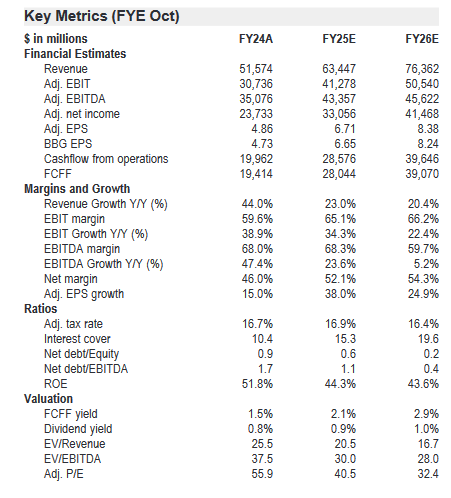
Core Insights - The management of Broadcom has indicated a significant and unexpected increase in demand for AI inference, which is currently exceeding existing production capacity, suggesting potential upward revisions in future profitability [1][2][3] - Non-AI business segments are also showing signs of recovery, particularly through VMware's growth, contributing to a multi-faceted growth strategy for the company [1][4] AI Inference Demand - Broadcom's custom AI XPU chip business remains strong, with a clear growth trajectory. The past year saw AI demand primarily focused on training workloads, but a notable surge in inference demand has been observed in the last two months as clients seek to monetize their AI investments [2][3] - The current inference demand is not included in Broadcom's 2027 market size forecast, which estimates $60-90 billion for three existing AI clients, indicating a potential upside opportunity [3] Technological Advancements - Broadcom is collaborating closely with four potential AI XPU clients, aiming to build 1 million XPU AI cluster infrastructures. The company plans to complete the first generation of AI XPU products for two major clients this year [3] - The company is leading the industry transition to next-generation 2nm 3.5D packaging AI XPU architecture, with plans to complete the 2nm 3.5D AI XPU tape-out this year [3] Non-AI Business Recovery - After several quarters of cyclical pressure in non-AI semiconductor businesses, Broadcom is witnessing a gradual "U"-shaped recovery, reflected in current booking and order situations. This recovery may drive positive EPS revisions next year [4] - VMware is leveraging its cloud infrastructure (VCF) platform to provide comprehensive solutions for large enterprise clients, with expected revenue growth to approximately $20 billion annually by 2026/2027 [4] Profitability and Financial Metrics - Despite potential pressure on gross margins from high demand for custom AI XPUs, Broadcom anticipates continued expansion of operating margins due to operational leverage. AI revenue is expected to grow by 60% year-over-year in fiscal 2026, while operating expenses are not expected to increase at the same rate [5] - Key financial estimates for Broadcom include projected revenues of $51.574 billion for FY24, $63.447 billion for FY25, and $76.362 billion for FY26, with adjusted EPS expected to grow from $4.86 in FY24 to $8.38 in FY26 [6] Market Outlook - JPMorgan maintains an "overweight" rating on Broadcom with a target price of $325, representing a 16.9% upside from the current stock price. Broadcom's stock has risen nearly 20% year-to-date [7]
【马斯克:将于今年晚些时候上线Dojo 2】马斯克表示,Tesla Dojo AI训练计算机正在取得进展。我们将于今年晚些时候上线Dojo 2。一项新技术需要经历三次重大迭代才能走向卓越。Dojo 2已经很好了,但Dojo 3一定会更出色。
news flash· 2025-06-05 18:29
Core Viewpoint - Tesla is making progress with its Dojo AI training computer and plans to launch Dojo 2 later this year, indicating a commitment to advancing AI technology [1] Group 1 - The new technology, Dojo 2, has undergone significant iterations, with the expectation that it will improve further with Dojo 3 [1] - Elon Musk emphasizes that achieving excellence in technology typically requires three major iterations [1] - Dojo 2 is already performing well, setting a positive outlook for its successor, Dojo 3 [1]

昇腾+鲲鹏联手上大招!华为爆改MoE训练,吞吐再飙升20%,内存省70%
华尔街见闻· 2025-06-04 11:01
Core Insights - Huawei has introduced new solutions for MoE training systems, achieving a 20% increase in system throughput and a 70% reduction in memory usage through three core operator optimizations [1][4][33] Group 1: MoE Training System Enhancements - MoE has become a preferred path for tech giants towards more powerful AI [2] - The scaling law indicates that as long as it holds, the parameter scale of large models will continue to expand, enhancing AI intelligence levels [3] - Huawei's previous Adaptive Pipe & EDPB framework improved distributed computing efficiency, and the latest advancements further enhance training operator efficiency and memory utilization [4][5] Group 2: Challenges in MoE Training - MoE model training faces significant challenges, particularly in single-node efficiency [6][7] - Low operator computation efficiency and frequent interruptions due to expert routing mechanisms hinder overall throughput [8][10] - The need for extensive model parameters leads to memory constraints, risking out-of-memory (OOM) errors during training [11][13][14] Group 3: Solutions Proposed by Huawei - Huawei has proposed a comprehensive solution to address the challenges in MoE training [15] - The Ascend operator acceleration has led to a 15% increase in training throughput, with core operators like FlashAttention, MatMul, and Vector accounting for over 75% of total computation time [16][18] - Three optimization strategies—"Slimming," "Balancing," and "Transporting"—have been implemented to enhance computation efficiency [17] Group 4: Specific Operator Optimizations - FlashAttention optimization has improved forward and backward performance by 50% and 30%, respectively [24] - MatMul optimization has increased Cube utilization by 10% through enhanced data transport strategies [28] - Vector operator performance has surged by over 300% due to reduced data transport times [32] Group 5: Collaboration Between Ascend and Kunpeng - The collaboration between Ascend and Kunpeng has achieved nearly zero waiting time for operator dispatch and a 70% reduction in memory usage [33] - Innovations in operator dispatch optimization and Selective R/S memory surgery have been key to these improvements [33][43] - The training throughput has been further enhanced by 4% through effective task binding and scheduling strategies [42] Group 6: Selective R/S Memory Optimization - The Selective R/S memory optimization technique allows for a customized approach to memory management, saving over 70% of activation memory during training [43] - This technique includes fine-grained recomputation and adaptive memory management mechanisms to optimize memory usage [45][51] - The overall strategy aims to maximize the efficiency of memory usage while minimizing additional computation time [52] Group 7: Conclusion - Huawei's deep collaboration between Ascend and Kunpeng, along with operator acceleration and memory optimization technologies, provides an efficient and cost-effective solution for MoE training [53] - These advancements not only remove barriers for large-scale MoE model training but also offer valuable reference paths for the industry [54]
芯片新贵,集体转向
半导体芯闻· 2025-05-12 10:08
Core Viewpoint - The AI chip market is shifting focus from training to inference, as companies find it increasingly difficult to compete in the training space dominated by Nvidia and others [1][20]. Group 1: Market Dynamics - Nvidia continues to lead the training chip market, while companies like Graphcore, Intel Gaudi, and SambaNova are pivoting towards the more accessible inference market [1][20]. - The training market requires significant capital and resources, making it challenging for new entrants to survive [1][20]. - The shift towards inference is seen as a strategic move to find more scalable and practical applications in AI [1][20]. Group 2: Graphcore's Transition - Graphcore, once a strong competitor to Nvidia, is now focusing on inference as a means of survival after facing challenges in the training market [6][4]. - The company has optimized its Poplar SDK for efficient inference tasks and is targeting sectors like finance and healthcare [6][4]. - Graphcore's previous partnerships, such as with Microsoft, have ended, prompting a need to adapt to the changing market landscape [6][5]. Group 3: Intel Gaudi's Strategy - Intel's Gaudi series, initially aimed at training, is now being integrated into a new AI acceleration product line that emphasizes both training and inference [10][11]. - Gaudi 3 is marketed for its cost-effectiveness and performance in inference tasks, particularly for large language models [10][11]. - Intel is merging its Habana and GPU departments to streamline its AI chip strategy, indicating a shift in focus towards inference [10][11]. Group 4: Groq's Focus on Inference - Groq, originally targeting the training market, has pivoted to provide inference-as-a-service, emphasizing low latency and high throughput [15][12]. - The company has developed an AI inference engine platform that integrates with existing AI ecosystems, aiming to attract industries sensitive to latency [15][12]. - Groq's transition highlights the growing importance of speed and efficiency in the inference market [15][12]. Group 5: SambaNova's Shift - SambaNova has transitioned from a focus on training to offering inference-as-a-service, allowing users to access AI capabilities without complex hardware [19][16]. - The company is targeting sectors with strict compliance needs, such as government and finance, providing tailored AI solutions [19][16]. - This strategic pivot reflects the broader trend of AI chip companies adapting to market demands for efficient inference solutions [19][16]. Group 6: Inference Market Characteristics - Inference tasks are less resource-intensive than training, allowing companies with limited capabilities to compete effectively [21][20]. - The shift to inference is characterized by a focus on cost, deployment, and maintainability, moving away from the previous emphasis on raw computational power [23][20]. - The competitive landscape is evolving, with smaller teams and startups finding opportunities in the inference space [23][20].

芯片新贵,集体转向
半导体行业观察· 2025-05-10 02:53
Core Viewpoint - The AI chip market is shifting focus from training to inference, with companies like Graphcore, Intel, and Groq adapting their strategies to capitalize on this trend as the training market becomes increasingly dominated by Nvidia [1][6][12]. Group 1: Market Dynamics - Nvidia remains the leader in the training chip market, with its CUDA toolchain and GPU ecosystem providing a significant competitive advantage [1][4]. - Companies that previously competed in the training chip space are now pivoting towards the more accessible inference market due to high entry costs and limited survival space in training [1][6]. - The demand for AI chips is surging globally, prompting companies to seek opportunities in inference rather than direct competition with Nvidia [4][12]. Group 2: Company Strategies - Graphcore, once a strong competitor to Nvidia, is now focusing on inference, having faced challenges in the training market and experiencing significant layoffs and business restructuring [4][5][6]. - Intel's Gaudi series, initially aimed at training, is being repositioned to emphasize both training and inference, with a focus on cost-effectiveness and performance in inference tasks [9][10][12]. - Groq has shifted its strategy to provide inference-as-a-service, emphasizing low latency and high throughput for large-scale inference tasks, moving away from the training market where it faced significant barriers [13][15][16]. Group 3: Technological Adaptations - Graphcore's IPU architecture is designed for high-performance computing tasks, particularly in fields like chemistry and healthcare, showcasing its capabilities in inference applications [4][5]. - Intel's Gaudi 3 is marketed for its performance in inference scenarios, claiming a 30% higher inference throughput per dollar compared to similar GPU chips [10][12]. - Groq's LPU architecture focuses on deterministic design for low latency and high throughput, making it suitable for inference tasks, particularly in sensitive industries [13][15][16]. Group 4: Market Trends - The shift towards inference is driven by the lower complexity and resource requirements compared to training, making it more accessible for startups and smaller companies [22][23]. - The competitive landscape is evolving, with a focus on cost, deployment, and maintainability rather than just computational power, indicating a maturation of the AI chip market [23].