
资产配置

Search documents
公司债ETF(511030)交投活跃,机构称调整后的债券对银行有配置价值
Sou Hu Cai Jing· 2025-08-22 02:03
Group 1: Alternative Investment Trends in Insurance Asset Management - The structure of alternative investment in insurance asset management is changing, with a contraction in debt investment plans and rapid growth in equity investment and asset securitization [1] - The registration scale of debt investment plans is expected to decline by over 20% year-on-year by mid-2025, with yields dropping to 2%-3% [1] - Industry experts suggest that insurance asset management companies need to enhance their research, project selection, and risk control capabilities during this transition [1] Group 2: Bond ETF Market Developments - As of August 21, 2025, there are 39 bond ETFs listed, with the second batch of 14 sci-tech bond ETFs reported, indicating a rapid expansion in this category [1] - The sci-tech bond ETFs utilize a T+0 trading mechanism and physical redemption model, improving liquidity and trading convenience for investors [1] - Recent data shows that the company bond ETF (511030) has increased by 0.02% to a price of 106.07 yuan, with a 1.00% rise over the past six months [2] Group 3: Company Bond ETF Performance Metrics - The latest scale of the company bond ETF has reached 22.33 billion yuan, with recent inflows and outflows balancing out [3] - The company bond ETF has shown a net value increase of 13.32% over the past five years, with a maximum monthly return of 1.22% since inception [3] - The management fee for the company bond ETF is 0.15%, and the custody fee is 0.05% [4] Group 4: Tracking Accuracy and Index Information - The company bond ETF has a tracking error of 0.013% year-to-date, closely following the China Bond - Medium to High Grade Corporate Bond Spread Factor Index [5] - The index is based on AAA-rated corporate bonds and is adjusted quarterly, providing a benchmark for investment performance in medium to high-grade corporate bonds [5]
时报观察|理性投资ETF 方能收获满满
证券时报· 2025-08-22 00:16
Core Viewpoint - The recent surge in stock market activity has led to significant inflows into thematic ETFs, driven by their high volatility and potential for high returns [1][2]. Group 1: Thematic ETF Performance - One-third of ETFs have increased by over 20% this year, with concentrated thematic ETFs showing the most significant gains [2]. - Seven ETFs tracking the Hong Kong pharmaceutical sector have doubled their returns this year, while other thematic ETFs in sectors like Hong Kong securities, rare earths, and communications have exceeded 50% returns [2]. Group 2: Fund Flows and Investor Behavior - There is a noticeable shift of funds from stable broad-based ETFs to high-volatility thematic ETFs, with the top three ETFs receiving over 10 billion yuan in net inflows each [2]. - The top ten ETFs experiencing the most significant net outflows since July are all broad-based ETFs, with two losing over 10 billion yuan [2]. Group 3: Marketing and Risk Awareness - The aggressive marketing strategies of fund companies, capitalizing on investors' tendency to chase rising prices, have contributed to the rapid growth of thematic ETFs [3]. - The influx of ETF funds into constituent stocks has led to sharp price increases, but a potential reversal could accelerate price declines, posing risks to investors [3]. - There is a call for rationality among all parties involved, emphasizing the need for investor education and awareness of the inherent risks associated with thematic ETFs [3].


理性投资ETF方能收获满满
Zheng Quan Shi Bao· 2025-08-21 23:44
Group 1 - The stock market has seen active trading, with a significant number of thematic ETFs achieving high returns, attracting substantial capital inflow [1] - One-third of ETFs have gained over 20% this year, with concentrated thematic ETFs, such as those tracking the Hong Kong pharmaceutical sector, doubling their returns [1] - Since July, the top 10 ETFs with the largest capital outflows are all broad-based ETFs, while the top three ETFs with the most capital inflows are thematic ETFs, each exceeding 10 billion in net inflow [1] Group 2 - The increase in capital flow towards thematic ETFs is partly driven by heightened investor risk appetite and aggressive marketing by fund companies [2] - The rapid inflow of ETF funds into constituent stocks has led to significant price increases, but a potential reversal could accelerate price declines if thematic ETF sizes shrink [2] - Investors are advised to maintain rationality and recognize the relationship between high returns and high volatility in thematic ETFs, emphasizing the importance of diversified asset allocation rather than chasing extreme returns [2]
手里有“20万元现金”,选择存“定期”划算吗?银行经理给出答案
Sou Hu Cai Jing· 2025-08-21 21:02
Core Viewpoint - In a rapidly changing economic environment, individuals with 200,000 yuan in cash face a crucial financial decision regarding whether to deposit it in a bank or explore alternative investment options. Financial professionals emphasize the importance of considering safety, liquidity, and yield when making this decision, tailored to individual financial situations and risk tolerance [1]. Investment Strategies - Traditional fixed deposits may not be the only option; a diversified investment strategy is recommended. A pyramid asset allocation model is suggested, distributing funds across different risk levels to balance returns and risks [1]. Conservative Base (40-60% of funds) - Large Time Deposits: Starting from 200,000 yuan, rates typically exceed regular fixed deposits by 30-50 basis points. For instance, a three-year large time deposit from a joint-stock bank can yield up to 3.25% [3]. - Savings Bonds: Backed by national credit, these are highly secure. The three-year savings bond for 2025 has a coupon rate of 3.12%, while the five-year bond offers 3.32%, making them ideal for conservative investors [3]. Balanced Middle (30-40% of funds) - Cash Management Products: These offer high liquidity, often allowing T+0 redemption, with annual yields ranging from 2.3% to 2.8%. For example, the "Zhaozhao Bao" from China Merchants Bank is flexible and accessible [4]. - Pure Bond Funds: Primarily investing in the bond market, these have relatively low risk, with a three-year annualized return of approximately 4.5% to 5.2% and volatility below 1.5% [4]. Aggressive Top (10-20% of funds) - Index Fund Regular Investment: Taking the CSI 300 index as an example, the annualized return over the past decade has reached 6.8%, indicating substantial long-term investment returns [6]. - Gold ETFs: With inflation-resistant properties, these saw a 9.2% increase in the first half of 2025, serving as an effective tool against currency depreciation [8]. Innovative Deposit Products - In response to market competition, banks are launching innovative deposit products to balance yield and liquidity [9]. - Tiered Interest Products: For example, the "Tianjin Jinbao" from Bohai Bank offers a rate of 3.0% to 3.2% for 1-3 years, allowing for tiered interest even with early withdrawals [9]. - Special Savings: The "Happiness Savings" from Citic Bank supports monthly interest payments, with a five-year rate of up to 3.85%, providing stable cash flow [9]. - Structured Deposits: These capital-protected products typically linked to foreign exchange or indices have expected returns between 1.5% and 2.0% [11]. Personalized Investment Strategies - Different asset allocation strategies should be adopted based on individual risk tolerance and financial goals [11]. - Conservative Investors (55+ years): Recommended to allocate 70% to large time deposits, 20% to bonds, and 10% to money market funds for capital safety [13]. - Steady Investors: Suggested allocation includes 50% in smart deposits, 30% in pure bond funds, 15% in gold ETFs, and 5% in equity funds for stable growth [13]. - Aggressive Investors (under 35 years): Recommended to invest 40% in index fund regular investments, 30% in mixed products from bank wealth management subsidiaries, 20% in structured deposits, and 10% in QDII funds for higher returns [13]. Key Operational Reminders - Interest Rate Cycle Assessment: When the central bank is in a rate-cutting phase, longer-term deposit products are advisable; conversely, short-term products should be chosen during rate hikes for flexibility [14]. - Fund Planning Techniques: The "12 Time Deposit Method" involves depositing 16,000 yuan monthly in fixed deposits to maintain liquidity while enjoying higher rates [14]. - Tax Optimization: Interest income from bonds is exempt from personal income tax, while large time deposit interest must be reported as part of comprehensive income, necessitating tax planning [14]. - Bank Selection: City commercial banks typically offer deposit rates 30-50 basis points higher than state-owned banks, warranting investor attention [15]. Market Trends - The proportion of clients opting for pure fixed deposits has decreased to 38% in 2025, down 23 percentage points from 2020, indicating a shift towards a "core-satellite" strategy, where stable products form the core, supplemented by a small portion of high-risk, high-reward products for diversified asset growth [15].
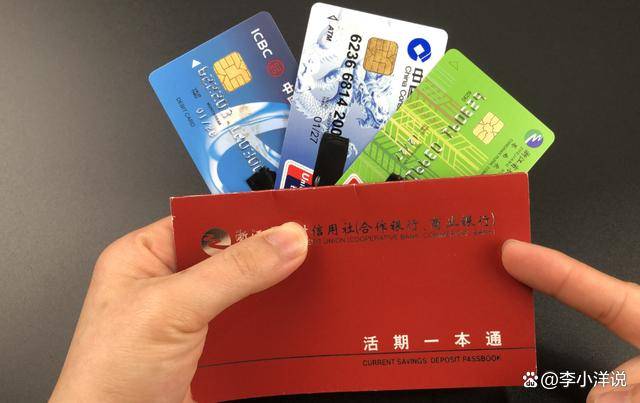
求稳投资收益下滑?别慌!《基民来了》送你配置锦囊!
中国基金报· 2025-08-21 16:17
Core Viewpoint - The article emphasizes the need for mutual respect and service for investors, rather than just education, highlighting the launch of a new program called "Investors Are Here" to amplify the voices of retail investors [3]. Group 1: Market Conditions - The article notes that various asset classes have experienced significant volatility this year, leading to a decline in returns for previously high-performing investments, making it increasingly difficult to achieve stable returns [4]. - It raises the question of how to respond to market volatility and what strategies can be employed for more stable investments [4]. Group 2: Event Details - A special event titled "Investment Education Festival" is scheduled for August 22 at 15:00, co-hosted by China Fund News and Huihua Wealth Management, focusing on strategies for navigating low-interest-rate environments [6][4]. - The event will feature discussions on breaking through asset allocation challenges in a low-interest-rate era and will include insights from two low-risk preference investors [5]. Group 3: Investment Strategies - The article outlines a series of questions to be addressed during the event, including the timing for investing in low-risk funds, the balance of low-risk investments, and how to manage the gap between low-risk yields and actual returns [12]. - It also discusses the expected returns for investment horizons of 4 to 7 years and the factors that have the most significant impact on investment outcomes [13].

保险同行都“不放过”!险资频频举牌银行保险H股的“多重算盘”
经济观察报· 2025-08-21 10:12
Core Viewpoint - The insurance industry is adjusting its asset allocation strategies in response to a low interest rate environment, focusing on extending bond durations, credit downgrading, increasing equity allocations, and enhancing alternative assets [1][3][4]. Group 1: Asset Allocation Strategies - The overseas insurance industry has made four major adjustments to asset allocation: extending bond durations, credit downgrading, increasing equity allocations, and enhancing alternative assets [3][4]. - Domestic insurance companies are learning from overseas experiences to develop a diversified asset allocation strategy suitable for the domestic market, including increasing high-dividend assets through FVOCI accounts [1][3]. Group 2: Recent Investment Activities - Since August, insurance capital has frequently acquired shares in financial sector listed companies, with notable transactions including China Ping An's purchases of China Pacific Insurance H-shares [2][6]. - Insurance companies have made over 20 acquisitions of listed companies this year, marking the highest number in five years, primarily targeting high-dividend H-shares in the banking and insurance sectors [6]. Group 3: Financial Performance and Challenges - Insurance companies are striving to maintain high investment returns, with China Ping An achieving a comprehensive investment return rate of 5.8% in 2024, up 2.2 percentage points year-on-year [7]. - The average return rate of non-standard assets held by leading insurance companies has decreased from 6% in 2017 to 4.5% currently, indicating pressure to seek higher returns [8]. Group 4: Market Dynamics and Strategic Considerations - The high dividend yield of H-shares in the banking and insurance sectors, around 4%, is attracting insurance capital, especially in a low interest rate and asset scarcity environment [4][9]. - The narrowing AH share premium has prompted insurance capital to accelerate acquisitions to lock in lower holding costs before further declines [12][13]. Group 5: Risk Management and Asset Liability Matching - Insurance companies are using high-dividend stocks to mitigate risks associated with interest rate differentials and funding mismatches, as the average investment return rate has shifted down to 3%-4% [15][16]. - The phenomenon of "long money short matching" is prevalent, with many leading insurance companies facing a duration gap of 4-7 years, prompting a shift towards high-dividend H-shares as long-term assets [16][18].


保险同行都“不放过”! 险资频频举牌银行保险H股的“多重算盘”
Jing Ji Guan Cha Wang· 2025-08-21 06:26
Core Viewpoint - Insurance capital has been actively increasing stakes in financial sector listed companies, particularly in H-shares, driven by the need for stable high-yield investments amid low interest rates and asset scarcity [2][5][11]. Group 1: Recent Activities - Since August, insurance capital has frequently made significant purchases in the financial sector, including China Pacific Insurance and Zheshang Bank, triggering mandatory disclosures due to exceeding 5% ownership [2][5]. - In total, insurance capital has initiated over 20 stake increases in listed companies this year, marking the highest frequency in the past five years [5]. Group 2: Investment Strategy - The strategy behind these investments includes utilizing the FVOCI accounting method, which allows insurance companies to smooth out profit fluctuations by classifying high-dividend stocks as financial assets [3][11]. - The current low interest rate environment has prompted insurance companies to adjust their asset allocation strategies, focusing on increasing stock and alternative asset holdings to meet cash flow management needs [3][11]. Group 3: High Dividend Appeal - The banking and insurance H-shares offer attractive dividend yields of approximately 4% to 5%, which exceed the average return of insurance capital, making them appealing for maintaining higher investment returns [7][10]. - The trend of narrowing AH share premium has led insurance capital to expedite their investments in H-shares to lock in lower holding costs before further price increases [9][10]. Group 4: Risk Management - Insurance companies are also using these investments to mitigate risks associated with interest rate spreads and funding mismatches, as the current market conditions have shifted their focus from safety to yield [11][12]. - The long-term asset allocation strategy aims to address the structural mismatch between the long duration of insurance liabilities and the shorter duration of available high-yield assets [12][13].
黄金ETF基金(159937)重获资金青睐,昨日“吸金”近2000万元,黄金或处于长周期布局窗口期
Sou Hu Cai Jing· 2025-08-21 03:50
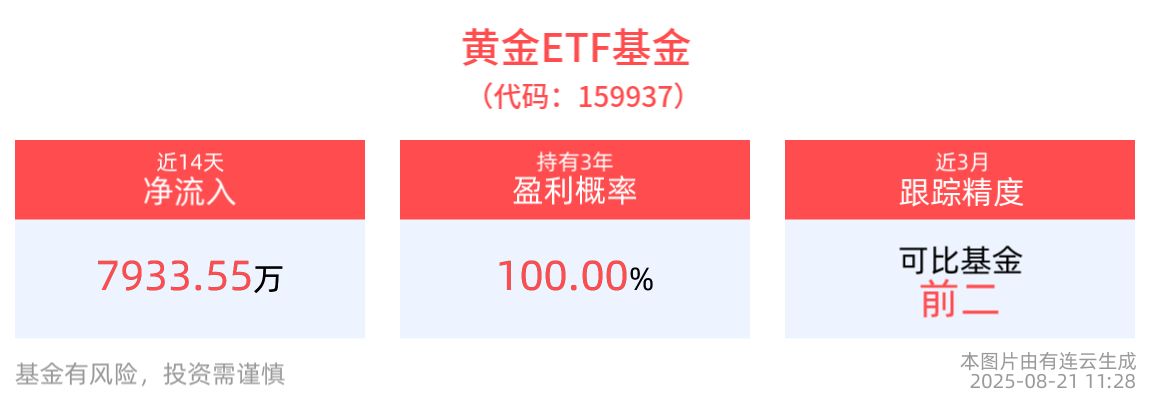
Core Insights - The gold ETF fund (159937) has shown a recent increase of 0.46%, with a price of 7.39 yuan, and a cumulative rise of 2.24% over the past three months [2] - The global macroeconomic environment is favorable for gold, with the Federal Reserve signaling a dovish stance and a decline in the dollar index, which supports gold valuation [2][3] - Central banks globally have increased gold purchases, with a total of 123 tons in the first half of the year, indicating strong long-term asset allocation demand [2] Market Performance - The gold ETF fund has a trading volume of 1.03 billion yuan, with a turnover rate of 0.36% [2] - Over the past month, the average daily trading volume of the gold ETF fund was 6.34 billion yuan, ranking it among the top two comparable funds [2] - The fund has seen a net inflow of 19.84 million yuan recently, with a total of 79.34 million yuan over the last 14 trading days [3] Historical Returns - The gold ETF fund has appreciated by 80.18% over the past five years, ranking it among the top two comparable funds [4] - The fund's highest monthly return since inception was 10.62%, with a maximum consecutive monthly gain of 16.53% [4] - The fund has a historical profit probability of 100% over a three-year holding period [4] Risk and Fees - The management fee for the gold ETF fund is 0.50%, and the custody fee is 0.10% [4] - The fund has a Sharpe ratio of 2.40 over the past year, indicating strong risk-adjusted returns [4] - The tracking error for the fund over the past three months is 0.002%, demonstrating high tracking precision compared to similar funds [4]
资产配置新趋势:解码 2025 年跨市场投资密码
Sou Hu Cai Jing· 2025-08-21 02:44
Core Viewpoint - The article discusses the need for a balanced asset allocation strategy among stocks, bonds, and gold in the context of the 2025 global capital market, which is characterized by significant differentiation and changing dynamics [1] Group 1: Stock Investment - Investors are advised to focus on Hong Kong stocks with core competitive advantages, particularly in digital infrastructure, smart city solutions, and electric vehicle charging networks [1] - Specific companies highlighted include those with a 37% year-on-year revenue growth in smart city solutions and strategic breakthroughs in electric vehicle charging networks [1] - Other notable sectors include biopharmaceutical innovation and metaverse application development, which have established differentiated competitive advantages [1] Group 2: Bond Market - The bond market is experiencing a divergence between government bonds and corporate credit bonds, with the 10-year U.S. Treasury yield stabilizing around 3.8% and investment-grade corporate bond spreads narrowing to 150 basis points [1] - Green bonds issued by certain companies received oversubscription due to carbon neutrality certification, while convertible bonds are favored by hedge funds due to their conversion premium advantages [1] - A "barbell strategy" is recommended for bond portfolio allocation, focusing on high-rated short-duration bonds and inflation-protected securities (TIPS) [1] Group 3: Gold as an Asset - Gold is undergoing a repositioning as a traditional safe-haven asset, with physical gold ETF holdings reaching record highs, although digital currencies are increasingly seen as alternatives [1] - The current price of London gold is around $1,950 per ounce, reflecting a 12% decline from its 2024 peak [1] - Investment strategies include indirect exposure through gold mining stocks or structured products linked to gold prices to capture rebound opportunities while managing volatility risks [1] Group 4: Investment Portfolio Construction - The Morningstar Q2 2025 report suggests a "433" allocation strategy: 40% in stocks, 30% in bonds, and 30% in alternative assets, including gold ETFs and commodity funds [1] - This allocation considers the growth potential of certain growth stocks while providing yield protection through high-yield bonds and hedging tail risks with precious metal derivatives [1] - As the Federal Reserve's balance sheet reduction nears its end, investors are encouraged to monitor interest-sensitive assets, credit spread indices, and volatility indicators for dynamic asset allocation adjustments [1]
2025 年港市新机遇:解码多元资产配置路径
Sou Hu Cai Jing· 2025-08-21 02:32
Group 1 - The Hong Kong stock market is expected to present structural opportunities in 2025, particularly in growth sectors like renewable energy and biotechnology, attracting global capital attention [1] - Companies with core patents, such as those involved in solid-state battery technology, have seen their stock prices increase by over 30% this year, outperforming the industry average [1] - Fixed income investments, including local government special bonds and offshore RMB government bonds, maintain yields in the range of 4.2%-5.8%, providing a hedge against equity asset volatility [1] Group 2 - A suggested asset allocation strategy is to maintain a portfolio consisting of 40% equities, 35% fixed income, and 25% alternative investments, focusing on specific Hong Kong Stock Connect stocks and cross-border bond varieties [2] - Smart investment advisory products can dynamically adjust portfolio allocations based on real-time data, enhancing the Sharpe ratio by 0.3-0.5 [2] - REITs are highlighted as providing an average annual dividend return of 6.2%, appealing to investors seeking stable income [2] Group 3 - Digital gold certificates launched by the Shanghai Gold Exchange utilize blockchain technology for T+0 settlement, with average daily trading volume exceeding 80 tons this year [1] - Investing in gold ETFs allows ordinary investors to avoid physical storage costs while benefiting from price fluctuations [1]