
产能出清

Search documents
“反内卷”题材轮动 化工、建材等板块或迎结构性机会
Di Yi Cai Jing· 2025-08-24 12:22
Core Viewpoint - The "anti-involution" trend is reshaping the competitive landscape in industries such as photovoltaic and lithium battery, with a focus on capacity clearing and structural opportunities in traditional sectors like agriculture and chemicals [1][5]. Industry Analysis - The photovoltaic and lithium battery sectors are experiencing a "cooling down" phase, with polysilicon futures prices dropping from a historical high of 55,000 yuan/ton to 51,400 yuan/ton, indicating a significant decrease in market activity [2]. - Lithium carbonate futures prices have also declined from over 90,000 yuan/ton to around 78,000 yuan/ton, reflecting a drop of more than 10,000 yuan within a week [2]. - The overall profitability in the lithium battery sector is under pressure, with a projected revenue decline of 2.8% in 2024, despite a 32.6% increase in shipment volume to 1,175 GWh [3]. Structural Opportunities - Traditional industries such as chemicals and agriculture are emerging as more certain structural opportunities due to differentiation and demand upgrades, with significant capital inflows observed in these sectors [1][4]. - The chemical sector has seen a rise in the Chemical 50 ETF and other related ETFs, with cumulative increases of 16% to 20% since July [1][4]. - The agricultural sector is also benefiting from policy adjustments aimed at reducing outdated production capacity, with a noted decline in the number of breeding sows [6]. Policy Impact - Recent policies are focused on capacity clearing and price guidance, which are expected to reshape competition across multiple industries, including lithium and photovoltaic [5]. - The "anti-involution" policies are anticipated to enhance profitability in related sectors by eliminating low-efficiency competition and outdated capacity, potentially leading to a 53% increase in industry profits over the next two years [6].


“反内卷”题材轮动,化工、建材等板块或迎结构性机会
Di Yi Cai Jing· 2025-08-24 11:35
Group 1 - The core viewpoint is that the photovoltaic and lithium battery industries are experiencing a "de-involution" trend, with capacity clearing becoming crucial for future growth [1][2][3] - The valuation recovery in photovoltaic and lithium battery sectors is still in its early stages, with expectations of improved capacity utilization leading to potential market peaks by 2026 [1][3] - Traditional industries such as agriculture, chemicals, and building materials are emerging as more certain structural opportunities due to differentiation and demand upgrades [1][4] Group 2 - The lithium battery and photovoltaic sectors have seen significant price corrections, with polysilicon futures dropping from 55,000 CNY/ton to 51,400 CNY/ton, and lithium carbonate prices falling from 90,000 CNY/ton to 78,000 CNY/ton [2][3] - The overall profitability in the lithium battery sector is under pressure, with a projected 2.8% decline in revenue for 2024, despite a 32.6% increase in shipment volume [3] - The chemical industry is facing dual pressures of weak product prices and declining capacity utilization, with nearly 25% of chemical companies expected to report losses in 2024 [5][6] Group 3 - Policy measures are reshaping competition across multiple industries, with a focus on capacity clearing and price guidance to improve profitability [5] - The agricultural sector is also expected to benefit from capacity adjustments and environmental regulations, leading to a decrease in outdated production capacity [6] - The "de-involution" policies are anticipated to inject new momentum into corporate profitability, with a projected 53% increase in related industry earnings over the next two years [6]
“产能出清”网传文件获证实,磷酸铁锂行业闭门会在深圳召开
Di Yi Cai Jing· 2025-08-23 03:05
Core Viewpoint - The lithium iron phosphate (LFP) industry is facing significant attention due to capacity clearing amid concerns of overcapacity, with a recent meeting held to discuss solutions [1][5]. Group 1: Industry Meeting - A meeting was held on August 22 at the Crowne Plaza Hotel in Shenzhen, attended by representatives from 10 LFP industry companies and the LFP Materials Subcommittee [3][5]. - The meeting aimed to address overcapacity issues and explore low-carbon transformation paths for the entire industry chain [5][7]. Group 2: Industry Capacity and Demand - The LFP industry has experienced a slowdown in new capacity construction due to overcapacity in the cathode materials sector, leading to a period of low demand for LFP equipment [7]. - By the first half of 2025, China's LFP production is expected to reach 1.632 million tons, a year-on-year increase of 66.6%, with total available capacity rising to 5.32 million tons [8]. - Despite overall capacity being abundant, there is a structural mismatch in supply and demand, with high-quality capacity being scarce while low-end capacity is excessive [8]. Group 3: Capacity Elimination - The meeting discussed the need to accelerate the exit of outdated capacities, particularly those unable to keep up with product upgrades or facing financial difficulties [8]. - Factors leading to the elimination of certain LFP capacities include failure to meet new product requirements, bankruptcy, and inadequate production line designs [8].




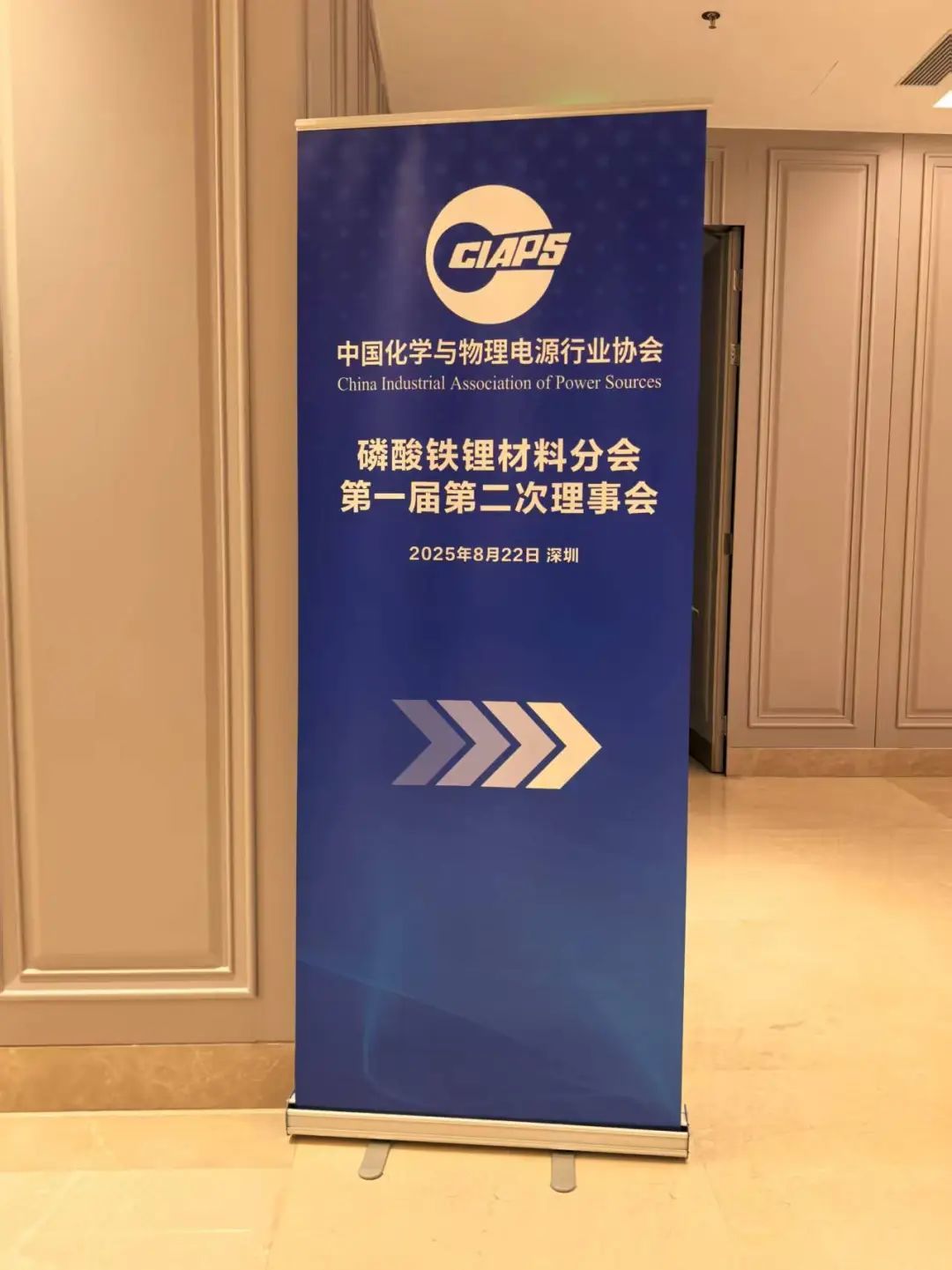
“产能出清”网传文件获证实!磷酸铁锂行业闭门会在深圳召开
第一财经· 2025-08-23 02:31
Core Viewpoint - The article discusses the current state of the lithium iron phosphate (LFP) industry, focusing on the need for capacity clearance due to overcapacity and the upcoming expansion driven by high demand in the energy storage sector [1][3]. Industry Overview - A meeting was held on August 22 at the Crowne Plaza Hotel in Shenzhen, attended by representatives from 10 LFP industry companies and the Lithium Iron Phosphate Materials Subcommittee of the China Chemical and Physical Power Industry Association [6][9]. - The subcommittee was established in May 2023 to promote standardization, eliminate outdated capacity, and strengthen international cooperation in the LFP industry [9]. Capacity and Demand Dynamics - The meeting addressed the issue of overcapacity in the LFP sector, which is critical for current power batteries and energy storage systems [12]. - In the first half of 2025, China's LFP production reached 1.632 million tons, a year-on-year increase of 66.6%, with total available capacity rising to 5.32 million tons [12]. - The supply-demand situation is characterized by "overall surplus but structural tightness," where high-quality capacity is scarce while low-end capacity is excessive [12]. Challenges for Industry Players - Leading companies maintain over 70% utilization rates due to their technological, financial, and supply chain advantages, while smaller firms face idle capacity due to lower product quality [12]. - The article identifies three types of LFP capacities likely to be eliminated: those unable to keep up with product upgrades, those affected by bankruptcies or cash flow issues, and those with poorly designed production lines [13].

“产能出清”网传文件获证实 磷酸铁锂行业闭门会在深圳召开
Xin Lang Cai Jing· 2025-08-23 01:46
Core Viewpoint - The lithium iron phosphate (LFP) industry is currently facing significant attention due to capacity clearance amid concerns of overcapacity and industry competition [1]. Group 1: Industry Meeting - A meeting regarding the LFP materials sub-association was held on August 22, focusing on solutions to address industry overcapacity [1]. - The meeting took place in a private setting with 13 attendees, including representatives from 10 LFP industry companies and 3 staff members from the sub-association [1]. - Participating companies included listed firms such as Hunan Youneng, Wanrun New Energy, Anda Technology, De Fang Nano, and the subsidiary of Dangsheng Technology, Dangsheng Shudao (Panzhihua) New Materials Co., Ltd [1]. Group 2: Meeting Agenda - The agenda of the meeting revolved around discussing industry competition and strategies for phasing out outdated production capacity [1]. - Another key topic was exploring low-carbon transformation pathways for the entire industry chain [1]. - The meeting was characterized as a "closed-door" event, with no media presence or live recordings [1].
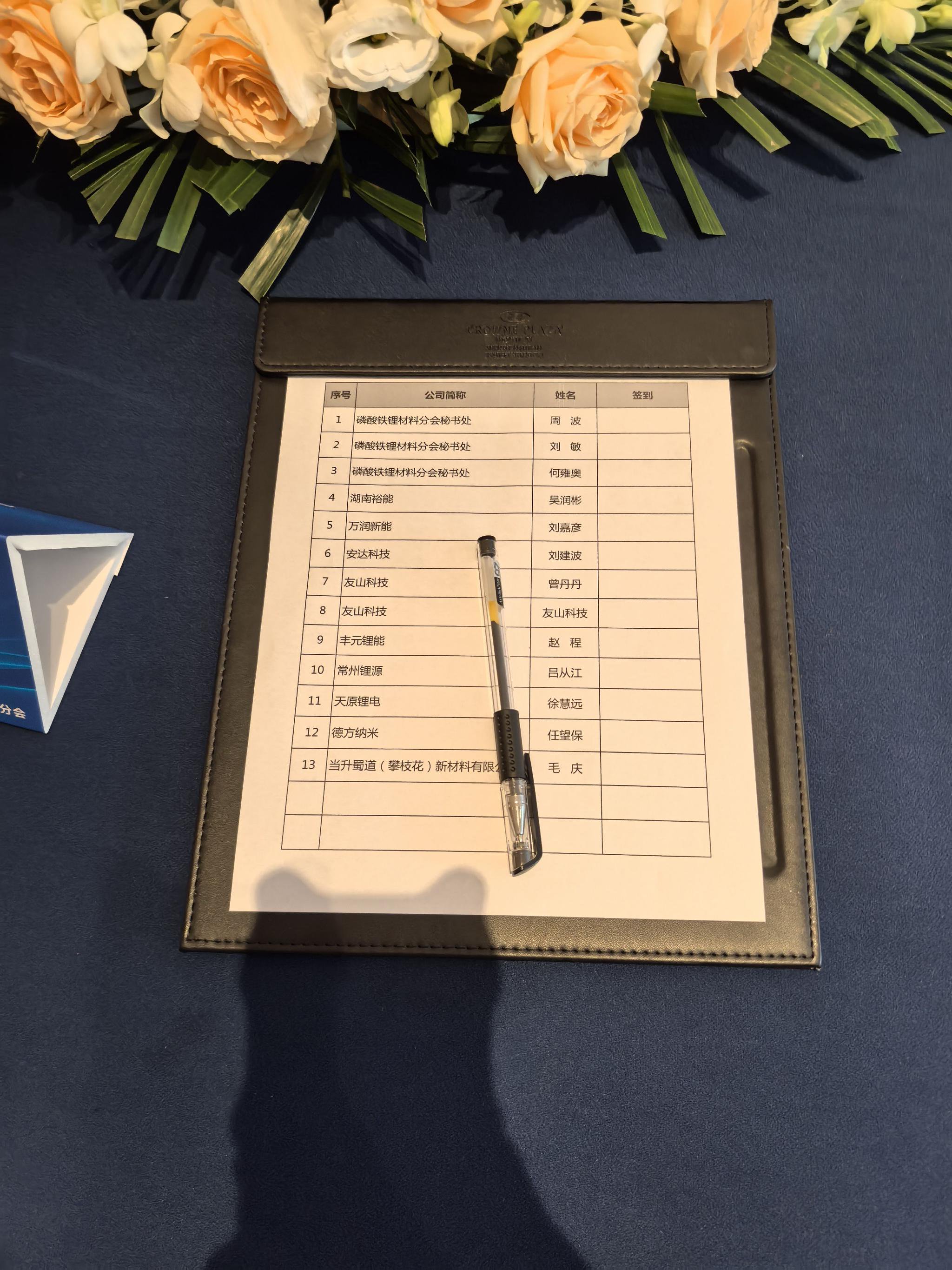
独家|“产能出清”网传文件获证实!磷酸铁锂行业闭门会在深圳召开
Di Yi Cai Jing· 2025-08-23 01:43
Core Viewpoint - The meeting held on August 22 in Shenzhen focused on addressing the issue of excess capacity in the lithium iron phosphate (LFP) industry, with industry representatives discussing strategies for capacity elimination and low-carbon transformation across the supply chain [1][7]. Group 1: Industry Context - The LFP materials sub-association was established in May this year to promote standardization, eliminate outdated capacity, and strengthen international cooperation, aiming to help China lead the global LFP industry [7]. - The meeting included representatives from 10 LFP industry companies, highlighting the collaborative effort to tackle industry challenges [4]. Group 2: Capacity and Demand Dynamics - The LFP industry is currently experiencing a structural supply-demand imbalance, characterized by overall excess capacity but a shortage of high-quality production [11]. - By the first half of 2025, China's LFP production is expected to reach 1.632 million tons, a year-on-year increase of 66.6%, with total available capacity rising to 5.32 million tons [11]. - Leading companies maintain over 70% operational rates due to their technological and financial advantages, while smaller firms struggle with underutilization due to lower product quality [11]. Group 3: Capacity Elimination Trends - The current "anti-involution" trend may lead to the elimination of certain LFP capacities, including those unable to keep pace with product upgrades, those affected by bankruptcies or cash flow issues, and those with poorly designed production lines [12].
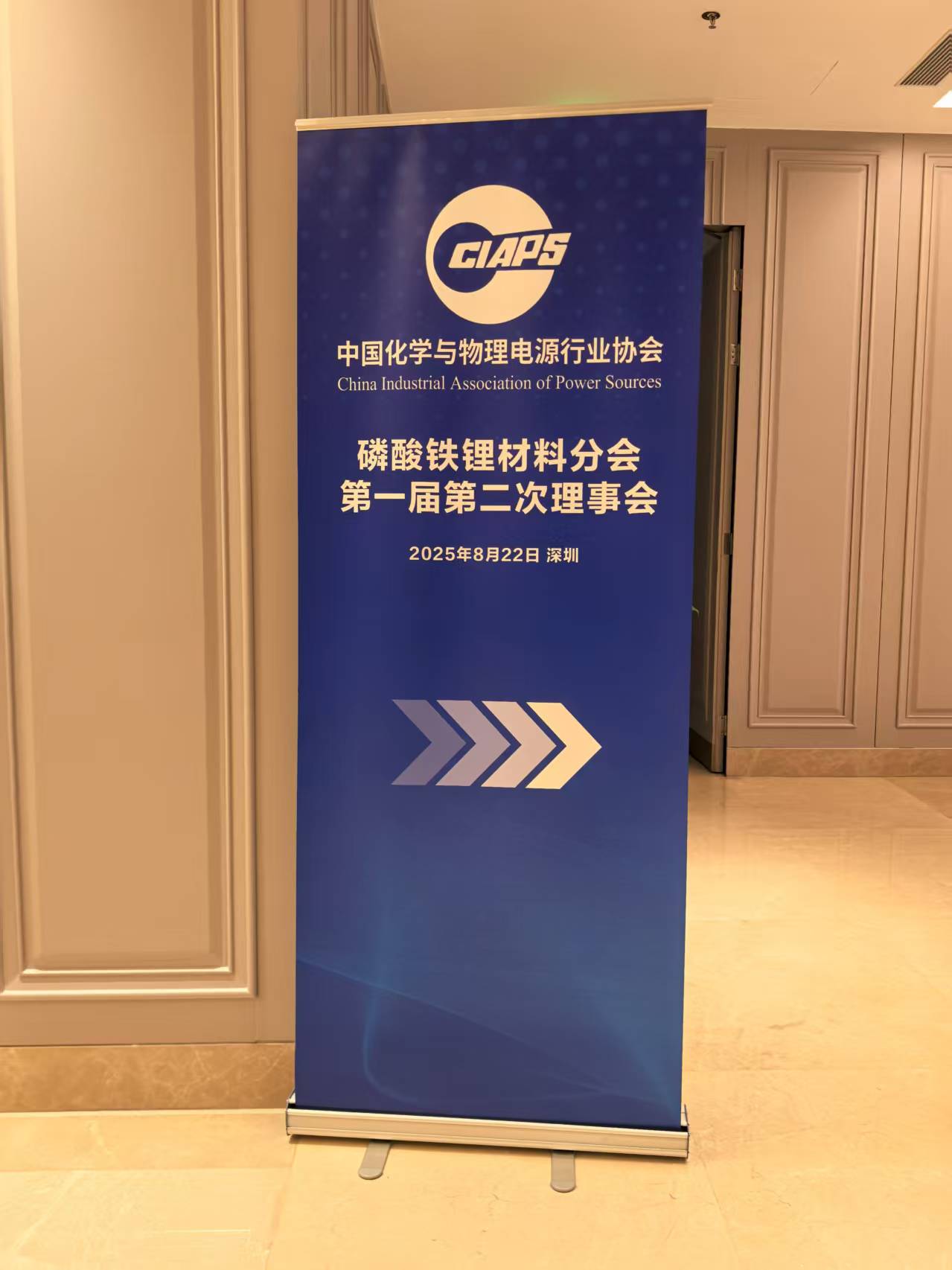
“产能出清”网传文件获证实!磷酸铁锂行业闭门会在深圳召开
Di Yi Cai Jing· 2025-08-23 01:43
Core Viewpoint - The lithium iron phosphate (LFP) industry is focusing on capacity clearance due to overcapacity issues, with a recent meeting held to discuss solutions and strategies for the industry [1][6]. Group 1: Industry Overview - The LFP materials sub-association was established in May this year to promote standardization, eliminate outdated capacity, and enhance international cooperation [6]. - The meeting included representatives from 10 LFP industry companies, discussing the challenges of overcapacity and the need for a low-carbon transition across the entire supply chain [3][6]. Group 2: Capacity and Demand Dynamics - The LFP industry is experiencing a structural supply-demand contradiction, with an expected production of 1.632 million tons in the first half of 2025, a year-on-year increase of 66.6%, and total available capacity rising to 5.32 million tons [8]. - Despite overall capacity being abundant, there is a mismatch where high-quality capacity is scarce while low-end capacity is excessive, leading to low effective utilization rates across the industry [8]. Group 3: Capacity Elimination Trends - Several types of LFP capacities are likely to be eliminated, including those unable to keep up with product upgrades, those affected by bankruptcies or cash flow issues, and those with poorly designed production lines that do not meet current standards [9].
整治“内卷式”竞争初显成效 畅通价格传导还需政策加力
Sou Hu Cai Jing· 2025-08-22 22:17
Core Viewpoint - The recent wave of "involution" competition rectification across various industries has led to some improvement in industrial product prices, although the overall impact on price levels remains limited [1][2]. Group 1: Price Trends and Influences - Since July, there has been a significant increase in the futures prices of industrial products such as coking coal, polysilicon, and lithium carbonate, with the Nanhua Composite Index rising for four consecutive weeks [1]. - As of August 22, the current prices of rebar, hot-rolled coils, and other steel products, as well as polysilicon and lithium carbonate, are notably higher than early July levels [1]. - The rectification of "involution" competition has particularly focused on the photovoltaic industry, with polysilicon prices rising by 36.9% and industrial silicon prices by 7.26% from the beginning of the year to July [1][2]. Group 2: Producer Price Index (PPI) and Market Dynamics - The Producer Price Index (PPI) for July showed a narrowing decline, indicating that the "involution" measures are beginning to have an effect on price levels [2][3]. - The prices in sectors such as coal mining, black metal smelting, and photovoltaic equipment manufacturing have seen reduced month-on-month declines compared to previous months [2]. - However, the overall price recovery trend remains unclear, as some sectors like cement have not shown significant improvement [3]. Group 3: Policy Measures and Future Outlook - The Ministry of Industry and Information Technology has called for a more regulated competitive order in the photovoltaic industry, emphasizing the need for orderly exit of outdated capacities and resisting low-price competition [3][4]. - Recent policies aimed at boosting consumer demand, such as subsidies for childbirth and education, are expected to help improve the weak downstream demand situation [5]. - Analysts suggest that strengthening supply-side constraints could mitigate the impact of declining exports on demand, while more targeted demand-side policies may be necessary [5][6].
华峰化学(002064):2025 年中报点评:行业谷底业绩坚韧,氨纶盈利逆势抬升
Huachuang Securities· 2025-08-22 13:01
Investment Rating - The report maintains a "Strong Buy" rating for the company with a target price of 11 yuan [2][8]. Core Views - The company reported a resilient performance despite industry downturns, with a notable increase in cash flow [2][3]. - The report highlights that the spandex segment's profitability has improved against a backdrop of industry challenges, with a focus on product structure optimization [2][3]. - The report anticipates a recovery in profitability across various segments as market conditions improve, particularly with the exit of underperforming capacities [2][3]. Financial Summary - For the first half of 2025, the company achieved a revenue of 12.14 billion yuan, a decrease of 11.7% year-on-year, and a net profit of 983 million yuan, down 35.2% year-on-year [2]. - The second quarter of 2025 saw revenues of 5.82 billion yuan, a decline of 17.8% year-on-year, with a net profit of 479 million yuan, down 42.6% year-on-year [2]. - The company expects net profits to recover to 2.27 billion yuan in 2025, with growth rates projected at 2.2%, 19.7%, and 27.4% for the following years [4][8]. Segment Performance - The spandex segment experienced a revenue decline of 9.43% in the first half of 2025, but its gross margin improved by 3.68 percentage points [2][3]. - The adipic acid segment faced a revenue drop of 15.01% with a significant decline in gross margin due to raw material price fluctuations [2][3]. - The shoe sole liquid segment's revenue decreased by 8.82%, but it maintained relative stability in profitability [2][3]. Market Outlook - The report suggests that the company is well-positioned to benefit from the market exit of underperforming capacities and the upcoming inventory replenishment cycle in the U.S. manufacturing sector [2][3]. - The anticipated recovery in profitability is expected to be driven by the company's ability to leverage its technological advantages into scale advantages [2][3].

乙二醇:政策对基本面影响较小,中期仍旧承压
Wu Kuang Qi Huo· 2025-08-22 02:45
Report Summary 1) Report Industry Investment Rating No relevant information provided. 2) Core Viewpoint The impact of policies on the ethylene glycol industry is more emotional than substantial. In the medium term, as domestic and foreign operating rates increase, ethylene glycol will enter an inventory accumulation cycle, and its valuation will face pressure at high levels. In the short term, the recent low arrival volume and policy stimulus provide some support, and opportunities for short - selling on rallies should be considered after the arrival volume increases [1][10]. 3) Summary by Related Catalogs Anti - involution Policy Impact - The Ministry of Industry and Information Technology's policy to assess old petrochemical and chemical devices may ease over - capacity in the chemical industry, but for the ethylene glycol industry, the proportion of old devices is small. The operating devices over 20 years old have a capacity of 118.5 million tons, accounting for 4% of ethylene glycol capacity, and the devices mainly producing ethylene glycol account for only 2%. The impact on the industry with an operating rate of 60% - 70% is limited [4]. - The policy in Jiangsu Province to restrict ethylene glycol devices below 200,000 tons per year has little impact as only Sierbang's 40,000 - ton device in the province is affected [4]. South Korean Policy Impact - South Korea plans to cut 2.7 - 3.7 billion tons of naphtha cracking capacity annually, accounting for about 25% of the total capacity. The ethylene glycol production capacity in South Korea is 1.41 billion tons, with only 425,000 tons of in - production devices mainly producing ethylene glycol, and the capacity utilization rate is 30%. - From January to July 2025, China imported 118,000 tons of ethylene glycol from South Korea, accounting for nearly 2.7% of the total imports, with an average monthly import of 17,000 tons. This import volume is easy to replace, and the impact on China's ethylene glycol supply and raw material end is small [5]. Policy Emotional Impact Greater than Substance, Medium - term Pattern Weak - Supply - side policies at home and abroad have little impact on the over - capacity problem of ethylene glycol, and there is still room for capacity utilization to increase. - In the downstream polyester industry, the proportion of old devices over 20 years old is 11.9%. If capacity clearance occurs, the negative impact on the demand side will be greater than the positive impact on the supply side. - In the medium term, if domestic and foreign devices restart smoothly, ethylene glycol will enter an inventory accumulation cycle even in the peak season. The valuation profit of naphtha - based devices is at a high level this year, facing compression pressure. - In the short term, the low arrival volume and policy stimulus support ethylene glycol, and short - selling on rallies should be considered after the arrival volume increases [10].