制度创新

Search documents
以制度创新驱动高质量发展新格局:资本市场改革“三支箭”
Yong Xing Zheng Quan· 2025-10-29 07:13
Report Industry Investment Rating Not provided in the given content Core View On October 27, 2025, at the Financial Street Forum Annual Conference, the CSRC Chairman Wu Qing's speech centered on the "Three Arrows" framework, elaborating on the in - depth direction and practical path of capital market reform. These policies are a continuous deepening of the "12 Key Tasks for Comprehensive Deepening of Capital Market Reform", aiming at serving the real economy, activating market vitality, and筑牢ing risk bottom - lines. Through institutional innovation, ecological optimization, and stability mechanism construction, they drive the strategic transformation of the capital market from "scale expansion" to "quality improvement", providing clear policy guidance for the development of new - quality productivity and the entry of long - term funds [1]. Summary by Related Catalogs 1. Institutional Upgrade: Consolidating the Market Foundation with "Precise Adaptation + Strict Supervision" - **Deepening Sector Reform**: Policy may promote the deep adaptation of sector systems to industrial development. For the Sci - tech Innovation Board, it may break through the traditional listing standard's reliance on profit indicators and set up a diversified listing indicator system. For the Beijing Stock Exchange, it may optimize the connection with the New Third Board, simplify the transfer process, and form a full - chain service system [2]. - **Strengthening Investor Protection**: 23 practical measures will be released to form a full - chain protection mechanism of "pre - event prevention, in - event supervision, and post - event relief". This includes requirements for real, accurate, and complete information disclosure, cracking down on illegal activities, and improving relief measures for small and medium - sized investors [3]. 2. Opening - up and Ecosystem Construction: Activating Market Vitality with "Two - way Opening + Long - term Fund Cultivation" - **Deepening Institutional Opening - up**: The "Qualified Overseas Investor System Optimization Plan" is launched. It optimizes the access process, investment scope, and operation convenience, aiming to create a "convenient channel" for cross - border capital flow [6]. - **Cultivating Long - term Funds**: Policy promotes the transformation of public fund managers from "scale - oriented" to "performance - oriented", encourages the launch of long - term investment products, implements long - cycle assessment for basic endowment insurance funds and annuity funds, and promotes the expansion of the proportion of equity - type asset allocation for insurance funds and enterprise annuities [6]. 3. Market Stability Mechanism: Guarding the Safety Bottom - line with "Risk Prevention + Interconnectivity" - **Improving Cross - market Risk Monitoring**: A risk monitoring and early - warning mechanism is established, including a multi - market risk monitoring platform and strengthened cross - departmental coordinated supervision to prevent the spread of local risks to systemic risks [7]. - **Optimizing Interconnectivity Mechanisms**: The optimization of interconnectivity mechanisms such as the Shanghai - Hong Kong Stock Connect and Bond Connect is a key measure. It may expand the scope of underlying assets, optimize trading mechanisms, and improve risk management, promoting the two - way flow of funds between the mainland and Hong Kong markets and enhancing the international allocation value of the Chinese capital market [8]. 4. Investment Suggestion The current reform framework is driven by "marketization + legalization". From the marketization dimension, it respects market laws and stimulates market vitality. From the legalization dimension, it highlights the concept of "governing the market by law". These policies mark that the Chinese capital market reform has entered a new stage of "systematic promotion", aiming to transform the market from "scale expansion" to "quality improvement" [9].
【申万宏源策略】包容、开放、稳定、创新——2025年金融街论坛解读
Xin Lang Zheng Quan· 2025-10-28 01:24
Group 1 - The core message emphasizes the importance of enhancing the inclusiveness, adaptability, attractiveness, and competitiveness of China's capital market as outlined by the Chairman of the China Securities Regulatory Commission (CSRC), Wu Qing [1][2] - The CSRC plans to support emerging industries by implementing reforms in the Growth Enterprise Market (GEM) and establishing listing standards that cater to innovative enterprises in new sectors [1][2] - The introduction of the "Qualified Foreign Institutional Investor (QFII) Optimization Work Plan" aims to facilitate foreign investment by improving access management, operational efficiency, and expanding investment scope [1][2] Group 2 - The reform of the Sci-Tech Innovation Board (STAR Market) is accelerating, with the first batch of newly registered companies set to list, supported by measures such as the introduction of professional institutional investors [2] - Institutional reforms will focus on streamlining refinancing processes, expanding merger and acquisition support channels, and encouraging listed companies to enhance governance and return value to shareholders through dividends and buybacks [2] - The development of the Beijing Stock Exchange (BSE) will be promoted, along with the implementation of pioneering policies [2]

只有创新才能对抗内卷
Di Yi Cai Jing· 2025-10-27 12:48
Group 1 - The core issue of "involution" in the current Chinese economy is a systemic growth dilemma caused by insufficient innovation momentum, where continuous innovation, particularly technological innovation, is essential for breaking through this dilemma [1][3] - The phenomenon of "involution" is characterized by a large number of economic entities entering homogeneous competition, leading to a situation where overall welfare does not improve, and innovation momentum is suppressed [2][3] - Strategic "focus" is advocated as a rational survival logic, which is not an end in itself but a means to create necessary conditions for sustained and effective innovation activities [2][4] Group 2 - The essence of "involution" is the degradation of competitive forms due to insufficient innovation, and the fundamental way to break through this dilemma is to enhance the dimensions of competition through systematic innovation [3][5] - Focusing on specific areas allows companies to concentrate resources, leading to a higher intensity of investment and deeper knowledge accumulation, which are crucial for generating differentiated and hard-to-replicate technological outcomes [4][5] - Innovation is the fundamental means to achieve the goals of "cost leadership" or "differentiation" under a focused strategy, enabling companies to escape price wars and dynamically expand their focus boundaries [5][6] Group 3 - A robust institutional framework is necessary to guide competition towards innovation rather than involution, emphasizing that good systems can promote innovation while poor systems can lead to involution [6][8] - The core proposition of institutional innovation is to deeply bind key human capital with monetary capital and long-term organizational goals through a "dynamic incentive compatibility" logic [7][8] - Continuous innovation in China relies not only on the accumulation of key human capital but also on the ongoing transformation of the institutional environment that stimulates innovation [8]
安徽自贸试验区拥有高新技术企业超3400家
Zhong Guo Xin Wen Wang· 2025-10-27 12:31
中新社合肥10月27日电 (记者 张强)记者27日从中国(安徽)自由贸易试验区(以下简称"安徽自贸试验区") 五周年建设情况新闻发布会获悉,截至目前,安徽自贸试验区拥有高新技术企业超3400家,是设立之初 的2.3倍。 安徽自贸试验区拥有高新技术企业超3400家 编辑:郭晋嘉 广告等商务合作,请点击这里 本文为转载内容,授权事宜请联系原著作权人 中新经纬版权所有,未经书面授权,任何单位及个人不得转载、摘编或以其它方式使用。 关注中新经纬微信公众号(微信搜索"中新经纬"或"jwview"),看更多精彩财经资讯。 其中,安徽创新推出"双元制"高等教育国际合作、国产小客车注册登记自动化预查验等新模式,落户肿 瘤原代细胞"活体"生物样本库、量子计算工程研究中心等一批新平台、新技术、新场景。 据孙东海介绍,安徽自贸试验区已形成236项制度创新成果,其中47项为中国首创。 今年前9个月,安徽自贸试验区实现进出口额超2297亿元人民币,同比增长32.3%。(完) 来源:中国新闻网 安徽省商务厅厅长孙东海说,安徽发挥科创"金字招牌"作用,加强首创性、差异化探索。在打造"科创 自贸"方面,安徽首创"赋权+转让+约定收益"职务科 ...
人民日报:“为全球自由区发展提供助力”
Ren Min Ri Bao· 2025-10-20 07:09
Core Insights - The 11th World Free Zone Organization Conference was held in Hainan, China, highlighting the potential of Hainan Free Trade Port as a significant gateway for China's opening-up strategy [1][2] - The conference emphasized the transformation of free zones from mere trade facilitators to resilient ecosystem builders, focusing on financial and logistical integration [1] Group 1: Conference Highlights - Over 70 countries and regions participated in the conference, showcasing the global interest in free zones as engines for economic growth and sustainable development [1] - The theme of the conference was "Free Zones: A Gateway to Global Prosperity, Trade, and Sustainable Innovation," reflecting the importance of institutional innovation and global cooperation [1][2] Group 2: International Cooperation and Agreements - Multiple cooperation agreements were reached, including a memorandum of understanding to promote cross-border data flow between representatives from Angola, Argentina, and Hainan's internet information industry park [2] - The World Trade Center Association plans to introduce more international brands to Hainan, aiming to establish it as a global hub for high-end consumer brands [2] Group 3: Future Prospects - Hainan's focus on green energy development and digital infrastructure was highlighted, with expectations for future collaborations in these sectors [2] - The conference concluded with the "21st Century Economic Special Zone Hainan Declaration," which aims to share China's special economic zone experiences and enhance global trade agreements [2]
民企招才引智需更多创新
Jing Ji Ri Bao· 2025-10-20 00:06
Core Insights - The core issue in market competition is talent acquisition, with many regions investing significantly in attracting talent, as evidenced by initiatives like Ningbo's "Zhejiang·Ningbo Talent Technology Week" which has been ongoing for 20 years [1] - The "Talent Problem" has been identified as the primary challenge faced by the top 500 private enterprises in China, according to a report by the All-China Federation of Industry and Commerce [1] Group 1: Talent Acquisition Challenges - To address the talent acquisition challenges, innovative systems are required, focusing on optimizing talent introduction channels to make private enterprises a hub for talent [2] - The root causes of the talent acquisition difficulties include inherent resource limitations and institutional barriers to talent mobility [2] - Strategies should include enhancing talent awareness within private enterprises and integrating talent strategies into business development plans [2] Group 2: Mechanisms for Talent Utilization - Innovating talent utilization mechanisms is crucial for unlocking talent potential, emphasizing the need for reforms in talent development systems [3] - Encouraging private enterprises to independently recruit and flexibly utilize talent is essential, along with granting them more autonomy in areas like title evaluation and skills certification [3] - Establishing a talent evaluation system based on knowledge, ability, and character is necessary to incentivize contributions and results [3] Group 3: Retention Strategies - Creating a comprehensive service system for talent throughout their lifecycle is vital for retention, as regional talent competition relies on both policies and the overall environment [4] - Providing substantial rewards and genuine support is necessary to foster a welcoming atmosphere for talent [4] - Implementing targeted measures addressing healthcare, housing, and other concerns of talent is crucial for creating optimal conditions and eliminating long-term worries [4]
“为全球自由区发展提供助力”
Ren Min Ri Bao· 2025-10-19 22:04
Core Insights - The 11th World Free Zone Organization Conference was held in Hainan, China, with over 70 countries and regions represented, highlighting the significance of free zones as engines for economic growth, industrial diversification, and sustainable development [1][2] - The theme of the conference was "Free Zones: A Gateway to Global Prosperity, Trade, and Sustainable Innovation," emphasizing Hainan's role as a modern free trade port and its potential for institutional innovation and global cooperation [1][2] Group 1 - The conference showcased Hainan's achievements in economic development and openness, featuring projects in green low-carbon initiatives, duty-free shopping, and cross-border e-commerce [1][2] - The World Free Zone Organization's president noted that modern free zones are evolving from mere trade facilitators to resilient frameworks that support the free flow of financial and logistical elements [1][2] Group 2 - Several cooperation agreements were reached during the conference, including a memorandum to promote cross-border data flow signed by representatives from Angola, Argentina, and Hainan's internet information industry park [2] - The conference concluded with the release of the "21st Century Economic Special Zone Hainan Declaration," which aims to share China's experience in special economic zone development and enhance global trade agreements [2]
青岛自贸区:“试验田”里育出358项“创新果”
Xin Hua Wang· 2025-10-19 02:45
Core Insights - The Qingdao Free Trade Zone has achieved significant institutional innovation, with 358 innovative results, 97 of which have received recognition at the national or provincial level [1] - The Free Trade Zone serves as a "testing ground" for reform and innovation, focusing on core tasks of institutional innovation [2] Group 1: Innovation Practices - Qingdao Free Trade Zone emphasizes originality and integrated approaches, successfully addressing international transit challenges through a new "bonded + export customs clearance" model, significantly improving transit efficiency [3] - The new model has reduced transit time by 3-5 working days compared to ports like Busan and Singapore, leading to lower costs for businesses [3] Group 2: Performance Metrics - From January to August this year, international transit consolidation at Qingdao Port reached 754 TEUs, marking a year-on-year increase of 55.5% [4] - The Free Trade Zone has implemented a "problem-oriented + international benchmarking" innovation logic, focusing on addressing operational bottlenecks and aligning with international trade standards [4] Group 3: Collaborative Efforts - The establishment of a special task force and a "ranking mechanism" has facilitated collaboration among various departments, leading to over 30 provincial-level innovative results [4] - The Free Trade Zone has introduced a fault-tolerance mechanism to encourage innovation, allowing for a more daring approach to experimentation [4] Group 4: Regional Impact - The Qingdao Free Trade Zone, covering 52 square kilometers, contributes over 20% of the city's foreign trade and sales in wholesale industries, leading the province in import and export volumes [6] - The zone's innovative practices have been replicated in six other trade innovation zones and have established a cross-border e-commerce alliance across nine provinces in the Yellow River basin [5][6]
深化改革开放,培育竞争新优势——江苏“十四五”经济社会发展综述之四
Xin Hua Ri Bao· 2025-10-17 23:15
Core Insights - Jiangsu has achieved significant economic milestones during the "14th Five-Year Plan," including a continuous A-level rating for state-owned enterprise reform and a cumulative exploration of over 450 institutional innovations in the free trade zone [1][2] - The province's foreign trade has surpassed 5 trillion yuan, maintaining its position as the second-largest in the country for 22 consecutive years, while actual foreign investment has led the nation for seven years [1][2] Group 1: Economic Strength and Reforms - All 13 prefecture-level cities in Jiangsu are ranked among the top 100 nationwide, with five cities projected to exceed 1 trillion yuan in GDP by 2024 [2] - The per capita GDP in Jiangsu has surpassed 160,000 yuan, ranking first among all provinces for 16 consecutive years [2] - State-owned enterprises in Jiangsu have seen a revenue increase of 5.5% and a profit increase of 9.9% year-on-year [2] Group 2: Private Sector Development - Jiangsu has implemented policies to support private enterprises, including a 20-point measure to address financing, land use, and competition challenges [3] - The added value of the private economy in Jiangsu has increased from 5.1 trillion yuan in 2018 to 7.98 trillion yuan in 2024, contributing over 50% of the province's GDP [3] Group 3: Industrial Collaboration - Jiangsu's industrial economy is transitioning towards high-end and intelligent production, with a 6.8% year-on-year increase in industrial added value from January to August 2025 [4] - Companies like Wuxi Yicai and Suzhou Xinda Biopharmaceuticals are leveraging smart production and regulatory support to enhance product value and accelerate market entry [4] Group 4: Open Economy and Trade - Jiangsu is enhancing its open economy through institutional innovations, with the Wuxi Comprehensive Bonded Zone achieving a 207% year-on-year increase in import-export value [5] - The Taicang Port has seen a significant increase in automobile exports, with a 58.78% year-on-year growth in the first seven months of 2025 [6] Group 5: Foreign Investment and Trust - Jiangsu has become a preferred destination for foreign investment, with over 408 Fortune 500 companies operating in the province and actual foreign investment exceeding 100 billion USD from 2021 to 2024 [7] - The province's foreign investment reinvestment has increased by 1.2 times compared to the entire year of 2020 [7] Group 6: Green Transformation - Jiangsu has invested over 13 billion yuan in environmental upgrades and low-emission transformations, achieving significant cost savings and environmental benefits [10] - The province has established 443 national-level green factories and 51 green industrial parks, leading the nation in green manufacturing systems [10] Group 7: Future Outlook - Jiangsu aims to continue its reform and opening-up efforts, focusing on overcoming challenges and enhancing its economic landscape as it transitions into the "15th Five-Year Plan" [11]
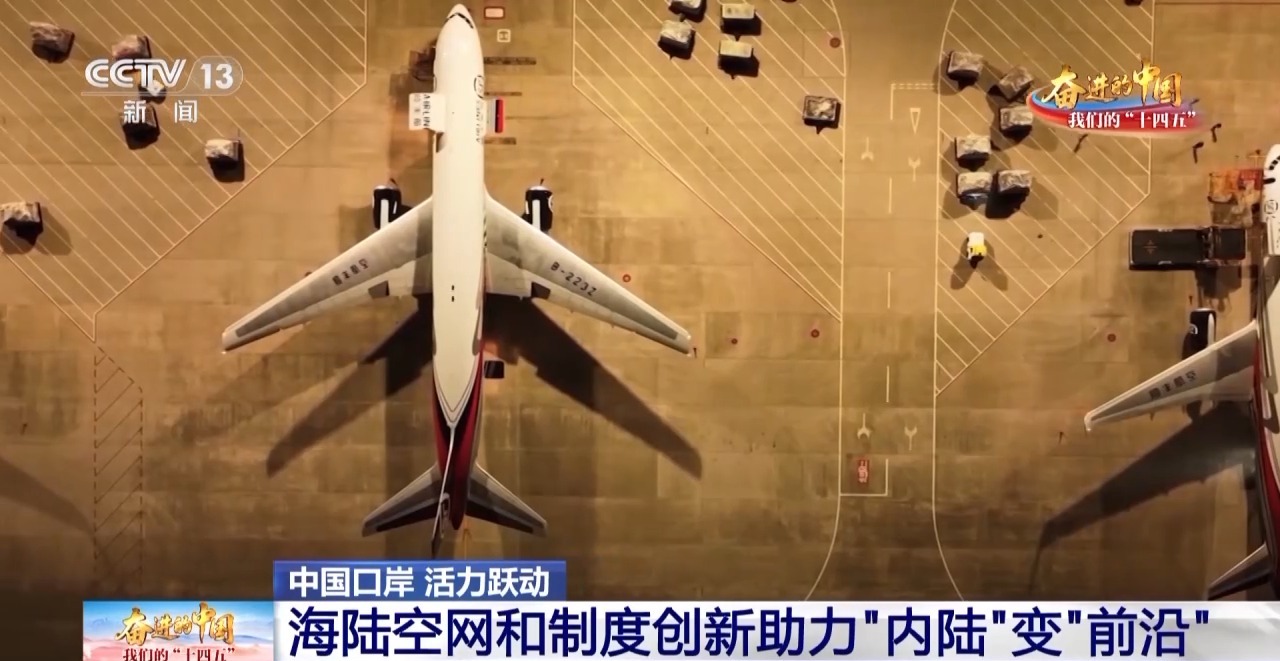
内陆腹地变开放前沿 这波“神操作”了解一下
Yang Shi Xin Wen Ke Hu Duan· 2025-10-16 11:39
Group 1 - Zhengzhou Airport in Henan has achieved impressive performance this year, with cross-border cargo throughput exceeding 470,000 tons, completing last year's total two months ahead of schedule, and showing a year-on-year growth of over 40% [1] - The airport has become the first aviation port in Central China to surpass 10,000 flights, leveraging high-speed rail networks, air transport hubs, and institutional innovations during the 14th Five-Year Plan period [1] - Zhengzhou has opened eight intercontinental routes to cities like Luxembourg, Frankfurt, and Amsterdam, connecting to over 200 cities globally, and has developed modern logistics parks and cross-border e-commerce clusters around the airport [1] Group 2 - Hubei's Ezhou Huahu International Airport is the first professional cargo hub in Asia, projected to handle over 1.2 million tons of cargo in 2024, with 90 domestic and international cargo routes covering 26 countries and regions [3] - Jiangxi's Ganzhou has established a westward corridor through the China-Europe Railway Express, impacting over 100 cities in more than 20 countries, with the furniture industry’s annual output value increasing from 30 billion to 280 billion [5] - Shanxi has implemented a "port + industry" dual-drive strategy, achieving "foreign trade in every county" by 2024, with three major aviation ports and 26 China-Europe Railway Express routes connecting to 17 countries and 48 cities [5] - Ports in Anhui and Hunan have upgraded waterways to facilitate efficient integration into the global logistics network, enabling shipping to the east and rail connections to Europe [5]