地缘政治不确定性

Search documents
荷兰向中方释放信号
Huan Qiu Shi Bao· 2025-10-21 07:46
Core Points - The Netherlands is seeking to meet with China to discuss the current "stalemate" involving ASML, which impacts both Sino-Dutch economic relations and the global automotive chip supply chain [1][2] - The Dutch Minister of Economic Affairs, Vincent Karremans, indicated that the Dutch government's intervention aims to prevent the transfer of business and intellectual property out of Europe by ASML's former Chinese CEO [1] - The "stalemate" originated from the U.S. "penetration rules" announced on September 29, leading to direct Dutch government intervention in ASML's internal affairs, affecting its global operations and governance structure [1][2] Company Summary - ASML's Chinese subsidiary issued a public letter stating that it operates independently and that production and operations are proceeding normally despite external pressures [2] - The company is crucial in the automotive electronics sector, producing a wide range of chips that are essential for global automotive manufacturers [2] - Concerns are rising that if the stalemate continues without a solution, global automotive companies may face supply shortages or even production halts [2] Industry Summary - The ongoing situation is putting pressure on the global automotive supply chain, with potential impacts on production in the U.S. and other countries if chip transportation does not resume quickly [2] - The Chinese Ministry of Commerce criticized the U.S. "penetration rules" as harmful to Chinese enterprises and urged the Netherlands to maintain independence and respect market principles [2][3] - The event highlights the need for countries to navigate geopolitical uncertainties while ensuring the stability of supply chains and fostering technological independence [3]

企业自身受到影响 全球汽车面临“断供” 荷兰称将与中方化解安世僵局
Huan Qiu Shi Bao· 2025-10-21 01:27
Core Viewpoint - The Netherlands is seeking to meet with China to discuss the current "stalemate" involving Nexperia, which impacts both Sino-Dutch economic relations and the global automotive chip supply chain [1][2]. Group 1: Nexperia's Situation - Nexperia is facing operational challenges due to the U.S. "penetration rules" implemented on September 29, which led to direct Dutch government intervention in the company's internal affairs [1]. - The intervention has disrupted Nexperia's global business and governance structure, resulting in reports of salary suspensions and system access interruptions for employees in China [1][2]. - Nexperia's products are critical in the automotive electronics sector, and any prolonged stalemate could lead to supply shortages or production halts for global automotive manufacturers [2]. Group 2: Responses from Stakeholders - The Dutch Minister of Economic Affairs, Vincent Karremans, emphasized the need for cooperation between China and the Netherlands to resolve the issue, highlighting that Chinese automakers also require Nexperia's chips [1]. - The American Automotive Innovation Alliance's CEO, Bozella, warned that delays in chip transportation could significantly impact automotive production in the U.S. and other countries, potentially affecting other industries as well [2]. - China's Ministry of Commerce criticized the U.S. "penetration rules" as harmful to Chinese enterprises and urged the Netherlands to maintain independence and respect market principles to protect Chinese investors' rights [2]. Group 3: Broader Implications - The ongoing situation serves as a reminder of the increasing geopolitical uncertainties and the need for countries to maintain a balance between development and security while advancing core technologies [3]. - It is essential for the Netherlands to avoid politicizing economic issues under U.S. pressure and to adhere to established contracts and market principles in resolving disputes with China [3].
企业自身受到影响,全球汽车面临“断供”!荷兰称将与中方化解安世僵局
Huan Qiu Shi Bao· 2025-10-20 23:36
Group 1 - The Netherlands is seeking to meet with China to discuss the current "stalemate" involving Nexperia, which impacts both Sino-Dutch economic relations and the global automotive chip supply chain [1] - Dutch Economic Affairs Minister Vincent Karremans stated that the Netherlands aims to prevent the transfer of business and intellectual property out of Europe by Nexperia's former Chinese CEO, emphasizing the need for cooperation between China and the Netherlands [1] - The "stalemate" originated from the U.S. "penetration rules" issued on September 29, leading to direct Dutch government intervention in Nexperia's internal affairs, which has disrupted the company's global operations and governance structure [1] Group 2 - Nexperia China issued an open letter to all employees asserting its independence as a Chinese enterprise and confirming that operations are proceeding normally despite external pressures [2] - Nexperia's products, while not the most advanced chips, are critical in the automotive electronics sector, and concerns are rising about potential supply shortages or production halts for global automakers if the stalemate continues [2] - The American Automotive Innovation Alliance's CEO, John Bozzella, warned that delays in chip transportation could impact automotive production in the U.S. and other countries, potentially affecting other industries as well [2] Group 3 - A researcher from the Ministry of Commerce's research institute emphasized that the Netherlands should maintain independence and not politicize economic issues under U.S. pressure, advocating for adherence to contracts and market principles in resolving differences with China [3] - The incident highlights the importance of maintaining a balance between development and security amid increasing geopolitical uncertainties, urging the need for breakthroughs in key technologies and a complete industrial chain to ensure high-quality development [3]

企业自身受到影响,全球汽车面临“断供”,荷兰称将与中方化解安世僵局
Huan Qiu Shi Bao· 2025-10-20 22:57
Group 1 - The Netherlands is seeking to meet with China to discuss the current "stalemate" involving Nexperia, which impacts both Sino-Dutch economic relations and the global automotive chip supply chain [1] - Dutch Economic Affairs Minister Vincent Karremans stated that the Dutch government's intervention aims to prevent the transfer of business and intellectual property out of Europe by Nexperia's former Chinese CEO [1] - The "stalemate" originated from the U.S. "penetration rules" issued on September 29, leading to direct Dutch government intervention in Nexperia's internal affairs, which has disrupted the company's global operations [1][2] Group 2 - Nexperia's Chinese subsidiary issued an open letter asserting its independence and normal operations, emphasizing that external forces will not influence its operations or harm employee interests [2] - The automotive industry is under pressure due to concerns that if the stalemate continues, there could be a supply shortage or production halts for global car manufacturers [2] - The American Automotive Innovation Alliance's CEO warned that delays in automotive chip transportation could impact production in the U.S. and other countries, potentially affecting other industries as well [2] Group 3 - A researcher from the Ministry of Commerce emphasized that the Netherlands must maintain independence and not politicize economic issues under U.S. pressure, advocating for adherence to contracts and market principles [3] - The incident highlights the need for countries to focus on developing key technologies and maintaining autonomy in technological advancements amid increasing geopolitical uncertainties [3]
多空因素激烈角逐,金价站上历史关口后的抉择
Sou Hu Cai Jing· 2025-10-20 12:24
Core Viewpoint - The current gold market is experiencing significant volatility driven by geopolitical tensions, trade relations, and monetary policy expectations, with a notable increase in demand for safe-haven assets due to renewed conflicts in the Middle East [1][5]. Group 1: Market Dynamics - Gold prices reached a high of $4,274.53 per ounce but later retreated to around $4,247.30, influenced by easing international trade tensions [1]. - Year-to-date, gold has surged over 64%, marking one of the largest increases in recent years, with a historical peak of $4,379.38 reached last Friday before closing at $4,247.17, reflecting a 1.8% decline [1][3]. - The market has seen a weekly increase of 5.69%, achieving a ninth consecutive week of gains, indicating strong upward momentum despite recent pullbacks [3]. Group 2: Technical Analysis - The current weekly support level is around the $4,000 mark, with a significant drop below this level needed to confirm a potential top formation or larger correction [3]. - Resistance levels to watch include the $4,308 mark, which, if surpassed, could trigger a new acceleration in gold prices, with subsequent targets at $4,492 and $4,553 [4]. - The market is experiencing record volatility, with the potential for further upward movement contingent on maintaining support at $4,000 and closing above $4,308 [4]. Group 3: Future Outlook - Upcoming U.S. inflation data, particularly the September CPI report, is expected to play a crucial role in shaping market expectations ahead of the Federal Reserve's FOMC meeting [4]. - Investor sentiment remains stable despite price fluctuations, with 60% of Wall Street analysts predicting a rise in gold prices, while retail investors show even greater optimism at 68% [4]. - The interplay of geopolitical risks and potential monetary easing suggests that while short-term corrections may occur, the long-term outlook for gold remains strong, with the possibility of surpassing the $5,000 mark if conflicts escalate or policies are more accommodative than expected [5].

市场突然大跌,如何应对?
雪球· 2025-10-18 13:00
Core Viewpoint - The article emphasizes the importance of maintaining composure and a long-term perspective during market downturns, suggesting that such periods can present opportunities to acquire quality assets at discounted prices [6][9][14]. Market Analysis - Recent market fluctuations are attributed to a combination of internal and external factors, including tightening overseas liquidity, geopolitical uncertainties, and technical adjustments in overperforming sectors [8]. - Historical data shows that since 2005, mixed equity funds have experienced significant drawdowns, yet holding these funds for three years yields an 85% probability of positive returns, and over five years, this probability increases to over 95% [7]. Investment Strategy - Investors are encouraged to reassess their fund portfolios during market declines, ensuring that the investment strategies of fund managers remain consistent and aligned with their risk preferences [10]. - The article advocates for a disciplined approach to investing, suggesting that market downturns can be ideal times for dollar-cost averaging, thereby reducing overall investment costs [11]. Learning and Growth - Market volatility serves as a valuable educational experience, highlighting the importance of asset allocation and the understanding that no asset appreciates indefinitely [12]. - The article encourages investors to trust in professional management and the power of time, asserting that those who remain calm and adhere to sound investment principles will be rewarded in the long run [15][16].

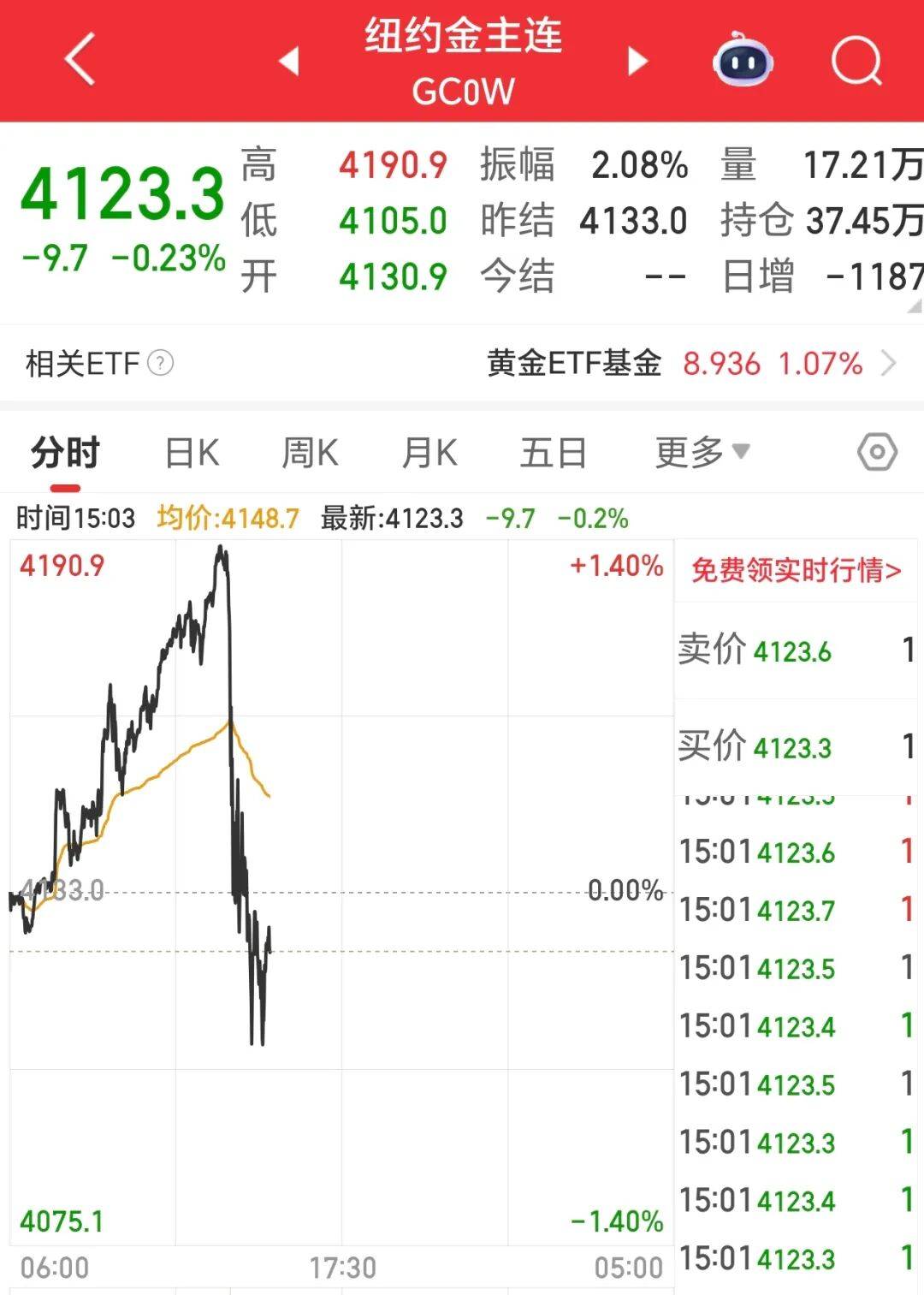
金荣中国:现货黄金延续新高,盘中一度挑战4233美元/盎司
Sou Hu Cai Jing· 2025-10-16 06:01
Core Viewpoint - The rise in gold prices is primarily driven by increasing expectations of interest rate cuts by the Federal Reserve, geopolitical uncertainties, and escalating international trade tensions [3][4][6]. Fundamental Analysis - Gold prices have shown strong performance, trading around $4,229 per ounce after a significant increase of 1.59% on the previous day, marking four consecutive days of gains [1]. - The U.S. dollar index has declined by 0.32% to 98.72, reflecting a bearish trend over two consecutive days [1]. - The Federal Reserve's Beige Book indicates little change in U.S. economic activity, with signs of increased layoffs and reduced spending among middle- and low-income households [4]. - Market expectations suggest a 25 basis point rate cut at the upcoming Federal Reserve meeting on October 28-29, with further cuts anticipated in December and three more in the following year [1][3]. - The labor market is under pressure, with layoffs increasing and spending declining, particularly among lower-income families [4][5]. - The ongoing government shutdown has resulted in an estimated economic output loss of approximately $15 billion per day, affecting key economic data releases [5]. - Trade tensions have reignited, particularly regarding U.S.-China relations, contributing to market uncertainty and further supporting gold's appeal as a safe-haven asset [6]. Technical Analysis - The daily chart indicates a strong bullish trend for gold, with potential upward movement towards the $4,300 level [8]. - Short-term trading strategies suggest entering long positions around $4,145 or $4,120, with a stop loss of $10 and targets set at $4,190 and $4,230 [7][8]. - Caution is advised for traders, as there may be a risk of price pullbacks, particularly around the $4,250 level [8].

张德盛:10.16现货黄金还会涨吗?积存金行情价格走势分析操作
Sou Hu Cai Jing· 2025-10-16 03:05
Group 1 - The core viewpoint of the articles emphasizes the bullish trend in gold prices driven by factors such as Federal Reserve interest rate cut expectations, geopolitical uncertainties, and escalating international trade tensions [3][4]. - Gold prices reached a historical high of $4218 per ounce, with a notable increase of 1.59% on Wednesday, marking four consecutive days of gains [3]. - The market sentiment remains optimistic, with expectations for gold to potentially reach the next target range of $4300 to $4500 [3][4]. Group 2 - Technical analysis indicates that the support level for gold is around $4180, and traders are advised to wait for a pullback to this level for more stable buying opportunities [4]. - Domestic gold prices, particularly the Shanghai gold futures (2512 contract), have shown strong upward momentum, reaching a high of 967, indicating a robust bullish trend [4]. - The articles suggest that a significant adjustment in the market could provide further opportunities for traders, but caution is advised against chasing prices without clear signals [4].

金晟富:10.16黄金每天新高何时见顶?日内黄金行情分析参考
Sou Hu Cai Jing· 2025-10-16 02:53
Group 1: Market Overview - The recent surge in gold prices is attributed to multiple favorable factors, including rising expectations for interest rate cuts by the Federal Reserve, geopolitical uncertainties, and escalating international trade tensions [2][3] - Gold prices reached a historical high of $4218 per ounce, with a 1.59% increase on Wednesday, marking four consecutive days of gains [2] - The Federal Reserve's dovish stance, particularly comments from Chairman Powell regarding the labor market, has led to a decline in the US dollar index, enhancing gold's appeal as a hedge against risks [2][3] Group 2: Economic Impact - The ongoing government shutdown has resulted in an estimated economic output loss of approximately $15 billion per day, affecting the release of key economic data such as inflation and retail sales reports [3] - Despite some positive indicators like the Empire State Manufacturing Index rising to 10.7, overall economic activity remains stagnant, with concerns over consumer spending and increased layoffs [3] - The mention of "tariffs" in reports highlights their impact on rising input costs and inflation expectations, with the term being referenced 64 times [3] Group 3: Technical Analysis and Trading Strategies - Current trading strategies suggest a cautious approach, with recommendations to buy on dips around $4180 and to avoid chasing prices above $4250 [4][6] - The short-term trading outlook emphasizes the importance of monitoring market trends, with key resistance levels identified at $4250-$4255 and support levels at $4180 [6][7] - Specific trading strategies include selling on rebounds near $4250-$4255 and buying on dips around $4185-$4190, with strict stop-loss measures advised [7]

黄金白银,突然跳水!
Sou Hu Cai Jing· 2025-10-14 09:36
Group 1 - Gold and silver prices experienced a significant drop after reaching historical highs, with COMEX gold falling by 0.64% and London spot gold down by 0.51% [1][3] - The decline in precious metal prices is viewed as a technical correction following a period of continuous increase, with industry experts remaining optimistic about future price movements [4] - Factors supporting the outlook for gold prices include the current interest rate cut cycle and geopolitical uncertainties, which are expected to provide upward pressure on gold [4] Group 2 - A precious metals listed company expressed a positive outlook for both gold and silver prices, indicating that gold is likely to remain strong while silver may follow gold's upward trend due to its industrial properties [4] - Historical data suggests that silver prices tend to exhibit greater volatility compared to gold, which may influence future trading strategies [4] - Another gold listed company also shares a favorable view on gold prices, citing the trend of "de-dollarization" and geopolitical uncertainties as key supporting factors [4]