
指数增强

Search documents
策略周观点:财报和中观景气改善的交集
2025-05-18 15:48
Summary of Conference Call Notes Industry or Company Involved - The notes primarily discuss the A-share market, public funds, and various sectors including technology, consumer goods, manufacturing, and TMT (Technology, Media, and Telecommunications) sectors. Core Points and Arguments - **Market Overview**: The market lacks a clear direction, with public fund adjustments and high-frequency data being the main trading logic. Non-bank sectors show a demand for catch-up, becoming a preferred direction for funds. The market is expected to remain volatile with both bullish and bearish factors present [1][4][5]. - **Sector Allocation Recommendations**: The recommendation is to maintain a strategy focused on broad technology, domestic demand, and dividend stocks. New regulations favor large-cap stocks, and the technology sector is expected to see short-term trading opportunities due to upcoming industry events [1][6]. - **Hong Kong Market Outlook**: The Hong Kong market is expected to gain attractiveness due to tariff easing and expectations of RMB appreciation, which will facilitate capital inflow from the south [1][7]. - **Public Fund Regulations Impact**: New regulations pose challenges for fund managers, with only 30.9% of equity mixed funds expected to pass assessments from 2022 to 2024. Strategies may shift towards quantitative methods or changing benchmarks to adapt to these regulations [1][8]. - **Market Capital Flow**: The overall capital flow in the market remained stable, with net inflows in financing funds. However, foreign capital showed mixed trends, with active foreign investments withdrawing from A-shares and Hong Kong stocks [1][10][11]. - **Sector-Specific Trends**: The consumer sector saw significant net outflows in ETFs, while manufacturing and technology sectors experienced slight outflows after previous inflows. Corporate buybacks and major shareholder increases are expected to provide support to the market [1][12]. - **April A-Share Economic Data**: A-share economic data showed a downward trend, with consumer sectors showing signs of recovery, while manufacturing sector improvements slowed down. The TMT sector demonstrated resilience [2][14]. - **Highlighted Industries**: Key industries to watch include lithium batteries, photovoltaic equipment, e-commerce, textiles, dairy products, and condiments, all showing signs of recovery or growth [2][15]. Other Important but Possibly Overlooked Content - **Market Sentiment Complexity**: Recent market sentiment is described as complex and slightly weaker than expected, with strong performances in certain sectors like photovoltaic and shipping, while others like military and robotics faced corrections [3]. - **Future Market Dynamics**: The market is expected to adapt to new regulations, potentially leading to increased indexation, which may affect the uniqueness and competitiveness of products offered by fund managers [1][9].
科创综指增强基金再添一员:布局硬科技赛道新选择!
Xin Lang Ji Jin· 2025-05-13 01:21
Core Insights - The rapid growth of index funds has led to the ETF market size surpassing 4 trillion yuan by April 17, 2025, with stock ETFs being the main contributors to this growth [1] - Index-enhanced funds are gaining popularity as they combine passive investment with active management, catering to investors' dual needs for passive investment and excess returns [1][2] Group 1: Advantages of Index-Enhanced Funds - Dual attributes: They passively track indices (e.g., STAR Market Composite Index, CSI 300) to reduce individual stock selection risk while also actively seeking to outperform benchmark indices through quantitative models or active stock selection [3][4] - Risk-return balance: Index-enhanced funds aim for excess returns while controlling tracking error (typically 2%-5%), offering lower fees and greater transparency compared to active funds [5] - Diverse index opportunities: The rapid expansion of the index system provides more segmented tracks for index-enhanced strategies, suitable for capturing structural market trends [6] Group 2: New Product Launch - The launch of the Huashang STAR Market Composite Index Enhanced Fund is highlighted, which aims to closely track the STAR Market Composite Index while striving for superior investment returns [7] - The STAR Market Composite Index covers a wide range of high-growth, high-potential technology companies, with a market capitalization coverage of nearly 97%, and a balanced industry distribution [6] Group 3: Team Expertise - The performance of index-enhanced products heavily relies on the professional capabilities of the management team, particularly in the context of the high R&D and volatility characteristics of STAR Market companies [8] - The Huashang STAR Market Composite Index Enhanced Fund is managed by a team with strong expertise in quantitative investment, led by two PhD holders [10][12] Group 4: Management Team Profiles - Dr. Aiding Fei, with over 10 years of experience in securities, focuses on quantitative multi-factor stock selection models and aims to mitigate emotional biases in investment [11] - Dr. Haiyang, with 8 years of experience, employs a quantitative-driven approach to monitor risks and returns across different sectors, seeking optimal exposure to risk and expected returns [12]


私募基金年内加速“上新”,百亿私募“鏖战”A500指增
2 1 Shi Ji Jing Ji Bao Dao· 2025-05-12 14:17
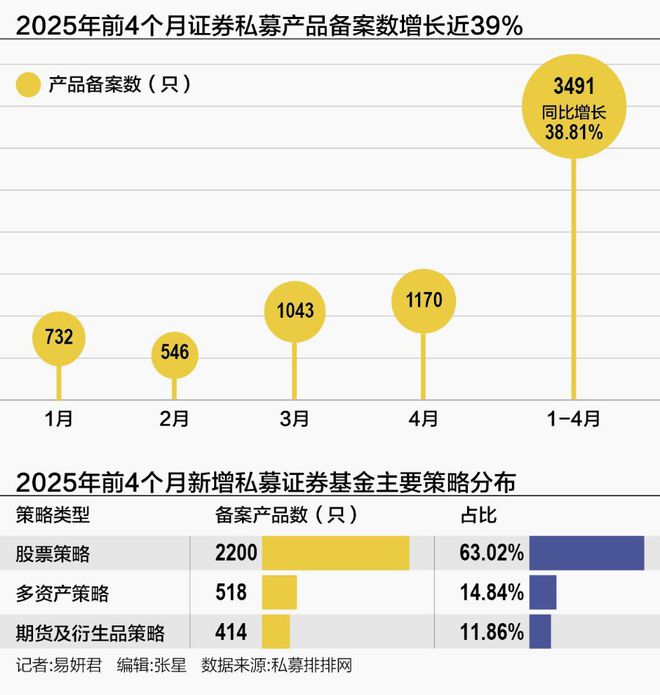
21世纪经济报道记者易妍君 广州报道市场风险偏好回升背景下,私募证券投资基金日益活跃。 根据私募排排网最新统计,今年前4个月,已有1372家私募证券投资基金管理人备案了新产品,累计备 案私募证券产品3491只,较2024年同期的2515只增长了38.81%。其中,4月新备案的私募证券产品数量 达到1170只,创下近24个月内单月最高纪录。 值得一提的是,伴随A股市场流动性回暖,量化策略逐渐成为市场主流策略之一。特别是以指数增强 (简称"指增")为代表的股票量化策略颇受机构青睐。例如,今年以来,包括黑翼资产、宽德私募、世 纪前沿在内,多家"百亿"(管理规模超过100亿元以上,下同)私募均备案了A500指数增强产品。 "量化策略在私募领域的应用广度与深度持续拓展,已发展成为投资者资产配置的核心组成部分。"融智 投资FOF基金经理李春瑜向21世纪经济报道记者指出,随着市场参与者数量快速增长,量化行业竞争日 趋白热化,倒逼各机构通过构建差异化策略体系、强化技术研发投入和完善风险管理机制来提升核心竞 争力。 量化私募产品占比接近44% 2025年以来,A股市场逐步企稳,投资者情绪有所回暖,私募基金行业则掀起了备案新产品 ...
从“沪深300”到“A500”:指数增强实力派步入新赛道
Xin Lang Ji Jin· 2025-05-12 05:42
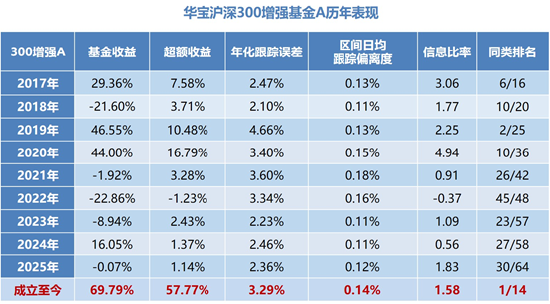
A500指数,这个从2024年火到今天、被誉为中国版"标普500"的明星指数,成为了当下指数增强投资的 布局热门。今日(5月12日),又一A500指增基金——华宝中证A500指数增强基金(A类:023319;C 类:023320)正式开售,该基金将由绩优量化投资老将徐林明,搭档基金经理喻银尤共同管理。 徐林明的代表作——华宝沪深300增强A(003876)自2016.12.9成立以来,截至2025.3.31,区间收益率 达69.79%,而同期其基准指数(沪深300指数)仅上涨12.02%,区间超额收益高达57.77%,年化超额达 5.21%,在14只同期可比同类基金中高居第一(1/14)。(来源:2025年基金一季报、Wind。注:同类 产品指同期已经成立的、跟踪标的为沪深300指数的指数增强公募基金) 因此,在A500指数增强这个热门赛道上,华宝中证A500指数增强基金(A类:023319;C类:023320) 的发售,引起了市场的重点关注。 指数增强"经典赛道":沪深300 靛青是从蓼蓝(蓝草)中提取的,却比蓼蓝(蓝草)的颜色更深。拿《荀子·劝学》中的名句——"青, 取之于蓝,而胜于蓝",来形容"指数增强 ...
东方因子周报:Liquidity风格登顶,单季ROE因子表现出色-20250511
Orient Securities· 2025-05-11 10:16
Quantitative Factors and Construction Methods Factor Name: Liquidity - **Construction Idea**: Measures the market's preference for high-liquidity assets, reflecting the demand for stocks with higher turnover rates [9][14] - **Construction Process**: - **TO**: Average logarithmic turnover rate over the past 243 trading days - **Liquidity Beta**: Regression of individual stock turnover rates against market turnover rates over the past 243 trading days [14] - **Evaluation**: Demonstrated the highest positive return among style factors in the recent week, indicating a significant increase in demand for high-liquidity assets [9] - **Performance**: Weekly return of 5.44%, monthly return of 13.08%, and annualized return of 33.79% over the past year [11] Factor Name: Volatility - **Construction Idea**: Captures the market's preference for high-volatility stocks, reflecting risk appetite [9][14] - **Construction Process**: - **Stdvol**: Standard deviation of daily returns over the past 243 trading days - **Ivff**: Fama-French 3-factor idiosyncratic volatility over the past 243 trading days - **Range**: Difference between the highest and lowest prices over the past 243 trading days - **MaxRet_6**: Average return of the six highest daily returns over the past 243 trading days - **MinRet_6**: Average return of the six lowest daily returns over the past 243 trading days [14] - **Evaluation**: Showed a significant improvement in weekly performance, reflecting increased market risk appetite [9] - **Performance**: Weekly return of 5.03%, monthly return of 12.37%, and annualized return of 25.55% over the past year [11] Factor Name: Beta - **Construction Idea**: Represents the market's preference for high-beta stocks, indicating sensitivity to market movements [9][14] - **Construction Process**: Bayesian shrinkage of market beta [14] - **Evaluation**: Significant weekly performance improvement, indicating a strong preference for high-beta stocks [9] - **Performance**: Weekly return of 4.28%, monthly return of 12.51%, and annualized return of 33.02% over the past year [11] Factor Name: Growth - **Construction Idea**: Measures the market's preference for growth-oriented stocks, focusing on financial growth metrics [9][14] - **Construction Process**: - **Delta ROE**: Average change in ROE over the past three years - **Sales Growth**: 3-year compound growth rate of TTM sales revenue - **Na Growth**: 3-year compound growth rate of TTM net assets [14] - **Evaluation**: Improved weekly performance, reflecting increased market interest in growth stocks [9] - **Performance**: Weekly return of 1.65%, monthly return of 0.77%, and annualized return of 1.32% over the past year [11] Factor Name: Certainty - **Construction Idea**: Reflects the market's preference for stocks with higher predictability and stability [10][14] - **Construction Process**: - **Instholder Pct**: Proportion of holdings by mutual funds - **Cov**: Analyst coverage adjusted for market capitalization - **Listdays**: Number of days since the stock's listing [14] - **Evaluation**: Experienced a significant decline in weekly performance, indicating reduced confidence in certainty-based strategies [10] - **Performance**: Weekly return of -3.99%, monthly return of -9.10%, and annualized return of -17.07% over the past year [11] Factor Name: Value - **Construction Idea**: Measures the market's preference for undervalued stocks based on valuation metrics [10][14] - **Construction Process**: - **BP**: Book-to-price ratio - **EP**: Earnings yield [14] - **Evaluation**: Significant decline in weekly performance, reflecting reduced market interest in value-based strategies [10] - **Performance**: Weekly return of -4.75%, monthly return of -8.10%, and annualized return of -16.96% over the past year [11] Factor Name: Size - **Construction Idea**: Captures the market's preference for small-cap stocks [10][14] - **Construction Process**: Logarithm of total market capitalization [14] - **Evaluation**: Experienced the largest decline among style factors, indicating reduced market interest in small-cap stocks [10] - **Performance**: Weekly return of -5.96%, monthly return of -12.84%, and annualized return of -54.81% over the past year [11] --- Factor Backtesting Results Weekly Performance - **Liquidity**: 5.44% - **Volatility**: 5.03% - **Beta**: 4.28% - **Growth**: 1.65% - **Certainty**: -3.99% - **Value**: -4.75% - **Size**: -5.96% [11] Monthly Performance - **Liquidity**: 13.08% - **Volatility**: 12.37% - **Beta**: 12.51% - **Growth**: 0.77% - **Certainty**: -9.10% - **Value**: -8.10% - **Size**: -12.84% [11] Annualized Performance (Past Year) - **Liquidity**: 33.79% - **Volatility**: 25.55% - **Beta**: 33.02% - **Growth**: 1.32% - **Certainty**: -17.07% - **Value**: -16.96% - **Size**: -54.81% [11]

反转因子表现出色,中证 1000 增强组合年内超额6.24%【国信金工】
量化藏经阁· 2025-05-11 00:55
Group 1 - The core viewpoint of the article is to track and analyze the performance of various index enhancement portfolios and the factors influencing stock selection across different indices [1][2][3]. Group 2 - The performance of the HuShen 300 index enhancement portfolio showed an excess return of 0.54% for the week and 2.44% year-to-date [5][19]. - The performance of the Zhongzheng 500 index enhancement portfolio indicated an excess return of 1.29% for the week and 4.77% year-to-date [5][21]. - The Zhongzheng 1000 index enhancement portfolio achieved an excess return of 1.67% for the week and 6.24% year-to-date [5][21]. - The Zhongzheng A500 index enhancement portfolio reported an excess return of 0.21% for the week and 5.19% year-to-date [5][25]. Group 3 - In the HuShen 300 component stocks, factors such as expected PEG, quarterly ROE, and quarterly EP performed well [6][4]. - In the Zhongzheng 500 component stocks, factors like three-month reversal, one-month reversal, and three-month turnover showed strong performance [6][8]. - For the Zhongzheng 1000 component stocks, one-month reversal, specificity, and three-month reversal were notable factors [6][10]. - In the Zhongzheng A500 index component stocks, three-month reversal, expected PEG, and expected EPTTM were effective factors [6][12]. - Among public fund heavy stocks, one-month reversal, three-month reversal, and expected PEG were the best-performing factors [6][14]. Group 4 - The public fund index enhancement products for HuShen 300 had a maximum excess return of 0.57%, a minimum of -0.34%, and a median of 0.05% for the week [19]. - The Zhongzheng 500 index enhancement products had a maximum excess return of 1.06%, a minimum of -0.28%, and a median of 0.25% for the week [21]. - The Zhongzheng 1000 index enhancement products reported a maximum excess return of 0.97%, a minimum of -0.55%, and a median of 0.23% for the week [21]. - The Zhongzheng A500 index enhancement products had a maximum excess return of 0.58%, a minimum of -0.49%, and a median of 0.02% for the week [25].

理财档案|指数增强如何实现超额收益?关注成分股数量和行业
Guang Zhou Ri Bao· 2025-05-08 15:29
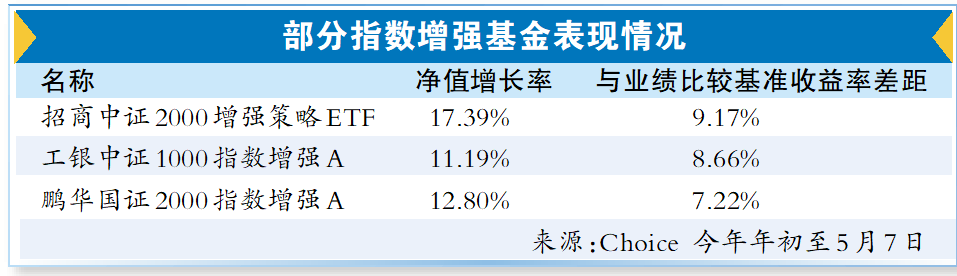
近期,指数增强基金走势火热,今年以来已有超七成指数增强基金,收益跑赢跟踪的标的指数。指数增强基金是什么?如何投资呢? 有业内人士表示,指数增强基金适合有一定风险承受能力的投资者,波动性较大的指数可能更容易获得超额收益。而指数的成分股越 少、行业区别越小,相关指数增强基金越难实现超额收益。 指数增强基金有望实现超额收益管理费相对高 普通指数基金主要是复制跟踪指数构建投资组合,而指数增强基金,会将80%的资金投资标的指数的成分股,而剩下的20%资金会由基 金经理和投资团队采用精选个股等策略,力争增厚产品收益。 成分股越少、行业区别越小越难实现超额收益 记者采访了解到,指数增强基金实现超额收益,整体成分股数量越少越难做,成分股行业区别越小越难做。"例如银行指数,由于银行 和银行之间区别较小,非常难做增强,而科技指数就相对更好做增强。"有公募基金业内人士指出。 有公募基金业内人士指出,通常情况下,中证1000指数增强型基金的平均超额收益大于中证500指数增强型基金,而中证500指数增强型 基金的平均超额收益又大于沪深300指数增强型基金。 李一鸣表示,波动性较大的指数可能更容易获得超额收益,基金经理可以通过把握个股波 ...
反转因子表现出色,中证 A500 增强组合年内超额 4.88%【国信金工】
量化藏经阁· 2025-05-04 06:02
Group 1 - The core viewpoint of the article is to track the performance of various index enhancement portfolios and stock selection factors across different indices, highlighting their excess returns and factor performance over the recent week and year-to-date [1][2][3]. Group 2 - The performance of the HuShen 300 index enhancement portfolio showed an excess return of -1.26% for the week and 1.88% year-to-date [5]. - The performance of the ZhongZheng 500 index enhancement portfolio showed an excess return of -0.50% for the week and 3.40% year-to-date [5]. - The ZhongZheng 1000 index enhancement portfolio had an excess return of -0.78% for the week and 4.40% year-to-date [5]. - The ZhongZheng A500 index enhancement portfolio reported an excess return of -0.22% for the week and 4.88% year-to-date [5]. Group 3 - In the HuShen 300 component stocks, factors such as one-year momentum, one-month reversal, and DELTAROE performed well [6]. - In the ZhongZheng 500 component stocks, factors like one-month reversal, SPTTM, and executive compensation showed strong performance [6]. - For ZhongZheng 1000 component stocks, factors such as non-liquidity shock, three-month earnings adjustments, and expected net profit month-on-month performed well [6]. - In the ZhongZheng A500 component stocks, one-month reversal, one-year momentum, and executive compensation were among the top-performing factors [6]. Group 4 - The HuShen 300 index enhancement products had a maximum excess return of 0.44%, a minimum of -0.66%, and a median of -0.06% for the week [19]. - The ZhongZheng 500 index enhancement products had a maximum excess return of 0.48%, a minimum of -1.30%, and a median of -0.35% for the week [19]. - The ZhongZheng 1000 index enhancement products had a maximum excess return of 1.09%, a minimum of -0.82%, and a median of -0.06% for the week [19]. - The ZhongZheng A500 index enhancement products had a maximum excess return of 0.46%, a minimum of -0.38%, and a median of -0.22% for the week [19]. Group 5 - The total number of public fund index enhancement products includes 67 for HuShen 300 with a total scale of 77.8 billion, 69 for ZhongZheng 500 with 45.2 billion, 46 for ZhongZheng 1000 with 15 billion, and 35 for ZhongZheng A500 with 22.3 billion [16].

罕见!29只基金同日公告成立,竟有9只是指数增强基金
Mei Ri Jing Ji Xin Wen· 2025-04-30 07:49
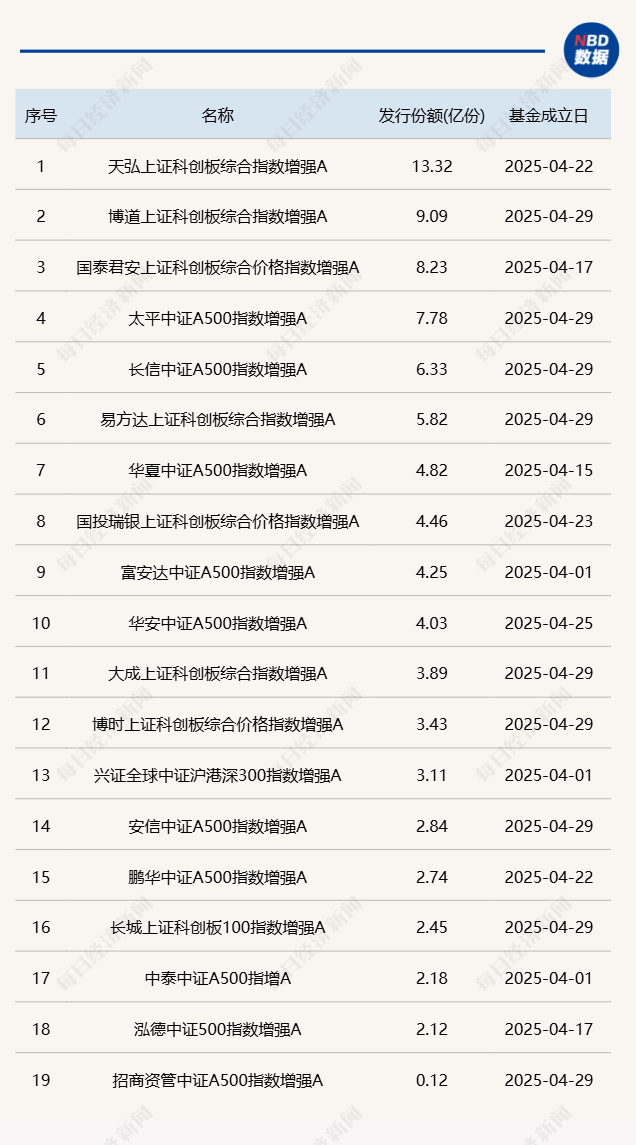
Core Insights - The public fund industry witnessed an unusual event with 29 funds announced on the same day, representing nearly a quarter of the total 119 funds established in April [1][2] - Among these, 9 were index-enhanced funds, indicating a growing focus on this product type as traditional ETF offerings face challenges [1][2] Fund Establishment Trends - In April, 19 index-enhanced funds were established, accumulating a total scale of approximately 9.1 billion yuan [2] - The trend of establishing index-enhanced funds accelerated since March, with 18 funds launched that month, totaling around 12.8 billion yuan [5] - Year-to-date, 49 index-enhanced funds have been established, with a cumulative scale of about 25.5 billion yuan [4] Market Dynamics - The increasing number of index-enhanced funds reflects a strategic shift among fund companies as they seek differentiation in a competitive market [6][10] - The ETF market has shown a "Matthew effect," making it challenging for many fund companies to compete effectively [8] - Index-enhanced funds are perceived as a potential breakthrough for companies facing difficulties in the ETF space [9] Challenges and Opportunities - Despite the growing interest, index-enhanced products have historically struggled to exceed a total scale of 300 billion yuan, indicating a significant hurdle in market acceptance [12] - The average annual excess return of index-enhanced funds compared to the CSI 300 index from 2020 to 2024 was 4.3%, but only 40% of these funds managed to consistently outperform the index over five years [12] - Achieving stable excess returns is crucial for the long-term viability of index-enhanced funds, as investor confidence hinges on their ability to deliver consistent performance [12]
交易型指数基金资金流向周报-20250428
Great Wall Securities· 2025-04-28 09:39
Report Information - Report Title: Weekly Report on Capital Flows of Exchange-Traded Index Funds [1] - Data Date: April 21 - April 25, 2025 [1] - Analyst: Jin Ling [1] - Report Date: April 28, 2025 [1] Core Viewpoints - The report presents the capital flow, fund scale, and weekly price change data of domestic passive stock funds, overseas index funds, and other types of index funds from April 21 to April 25, 2025, helping investors understand the market dynamics of different types of index funds [4][5][6] Summary by Category Domestic Passive Stock Funds - **Composite Concepts**: Among them, the CSI 1000 had a weekly price increase of 1.95% and a net capital inflow of 594 million yuan; the Science and Technology Innovation 100 had a weekly price increase of 0.69% and a net capital inflow of 391 million yuan; while the Shanghai - Shenzhen 300 had a weekly price increase of 0.38% but a net capital outflow of 2.783 billion yuan [4] - **Industry Themes**: The large - technology concept had a weekly price increase of 1.10% and a net capital inflow of 4.849 billion yuan; the large - health concept had a weekly price increase of 2.36% and a net capital inflow of 479 million yuan; the large - consumer concept had a weekly price increase of 0.36% and a net capital outflow of 1.397 billion yuan [4] - **Style Strategies**: The dividend - low - volatility concept had a weekly price increase of 0.76% and a net capital inflow of 87 million yuan; the growth concept had a weekly price increase of 1.84% and a net capital outflow of 109 million yuan [4] - **Enterprise Nature**: The China Special Valuation (C - Special Valuation) concept had a weekly price change of - 0.05% and a net capital outflow of 242 million yuan [4] - **Region**: The regional concept had a weekly price increase of 1.62% and a net capital outflow of 600,000 yuan [4] Overseas Index Funds - **Composite Concepts**: The Nasdaq 100 had a weekly price increase of 4.79% and a net capital inflow of 1.052 billion yuan; the S&P 500 had a weekly price increase of 3.35% and a net capital inflow of 366 million yuan; the Nikkei 225 had a weekly price increase of 1.50% and a net capital outflow of 16 million yuan [5] - **Industry Themes**: The Hong Kong Stock Technology concept had a weekly price increase of 3.73% and a net capital inflow of 553 million yuan; the China Internet concept had a weekly price increase of 5.22% and a net capital outflow of 51 million yuan; the Hong Kong Stock Medical concept had a weekly price increase of 9.53% and a net capital outflow of 3.053 billion yuan [5] - **Style Strategies**: The dividend concept had a weekly price increase of 1.18% and a net capital inflow of 200,000 yuan; the dividend - low - volatility concept had a weekly price increase of 1.85% and a net capital inflow of 100,000 yuan [5] Other Types of Index Funds - **Bond Funds**: Among interest - rate - related bond funds, the 10 - year bond fund had a weekly price increase of 0.05% and a net capital inflow of 3 million yuan; the 5 - 10 - year bond fund had a weekly price change of - 0.04% and a net capital outflow of 195 million yuan [6] - **Commodity Funds**: The gold fund had a weekly price change of - 0.70% and a net capital inflow of 1.8109 billion yuan; the non - ferrous metal fund had a weekly price increase of 1.70% and a net capital outflow of 400,000 yuan [6] - **Index - Enhanced Funds**: The CSI 500 index - enhanced fund had a weekly price increase of 1.92% and a net capital outflow of 18 million yuan; the GEM index - enhanced fund had a weekly price increase of 2.45% and a net capital outflow of 500,000 yuan [6]