碳化硅

Search documents
温州宏丰跌2.12%,成交额1.70亿元,主力资金净流出3257.69万元
Xin Lang Cai Jing· 2025-08-27 06:21
Company Overview - Wenzhou Hongfeng Electric Alloy Co., Ltd. is located in Wenzhou, Zhejiang Province, and was established on September 11, 1997. It was listed on January 10, 2012. The company specializes in the research, production, and sales of electrical contact functional composite materials, components, and hard alloy products [2] - The main business revenue composition includes: integrated electrical contact components (33.50%), particle and fiber reinforced electrical contact functional composite materials and components (24.84%), layered composite electrical contact functional composite materials and components (16.14%), others (10.51%), hard alloys (10.11%), and lithium battery copper foil (4.91%) [2] - The company belongs to the Shenwan industry category of electrical equipment - grid equipment - distribution equipment, and is associated with concepts such as silicon carbide, solid-state batteries, lithium batteries, charging piles, and smart grids [2] Financial Performance - As of June 30, the number of shareholders for Wenzhou Hongfeng was 21,800, an increase of 14.26% from the previous period. The average circulating shares per person decreased by 12.48% to 14,087 shares [2] - For the first half of 2025, Wenzhou Hongfeng achieved operating revenue of 1.687 billion yuan, a year-on-year increase of 28.53%. However, the net profit attributable to the parent company was -3.813 million yuan, a year-on-year decrease of 45.01% [2] Stock Performance - On August 27, Wenzhou Hongfeng's stock price fell by 2.12%, trading at 7.37 yuan per share with a transaction volume of 170 million yuan and a turnover rate of 6.39%. The total market capitalization is 3.590 billion yuan [1] - Year-to-date, Wenzhou Hongfeng's stock price has increased by 34.24%. In the last five trading days, it has decreased by 1.07%, while it has increased by 1.52% over the last 20 days and by 29.98% over the last 60 days [1] - The company has appeared on the "Dragon and Tiger List" once this year, with the most recent appearance on July 18, where it recorded a net purchase of 855.068 million yuan, accounting for 20.92% of the total transaction volume [1] Dividend Information - Since its A-share listing, Wenzhou Hongfeng has distributed a total of 150 million yuan in dividends. In the past three years, the cumulative dividend distribution amounts to 19.6705 million yuan [3]

晶盛机电(300316):设备验收放缓等影响短期业绩 看好半导体设备&材料布局
Xin Lang Cai Jing· 2025-08-27 00:41
Core Viewpoint - The photovoltaic industry is experiencing significant performance impacts due to cyclical fluctuations, leading to a substantial decline in revenue and profitability for companies in the sector [1][2]. Financial Performance - In H1 2025, the company's revenue was 5.8 billion yuan, a year-on-year decrease of 42.9%, with equipment and services revenue at 4.08 billion yuan (down 44.6%) and materials revenue at 1.23 billion yuan (down 48.2%) [1] - The net profit attributable to the parent company was 640 million yuan, a year-on-year decline of 69.5% [1] - In Q2 2025, the single-quarter revenue was 2.66 billion yuan, down 52.8% year-on-year and 15.2% quarter-on-quarter, with net profit of 70 million yuan, a 93.6% year-on-year decline [1] Profitability Metrics - The gross margin for H1 2025 was 24.4%, a decrease of 12.6 percentage points year-on-year, with equipment and services gross margin at 32.9% (down 4.5 percentage points) and materials gross margin at 6.22% (down 33.9 percentage points) [2] - The net profit margin was 10.7%, down 12.8 percentage points year-on-year, with a period expense ratio of 13.0%, an increase of 4.2 percentage points [2] - In Q2 2025, the gross margin was 20.6%, down 11.2 percentage points year-on-year and 6.9 percentage points quarter-on-quarter, with a net profit margin of 2.3%, down 16.2% year-on-year and 15.5% quarter-on-quarter [2] Inventory and Cash Flow - As of Q2 2025, contract liabilities were 3.17 billion yuan, a year-on-year decrease of 62.1%, and inventory was 8.95 billion yuan, down 35.0% [2] - The company reported a net cash flow from operating activities of 450 million yuan in H1 2025, an increase of 55.8% year-on-year [2] Product Development and Market Position - The company focuses on large silicon wafers, advanced packaging, advanced processes, and silicon carbide equipment, providing comprehensive solutions for crystal growth, slicing, grinding, and polishing [3] - The company has developed various silicon carbide equipment and has planned a total production capacity of 900,000 pieces for silicon carbide substrates, with significant partnerships in the AR glasses sector [3] Subsidiary Performance - The subsidiary, Jinghong Precision, specializes in high-precision components and has capabilities in special welding, assembly testing, and semiconductor-level surface treatment, targeting high-end product markets [4] - The profit forecast for the company has been adjusted downwards for 2025-2027, but the growth potential across multiple business lines remains [4]
晶盛机电20250825
2025-08-25 09:13
Summary of Jinsheng Electric's Conference Call Company Overview - **Company**: Jinsheng Electric - **Industry**: Semiconductor and Photovoltaic Equipment Key Points Financial Performance - In the first half of 2025, Jinsheng Electric achieved a revenue of 5.799 billion yuan and a net profit attributable to shareholders of 639 million yuan [3] - The company reported a net cash inflow from operating activities of 447 million yuan, a year-on-year increase of 55.84%, indicating improved financial management [2][4] Business Segments - Jinsheng Electric focuses on three main business segments: semiconductor equipment, substrate materials, and consumables [2] - The company has over 3.7 billion yuan in unfulfilled contracts for integrated circuits and compound semiconductor equipment as of June 30, 2025 [3] Semiconductor Equipment - The company successfully delivered 12-inch silicon epitaxy equipment to leading domestic clients and is promoting 8-inch silicon carbide (SiC) epitaxy equipment [3] - New products such as the 12-inch dry-in dry-out edge polishing machine and double-sided thinning machine are undergoing customer validation [3] - Jinsheng Electric is a market leader in large silicon wafer equipment and is expanding its overseas market for semiconductor components and consumables [3][4] Photovoltaic Equipment - The company is optimistic about the long-term development of the photovoltaic industry and is addressing overcapacity challenges through technological innovations [2][5] - New products like Topcon efficiency EPD equipment and BC end silver-free multi-wire welding equipment are expected to have a positive impact from 2025 to 2026 [5][6] Silicon Carbide (SiC) Development - Jinsheng Electric has made significant advancements in 12-inch SiC crystal growth technology and is validating 8-inch SiC substrates with global customers [2][4] - The company plans to produce 600,000 wafers per month to meet future market demand, anticipating that 8-inch SiC will fully replace 6-inch [2][7] - The expected turning point for SiC development is projected for 2026-2027, particularly in the automotive sector [3][11] Market Outlook - The company expects a significant increase in demand for 8-inch conductive chips and MOSFETs by 2026-2027, driven by investments from major players like Infineon [9][11] - The photovoltaic industry is recovering from a downturn, and Jinsheng Electric is focused on maintaining order expansion and enhancing competitiveness through innovation [16] Challenges and Strategies - The company faces challenges in the photovoltaic equipment sector due to intense competition and cash flow pressures, particularly in the dry pot and diamond wire segments [28] - Jinsheng Electric is committed to continuous investment in key areas to ensure long-term sustainable development despite current financial performance not meeting expectations [29] Inventory and Supply Chain - The company maintains a lean inventory in the photovoltaic sector, while semiconductor components are stocked due to the long cycle nature of the industry [20] Conclusion - Jinsheng Electric is strategically positioned in the semiconductor and photovoltaic equipment markets, with a focus on innovation and expansion to capture future growth opportunities in the SiC and photovoltaic sectors [2][3][4][5][6][7][11][16][29]
天岳先进全球进击再下一城,解读牵手东芝电子元件背后“阳谋”
Zhi Tong Cai Jing· 2025-08-25 01:47
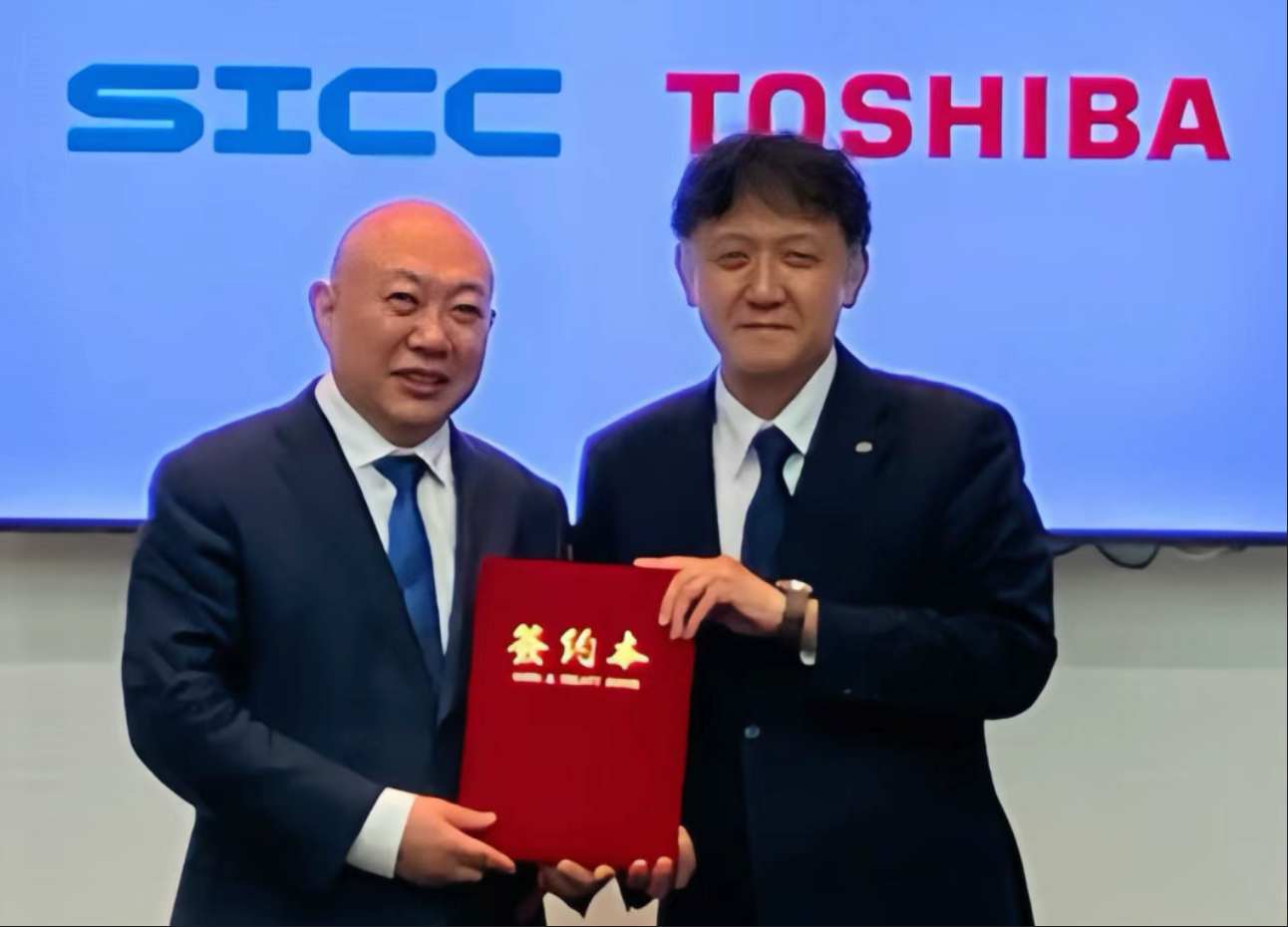
Core Viewpoint - Tianyue Advanced (02631) has made significant breakthroughs in business expansion, recently announcing a collaboration with Toshiba Electronic Components to enhance the characteristics and quality of silicon carbide power semiconductors, aiming to expand the supply of high-quality substrates [1][3] Group 1: Collaboration and Market Position - The partnership with Toshiba reinforces Tianyue's growing influence in the power semiconductor sector, as evidenced by its recent award from a Japanese semiconductor media outlet, marking the first time a Chinese company has won in this category [3] - Tianyue has established a strong presence in Japan, with sales offices and notable clients including Sumitomo, indicating a strategic focus on this market [3][4] - Chinese substrate manufacturers, represented by Tianyue, are gaining traction in Japan due to their quality and pricing advantages, leading local and European semiconductor firms to switch to Chinese products [3][4] Group 2: Competitive Landscape - The financial struggles of Japanese manufacturer Rohm, which reported an over 80% drop in operating profit, highlight the competitive pressure from Chinese firms like Tianyue, whose silicon carbide substrate technology is now considered top-tier [3][4] - The contrasting operational models between Japanese companies, which often pursue vertical integration, and Chinese firms, which focus on specific production processes, contribute to the competitive dynamics in the semiconductor industry [4] Group 3: International Expansion and Partnerships - Tianyue's collaboration with Infineon, signed in 2023, involves supplying 150mm substrates and assisting in the transition to 200mm silicon carbide wafers, with expected supply volumes representing a significant portion of Infineon's long-term needs [5] - Infineon's recent announcement of a 50 billion investment in Malaysia to build the largest 200mm silicon carbide power semiconductor factory indicates a growing demand for Tianyue's products [5] - The company has established partnerships with major global semiconductor players, including Bosch and ON Semiconductor, with over half of the top ten power semiconductor manufacturers collaborating with Tianyue [6] Group 4: Emerging Applications and Future Opportunities - Silicon carbide's superior performance characteristics position it as a key material in emerging fields such as data centers and AI technologies, with Tianyue poised to capitalize on these trends [9] - The company's strategic partnership with Sunny Optical's subsidiary focuses on micro-nano optics and new materials, further expanding its application scope [9] - As silicon carbide finds broader applications, Tianyue's role as a leading global supplier is expected to grow, providing valuable insights for other Chinese tech firms aiming for international markets [9]


天岳先进(02631)全球进击再下一城,解读牵手东芝电子元件背后“阳谋”
智通财经网· 2025-08-25 01:01
Core Viewpoint - Tianyue Advanced (02631) has made significant breakthroughs in business expansion, recently announcing a collaboration with Toshiba Electronic Components to enhance the characteristics and quality of silicon carbide power semiconductors, aiming to expand the supply of high-quality substrates [1][3] Group 1: Collaboration and Market Position - The partnership with Toshiba, a well-established semiconductor manufacturer in Japan, underscores Tianyue's growing influence in the power semiconductor sector [3] - Tianyue Advanced won the "Semiconductor Electronic Materials" gold award from the authoritative Japanese media "Electronic Device Industry News" in June, marking the first time a Chinese company has achieved this in 31 years [3] - The company has established a sales presence in Japan and has been supplying silicon carbide substrate materials to the Japanese market, with notable clients including Sumitomo [3][4] Group 2: Competitive Landscape - Chinese substrate manufacturers, represented by Tianyue Advanced, are gaining traction among local and European semiconductor firms due to their quality and price advantages [3][4] - The financial report from Japanese manufacturer Rohm indicated a significant drop of over 80% in operating profit, attributing this to the competitive pressure from Chinese manufacturers whose silicon carbide substrate technology has reached top levels [3][4] Group 3: Strategic Advantages - The collaboration with Toshiba may signify a shift where Tianyue, through local innovation, gradually "replaces" foreign competitors and plays a more significant role in the international power semiconductor supply chain [4] - Tianyue's overseas expansion is not limited to Japan, with ongoing developments in other regions also being noteworthy [4] Group 4: Partnerships and Future Prospects - Tianyue Advanced has a prior agreement with German semiconductor manufacturer Infineon, which includes supplying 150mm substrates and assisting in transitioning to 200mm silicon carbide wafers [5] - Infineon announced a 50 billion yuan investment to build the world's largest 200mm silicon carbide power semiconductor factory in Malaysia, indicating a growing demand for Tianyue's products [5] - The company has established partnerships with major global semiconductor giants, with over half of the top ten power semiconductor manufacturers collaborating with Tianyue Advanced [6] Group 5: Emerging Applications - Silicon carbide is recognized for its superior performance in high-pressure and high-temperature scenarios, making it a key material for emerging fields such as data centers and AI glasses [9] - Tianyue Advanced has signed a strategic cooperation agreement with Sunny Optical Technology Group to collaborate in the fields of micro-nano optics and new materials, positioning itself to capture opportunities in these growing markets [9]
DeepSeek-V3.1发布,磷化铟领域获重大突破
Guotou Securities· 2025-08-24 11:07
Investment Rating - The report maintains an investment rating of "Outperform the Market" [5] Core Insights - The semiconductor industry is experiencing significant advancements, particularly with TSMC's 2nm wafer pricing set at approximately $30,000, which is 50-66% higher than the current 3nm process [19] - The InP (Indium Phosphide) material sector has achieved a major breakthrough with the development of a 6-inch InP-based PIN structure detector and FP structure laser, addressing previous size limitations and enabling mass production [3] - The electronic sector has shown a weekly increase of 4.65%, with the electronic index PE at 63.89 times, indicating strong market performance [4][28] Summary by Sections Industry Performance - The electronic sector has outperformed with a relative return of 14.4% over the past month and an absolute return of 20.7% [7] - The electronic index PE is at 63.89 times, with a 10-year PE percentile of 78.80% [4][10] Semiconductor Developments - TSMC plans to start trial production of its 2nm process in the next 3-4 months, targeting a monthly capacity of 30,000 to 35,000 wafers [19] - The initial yield for the 2nm process is expected to be around 60%, with SRAM yields exceeding 90% [19] InP Material Breakthrough - The successful development of a 6-inch InP-based PIN structure detector and FP structure laser marks a significant advancement in the InP material field, overcoming previous technical bottlenecks [3] Investment Recommendations - The report suggests focusing on companies in the computing chip sector such as Cambrian, Haiguang Information, and Longxin Zhongke, as well as those in the InP industry like Sanan Optoelectronics and Yuanjie Technology [11]
济南前首富IPO敲钟,资本市场新星崛起,财富腾飞开启新时代
Sou Hu Cai Jing· 2025-08-23 04:34
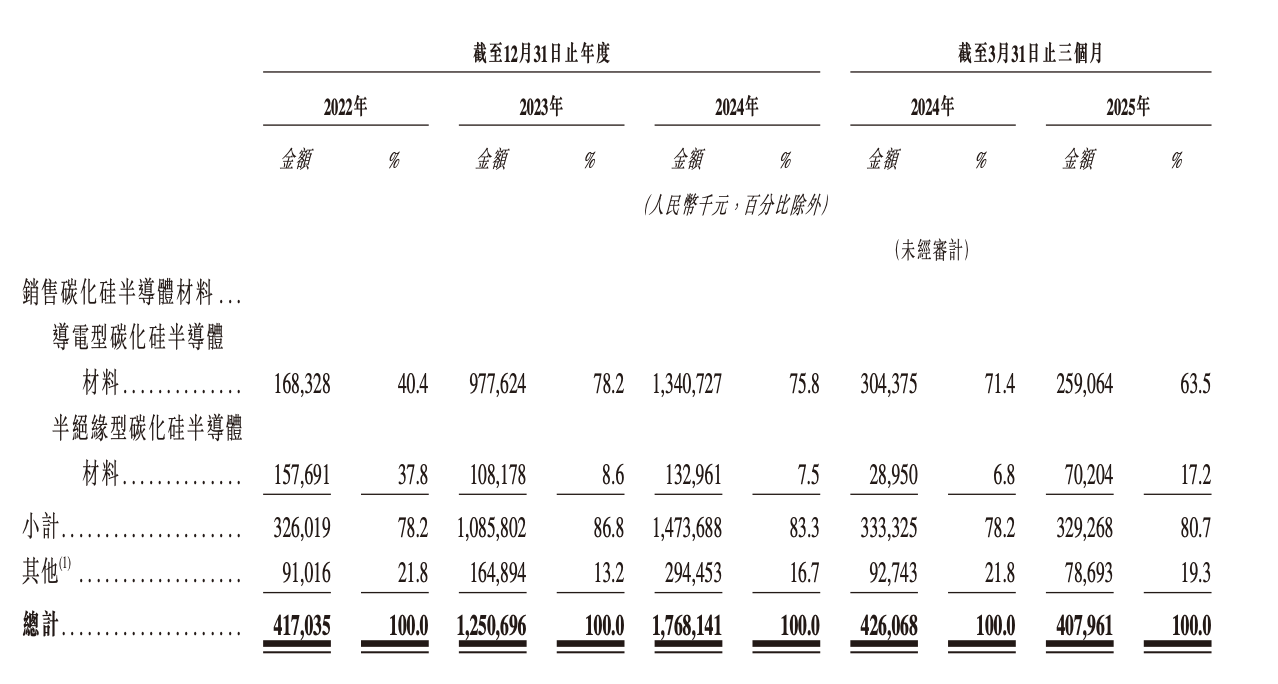
Core Viewpoint - Tianyue Advanced's successful listing on the Hong Kong Stock Exchange highlights the contrasting opportunities and pressures faced by companies in the A-share market, where listing thresholds are rising [1][12]. Company Overview - Tianyue Advanced was founded in 2010 by Zong Yanmin, who previously worked as an engineer and faced challenges after his initial business venture [3][5]. - The company specializes in silicon carbide substrates, a critical component in the semiconductor industry, and has made significant technological advancements [6][10]. Financial Performance - In 2022, Tianyue Advanced reported a revenue of 4.17 billion RMB, a 15.56% decrease year-on-year, with a net loss of 1.76 billion RMB due to various operational challenges [8]. - By 2023, the company's revenue rebounded to 12.51 billion RMB, and it is projected to reach 17.68 billion RMB in 2025, with a net profit of 1.79 billion RMB and a gross margin of 24.6% [10][17]. - The sales volume of products increased significantly from over 60,000 pieces to 360,000 pieces, although the average selling price dropped from 5,110 RMB to 4,080 RMB, indicating a competitive pricing strategy [10]. Market Position - Tianyue Advanced holds a 16.7% market share in the global silicon carbide substrate industry, ranking among the top three players, breaking the dominance of foreign companies [10][12]. - The company relies heavily on a few major clients, with the top five customers accounting for over 50% of its revenue, posing a risk if any major client is lost [10]. Industry Context - The Hong Kong market has become a competitive arena for IPOs, with 53 new listings raising a total of 127 billion HKD in the first seven months of 2025, surpassing the previous year's total [12][15]. - The trend of increasing listing thresholds in the A-share market is prompting many companies to expedite their IPO processes to avoid missing out on opportunities [15][16].
“碳化硅衬底第一股”天岳先进登陆港股,拟扩大尺寸衬底产能
2 1 Shi Ji Jing Ji Bao Dao· 2025-08-20 09:39
8月20日,国内"碳化硅衬底第一股"天岳先进(688234.SH,02631.HK)登陆港股,成为两市唯一"A+H"上市的碳化硅衬底公司。 继2022年年初登陆科创板后,2024年年底,天岳先进披露了赴港上市计划,8个月后正式登陆港交所。 天岳先进本次全球发售4774.57万股H股,发行价为每股42.8港元,募集资金总额约20.4亿港元。截至8月20日收盘,天岳先进H股涨6.4%,收报45.54港元/ 股。 今年以来,多家碳化硅企业组团赴港上市。不止天岳先进,碳化硅功率器件企业基本半导体、碳化硅外延晶片企业瀚天天成以及天域半导体也向港股发起冲 击。下游需求高涨 此外,天岳先进还在拓展AR眼镜等新兴领域。 天岳先进预计,从2024年到2030年,xEV领域将继续引领全球碳化硅功率半导体器件市场的增长,光伏储能、电网、轨道交通领域也表现出强劲的增长势 头,家用电器、低空飞行和数据中心等碳化硅功率半导体器件新兴应用领域将展现出最快的增长速度。2024年扭亏 2022年、2023年、2024年,天岳先进分别实现收入4.17亿元、12.51亿元、17.68亿元,逐年增长。 作为第三代半导体材料的一种,碳化硅(SiC)材 ...
晶盛机电(300316):AR眼镜催化不断,材料龙头有望充分受益
Soochow Securities· 2025-08-19 13:53
Investment Rating - The report maintains a "Buy" rating for the company [1] Core Views - The company is expected to benefit significantly from the growing demand for AR glasses, with silicon carbide (SiC) materials being ideal for AR lens substrates due to their high refractive index and thermal conductivity [3] - The company has partnered with leading AR players to establish a presence in the AR glasses substrate market, with plans to increase production capacity significantly [3] - The projected net profit for the company from 2025 to 2027 is estimated at 20 billion, 22 billion, and 27 billion CNY, corresponding to a price-to-earnings ratio of 19, 18, and 15 times respectively [9] Financial Projections - Total revenue is projected to decline from 17,983 million CNY in 2023 to 13,385 million CNY in 2025, with a subsequent increase to 15,236 million CNY by 2027 [1] - The net profit attributable to the parent company is expected to decrease from 4,558 million CNY in 2023 to 2,017 million CNY in 2025, before rising to 2,658 million CNY in 2027 [1] - The earnings per share (EPS) is forecasted to drop from 3.48 CNY in 2023 to 1.54 CNY in 2025, then increase to 2.03 CNY by 2027 [1] Market Data - The closing price of the company's stock is 29.71 CNY, with a market capitalization of approximately 38,906.25 million CNY [6] - The company has a price-to-book ratio of 2.26 and a total share capital of 1,309.53 million shares [6][7] Production Capacity - The company currently has a crystal pulling capacity of 300,000 pieces, which will increase to 900,000 pieces after the new capacity is established in 2025 [3] - A subsidiary in Malaysia is expected to achieve an annual production capacity of 240,000 pieces of 8-inch silicon carbide substrates [3]
首次单季盈利!芯联集成为何又要花59亿买亏损资产?
市值风云· 2025-08-18 10:08
Core Viewpoint - Silicon carbide (SiC) is regarded as the second growth curve for the company, with significant potential in the power semiconductor market, particularly in the automotive sector [1][40]. Group 1: Financial Performance - In the first half of 2025, the company reported a net profit of -170 million, a significant reduction in losses by 63.8% year-on-year, achieving a quarterly profit of 12 million for the first time since its establishment [4][6]. - The company aims to achieve a revenue exceeding 10 billion by 2026, with a projected compound annual growth rate (CAGR) of 24% from 2025 to 2026 [23]. - The EBITDA for 2024 is expected to be 2.146 billion, with an EBITDA margin of 31.7%, aligning with global industry standards, while the gross margin is projected to improve further [9][10]. Group 2: Business Strategy and Operations - The company focuses on specialty foundry services, particularly in power devices, MEMS, BCD, and MCU technology platforms, transitioning from pure foundry services to a one-stop solution including design and packaging [7][8]. - The revenue contribution from the foundry business remains over 80%, indicating its core importance [8]. - The company has optimized its product structure, reducing the revenue share from consumer electronics from 45.6% in 2022 to approximately 28% in the first half of 2025, while increasing the share from automotive applications to around 50% [17][18]. Group 3: Market Position and Growth Potential - The company is now the largest automotive-grade IGBT production base in China and ranks as the third-largest supplier of automotive power devices domestically [19][20]. - The SiC business is expected to be a major growth driver, with revenues reaching approximately 1 billion in 2024, representing over 15% of total revenue, and a significant increase in shipment volumes [42]. - The global SiC power device market is projected to grow from over 3 billion in 2024 to 10.3 billion by 2030, with a CAGR of about 20.7%, primarily driven by the automotive sector [40]. Group 4: Capital Expenditure and Cash Flow - The company reported a net operating cash inflow of 981 million in the first half of 2025, a 77.1% increase year-on-year, indicating improved cash flow management [24]. - Capital expenditures have decreased significantly, with 2024's capital spending dropping to 3.558 billion, down from over 10 billion in previous years [27]. - The company is currently focused on completing the construction of the Chip Pioneer project, which is expected to enhance its production capacity significantly [30][31]. Group 5: Acquisition and Future Outlook - The company plans to acquire 72.33% of Chip Lian Yuezhou for a total consideration of approximately 5.897 billion, which will allow it to fully control the SiC business operations [35][39]. - Despite the acquisition, the target company is currently operating at a loss, with a revenue of 2.264 billion and a loss of 1.052 billion in 2024, which may impact the company's profitability in the short term [43][44]. - Management maintains the goal of achieving overall profitability by 2026, despite the challenges posed by the acquisition [46].