
绿色低碳

Search documents
聚焦五大核心战略方向 贡献成渝力量
Xin Lang Cai Jing· 2026-01-27 17:52
Core Strategy Directions - The focus is on five core strategic directions: innovation-driven development, industrial collaboration, open leadership, green development, and collaborative governance to establish a significant economic and technological innovation center in the region [2][3]. Innovation and Production Capacity - The strategy aims to address the issues of dispersed scientific innovation resources and inefficient results transformation by building a high-level innovation platform matrix and enhancing collaboration between Chongqing and Chengdu [2]. - Key areas of focus include artificial intelligence, low-altitude economy, and biomanufacturing, with plans to establish new research institutions and attract high-end talent [2]. Modern Industrial System - The goal is to construct a modern industrial system that emphasizes both quality and efficiency, transitioning from mere scale expansion to a balanced approach [3]. - Collaborative efforts will be made to build world-class industrial clusters in electronic information and advanced materials, with specific roles for Chengdu and Chongqing in research and high-end manufacturing [3]. Open Economy and Connectivity - The initiative aims to create a new inland open highland by enhancing the logistics network, including the Western Land-Sea New Corridor and the China-Europe Railway Express [3]. - There will be a focus on innovative institutional frameworks in cross-border service trade and digital trade, alongside efforts to attract multinational companies to establish regional headquarters [3]. Green Development - The strategy includes establishing a collaborative governance mechanism for environmental protection, focusing on pollution control in cross-border rivers and air quality [3]. - There will be an emphasis on energy-saving transformations in traditional industries and the cultivation of green industrial clusters [3]. Integrated Governance - The approach advocates for a unified strategy across the Sichuan-Chongqing region, promoting market-oriented reforms for resource allocation and enhancing public service integration [4]. - The aim is to create a one-hour commuting circle and establish a mechanism for integrated planning and project assessment to maximize collaborative development benefits [4].

大兴:首都南翼 不止一种想象
Bei Jing Shang Bao· 2026-01-27 16:46
Core Insights - Daxing District is focusing on a "6+5+3" industrial layout for its development plan, emphasizing "industry first, projects as king, and action as king" for the next five years [1] Group 1: Air Economy - The air economy is identified as the leading industry in Daxing, with Daxing International Airport achieving a cumulative passenger throughput of 188 million since its operation, and a 43.2% annual growth in cargo and mail throughput [2] - Xiamen Airlines is establishing an operational base at Daxing Airport to enhance its service capabilities and support the development of the air economy zone [2] Group 2: Hydrogen Energy - Daxing is recognized as a key area for hydrogen energy in Beijing, with the largest international hydrogen demonstration zone and ongoing construction of a hydrogen pipeline connecting Beijing and Ulanqab [4] - The development of the hydrogen industry is still in its early stages, with a focus on practical applications in industrial sectors to drive growth and reduce costs [4] Group 3: Cultural and Tourism Development - Daxing is planning a 22 square kilometer international tourism resort centered around the Beijing Wildlife Park, aiming to create a sustainable ecosystem for cultural and tourism industries [6][7] - The integration of tourism with air economy and hydrogen energy is emphasized, with potential synergies in areas such as duty-free shopping and eco-friendly transportation [8]
铸就绿色低碳铝产业新标杆:云南智铝、云南宏砚产品顺利通过绿色低碳铝产品认证
Xin Lang Cai Jing· 2026-01-27 12:25
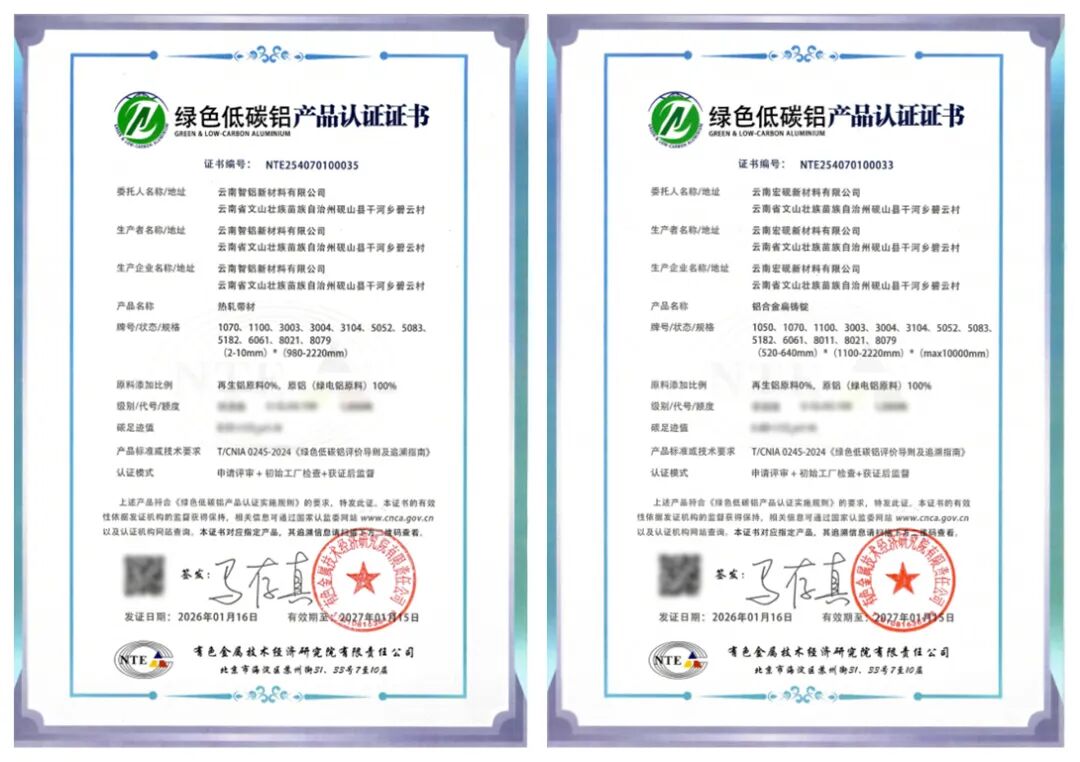
近日,云南智铝新材料有限公司(下称"云南智铝")生产的高端热轧带材、云南宏砚新材料有限公司(下称"云南宏砚")生产的铝合金扁铸锭顺利通过中 国有色金属工业协会绿色产品评价中心的绿色低碳铝认证,且云南智铝首创高端绿色低碳铝热轧带材认证突破。这标志着我公司已构建起从绿色原料到高 端产品透明化、可追溯的全链路低碳管控体系。 | | 证书编号: NTE254070100035 | 证书编号: NTE254070100033 | | | --- | --- | --- | --- | | 委托人名称/地址 | 云南智怒题材料有限公司 云南省文山壮族苗族自治州砚山县干河乡疆云村 | 员托人名称/地址 云南宏硬盖材料有限公司 | 云南省文山壮族盛族自治州硕山县干河乡曼云村 | | 生产者名称/地址 | 云南智铅盖材料有限公司 云南省文山壮族苗族自治州砚山县干河乡景云村 | 生产者名称/地址 云南宏硬盖材料有限公司 | 云南省文山壮族苗族自治州砚山县干河乡磐云村 | | 生产企业名称/地址 | 云南智船舶材料有限公司 云南省文山壮族苗族自治州砚山县干河乡建云村 | 生产企业名称/地址 云南宏碳盖材料有限公司 | 云南省文山壮 ...
深耕中国丨芬兰企业界:“这里将是我们最大的增长引擎”
Yang Shi Xin Wen Ke Hu Duan· 2026-01-27 09:12
芬兰企业组团来中国了!在芬兰总理奥尔波访华期间,中芬创新企业合作委员会第六次会议26日在北京 举行。两国企业现场签署多项商业合作协议。数字化转型、绿色低碳、医疗健康…… 成为会场内外的 关键词。看好中国市场、抓住中国机遇成为芬兰企业界共识。 ...
聚焦人工智能2026武汉国际智能制造数字化转型创新展览会制造融合新趋势
Sou Hu Cai Jing· 2026-01-27 05:38
2026武汉国际智能制造数字化转型创新博览会即将启幕 在制造业转型升级的关键时期,一场全球瞩目的盛会即将拉开帷幕——2026年武汉国际智能制造数字化转型创新博览会(以下简称"武汉智造展")将于9月 22日至24日在武汉国际博览中心盛大举办。作为连接产业链上下游的桥梁,这场为期三天的行业盛会将汇聚全球顶尖技术成果,聚焦智能制造与数字化转型 的核心议题,为行业从业者提供深度交流与合作的平台。 武汉智造展以"智能制造·数字未来"为主题,围绕工业互联网、人工智能、5G通信等前沿领域,搭建集技术展示、场景应用、政策解读于一体的综合平台。 展会不仅涵盖装备制造、汽车工业等传统行业,还延伸至新能源、航空航天等新兴赛道,全面呈现数字化转型的全链条解决方案。 展会核心展区将分为三大板块:工业互联网赋能区、智能制造技术应用区、绿色低碳创新区。其中,工业互联网赋能区重点展示龙头企业培育的行业型平 台,通过数字化园区、智能工厂等标杆案例,解析如何构建高效协同的产业链生态;智能制造技术应用区则聚焦机器人协作、机器视觉检测、数字孪生设计 等核心技术,展现AI与制造深度融合的实践路径;绿色低碳创新区则集中呈现增材制造、碳中和解决方案等可持 ...
AI时代的热管理革命:从液冷系统看冷却液的发展趋势
GUOTAI HAITONG SECURITIES· 2026-01-27 05:03
Investment Rating - The report does not explicitly state an investment rating for the industry Core Insights - The year 2025 is projected to be the "landing year" for liquid cooling in data centers, driven by the intersection of increased computing power density and stringent energy efficiency requirements [2][4] - Liquid cooling technology is evolving rapidly, with cold plate systems currently holding an 80% market share, while immersion cooling is recognized as the future core direction for high-density computing scenarios [2][21] - The choice of cooling liquid significantly impacts the safety, lifespan, and operational costs of liquid cooling systems, making it a high-value segment within the liquid cooling industry [2][3] Summary by Sections 1. Background of Liquid Cooling Technology - The explosive growth in computing power demand and continuous increase in chip power consumption necessitate advanced cooling solutions [6][11] - Energy efficiency has become a rigid requirement, with global data center electricity consumption projected to double by 2030 [15][16] - The rise of edge computing is creating new demands for efficient space utilization in data centers [19] 2. Classification and Technical Characteristics of Liquid Cooling Systems - Liquid cooling systems are categorized into cold plate, immersion, and spray cooling types, with cold plate and immersion systems leading the market [20][21] - Cold plate systems are widely used due to their reliability and moderate deployment costs, while immersion cooling is recognized for its superior heat dissipation capabilities [22][38] 3. Performance Requirements of Cooling Liquids - Water-based cooling liquids dominate cold plate systems, while oil-based liquids are used in single-phase immersion systems [3][4] - Fluorinated liquids are considered the ideal cooling medium for data centers, although their high cost limits their application to high-power scenarios [3][4] 4. Future Trends in Cooling Liquids - The development of cooling liquids is evolving towards higher efficiency, lower energy consumption, better environmental performance, and smarter systems [2][4] - The industry is moving towards a comprehensive thermal management solution that integrates material science, thermodynamics, and intelligent control technologies [2][4] 5. Competitive Landscape - The water-based cooling liquid market is highly open with many participants, while the oil-based cooling liquid market is specialized and dominated by foreign brands [2][3] - The fluorinated liquid industry is undergoing significant changes, with traditional giants exiting the market and domestic companies seizing the opportunity for "domestic substitution" [2][3]

余热利用为清洁供暖注入新动能
中国能源报· 2026-01-27 04:48
Core Viewpoint - The article emphasizes the importance of utilizing industrial waste heat in the transition to a clean and low-carbon heating system in northern China, addressing the high energy consumption and emissions in the heating sector while leveraging existing waste heat resources for sustainable urban development [1]. Group 1: Industrial Waste Heat Utilization - The "Liaohe into Jinan" project in Shandong is highlighted as a representative example of effectively utilizing industrial waste heat, capable of replacing approximately 1.299 million tons of standard coal and reducing CO2 emissions by about 356,000 tons per heating season [2]. - The project aims not only to deliver heat but also to address the mismatch between urban heating needs and industrial layout through regional energy collaboration [2]. - Currently, the proportion of waste heat utilization in China's clean heating system is around 25%-30%, which is significantly lower than the over 50% seen in more mature markets, indicating substantial room for improvement [3]. Group 2: Policy and Financial Support - Shandong has made policy advancements by not categorizing waste heat projects under the "high energy consumption" management framework, thus facilitating project approvals and resource utilization [3]. - The province is also incorporating some projects into government special bond support and encouraging diverse financing channels, including international financial institutions, to ensure stable funding for waste heat utilization [4]. - The article notes that various waste heat projects are being developed across multiple cities in Shandong, demonstrating the technical maturity and economic feasibility of waste heat utilization [4]. Group 3: Energy System Transformation - The article argues that waste heat utilization is not merely an optimization of heating methods but a crucial component in constructing a new energy system, addressing inefficiencies and unclear emission reduction pathways in the current heating system [5]. - There is significant potential for waste heat recovery from various industries, including steel, cement, and chemical sectors, which could support over 60% of heating needs in northern regions if effectively harnessed [5]. - The existing infrastructure, with approximately 650,000 kilometers of centralized heating pipelines and nearly 90% coverage, provides a solid foundation for integrating waste heat into urban energy systems [5]. Group 4: Challenges and Recommendations - Despite the support for waste heat utilization, challenges remain, including the need for detailed top-level planning, insufficient inter-departmental collaboration, and a lack of understanding regarding the stability and economic viability of waste heat [6]. - Recommendations include integrating waste heat utilization into urban energy planning, utilizing financial instruments to attract private investment, and accelerating the innovation of technical standards and business models to enhance the stability and economic viability of waste heat projects [7]. - The future energy system is envisioned as one that synergizes electricity and heat, with those who effectively utilize waste heat gaining a competitive advantage in the low-carbon transition [7].
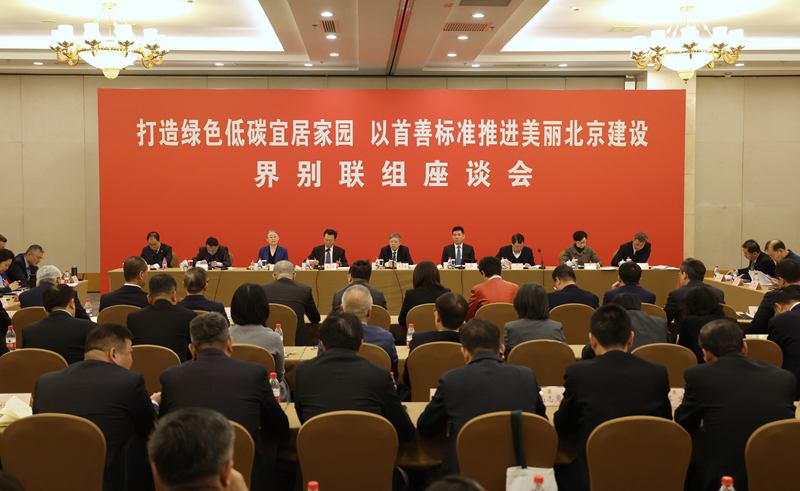
创建密云水库国家公园、发展氢能产业,委员建言美丽北京建设
Xin Jing Bao· 2026-01-27 01:13
Group 1: Environmental Initiatives - The proposal to create the Miyun Reservoir National Park aims to enhance ecological advantages and promote local employment opportunities for farmers [4][5] - The Miyun water system is highlighted as a crucial part of the national water network, with significant contributions to flood control and water supply [4] - The average PM2.5 concentration in Miyun is projected to be 23.4 micrograms per cubic meter by 2025, the lowest in Beijing, indicating strong ecological health [4] Group 2: Hydrogen Energy Development - The hydrogen energy industry in Beijing has made significant progress, with the city being a national leader in hydrogen technology and infrastructure [5] - There is a call to include hydrogen energy in Beijing's future industrial plans, emphasizing the need for supportive policies to foster growth in this sector [5] - The development of hydrogen-powered vehicles and the establishment of hydrogen refueling stations are seen as critical steps for the future of the hydrogen industry in Beijing [5] Group 3: Waste Management and Energy Production - The current waste management strategy in Beijing has shifted from landfilling to incineration, generating nearly 14,000 tons of hazardous waste annually [6][8] - The potential to produce 48,000 tons of green hydrogen and recover 750,000 tons of liquid carbon dioxide from waste processing is highlighted, with an estimated economic benefit of around 20 billion yuan [8] - Advanced waste treatment technologies are recommended to maximize resource recovery and minimize environmental impact, transforming waste into green energy [6][8] Group 4: Urban Waterway Enhancement - The proposal includes enhancing the ecological corridors of rivers in urban areas, focusing on creating diverse and accessible waterfront spaces [9] - Suggestions for improving the green coverage along riverbanks and utilizing water features to activate urban spaces are presented [9] - The importance of balancing flood safety with the creation of recreational water spaces is emphasized, promoting a more integrated urban waterway system [9]
2025年全省用电量8895亿千瓦时,同比增4.8%绿电澎湃 产业向新 算力奔腾
Xin Hua Ri Bao· 2026-01-27 00:45
Core Insights - Jiangsu's total electricity consumption is projected to reach 889.5 billion kilowatt-hours by 2025, marking a year-on-year growth of 4.8%, accounting for nearly 9% of the national total [1] - The industrial electricity consumption is expected to be 595.465 billion kilowatt-hours, with a year-on-year increase of 4.39% [1] Energy Transition - By 2025, over 90% of the new electricity generation in Jiangsu will come from green energy sources, with a total of 37.9 billion kilowatt-hours added, of which wind and solar energy will contribute 94% [2] - Jiangsu has become the first province in the Yangtze River Delta to exceed 100 million kilowatts in installed renewable energy capacity [2] - The number of enterprises consuming green electricity in Jiangsu is expected to grow by 210.28% by 2025 [2] Infrastructure Development - The first integrated "wind-solar-storage-charging" highway service area in the country has been fully operational, enhancing electric vehicle charging infrastructure [3] - The charging volume from electric vehicle charging stations operated by State Grid Jiangsu is projected to reach 1.03 billion kilowatt-hours in 2025, reflecting a year-on-year growth of 15.5% [3] Industrial Upgrading - The output value of strategic emerging industries in Jiangsu is expected to rise from 36.8% in 2020 to 41.8% in 2024, indicating a significant shift towards high-end and intelligent manufacturing [4] - Electricity consumption in the manufacturing sector is projected to grow by 11.2% year-on-year, with the computer and electronic equipment manufacturing sector surpassing 50 billion kilowatt-hours for the first time [4] Sector Performance - The wind energy equipment manufacturing sector is expected to see a year-on-year electricity consumption increase of 33.2%, while the aerospace and new energy vehicle sectors are projected to grow by 30.1% and 7.2%, respectively [5] Digital Economy - The electricity consumption in the information transmission, software, and IT services sector is projected to reach 19.7 billion kilowatt-hours by 2025, with an annual growth rate of 19% [7] - Over 300 AI and data-related enterprises are expected to establish operations in Jiangsu, generating a monthly electricity demand exceeding 1 million kilovolt-amperes [7] - The electricity consumption in the internet and related services sector is projected to grow by 43.7% by 2025, with significant contributions from data centers [7] Economic Impact - The digital economy is becoming a key driver of high-quality development in Jiangsu, with the core industries' added value as a percentage of GDP expected to rise from 10.3% in 2021 to 11.8% in 2024 [8] - The smart consumer goods market in Jiangsu has seen an overall growth rate of 18.4%, driven by the rapid adoption of intelligent driving technology in domestic electric vehicles [8]
做好“特”字文章
Xin Lang Cai Jing· 2026-01-26 22:08
Core Insights - The construction of a modern industrial system should leverage urban industrial foundations, resource endowments, and existing industrial advantages, focusing on distinctive features to create a sustainable development pattern [1][2] - Emphasizing uniqueness is essential for respecting development laws and building core competitiveness through the creative transformation of regional advantages [1] - The modernization of the industrial system is a process of re-evaluating and upgrading existing industrial foundations, with a focus on distinctive industries to foster a synergistic ecosystem [2] Group 1 - The core of the modern industrial system is to maintain a focus on distinctive features, which requires strategic determination and long-term commitment from decision-makers [1] - Distinctive industries rooted in local resources can attract supporting enterprises, reduce operational costs, and enhance supply chain resilience [2] - The integration of digital technology and green low-carbon initiatives into distinctive industries can significantly boost efficiency and economic vitality [2] Group 2 - The development of distinctive industries necessitates collaboration between proactive government and effective market mechanisms, emphasizing the need for a conducive business environment [2] - Governments must transition to roles as "service providers" and "partners" to foster an ecosystem that encourages innovation and development in distinctive industries [2] - The goal is not to achieve the largest scale or the most comprehensive range of industries, but to ensure strong competitiveness and clear distinctiveness [2]