
金融稳定

Search documents
【UNFX课堂】各国央行的主要职责货币政策稳定物价
Sou Hu Cai Jing· 2025-05-26 08:13
Group 1: Monetary Policy Design and Implementation - Central banks utilize policy interest rates to influence market funding costs through adjustments to benchmark rates [2] - The interest rate corridor mechanism sets deposit facility rates (lower bound) and lending facility rates (upper bound) to guide market interest rates within a range [3] - Quantitative easing involves purchasing government bonds or mortgage-backed securities to inject liquidity, with the Federal Reserve's balance sheet expanding to $9 trillion in 2020 [4] - In response to high inflation, the Federal Reserve initiated a balance sheet reduction plan in June 2022, selling assets at a rate of $95 billion per month [5] Group 2: Price Stability and Inflation Management - Many central banks adopt a symmetric inflation target of 2%, allowing for short-term fluctuations but requiring medium-term anchoring [6] - The Reserve Bank of India has set an inflation tolerance band of 4%±2% to accommodate the high volatility characteristic of emerging markets [7] - The Bank of Japan introduced a 2% inflation target in 2013, permitting "ultra-loose monetary policy to continue until stability is achieved" [8] - Core CPI is monitored to exclude food and energy prices, reducing short-term volatility interference [9] - In 2023, service sector inflation in the Eurozone reached 5.6%, prompting the European Central Bank to continue raising interest rates [9] Group 3: Extended Functions Beyond Price Stability - Central banks act as financial stability maintainers, with the Bank of England requiring banks to increase capital reserves during economic overheating through countercyclical capital buffers [12] - The Federal Reserve conducts annual stress tests on large banks, with 2023 tests indicating that 23 banks could withstand a 10% unemployment rate shock [12] - The Federal Reserve processes an average of $3 trillion in payments daily through real-time gross settlement systems, ensuring zero-delay settlement for large transactions [13] - In 2023, the transaction volume of China's digital yuan pilot expanded to 1.8 trillion yuan across 26 cities [14] Group 4: Challenges in Policy Transmission - The zero lower bound constraint limits traditional tools when policy interest rates approach zero, necessitating reliance on unconventional tools [16] - The energy crisis in 2022 led to imported inflation in the Eurozone reaching 10.6%, surpassing local economic overheating levels [17] - The rise of digital currencies like Bitcoin undermines the efficiency of monetary policy transmission, prompting central banks to accelerate the development of Central Bank Digital Currencies (CBDCs) [18] - New Zealand's central bank became the first to incorporate climate risk into financial stability assessments, requiring banks to disclose the carbon intensity of their loan portfolios [18] Group 5: Historical Policy Missteps - The Federal Reserve's misjudgment of inflation as a temporary phenomenon in the 1970s led to a CPI peak of 13.5% in 1980 due to delayed interest rate hikes [19] - The Swiss National Bank's sudden cancellation of the euro/franc 1.20 floor in 2015 caused a 41% spike in the exchange rate, resulting in over $1 billion in forex market losses [19] - The Bank of England's rapid interest rate hikes in 2022 triggered a liquidity crisis in pension funds, forcing a temporary resumption of quantitative easing [19] Conclusion - The role of modern central banks has evolved from being mere "inflation fighters" to becoming "omni-stabilizers" of the economic system, facing challenges from the rise of digital currencies, geopolitical instability, and accelerated climate transitions [UNFX]
黄金上行的重大阻力浮现:欧洲央行警示黄金市场可能威胁欧元区金融稳定
智通财经网· 2025-05-19 11:51
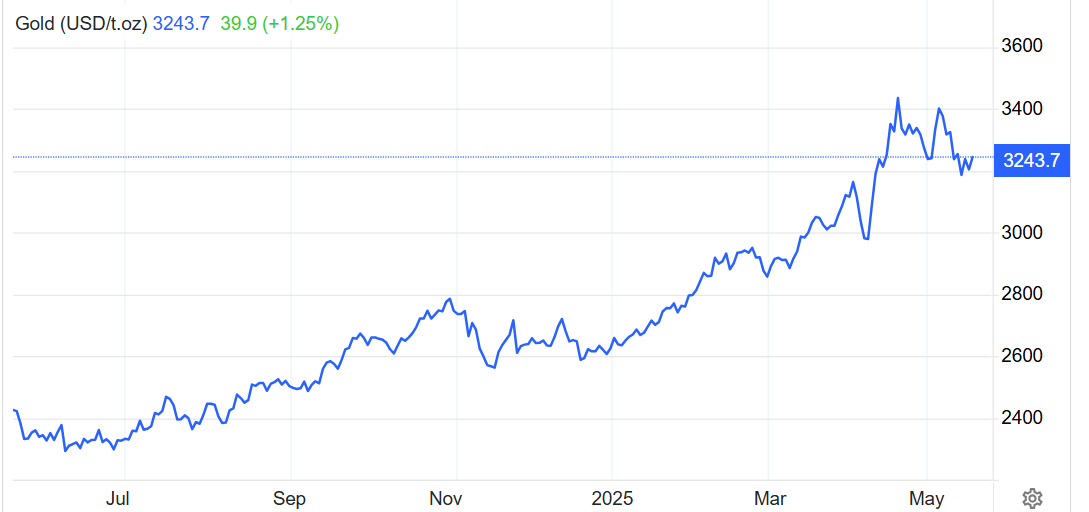
"追加保证金要求和杠杆头寸的平仓规模扩张可能导致市场的主要参与者们出现流动性压力,进而将这种负面冲击扩散至更广泛的金融体系,"欧洲央行的 经济学家们写道。"此外,实物黄金市场的供应链中断可能增加被逼平仓的风险。" 由于市场预期特朗普将向全球各领域征收关税,今年早些时候美国对该贵金属的需求导致英国央行金库出现需求拥堵,并推动瑞士对美国的贸易顺差激 增,原因是伦敦流向纽约的金条需要在瑞士炼金中心进行重新炼制。 这些黄金并非直飞纽约,而是先运往瑞士炼厂,被重新熔铸为1公斤小金锭——这是纽约Comex交易所期货合约的标准官方交割规格。"公斤金条的订单量 ——不仅是我们,整个行业都在激增,"贵金属精炼商瑞士贺利氏(Argor-Heraeus)首席执行官罗宾·科尔文巴赫近日表示。 未来,随着供需愈发失衡,黄金实物交付问题可能成为市场交易压力的核心来源,欧洲央行的经济学家们在报告中表示。撰写这份研究的经济学家们分别 为 Maurizio Michael Habib、Oscar Schwartz Blicke、Emilio Siciliano 和 Jonas Wendelborn。 智通财经APP获悉,欧洲央行的经济学家们最 ...

欧洲央行认为黄金市场可能对金融稳定构成风险
news flash· 2025-05-19 10:23
Core Viewpoint - The European Central Bank warns that geopolitical pressures could make the gold market a source of financial stability risk in the Eurozone [1] Group 1 - A report by four central bank economists highlights that worsening geopolitical situations could lead to increased demand for physical delivery of gold, dominance of large traders, and opaque trading practices, all of which may pose broader threats to financial stability [1] - The findings will be included in a more comprehensive risk assessment report scheduled for release on Wednesday [1]
欧洲央行副行长金多斯:在贸易动荡中保持金融稳定。发生尾部事件的可能性仍然很高。国防开支可能会加剧一些财政问题。急剧调整仍可能变得无序。
news flash· 2025-05-15 10:21
Core Viewpoint - The European Central Bank's Vice President, Luis de Guindos, emphasizes the importance of maintaining financial stability amid trade disruptions and highlights the high likelihood of tail events occurring [1] Group 1: Financial Stability - The possibility of tail events remains significantly high, indicating potential risks in the financial markets [1] - Maintaining financial stability is crucial during periods of trade turmoil, which can lead to increased volatility [1] Group 2: Fiscal Concerns - Increased defense spending may exacerbate certain fiscal issues, suggesting a need for careful budget management [1] - The potential for abrupt adjustments in fiscal policies could lead to disorderly outcomes, raising concerns for economic stability [1]
欧洲央行副行长金多斯:尽管市场动荡和重大不确定性持续存在,欧元区的金融稳定仍然保持良好。
news flash· 2025-05-15 10:18
Core Viewpoint - Despite ongoing market turbulence and significant uncertainties, financial stability in the Eurozone remains strong [1] Group 1 - The European Central Bank's Vice President, Luis de Guindos, emphasized the resilience of the Eurozone's financial system [1] - The statement reflects confidence in the Eurozone's ability to withstand external shocks and maintain stability [1]
ETO Markets 市场洞察:降息倒计时?别天真了!美联储这盘棋比你想得更狠
Sou Hu Cai Jing· 2025-05-15 06:06
Core Insights - The Federal Reserve has decided to maintain the federal funds rate in the range of 4.25%-4.50%, marking the third pause in rate hikes this year, reflecting a cautious assessment of the current economic situation [1] - The Fed's "silence" is an active response to multiple challenges, including the potential impact of tariff policies, inflation structure divergence, and regional economic imbalances [1] Inflation Dynamics - The overall inflation rate in the U.S. has dropped to 2.3% year-on-year, the lowest since 2021, primarily driven by falling food prices; however, the core CPI remains stubbornly at 2.8%, exceeding the Fed's 2% target [3] - The persistent high service prices, such as housing and healthcare, versus the cyclical decline in goods prices illustrate a complex inflation landscape [3] Regional Economic Disparities - A Fed internal survey reveals a "dual mirror" of the U.S. economy, with tourism-heavy areas like Las Vegas facing significant declines in hotel occupancy and gaming revenue, while resource-rich regions like Utah and Alaska benefit from high commodity prices [4] - This regional economic imbalance poses significant challenges for Fed policy-making, as traditional reliance on national data may fail to capture local economic conditions [4] Policy Signals and Divergence - There is a notable divide within the Fed regarding economic outlook; some officials emphasize a strong labor market and robust consumer spending, while others warn of declining business confidence and potential "second inflation" due to tariff policies [4] - This contradictory stance reflects the Fed's struggle to balance "data dependence" with "forward guidance" amid evolving economic conditions [4] Market Expectations - Despite the Fed's emphasis on data-driven policy, the market anticipates a greater than 60% probability of a rate cut in September, reflecting historical memories of the Fed's delayed responses [6] - The Fed must be cautious of repeating past mistakes by prematurely easing policies, which could reignite inflation expectations or excessively delaying could tighten financial conditions and trigger a recession [6] The Fed's Dilemma - The Fed faces a "trilemma" involving three constraints: maintaining a tight policy stance due to core inflation, allowing flexibility in response to regional economic disparities and tariff impacts, and ensuring financial stability amid high interest rates [7] - The Fed is likely to continue a "data-driven" strategy, balancing between quantitative tightening and interest rate adjustments to manage inflation and risk [7] Conclusion - The Fed's current inaction is not an endpoint but the beginning of a new policy negotiation phase, emphasizing the need for a dynamic market perspective amid uncertainties in inflation, growth, and policy [8]
中巴续签1900亿元本币互换协议,推动人民币区域使用
Di Yi Cai Jing· 2025-05-14 05:29
Core Viewpoint - The People's Bank of China (PBOC) has signed bilateral currency swap agreements with 32 countries and regions, totaling approximately 4.5 trillion yuan, with the recent renewal of the agreement with Brazil being a significant step in deepening financial cooperation between the two nations [1][2]. Group 1: Bilateral Currency Swap Agreements - The PBOC and the Central Bank of Brazil renewed their bilateral currency swap agreement, amounting to 190 billion yuan (157 billion Brazilian reais), valid for five years and extendable by mutual consent [1]. - Since the 2008 global financial crisis, the PBOC has been actively signing bilateral currency swap agreements with foreign central banks, covering major economies across six continents [1]. Group 2: Economic and Trade Relations - China has been Brazil's largest trading partner for 15 consecutive years, and Brazil is China's top trading partner in Latin America, indicating a strong economic relationship [2]. - The renewal of the currency swap agreement is expected to further enhance trade between China and Brazil and promote the use of the yuan in Brazil and the broader Latin American region [2]. Group 3: Financial Stability and Cooperation - The bilateral currency swap agreement is viewed as a crucial component of the global financial safety net, especially in the context of current tariff impacts, signaling a commitment to cooperation and market confidence [2]. - The agreement is part of a broader strategy to strengthen the financial partnership between China and Brazil, contributing to a more equitable and sustainable global community [2].
政策与大类资产配置周观察:关税破冰,以斗争求合作
Tianfeng Securities· 2025-05-13 09:12
Group 1: Domestic Policy Developments - President Xi Jinping's state visit to Russia and participation in the 80th anniversary of the victory in the Great Patriotic War emphasized the deepening of strategic cooperation between China and Russia [10][11] - The State Council meeting led by Premier Li Qiang focused on planning key economic and social development tasks for the 14th Five-Year Plan period, aligning with the central government's strategic intentions [12][13] - The People's Bank of China announced a series of monetary easing measures, including a reduction in the reserve requirement ratio and interest rates, aimed at stabilizing the economy [14][22] Group 2: International Trade and Economic Relations - The high-level economic talks between China and the U.S. in Geneva resulted in a significant reduction of bilateral tariffs, marking a constructive step in trade relations [19][20] - The G20 Trade and Investment Working Group meeting highlighted China's commitment to expanding high-level opening-up and promoting inclusive economic globalization [15][21] - The recent easing of tariff pressures between China and the U.S. is expected to positively impact global economic stability and development [20][21] Group 3: Equity Market Analysis - The A-share market rebounded significantly due to the easing of tariff pressures and economic stabilization measures, with the ChiNext and Shenzhen Composite Index rising by 3.27% and 2.88% respectively [23] - Southbound capital flows turned positive, with a total inflow of 6.775 billion yuan from May 6 to May 9, indicating renewed investor confidence [23] - The MSCI China A-share Index experienced a slight rebound of 1.94% following the positive developments in trade relations [23] Group 4: Fixed Income and Monetary Policy - The People's Bank of China implemented a series of ten monetary policy measures to enhance liquidity and support economic recovery, including a 0.5 percentage point reduction in the reserve requirement ratio [24][27] - The central bank's first-quarter monetary policy report indicated a GDP growth of 5.4% year-on-year, reflecting a solid economic recovery [25][26] - The report emphasized the need for a balanced approach in monetary policy to support the real economy while maintaining financial stability [26]
央行:启动2025年度系统重要性金融机构评估工作 稳步拓宽附加监管覆盖范围至非银领域
news flash· 2025-05-09 09:46
Core Viewpoint - The central bank is initiating the assessment of systemically important financial institutions for 2025, aiming to expand additional regulatory coverage to the non-bank sector while enhancing financial risk management and stability measures [1] Group 1: Financial Stability Measures - The central bank plans to actively and prudently prevent and resolve financial risks, exploring the expansion of its macroprudential and financial stability functions [1] - There will be an improvement in the macroprudential policy framework to enhance systemic risk monitoring, assessment, and early warning capabilities [1] - The toolbox for macroprudential policies will be enriched to strengthen the management of systemically important financial institutions [1] Group 2: Regulatory Enhancements - Systemically important banks will be urged to comply with additional capital and leverage ratio requirements, improving the operability and effectiveness of recovery and resolution plans [1] - The assessment work for systemically important financial institutions for 2025 has been initiated, with a steady expansion of additional regulatory coverage to the non-bank sector [1] Group 3: Risk Management and Monitoring - There will be a focus on the orderly resolution of key risk projects and areas, supporting the risk resolution of small and medium-sized banks based on market-oriented and legal principles [1] - Financial risk monitoring, early warning, and assessment will be strengthened, enhancing the judgment of systemic financial risks [1] - The financial stability mechanism will be solidified, promoting the accumulation of deposit insurance funds and financial stability guarantee funds, while reinforcing the specialized financial risk resolution functions of deposit insurance [1]
加拿大央行:加拿大金融体系稳定,但贸易战带来巨大风险
news flash· 2025-05-08 14:08
金十数据5月8日讯,加拿大央行周四表示,旷日持久的贸易战可能会损害银行和其他机构,使家庭和企 业更难偿还债务,从而增加加拿大金融稳定面临的风险。加拿大央行在其年度《金融稳定报告》中表 示,金融体系具有弹性。但是,美国总统特朗普对加拿大征收的关税以及渥太华随后的反制关税的影响 可能会损害金融稳定,特别是如果这种情况持续很长一段时间的话。"长期的贸易战对加拿大经济构成 了最大的威胁。这也增加了金融稳定的风险。"加拿大央行表示,在短期内,美国贸易政策的不可预测 性可能会导致市场进一步波动和流动性紧张。在极端情况下,市场波动可能演变为市场功能失调。从中 长期来看,一场旷日持久的全球贸易战将产生严重的经济后果。加拿大央行行长麦克勒姆表示,不确定 性如此之大,以至于"我们的分析不是预测,而是对脆弱性的评估"。 加拿大央行:加拿大金融体系稳定,但贸易战带来巨大风险 ...