
银发经济

Search documents
广州银龄集市:激活银发消费新生态
Sou Hu Cai Jing· 2026-02-10 13:03
Core Insights - The article discusses how Guangzhou is transforming policy benefits into accessible happiness experiences for the elderly, aiming to stimulate the trillion-level silver economy market through the "Lohas Yangcheng" silver market initiative [1] Group 1: Silver Market Initiative - In 2025, Guangzhou plans to hold 180 "Lohas Yangcheng" silver markets under the guidance of local civil affairs and aging offices, utilizing a "six-in-one" innovative model that integrates various services [1] - The silver market aims to provide a one-stop consumption experience for the elderly, combining supermarkets, hospitals, banks, and community events [1] Group 2: Subsidy Policy Integration - Guangzhou is the first city in China to deeply integrate national subsidies for home adaptation with offline consumption, offering a 30% discount on eligible products, with a maximum subsidy of 10,000 yuan per person [4] - The range of subsidized products has expanded to 54 categories across seven major types, addressing diverse needs from home modifications to health monitoring [4] Group 3: Sales Performance and Impact - The total sales revenue from the silver market reached 43.139 million yuan, with over 35 million yuan attributed to subsidized products [5] - During the ninth Guangzhou International Elderly Health Industry Expo, the silver market's home adaptation section achieved sales exceeding 12 million yuan in three days, with a conversion rate of 35% [5] Group 4: Consumer Behavior Trends - Data from last year's silver market indicates a 200% year-on-year increase in users purchasing elderly-friendly products, reflecting a shift from basic needs to quality improvements [6] - The subsidy policy has encouraged family collaborative consumption, with over half of the orders for elderly products made by children for their parents [6] Group 5: Comprehensive Service Model - The silver market has created a comprehensive service model that includes medical consultations, financial education, and community performances, effectively addressing the diverse needs of the elderly [8] - Each district in Guangzhou has tailored its silver market activities to local characteristics, enhancing the overall experience for the elderly [8] Group 6: Future Developments - The silver market plans to evolve into a 3.0 version focusing on fixed, normalized, decentralized, and digital services, including a mobile service station to reach rural areas [15][16] - The initiative aims to create a vibrant new culture of aging, promoting positive perceptions of elderly consumption and engagement in community activities [18]


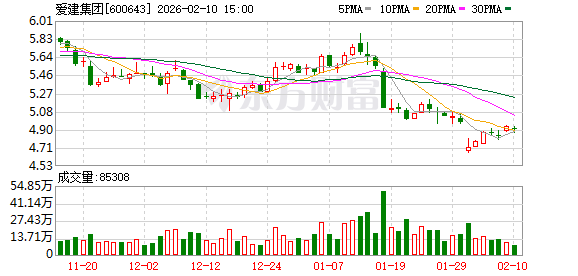
爱建集团:2025年,公司子公司爱建信托首单不动产特殊需要服务信托成功设立
Zheng Quan Ri Bao· 2026-02-10 12:37
Core Viewpoint - Aijian Group's subsidiary, Aijian Trust, successfully established its first real estate special needs service trust, marking a significant breakthrough in the pilot registration of real estate trusts in Shanghai by 2025 [2] Group 1 - The company aims to actively explore multi-dimensional service-oriented products [2] - Continuous innovation in wealth management tools is a priority for the company [2] - The trust system is intended to better serve the needs of elderly care and inject momentum into the silver economy [2]

国信证券:维持中国东方教育(00667)“优于大市”评级 职教龙头弄潮服务消费新风口
智通财经网· 2026-02-10 09:52
Group 1 - The core viewpoint of the report is that China Oriental Education (00667) is experiencing a strong recovery in its mature professional enrollment and profitability, while steadily expanding into emerging fields, which is expected to create new growth momentum [1] - The company is a leading vocational education group in China, with a diverse portfolio including well-known brands such as New Oriental Cooking, Xinhua Computer, and Wantong Automotive Repair, and has been operating in the vocational education sector for nearly 40 years [1] - The company is projected to achieve net profits of 790 million, 1.1 billion, and 1.38 billion yuan for the years 2025-2027, reflecting growth rates of 53%, 39%, and 26% respectively [1] Group 2 - The vocational education industry in China is in a golden expansion phase, with a projected compound annual growth rate of 17% from 2025 to 2029, potentially exceeding 2 trillion yuan by 2029 [2] - The company has actively adjusted its operations since 2024, including shutting down inefficient campuses and upgrading course structures, which has led to an increase in net profit margin to 19% in the first half of 2025, with expectations of approaching 24% [3] - Emerging fields such as beauty, pet care, and health management are expected to become new growth drivers, with the beauty market projected to reach 380 billion yuan by 2025 [4]

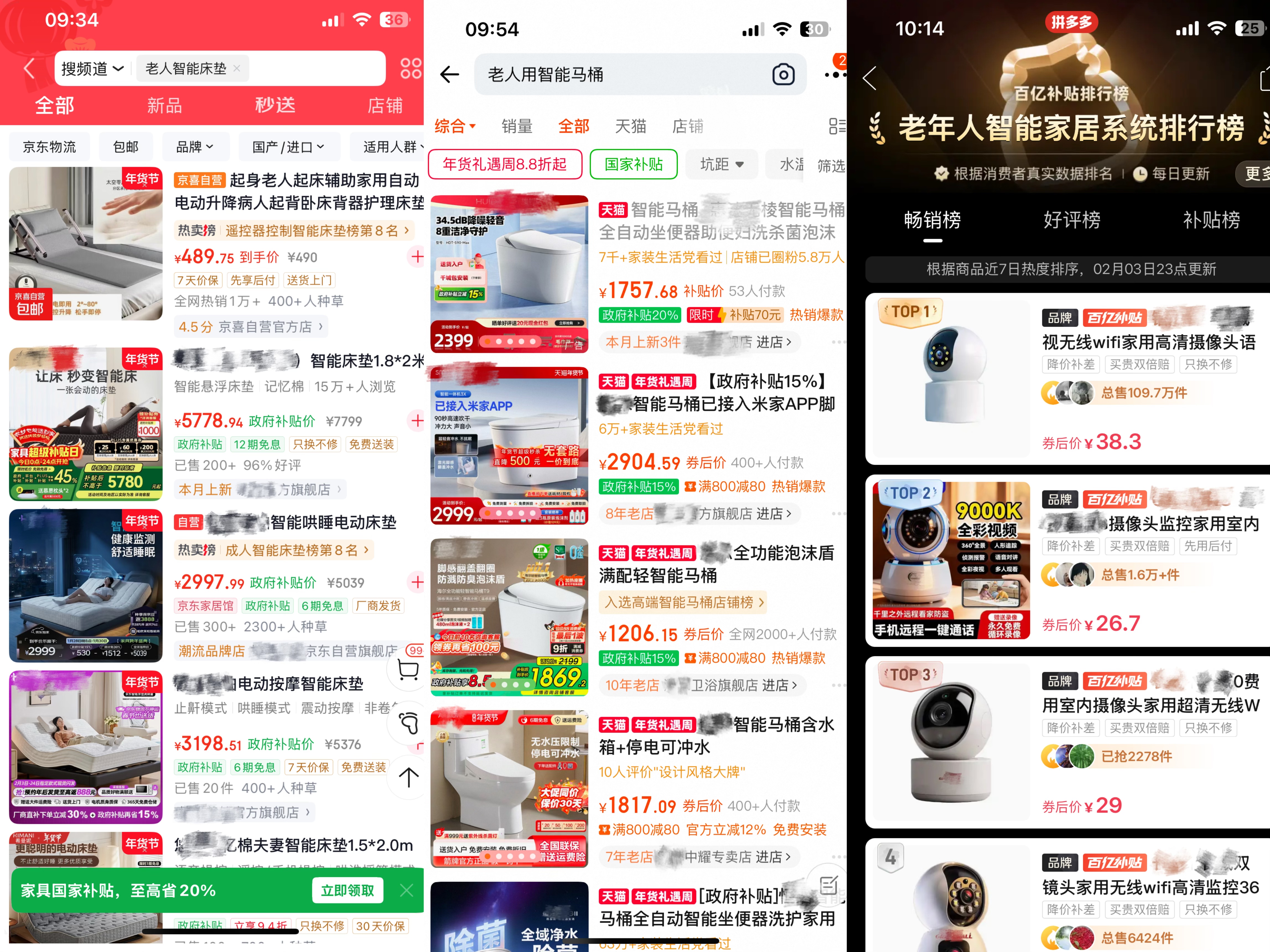
适老化智能家居成爆款年货,“AI+银发”催生增量|年货新趋势
Bei Ke Cai Jing· 2026-02-10 08:37
Core Insights - The acceptance and purchase willingness of elderly-friendly smart home products have increased as they are optimized with "technology adapting to the elderly" rather than the other way around [1][5] - The surge in demand for elderly-friendly smart home products is driven by the "AI + silver hair" trend and effective consumer stimulation policies, transitioning from niche to mainstream necessity [2][14] Group 1: Market Trends - The popularity of elderly-friendly smart home products during the New Year shopping season is evident, with items like smart mattresses and AI-interactive appliances seeing significant sales growth [1][6] - Data from the National Bureau of Statistics indicates that by 2024, the population aged 60 and above will reach 310 million, accounting for 22% of the total population, creating a substantial market for elderly-friendly products [14] Group 2: Product Development - Smart locks are being upgraded to address common issues faced by elderly users, such as fingerprint recognition failures and complex interfaces, with features like vein recognition and long battery life being introduced [4][5] - The development of elderly-friendly smart home products is guided by the principle of "technology adapting to the elderly," focusing on comprehensive recognition and AI monitoring to enhance safety and usability [5][16] Group 3: Consumer Behavior - Consumers are increasingly recognizing the value of elderly-friendly smart home products, with significant sales growth reported on platforms like Taobao and Tmall, where sales of vein recognition locks increased by nearly 150% year-on-year [14] - There is a growing trend of purchasing these products as gifts for elderly family members, emphasizing the emotional value beyond the product itself [17] Group 4: Policy Impact - Recent consumer stimulation policies have expanded the range of subsidized products to include smart home devices, which is expected to meet the diverse needs of consumers seeking improved living standards [15] - The implementation of these policies is seen as a way to enhance the accessibility of smart home products for the elderly, reflecting a commitment to improving quality of life [15]
一年四登央视!红豆股份投资的“大头阿亮”,如何成为养老机器人标杆?
Xin Lang Zheng Quan· 2026-02-10 06:13
Core Insights - The global robotics industry is experiencing a new wave characterized by "artificial intelligence + embodied intelligence," with the application boundaries of robots continuously expanding. In China, elderly care robots represent a significant market opportunity in response to the aging population [1] Group 1: Product Development - The investment by Hongdou Co. in Aiyu Wencheng Robotics marked a strategic entry into the smart elderly care sector, transitioning from investment agreements to product upgrades within a year [1] - The "Daitou Aliang" elderly care robot, developed by Aiyu Wencheng, has undergone five upgrades, enhancing its signal coverage from 800 square meters to 5000 square meters, a more than fivefold increase in capability [3] - The robot has received multiple awards, including the "Gold Award" at the Shanghai International Invention Exhibition and the second prize at the 2025 Beijing Smart Health Robot Application Competition [3] Group 2: Brand Image - The "Daitou Aliang" brand has achieved significant recognition, appearing on CCTV four times within a year, transitioning from a local brand to a trusted industry brand [6][7] - The media coverage has highlighted the robot's impact on reducing caregiver workloads and enhancing the autonomy of the elderly, emphasizing the human aspect of technology [6] Group 3: Investment and Market Potential - Following the investment by Hongdou Co., Aiyu Wencheng has attracted additional investors, indicating the attractiveness of the elderly care robot sector [8] - The entry of professional investment firms suggests a thorough analysis of industry trends and market potential, confirming the high growth potential of the elderly care robot sector [8] - The new funding will be directed towards technology development, capacity enhancement, and market channel construction, facilitating the transition from demonstration applications to widespread adoption [8]


美日中消费演进启示录:下一站,风起服务消费
Shenwan Hongyuan Securities· 2026-02-10 06:11
Group 1: Core Insights - The report emphasizes that China's consumption market potential lies not only in income growth but also in the effective release of consumption scenarios and time, with current policies addressing constraints in holiday optimization and work time regulations [3] - The evolution of consumption patterns in the U.S., Japan, and China shows a clear transition from "survival" to "experience" consumption, with China's service consumption significantly lower than that of developed countries [3][10] - The report identifies three core variables driving consumption changes: economic development stage, demographic shifts, and technological innovation, highlighting the structural transformation of consumer preferences in China [3][12] Group 2: Historical Consumption Evolution - The U.S. consumption history from the 1970s to the present reflects a shift from practical consumption during crises to brand-driven consumption, rational consumption, and experience-oriented consumption, culminating in technology-enabled and social consumption [10][11] - Japan's consumption evolution post-World War II transitioned from durable goods to quality and luxury consumption, followed by a rational return and the emergence of the "silver economy" due to aging demographics [18][20] - China's consumption history since 1978 has progressed from policy-driven practical consumption to brand consumption, and now to a blend of rational and self-indulgent consumption, with a notable rise of domestic brands [23] Group 3: Current Market Analysis - The A-share consumption sector has seen significant price adjustments, with stock prices declining by 40%-70% since 2021, indicating a potential for long-term investment opportunities as market sentiment begins to recover [3][6] - The report suggests that the consumption sector is currently undervalued, with low profitability and low holdings, presenting a significant expectation gap compared to the technology sector [3][6] - Service consumption is highlighted as a key area for alpha returns, with structural highlights in sectors such as cultural tourism, sports, emotional value, and beauty, indicating a potential for independent alpha performance among core companies in these fields [3][6]
中部六省加快构建增长新引擎
Jing Ji Wang· 2026-02-10 06:04
Group 1: Economic Growth and Investment - The GDP of the central region is expected to approach 30 trillion yuan by 2025, with Henan leading at a growth rate of 5.6% [1] - The focus for 2026 among central provinces is on "stabilizing growth and expanding domestic demand," leveraging local resources and insights into new consumption trends [1] - Effective investment is crucial for stabilizing economic growth, with provinces exploring investment potential in water conservancy and other sectors [4] Group 2: New Consumption Trends - Central provinces are focusing on "emotional value" and "emotional economy" in their government work reports, indicating a shift in consumer trends [2] - Various provinces are cultivating new consumption growth points, such as the "first launch economy" and "night economy," to enhance consumer vitality [2][3] - Specific initiatives include promoting local business innovations and developing new consumption scenarios in provinces like Henan and Shanxi [2] Group 3: Modern Manufacturing and High-Tech Industries - The central region aims to build a modern industrial system with a focus on new energy, new materials, and optoelectronic information [6] - Provinces like Hubei and Hunan are advancing projects in high-tech sectors, including lithium batteries and new energy systems [6][7] - Jiangxi is enhancing its capabilities in aircraft manufacturing and electric vehicles, while Shanxi is focusing on high-end equipment manufacturing and new materials [7]
“银发商店”兴起:从卖产品到构建生活方式的变革
Yang Zi Wan Bao Wang· 2026-02-10 03:14
Core Insights - The emergence of "Silver Economy" stores in Beijing and Shanghai marks a significant shift from providing scattered "age-friendly products" to constructing a complete "age-friendly lifestyle" [1][2] Group 1: Market Trends - The "Silver Store" innovation addresses two core pain points in elderly consumption: the trust issue related to complex products and the lack of integrated services [1] - The Beijing store, led by Jinyu Tiantan Furniture, integrates resources from 63 member units of the "Beijing Age-Friendly Transformation Industry Development Alliance" [1] - The Shanghai store systematically presents various age-friendly products and plans regular updates, allowing consumers to purchase goods and access health checks and consultation services [1] Group 2: Competitive Landscape - The success of this model provides key insights for the high-quality development of the Silver Economy, indicating that future competition will focus on "ecosystem building" capabilities [2] - Beijing's approach showcases a platform-based strategy led by state-owned enterprises, while Shanghai's efforts reflect a continuous extension of exhibition resources into daily life [2] - The trend indicates a shift from fragmented sales competition to an integrated ecosystem of products, services, and experiences in the Silver Economy [2] Group 3: Social Implications - The "Silver Store" serves as an important social interface, acting as a sensitive market demand perceiver and fostering a positive aging perspective [2] - The rise of such stores reflects the evolution of aging society from "survival security" to "life prosperity," emphasizing the need for integrated resources and trust-building spaces [2]
布局新消费、促进有效投资 中部六省加快构建增长新引擎
Shang Hai Zheng Quan Bao· 2026-02-09 23:46
近日,地方两会陆续召开,山西、安徽、江西、河南、湖北、湖南等中部六省的2026年政府工作报告已 全部出炉。根据六省的数据,2025年中部地区GDP总量逼近30万亿元。其中,河南以5.6%的增速领跑 中部,湖北、安徽、江西增速均超5%。同时,安徽、河南的规上工业增加值同比分别增长9.4%和 8.4%,凸显中部地区制造业底盘之稳。 上海证券报记者梳理中部省份2026年政府工作报告发现,"稳增长、扩内需"成为各省今年的重点工作之 一。依托地方资源禀赋及在新消费领域的洞察,中部省份在消费、投资两端同步发力,打造中国经济高 质量发展的"中部引擎"。 满足情绪价值 中部省份布局新消费 湖北将大力推进三峡水运新通道等新建续建项目建设,以有效投资的扩量提质助推全省高质量发展一路 前行。江西力争鄱阳湖水利枢纽工程等重大项目开工,浙赣粤运河等重大项目前期工作取得积极进展。 山西则持续开展重大项目建设年活动,推动骨干水网及县域配套工程等项目建设,加快黄河古贤山西水 资源配置工程等前期工作。 湖南提出,抓好总投资2万亿元的389个省重点项目。根据湖南省发展和改革委员会日前公布的名单,包 括梅山灌区、金塘冲水库等重大水利工程被列入今年 ...
完成200个民生服务综合体功能提升 加速“甜蜜经济杭州中心”建设落地
Mei Ri Shang Bao· 2026-02-09 23:21
针对大家关心的助餐服务话题,会上提到,鼓励城市社区探索连锁经营、全龄服务、"市场+公益"的可 持续运营机制,在农村地区发展慈善助力邻里互助、爱心菜地、在地收菜等新模式。同时,2026年将新 建(提升改造)老年食堂50个,改造提升老年助餐服务点位100个。 在甜蜜经济和银发经济上,将谋划成立"杭州甜蜜经济研究院",加速产业地标"甜蜜经济杭州中心"建设 落地。与此同时,将组织开展第二届甜蜜经济博览会,着力打造国际婚俗文化IP。 另外,在慈善领域,杭州还将实施新一轮慈善促富五年行动计划,纵深发展战略慈善,制定《杭州市慈 善顾问管理办法》。出台慈善信托激励政策,推广"慈善信托+社区治理"全面构建"展示、互动、服 务"三位一体市级慈善基地,编撰《杭州慈善文化史话》,推进"慈善+文旅"融合,打造市级慈善文化地 标。 养老服务方面,2025年共计为72万老年人开通"爱心卡"服务,每万名老年人拥有持证养老护理员数达 28.12人,全市特困供养机构"一院供养"率达100%。出台城市、农村两个老年助餐新政,全市累计建成 老年食堂(助餐点)2418家。 2026年,作为"十五五"的开局之年,杭州将抓好人口老龄化战略实施、救助格局优 ...