
跨境电商

Search documents
全国外贸十强市又变了!这座小城一直在默默发财...
Sou Hu Cai Jing· 2025-08-07 05:35
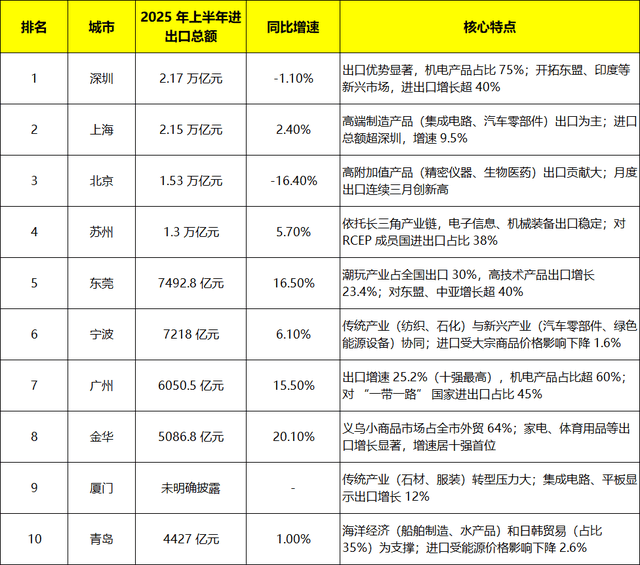
Core Insights - The top ten foreign trade cities in China for the first half of 2025 have been released, showcasing a stable position for leading cities while new contenders are emerging [1] Group 1: Trade Performance - Shenzhen ranks first with a total import and export value of 2.17 trillion yuan, accounting for 9.9% of the national foreign trade value, despite a slight decline of 1.1% year-on-year [2][3] - Shanghai follows closely with 2.15 trillion yuan, showing a year-on-year increase of 2.4%, with a notable 9.5% growth in imports [2][3] - Beijing's trade value is 1.53 trillion yuan, down 16.4% year-on-year, but it has seen three consecutive months of record-high exports [2][3] - Suzhou's trade reached 1.3 trillion yuan, growing by 5.7%, benefiting from the Yangtze River Delta industrial chain [2][3] Group 2: Sector Contributions - Dongguan's trade value is 749.28 billion yuan, with a significant year-on-year growth of 16.5%, driven by the trendy toy industry, which accounts for 30% of national exports [4][5] - Ningbo's trade reached 721.8 billion yuan, growing by 6.1%, with traditional industries collaborating with emerging sectors [4][5] - Guangzhou's trade value is 605.05 billion yuan, with the highest export growth rate of 25.2%, supported by machinery and electrical products [4][5] - Yiwu's trade reached 508.68 billion yuan, growing by 20.1%, with the small commodity market playing a crucial role [4][5] Group 3: Market Dynamics - The competition between Shenzhen and Shanghai for the top position is expected to continue, influenced by global demand recovery in the second half of the year [6] - The combined trade value of Shanghai, Suzhou, Ningbo, and Jinhua exceeds 4.7 trillion yuan, representing 21.6% of the national total [5][6] - Emerging markets are becoming the main growth drivers, with significant increases in trade with ASEAN and Central Asia [5][6]

国产“度夏三宝”风靡海外 便携风扇、遮阳篷和太阳镜淘宝境外销量突破百万
Xin Hua Cai Jing· 2025-08-07 05:17
Group 1 - The extreme heat wave has led to a surge in global demand for summer products from China, particularly portable fans, sunshades, and sunglasses, with total sales exceeding one million units in just two months [1] - Different regions exhibit diverse preferences for summer products, such as swimwear in Kazakhstan, mosquito repellent in Hong Kong, sunscreen in Japan, portable fans in Southeast Asia, and sunshades in Thailand, indicating a growing variety in consumer needs [1] - In Australia, despite being winter, there is a strong demand for cooling products, with a reported over 20% year-on-year growth in GMV for these items during June and July [2] Group 2 - The introduction of the "Taobao Tmall Overseas Growth Plan" in 2024 has significantly boosted cross-border e-commerce, allowing merchants to retain control over pricing and inventory without additional operational costs [2] - The innovative fan lamp, which combines lighting and cooling functions, has seen a remarkable 380% year-on-year increase in GMV, highlighting a new trend in summer consumer products [2]
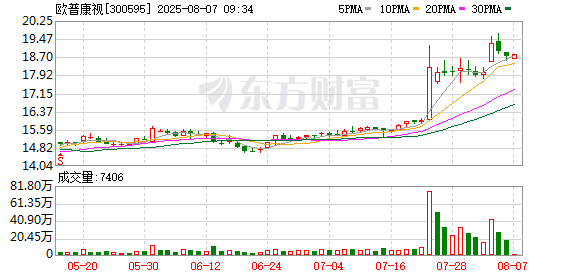
欧普康视:跨境电商主要销售一些日常的眼健康用品,目前马来西亚已启动,其它东南亚国家在筹备中
Mei Ri Jing Ji Xin Wen· 2025-08-07 01:33
Group 1 - The company is expanding its cross-border e-commerce operations, focusing on daily eye health products [2] - Malaysia has already initiated the process for selling these products, while other Southeast Asian countries are in preparation [2] - The main products include orthokeratology lenses, scleral lenses, and care products, which are classified as medical devices requiring local registration before sales [2]

中国企业助力东南亚电商市场发展(第一现场)
Ren Min Ri Bao· 2025-08-06 22:06
近日,新加坡星展集团联合市场洞察公司Cube发布报告显示,2012年至2024年,东南亚电商年度销售 额从40亿美元增至1840亿美元。预计到2030年,该地区电商销售额将升至4100亿美元。在东南亚蓬勃发 展的电商经济大潮中,中国电商企业与当地企业携手合作,不仅为东南亚各国消费者带来快捷方便的网 购体验,还不断助力当地电商产业的技术平台升级、物流体系创新和行业人才本土化培养,促进东南亚 电商经济提质升级。 丰富消费者购物体验 东南亚地区人口规模近7亿,年轻人比例较高。数据显示,截至2024年8月,除老挝、缅甸和东帝汶外, 东南亚各国的互联网普及率均超过70%,是全球电商市场中极具发展潜力的区域。目前,"来赞达""虾 皮"是东南亚地区主要电商平台,Tokopedia和TikTok的影响力也在不断上升。 2016年,中国企业收购"来赞达",在技术上对"来赞达"平台进行全面升级改造,并在资金、人才等方面 提供各项支持,为平台发展探索新模式、新机会。去年10月,"来赞达"更新了一款人工智能组件,可根 据用户的过往消费情况提供智能推荐、在线试品等服务,并研发人工智能虚拟助手为用户提供个性化商 品推荐。去年"双12"期 ...
上半年赚了36.51亿港元 国泰管理层这样看下半年市场
Di Yi Cai Jing· 2025-08-06 13:57
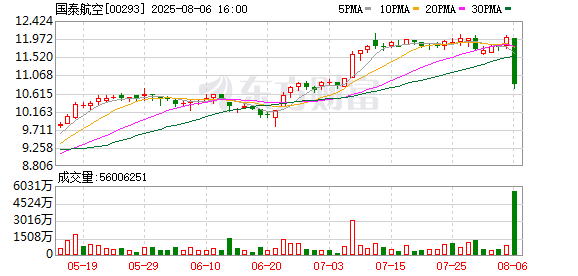
Financial Performance - Cathay Pacific reported a net profit of HKD 36.51 billion for the first half of the year, a year-on-year increase of 1.1%, with revenue reaching HKD 543.09 billion, up 9.5% [2] - The growth in performance is attributed to an increase in passenger volume, stable cargo performance, and a decrease in fuel prices, with fuel costs down by 13% compared to previous years [2] Passenger Operations - Passenger capacity increased by 26.3% year-on-year, with passenger turnover rising by 30% and average daily passenger load increasing by 27.8%, resulting in a seat load factor of 84.8%, up 2.4 percentage points [2] - Despite the strong demand for passenger services, overall yield declined by 12.3% due to increased market capacity, with significant capacity additions on routes to the US and Europe [2] Cargo Operations - Cathay Pacific's cargo revenue increased by 2.2% year-on-year, with cargo capacity up by 8.1% and cargo volume rising by 11.4%, although yield decreased by 3.4% [3] - The cargo sector faces challenges due to geopolitical factors and changes in customs policies, particularly affecting cross-border logistics [3] - The company is focusing on diversifying cargo demand by exploring markets in Southeast Asia and India, while also investing in non-e-commerce cargo segments such as perishables and pharmaceuticals [3] Strategic Initiatives - Cathay Pacific plans to continue expanding its domestic routes in mainland China and has established IT offices in Guangzhou and Shenzhen, with a target of increasing mainland staff to 4,000 by the end of the year [4] - The company is enhancing its service offerings and optimizing its network to attract more transit passengers, with half of its business currently coming from transit traffic [3][4]

非洲电商疯抢中国卖家
Hu Xiu· 2025-08-06 10:35
Core Insights - The article discusses the emerging competition in the African e-commerce market, particularly focusing on the activities of Chinese sellers and platforms like Jumia and Takealot, as they seek to capitalize on the growing demand in Africa [1][2][3]. Group 1: Market Dynamics - Jumia is the first African tech company listed on the NYSE, focusing on nine core markets including Nigeria, Egypt, and Kenya, with a projected GMV of $720.6 million and revenue of $167.5 million for 2024 [3]. - The African e-commerce market is witnessing a surge in Chinese sellers, with over 80% of products on Jumia coming from China, indicating a significant shift in supply dynamics [13][20]. - The overall e-commerce penetration in Africa remains low compared to global averages, with South Africa at approximately 46% and Nigeria at around 15%, suggesting substantial growth potential [26]. Group 2: Seller Experiences - Sellers like Tang Wenjie and Zhang Qing have successfully established multiple stores on Jumia, achieving monthly sales of up to 2 million yuan, with profit margins ranging from 30% to 45% [7][10]. - The logistics and operational support provided by platforms like Jumia simplify the entry for traditional foreign trade businesses into the e-commerce space, making it accessible for newcomers [8][9]. - The low return rates on Jumia, ranging from 1% to 2.5%, highlight the platform's efficiency compared to other regions [10]. Group 3: Competitive Landscape - Takealot, another major player in the African e-commerce space, reported revenues of $872 million for the 2025 fiscal year and is also attracting Chinese sellers [11]. - Temu and Shein are expanding their presence in South Africa, with Temu launching local warehousing to enhance delivery speed, while Shein faces new import tax challenges [24][25]. - The competition among platforms is intensifying, with Jumia focusing on building its logistics network and ceasing its global dropshipping model to concentrate on fulfillment by Jumia [21][22]. Group 4: Strategic Initiatives - Jumia is actively recruiting international sellers by offering financial incentives and operational support, including free warehousing services and localized account management [20]. - Gecko, a cross-border supply chain service platform, is facilitating Chinese sellers' entry into Takealot, indicating a trend of increasing collaboration between Chinese suppliers and African platforms [15][19]. - The article emphasizes the importance of adapting product offerings to local market conditions, as sellers from other regions may need to adjust their strategies to succeed in the African market [16][27].
规则对接与数字互联,构建区域贸易便利化新框架
Zhong Guo Chan Ye Jing Ji Xin Xi Wang· 2025-08-06 08:55
Core Viewpoint - The China-ASEAN economic and trade relationship is increasingly close, with cross-border e-commerce emerging as a new engine for bilateral trade growth, driven by the implementation of the Regional Comprehensive Economic Partnership (RCEP) and the conclusion of negotiations for the China-ASEAN Free Trade Area 3.0 [1] Group 1: Current Development Status of Cross-Border E-Commerce - Cross-border e-commerce has become a significant force in promoting trade growth between China and ASEAN, with transaction volume exceeding 600 billion RMB in 2023, maintaining double-digit growth for three consecutive years [2] - The implementation of tariff reciprocity pilot programs has significantly improved customs clearance efficiency, with average declaration times reduced by 30%-40% and tariff costs for some product categories decreased by over 15% [2] - The "Single Window" platform has been rapidly developed, with 77 new service functions added by the end of 2023, covering 875 services across 23 categories, supporting over 600,000 enterprises in Shanghai alone [3] Group 2: Challenges in Cross-Border E-Commerce Development - Fragmentation of tariff systems and differences in tax classification and origin rules among ASEAN countries complicate the implementation of policies, leading to increased risks of misclassification and compliance issues for enterprises [5][6] - The lack of interoperability between "Single Window" platforms across ASEAN countries hinders data sharing and operational efficiency, requiring enterprises to operate across multiple systems [7] - Many small and medium-sized enterprises (SMEs) face challenges in understanding and utilizing policies effectively, leading to low participation rates in tariff reciprocity programs [8] Group 3: Recommendations for Enhancing Cross-Border E-Commerce - Establish a "Three Mutuals" tariff governance system to innovate tax recognition mechanisms and improve consistency in tax classification through AI and cloud platforms [9] - Optimize the application of origin rules by promoting blockchain-based certificate management systems to enhance the interoperability of origin certificates across ASEAN [9] - Develop an intelligent collaborative "Single Window" platform by standardizing data and protocols with ASEAN countries, enhancing operational efficiency and reducing redundancy for enterprises [11]
家联科技跌0.88%,成交额1.25亿元,今日主力净流入-137.57万
Xin Lang Cai Jing· 2025-08-06 07:49
Core Viewpoint - Ningbo Jialian Technology Co., Ltd. is focused on the research, production, and sales of plastic products, biodegradable products, and plant fiber products, with a significant portion of its revenue coming from overseas sales, benefiting from the depreciation of the RMB [2][3]. Company Overview - Ningbo Jialian Technology was established on August 7, 2009, and went public on December 9, 2021. The company is located in Zhenhai District, Ningbo, Zhejiang Province [7]. - The main business revenue composition includes: plastic products 74.96%, biodegradable products 12.82%, paper products and others 6.77%, and plant fiber products 5.45% [7]. Business Performance - As of March 31, the company had 5,694 shareholders, an increase of 13.93% from the previous period, with an average of 16,903 circulating shares per person, a decrease of 12.21% [7]. - For the first quarter of 2025, the company achieved operating revenue of 506 million yuan, a year-on-year increase of 1.29%, while the net profit attributable to the parent company was -24.96 million yuan, a decrease of 157.54% year-on-year [7][8]. Market Position - The company is a leading player in the global plastic dining utensils manufacturing industry, with 70.47% of its sales coming from exports as of 2021, primarily to developed regions such as North America, Europe, and Oceania [2]. - The company has also expanded its online market through cross-border e-commerce platforms for product promotion and sales [2]. Financial Analysis - The average trading cost of the stock is 18.52 yuan, with the stock price currently near a resistance level of 20.84 yuan, indicating potential for upward movement if the resistance is broken [6]. - The stock has seen a net outflow of 1.3757 million yuan today, with a continuous reduction in main funds over the past three days [4][5].
非洲电商疯抢中国卖家,腾讯大股东都下场了
3 6 Ke· 2025-08-06 07:39
Core Insights - The article discusses the emerging competition in the African e-commerce market, particularly focusing on the activities of Chinese sellers and platforms like Jumia and Takealot [1][2][3]. Group 1: Market Dynamics - The African e-commerce market is witnessing a surge in Chinese sellers, with a notable increase in cross-border trade, as evidenced by a 14.4% year-on-year growth in China's imports and exports to Africa [1]. - Jumia, the largest African e-commerce platform, is actively recruiting Chinese sellers, with over 80% of its products sourced from China [7][14]. - The competition is intensifying as platforms like Temu and Amazon enter the African market, with Temu launching its South African platform and establishing local warehouses [16][18]. Group 2: Seller Experiences - Successful sellers on Jumia, such as Tang Wenjie, report monthly sales reaching 2 million yuan, with profit margins between 35% and 45% [3][5]. - Zhang Qing, another seller, has also achieved significant sales on Jumia, with plans to expand her operations by opening additional warehouses [4][5]. - The low return rates on Jumia, ranging from 1% to 2.5%, indicate a stable market environment for sellers [5][7]. Group 3: Logistics and Infrastructure - Jumia has established its logistics service, Jumia Logistics, to streamline order fulfillment and after-sales service, allowing sellers to focus on product selection and inventory [5][14]. - The company is expanding its logistics network, including a new comprehensive warehouse in Cairo, which will serve as a key hub for operations in Egypt and surrounding regions [14][15]. - Takealot, another major player, is also enhancing its logistics capabilities, although it faces challenges with platform mechanisms and product listing approvals [6][7]. Group 4: Future Outlook - The African e-commerce market is expected to continue growing, driven by a young population and increasing digital infrastructure [18][19]. - Sellers are beginning to adapt their strategies to the African market, such as branding products to capture higher price points [19]. - The article emphasizes the potential for significant growth in the African e-commerce sector, suggesting that the current phase represents a critical opportunity for market entry [12][19].

星徽股份涨0.71%,成交额5959.49万元,近5日主力净流入-123.42万
Xin Lang Cai Jing· 2025-08-06 07:37
Core Viewpoint - The company, Guangdong Xinghui Precision Manufacturing Co., Ltd., is benefiting from its cross-border e-commerce business, particularly in the small home appliance sector, amidst the depreciation of the RMB. Group 1: Business Overview - The company specializes in the research, production, and sales of precision metal components, including slides and hinges, with a significant portion of its revenue coming from cross-border e-commerce [7]. - As of March 31, the company's revenue composition includes 55.24% from slides, 15.69% from smart home appliances, and 7.71% from hinges, among other categories [7]. - The company reported a revenue of 3.35 billion yuan for the first quarter of 2025, a year-on-year decrease of 8.65%, with a net profit of -28.42 million yuan, a significant decline of 161.13% [7]. Group 2: Financial Performance - The company's overseas revenue accounted for 67.99% of total revenue, benefiting from the depreciation of the RMB [3]. - In the first half of 2022, the sales revenue from smart home appliances reached 240 million yuan, representing 37.14% of the company's e-commerce revenue [2]. - The company has distributed a total of 71.16 million yuan in dividends since its A-share listing, with no dividends paid in the last three years [8]. Group 3: Market Activity - On August 6, the company's stock price increased by 0.71%, with a trading volume of 59.59 million yuan and a market capitalization of 2.591 billion yuan [1]. - The stock has shown a net inflow of 5.09 million yuan from major investors today, indicating a lack of clear trend in major investor activity [4][5]. - The average trading cost of the stock is 5.53 yuan, with the current price approaching a resistance level of 5.67 yuan, suggesting potential for upward movement if the resistance is broken [6].
