银发经济

Search documents
掘金银发经济:老年人应用的商业机遇与思路
经济观察报· 2025-09-03 10:48
随着"银发浪潮"袭来,适老应用正在成为互联网行业关注的关 键赛道。老年人需要什么样的数字服务?这些服务应如何设 计、如何商业化?正成为越来越多创业者和投资人试图解答的 问题。 作者:陈永伟 封图:东方IC 最近,全球知名通信服务平台Truecaller宣布将与印度老年应用Khyaal达成合作,帮助老年人提升 防诈骗能力。根据合作计划,Khyaal会员将享受Truecaller Premium半价订阅优惠,还可参与"识 别诈骗小课堂""如何应对未知来电"等线上线下活动。虽然只是一次看似常规的合作,却被印度国 内外多家媒体广泛报道,并获得专栏级别的深度关注。 这一"小事件"被"升格"处理,反映出一个重要趋势:随着"银发浪潮"袭来,适老应用正在成为互联 网行业关注的关键赛道。老年人需要什么样的数字服务?这些服务应如何设计、如何商业化?正成 为越来越多创业者和投资人试图解答的问题。也正是在这种背景下,Khyaal作为印度第一的适老 应用,其每一个动作都受到放大镜式的审视与分析。 那么,Khyaal究竟是一款怎样的应用?它是如何在短短几年内迅速成长为印度领先的老年平台? 而在全球范围内应对人口老龄化的背景下,它的路径又 ...

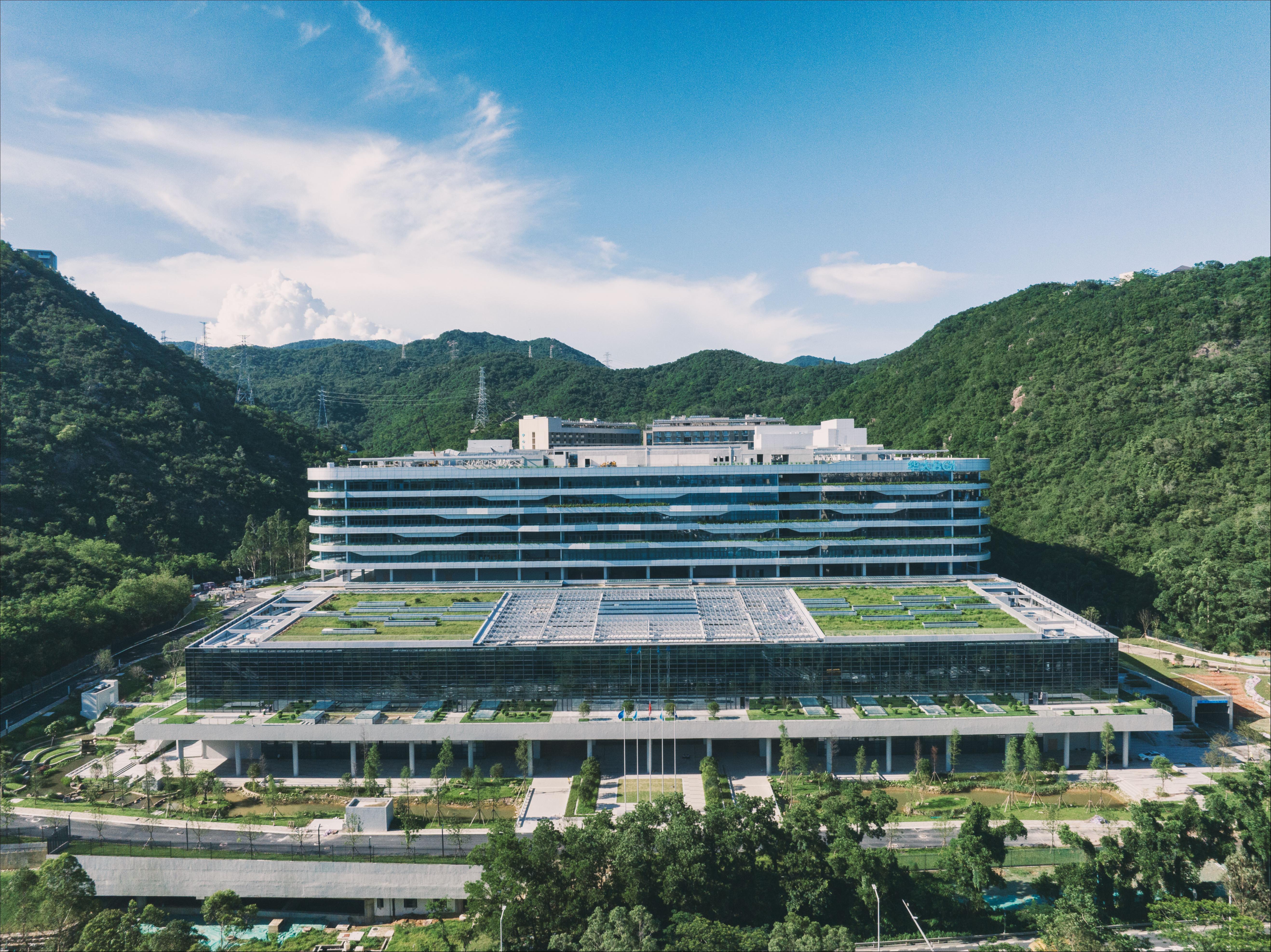
华大基因:布局银发经济的万亿消费新蓝海
Tai Mei Ti A P P· 2025-09-03 09:58
Core Insights - The gene testing industry is facing significant challenges, including upstream monopolies squeezing profits, price wars downstream, and a decline in birth rates leading to reduced demand, which is putting pressure on overall profitability [4] - BGI Genomics has identified elderly health management as a key growth driver for the future, focusing on the elderly demographic as a core market [4][5] - With over 300 million people aged 60 and above in China, there is a surge in demand for chronic disease prevention, which may support BGI's market positioning during industry downturns [4][5] Industry Trends - The aging population in China is accelerating, with projections indicating that by 2024, 22% of the population will be aged 60 and above, equating to approximately 310 million individuals [5] - The silver economy is expected to reach a market size of 8.3 trillion yuan in 2024, potentially exceeding 20 trillion yuan by 2030 and 106 trillion yuan by 2050, covering various sectors including healthcare, elderly care services, and senior products [5] - Health care needs are particularly pronounced, with 75% of elderly individuals suffering from chronic diseases, creating substantial demand for prevention, diagnosis, and health management services [6] Company Strategy - BGI Genomics is focusing on precision health management driven by gene testing, targeting chronic diseases prevalent among the elderly, such as genetic metabolic disorders and cardiovascular diseases [7] - The company has launched several products for Alzheimer's disease risk assessment and cardiovascular disease risk evaluation, addressing the specific health needs of the aging population [8][9] - BGI's innovative approaches include the integration of artificial intelligence and multi-omics technologies to provide comprehensive health management solutions for the elderly [10] Technological Innovations - The introduction of the GeneT model allows for efficient interpretation of large genomic datasets, enhancing the accuracy of disease risk predictions for the elderly [10] - The "i99 Smart Health" multi-omics health management system offers personalized health management plans by integrating various data types, addressing common health issues faced by the elderly [10] - These technological advancements aim to lower testing costs and make gene testing more accessible, transforming it from a luxury service to a more widely available option for the elderly [10][11]
斯凯奇9月退市,代言人换成63岁梁朝伟,重回“舒适区”
Nan Fang Du Shi Bao· 2025-09-03 04:21
Group 1 - Skechers has announced a merger deal valued at $9 billion with 3G Capital, which has received all necessary regulatory approvals and is expected to close on September 12, 2025. Following the completion, Skechers will go private and its existing shares will be canceled [2][4] - The acquisition price is set at $63 per share, representing a 28% premium, totaling $9.42 billion. After the deal, Skechers' common stock will no longer be listed on the New York Stock Exchange [4] - Skechers reported a 13.1% year-over-year increase in sales for Q2 of fiscal year 2025, reaching $2.44 billion, and a 21.5% increase in net profit to $170.5 million. For the first half of the year, sales grew by 10% to $4.852 billion, with net profit increasing by 7.5% to $373 million [6] Group 2 - Skechers' sales in the Americas increased by 4.6% to $2.217 billion in the first half of the year, while EMEA sales surged by 29.4% to $1.45 billion. However, sales in the Asia-Pacific region grew only 1.4% to $1.185 billion, with a notable 8.2% decline in revenue from the Chinese market [6] - The company has appointed actor Tony Leung as the brand ambassador for the Asia-Pacific region, marking its largest endorsement deal in China to date. This partnership aims to explore the concept of comfort, aligning with Skechers' brand DNA [7] - Skechers has shifted its marketing strategy to target the high-end consumer segment, moving away from its previous focus on mid-range pricing and value. This change is partly in response to increased tariffs affecting its cost structure, which may force the company to pursue a more premium positioning [9]

水饺仅售4.9元,老人鞋大王足力健杀入食品赛道,自救还是自虐?
3 6 Ke· 2025-09-03 04:19
Core Viewpoint - The company, originally known for its elderly footwear, has recently ventured into the food industry, particularly organic and health-focused products, in response to market trends and its declining traditional business [3][4][10]. Group 1: Company Transition - The company has seen its membership for organic food exceed 80,000, with 34 physical stores primarily located in Zhengzhou, Henan [4]. - The product line includes over 200 SKUs, covering snacks, grains, frozen foods, beverages, and health products, with prices ranging from 1 yuan to 300 yuan [4]. - The shift to food is driven by the growing consumer focus on health, with 43.8% of consumers indicating increased attention to health and wellness in their food choices [6]. Group 2: Market Potential - The elderly health food market is projected to grow significantly, with estimates suggesting a total consumption of 12 trillion to 15.5 trillion yuan by 2030 [7]. - The company aims to address the supply shortage and high prices in the elderly health food market by offering low-cost products and incentives like free samples [7]. Group 3: Challenges and Risks - The company's traditional footwear business has faced severe challenges, including a decline in sales and a tarnished reputation due to quality issues and legal disputes [10][11]. - The transition to food products is complicated by the company's reliance on a light-asset model, using third-party manufacturers, which raises concerns about quality control and food safety [16]. - There is a significant brand perception gap, as consumers associate the brand primarily with footwear, leading to skepticism about its new food offerings [16][17].

【汉中】托起幸福“夕阳红”
Shan Xi Ri Bao· 2025-09-02 22:42
Core Viewpoint - Hanzhong City is actively developing a comprehensive and high-quality elderly care service system that addresses the diverse needs of senior citizens through facility construction, service provision, and policy support [1] Group 1: Infrastructure Development - Hanzhong City has established a four-level elderly care network, including comprehensive service centers at the city level, regional nursing homes at the county level, service stations at the town level, and mutual happiness homes at the village level, ensuring services reach both urban and rural areas [2] - The city has invested in building standardized community day care centers, providing one-time construction subsidies and annual operational support for high-quality services, resulting in 263 community day care centers serving over 5,000 elderly individuals daily [2] Group 2: Rural Elderly Care - Hanzhong City has built 1,103 mutual happiness homes, covering over 80% of administrative villages, providing essential services such as meals and social interaction for elderly residents [3] Group 3: Diverse Services - The city has implemented a comprehensive meal assistance program, establishing 80 demonstration meal points with plans to reach 100 by the end of the year, serving 120,000 elderly individuals [5] - Various service models have been adopted, including neighborhood mutual assistance and town delivery services, to ensure safe, convenient, and affordable meal services for the elderly [5] Group 4: Economic Development - Hanzhong City is leveraging its ecological and cultural resources to develop a "silver economy," promoting health management services and creating high-end travel and elderly care communities [7] - The city has introduced policies to support the development of the silver economy, attracting over 20 well-known elderly care enterprises and establishing six provincial-level travel elderly care bases, receiving more than 50,000 elderly visitors annually [7][8] Group 5: Future Plans - The city aims to deepen elderly care service reforms and integrate medical and health care services, expanding the breadth and depth of the silver economy to ensure every elderly individual enjoys a happy and secure old age [8]
奥佳华(002614) - 2025年9月1日至9月2日投资者关系活动记录表
2025-09-02 14:28
Market Overview - The domestic massage and health product market has low penetration and concentration, with significant growth potential driven by increasing health demands and an aging population [2] - The "old-for-new" subsidy policy has supported a recovery in the domestic massage chair market in the first half of the year [2] Product Development - The company launched the flagship massage chair OG-9598 in April, featuring the world's first "5D" mechanism, which has seen continuous sales growth [3] - New products are being introduced to diversify the price range of massage chairs, including a collaboration with "LINE FRIENDS" for small massage appliances [3] Marketing Strategy - The company focuses on promoting flagship products through advertising in major urban areas and airports, and has engaged Chinese Olympic champions as product ambassadors [3] - Online sales are boosted by the "old-for-new" subsidy policy, while offline efforts target growth in key channels like Sam's Club and JD [3] Financial Insights - Sales from the U.S. accounted for less than 22% of total revenue, indicating a dominant non-U.S. business [4] - The company has a production capacity of 5.4 million units annually at its Vietnam factory, which is gradually being put into operation [4] Cost Management - High sales expenses are attributed to significant investments in brand recognition and market share across various regions [5] - The company aims to enhance profitability by optimizing product quality and cost through innovative design and material application [5] R&D Investment - R&D investment has consistently exceeded 4% of total revenue, focusing on advanced technologies in health and wellness [6] - The company is the only one in the industry with seven national-level innovation platforms, emphasizing its commitment to R&D [6] Technological Advancements - The company is advancing its AI and IoT capabilities to enhance product innovation, particularly in the massage chair sector [7] - A new massage chair prototype with innovative movement capabilities was introduced at the Canton Fair, showcasing the company's commitment to breaking traditional product boundaries [7]

(申城风景线)新经济激活上海“夜校新活力”
Zhong Guo Xin Wen Wang· 2025-09-02 11:42
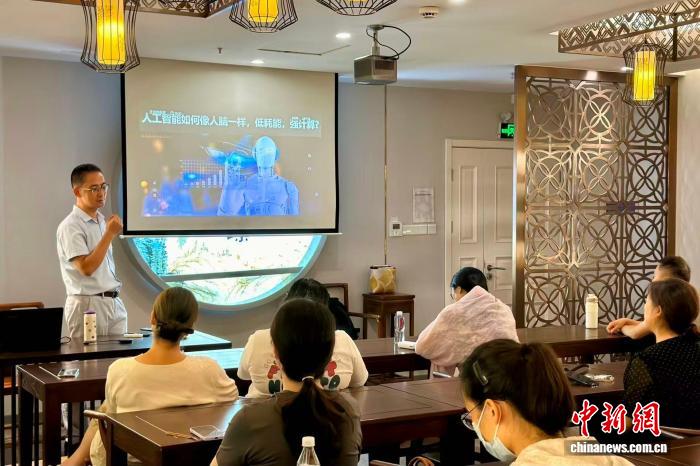
Core Insights - The development of AI is likened to a "Cambrian explosion," with significantly lowered application barriers, as highlighted in the "AI Magic Course" offered at the Shanghai Citizen Art Night School [1][3]. Group 1: Course Offerings and Objectives - The "AI Magic Course" aims to help working professionals and beginners quickly master practical skills in AI painting, audio-visual production, and AI life assistance, thereby enhancing their leisure activities [3]. - The night school is introducing multiple AI-related courses in its autumn session, reflecting a growing interest in personal experience and technology among participants [3]. Group 2: Participant Engagement and Feedback - Participants, such as a finance worker named Mei Xiao, express a desire to keep up with AI trends to improve work efficiency and enrich their entertainment lives [3]. - The founder of a comedy group, Fan Chenjian, notes the diverse backgrounds of participants in the night school, emphasizing the importance of learning new skills to alleviate work-related stress [3]. Group 3: Future Directions and Collaboration - The director of the Shanghai Mass Art Museum, Wu Penghong, indicates a strong enthusiasm among citizens for night school programs, with plans for diversified teaching that includes AI and other trending economic topics [4]. - There are considerations for collaboration among various night schools to create a unified Shanghai brand, enhancing the educational offerings available to the community [4].
A+H丨营收近30亿元、康复辅具类产品排名第一,可孚医疗(301087.SZ)拟赴港IPO!
Sou Hu Cai Jing· 2025-09-02 07:40
Core Viewpoint - Kefu Medical Technology Co., Ltd. is seeking to list on the Hong Kong Stock Exchange, aiming to enhance its global strategy and brand recognition after its previous listing on the ChiNext in 2021 [1][7] Group 1: Financial Performance - Kefu Medical's revenue for 2022, 2023, 2024, and the first half of 2025 was RMB 29.77 billion, RMB 28.54 billion, RMB 29.83 billion, and RMB 14.96 billion respectively [2] - Gross profit for the same periods was RMB 11.27 billion, RMB 11.73 billion, RMB 15.09 billion, and RMB 7.48 billion, with corresponding gross margins of approximately 37.84%, 41.09%, 50.58%, and 49.99% [2] - Net profit figures were RMB 3.02 billion, RMB 2.53 billion, RMB 3.12 billion, and RMB 1.67 billion, with net profit margins of about 10.15%, 8.86%, 10.47%, and 11.14% [2] Group 2: Product and Market Position - Kefu Medical's core business is product sales, contributing approximately 90% of total revenue, with sales figures of RMB 27.99 billion, RMB 26.42 billion, RMB 27.37 billion, and RMB 13.07 billion for the years 2022 to 2025 [2] - The revenue from rehabilitation aids increased significantly from RMB 5.26 billion in 2022 to RMB 10.4 billion in 2024, reaching RMB 5.31 billion in the first half of 2025, accounting for over 35% of total revenue [3] - Kefu Medical ranks first in the market for home rehabilitation aids and posture correction products, with a market share of nearly 30% [4] Group 3: Market Trends and Growth Potential - The global medical device market is projected to reach USD 869.7 billion by 2030, driven by factors such as aging population and increased healthcare spending [6] - The Chinese home medical device market is expected to grow from RMB 1,224 billion in 2019 to RMB 3,131 billion by 2030, with a compound annual growth rate of 7.9% [7] - Kefu Medical's overseas revenue was approximately RMB 59.15 million in 2024, representing only 1.98% of total revenue, but showed significant growth with a 200% increase in the first half of 2025 [7]
银发经济 养老服务师“真服务” 才能走得更远
Zheng Quan Shi Bao· 2025-09-01 22:12
Core Viewpoint - The introduction of the new profession of elderly care service providers in China highlights the need for high-quality elderly care services as the aging population grows, with 310 million people aged 60 and above by the end of 2024 [1][2]. Group 1: Importance of Elderly Care Service Providers - The elderly care service provider is a more comprehensive role compared to traditional elderly caregivers, requiring a higher level of knowledge and skills [1]. - The aging population in China is significant, with 220 million people aged 65 and above, representing 15.6% of the total population, indicating a pressing need for effective elderly care services [1]. Group 2: Market Demand and Challenges - The demand for professional elderly care service providers is increasing, as they can offer tailored guidance to meet individual needs, similar to the emerging role of career planners [2]. - The profession currently lacks clear definitions and standards, leading to a chaotic environment where services may not meet the necessary quality or regulatory requirements [2][3]. Group 3: Risks and Regulatory Needs - There are instances of fraud in the elderly care sector, where companies misrepresent their services and charge high fees under the guise of providing high-end care solutions [3]. - Establishing regulations and standards for elderly care service providers is crucial to protect the rights of the elderly and ensure the integrity of the market [3].
央地协同发力稳就业 增量举措加速出台落实
Shang Hai Zheng Quan Bao· 2025-09-01 19:06
Group 1 - The central government has implemented a series of fiscal, monetary, and industrial policies aimed at stabilizing employment, which has shown foundational and critical effects in promoting job stability [2][3] - In the first half of the year, 6.95 million new urban jobs were created, achieving 58% of the annual target, supported by measures such as increased unemployment insurance and social insurance subsidies [4][5] - The State Council has issued a notice with 19 policy measures to further enhance employment support, focusing on increasing unemployment insurance returns, deferring social insurance payments, and strengthening skills training [4][5] Group 2 - Local governments have accelerated the implementation of employment stabilization measures, with specific plans in cities like Beijing and Guizhou to create new job opportunities in emerging sectors [6] - Experts predict that the employment situation is likely to improve further due to ongoing economic recovery and the release of policy effectiveness, particularly in the service and manufacturing sectors [6] - There is a call for increased investment in education and training to address structural employment issues and support high-quality employment in the future [7]