中美博弈

Search documents
特朗普号召全球:一起给中国加关税100%!第1个响应的国家来了...
Sou Hu Cai Jing· 2025-10-06 10:25
Group 1 - Trump calls for NATO countries to stop importing Russian oil and impose high tariffs on Chinese goods, claiming it could end the Ukraine war, but the real intention is to unite against China and Russia [1] - Mexico initially planned to impose a 50% tariff on Chinese cars but quickly reversed after warnings from China, indicating the influence of Chinese diplomacy [1] - China is responding in various sectors, including investigating U.S. chip export controls, advancing domestic DUV lithography machine testing, and shifting soybean orders from the U.S. to South America [1] Group 2 - The U.S. unilateral pressure is showing limited effectiveness, as more countries are moving towards diversified cooperation, with Brazil rejecting U.S. calls and signing coffee orders with China [1] - Russia and Iran are expanding the use of the yuan in energy trade, while China continues to reduce its holdings of U.S. Treasury bonds [1] - The competition between the U.S. and China has extended beyond trade to technology, finance, and geopolitical strategy, with China gradually weakening U.S. dominance in key areas through technological self-reliance and deepening international partnerships [3]

130万美军没工资发,特朗普另有打算,他手上对华还有三张牌
Sou Hu Cai Jing· 2025-10-06 08:16
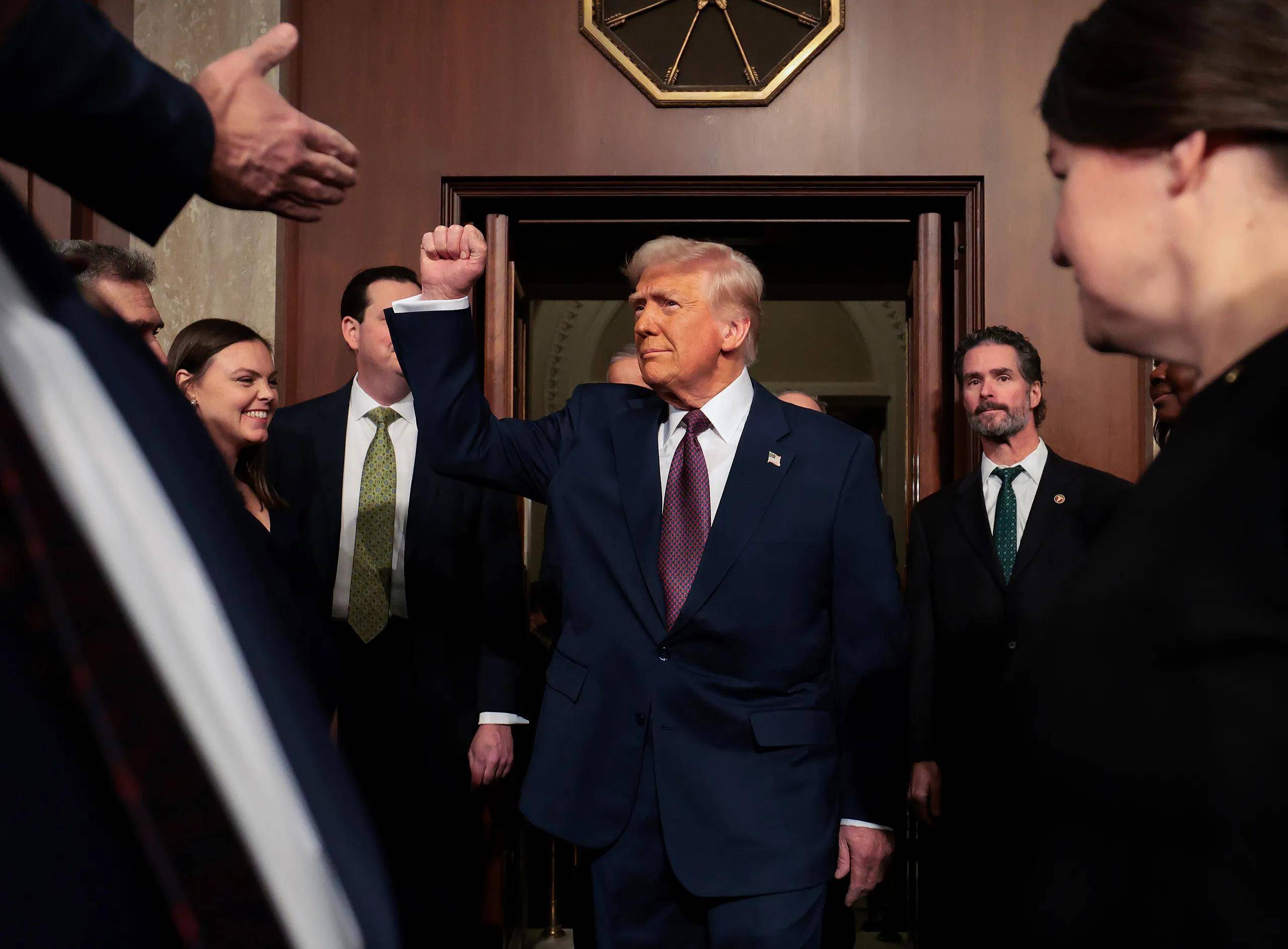
这一事件的影响在于,停薪可能动摇美军的士气与公众对政府的信任。你让那些为国家捍卫安全的军人先断薪,这传递出的是什么信号?不仅会引发军心不 稳,也会让外界看到美国的弱点。 STATE a To To Casting 15 t 2017 特朗普的算盘 特朗普表面上坚持不妥协,口口声声不求预算中的支持者,但他绝不会没有后手。实际上,这场停摆和混乱局面正为特朗普在外交上制造了 一种紧迫感——有困境就有谈判的筹码。 美国政府已停摆多日,国内的混乱局面不断曝出,令人意外的是,美军也深受其累:按时发工资都成了问题。特朗普口口声声说要"削繁就简",但实际上, 他似乎将赌注押在了对华博弈上。那么他还剩下什么牌可打呢? 政府关门的深远影响 政府关门带来的后果,比街头新闻报道的要严重得多。据观察者网报 道,美国各军种约有130万现役军人未能按时领取工资。一些军属甚至在清晨5点就开始排队领取救济粮,许多家庭的生活陷入了困境。 按理说,即便政府 停摆,美国军人也应继续获得"保障支付",但这次似乎出现了空窗期。《战略与国际研究中心》指出,虽然军人仍在执行任务,但薪酬可能会被延迟,除非 国会出台特别立法来保障支付。 令人意外的是,在这段时 ...
中方连抛3096亿美债,美政府正式关门,专家坦言:中国王牌奏效
Sou Hu Cai Jing· 2025-10-04 02:45
Core Insights - Since 2022, China has cumulatively reduced its holdings of U.S. Treasury bonds by $309.6 billion, coinciding with a government shutdown crisis in the U.S. [1][7] - The U.S. government shutdown is a result of long-standing partisan divisions, leading to budgetary deadlocks that prevent funding [3][5] - The reduction in U.S. Treasury bond purchases by the Federal Reserve, due to inflationary pressures, has exacerbated the fiscal situation of the U.S. government [6][7] Group 1: U.S. Government Shutdown - The shutdown is not an isolated incident but a culmination of ongoing political polarization, making it difficult for parties to reach a compromise on fiscal policies [5][6] - The shutdown has significant implications, including the suspension of government services and unpaid leave for federal employees [3][5] Group 2: China's Reduction of U.S. Treasury Bonds - China's reduction of U.S. Treasury bonds is a strategic decision based on a thorough analysis of the current international economic landscape, reflecting concerns over U.S. fiscal sustainability and monetary policy uncertainty [8][10] - The cumulative reduction includes $173.2 billion in 2022, $50.8 billion in 2023, $57.3 billion in 2024, and $28.3 billion in early 2025, bringing China's remaining U.S. Treasury holdings to $730.7 billion, the lowest since 2009 [7][8] Group 3: Strategic Implications - The shift in China's investment strategy is influenced by the changing global economic landscape and increasing tensions in U.S.-China relations, prompting a reassessment of its previous reliance on U.S. Treasury bonds [10][12] - China's growing economic and international influence positions it as a significant player in global trade and finance, which is recognized by U.S. officials, including former President Trump, who called for negotiations with China during the shutdown [12][13]
中美缠斗出现分水岭,巴铁要卖稀土给美国,赴美签字救美军工一命
Sou Hu Cai Jing· 2025-10-02 06:32
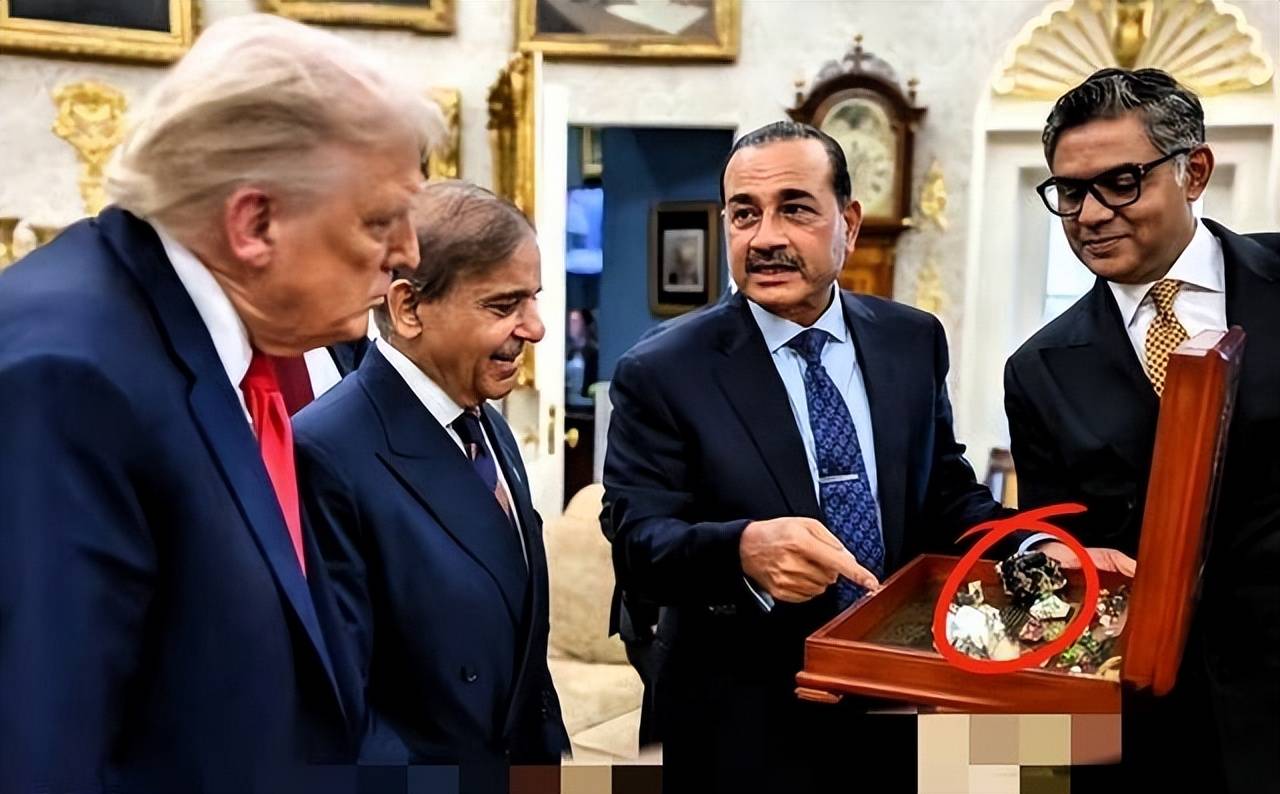
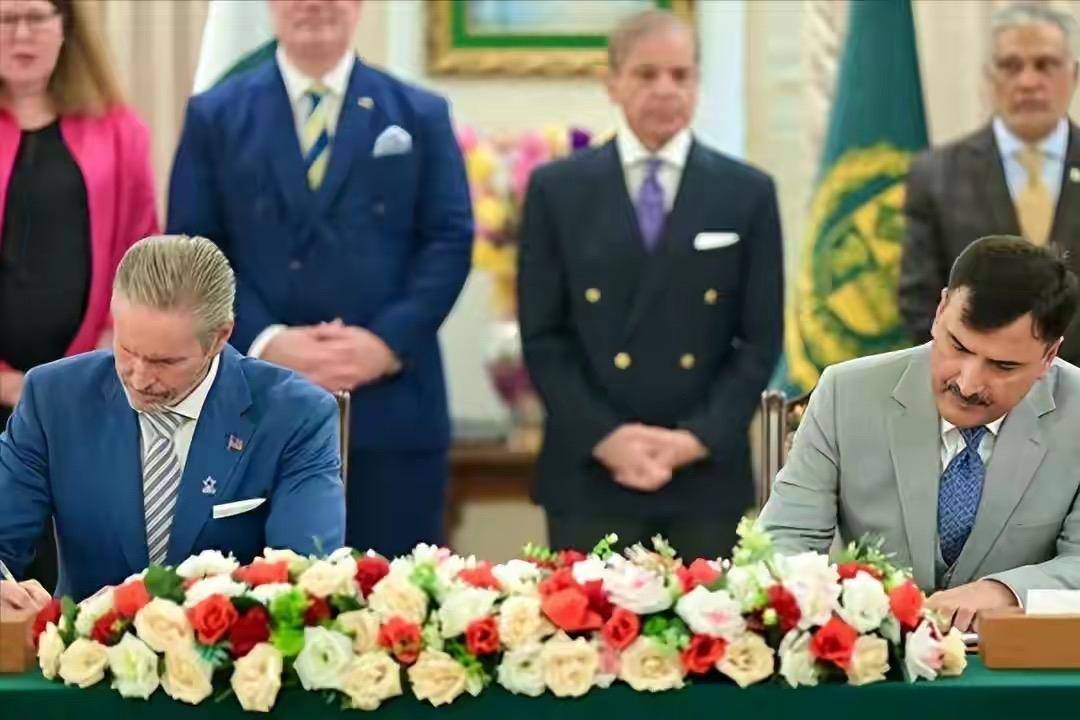
Group 1 - The ongoing competition between the US and China in the rare earth sector has been intense, with the US military industry heavily reliant on Chinese rare earths, making it difficult to find alternative sources [1] - In early 2025, China implemented stricter export license management for seven categories of heavy rare earths, prioritizing national security and industrial interests, which caught the US military industry off guard [1][4] - The US is accelerating its supply chain diversification efforts, seeking sources in Australia and Canada, but these projects are costly and time-consuming, making it challenging to address immediate needs [1] Group 2 - Pakistan has emerged as a new hope for the US due to its rich rare earth resources, although it has long struggled with funding and technological development [1][3] - In August 2025, the US and Pakistan began discussions on critical mineral cooperation, with a focus on a $1 billion investment in the copper-gold mine in Balochistan [3] - A $500 million agreement was signed, outlining a three-step plan to export light rare earths, improve mining infrastructure, and facilitate technology transfer to establish a complete industrial chain in Pakistan [3] Group 3 - China's rare earth policy remains stable, with export license controls implemented in 2023 and further refined in 2025, emphasizing dynamic adjustment and green development [4] - The cooperation with the US is seen as a pragmatic survival strategy for Pakistan, providing short-term cash flow and aiding in industrial upgrades amid significant economic pressures [4][5] - While the agreement offers the US some relief in its supply chain challenges, it does not fully resolve the issues, particularly for the F-35 and drone production that heavily depend on rare earth magnets [5]
稀土王牌不吃香了?巴铁卖矿给美国救军工,其实中国早留有后手
Sou Hu Cai Jing· 2025-10-01 21:50
Core Viewpoint - The cooperation between the United States and Pakistan on rare earth development is driven by mutual needs: the U.S. seeks to secure rare earths for military use, while Pakistan aims to alleviate its economic crisis through foreign investment and technology support [1][3][4]. Group 1: Economic Context - Pakistan is facing a severe economic crisis characterized by high external debt, soaring prices, and a lack of funds, making the underground rare earth resources a potential lifeline [1][3]. - The U.S. is providing $500 million in investment along with technical support, which is crucial for Pakistan at this time [3]. Group 2: U.S. Military Needs - The U.S. military industry has become increasingly dependent on Chinese rare earths, which are essential for various military applications, leading to production delays due to recent export controls by China [4][6]. - The urgency for the U.S. to find alternative sources of rare earths is driven by the need to reduce reliance on China [4]. Group 3: Resource Compatibility and Challenges - Most of Pakistan's rare earths are light rare earths, while the U.S. requires medium and heavy rare earths, indicating a mismatch in resource availability [6]. - Establishing a complete supply chain for rare earths in Pakistan will take years, which may not meet the immediate demands of the U.S. military [6]. Group 4: China's Position - China maintains a dominant position in the rare earth market due to its comprehensive supply chain capabilities, making it difficult for other countries to compete in the short term [7][9]. - China's export control policies are designed to balance international demand while protecting its strategic resources [9]. Group 5: Security Concerns - The rare earth mines in Pakistan are located in regions with existing tribal conflicts and armed activities, raising security concerns for large-scale mining operations [11]. - Although the U.S. has promised security support, historical precedents show that foreign investments can be jeopardized by security issues [11]. Group 6: Strategic Implications - The rare earth cooperation between the U.S. and Pakistan represents a small episode in the broader U.S.-China geopolitical competition, with both countries pursuing their strategic interests [13].
王涵:从关税战到卖“金卡”,特朗普在折腾啥?——特朗普“任性”行为背后的财政逻辑
Sou Hu Cai Jing· 2025-09-28 03:18
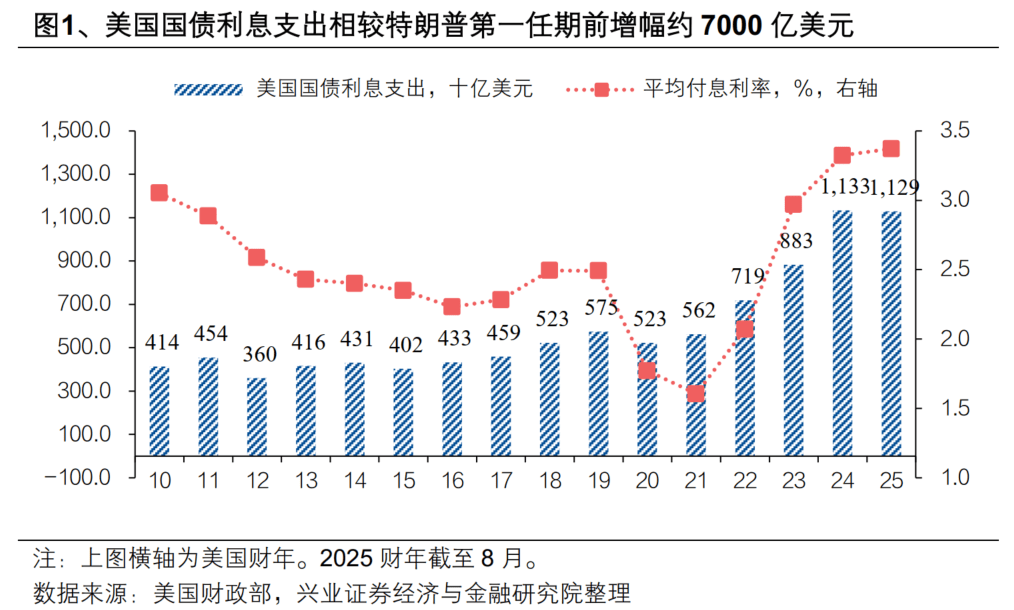
Group 1 - The core objective of recent policies by the Trump administration is to alleviate U.S. fiscal pressure, as evidenced by the significant increase in interest payments on national debt from $432.6 billion in FY2016 to nearly $1.13 trillion by FY2025 [1][5][9] - The administration's push for interest rate cuts by the Federal Reserve is aimed at reducing debt servicing costs, which have increased by approximately $700 billion since Trump's first term [1][7][9] - Despite the Fed's rate cuts potentially saving around $412 billion to $1.93 trillion in interest payments, this is insufficient to cover the existing fiscal gap of about $400 billion, prompting the administration to seek additional revenue sources [2][15][19] Group 2 - The Trump administration's policies, including the "Gold Card" initiative and increased H1B fees, are part of a broader strategy to generate revenue and address the fiscal shortfall [15][17] - The relationship between the Trump administration and the Federal Reserve has deteriorated, with the administration advocating for monetary policy to support fiscal needs, which may undermine the Fed's independence and affect the credibility of the U.S. dollar [2][17][19] - As a result of these policies, capital is expected to flow out of the U.S., benefiting non-U.S. assets such as precious metals and Chinese assets, as the dollar's creditworthiness is likely to weaken [3][19][21] Group 3 - The anticipated decline in interest rates and the weakening of the dollar may lead to increased investment in non-U.S. markets, particularly in Chinese assets, as the yuan is expected to appreciate due to narrowing interest rate differentials [3][19][21] - The Chinese capital market is expected to benefit from these trends, with a solid long-term upward trajectory supported by favorable domestic policies and the ongoing global shift towards non-U.S. assets [21][22][23] - The current geopolitical landscape and the strategic positioning of China in global markets are likely to enhance investor confidence and risk appetite, further supporting the A-share market [21][22][23]
全球关税正式落地,特朗普宣布美国“起死回生”,中方直插美后院
Sou Hu Cai Jing· 2025-09-27 08:54
Group 1 - Trump has initiated a global tariff war, claiming it has revitalized the U.S. economy, despite the reality of increasing trade tensions with various countries [1] - The primary target of Trump's strategy appears to be the European Union, as he seeks to capitalize on the ongoing conflict between Russia and Ukraine, positioning the U.S. to benefit from Europe's struggles [3] - The U.S. Secretary of State, Rubio, acknowledges the strategic stability between the U.S. and China, emphasizing the potential negative impact of a full-scale trade conflict on both nations and the global economy [5] Group 2 - A Chinese delegation visited Canada, offering support to the Canadian government, which is facing a 35% tariff from the U.S., indicating a strategic move to strengthen economic ties with Canada amidst U.S. pressures [7] - The Canadian government, under Prime Minister Carney, has taken a strong stance against the U.S. and has implemented measures to counteract American policies, highlighting the shifting dynamics in international trade relationships [7]
中国突然宣布放弃WTO特殊优惠,美国施压失效,全球贸易迎转折?
Sou Hu Cai Jing· 2025-09-26 09:43
Group 1 - China's Prime Minister Li Qiang announced that China will not seek any new special and differential treatment in WTO negotiations, reflecting a proactive stance in the ongoing US-China rivalry [1][3] - The US has pressured China for three years regarding its developing country status, arguing that as the world's second-largest economy, China should not enjoy preferential treatment [2][3] - China's strategic response effectively neutralized US criticisms, allowing it to maintain its core interests while demonstrating flexibility in its approach to international trade [3][4] Group 2 - This move by China serves three strategic objectives: it eliminates a key point of attack from the US, allows China to participate in global rule-making on more equal terms, and showcases its role as a responsible major power [4][7] - The timing of this adjustment is significant, as it coincides with a deadlock in WTO reforms, potentially revitalizing discussions and enhancing China's international standing [4][7] - China's average tariff has decreased to 4.4%, nearing levels seen in developed countries, indicating its commitment to aligning with global trade standards [4]
如果降息,人民币升值会延缓吗?
Yin He Zheng Quan· 2025-09-26 08:56
Exchange Rate Projections - Under the baseline scenario, the USD/CNY exchange rate is expected to approach 7.0 by the end of the year[1] - In an optimistic scenario, with extraordinary counter-cyclical policies, the new equilibrium for USD/CNY could be around 6.7[1] Monetary Policy Implications - A potential interest rate cut of 10-20 basis points (BP) by the People's Bank of China (PBOC) in Q4 may not delay RMB appreciation but could intensify it[1] - The current market does not fully anticipate a rate cut, meaning the existing exchange rate does not factor in this possibility[1] Economic Context - The recent RMB appreciation is not driven by strong economic fundamentals but rather by expectations and a self-fulfilling cycle of currency appreciation[1][10] - The Chinese government's debt cost is currently lower than economic growth rates, supporting fiscal expansion and the exchange rate[1] Investment Insights - RMB appreciation is expected to benefit Chinese stocks, with historical data showing that a 1% appreciation typically leads to a 2.73% increase in A-shares and a 4.52% increase in Hong Kong stocks[6] - The current RMB appreciation cycle has seen A-shares rise by an average of 8.31% and Hong Kong stocks by 10.52% since April 8, 2025[6] Risks and Considerations - Risks include misinterpretation of policy, unexpected monetary policy actions, and potential increases in U.S. tariffs[50]
美国没想到!3500亿关税协议被拒,韩国外长当着中国面,罕见亮剑
Sou Hu Cai Jing· 2025-09-23 06:33
Group 1 - The core issue revolves around a $350 billion special economic agreement proposed by the U.S., which includes a significant cash investment requirement from South Korea [2] - South Korea's Foreign Minister criticized the agreement as unfair, highlighting that it requires South Korea to invest $350 billion, which is 84% of its foreign exchange reserves [2] - South Korean President Lee Jae-myung expressed concerns that the agreement could hinder the country's development for the next decade, citing lower returns on investments in the U.S. compared to domestic projects [2] Group 2 - There is a growing public outcry in South Korea against the agreement, with protests occurring in Seoul, indicating a rare consensus among political parties against perceived economic colonialism [4] - The U.S. Secretary of Commerce emphasized that there are no exceptions for South Korea, as Japan has already signed the agreement, reflecting a unilateral approach by the U.S. [4] - The situation illustrates a shift in international relations, with South Korea attempting to balance its security alliance with the U.S. while seeking economic opportunities with China, which has been its largest trading partner for 18 consecutive years [4]