
市盈率

Search documents
BEN share price at $10: here’s how I would value them
Rask Media· 2025-12-07 19:37
Core Viewpoint - The valuation of Bendigo & Adelaide Bank Ltd (ASX: BEN) shares is a topic of interest for investors, particularly those seeking dividend income, with current share price around $10.38 and various valuation methods suggesting higher intrinsic values [1][11]. Group 1: Valuation Methods - The Price-Earnings (PE) ratio is a common valuation tool, comparing a company's share price to its earnings per share, with BEN's current PE ratio at 11.9x compared to the banking sector average of 18x, suggesting a sector-adjusted valuation of $15.85 [6][5]. - The Dividend Discount Model (DDM) is highlighted as a more effective valuation method for banks, relying on past or forecasted dividends and assuming consistent growth, with BEN's valuation ranging from $13.32 to $19.64 depending on the dividend and risk rate assumptions [7][12][11]. Group 2: Dividend Insights - Fully franked dividends are a significant factor in boosting BEN's share price, as they provide additional value to eligible shareholders through franking credits [12][3]. - The DDM approach considers the last year's dividend payment of $0.63, with adjustments leading to different valuations based on growth and risk rates, indicating the importance of dividend consistency in valuation [10][11]. Group 3: Market Context - The Australian banking sector is characterized by an oligopoly, with major players like Commonwealth Bank and National Australia Bank, making bank shares particularly attractive to investors [2][3]. - Despite attempts by international banks to penetrate the Australian market, their success has been limited, reinforcing the stability of local bank shares [3].



每日钉一下(估值百分位,在哪些情况下可能会失效?)
银行螺丝钉· 2025-12-06 14:03
Group 1 - The article discusses the importance of understanding investment strategies for index funds to achieve good returns [2] - A free course is offered to help investors learn index fund investment techniques, along with course notes and mind maps for efficient learning [2] Group 2 - The article highlights three situations where valuation percentiles may fail as a judgment indicator in investments [6] - Situation one involves significant earnings volatility, which can lead to ineffective price-to-earnings (P/E) ratios; in such cases, price-to-book (P/B) ratios can be referenced as an alternative [7][8] - Situation two pertains to indices with a short historical record, where low valuation percentiles may not indicate undervaluation due to insufficient historical data [10] - Situation three addresses changes in index rules, which can significantly alter valuation data; for example, the changes in the China Securities 100 index in June 2022 led to a shift in P/E ratios from around 10 to 13-14 [11][12]

贝肯能源收盘上涨1.81%,滚动市盈率264.47倍,总市值23.80亿元
Sou Hu Cai Jing· 2025-12-06 04:37
Group 1 - The core viewpoint of the articles highlights the financial performance and market position of Beiken Energy, indicating a significant increase in revenue and net profit for the third quarter of 2025 [1] - Beiken Energy's stock closed at 11.84 yuan on December 5, with a price increase of 1.81%, resulting in a rolling PE ratio of 264.47 times and a total market capitalization of 2.38 billion yuan [1] - The company operates in the drilling and extraction industry, providing comprehensive technical services including drilling contracting, fracturing, and chemical product sales, with a total of 35 authorized patents [1] Group 2 - As of the third quarter of 2025, only one institution holds shares in Beiken Energy, with a total of 24,100 shares valued at 0.00 billion yuan [1] - The company's latest financial results show an operating income of 747 million yuan, a year-on-year increase of 23.38%, and a net profit of 29.01 million yuan, reflecting a 19.21% increase, with a sales gross margin of 20.51% [1] - In terms of industry comparison, Beiken Energy ranks 20th in the extraction sector, where the average PE ratio is 36.24 times and the median is 54.24 times [2]

富瑞特装收盘上涨2.62%,滚动市盈率20.27倍,总市值53.89亿元
Sou Hu Cai Jing· 2025-12-05 09:49
Group 1 - The core business of the company includes manufacturing equipment for the entire industrial chain of natural gas liquefaction and LNG storage, transportation, and terminal applications, as well as providing comprehensive technical solutions and operational services [2] - The company's main products consist of liquefaction plant devices, LNG/L-CNG refueling station equipment, cryogenic liquid transport vehicles, cryogenic liquid tank containers, LNG storage tanks, and LNG supply systems for vehicles and ships [2] - The latest financial report indicates that for the third quarter of 2025, the company achieved an operating income of 2.363 billion yuan, a year-on-year decrease of 7.90%, while net profit increased by 36.93% to 173 million yuan, with a gross profit margin of 23.07% [2] Group 2 - As of December 5, the company's stock closed at 9.02 yuan, up 2.62%, with a rolling price-to-earnings ratio (PE) of 20.27, marking a new low in 174 days, and a total market capitalization of 5.389 billion yuan [1] - In terms of industry PE rankings, the average PE for the specialized equipment industry is 81.06, with a median of 61.33, placing the company at 87th [1] - The company has 44,361 shareholders as of November 28, 2025, an increase of 52 from the previous count, with an average holding value of 352,800 yuan and an average holding quantity of 27,600 shares [1]

大新银行:对明年美股前景持乐观看法,亦预期未来六个月港股上升机会较高
Sou Hu Cai Jing· 2025-12-05 03:27
Group 1 - The outlook for the US stock market in the coming year is optimistic, particularly for the technology and financial sectors, supported by corporate earnings performance and the prospect of interest rate cuts [1] - The Hong Kong stock market is currently trading at a price-to-earnings ratio of approximately 12.5 times, which is considered reasonable. There is a positive outlook for technology stocks and chip-related themes, bolstered by government policy support, with a high likelihood of stock price increases in the next six months, barring geopolitical events [1] - There is uncertainty regarding whether the Federal Reserve will cut interest rates in the first quarter of next year, as it coincides with the end of Chairman Powell's term. Bond prices may experience volatility due to related news, leading to a cautious preference for investments in bonds with a maturity of three years or less and investment-grade corporate bonds [1]

Why SAIC Stock Soared Today
The Motley Fool· 2025-12-04 16:34
Core Viewpoint - SAIC's stock appears undervalued despite recent challenges, with a significant increase in share price following a strong earnings report, indicating potential for future growth if the company can resume its growth trajectory [1][2]. Financial Performance - SAIC reported fiscal Q3 2026 earnings that exceeded analyst expectations, achieving $2.58 per share in profit against a forecast of $2.15, with sales matching the expected $1.87 billion [1]. - However, sales declined by 6% and operating profit fell by 20%, leading to a 120-basis-point decrease in operating margin [2]. - Net profit, calculated under GAAP, decreased by 21% to $1.69 per diluted share, despite adjusted bottom-line profits only falling by 1% [2]. Cash Flow and Guidance - The company significantly increased its free cash flow, generating $135 million in the quarter, surpassing both reported operating income and net income [3]. - SAIC's book-to-bill ratio stands at 1.2x, indicating potential for sales growth, with management slightly raising sales guidance to approximately $7.3 billion for the year [5]. - Adjusted profit is projected to be between $9.80 and $10 per share, with free cash flow expected to exceed $550 million [5]. Valuation Metrics - SAIC's market capitalization is around $4 billion, with a price-to-free cash flow ratio of 8.9 based on the expected $550 million in free cash flow [6]. - Even when considering debt, the enterprise value to free cash flow ratio is 13.3x, suggesting that the stock is reasonably priced and does not require rapid growth to justify its valuation [6].


Ollie's Bargain Outlet Holdings, Inc. (NASDAQ: OLLI) Quarterly Earnings Preview
Financial Modeling Prep· 2025-12-04 13:00
Core Insights - Ollie's Bargain Outlet Holdings, Inc. is a leading off-price retailer set to release its quarterly earnings on December 9, 2025, with expected EPS of $0.71 and revenue of approximately $614.4 million [1][6] Financial Metrics - The company's price-to-earnings (P/E) ratio is approximately 34.04, indicating a positive market outlook on future earnings potential [3][6] - The price-to-sales ratio stands at about 2.97, reflecting the market's valuation of its revenue [3][6] - The enterprise value to sales ratio is around 3.15, providing insight into the company's valuation relative to its sales [4] - The enterprise value to operating cash flow ratio is approximately 30.44, highlighting market valuation of Ollie's cash flow from operations [4] - The earnings yield is about 2.94%, indicating a return on investment relative to earnings [4] Financial Health - Ollie's maintains a debt-to-equity ratio of approximately 0.37, suggesting a balanced approach to financing [5][6] - The current ratio is about 2.63, demonstrating the company's strong ability to cover short-term liabilities with its short-term assets [5][6]


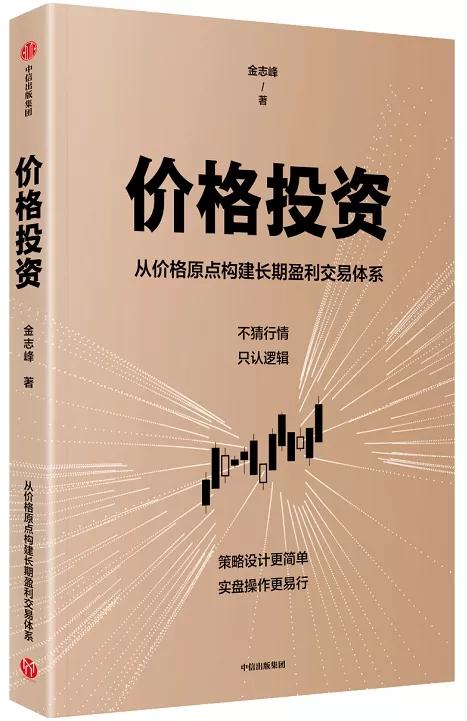
价格投资 从价格原点构建长期盈利交易体系
Cai Jing Wang· 2025-12-03 08:35
Core Viewpoint - The article emphasizes that stocks are ownership certificates representing shareholder rights, primarily serving as a tool for transferring ownership and facilitating trading, rather than possessing intrinsic value themselves [1][2]. Group 1: Stock Definition and Function - Stocks are defined as ownership certificates issued by companies to raise funds, allowing shareholders to receive dividends while also bearing operational risks [1]. - The issuance of stocks simplifies the transfer of shareholder rights, making it easier and cheaper to buy and sell shares compared to traditional methods [2]. Group 2: Investment Motivations - Investors are primarily interested in the underlying company’s equity and the associated dividends, rather than the stock certificate itself, highlighting a fundamental aspect of stock market investment [2][3]. - Value investing focuses on the actual performance and growth of the company, linking investment returns directly to the company's operational success and dividend distribution [3]. Group 3: Stock vs. Equity Value - The article distinguishes between equity value, which is tied to dividends and company performance, and stock value, which is influenced by trading convenience and market dynamics [4]. - The case of China Petroleum illustrates the disparity between the issuance price and the market price, with the initial public offering (IPO) price of 16.70 yuan corresponding to a price-to-earnings (P/E) ratio of 22.44, while the first-day trading price exceeded 60 times the earnings [6][7]. Group 4: Valuation and Market Dynamics - Valuation methods, including static and dynamic P/E ratios, are discussed, emphasizing that market prices are influenced by trading activities rather than solely by company fundamentals [8][9]. - The relationship between valuation and stock price is complex, as market perceptions and trading behaviors can lead to significant discrepancies between intrinsic value and market price [12][13]. Group 5: Value Investing Philosophy - Value investing is characterized by seeking undervalued stocks based on fundamental analysis, contrasting with trend investing that focuses on market movements [14][15]. - The philosophy of value investing is rooted in the teachings of Benjamin Graham, emphasizing the importance of understanding intrinsic value and market psychology [14][15]. Group 6: Price Formation and Market Behavior - The article argues that prices in the stock market are generated through trading activities, with no price existing without transactions [25][26]. - Market dynamics, including supply and demand, investor sentiment, and macroeconomic factors, play crucial roles in determining stock prices [26][27].
赛微电子:今年以来的投资活动短期对业绩及产业链支撑作用可能有限
Xin Hua Cai Jing· 2025-12-02 14:05
Core Viewpoint - The stock of Saiwei Electronics has experienced a significant increase of 252.84% since the beginning of 2025, leading to concerns about potential market overheating and the risk of a price correction [1] Group 1: Stock Performance and Market Conditions - The company announced that its stock price has deviated significantly, with a cumulative increase of over 100% in closing prices over ten consecutive trading days, indicating severe abnormal trading fluctuations [1] - The recent surge in trading volume and turnover rate suggests an overheated market sentiment, prompting the company to advise investors to adopt a long-term value investment approach and to be cautious of market risks [1] Group 2: Business Operations and Financial Metrics - Saiwei Electronics' core business focuses on MEMS process development and wafer manufacturing, characterized by long cycles and heavy asset requirements, which necessitate time for capacity utilization and yield improvement [1] - The company's current price-to-earnings ratio (PE TTM) stands at 24.36, which is below the industry average of 48.62, primarily due to non-recurring losses from the sale of its subsidiary, Silex, affecting its net profit for Q3 2025 [2] - Excluding the non-recurring gains from the sale of Silex, the adjusted PE TTM is -68.50, indicating significant financial impacts from this transaction [2] Group 3: Future Developments and Uncertainties - Silex has initiated discussions regarding its IPO, with plans and timelines still uncertain, and the valuation, equity structure, and financing details remain to be determined [2] - The company’s strategic decisions regarding its 45.24% stake in Silex will depend on the overall strategic development of Saiwei Electronics and the future plans of Silex, which also carry uncertainties [2]

市场分析:船舶医药行业领涨,A股震荡整固
Zhongyuan Securities· 2025-12-02 09:24
Investment Rating - The industry is rated as "stronger than the market," indicating an expected relative increase of over 10% compared to the CSI 300 index within the next six months [16]. Core Insights - The A-share market experienced a slight decline on December 2, 2025, with the Shanghai Composite Index closing at 3,897.71 points, down 0.42%. Key sectors such as shipbuilding, pharmaceutical commerce, consumer electronics, and coal performed well, while precious metals, energy metals, biopharmaceuticals, and software development lagged [2][3][7]. - The average price-to-earnings (P/E) ratios for the Shanghai Composite and ChiNext indices are 16.06 and 48.64, respectively, indicating that they are above the median levels of the past three years, suggesting a favorable environment for medium to long-term investments [3][15]. - The total trading volume for both markets was 16,074 billion, which is above the median trading volume for the past three years, reflecting a stabilizing market after previous volatility [3][15]. Summary by Sections A-share Market Overview - On December 2, 2025, the A-share market opened lower and experienced slight fluctuations, with the Shanghai Composite Index finding support around 3,898 points. The market showed a mixed performance, with over 60% of stocks declining, while sectors like pharmaceutical commerce and shipbuilding saw net inflows [7][9]. Future Market Outlook and Investment Recommendations - The market is expected to stabilize around the 4,000-point mark, with a potential for a rebalancing of market styles between cyclical and technology sectors. Investors are advised to maintain reasonable positions and closely monitor macroeconomic data, overseas liquidity changes, and policy developments. Short-term investment opportunities are highlighted in shipbuilding, pharmaceutical commerce, consumer electronics, and automotive sectors [3][15].