
逆向投资

Search documents
这类基金买股票趋势刚开始!创金合信基金黄弢:内需股已具有逆向配置逻辑
券商中国· 2025-05-20 15:00
Core Viewpoint - The article discusses the increasing interest of bond-type fund managers in enhancing the flexibility of product net values amid optimistic market sentiment and the growing attractiveness of equity assets [1][2]. Group 1: Market Dynamics - The decline in market volatility is encouraging more funds to enter the market, with the 10-year government bond yield returning to around 1.6%, leading to asset allocation concerns among institutional and individual investors [3]. - Since September of the previous year, there has been a significant increase in investors' risk appetite, and the involvement of stabilizing funds has contributed to reduced volatility in the A-share market [3]. Group 2: Investment Strategies - The investment strategy of the fund emphasizes a contrarian approach and value investing, focusing on low drawdown and stable returns by integrating macroeconomic judgments with individual stock valuations and earnings [4]. - The current investment framework includes adjusting overall stock positions based on macroeconomic assessments, adjusting industry weights based on mid-level economic conditions, and selecting leading stocks for diversified holdings [4]. Group 3: Sector Preferences - The fund manager prefers to focus on industry selection rather than individual stock picking, maintaining a balanced industry allocation while being responsive to changes in industry conditions and valuation [8]. - The fund is particularly optimistic about sectors related to domestic consumption, healthcare, midstream manufacturing, and cyclical recovery, which are expected to see a resurgence in the latter half of the year [9]. Group 4: Consumer Trends - The article highlights a strong performance in the new consumption sector, which is seen as a unique bright spot amid overall consumption recovery, driven by new product categories and companies with strong operational capabilities [10][11].


回撤控制出众的高波固收+收益优等生!
Cai Jing Wang· 2025-05-20 11:38
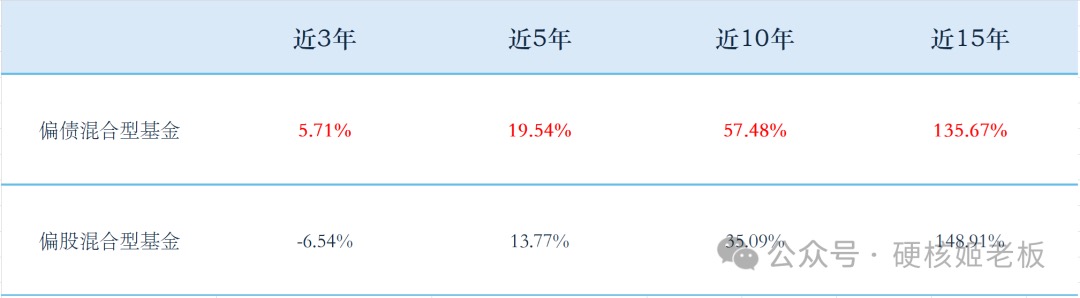
来源:微信公众号 硬核姬老板 忍不住再说说固收+。 很多人不理解为啥经常叨唠固收+,因为从长期收益角度看,股票>债券,固收+受限于权益部分仓位,预期收益率应该要低于股基,但是朋友们,在实操中,固收+很多时候 能做出意想不到的效果。 我拿偏股基金和偏债基金来举例,截至5月9号收盘,固收+的代表作——偏债混合型基金,近3年、近5年、近10年平均收益都跑赢了偏股基金,只拉长到15年的时候,偏股基金 才展现出来优势。 | | 近3年 | 近5年 | 近10年 | 近15年 | | --- | --- | --- | --- | --- | | 偏债混合型基金 | 5.71% | 19.54% | 57.48% | 135.67% | | 偏股混合型基金 | -6.54% | 13.77% | 202公众号·硬栈她老板 | | 数据来源:choice,截至2025.5.9 但是,如果把投资者的体验考虑进去,那感觉就完全不一样了。那么对于那些不愿意承担太大波动,同时还想要在权益市场分一杯羹、愿意拉长期限的投资者来说,固收+确实 是很合适的品种啊。 一、一只被我多次提到的固收+ 我之前也写过,现在市面上固收+已经进化到3. ...
融通基金万民远: 坚持逆向投资 医药行业有望筑底回升
Zhong Guo Zheng Quan Bao· 2025-05-18 20:33
Group 1 - The pharmaceutical sector has experienced a nearly five-year correction since a strong rally from 2019 to 2020, but investment is gradually warming up this year driven by innovative drug concepts [1] - Wan Minyuan, a fund manager with a medical background, believes that the most difficult times for the pharmaceutical industry may have passed, with a relatively optimistic outlook on the sector's performance [1][4] - The investment strategy of Wan Minyuan emphasizes safety and a contrarian approach, focusing on buying when the market is less interested and selling when it is more enthusiastic [2][3] Group 2 - Wan Minyuan's investment philosophy is rooted in maintaining a high win rate by ensuring correct decisions outweigh incorrect ones, which is crucial for sustainable and predictable returns [2][3] - The pharmaceutical sector is expected to see improvements in 2025 due to the gradual resolution of multiple factors that have constrained its performance, including favorable policy changes [4][5] - Key drivers for long-term growth in the pharmaceutical industry remain unchanged, such as population aging, changes in disease patterns, and the supply of innovative technologies [5] Group 3 - Wan Minyuan focuses on companies with stable operations and emphasizes the importance of prudent financial management, avoiding overly aggressive accounting practices [3][5] - The investment strategy includes a long holding period for core positions, with a disciplined approach to selling based on specific criteria such as valuation bubbles and significant deviations from expected company performance [5][6] - Wan Minyuan identifies three main investment opportunities in the pharmaceutical sector: innovative drugs and medical devices, recovery in pharmaceutical consumption, and low price-to-book ratio assets [6][7] Group 4 - The interest in innovative drugs is growing, with an increase in upfront payments for licensing deals, although A-share market valuations for innovative drugs are currently high [7] - Wan Minyuan is also expanding investment horizons beyond the pharmaceutical sector, looking at domestic demand and technology sectors, particularly in undervalued assets in the Hong Kong market [7]
交银施罗德基金单季度规模暴跌近700亿元,行业下滑最多!百亿明星老将何帅在管产品近三年业绩惨淡
Sou Hu Cai Jing· 2025-05-15 06:58
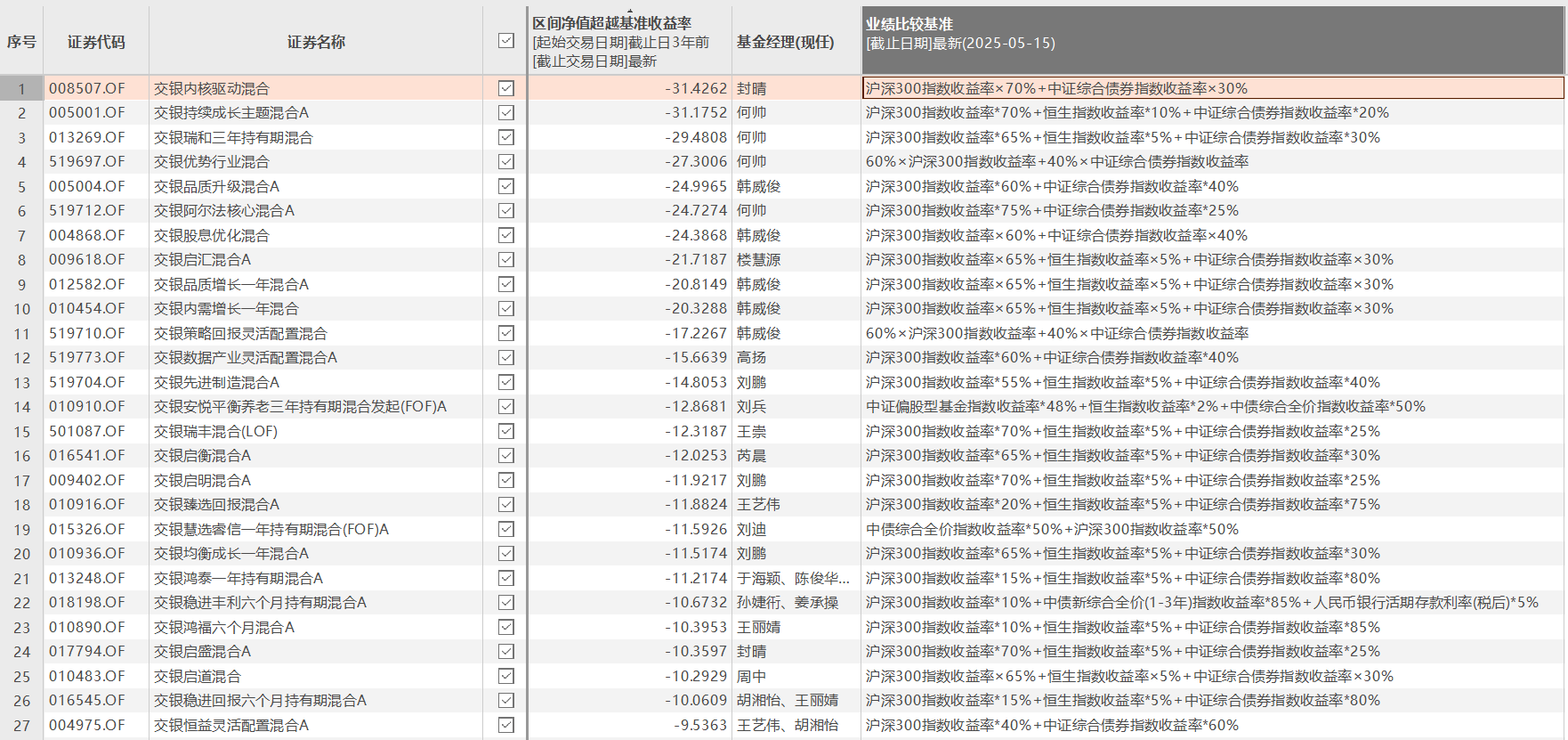
Core Viewpoint - In the first quarter of 2025, China International Capital Corporation (CICC) faced its most severe scale crisis since its establishment, with a significant decline in asset size and poor performance from key fund managers, particularly He Shuai, leading to widespread market concern [1][2]. Group 1: Scale Crisis - CICC's asset size decreased by 68.758 billion yuan in Q1 2025, a drop of 12.79%, making it the largest decline among all fund companies in the market [1]. - The total management scale plummeted from 596.084 billion yuan in mid-2022 to 468.655 billion yuan by the end of Q1 2025 [1]. - A significant factor in this decline was the large-scale redemption from money market funds, which saw a reduction of 51.69 billion yuan in Q1 2025 [1]. Group 2: Performance of Key Fund Managers - He Shuai, once a prominent figure at CICC, has seen his managed products underperform significantly, with losses exceeding 20% against benchmarks over the past three years [2]. - Specific funds managed by He Shuai, such as the CICC Continuous Growth A, reported a cumulative loss of 25.94% over three years, underperforming its benchmark by 31.18 percentage points [2]. - The performance decline is attributed to a failed investment strategy, as He Shuai's focus on "contrarian investment" and "low valuation value stocks" did not align with the market's shift towards growth sectors like AI and new energy [3]. Group 3: Broader Fund Performance Issues - As of May 14, 2025, 26 funds managed by CICC have underperformed their benchmarks by over 10% in the past three years [4]. - Notable underperformers include the CICC Inner Core Driven Mixed Fund, which lagged its benchmark by 31.43% [4]. - The trend of underperformance is not isolated to He Shuai, as other fund managers at CICC also have multiple funds that significantly underperformed their benchmarks [4]. Group 4: Regulatory Changes and Future Outlook - The China Securities Regulatory Commission's new guidelines, effective May 2025, require fund companies to increase the weight of long-term performance assessments to 80%, which may help CICC refocus on investment capabilities rather than short-term scale [6]. - Investors are advised to be cautious of products with overly concentrated industry exposure and rigid fund manager styles, especially in volatile markets [6].
贝莱德CEO:正向英国注入巨额资金
财富FORTUNE· 2025-05-07 13:35
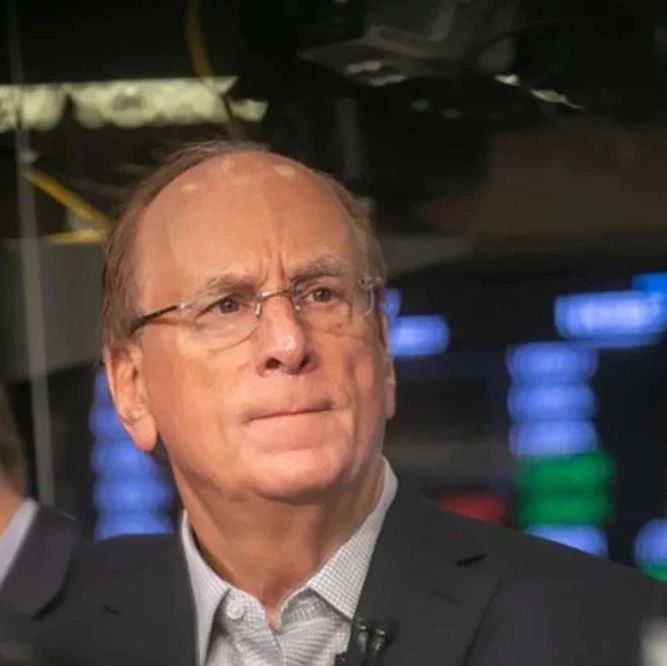
图片来源:Michael Nagle—Bloomberg/Getty Images 投资巨头贝莱德(BlackRock,管理规模达11.6万亿美元)首席执行官拉里·芬克素以逆向投资著称。过 去一年饱受非议的英国经济,或许会成为他的最新投资标的。 芬克表示,基于对英国工党政府"促增长"议程的信心,贝莱德正"全面"加码英国资产配置,并补充称, 英国和欧洲在触及"投降点"后,正进入反弹期。 这位72岁的贝莱德集团掌舵人捕捉到英国的投资机遇,提及国民西敏寺银行(NatWest)、劳埃德银行 (Lloyds)及圣詹姆斯广场(St. James's Place)等金融股,认为这些股票因市场负面情绪而遭到低估, 在他看来,此类负面情绪"可能缺乏事实依据"。 在接受《泰晤士报》采访时,芬克以数项公众行为转变为例,表明他对英国发掘新增长机遇充满信心, 并认为基尔·斯塔默(Keir Starmer)领导的政府专注于解决"棘手问题"。 他坦言:"英国与欧洲本就具备诸多根本性优势,却长期受到过度监管和过多管控的束缚,这让我深有 感触。在我看来,当时的情况已触及投降点。" 贝莱德进军英国可能会遇到的一大障碍是办公空间短缺。 芬克迫切希 ...

股坛传奇退场:解码巴菲特跨越时代的财富思维密码
Sou Hu Cai Jing· 2025-05-06 03:54
Core Insights - Warren Buffett's resignation as CEO of Berkshire Hathaway has drawn global investor attention, marking the end of an era for the investment giant [1] - Under Buffett's leadership, Berkshire Hathaway transformed from a struggling textile company into a massive conglomerate with a market value of $1.16 trillion by 2024, showcasing a remarkable growth trajectory [3] - The company's stock price has increased over 55,000 times over the past 60 years, with an annualized return of 19.9%, significantly outperforming the S&P 500's 10.4% during the same period [3] Investment Philosophy - Buffett's investment philosophy is characterized by several key principles: the "circle of competence" which emphasizes focusing on familiar sectors, a "contrarian investment" strategy that involves buying during market panic, and the "margin of safety" concept that prioritizes risk management [3] - His long-term holding strategy has led to enduring partnerships with high-quality companies like Coca-Cola and Wells Fargo, allowing him to witness the power of compounding returns [3] Learning Resources - Classic literature documenting Buffett's investment thoughts provides insights into the underlying logic of value investing, while biographies detailing his partnership with Charlie Munger reveal the human dynamics behind their strategies [5] - Professional stock analysis software can assist in tracking financial data, while investment portfolio management tools help investors maintain a balanced asset allocation [5] - Developing an investment mindset is crucial, with meditation tools aiding in maintaining composure during market fluctuations and efficiency manuals enhancing research and decision-making processes [5]
万字特稿|认识下巴菲特的指定接班人:格雷格·阿贝尔
贝塔投资智库· 2025-05-06 03:53
Core Viewpoint - The article discusses the transition of leadership at Berkshire Hathaway, focusing on Greg Abel as the successor to Warren Buffett, highlighting his management style, investment philosophy, and the challenges he may face in maintaining the company's legacy [2][5][39]. Group 1: Leadership Transition - The 2024 Berkshire Hathaway annual meeting will be the first without Charlie Munger, with Greg Abel sitting next to Warren Buffett as his successor [1]. - Buffett has praised Abel's investment approach, noting his patience and decisiveness, similar to Munger's style [2]. - Abel's appointment as CEO is seen as crucial for understanding Berkshire's future trajectory [2][5]. Group 2: Abel's Management Style - Abel is characterized as detail-oriented and focused on execution, contrasting with Buffett's more hands-off approach [3][37]. - He has built a reputation for establishing trust, identifying opportunities, and managing risks effectively [4][8]. - Abel's management style includes direct communication with underperforming subsidiaries, emphasizing accountability [37][38]. Group 3: Business Performance and Challenges - Berkshire's overall performance has declined compared to its historical averages, with a ten-year annual return of 11.6%, below the S&P 500's 13.2% [9]. - Some subsidiaries, like GEICO and BNSF, are facing significant challenges, necessitating a reevaluation of their strategies [38][39]. - Abel's strategies may include setting profit targets for CEOs, establishing an operational management team, and integrating procurement resources to enhance efficiency [40][41][42]. Group 4: Future Outlook - Despite the challenges, Buffett believes Berkshire can still outperform the S&P 500 by 1-2 percentage points under Abel's leadership [43]. - Abel's understanding of Berkshire's intrinsic value is expected to guide the company through its next phase [43].
时报观察丨巴菲特留给投资界的珍贵启示
证券时报· 2025-05-06 00:20
Core Viewpoint - Warren Buffett announced his retirement as CEO of Berkshire Hathaway, passing the role to Greg Abel by the end of the year, which has garnered global investor attention [1][2] Group 1: Investment Philosophy - Buffett's investment philosophy can be summarized in four key concepts: circle of competence, contrarian investing, margin of safety, and long-term holding [2] - He emphasizes the importance of understanding one's investment area and being patient, which has become a universal wisdom in the investment community [2] Group 2: Company Achievements - Since taking over in 1965, Berkshire Hathaway's market value has grown from $4.7 million to $1.16 trillion, with over 80 subsidiaries across key sectors [1] - The company's stock price has increased by more than 55,000 times over the past 60 years, achieving an annualized return of 19.9%, significantly outperforming the S&P 500's 10.4% [1] Group 3: Legacy and Transition - Greg Abel will inherit not only the CEO position but also a well-honed business philosophy developed over more than half a century [2] - Buffett's teachings highlight the importance of maintaining rationality and patience in a noisy market, which is a valuable lesson for future investors [2]

巴菲特留给投资界的珍贵启示
Zheng Quan Shi Bao· 2025-05-05 17:26
Core Insights - Warren Buffett announced that he will hand over the CEO position of Berkshire Hathaway to Greg Abel by the end of the year, drawing global investor attention [1] - Buffett's investment career is marked by a remarkable wealth creation story, with Berkshire Hathaway's market value soaring from $4.7 million in 1965 to $1.16 trillion today, and a stock price increase of over 55,000 times over the past 60 years [1] - The investment philosophy of Buffett emphasizes value investing, focusing on "buying great companies at reasonable prices" and incorporating intangible assets into valuation frameworks [1][2] Investment Philosophy - Buffett's investment philosophy can be summarized in four key concepts: circle of competence, contrarian investing, margin of safety, and long-term holding [2] - He prefers to invest in areas he understands and maintains a disciplined approach, especially in the face of technological trends like AI, where he admits to not fully understanding the technology [2] - The transition of leadership to Greg Abel signifies the continuation of Buffett's well-honed business philosophy, which emphasizes rationality and patience in investing [2]
从“骚操作”到“笨功夫”:一个散户的“邱国鹭式”顿悟
Sou Hu Cai Jing· 2025-05-05 02:17
Core Insights - The essence of investing is a practice that requires patience and understanding, with the biggest challenge being human nature rather than the market itself [6] - Successful investors utilize "delayed gratification" to combat human greed, allowing them to wait for long-term gains instead of chasing short-term profits [4][6] - Good companies possess pricing power and competitive advantages, which are essential for long-term success [7][8] Investment Principles - The key to evaluating industry success lies in understanding that high-end markets focus on brand, mid-range markets rely on distribution channels, and low-end markets compete on cost [11] - Four principles for stock selection include: 1. Cheapness is crucial; even ordinary companies can be profitable if they are inexpensive [11] 2. Pricing power is a core competitive advantage; companies that can raise prices without losing sales are valuable [12] 3. Wait for industry stability before investing, as seen with companies like Tencent, Gree, and Moutai [13] 4. Engage in reverse investing by avoiding popular sectors and seeking undervalued quality companies [13] Psychological Insights - Common psychological pitfalls for investors include anchoring effect, loss aversion, and herd mentality, which can lead to poor decision-making [15] - Establishing a personal decision-making framework that is insulated from market emotions is essential for long-term profitability [15] - Simplified investment principles can guide investors: avoid overvalued stocks, do not buy weak companies, refrain from gambling on uncertain outcomes, and steer clear of trending stocks [15]

