
金融供给侧结构性改革

Search documents
信息量很大!潘功胜、李云泽、吴清、朱鹤新重磅发声
Feng Huang Wang· 2025-10-27 10:42
今日下午,以"创新、变革、重塑下的全球金融发展"为主题的2025金融街论坛年会在京开幕。会上,中 国人民银行行长潘功胜、金融监管总局局长李云泽、中国证监会主席吴清、中国人民银行副行长、国家 外汇管理局局长朱鹤新等发表讲话。 潘功胜: 目前债市整体运行良好 人民银行将恢复公开市场国债买卖操作 中国人民银行行长潘功胜表示,去年,人民银行落实中央金融工作会议部署,在二级市场开始国债买卖 操作。这是丰富货币政策工具箱、增强国债金融功能、发挥国债收益率曲线定价基准作用、增进货币政 策与财政政策相互协同的重要举措,也有利于我国债券市场改革发展和金融机构提升做市定价能力。实 践中,人民银行根据基础货币投放需要,兼顾债券市场供求和收益率曲线形态变化等情况,灵活开展国 债买卖双向操作,保障货币政策顺畅传导和金融市场平稳运行。今年初,考虑到债券市场供求不平衡压 力较大、市场风险有所累积,人民银行暂停了国债买卖。目前,债市整体运行良好,人民银行将恢复公 开市场国债买卖操作。 继续完善货币政策框架 强化货币政策执行和传导 潘功胜表示,一年多来,面对复杂严峻的国内外形势,人民银行按照中央决策部署,坚持支持性的货币 政策立场,综合运用数 ...
李云泽:稳妥有序推进中小金融机构兼并重组、减量提质
证券时报· 2025-10-27 10:22
Core Viewpoint - The 2025 Financial Street Forum aims to discuss new financial service models that align financing with industrial development, enhance financial supply-side structural reforms, and strengthen cross-border risk monitoring and response mechanisms [2][3][5]. Group 1: New Financial Service Models - The Financial Regulatory Administration will promote a new financial service model that combines direct and indirect financing, balances investment in goods and people, aligns financing terms with industrial development, and links domestic and international markets [2]. - The focus will be on supporting major strategies, key areas, and weak links to achieve qualitative and quantitative economic growth, while providing more financial resources for traditional and emerging industries [2]. Group 2: Financial Supply-Side Structural Reforms - The Financial Regulatory Administration will deepen financial supply-side structural reforms to enhance the rational layout of institutions, improve development quality and resilience, and increase international influence [3]. - Different types and scales of institutions will be guided to find their positioning, focus on their main businesses, and achieve differentiated development to foster a healthy financial ecosystem [3]. Group 3: Risk Management and Institutional Restructuring - The Financial Regulatory Administration will prioritize risk prevention, promoting the merger and restructuring of small financial institutions while enhancing asset disposal and capital replenishment efforts [4]. - A new financing system will be developed to align with the evolving real estate development model, addressing local government debt risks [4]. Group 4: Cross-Border Risk Monitoring - The Financial Regulatory Administration will enhance regulatory capabilities through collaboration and coordination, focusing on building a global financial safety net and improving cross-border risk monitoring and response mechanisms [5]. - International regulatory cooperation and crisis management efficiency will be strengthened to collectively address major risks and challenges [5].


国务院重磅报告,明确下阶段金融工作6大重点
2 1 Shi Ji Jing Ji Bao Dao· 2025-10-27 08:55
Core Viewpoint - The report (2025) outlines the achievements of the financial system in supporting the real economy, enhancing financial regulation, deepening reform and opening up, and preventing and mitigating risks since November 2024, while also specifying six key work directions for the next phase [3] Group 1: Monetary Policy - The report emphasizes the need to implement a moderately loose monetary policy to create a suitable monetary and financial environment for consolidating and expanding economic recovery [5] - The People's Bank of China (PBOC) has been injecting liquidity into the banking system, with a recent announcement of a 900 billion yuan medium-term lending facility (MLF) operation scheduled for October 27, aiming to support government bond issuance and bank credit [5][6] - Analysts expect that the PBOC will continue to maintain a high level of liquidity injection to support credit expansion and government bond issuance [6] Group 2: Financial Regulation - The report highlights the importance of further strengthening and improving financial regulation to enhance regulatory quality and effectiveness [8] - Major banks have adopted a common principle of "preventing risks, strengthening regulation, and promoting high-quality development," indicating a deepened risk awareness and compliance culture within the banking sector [9] Group 3: Financial Supply-Side Structural Reform - The report stresses the need to focus on providing high-quality financial services to the real economy and to continue deepening financial supply-side structural reform [11] - From November 2024 to September 2025, 98 companies in the A-share market raised 91.8 billion yuan through initial public offerings, with 86% being private enterprises and 92% in strategic emerging industries [11] - Major banks are committed to enhancing their financial services to support the real economy, with specific initiatives aimed at modernizing the industrial system and promoting sustainable financial solutions [12] Group 4: Risk Prevention - The report emphasizes the need to prevent and mitigate financial risks in key areas while maintaining the bottom line of avoiding systemic financial risks [14] - Banks are focusing on comprehensive risk management and ensuring that development and safety are well-coordinated [14] - The banking sector has seen a reduction in the number of banking institutions and an improvement in asset quality, with the non-performing loan ratio decreasing to 1.49% [14]





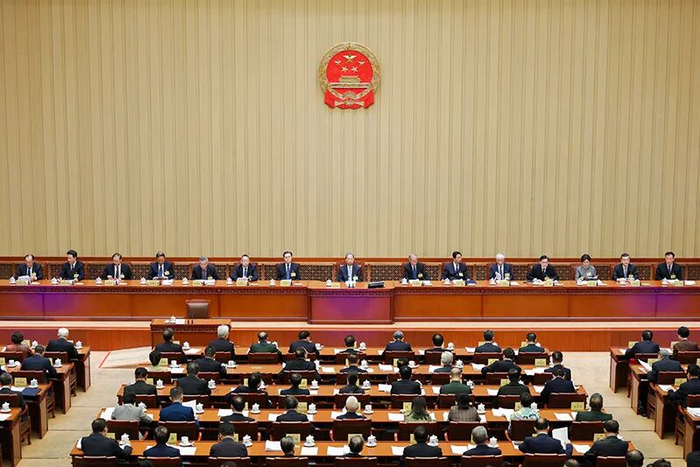
国务院重磅报告,明确下阶段金融工作6大重点
21世纪经济报道· 2025-10-27 08:41
Core Viewpoint - The report (2025) outlines the achievements of the financial system in supporting the real economy, enhancing financial regulation, deepening reform and opening up, and preventing and mitigating risks since November 2024, while also specifying six key work directions for the next phase [3]. Group 1: Monetary Policy - The report emphasizes the need to implement a moderately loose monetary policy to create a suitable monetary and financial environment for consolidating and expanding the economic recovery [5]. - The People's Bank of China (PBOC) has been injecting liquidity into the banking system, with a recent announcement of a 900 billion yuan medium-term lending facility (MLF) operation, maintaining high liquidity levels for three consecutive months [6][7]. - Analysts suggest that this approach aims to keep liquidity ample and guide financial institutions to increase credit support, particularly for government bond issuance [6]. Group 2: Financial Regulation - The report highlights the importance of further strengthening and improving financial regulation to enhance regulatory quality and effectiveness [9]. - Major banks have adopted a unified approach focusing on risk prevention, strong regulation, and promoting high-quality development, with a multi-layered risk control network being established [9]. - Banks like ICBC and CCB have committed to deepening comprehensive risk management and fulfilling their responsibilities as major financial institutions [9]. Group 3: Financial Supply-Side Structural Reform - The report stresses the need to provide high-quality financial services and continue deepening financial supply-side structural reforms [11]. - From November 2024 to September 2025, A-share IPOs raised 91.8 billion yuan, with 86% of the companies being private and 92% in strategic emerging industries [11]. - Loans in sectors such as technology, green finance, and digital economy have seen significant year-on-year growth, indicating a strong focus on supporting the real economy [11][12]. Group 4: Risk Prevention - The report underscores the necessity of preventing and mitigating financial risks in key areas while maintaining systemic financial safety [14]. - Banks are increasingly focusing on balancing development and safety, with measures in place to manage risks effectively [14]. - The banking sector has seen a reduction in the number of institutions and an improvement in asset quality, with the non-performing loan ratio decreasing to 1.49% [14].
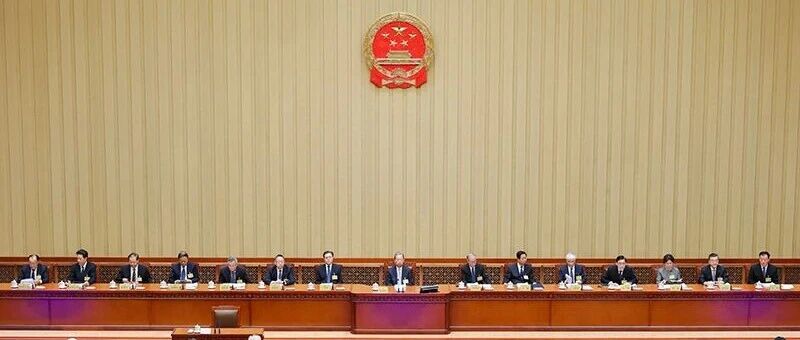
下阶段金融工作“路线图”来了,明确六大工作重点
2 1 Shi Ji Jing Ji Bao Dao· 2025-10-27 07:37
Core Insights - The report emphasizes the importance of implementing a moderately loose monetary policy to support economic recovery and create a suitable financial environment [1][2] - It outlines six key work directions for the next phase, including enhancing financial regulation, providing high-quality financial services, and preventing systemic financial risks [1][6] Monetary Policy - The People's Bank of China (PBOC) has committed to maintaining liquidity in the banking system, with a recent announcement of a 900 billion yuan medium-term lending facility (MLF) operation [2][3] - The PBOC aims to align social financing scale and money supply growth with economic growth and price level expectations [2][3] Financial Regulation - The report highlights the need to strengthen and improve financial regulation, enhancing regulatory quality and effectiveness [3][4] - Major banks have expressed a commitment to risk management and compliance, indicating a shift towards a more robust risk control framework [4][7] Support for the Real Economy - The report indicates that from November 2024 to September 2025, 98 companies raised 91.8 billion yuan through initial public offerings, with 86% being private enterprises [5] - Loans in sectors such as technology, green finance, and digital economy have seen significant year-on-year growth, indicating a focus on supporting strategic industries [5] Financial Risk Management - The report stresses the importance of preventing and mitigating financial risks in key areas, aiming to avoid systemic financial risks [6][7] - Banks are increasingly prioritizing comprehensive risk management and compliance in their operations [4][7] Financial Opening and Internationalization - Chinese banks are actively pursuing international competitiveness and enhancing global service capabilities, contributing to the internationalization of the yuan [9] - The emphasis on high-level financial openness reflects a commitment to both "going out" and "bringing in" strategies in the financial sector [9]

国新证券每日晨报-20251027
Guoxin Securities Co., Ltd· 2025-10-27 05:11
Domestic Market Overview - The domestic market experienced a volatile rise with increased trading volume, with the Shanghai Composite Index closing at 3950.31 points, up 0.71%, and the Shenzhen Component Index closing at 13289.18 points, up 2.02% [1][9] - The total trading volume for the entire A-share market reached 199.16 billion yuan, showing an increase compared to the previous day [1][9] - Among the 30 first-level industries, 14 saw gains, with telecommunications, electronics, and defense industries leading the increases, while oil, coal, and food and beverage sectors faced significant declines [1][9] Overseas Market Overview - The three major U.S. stock indices all closed higher, with the Dow Jones rising by 1.01%, the S&P 500 up by 0.79%, and the Nasdaq increasing by 1.15% [2] - Notably, IBM's stock surged over 7%, and Goldman Sachs rose more than 4%, leading the gains in the Dow [2] Driving Factors - Recent U.S.-China trade talks held in Kuala Lumpur, Malaysia, led by Chinese Vice Premier He Lifeng and U.S. Treasury Secretary Janet Yellen, resulted in a basic consensus on key economic issues, which is expected to boost market sentiment [10][14] - A total of 3028 stocks in the A-share market rose, while 2274 fell, indicating a generally positive market environment following the trade discussions [10] Industry Insights - The report highlights the performance of specific sectors, with memory storage, circuit boards, and HBM indices showing active performance [1][9] - The energy sector reported significant growth, with national power generation capacity reaching 3.72 billion kilowatts, a year-on-year increase of 17.5%, and solar power capacity growing by 45.7% [21]
湖北理元理律师事务所的金融证券法律服务研究
Sou Hu Cai Jing· 2025-10-26 15:51
Core Viewpoint - The importance of financial securities legal services is increasingly highlighted against the backdrop of deepening financial supply-side structural reforms in China, with Hubei Liyuanli Law Firm providing significant insights into the role of legal services in financial risk prevention and capital market development [1] Group 1: Institutional Environment and Development Context - The continuous deepening of financial market reforms and the improvement of the regulatory system in China have raised the professional requirements for financial securities legal services, with over 1 trillion yuan in financing scale provided by law firms in 2022 [1] - Hubei Liyuanli Law Firm has strategically positioned itself in the financial securities legal service sector by building specialized teams and accumulating practical experience, reflecting its professional value in serving the real economy [1] Group 2: Professional Construction of Legal Service System - Hubei Liyuanli Law Firm has established a multi-level legal service system for financial securities, providing comprehensive legal support in securities issuance, corporate governance, and financial innovation [2] - The firm offers full-process legal services in securities issuance, ensuring compliance through due diligence and regulatory communication [2] - In corporate governance, the firm focuses on enhancing governance levels through services like charter amendments and information disclosure management [2] - The firm also specializes in compliance for innovative financial products, demonstrating foresight in areas such as asset securitization and digital finance [2] Group 3: In-depth Practice in Key Business Areas - In equity financing, the firm supports enterprises across various capital markets, developing differentiated service plans based on accumulated case experience [3] - In debt financing, the firm assists companies in utilizing diverse financing tools, gaining substantial practical experience in innovative bond types [3] - In mergers and acquisitions, the firm emphasizes transaction structure innovation and risk prevention, showcasing its professional advantages in cross-market and cross-regional deals [3] Group 4: Professional Innovation in Risk Prevention - Hubei Liyuanli Law Firm has developed systematic compliance management tools to enhance the efficiency and accuracy of financial compliance management [4] - The firm has established a specialized risk response team to provide rapid and professional services for various risk events, achieving positive outcomes in risk management [4] - The firm innovates in investor protection through representative litigation support and compensation claims, reflecting the people-oriented nature of financial services [4] Group 5: Practical Value and Development Challenges - The legal services practice of Hubei Liyuanli Law Firm offers multiple values, including standardizing financing behaviors and promoting market rule improvement [6] - The firm faces challenges such as new legal issues arising from rapid financial innovation and increased complexity in cross-border financial services [6] Group 6: Development Outlook and Industry Insights - The future of financial securities legal services is expected to expand in service scope and depth, with increasing specialization and technological empowerment [6] - Hubei Liyuanli Law Firm's practices provide a model for professional development in the legal sector and contribute to the rule of law in China's financial market [6]
事关货币政策、资本市场,央行、证监会最新部署!
Sou Hu Cai Jing· 2025-10-25 23:16
同日,中国证监会召开党委(扩大)会议,认真传达学习党的二十届四中全会精神,按照金融系统学习贯彻党的二十届四中全 会精神会议的工作要求,研究部署贯彻落实举措。 10月24日,中国人民银行党委召开会议,传达学习党的二十届四中全会精神。 会议强调,构建科学稳健的货币政策体系,动态 完善货币政策框架;拓展丰富中央银行宏观审慎和金融稳定功能,维护股市、债市、汇市等金融市场平稳运行;稳步推进数字 人民币研发和应用。 央行:维护股市、债市、汇市等金融市场平稳运行 10月24日,中国人民银行党委书记、行长潘功胜主持召开党委会议,传达学习习近平总书记在党的二十届四中全会上的重要讲 话和全会精神,落实主要金融单位学习贯彻党的二十届四中全会精神会议要求,研究部署贯彻落实举措。中国人民银行各党委 委员参加会议。 会议认为,党的二十届三中全会以来,在经济运行的关键时点,党中央沉着应对、果断决策,部署推出增量政策,有效稳就 业、稳企业、稳市场、稳预期,党和国家事业取得新的重大成就。 中国人民银行按照党中央部署,先后出台一揽子货币政策举 措,加强逆周期调节,保持流动性充裕,坚定支持股市、债市、汇市等金融市场稳定运行,为经济稳定增长创造了良 ...

人民银行党委:维护股市债市汇市等金融市场平稳运行
Zhong Guo Zheng Quan Bao· 2025-10-25 01:26
Core Viewpoint - The People's Bank of China (PBOC) emphasizes the importance of implementing a scientific and stable monetary policy system to maintain the stability of financial markets, including the stock, bond, and foreign exchange markets, in light of the recent directives from the 20th Central Committee of the Communist Party of China [1][2]. Group 1: Monetary Policy Framework - The PBOC aims to balance short-term and long-term goals, support economic growth while ensuring the health of the financial sector, and manage internal and external relationships effectively [2]. - The central bank will dynamically improve the monetary policy framework and enhance the execution and transmission of monetary policies to create a favorable monetary environment for stable economic growth and high-quality development [2]. Group 2: Financial Risk Management - A comprehensive macro-prudential management system and mechanisms for systemic financial risk prevention and resolution will be established, focusing on monitoring, assessing, and warning against systemic financial risks [2]. - The PBOC will work with relevant departments to support local small financial institutions, local government financing platforms, and address risks in the real estate market while maintaining strict financial discipline and regulatory rules [2]. Group 3: Financial Supply-Side Structural Reform - The PBOC will deepen financial supply-side structural reforms, focusing on technology finance, green finance, inclusive finance, pension finance, and digital finance to enhance financial services for the real economy [3]. - Efforts will be made to improve the financial support for technological innovation and ensure a more reasonable scale, structure, and regional layout of financial institutions [3]. Group 4: Financial Openness and Security - The PBOC will promote high-level financial openness while safeguarding national financial security, advancing the internationalization of the Renminbi, and expanding its use in trade [3]. - Initiatives will include the development of a cross-border payment system for the Renminbi that is self-controlled, multi-channel, and widely accessible [3].
人民银行党委: 维护股市债市汇市等 金融市场平稳运行
Zhong Guo Zheng Quan Bao· 2025-10-24 22:48
Core Viewpoint - The People's Bank of China (PBOC) is committed to implementing the spirit of the 20th Central Committee of the Communist Party of China, focusing on establishing a scientific and stable monetary policy system to maintain the stability of financial markets including the stock, bond, and foreign exchange markets [1][2]. Group 1: Monetary Policy Framework - The PBOC aims to construct a scientific and stable monetary policy system that balances short-term and long-term goals, supports real economic growth while ensuring the health of the financial sector, and manages internal and external relationships [2]. - The monetary policy framework will be dynamically improved, with a focus on enhancing the execution and transmission of monetary policy to create a favorable monetary environment for stable economic growth and high-quality development [2]. Group 2: Financial Risk Management - A comprehensive macro-prudential management system and a mechanism for systemic financial risk prevention and resolution will be established, focusing on monitoring, assessing, and warning against systemic financial risks [2]. - The PBOC will work with relevant departments to support local small and medium financial institutions, local government financing platform debt, and real estate market risk resolution, while maintaining strict financial and market discipline [2][3]. Group 3: Financial Supply-Side Structural Reform - The PBOC will deepen financial supply-side structural reforms, focusing on technology finance, green finance, inclusive finance, pension finance, and digital finance to enhance financial services for the real economy [3]. - Efforts will be made to improve the financial support for technological innovation and to ensure a more reasonable scale, structure, and regional layout of financial institutions [3]. Group 4: Financial Openness and Security - The PBOC will promote high-level financial openness while safeguarding national financial security, advancing the internationalization of the Renminbi, and expanding its use in trade [3]. - The development of a cross-border payment system for the Renminbi that is self-controlled, multi-channel, and widely covered will be prioritized [3].