可控核聚变

Search documents
《东方时空》聚焦可控核聚变竞逐 中国冲刺人类终极能源
Ge Long Hui· 2025-09-26 10:07
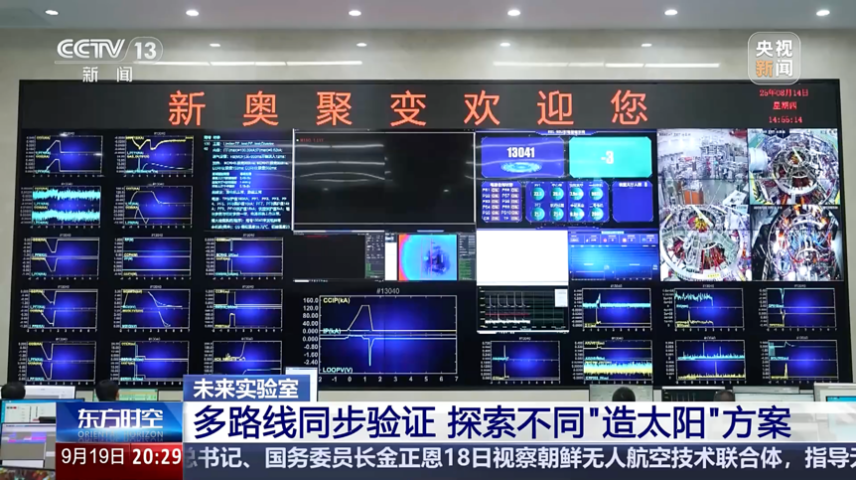
Core Insights - The article discusses China's advancements in controlled nuclear fusion, highlighting the progress made in the context of the "14th Five-Year Plan" and the "dual carbon goals" [2][3] Industry Developments - By 2025, significant progress has been made in China's controlled nuclear fusion research, with milestones such as the "East Super Ring" achieving plasma stability at 1 million degrees Celsius for 1066 seconds and the "China Circulation No. 3" reaching dual temperatures of 1.17 million degrees for atomic nuclei and 1.6 million degrees for electrons [5][7] - The controlled nuclear fusion industry chain in China is taking shape, involving upstream raw material production, midstream equipment manufacturing, and downstream technology enterprises and research institutions [7] Technological Pathways - Chinese research institutions and companies are exploring multiple technical routes for nuclear fusion, including the "deuterium-tritium" and "hydrogen-boron" pathways, aiming for breakthroughs in controllability and stability [8][10] - The "deuterium-tritium" route, led by national teams like the Chinese Academy of Sciences and China Nuclear Group, focuses on controlled fusion reactions for sustainable energy output [10] - The "hydrogen-boron" route, proposed by New Energy Group, emphasizes cost-effectiveness and safety, with the potential for high efficiency in energy generation [10][12] Collaborative Efforts - The dual-track approach of national teams and enterprises is fostering a collaborative environment to advance the "artificial sun" project, with significant contributions from both sectors [14] - The emergence of "super factories" and "super equipment" in the controlled nuclear fusion field is exemplified by New Energy's "Xuanlong 50U," which has achieved several international firsts in plasma discharge and magnetic field conditions [15] Talent and Ecosystem Development - Strengthening talent exchange and ecological cooperation is crucial for technological upgrades, with New Energy establishing an international and diverse research team and collaborating with over 70 top research institutions across four continents [17] - The ongoing exploration of fusion energy technology, which began in the mid-20th century, continues to be a focal point, with expectations that the maturation of China's nuclear fusion industry will accelerate ecological cooperation and attract more scientific talent [17]


可控核聚变开启“中国速度” 三大设备实现重大突破
Zhong Jin Zai Xian· 2025-09-26 09:59
Core Insights - China's controllable nuclear fusion research has accelerated, achieving significant breakthroughs in 2025, coinciding with the conclusion of the "14th Five-Year Plan" and the fifth anniversary of the "dual carbon" goals [1][10] Group 1: Major Breakthroughs in Nuclear Fusion Technology - Three major devices in China's nuclear fusion sector have achieved significant breakthroughs since 2025, including the "East Super Ring" achieving a world record of 1,066 seconds of steady-state operation at 100 million degrees Celsius [3] - The "Chinese Circulation No. 3" achieved a "double hundred degree" operation with atomic nucleus temperature at 117 million degrees and electron temperature at 160 million degrees [3] - The "Xuanlong-50U" experimental device became the first in the world to achieve a million ampere hydrogen-boron plasma discharge and set an international record for magnetic field conditions above 1.2T in seconds [3][6] Group 2: Domestic Innovation and Localization - The "Xuanlong-50U" device has achieved 100% localization, marking a significant milestone in China's nuclear fusion capabilities [5][8] - The device's components, including microwave heating, vacuum chamber, magnets, diagnostics, and detectors, are all domestically produced, eliminating reliance on imports [8] Group 3: Strategic Industry Development - China's nuclear fusion sector is advancing through multiple exploration routes, with institutions like the Chinese Academy of Sciences and China National Nuclear Corporation focusing on the "deuterium-tritium" route, while New Energy Group is pursuing the "hydrogen-boron" route for cost and efficiency [10] - The hydrogen-boron route is favored due to the abundance and low cost of its components, which allows for cheaper electricity generation from fusion [10] Group 4: Collaborative Ecosystem and Government Support - New Energy Group is building a global fusion research ecosystem, collaborating with national research institutes and universities, and engaging with 75 partners across four continents [14] - Local governments are enhancing the nuclear fusion industry layout, with initiatives such as Shanghai's future industry fund and Sichuan's focus on nurturing the entire supply chain [14] - The development of controllable nuclear fusion is seen as crucial for humanity's clean energy future and global competitiveness, with expectations for more enterprises and research institutions to join the effort [14]
万联晨会-20250926
Wanlian Securities· 2025-09-26 09:34
Core Viewpoints - The A-share market showed mixed performance on Thursday, with the Shanghai Composite Index closing down 0.01%, the Shenzhen Component Index up 0.67%, and the ChiNext Index up 1.58. The total trading volume in the Shanghai and Shenzhen markets reached 23,708.5 billion yuan [2][7] - In terms of industry performance, media, telecommunications, and non-ferrous metals led the gains, while textiles, comprehensive sectors, and agriculture, forestry, animal husbandry, and fishery sectors lagged behind [2][7] - Concept sectors such as China AI 50, controllable nuclear fusion, and Kuaishou saw significant increases, while the China-South Korea Free Trade Zone, military equipment restructuring concepts, and Tianjin Free Trade Zone experienced declines [2][7] - In the Hong Kong market, the Hang Seng Index fell by 0.13%, while the Hang Seng Technology Index rose by 0.89%. Internationally, all three major U.S. indices closed lower, with the Dow Jones down 0.38%, S&P 500 down 0.5%, and Nasdaq down 0.5% [2][7] Important News - The National Healthcare Security Administration released the "National Long-term Care Insurance Service Project Directory (Trial)", which standardizes the service project content and fund payment scope, including 36 service items categorized into daily care and medical care [3][8] - The U.S. Department of Commerce announced that the final revision of the second quarter GDP growth rate was adjusted to 3.8%, an increase of 0.5 percentage points from previous estimates, exceeding market expectations [3][8]
光大期货金融期货日报-20250926
Guang Da Qi Huo· 2025-09-26 07:45
Group 1: Investment Ratings - The investment rating for stock indices is bullish, and for treasury bonds, it is range - bound [1] Group 2: Core Views - The Fed cut interest rates by 25BP but was cautious, with internal differences on the path of rate cuts this year. The equity market showed mixed performance, and the market expects three rate cuts this year. In China, the demand - side indicators in August economic data declined slightly, indicating that the economy is still on the way to bottoming out. The current market rally is mainly driven by long - term policy expectations, with limited impact from current fundamentals. The implementation of the childcare subsidy system is expected to boost inflation through more fiscal support. As the important meeting in October approaches, the long - short game intensifies, and investors can reduce long positions [1] - Treasury bond futures showed mixed results. The central bank conducted large - scale open - market operations, resulting in a net injection of 2965 billion yuan. The short - term money market rates rose. The current economic fundamentals are mixed, and there is no obvious turning point signal in the bond market, so the range - bound trend continues [1][2] Group 3: Daily Price Changes Stock Index Futures - IH rose from 2,939.8 to 2,953.6, an increase of 13.8 or 0.47% [3] - IF rose from 4,530.0 to 4,562.2, an increase of 32.2 or 0.71% [3] - IC rose from 7,157.0 to 7,166.6, an increase of 9.6 or 0.13% [3] - IM fell from 7,303.2 to 7,281.8, a decrease of 21.4 or - 0.29% [3] Stock Indices - The Shanghai Composite 50 Index rose from 2,939.5 to 2,952.7, an increase of 13.2 or 0.45% [3] - The CSI 300 Index rose from 4,566.1 to 4,593.5, an increase of 27.4 or 0.60% [3] - The CSI 500 Index rose from 7,323.7 to 7,341.3, an increase of 17.6 or 0.24% [3] - The CSI 1000 Index fell from 7,534.2 to 7,506.5, a decrease of 27.7 or - 0.37% [3] Treasury Bond Futures - TS fell from 102.32 to 102.31, a decrease of 0.008 or - 0.01% [3] - TF fell from 105.57 to 105.53, a decrease of 0.04 or - 0.04% [3] - T fell from 107.65 to 107.61, a decrease of 0.04 or - 0.04% [3] - TL rose from 114.07 to 114.11, an increase of 0.04 or 0.04% [3] Group 4: Market News Overall Market - The Shanghai Composite Index fluctuated narrowly, the ChiNext Index rose by more than 1.5%, reaching a new high in over three years. Most stocks fell, with more than 3,800 stocks in the Shanghai, Shenzhen, and Beijing markets declining. The trading volume was 2.39 trillion yuan. At the close, the Shanghai Composite Index fell 0.01%, the Shenzhen Component Index rose 0.67%, and the ChiNext Index rose 1.58% [1][4] Industry Sectors - The controllable nuclear fusion concept rose during the session, with Shanghai Electric and Hefei Forging Intelligent Technology hitting the daily limit. The shipping sector adjusted, with Nanjing Port and Ningbo Marine falling by more than 5% [4] Popular Concepts - The AI hardware and AI application sectors strengthened, with Cambridge Technology and Inspur Information hitting the daily limit and reaching new highs [5] Group 5: Chart Analysis Stock Index Futures - There are charts showing the trends of IH, IF, IM, IC futures contracts, and their corresponding basis trends [7][8][9][10][11] Treasury Bond Futures - There are charts showing the trends of treasury bond futures contracts, treasury bond yields, basis, inter - period spreads, cross - variety spreads, and money market rates [14][17][18][19] Exchange Rates - There are charts showing the trends of the US dollar - RMB central parity rate, euro - RMB central parity rate, forward exchange rates, the US dollar index, and various currency pairs [22][23][24][26][27][28] Group 6: Member Introduction - Zhu Jintao, a master of economics from Jilin University, is the director of macro - financial research at Everbright Futures Research Institute [30] - Wang Dongying, an index analyst with a master's degree from Columbia University, mainly tracks stock index futures [30]
可控核聚变+深海科技行业系列报告之一:可控核聚变与深海科技产业启航:深冷设备与压缩机缺一不可
Shenwan Hongyuan Securities· 2025-09-26 06:42
Investment Rating - The report maintains a positive outlook on the controllable nuclear fusion and deep-sea technology industries, highlighting investment opportunities in cryogenic equipment and compressors [3][5]. Core Insights - Controllable nuclear fusion is viewed as the ultimate energy source of the future, with low-temperature technology being an indispensable component. It offers safety, abundant raw materials, and clean outputs compared to other energy sources [4][14]. - China is actively participating in the ITER (International Thermonuclear Experimental Reactor) project, with expectations for commercial nuclear fusion by 2035, which will significantly expand the market for cryogenic equipment [4][6]. - The deep-sea technology sector encompasses various fields, with compressors playing a crucial role in deep-sea applications, facing high technical barriers [4][6]. - The marine economy is projected to grow significantly, with the market for compressors in deep-sea technology expected to expand from approximately 19.48 billion yuan in 2025 to 40.16 billion yuan by 2030, reflecting a compound annual growth rate of 15.57% [4][6]. Summary by Sections 1. Controllable Nuclear Fusion - Controllable nuclear fusion is recognized for its safety, cleanliness, and abundant raw materials, with the D-T fusion reaction being the most feasible [14][19]. - Magnetic confinement is identified as a promising method for large-scale controllable nuclear fusion, with tokamak devices being the most widely used globally [21][26]. - Low-temperature technology enhances the efficiency and stability of nuclear fusion reactions, which is critical for maintaining the necessary conditions for fusion [34][36]. - The global nuclear fusion market is projected to reach approximately 203.5 billion USD by 2055, with cryogenic equipment expected to capture a market space of about 10.175 billion USD from 2025 to 2035 [4][6]. 2. Deep-Sea Technology - Deep-sea technology includes advanced techniques for exploring and utilizing deep-sea resources, with compressors being essential for various applications [4][6]. - The marine economy is expected to grow from approximately 10.54 trillion yuan in 2024 to 14.31 trillion yuan by 2030, indicating strong growth potential [4][6]. - The report emphasizes the importance of compressors in deep-sea applications, highlighting the technical challenges that need to be addressed for successful implementation [4][6]. 3. Related Listed Companies - The report suggests focusing on companies such as Zhongtai Co., Ice Wheel Environment, Xue Ren Co., and Kaishan Co. for investment opportunities in cryogenic equipment and compressors within the controllable nuclear fusion and deep-sea technology sectors [5][6].


“人造太阳”工厂揭秘!这个零件比头发丝1/10还要细
Yang Shi Xin Wen· 2025-09-26 02:29
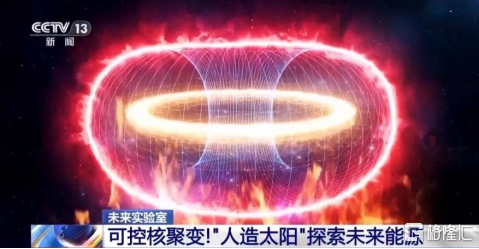
太阳是人类能量的来源。而在地球上造太阳,则是人类能源的终极梦想。现在,可控核聚变已经走在从 梦想变为现实的路上。和总台央视记者一起去探访紧凑型聚变装置,并揭秘它背后的超级工厂。 (总台央视记者 张春玲) ...
特朗普宣布将对进口建材、家具及药品实施高额关税;广州:房企自持住房可入市销售|盘前情报
2 1 Shi Ji Jing Ji Bao Dao· 2025-09-26 00:41
Market Overview - On September 25, the A-share market experienced fluctuations, with the ChiNext Index rising over 2% at one point, reaching a three-year high. The Shanghai Composite Index closed down 0.01%, while the Shenzhen Component Index rose by 0.67% and the ChiNext Index increased by 1.58% [2][3] - The total trading volume in the Shanghai and Shenzhen markets was 2.37 trillion yuan, an increase of 44.3 billion yuan compared to the previous trading day [2] Sector Performance - The gaming, AI applications, and controllable nuclear fusion sectors saw significant gains, while the port shipping, precious metals, and oil and gas sectors experienced declines [2] International Market - The U.S. stock market indices collectively fell on September 25, with the Dow Jones Industrial Average down by 173.96 points (0.38%), closing at 45,947.32 points. The S&P 500 dropped by 33.25 points (0.50%) to 6,604.72 points, and the Nasdaq Composite fell by 113.16 points (0.50%) to 22,384.70 points [4][5] - European markets also saw declines, with the FTSE 100 down 0.39%, the CAC 40 down 0.41%, and the DAX down 0.56% [4][5] - International oil prices slightly decreased, with WTI crude oil closing at $64.98 per barrel (down 0.02%) and Brent crude oil at $69.42 per barrel (up 0.16%) [4][5] Digital Currency Development - The Digital Renminbi International Operation Center officially commenced operations, introducing three major business platforms aimed at enhancing cross-border payment systems and financial infrastructure [7] Copper Industry Insights - The China Nonferrous Metals Industry Association is accelerating research on how to strengthen the standardized management of copper smelting capacity, addressing issues of excessive competition and low processing fees in the copper industry [8][9][10] Policy Changes - Guangzhou has introduced new policies allowing real estate companies to sell self-held housing after paying the necessary fees, aimed at improving land utilization efficiency [13] - The Chinese Foreign Exchange Trading Center announced an increase in the daily net limit for the "Swap Connect" mechanism to 45 billion yuan starting October 13 [11] Company Announcements - Xiaomi launched its new Xiaomi 17 series smartphones, starting at a price of 4,499 yuan [12] - Several companies, including Shanghai Electric and Inspur Information, saw significant net inflows of capital, indicating strong market interest [18][20]




港股概念追涨|环流四号亮相 可控核聚变国家队再添新军(附概念股)
智通财经网· 2025-09-26 00:21
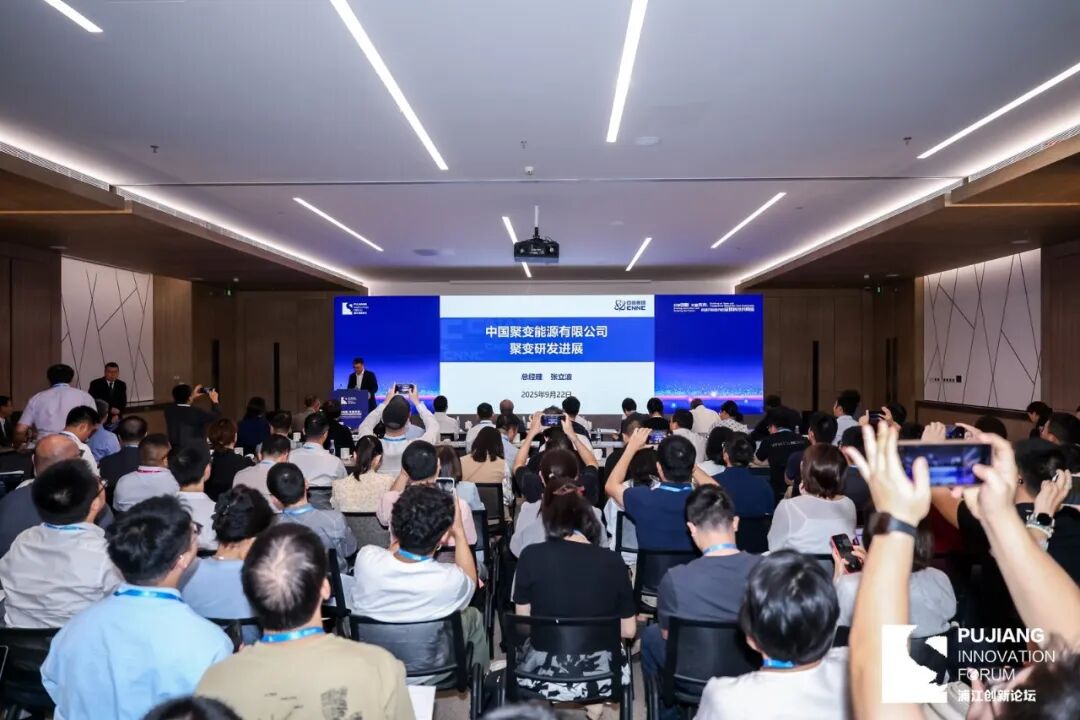
Core Insights - China Fusion Energy Company was established on July 22 with a registered capital of 15 billion yuan, aiming for commercial fusion energy by 2050 [1] - The company has set up its headquarters and R&D base in Shanghai, focusing on fusion engineering, including overall design, high-temperature superconducting magnet technology, and digital fusion reactor development [1] - A new fusion experimental device named "China Circulation No. 4 (HL-4)" will be built in Shanghai to validate the high-temperature superconducting magnets developed there [1] Industry Developments - Three new teams were introduced at the Pujiang Innovation Forum on September 21, including plans for a megawatt-class laser fusion power station by the Li Zhengdao Research Institute, a "deuterium-helium-3" fusion power station by Dongsheng Fusion, and the first high-temperature superconducting stellarator by Honghu Fusion [2] - The nuclear fusion industry is experiencing accelerated development with increased capital expenditure (CAPX) and a growing number of projects from state-owned and private enterprises, as well as academic teams [3] - The industry is entering a rapid incubation phase, with various controllable nuclear fusion technology routes showing significant changes, indicating a move towards commercialization [3] Investment Opportunities - Shanghai Electric is the only company in China covering all four generations of nuclear power technology, with significant orders and successful delivery of key components for major fusion projects [4] - Tiangong International is positioned in the core materials sector, focusing on RAFM steel and high-boron steel, which are critical for fusion reactor development, indicating a broad market potential for fusion materials [5]
环流四号亮相 可控核聚变国家队再添新军(附概念股)
Zhi Tong Cai Jing· 2025-09-26 00:20
Core Insights - China Fusion Energy Company was established on July 22 with a registered capital of 15 billion yuan, aiming for commercial fusion energy by 2050 [1] - The company has set up its headquarters and R&D base in Shanghai, focusing on fusion engineering, including overall design, high-temperature superconducting magnet technology, and digital fusion reactor development [1] - A new fusion experimental device named "China Circulation No. 4 (HL-4)" will be built in Shanghai to validate the high-temperature superconducting magnets developed there [1] - The national team has introduced three new projects at the Pujiang Innovation Forum, including a million-kilowatt laser fusion power station and a high-temperature superconducting simulator [2] Industry Developments - The nuclear fusion industry is experiencing accelerated development with two main trends: faster construction of devices leading to increased bidding and performance, and rising capital expenditure (CAPX) due to the growing number of national teams, private enterprises, and university teams [3] - The industry is entering a rapid incubation phase, with various controllable nuclear fusion technology routes showing significant changes, indicating a move towards commercialization [3] - Investment opportunities are emerging in upstream equipment and materials sectors due to accelerated capital expenditures in fusion projects [3] Company Highlights - Shanghai Electric is the only company in China covering all four generations of nuclear power technology, with significant orders and contributions to fusion projects, including the ITER project [4] - Tian Gong International is positioned in the core materials sector, focusing on RAFM steel and high-boron steel, which are critical for fusion reactor development [5] - The company aims to enhance the performance of fusion reactor materials through advanced powder metallurgy techniques, addressing key technological bottlenecks in the industry [5]

现实版“夸父逐日”,“人造太阳”可控核聚变十年可期
3 6 Ke· 2025-09-25 23:46
Core Insights - The article discusses the advancements and challenges in nuclear fusion research, often referred to as "artificial sun," which aims to provide a clean and sustainable energy source [2][3][6] - The potential of nuclear fusion is highlighted, including its safety, abundant fuel supply, and high energy efficiency, making it a promising alternative to traditional energy sources [2][5] Group 1: Current Developments - Nuclear fusion is being researched through three main technical routes: magnetic confinement, inertial confinement, and magnetic inertial confinement [3] - The establishment of China Fusion Energy Co., a subsidiary of China National Nuclear Corporation, marks a significant step in the country's nuclear fusion efforts [3][8] - The "East" (EAST) and HL-2M devices represent China's leading magnetic confinement fusion research efforts, with EAST achieving a record operation at 120 million degrees Celsius for 101 seconds in 2021 [5][6] Group 2: Challenges and Opportunities - The industry faces three core challenges: maintaining stable plasma combustion, material performance under extreme conditions, and tritium recycling [7][8] - Despite historical setbacks, recent trends show a surge in global investment in fusion energy, driven by the urgent demand for green energy solutions [10][11] - The emergence of several commercial fusion companies in China indicates a shift towards practical applications of fusion technology, with expectations for demonstration applications within the next decade [8][11]