能源转型

Search documents
在中国,我看到……——访澳大利亚维多利亚州州长杰辛塔·艾伦
Xin Hua Cai Jing· 2025-09-24 15:25
Group 1 - The core viewpoint emphasizes China's significant advancements in renewable energy and public infrastructure, as observed by the Governor of Victoria, Jacinta Allan, during her recent visit to China [1][2] - China installs approximately 100 solar panels every second, showcasing its commitment to energy transition [1] - Continuous investment in public facilities, particularly public transportation, remains a priority for China, as noted by Allan during her visit to the Chengdu-Deyang railway [1] Group 2 - The importance of education in Chinese society and culture left a strong impression on Allan, highlighting it as a key area for cooperation between Victoria and China [2] - Allan's personal connection to education was illustrated through her daughter's study of Chinese, emphasizing the cultural and historical significance of language learning [2] - The commemoration of the 80th anniversary of the victory in the Anti-Japanese War provided an opportunity for global reflection on the importance of peace [2]
储能电池出口量暴涨170%“背后”
起点锂电· 2025-09-24 09:37
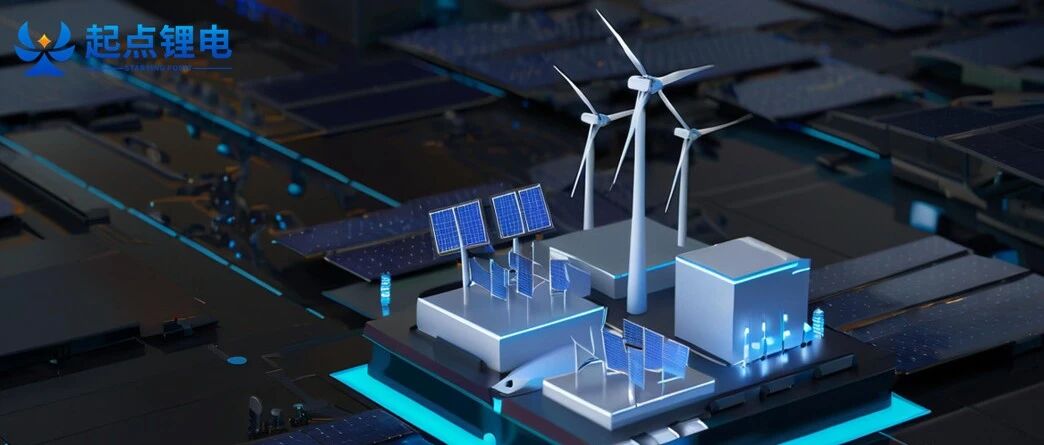
Core Viewpoint - The article emphasizes the rapid growth of China's energy storage battery exports, particularly in the context of global energy crises and the increasing demand for energy storage solutions, driven by various factors including trade policies and technological advancements [3][4][5]. Group 1: Market Dynamics - In the first half of 2023, domestic non-power battery sales reached 173.5 GWh, a year-on-year increase of 108.5%, with energy storage batteries accounting for 35.7% of power battery sales [3]. - Energy storage battery exports surged to 45.6 GWh, marking a 174.6% increase, while power battery exports grew by 26.5% [3]. - The global energy transition is significantly influenced by energy crises, particularly in regions like Europe and North America, where aging power grids and high energy prices create a pressing need for energy storage solutions [5][6]. Group 2: Regional Opportunities - The article identifies two primary markets: the developed regions (Europe, North America, Australia) facing energy crises and the developing regions (Africa, Asia) with high electricity demand but weak infrastructure [6][7]. - Various countries are implementing subsidy policies to stimulate energy storage demand, such as the U.S. "Inflation Reduction Act" and Australia's incentives for household energy storage systems [7][8]. Group 3: Market Segmentation - The global commercial energy storage market is projected to reach 25.4 GWh in 2024, with significant growth in regions like the Middle East, Europe, and Southeast Asia [10]. - The household energy storage market is expected to grow to 27.8 GWh, driven by high tax credits in the U.S. and increasing demand in regions like Ukraine and Australia [13][14]. - The portable energy storage market is anticipated to reach 11 million units, with the U.S. being the largest market due to outdoor activities and RV culture [15]. Group 4: Technological Advancements - Chinese companies dominate the global energy storage battery market, with a projected shipment of over 240 GWh by 2025, capturing over 91% of the market share among the top ten companies [22]. - The article highlights the advantages of lithium iron phosphate (LFP) batteries, including safety, cost-effectiveness, and technological maturity, positioning them as the primary choice for energy storage [21][24]. Group 5: Pricing Trends - The decline in lithium carbonate prices has led to a significant reduction in battery costs, with the average price dropping from 600,000 RMB per ton in October 2022 to 80,000 RMB in August 2023, a decrease of 87% [27]. - The competitive pricing landscape is evident in the Middle East, where energy storage system prices have dropped significantly, with some bids reported as low as 6.2 cents per Wh [28][29]. Group 6: Competitive Landscape and Risks - The article warns of increasing competition in the overseas market, with domestic companies facing challenges such as product certification delays and heightened safety standards [17][34]. - The potential instability of local partners and the emergence of new competitors, including Tesla and Korean battery manufacturers, pose additional risks for Chinese companies [33][34]. - The article stresses the need for companies to adapt to changing trade policies and market conditions to maintain their competitive edge in the global energy storage market [35].





中远海特20250923
2025-09-24 09:35
Summary of Zhongyuan Shipping Conference Call Company Overview - Zhongyuan Shipping is a leading enterprise in the global special ship transportation sector, operating a fleet of 151 vessels with a total deadweight tonnage of 6.146 million tons. The company maintains a leading position in semi-submersible and heavy-lift vessels, ranks second globally in pulp carrier operations, and is rapidly developing its car carrier business [2][3] Financial Performance - The company's profitability has significantly improved, with a projected net profit of 1.53 billion yuan for 2024, representing a 44% year-on-year increase, surpassing the historical peak of 1.45 billion yuan in 2008. For the first half of 2025, the net profit is expected to reach 820 million yuan, a 13% increase year-on-year [2][5] - Forecasted net profits for 2025 to 2027 are 1.87 billion yuan, 2.14 billion yuan, and 2.34 billion yuan, respectively, with a target market capitalization of 24.2 billion yuan, indicating approximately 29% growth potential [4][16] Business Segmentation and Margins - In the first half of 2025, the highest gross profit margin came from the car carrier business at 30%, while multi-purpose vessels, heavy-lift vessels, and semi-submersible vessels contributed margins between 15% and 17%. The pulp logistics segment is a key growth area, with a compound annual growth rate (CAGR) of 70% in revenue and 58% in gross profit from 2020 to 2024 [2][6] Shareholder Returns - The company has established a shareholder return plan for 2023 to 2025, committing to distribute at least 30% of cumulative profits in cash. The actual dividend payout ratio for 2023 and 2024 is approximately 50%, exceeding the commitment [2][7] Market Demand Drivers - Demand in the special transportation market is benefiting from energy transition and the advantages of Chinese manufacturing going global. Key transported goods include pulp, wind power equipment, and automobiles, with increasing demand for multi-purpose and semi-submersible transportation due to the rapid development of offshore wind power [2][8] Competitive Landscape - The semi-submersible market is highly concentrated, with the top five players holding 72% of the market share. Zhongyuan Shipping ranks second in this sector, with a competitive advantage due to a younger average fleet age compared to industry peers [9] Automotive Export Market Outlook - Since 2020, China's automotive export competitiveness has strengthened, with projected growth rates of 7% and 3% for exports in 2025 and 2026, respectively. Domestic automotive transport companies hold a low market share of about 4%, presenting opportunities for growth through strategic partnerships and expansions [10] Pulp Carrier Business Development - China is a major consumer of pulp, with stable import demand. Zhongyuan Shipping ranks second globally in pulp carrier capacity and aims to achieve the top position by the end of the year. The company has secured contracts with major pulp companies, supporting its rapid growth and profitability [12] Impact of Belt and Road Initiative - The Belt and Road Initiative is driving demand for multi-purpose and heavy-lift vessels due to increased overseas engineering contracts and machinery exports from China [13] Global Shipping Market Supply Dynamics - Since 2020, the global shipping market has seen rising demand, but stricter environmental regulations and aging fleets are limiting supply growth. Zhongyuan Shipping has a diverse order book, mitigating potential supply shocks [14] Special Ship Market Characteristics - The special ship market is relatively small and exhibits less cyclical volatility, providing stability in supply-demand relationships. The company is enhancing its resilience by extending its business into engineering project cargo [15] Risks and Challenges - Key risks include macroeconomic fluctuations, geopolitical tensions, and potential underperformance in wind power, automotive, and machinery exports, which could adversely affect the company's performance [17]

世界能源理事会总干事兼首席执行官安吉拉·威尔金森:能源是维系世界安全、繁荣与健康的战略平台
Zhong Guo Dian Li Bao· 2025-09-24 09:16
Core Insights - The global energy leadership landscape is undergoing significant disruption, characterized by three structural shifts: the competition for energy dominance driven by major power rivalries, the unprecedented surge in electricity demand from AI and data centers, and the projected electricity consumption from AI exceeding Germany's total by 2030 [1][2] Group 1: Energy Transition and Investment - Global clean energy investment is projected to approach $2 trillion in 2024, yet less than 2% is directed towards the most impactful areas [1] - There is a need for a human-centered energy transition that incorporates flexibility in system design, technology pathways, and global cooperation to ensure clean energy investments reach those most in need [1] Group 2: Geopolitical Dynamics and Governance - Geopolitical competition has expanded beyond traditional oil and gas rivalry to include technology, data, and supply chains, making energy a strategic platform for global security, prosperity, and health [1] - The call for a pragmatic and inclusive multipolar energy governance system is emphasized to effectively address shared climate challenges [1] Group 3: China's Role in Energy Transition - China currently accounts for 74% of the global installed capacity of solar and wind power, surpassing the total of all other countries combined, presenting an opportunity for developing a circular economy [2] - The World Energy Council invites China to leverage its experience and capabilities to collaborate on a global inclusive agenda for energy and circular development, promoting a sustainable future [2]
金银比翼齐飞创新高!美联储降息预期避险投资需求引贵金属狂潮?
Sou Hu Cai Jing· 2025-09-24 09:16
Group 1 - Gold prices have reached a historical high of $3749.27 per ounce, while silver is nearing $44 per ounce, close to its 14-year peak [1][3] - The primary driver behind this surge is the expectation of interest rate cuts by the Federal Reserve, which has led to increased investment in precious metals as a hedge against economic uncertainty [3][5] - The recent 25 basis point rate cut by the Federal Reserve has resulted in a significant increase in gold ETF holdings, marking the fastest growth in over three years, while the dollar index has decreased by 0.36%, making gold cheaper for global investors [3][5] Group 2 - The current geopolitical tensions and uncertain economic outlook have solidified gold's status as a safe-haven asset, independent of any country's credit [5][9] - Interestingly, despite rising gold prices, U.S. stock markets, particularly tech stocks, are also experiencing gains, indicating a unique market sentiment where investors are seeking both returns and safety [5][9] - Silver has also seen a substantial increase, with prices rising over 40% this year, driven by both the benefits of lower interest rates and strong industrial demand, particularly in solar energy and electric vehicles [6][9] Group 3 - The industrial demand for silver is projected to account for 58% of its usage in 2024, with solar energy applications alone representing 17%, indicating a supply-demand gap of 5000 tons [6][9] - Analysts suggest that the gold-silver ratio has reached 100:1, significantly higher than the historical average of 60-80, indicating that silver is undervalued and due for a correction [6][9] - Future projections indicate that the bull market for precious metals may extend to copper and aluminum by 2026, with potential price targets of $12,000 to $14,000 per ton for copper [7][9]

长城证券:24-25年或为光储行业盈利底部时刻 平价上网与能源转型仍为全球各地装机需求底色
Zhi Tong Cai Jing· 2025-09-24 08:52
Group 1 - The core viewpoint of the report indicates that 2024-2025 may represent a bottoming period for profitability in the solar energy storage industry, with performance differentiation among companies signaling potential investment opportunities [1] - The demand for solar energy installations globally is driven by grid parity and energy transition, while the supply side is experiencing losses from old capacities and delays in new projects due to intense competition [1] - The report highlights that each round of demand-driven production increases serves as a critical validation point for the evolution of the industry cycle, with inverters leading the recovery due to higher competitive barriers [1] Group 2 - In August 2025, China's total export value of solar cell modules reached $2.921 billion, a year-on-year increase of 19.8% and a month-on-month increase of 31.4%, with an estimated export volume of 40.42 GW [1] - The export of solar battery modules to Europe in August was 11.61 GW, showing a year-on-year increase of 39.41% and a month-on-month increase of 23.84%, marking two consecutive months of positive growth [1] - Emerging markets are flourishing, with exports of battery modules outside Europe reaching 28.81 GW, a year-on-year increase of 67.77% and a month-on-month increase of 36.54% [1] Group 3 - In August 2025, the total export value of inverters from China was $878 million, with a year-on-year increase of 1.93% but a month-on-month decrease of 3.63% [2] - The export scale of inverters reached 3.8461 million units in August, reflecting a year-on-year decrease of 27.26% and a month-on-month decrease of 16.39% [2] - The report notes that while overseas distribution channels are adjusting, high-priced household and commercial energy storage products remain in demand, particularly in provinces like Zhejiang and Jiangsu [2]


金银齐飙创新高!美联储降息+避险潮,这波贵金属狂潮能追吗?
Sou Hu Cai Jing· 2025-09-24 08:19
Group 1 - Gold prices recently reached a historical high of $3749.27 per ounce, while silver approached $44 per ounce, marking a 14-year peak [1] - The surge in gold and silver prices is primarily driven by market expectations of interest rate cuts by the Federal Reserve, which has led to increased demand for these precious metals as a hedge against inflation [3] - The recent increase in gold prices has coincided with a rise in U.S. stock markets, indicating a complex investor sentiment where risk appetite and safety concerns coexist [3] Group 2 - Silver has gained traction as a substitute for gold due to its dual role as both a financial asset and an industrial metal, particularly in electronics and renewable energy [5] - The silver market is more volatile than gold, with a market size less than one-tenth that of gold, making it susceptible to significant price fluctuations with relatively small capital movements [5] - Analysts predict that the current trend in precious metals may extend to other commodities like copper and aluminum, driven by supply constraints and increasing demand from emerging industries [7] Group 3 - The tightening supply of copper and aluminum, exacerbated by China's production restrictions, is expected to create significant supply-demand gaps, with UBS forecasting a shortfall of 87,000 tons for copper next year [7] - The overall surge in precious metals prices reflects broader market dynamics, including public sentiment towards economic uncertainty and policy expectations [7][8]

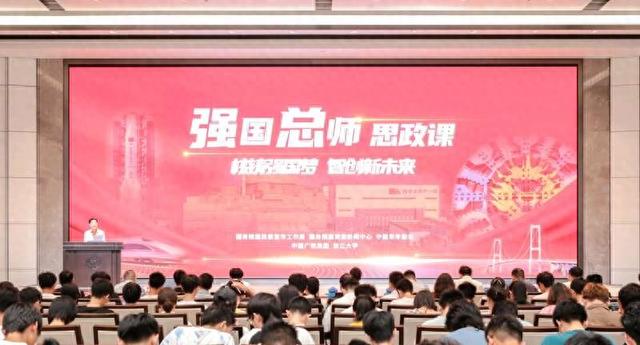
“强国总师思政课”第四期开讲 “华龙一号”总设计师王鑫授课
Zhong Guo Qing Nian Bao· 2025-09-24 07:03
Group 1 - The "Hualong One" nuclear technology represents China's independent innovation in nuclear power and serves as a national symbol for the country's technological capabilities [2][3] - China General Nuclear Power Group (CGN) has evolved alongside China's reform and opening-up, starting with the construction of the Daya Bay Nuclear Power Plant, and has developed a unique path in clean energy innovation through "introduction, digestion, absorption, and re-innovation" [2] - During the development of "Hualong One," CGN achieved 100% autonomy in over 400 key core technologies, collaborating with more than 5,400 enterprises in the industry chain [2] Group 2 - "Hualong One" is not only a representation of China's nuclear technology but also a significant contribution to global energy transition, providing a reliable and green development solution [2] - The safety philosophy of "nuclear safety is foolproof" has been integrated into every detail of the "Hualong One" project, ensuring its reliability and safety [2]

澳大利亚维州州长:加强澳中人文交流有助增进理解与互信
Xin Hua Wang· 2025-09-24 06:22
Group 1 - The Governor of Victoria, Jacinta Allan, emphasized the importance of strengthening language education and cultural exchanges to enhance understanding and trust between Australia and China [1] - Allan shared her observations from her recent trip to China, highlighting the country's focus on education, history, innovation, and future-oriented development [1] - The Chinese Consul General in Melbourne, Fang Xinwen, noted the significance of the 53rd anniversary of diplomatic relations and the 10th anniversary of the China-Australia Free Trade Agreement, expressing China's willingness to work with Australia to build a more mature and stable comprehensive strategic partnership [1] Group 2 - Allan pointed out China's increasing emphasis on renewable energy development, mentioning that approximately 100 solar panels are installed every second in China, reflecting the country's commitment to energy transition [1] - The celebration event in Melbourne was attended by over 400 guests, including friendly individuals from Victoria and Tasmania, showcasing cultural performances such as choir and dance [1]
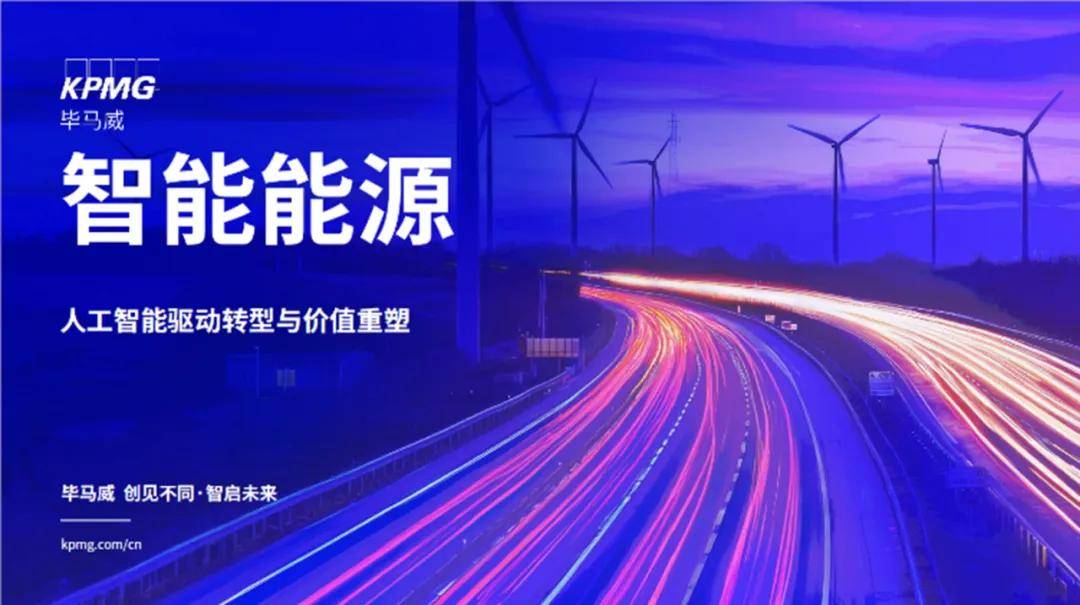
毕马威发布《智能能源——人工智能驱动转型与价值重塑》:解码AI赋能能源转型的密码
Sou Hu Cai Jing· 2025-09-24 04:45
Core Insights - The energy industry is currently facing three main challenges: ensuring safe and reliable supply, accelerating decarbonization, and maintaining cost control. Artificial intelligence (AI) is emerging as a key solution, deeply integrated into the strategic planning of the energy sector [1][3] - A report by KPMG highlights the latest advancements in AI applications within the energy sector, based on a survey of 163 executives from medium to large energy companies across eight countries [1][3] AI Application in the Energy Sector - There is a significant growth in AI applications within the energy industry, with 56% of companies expanding their AI projects and 44% integrating AI into core operations. AI is viewed as a critical factor for optimizing operational processes [3][5] - 79% of surveyed companies have achieved measurable efficiency improvements through AI, with 60% reporting returns exceeding 10% on their investments. Looking ahead, 92% of respondents plan to increase their investments in AI projects, although they do not expect short-term returns [3][5] Investment and Implementation Strategies - Companies are investing heavily in AI technology across various areas, including hardware upgrades, software procurement, data infrastructure transformation, and talent acquisition. This investment is crucial for large enterprises [5][6] - AI projects in the energy sector are categorized into two types: value-driven projects aimed at maximizing efficiency and returns, and purpose-driven projects focused on enhancing safety and sustainability [6][8] Operational Challenges and Transformation - Energy companies face multiple challenges, including aging infrastructure, rigid operational models, and stringent regulatory requirements. Successful AI implementation requires comprehensive capability building at foundational, functional, and enterprise levels [10][12] - Establishing transformation management offices or AI centers of excellence is essential for ensuring alignment and consistency in AI strategy and project delivery across all levels of the organization [10][12] Future Directions and Ecosystem Development - The transition to AI in the energy sector is expected to evolve through three stages: from automation to autonomy, changing interactions between companies and customers, and accelerating decarbonization and innovation [12][19] - Companies are actively building broader intelligent ecosystems that facilitate collaboration among customers, competitors, regulators, suppliers, and technology partners [12][19] Generative AI in China’s Energy Sector - China's energy sector is leading in digital infrastructure development, with significant data assets, although the maturity of intelligent applications remains relatively low. Generative AI is still in its early stages but holds substantial potential [12][19] - By the end of 2024, 13 state-owned energy enterprises are expected to release 25 vertical industry models, with over 28 applications in areas such as production optimization and fault prediction [12][19]