价值投资

Search documents
《关于引导保险资金长期稳健投资进一步加强国有商业保险公司长周期考核的通知》点评:拉长考核期限,风物长宜放眼量
ZHONGTAI SECURITIES· 2025-07-12 13:22
Investment Rating - The report maintains an "Overweight" rating for the industry, indicating an expected increase in performance relative to the benchmark index over the next 6 to 12 months [2][14]. Core Insights - The recent policy change aims to extend the assessment period for state-owned commercial insurance companies, promoting long-term stable investments and preventing short-term performance pressures [5]. - The adjustment in performance evaluation metrics emphasizes a balanced approach between annual and multi-year indicators, enhancing the focus on sustainable growth and risk management [5]. - The report highlights that the insurance sector is increasingly favoring high-dividend stocks, with a notable increase in equity allocations, reflecting a strategic shift towards long-term value investments [5]. Summary by Sections Industry Overview - The total market capitalization of the industry is approximately 31,377.86 billion, with a circulating market value of 31,369.21 billion [2]. Policy Implications - The new directive from the Ministry of Finance encourages insurance funds to act as stabilizers in the market, promoting long-term investment strategies [5]. - The report notes that the new accounting standards for insurance contracts will be fully implemented by January 1, 2026, which is expected to positively influence the assessment of insurance companies [5]. Investment Strategy - The report suggests that the extended assessment period will likely reduce the negative impact of equity asset fluctuations on profit assessments, thereby increasing the tolerance for equity allocation among insurance companies [5]. - The performance of the non-bank insurance stock index has significantly outperformed the market, with an absolute return of 13.17% and a relative return of 11.14% since the beginning of 2025 [7].



长周期考核提升险资投资稳定性和积极性 更好发挥资本市场“稳定器”作用
Zheng Quan Ri Bao Wang· 2025-07-12 13:08
7月11日,财政部印发《关于引导保险资金长期稳健投资进一步加强国有商业保险公司长周期考核的通 知》(以下简称《通知》),明确国有商业保险公司全面建立三年以上长周期考核机制,并要求其提高资 产负债管理水平,注重稳健经营,增强投资管理能力。 今年1月份,中央金融办、证监会、财政部等六部委联合印发《关于推动中长期资金入市工作的实施方 案》提出,对国有保险公司经营绩效全面实行三年以上的长周期考核,净资产收益率当年度考核权重不 高于30%,三年到五年周期指标权重不低于60%,以引导保险公司加大A股投资力度。 中国社会保障学会副会长兼养老金分会会长、浙江大学国家制度研究院副院长金维刚接受《证券日报》 记者采访时表示,考核周期延长,将对保险资金的投资理念、投资风格和投资特点产生正向激励作用, 有利于提升险资权益投资稳定性和积极性,鼓励险资价值投资、长期投资,成为稳定资本市场的重要力 量,增强市场的活力和韧性。 此次《通知》进一步将净资产收益率由"当年度指标+三年周期指标"调整为"当年度指标+三年周期指标 +五年周期指标",权重分别为30%、50%、20%;同时将资本保值增值率由"当年度指标"调整为"当年度 指标+三年周期指 ...
格雷厄姆真传:施洛斯的防御致胜哲学
雪球· 2025-07-12 07:46
Core Viewpoint - The article discusses the investment philosophy of Walter Schloss and his son Edwin Schloss, emphasizing their "cigar butt" strategy, which focuses on buying undervalued stocks with a strong margin of safety and minimal debt [2][3][9]. Investment Performance - Walter Schloss established his limited partnership in 1955, achieving a remarkable annual compound return of 15.3% from 1956 to 2000, compared to the S&P 500's 11.5% during the same period [3]. - An investment of $1 in Schloss's partnership in 1956 would have grown to $662 by 2000, while the same amount in the S&P 500 would have only reached $118 [3]. Investment Philosophy - The Schlosses are minimalists, focusing solely on financial statements and avoiding external influences, which allows them to concentrate on buying cheap stocks [4]. - Their investment strategy is characterized by a strong emphasis on safety margins, only purchasing stocks priced significantly below their net current asset value (NCAV) or tangible asset value [9]. - They adhere to a zero or low-debt principle, ensuring that companies have minimal long-term debt, which reduces the risk of bankruptcy due to debt defaults [10]. Market Neutrality - Schloss's approach does not rely on bull markets for returns; instead, it focuses on the intrinsic value of stocks, which can be realized through various catalysts such as fundamental improvements, asset sales, or mergers [12][15]. - The strategy aims to capture value recovery rather than relying on high growth or market bubbles [15]. Diversification - The Schlosses maintain a highly diversified portfolio, typically holding over 100 stocks, which mitigates individual stock risks and ensures that a few successful investments can offset losses from others [16][17]. - This diversification strategy allows them to avoid significant losses from any single investment, thereby enhancing overall portfolio stability [17]. Avoiding Valuation Bubbles - The core of their deep value strategy is to only buy extremely cheap stocks, avoiding investments during market bubbles, which protects against substantial downturns [19][20]. - By steering clear of high-growth stocks that are often overvalued, the Schloss strategy minimizes risk during market corrections [20]. Summary of Success Factors - The Schloss strategy emphasizes strong downside protection, capturing value recovery, and maintaining a diversified portfolio, which collectively contribute to consistent positive returns over time [21][22][23]. - The approach is particularly suitable for investors with moderate risk tolerance who seek stable returns and wish to avoid significant drawdowns, focusing on long-term growth through compounding [23].


长城港股通价值混合C,长城港股通价值精选混合A: 长城港股通价值精选多策略混合型证券投资基金2025年第2季度报告
Zheng Quan Zhi Xing· 2025-07-12 02:32
Core Viewpoint - The report highlights the performance and investment strategy of the Great Wall Hong Kong Stock Connect Value Selection Mixed Fund for the second quarter of 2025, emphasizing its focus on undervalued stocks with strong fundamentals and the potential for stable long-term returns [1][2]. Fund Overview - Fund Name: Great Wall Hong Kong Stock Connect Value Selection Mixed Fund - Fund Code: 007132 - Fund Type: Contractual open-end fund - Effective Date: June 26, 2019 - Total Fund Shares at Reporting Period End: 114,143,744.19 shares - Investment Objective: Focus on Hong Kong Stock Connect stocks, selecting fundamentally sound and undervalued companies to pursue long-term stable investment returns [1]. Investment Strategy - The fund employs a comprehensive analysis of macroeconomic conditions, policy trends, and market movements to actively determine asset allocation across various asset classes, including stocks and bonds [2]. - The strategy includes evaluating companies based on their competitive position, core product strength, market demand, and decision-making capabilities, using various valuation methods to identify undervalued stocks [2]. - The fund utilizes multiple strategies for stock selection, including high dividend growth, industry leader growth, high growth, A-H share price difference, and Davis double-click strategies to enhance return stability [2]. Performance Metrics - The fund's net value growth rate for Class A shares was 8.90%, while Class C shares achieved a growth rate of 8.72%, both outperforming the benchmark return of 2.70% during the reporting period [8]. - Over the past three months, the fund's return was 2.50%, and over the past six months, it was 2.47% [3]. Investment Composition - The fund's total assets included approximately 120,897,403.01 RMB in stocks, representing 86.16% of the total fund assets, with 89.17% of the net asset value invested in Hong Kong stocks through the Stock Connect mechanism [9]. - The fund's sector allocation included significant investments in consumer discretionary (29.13%), information technology (24.34%), and telecommunications (27.10%) [10][11]. Management Report - The fund manager has adhered to legal regulations and internal policies, ensuring fair treatment of investors and maintaining a focus on risk management [5]. - The fund's performance is attributed to investments in the Chinese technology and internet sectors, which have shown strong growth potential, particularly in areas integrating AI [6][8]. Future Outlook - The fund remains optimistic about the future of the Hong Kong technology and internet sectors, anticipating continued growth driven by favorable policies and emerging consumer trends [8]. - The focus will continue to be on value investing, emphasizing long-term performance over short-term gains [7].
为什么价值投资适合中国
3 6 Ke· 2025-07-12 00:02
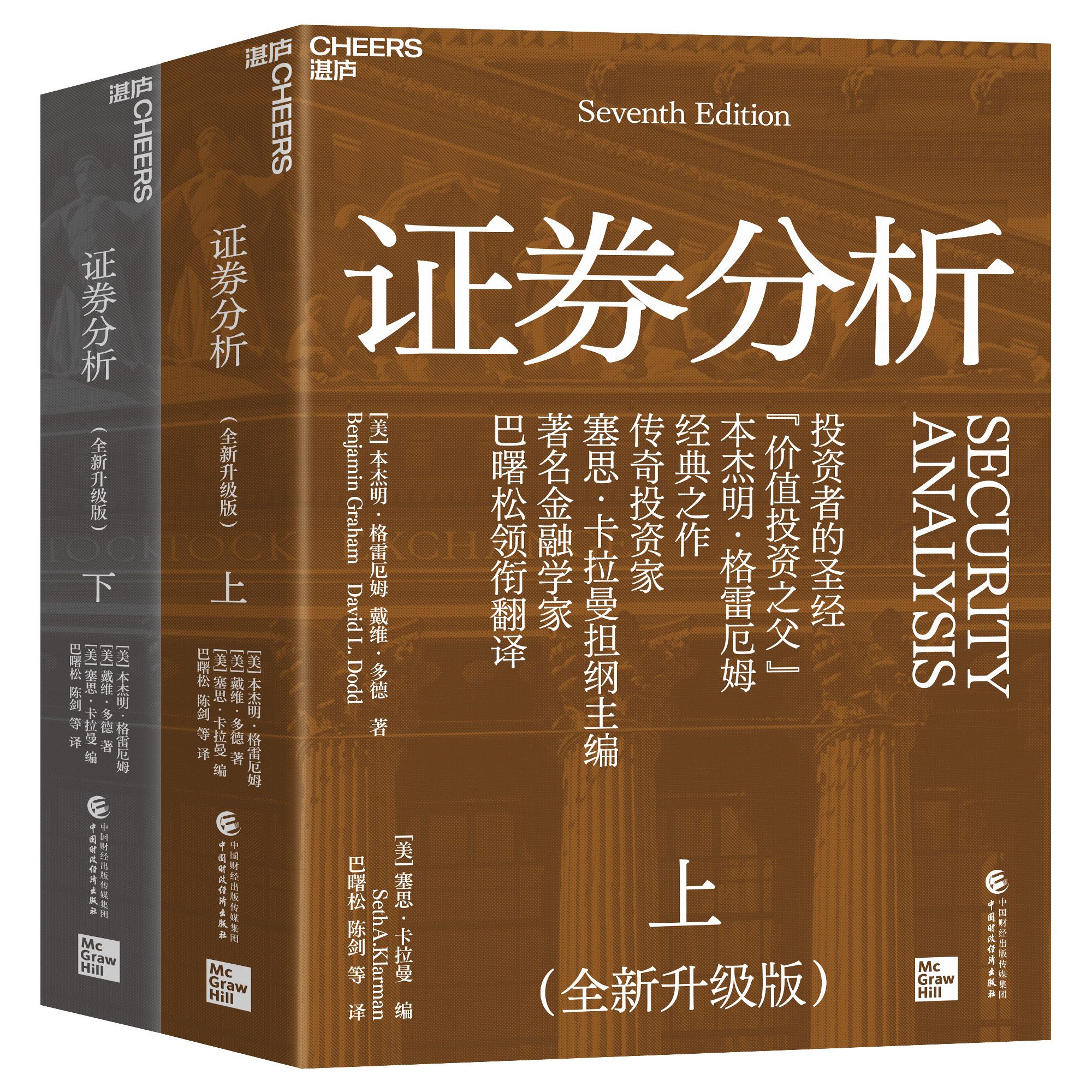
Core Insights - The article emphasizes the importance of Benjamin Graham's book "Security Analysis" as a foundational text for understanding investment philosophy and methodology [1][10][12] - It highlights three main investment principles from Graham: margin of safety, Mr. Market, and investing with a business perspective [5][10] - The text discusses the significance of financial statements in assessing a company's intrinsic value and the need for deeper analysis beyond surface-level profit growth [2][3][4] Summary by Sections Investment Philosophy - Graham's investment philosophy is rooted in the concepts of margin of safety, which arises from both undervaluation and solid fundamentals, and Mr. Market, who can exhibit extreme optimism or pessimism [5][6] - The article suggests that understanding these principles is crucial for value investing, especially in volatile markets like A-shares [5][6] Financial Analysis - The book "Security Analysis" provides a framework for fundamental analysis through financial statements, allowing investors to evaluate a company's intrinsic capabilities and value over time [2][3] - It stresses the importance of recognizing that financial data reflects underlying business realities, which may not always align with short-term market perceptions [3][4] Market Dynamics - The article notes that market conditions, particularly in China, have evolved rapidly, presenting both challenges and opportunities for investors [2][3] - It points out that while industries may show impressive growth in financial reports, the underlying business models and competitive advantages must be critically assessed to avoid pitfalls [4][5] Value Investing in China - The text asserts that value investing principles are applicable in the Chinese market, with historical evidence of successful long-term returns for value investors [6][11] - It highlights the need for investors to develop independent judgment and discipline in their investment approach, particularly in a rapidly changing economic landscape [6][11]
书评丨投资是一场修行
2 1 Shi Ji Jing Ji Bao Dao· 2025-07-11 22:20
Core Concept - Mindful investing is emerging as a new paradigm in the investment field, focusing on psychological aspects and behavioral finance to enhance emotional management and rational decision-making in investments [1][4] Group 1: Mindful Investing Overview - Mindful investing combines mindfulness techniques, such as meditation, with professional investment practices to help investors manage emotions and make rational decisions [1] - Ray Dalio, founder of Bridgewater Associates, emphasizes the importance of meditation in achieving success, practicing it daily for 20 minutes [1] - The concept of mindfulness is deeply rooted in Eastern philosophy, promoting awareness of the present moment as a remedy for emotional distress [1] Group 2: Importance of Emotional Management - The book "Equanimity: Mindful Investing, Mindful Life" by Yang Jun explains the critical role of emotional management in investment performance, presenting the formula: "Investment Performance = Professional Knowledge × Emotional Management" [2][4] - Emotional awareness can help identify trends and enhance decision-making, but it is essential to manage emotions to avoid diminishing returns on professional skills [4] - The author illustrates that even highly capable individuals can see reduced effectiveness in their "investment performance" if they fail to manage their emotions [4] Group 3: Characteristics of Mindful Investing - Mindful investing emphasizes focusing on the present, maintaining rationality, and adhering to fundamental value investing principles, avoiding speculation and herd behavior [6] - It encourages a long-term investment approach, recognizing that short-term results may not always align with rational investment strategies [6] - The recent "National Nine Articles" from the State Council highlights the importance of promoting long-term investment strategies and rational investment principles in the capital market [6][7]

RLTY: Reasonable Real Estate Income For Now
Seeking Alpha· 2025-07-11 15:33
Core Viewpoint - The article emphasizes a value investing approach with a focus on long-term horizons and an owner's mindset, avoiding short-selling recommendations [1]. Group 1 - The analysis is based on value investing principles, which prioritize the intrinsic value of securities over short-term market fluctuations [1]. - The author does not engage in short-selling or provide sell recommendations, indicating a commitment to long-term investment strategies [1]. - The article reflects the author's independent research and opinions, without any external compensation influencing the content [2]. Group 2 - There is a clear disclosure that the author holds no positions in the mentioned companies and has no plans to initiate any within a short timeframe [2]. - The article does not provide specific investment advice or recommendations, aligning with a broader perspective on investment suitability [3]. - The content is authored by an individual who may not be licensed or certified, highlighting the importance of independent analysis in investment decisions [3].

继续涨!A股又创新高了!会迎来新一轮加速了
Sou Hu Cai Jing· 2025-07-11 05:49
Group 1 - The A-share market has seen a rebound, with the Shanghai Composite Index rising over 1%, indicating a divergence in performance among stocks [1][3] - There is a sentiment of pessimism among investors despite the market reaching new highs, suggesting a disconnect between market performance and investor confidence [3][4] - The importance of patience in investment is emphasized, with a focus on long-term strategies rather than chasing short-term gains [4][6] Group 2 - The potential for a new acceleration in the market is highlighted, particularly if the liquor sector performs well, which could lead to a broader market rally [6] - The commentary suggests that retail investors should consider low-entry points rather than waiting for high prices to enter the market, advocating for a more strategic approach [8] - The distinction between different investment strategies, such as left-side investing and passive investing, is made, indicating that investors should understand their own approach [8]
杨德龙:本周大盘有效突破3500点 下半年行情有望超出很多人预期
Xin Lang Ji Jin· 2025-07-11 05:45
Group 1 - The core viewpoint of the articles indicates a significant rebound in the stock market, particularly with the Shanghai Composite Index breaking the 3500-point mark, driven largely by strong performance in the banking sector [1][2] - The banking sector has seen an overall increase of 9.66% over the past month, attributed to enhanced economic recovery expectations and the appeal of high dividend yields in a low-interest-rate environment [1][2] - Institutional investments, including those from insurance companies and pension funds, have increased their holdings in bank stocks, contributing to the upward momentum [1][2] Group 2 - The rise in bank stocks reflects a growing demand for safe-haven assets amid global uncertainties, with funds shifting from deposits to equities, particularly in large-cap blue-chip stocks [2] - The Shanghai Composite Index is expected to challenge the previous high of 3700 points, with a long-term outlook suggesting a potential return to above 4000 points within the next two to three years [2][3] - The current valuation of the CSI 300 index is approximately 13 times earnings, significantly below historical averages, indicating potential for upward movement if valuations normalize [2] Group 3 - The market is witnessing a historical shift of household savings towards capital markets, presenting a unique investment opportunity similar to past real estate investment trends [3] - Investment strategies should focus on technology growth stocks, low-valuation high-dividend sectors like banking and utilities, and new consumer sectors that may present opportunities following recent corrections [3] - The formation of a MACD golden cross signal suggests positive momentum for certain stocks, indicating potential for continued upward trends [4]
深度对话!陈光明、霍华德•马克斯,面对面
天天基金网· 2025-07-11 05:06
Core Viewpoints - The investment approach should resemble that of a farmer, focusing on long-term cultivation rather than short-term hunting, which is more challenging [1] - Price fluctuations can be severe, but the intrinsic value of companies, especially excellent ones, remains stable, continuously generating substantial free cash flow [2] - There is growing optimism among global investors regarding China's long-term development potential [3] - The key to investment lies in objectively assessing true value and leveraging market fluctuations rather than being defeated by them [4] - Long-term, patient investment is more successful than attempting to time the market [5] Economic and Market Cycles - The dialogue between Chen Guangming and Howard Marks covered economic cycles, global market volatility, and investment opportunities in China [2] U.S. Market Insights - Howard Marks believes the U.S. economy remains strong, with trade policies being the main uncertainty affecting market reactions [6] - The U.S. stock market accounts for 50% of global market capitalization, while its GDP is only about 25% of the global total, indicating high valuations [4] Market Volatility - Chen Guangming noted that while there were significant fluctuations in China's market in April, these were more reflective of short-term risk preferences rather than long-term fundamentals [10] Chinese Technological Innovation - The emergence of DeepSeek has shifted investor sentiment positively towards China's market, indicating that China is competitive in technology sectors like AI [12] - Howard Marks emphasized that the U.S. does not monopolize technological advancement, and competition from countries like China is significant [12] - Chen Guangming expressed optimism about investment opportunities across various sectors in China, highlighting the country's innovative capabilities and efficient supply chains [16][17] Value Investing Practices - Chen Guangming explained that the principles of value investing are consistent globally, focusing on buying below intrinsic value for returns [19] - In China, the stability and sustainability of intrinsic value may be weaker, making assessments more challenging [20] - The volatility in emerging markets like China can lead to greater investment opportunities if value investors can accurately assess intrinsic value [20]