
中国创造

Search documents
罗兰贝格戴璞:中国经济新的增长引擎正加速运转
Xin Lang Cai Jing· 2026-01-08 14:50
Core Insights - The core viewpoint of the articles is that China's new growth engines are accelerating, focusing on advanced manufacturing, green technology, digital transformation, artificial intelligence, and high-value-added services as key drivers for the economy in 2026 and beyond [1][2]. Economic Growth Drivers - In terms of consumption, from January to November, the total retail sales of consumer goods increased by 4% year-on-year, surpassing the growth rate for the entire year of 2024 [1]. - Although investment data showed a decline in the first three quarters, this does not indicate a reduction in investment scale but rather a fundamental shift in investment direction towards more precision, discipline, and patience [1]. - Exports are expected to remain a significant stabilizer for China's economy in 2025, contributing substantial growth momentum, with the global South markets identified as crucial for sustainable export growth [1]. Future Outlook - Looking ahead to 2026 and beyond, China is positioned not only as a large consumer market but also as a source of innovation and a benchmark for competitiveness [1]. - The achievements of "Made in China" and "Designed in China" are anticipated to enhance the global competitiveness of multinational companies [1]. Regional Supply Chain Dynamics - China continues to serve as an important bridge for multinational companies entering the Asian market, with Chinese enterprises accelerating their regional layout [2]. - The Chinese supply chain is evolving into an Asia-centric model led by Chinese enterprises, emphasizing the need for improved production efficiency, increased product value, and a focus on quality upgrades as core elements of the new development model [2].
国博高光时刻!文具办公业唯一代表得力,亮相国博诠释中国智造
Xin Lang Cai Jing· 2026-01-04 03:30
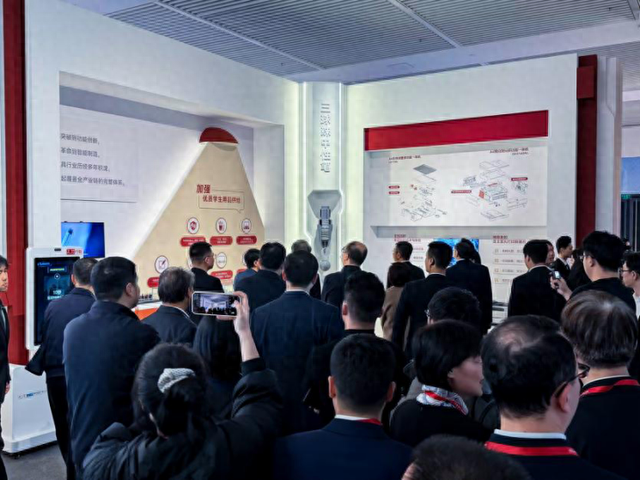
Group 1 - The "14th Five-Year Plan" achievement exhibition showcases China's manufacturing capabilities, with Deli Group being the only stationery office enterprise invited to the National Museum of China, highlighting its self-developed writing products and printing technologies [1] - Deli Group has focused on overcoming technical challenges in the pen manufacturing sector, developing a core pen head system and self-researched ink to create adaptable solutions for various writing scenarios [3] - The company has made significant advancements in the printing technology sector, breaking through foreign monopolies by mastering four core printing technologies and becoming the only domestic enterprise with a complete product matrix in printing [5] Group 2 - Deli's participation in the National Museum reflects the progress of the Chinese stationery industry in upgrading its supply chain and achieving core technology independence, marking a shift from "Made in China" to "Created in China" [7] - The future of Chinese brands, driven by innovation, is expected to continue making breakthroughs in core areas, contributing to the momentum of "Chinese Intelligent Manufacturing" [9]


文创跨越国界,中国潮玩跻身全球顶流
Xin Hua She· 2025-12-31 09:17
Core Insights - The article highlights the global success of Labubu, a Chinese original IP, which has become a phenomenon in the cultural and creative industry, showcasing China's shift from "made in China" to "created in China" [1][2][16] Group 1: Labubu's Success Story - Labubu, designed by Long Jiasheng, has gained immense popularity, with its revenue exceeding 4.8 billion yuan in just six months, marking a year-on-year growth of over 600% [1][5] - The character's unique design and emotional resonance with young consumers have contributed to its widespread appeal, breaking cultural barriers [1][17] - The operational strategy of Pop Mart emphasizes patience and respect for original creators, allowing for a sustainable growth model rather than quick commercial success [5][6] Group 2: Supply Chain Innovations - Pop Mart has implemented a flexible supply chain that can quickly respond to market demands, increasing production capacity from 300,000 units per month to 3 million units by 2025 [9][10] - The company has adopted a dual expansion strategy, focusing on local and overseas production to enhance supply chain resilience and reduce delivery times [10][12] - Automation and strategic partnerships with local factories have improved production efficiency while maintaining product quality [11][12] Group 3: Cultural Resonance and Globalization - Labubu's success is attributed to its ability to resonate with global youth values, such as acceptance of differences and self-expression, transforming it into a shared cultural symbol [17][18] - Pop Mart's approach to localization in different markets has allowed it to effectively engage with diverse consumer bases, enhancing brand value [16][18] - The company's growth reflects a broader trend in the Chinese creative industry, emphasizing the importance of emotional connection and cultural adaptation in global markets [17][19]


40万字重磅品牌白皮书发布:深圳45年的超级进化论
Sou Hu Cai Jing· 2025-12-31 06:11
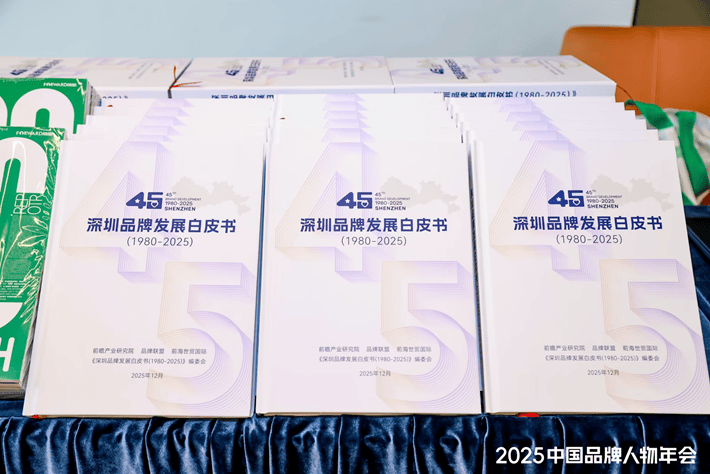
Core Insights - Shenzhen has produced a number of globally impactful companies, showcasing a shift from "Made in China" to "Created in China" [2] - The 45th anniversary of Shenzhen Special Economic Zone marks a significant milestone in its rapid modernization and brand development [2][3] - The "Shenzhen Brand Development White Paper (1980-2025)" outlines the evolution of Shenzhen's brands and their internal logic and success factors [3][5] Group 1: Brand Evolution - Shenzhen's brand journey reflects a transition from manufacturing to innovation, with key phases including the emergence of local brands in the 1980s and 1990s, and the rise of autonomous brands in the early 2000s [7][10] - The current phase is characterized by cluster upgrades, with companies like Tencent, BYD, and DJI leading in various sectors [8][10] - As of now, Shenzhen has cultivated 1,220 notable local brands, including 13 billion-level brands and 7 trillion-level brands, with Tencent, Ping An, and Huawei each exceeding a brand value of 490 billion [10][11] Group 2: Economic Contributions - The 1,220 notable brands contribute 47.97% of the city's sales, 42.05% of tax revenue, and 32.87% of exports, serving as the backbone of Shenzhen's high-quality economic development [11] - These brands span critical sectors such as electronics, renewable energy, biomedicine, high-end equipment, financial services, and digital economy, forming a robust industrial structure [11] Group 3: Brand Development Factors - Shenzhen's brand success is attributed to a unique ecosystem supported by policy innovation, technological advancement, and collaborative industrial frameworks [15][16][19] - The government has played a crucial role in creating a conducive environment for brand growth through targeted policies and regulatory frameworks [16] - Innovation drives brand competitiveness, with companies investing over 10% of their annual revenue in R&D, fostering a comprehensive innovation ecosystem [17] Group 4: Global Expansion and Responsibility - Shenzhen brands have established clear pathways for international expansion, evolving from processing trade to localized operations and global standardization [20] - Social responsibility is ingrained in the corporate strategy, enhancing brand value and sustainability through practices like tax compliance and community support [21] Group 5: Future Outlook - The release of the white paper is a significant step in documenting Shenzhen's brand journey and providing strategic guidance for future brand development [31] - Shenzhen's brands are expected to continue thriving in emerging sectors like digital and low-altitude economies, contributing to the global narrative of Chinese brands [33][34]



年终报道丨文创跨越国界,中国潮玩跻身全球顶流
Xin Hua Wang· 2025-12-31 03:09
Core Insights - Labubu, an original IP from China, has gained global popularity, becoming a cultural phenomenon and a symbol of China's creative industry [1][2] - The success of Labubu is attributed to continuous innovation in IP incubation, supply chain management, user engagement, and cultural dissemination [1] - The rise of Labubu reflects a significant shift in China's cultural and creative industry from "Made in China" to "Created in China" [2] IP Development and Market Response - Labubu's design, influenced by Nordic fairy tales, initially faced skepticism but gained traction after a partnership with Pop Mart in 2018 [4][5] - The product line's success is largely due to the development of soft vinyl plush toys, which resonated with the youth's desire for unique and expressive designs [5] - Pop Mart's patient and restrained approach to IP management has allowed Labubu to grow organically without succumbing to market pressures [5][6] Supply Chain Innovations - The supply chain has undergone a transformation to meet the surging demand for Labubu products, with production capacity increasing from 300,000 units per month to 3 million units by 2025 [9][10] - Pop Mart has implemented a dual expansion strategy, focusing on local and overseas production to enhance responsiveness to market demands [10][11] - The company has also adopted automation and precision techniques to maintain product quality while scaling production [10] Emotional Connection and Long-term Strategy - Labubu's appeal lies in its ability to resonate emotionally with consumers, transforming them from passive buyers to active co-creators of the IP [15][18] - The company emphasizes long-term value creation over short-term gains, ensuring that Labubu remains relevant and cherished by its audience [13][14] - Pop Mart's strategy includes creating immersive experiences and expanding into new markets, such as fashion, to enhance the IP's cultural significance [15][20] Global Expansion and Cultural Resonance - By 2025, Pop Mart plans to open flagship stores in major cities worldwide, including New York, and has already established a significant presence in North America and Europe [17][19] - Labubu's success is attributed to its ability to convey universal values that resonate with global youth, such as acceptance and self-expression [18][19] - The brand's growth reflects a broader trend of Chinese creative industries gaining recognition and influence on the global stage [19][21]

对我们“卡脖子”是卡不住的
Sou Hu Cai Jing· 2025-12-18 10:20
Core Viewpoint - China's manufacturing sector has achieved remarkable growth, now accounting for nearly 30% of global manufacturing value added and maintaining the world's largest scale for 15 consecutive years, showcasing strong competitiveness and innovation in various industries [1] Group 1: Historical Context - At the founding of New China, the industrial base was extremely weak, with only a few consumer goods being produced, and heavy industrial products were virtually nonexistent [3] - By the time of the first Five-Year Plan, significant projects were initiated, establishing a relatively complete modern industrial system and laying the groundwork for future manufacturing development [4] - The industrial foundation was further solidified before the reform and opening up, creating a robust industrial backbone for the nation [5] Group 2: Reform and Opening Up - The theme of Chinese manufacturing shifted from "entrepreneurship" before the reform to "innovation" post-reform, significantly enhancing productivity and integrating into the global division of labor after joining the WTO [6][7] - China's manufacturing share of global output rose from 2.7% in 1990 to 19.8% in 2010, surpassing the United States to become the world's leading manufacturing power [7] Group 3: Challenges and Responses - Despite rapid growth, concerns about the "big but not strong" nature of Chinese manufacturing emerged, highlighting weaknesses in technological innovation and positioning within the global value chain [7] - The global manufacturing landscape has changed, with Western countries pushing for re-industrialization and imposing technological barriers against China [7] Group 4: Strategic Independence - Strategic independence has been crucial for China's manufacturing resilience, with a focus on self-innovation in key sectors like automotive and high-speed rail, leading to significant advancements in domestic technology [10][11] - The balance between technology importation and independent development has been recognized as essential for maintaining competitiveness [11] Group 5: Long-term Vision and Action - China's manufacturing achievements are the result of long-term planning and consistent efforts, with significant investments in high-speed rail and electric vehicles dating back over a decade [12][13] - The commitment to innovation and the establishment of a manufacturing powerhouse has been reinforced by national policies aimed at enhancing manufacturing capabilities [15] Group 6: Future Outlook - The upcoming "14th Five-Year Plan" emphasizes the importance of manufacturing and outlines new directions for technological advancement and global competitiveness [17] - The ongoing journey of Chinese manufacturing is seen as a continuous evolution, with the potential for further breakthroughs and value expansion driven by innovation and practical efforts [17]
以“智能”之跃中创智领开启工业破界新生
Zhong Guo Zheng Quan Bao· 2025-12-12 20:17
Core Viewpoint - The company, now named Zhongchuang Zhiling, has undergone a significant transformation, achieving a revenue of 30.745 billion yuan in the first three quarters of the year, a year-on-year increase of 10.44%, and a net profit of 3.645 billion yuan, up 19.17% year-on-year, driven by robust growth in both traditional coal machinery and automotive parts sectors [1][2]. Business Transformation - The name change from Zhengmei Ji to Zhongchuang Zhiling reflects a strategic elevation, moving from a focus on coal machinery to a broader business model that includes coal machinery, automotive parts, and industrial intelligence [1][2]. - The company has transitioned from being a "technology follower" to a "technology leader," emphasizing independent innovation and smart technology as core components of its strategy [2][3]. Performance in Traditional Sector - In the traditional coal machinery sector, the company has evolved beyond simple equipment manufacturing, providing intelligent solutions to over 1,000 working faces across the country, thus enhancing operational efficiency and safety [2][3]. - The coal machinery segment reported a revenue increase of 1.549 billion yuan, a growth rate of 10.66%, and a net profit increase of 150 million yuan, a growth rate of 4.77% in the first three quarters [3]. Automotive Parts Sector Growth - The automotive parts segment has shown remarkable growth, with a net profit increase of 133.76% year-on-year, driven by subsidiaries SEG and Yaxinke, which have successfully turned around losses and increased revenues in their respective markets [3][4]. - SEG achieved a net profit of 218 million yuan in the first three quarters, while Yaxinke's revenue from its shock absorber and commercial vehicle business grew by 19.9%, with an additional 324 million yuan from new energy motor business [3][4]. Strategic Acquisitions and Collaborations - The company has strengthened its strategic collaboration by increasing its stake in core subsidiaries like Hengda Zhikong and Yaxinke, ensuring resource focus and driving performance growth [4][5]. - The strategic acquisitions made over the past decade have positioned the company to capitalize on the automotive parts market and the transition to new energy [2][4]. Future Vision - The company's vision is to become a global leader in sustainable intelligent industrial solutions, moving from being a provider of products and components to a paradigm outputter of intelligent industrial solutions [4][5]. - The integration of advanced technologies such as 5G, IoT, and AI into its operations is seen as a key driver for this transformation, with a dedicated R&D team focused on applying AI in industrial scenarios [5].

美媒发现可怕事实:能在中国市场胜出的企业,就能在全球大杀四方
Sou Hu Cai Jing· 2025-12-08 10:13
Core Insights - The significance of the Chinese market has shifted for foreign companies, transforming from an easy profit-making environment to a highly competitive training ground [1][2] - Many foreign brands, such as Starbucks and Tesla, are facing strong competition from local Chinese brands, indicating a rise in domestic competition [2][6] - China has become the world's largest manufacturing country and the second-largest consumer market, providing vast growth opportunities for businesses [2][3] Group 1: Market Dynamics - The competitive landscape in China has evolved, with local brands gaining strength and foreign companies needing to adapt to survive [2][7] - The Chinese market is characterized by a unified culture and consumer behavior, making it easier for brands to penetrate the market once they establish a foothold in a region [3] - The government and social groups' procurement processes follow market rules, leading to intense competition across various sectors [2] Group 2: Foreign Companies' Strategies - Foreign companies are increasingly viewing China as a research and development hub, using it to enhance their competitiveness before entering global markets [7][8] - Volkswagen exemplifies this strategy by treating China as a "fitness center" for developing products tailored to Chinese consumers [8] - The notion of "decoupling" from China is seen as unrealistic, as companies that disengage risk losing their competitive edge in the global market [8]
专访:中国的创新生态和产业环境助力企业发展——访法国法雷奥集团首席执行官佩里亚
Xin Hua She· 2025-12-07 07:34
Core Insights - Valeo is leveraging China's robust innovation ecosystem and competitive environment to enhance its capabilities and drive growth [1][2] - The company has established a significant presence in China with 27 production bases and 13 R&D centers, employing over 18,000 people, including more than 4,500 in R&D [1] - In 2024, Valeo's sales in China are projected to approach 30 billion RMB, making it the largest market for the company globally [1] Group 1 - Valeo is focusing on electric vehicle technology and advanced driver assistance systems, increasing investments in R&D and manufacturing in China [2] - The company plans to expand or build multiple factories and R&D facilities by 2025, including a "lighthouse factory" in Shenzhen and a new manufacturing base in Shanghai [2] - Over 65% of Valeo's orders in China by Q3 2025 are expected to come from local OEMs, reflecting a shift in the order structure towards domestic clients [2] Group 2 - Valeo is exploring new opportunities in emerging sectors such as data center cooling and drone component manufacturing, recognizing China's potential in these areas [2] - The company aims to deepen economic and trade cooperation between France and China, contributing to sustainable innovation and high-quality development in the global automotive industry [2]
汇丰调查:内地企业面对贸易变局更具韧性和信心
Guo Ji Jin Rong Bao· 2025-11-26 09:51
Core Insights - Despite uncertainties in global trade policies and tariffs, mainland companies are adapting to the "new normal" of trade, leading to increased confidence in revenue prospects [1] - Over 70% of surveyed mainland companies have a clearer understanding of global trade changes compared to six months ago, with 54% expecting revenue growth in the next two years [1][2] - Concerns about significant revenue impacts from tariffs and trade changes have decreased, with the percentage of companies worried about a major impact dropping from 24% to 8% [1] Group 1 - More than 70% of mainland respondents now have a clearer understanding of global trade dynamics, higher than the global average of 66% [1] - 54% of mainland companies anticipate revenue growth over the next two years [1] - The percentage of companies concerned about a significant revenue impact (over 25%) has decreased from 24% to 8% [1] Group 2 - Nearly 30% of mainland companies plan to increase their business presence in Southeast Asia, followed by 24% in Northeast Asia and 23% in the Middle East [2] - Saudi Arabia ranks as the top target market for mainland companies, with 36% from the healthcare sector and about 20% from the energy and materials sectors planning to increase sales there [2] - 86% of mainland companies are expanding online business and developing new revenue sources, while 85% are formulating risk management and business continuity plans [2] Group 3 - The evolving global trade landscape presents both challenges and opportunities, prompting companies to seek innovative solutions and new trade corridors [3] - Chinese companies are gaining experience and strength in emerging industries such as renewable energy, consumer goods, and healthcare, enhancing their resilience and diversified business layouts [3]