
二手车出口

Search documents
上海二手车国际贸易综合服务平台启动
Zhong Guo Xin Wen Wang· 2025-12-18 05:55
Core Viewpoint - The Shanghai International Trade Comprehensive Service Platform for Used Cars (Waigaoqiao) was officially launched, aiming to enhance the export capabilities of used cars from Shanghai [1] Group 1: Export Growth - From January to November this year, Shanghai exported over 20,000 used cars, representing a year-on-year growth of over 100% [1] - The launch of the platform aligns with the "Shanghai Action Plan to Promote Used Car Exports," which was issued in September [1] Group 2: Platform Features - The platform is operated by a subsidiary of Waigaoqiao Group and leverages the advantages of the Free Trade Zone, port location, and logistics resources [1] - It aims to create a comprehensive ecosystem that includes public services, transaction displays, inspection and maintenance, logistics, customs clearance, industry research, financial services, and overseas services [1] Group 3: Industry Collaboration - The Shanghai Import and Export Chamber of Commerce established a special committee for used car exports, focusing on gathering all used car export enterprises and financial institutions [1] - This committee aims to integrate industry resources and professional advantages to promote collective efforts for enterprises to expand internationally [1]
上海前10月二手车出口翻一番 预计到2027年将培育3—5家二手车出口龙头企业 年出口规模达到5万辆
Jie Fang Ri Bao· 2025-12-07 02:34
Core Insights - Shanghai's used car export business has seen significant growth, with exports reaching over 18,000 units from January to October 2025, representing a year-on-year increase of more than 100% [1] - The shift from "new consumption" to "renewal consumption" in Shanghai's automotive market is driving this growth, with 30% of consumers opting to sell or transfer their old cars for new purchases, and over 50% of these being fuel vehicles [1] - The city's robust automotive industry chain, comprising over 10,000 enterprises, supports the quality and adaptability of used cars for export [2] Industry Developments - Shanghai is establishing a comprehensive service platform for used car international trade in the Pudong New Area, which will include public services, logistics, and financial services [3] - The city plans to cultivate 3-5 leading used car export enterprises by 2027, aiming for an annual export scale of 50,000 vehicles [3] - New measures have been introduced to streamline the export process, including a dedicated inspection point for used cars within the Shanghai Haitong International Automobile Terminal [3]
【保值率】2025年11月中国汽车保值率报告
乘联分会· 2025-12-04 08:35
Core Viewpoint - The article discusses the findings of the "2025 November China Car Retention Rate Research Report," highlighting the importance of retention rates as indicators of brand strength and market dynamics, which can inform various business strategies in the automotive industry [2]. Group 1: Retention Rate Insights - The retention rate data reflects the relationship between market conditions, industry trends, and brand development, serving as a comprehensive measure of a brand's product strength, recognition, and reputation [4]. - The retention rate rankings are based on the selling prices of used cars in good condition (B2C), providing a clear picture of market performance [4]. Group 2: Policy Directions - The new national standard for vehicle safety, organized by the Ministry of Public Security, aims to enhance safety measures rather than focusing solely on industrial innovation or commercial issues, indicating a shift towards stricter safety regulations [6]. - The increasing penetration of new energy vehicles and advanced driver assistance systems has led to a rise in safety incidents, necessitating improved legislative and regulatory frameworks [6]. Group 3: Market Trends - The export of second-hand cars is gaining traction, with policies in place to support healthy development in this sector, including the recent initiatives from Shanghai to promote positive examples [8]. - The adjustment of vehicle purchase tax has stimulated consumer demand, leading to a significant increase in the availability of second-hand cars, which in turn supports new car sales [12]. Group 4: Retention Rate Variations - There is a notable decline in retention rates across different vehicle categories, with MPVs and large SUVs generally maintaining higher rates due to their comfort and functionality, while compact cars and small SUVs are experiencing lower rates [15]. - The current trends in product design are affecting the retention rates of compact sedans and small SUVs, although this does not fully capture the demand dynamics in the second-hand market [15]. Group 5: New Energy Vehicle Market Changes - Government procurement plays a crucial role in promoting the new energy vehicle industry, with policies emphasizing the need for specific technical standards, creating commercial opportunities for various vehicle categories [17]. - The competitive landscape for new energy vehicles is intensifying, particularly in the new car market, while the second-hand market shows limited price elasticity, indicating a significant drop in retention rates [20].


汽车早报|新问界M7累计交付突破3万台 宝马X5官宣将全系标配智能驾驶辅助系统Pro
Xin Lang Cai Jing· 2025-11-21 00:40
Group 1: Second-Hand Car Export Policy - The Ministry of Commerce aims to enhance the management of second-hand car exports, transitioning from "scale growth" to "value growth" [1] - A notification was issued detailing six specific measures to strengthen export management, compliance review, and promote sustainable development [1] - The notification has received positive feedback from various sectors, emphasizing the importance of quality and service in the second-hand car export industry [1] Group 2: SUV Sales Data - In the first ten months of 2025, the top ten SUV manufacturers sold 8.532 million units, accounting for 66.2% of total SUV sales [2] - Among these manufacturers, sales for FAW-Volkswagen and Tesla saw a slight decline compared to the same period last year, while other companies experienced varying degrees of growth [2] Group 3: New Energy Vehicle Production - In the first ten months of 2025, China's new energy vehicle production reached 12.672 million units, marking a year-on-year increase of 28.1% [3] - The cumulative penetration rate of new energy vehicles in China has reached 46.4%, indicating a strong growth trend in the market [3] Group 4: BYD Legal Case - BYD announced a court ruling requiring the defendant to publicly apologize and pay 313,800 yuan for defamatory statements against its brand [4] - The court found that the defendant's comments harmed the reputation of BYD's Fangchengbao brand [4] Group 5: Vehicle Delivery Milestones - The new Wanjie M7 has surpassed 30,000 deliveries within 57 days of its launch, offering both extended-range and pure electric versions [5] - Huawei's Yu Chengdong announced that the Zun Jie S800 has received 18,000 pre-orders within 175 days of its launch [6] Group 6: BMW X5 Launch - BMW China announced the launch of the new BMW X5, which will feature standard intelligent driving assistance systems across all models starting from January 2026 [8] - The new models are priced between 598,000 and 748,000 yuan, with additional features like front seat ventilation and heating [8] Group 7: GAC Toyota Response - GAC Toyota's sales vice president denied rumors regarding the discontinuation of several key fuel vehicle models, labeling the information as false [9] Group 8: Kia Recall - Kia is recalling over 250,000 vehicles in the U.S. due to potential fuel tank leaks in certain 2021-2024 K5 models [10]
促进二手车出口由规模增长迈向价值增长
Zhong Guo Zheng Quan Bao· 2025-11-20 20:08
Group 1 - The Ministry of Commerce aims to shift the focus of second-hand car exports from scale growth to value growth, providing a diverse range of products for global consumers [1][2] - A new notification has been issued to strengthen the management of second-hand car exports, including measures to strictly control the export of new cars under the guise of second-hand vehicles and establish a dynamic management and exit mechanism for enterprises [1][2] - The notification has received positive feedback from various sectors, emphasizing a sustainable development approach that prioritizes strong regulations, quality, and service in the second-hand car export industry [2] Group 2 - E-commerce in China has shown significant growth, with online retail sales increasing by 9.6% year-on-year from January to October, driven by digital consumption and quality e-commerce [2] - Notable growth has been observed in smart products and online services, with online retail sales of AI glasses and smartwatches rising by 23.1%, and online service consumption increasing by 21% [2] - The industry e-commerce sector is facilitating digital transformation for small and medium-sized enterprises, with significant increases in transaction volumes in key sectors such as textiles and pharmaceuticals [3]
汽车视点 | 插混贡献率跌至15%、比亚迪面临多元挑战 专家解读车市三大变化
Xin Hua Cai Jing· 2025-10-30 13:35
Core Insights - The Chinese automotive market is at a critical turning point in 2025, characterized by slowing growth and structural differentiation, with a notable decline in the penetration rate of new energy vehicles (NEVs) and a diversified competitive landscape among brands [2][3]. NEV Market Trends - The growth rate of NEV penetration has significantly slowed, with an increase of less than 4 percentage points from January to September 2025, compared to a 12.5 percentage point increase in 2024 [3]. - The proportion of consumers opting for NEVs under the trade-in policy decreased from 60% in 2024 to 53% in early 2025, indicating a weakening driving force for NEV penetration [3]. - The penetration rate of plug-in hybrid vehicles (PHEVs) has declined from 21.1% in 2024 to 19.8% in 2025, while pure electric vehicles (EVs) continue to rise from 26.6% to 31.4% during the same period [3][4]. PHEV Market Dynamics - PHEV sales dropped sharply from 124.7 million units in 2024 to 27.2 million units in the first three quarters of 2025, leading to a decrease in their contribution to overall NEV growth from 69.7% to 15.1% [4][5]. - The weakening momentum in the PHEV market is attributed to market saturation in lower-tier cities and increased competition from fuel vehicles, which have lowered their prices significantly [5]. Competitive Landscape - The NEV market is witnessing increased competition, with brands like Geely and Leap Motor gaining market share, disrupting BYD's previous dominance [6]. - In the first nine months of 2025, Geely's NEV sales increased by 566,000 units, while Changan and Xiaomi also reported significant sales growth [6]. - Joint venture brands are also entering the NEV market aggressively, with new models achieving monthly sales of 8,000 to 10,000 units, indicating a resurgence in competition [7]. Export Market Developments - China's automotive exports reached 4.95 million units in the first nine months of 2025, a year-on-year increase of 14.8%, with expectations to exceed 7.5 million units for the entire year [8][9]. - The export growth is shifting from a few major companies to a more diversified group of manufacturers, with BYD and Chery leading the charge [9]. - The second-hand car export market is emerging as a potential growth area, with only 7% of total automotive exports in 2024, indicating significant room for expansion [9][10]. Future Outlook - The second-hand car export market is expected to grow, particularly in regions like Africa and Southeast Asia, with a projected growth rate of nearly 85% in the African market [10][11]. - Companies are advised to focus on establishing after-sales networks in key export markets and to leverage existing resources to avoid blind investments [11].

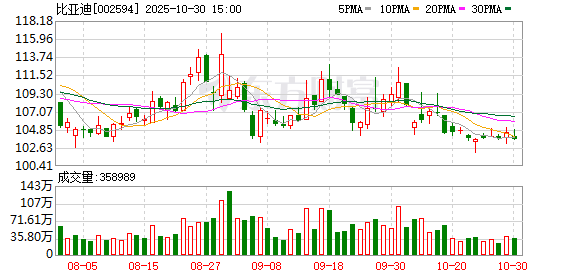
汽车视点 | 插混贡献率跌至15%、比亚迪面临多元挑战,专家解读车市三大变化
Xin Hua Cai Jing· 2025-10-30 13:21
Core Insights - The Chinese automotive market is at a critical turning point in 2025, characterized by slowing growth and structural differentiation, with a notable decline in the penetration rate of plug-in hybrid vehicles and a more diverse competitive landscape among brands [1][2]. Market Trends - The penetration rate of new energy vehicles (NEVs) has significantly slowed, with an increase of less than 4 percentage points from January to September 2025, compared to a 12.5 percentage point increase in 2024 [2]. - The plug-in hybrid market has experienced a rare decline in penetration rate, dropping from 21.1% in 2024 to 19.8% in the first three quarters of 2025, while pure electric vehicles continue to rise from 26.6% to 31.4% [2][3]. Sales Contributions - In 2024, plug-in hybrids sold 1.247 million units, contributing 69.7% to the overall increase in NEV sales, but by the first three quarters of 2025, sales plummeted to 272,000 units, contributing only 15.1% [3]. - The weakening of the plug-in hybrid market is attributed to market saturation in lower-tier cities and increased competition from fuel vehicles, which have seen a price drop, making them more appealing to consumers [3][4]. Competitive Landscape - The market is witnessing a diversification of brands, with companies like Geely and Leap Motor rapidly gaining market share, altering the previously dominant position of BYD [5]. - The interaction data from automotive apps indicates a growing consumer interest across various brands, with significant engagement metrics for new models from Geely and Xiaomi [5]. Export Market Dynamics - China's automotive exports have shown a steady increase, with 4.95 million units exported from January to September 2025, a year-on-year growth of 14.8%, and projections suggest exports could exceed 7.5 million units in 2025 [6][7]. - The export landscape is shifting from reliance on a few major companies to a more diversified group of manufacturers, with BYD and Chery leading the charge [6][7]. Second-Hand Vehicle Export Potential - The second-hand vehicle export market in China remains underdeveloped, accounting for only 7% of total automotive exports, indicating significant growth potential compared to mature markets [7][8]. - The future of second-hand vehicle exports is expected to evolve into a dual model of platform-based and self-operated businesses, focusing on local market integration and resource optimization [8].

South Korea's booming used car exports cushion impact of US tariffs
Reuters· 2025-09-29 22:03
Core Insights - The article highlights the significant increase in used car exports from South Korea, which is helping to offset the negative effects of U.S. tariffs on new car sales [1] Group 1: Industry Impact - The booming used car export market is emerging as a crucial factor for the automotive industry in South Korea, providing a buffer against tariffs imposed by the U.S. [1] - The location of the exports is from a former amusement park on South Korea's coast, indicating a unique logistical operation for vehicle shipments [1] Group 2: Economic Implications - Tens of thousands of vehicles are being prepared for shipment, showcasing the scale of the used car export business and its importance to the local economy [1]

从零公里到长公里,中国二手车出海经历交棒期
Zhong Guo Qi Che Bao Wang· 2025-09-15 03:00
Core Viewpoint - The Chinese used car market is poised to leverage its position as the largest new car consumer market to expand into global markets, particularly through long-distance used cars, which are increasingly seen as a viable option for international trade [2][3]. Group 1: Market Potential - In 2024, China's used car export volume has surpassed 400,000 units, covering over 160 countries and regions, indicating a significant opportunity for growth in the global market [2]. - Long-distance used cars are gaining traction due to their price competitiveness and suitability for emerging markets, which prioritize practical and cost-effective vehicles [3]. Group 2: Export Market Dynamics - The primary target markets for China's long-distance used cars are approximately 117 left-hand drive countries, mainly in Southeast Asia, the Middle East, Eastern Europe, Africa, and Latin America, with an annual import growth rate of around 6% from 2021 to 2024 [4]. - In Central Asia and Northern Asia, China's used cars have captured about half of the import market share, with an annual growth rate of 28% [4]. Group 3: Challenges in Exporting - The development of long-distance used cars faces challenges such as fragmented vehicle sources, high certification costs due to non-standard vehicle conditions, and inefficiencies in the distribution process [5][6]. - There is a significant gap in after-sales service for exported used cars, with complaints emerging regarding the lack of support for vehicles sold overseas [7][8]. Group 4: Strategic Initiatives - Companies like SAIC Volkswagen are exploring various models for used car business, including repurchase strategies to stabilize prices and enhance competitiveness in international markets [9]. - The industry anticipates that if domestic dealers and trade enterprises can effectively utilize specialized international trade strategies, the export share of long-distance used cars could rise from under 8% to 50% within the next decade, achieving an annual export target of 5 million units [10].

