
体验经济

Search documents
CPI专题报告:服务消费CPI能否重启上行?
Zhong Guo Yin He Zheng Quan· 2026-02-13 00:45
Investment Rating - The report maintains a positive investment rating for the service CPI sector [2] Core Insights - The service consumption CPI is expected to restart its upward trend, driven by stronger performance compared to overall consumption [7] - The demand for service consumption is resilient, particularly in sectors like tourism and entertainment, which are currently in a phase where prices are more likely to rise than fall [15] - The report highlights the importance of government policies aimed at boosting consumption, including various initiatives to enhance service quality and expand domestic demand [12] Summary by Sections 1. Overview of Service CPI - Service consumption CPI is performing better than overall consumption CPI, indicating a potential for price increases in the service sector [7] 2. Price Increases in Service Sectors - Hotel prices are expected to show elasticity due to supply-demand convergence and anti-monopoly measures [7] - The restaurant sector's ability to pass on costs to consumers is under observation, with Western fast food and tea drinks showing relative advantages [7] 3. Investment Recommendations - The report suggests focusing on sectors with strong demand resilience and potential for price increases, particularly in tourism and hospitality [7] 4. Policy Support - Various government policies are outlined, including actions to stimulate consumption and improve service quality, which are expected to support the service sector's growth [12]
“景区终身门票”激活地方文旅新动能
Xin Lang Cai Jing· 2026-02-12 20:33
Group 1 - The core viewpoint of the news is that the introduction of lifetime tickets in Ganzi Prefecture aims to shift from a reliance on ticket revenue to a consumption-driven economy, enhancing overall tourism experiences and economic benefits [1][2] - Ganzi Prefecture has sold 319,400 tickets online and over 510,000 tickets through offline travel agencies, achieving a total sales revenue exceeding 101 million yuan [1] - The two types of lifetime tickets, priced at 318 yuan and 317 yuan, allow visitors to access 14 scenic spots rated 4A or above in Ganzi, addressing the issue of low brand recognition and weak interconnectivity among the numerous scenic spots [1] Group 2 - The local tourism department is focusing on diversifying revenue sources by enhancing the quality of experiences and reducing dependence on ticket sales, which aligns with the broader industry trend towards a "big tourism era" [2] - Other regions, such as Zhejiang and Anhui, have implemented similar strategies to reduce reliance on ticket sales, offering free or lifetime access to attract repeat visitors and stimulate secondary consumption [2] - The success of these initiatives depends on developing attractive products and services that encourage secondary spending, improving public transport connections between scenic spots, and enhancing the overall quality of dining, accommodation, and shopping options [2][3]
从囤年货到囤旅行,春节经济变了
和讯· 2026-02-12 10:08
Core Insights - The core viewpoint of the article highlights a significant shift in Chinese consumer behavior during the Spring Festival, moving from traditional goods to travel and experiential consumption [6][7]. Group 1: Travel and Experience Consumption Trends - The data indicates a surge in travel bookings, with over 11.78 million domestic flight tickets reserved by February 9, reflecting a daily year-on-year increase of approximately 11% [6]. - The Spring Festival has evolved into a composite consumption model of "visiting family + vacation," enhancing the value of travel experiences [7]. - Popular destinations include Hainan, with a 45% year-on-year increase in daily flight orders and a 47% rise in ticket prices, and Heilongjiang, which saw a 115% increase in orders for winter vacation products [7]. Group 2: Changing Consumer Preferences - Tourists are increasingly seeking deep cultural immersion rather than superficial sightseeing, as evidenced by a 70% year-on-year increase in searches for "folk" and "intangible cultural heritage" tourism products during the Spring Festival [7][8]. - Families with children are a key driving force behind this trend, with over 60% of domestic travel orders during the Spring Festival attributed to family trips [8]. - The focus of consumer decision-making has shifted from basic functionality to a pursuit of knowledge and emotional value in travel experiences [8]. Group 3: Market Dynamics and Policy Support - The market is witnessing structural changes, with a stable "dual-direction" travel pattern and a clear "layering" of consumer choices, ranging from luxury hotels to more affordable destinations [8]. - The government plans to issue over 360 million yuan in cultural and tourism consumption subsidies to stimulate the market, which is expected to boost the entire consumption chain, including transportation, accommodation, dining, and duty-free shopping [8][9]. - The experience economy in China is projected to reach 18.4 trillion yuan by the end of November 2025, with a year-on-year growth of 22.6%, and is expected to exceed 22 trillion yuan by 2026, maintaining an annual growth rate of over 20% for the next five years [9]. Group 4: Future Outlook - The ongoing transformation in consumer behavior suggests that experiential travel will become an integral part of daily life, enhancing the vitality of the industry [10].


杭州手工体验市场火爆出圈
Mei Ri Shang Bao· 2026-02-11 23:32
Group 1 - The core theme of the article is the rising popularity of DIY handcrafts in Hangzhou, particularly those themed around the Year of the Horse, as consumers seek unique and personalized experiences for the upcoming Spring Festival [1][2]. - Various offline handcraft stores and intangible cultural heritage workshops are launching horse-themed DIY products, blending traditional craftsmanship with modern trends, which has made them popular among consumers [2][3]. - Online sales of horse-themed DIY material kits are also booming, with products like sachets and dolls priced around 20 yuan, achieving monthly sales of over 1,000 units [2][3]. Group 2 - The DIY market in Hangzhou is experiencing a shift from rapid growth to a more refined and competitive landscape, pushing businesses to innovate and enhance customer experiences [4]. - The competition has evolved from merely having offerings to providing superior experiences, necessitating differentiation and cultural integration in DIY projects [4][5]. - The rise of the DIY industry reflects a broader trend of experiential and self-indulgent consumption, merging local cultural elements with modern consumer preferences, thus contributing to the optimization of the service industry and urban renewal [5][6].
“一颗豆”如何圈住年轻人的心?
Xin Lang Cai Jing· 2026-02-08 22:43
拼豆制作过程。李慧 摄 拼豆实体店生意火爆。杨民仆 摄 (来源:新华日报) □ 本报记者 杨民仆 李慧 曾被视为孩童游戏的拼豆手工,如今在社交平台与线下商圈持续走红。仅从线上看,抖音相关话题浏览 量已超130亿,淘宝2025年下半年拼豆类商品销售量较上半年增长6倍,小红书上拼豆相关内容搜索次数 今年1月同比增长近3000%。 这一颗颗色彩斑斓的小豆子,为何能成为城市消费中极具活力的新亮点?又是如何重塑年轻人的休闲方 式与精神生活的? 线下: 手工坊里的沉浸式创作 位于新街口商圈的南京国际贸易中心,就聚集了约20家拼豆手工坊。记者2月3日下午来到中心7楼探 访,发现这层楼每家店内几乎都挤满了体验者。起点工舍内,数十名年轻人正埋头于操作桌,手持镊子 将各色塑料豆子,对照图案进行沉浸式拼搭。空气中只有豆子落入拼豆板的轻微声响,氛围专注而宁 静。 "我拼的是一个卡通猫。"大学生施琳一边紧盯参考图案,一边小心翼翼地操作。半小时后,她用镊子将 最后一颗豆子归位。店主接过拼豆板,熟练地盖上透明烘焙布,用熨斗轻轻熨烫。受热后的豆子相互融 合,原本零散的颗粒瞬间凝聚成完整的卡通猫,一场指尖魔法完美落幕。 "拼豆的制作时长由图案 ...
跳出“门票经济”的“一生之约”
Xin Hua Wang· 2026-02-06 02:41
Core Insights - Sichuan's Ganzi Tibetan Autonomous Prefecture has introduced a lifetime ticket allowing unlimited access to 14 scenic spots, aiming to shift from a "ticket economy" to an "experience economy" [1][3] - The region has long faced challenges in tourism development, including seasonal visitor fluctuations, weak infrastructure, and limited service offerings, despite having rich natural and cultural resources [1][3] - The lifetime ticket consolidates over 1,000 yuan in ticket rights into a service priced around 300 yuan, establishing a "one-time payment, lifetime connection" model between tourists and Ganzi [3] Industry Challenges - Ganzi Prefecture has 115 A-level tourist attractions but struggles with issues such as scattered distribution, insufficient linkage, and low brand recognition, leading to a "transit stop" experience for most visitors [1] - The tourism industry is hindered by a lack of engagement, with many attractions facing the challenge of visitors not staying long enough to appreciate the full value of the resources available [1] Strategic Initiatives - The introduction of seasonal themed cultural tourism activities aims to address the "half-year bustling, half-year idle" issue, enhancing the connection between scenic spots, tourists, and service consumption [3] - The focus is shifting from merely selling tickets to providing long-term services, requiring continuous improvement in visitor experience, cultural offerings, and infrastructure [3][4] - The success of the lifetime ticket initiative will depend on the ability to evolve the travel experience for repeat visitors, moving beyond mere scenic appreciation [3]

情感消费有市场! 当“毛孩子”成为家人,宠物经济朝气蓬勃
Sou Hu Cai Jing· 2026-02-05 01:12
文|食安时代 情感消费驱动下的宠物经济迎来新机遇,从商业场景中人宠互动空间的打造,到服务链条的完善与供应链的转型,行业价值逻辑正被重新构建,品牌也在探 索国内外经验的融合之道。 但宠物经济快速发展的同时也面临着多方挑战与调整,城市治理层面需适配其发展需求,行业还需聚焦环保问题借助绿色材料与循环模式,将可持续理念转 化为自身发展的核心优势。 宠物经济的价值升维与边界突破 当国内宠物市场仍在基础服务领域激烈竞争时,新加坡已率先迈入以"宠物福祉"为核心的高阶发展阶段,近期,新加坡推出一系列创新活动,如狗狗水上乐 园、宠物漫游乐园、宠物专属晚餐、宠物普拉提课程等,不断拓展宠物友好理念的实践边界。 这些举措标志着宠物经济正逐步超越喂食、洗护等基础需求,转向满足情感联结与高品质体验的新阶段,也为全球宠物产业链的价值重构带来重要启示。 在当代消费社会中越来越多人将宠物视为家庭成员,愿意通过消费为其创造更优质的生活,数据显示,2024年我国城镇犬猫消费市场规模已达3002亿元同比 增长7.5%,其中犬类消费市场增长4.6%,而猫类市场表现更为亮眼增幅高达10.7%,从单只宠物的年均消费来看犬和猫均突破2000元,且呈现持续上 ...


视频丨一次购票,终身畅游!景区为啥这么做?
Xin Hua Wang· 2026-02-03 23:53
Core Viewpoint - The introduction of "lifetime tickets" by various scenic spots reflects a shift in the tourism industry from a "ticket economy" to an "experience economy" [3][7]. Group 1: Introduction of Lifetime Tickets - Multiple scenic areas, including Ganzi, Anhui, and Xinjiang, have launched "lifetime tickets" allowing unlimited access to various attractions [1][3]. - Ganzi's lifetime ticket costs over 300 yuan and provides access to 14 scenic spots, which would normally cost 1,091 yuan if purchased separately, representing a significant discount [1]. Group 2: Changes in Revenue Model - The trend indicates that scenic spots are moving away from relying solely on ticket sales for revenue [3][5]. - The focus is shifting towards generating income from repeat visitors through additional services such as accommodation, dining, and outdoor experiences [5][7]. Group 3: Visitor Experience and Engagement - Lifetime tickets are likened to long-term membership cards, encouraging tourists to visit multiple times [5]. - To attract repeat visitors, scenic spots must enhance service quality, diversify offerings, and optimize visitor experiences [5][7]. - The success of one scenic area can positively impact nearby lesser-known attractions, promoting collaborative tourism development [5].
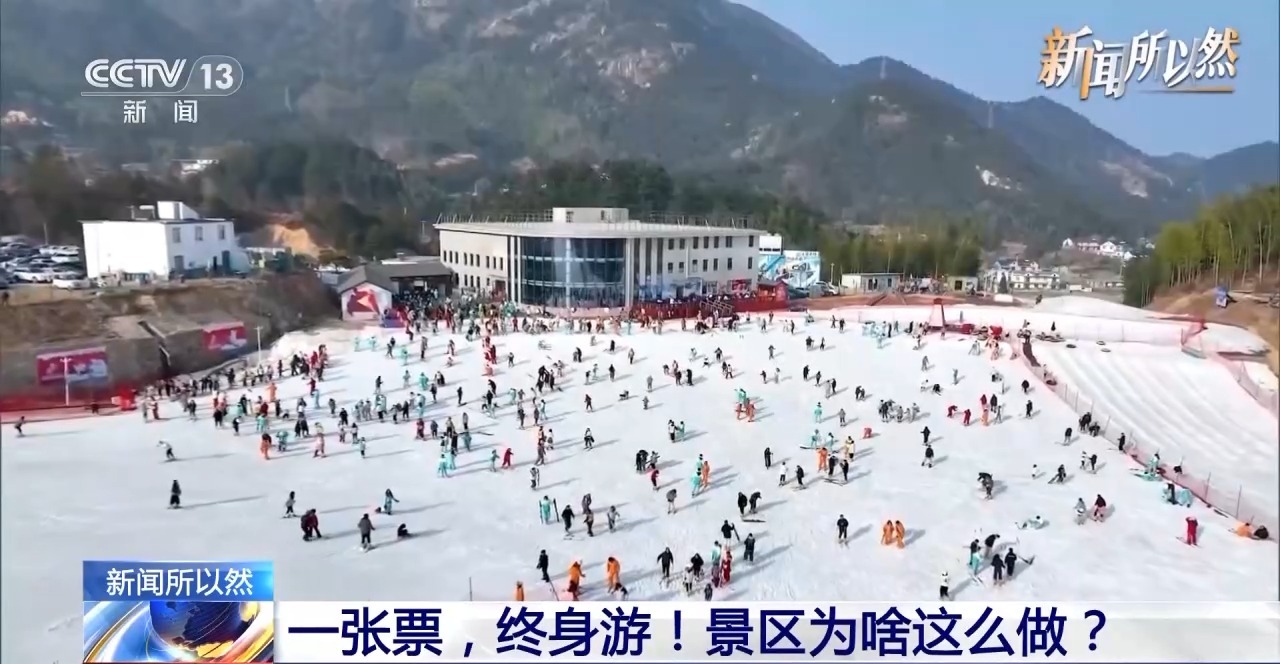
一次购票,终身畅游!景区为啥这么做?
Yang Shi Wang· 2026-02-03 23:06
Core Viewpoint - The introduction of "lifetime tickets" by various scenic spots reflects a shift from a "ticket economy" to an "experience economy" in the tourism industry, aiming to attract repeat visitors rather than relying solely on entrance fees [4][8]. Group 1: Introduction of Lifetime Tickets - Multiple scenic areas, including Ganzi, Anhui, and Xinjiang, have launched "lifetime tickets" allowing unlimited access to various attractions, with Ganzi's ticket priced at over 300 yuan for access to 14 scenic spots [1][3]. - Ganzi's lifetime ticket sales have been remarkably successful, with over 170,000 tickets sold within just a few days, highlighting the high value proposition compared to the total cost of individual tickets [1]. Group 2: Shift in Revenue Model - The strategy behind lifetime tickets is to transform scenic spots into "traffic entry points" rather than "charging gates," indicating a broader trend in the tourism sector [3]. - The focus for scenic areas is shifting from earning money through single entry fees to generating revenue from repeat visitors through comprehensive spending on accommodations, dining, transportation, and experiences [6]. Group 3: Enhancing Visitor Experience - To attract repeat visitors, scenic spots must enhance service quality, diversify offerings, and optimize visitor experiences, as these factors contribute to the overall competitiveness of the attractions [6]. - The implementation of lifetime tickets can create a synergistic effect, where popular attractions boost the visibility and visitation of lesser-known nearby sites, promoting collaborative tourism development [6].
鲜花添彩文创增味 非遗年货市场精彩纷呈
Xin Lang Cai Jing· 2026-02-03 19:46
Core Insights - The Chinese New Year market is experiencing a vibrant surge in demand, driven by the integration of intangible cultural heritage (ICH) elements into traditional products, reflecting the dynamic nature of consumer preferences [1][2][3] Group 1: Market Trends - The traditional flower market is shifting towards smaller, personalized, and emotionally resonant products, with sales starting to rise from November instead of being concentrated around the Lantern Festival [2] - Non-heritage cultural products, such as creatively designed Spring Festival couplets and zodiac-themed items, are gaining popularity among younger consumers, indicating a trend towards cultural and emotional value in purchases [2][3] Group 2: Consumer Behavior - Consumers are increasingly seeking emotional connections and cultural significance in their purchases, moving beyond mere functionality to include memories and meanings associated with products [3] - The demand for ICH products is transforming them from essential goods to decorative and emotional items, showcasing a shift in consumer values [3] Group 3: Government and Market Initiatives - Local governments are launching initiatives to stimulate consumption, such as issuing food vouchers and organizing cultural events, to promote ICH products during the festive season [4] - Financial institutions and e-commerce platforms are investing significantly to boost consumer spending, indicating a collaborative effort to enhance market activity [5] Group 4: Future Outlook - The integration of cultural and emotional elements into consumer products is expected to create new opportunities in the market, with projections for the 2026 Spring Festival indicating a continued trend towards innovative and culturally rich offerings [5]