
全域运营

Search documents
泡泡玛特港股跌超10%,创4月来单日最大跌幅
21世纪经济报道· 2025-10-23 03:08
Group 1 - The Hong Kong new consumption sector experienced a decline, with Pop Mart's stock price dropping by 10%, marking the largest single-day decline since April [1] - According to brokerage views, both CMB International and Guojin Securities maintained a "buy" rating for Pop Mart, highlighting its sustained growth momentum and potential for overseas market expansion through localized operations [3] - Pop Mart announced a significant increase in its third-quarter revenue, with an estimated growth of 245% to 250% year-on-year, driven by strong performance in both domestic and international markets [3] Group 2 - In the third quarter, Pop Mart's revenue in China grew by 185% to 190%, with offline channels increasing by 130% to 135% and online channels by 300% to 305% [3] - The overseas market showed even more impressive growth, with a year-on-year increase of 365% to 370%, including a 170% to 175% increase in the Asia-Pacific region and a staggering 1265% to 1270% increase in the Americas [3] - The launch of the Star People series, following the success of Labubu, has generated significant consumer demand, indicating strong brand engagement [3]


“双11”竞争:各忙各的
Bei Jing Shang Bao· 2025-10-16 16:17
Core Insights - The "Double 11" shopping festival has evolved into a month-long promotional event, with a shift from price-driven strategies to brand recognition and user experience [2][3] - Different e-commerce platforms are adopting varied strategies, such as pre-sale and immediate sale, to cater to diverse consumer needs and enhance their competitive edge [1][2] Group 1: Promotional Strategies - The competition among platforms like JD, Douyin, and Taobao is marked by differences in pre-sale and immediate sale approaches, impacting consumer behavior and merchant strategies [1] - The concept of "super brand dividends" has emerged, with platforms focusing on unique offerings like Taobao Flash Sale and membership benefits to attract consumers [2] Group 2: Consumer Behavior - Consumers are no longer rushing to stock up during the festival; instead, they are more focused on user experience and brand loyalty [3] - The shift in consumer behavior indicates that price is no longer the sole decision factor, as brand trust and long-term value become more significant [2][3]


【西街观察】双11竞争:各忙各的
Bei Jing Shang Bao· 2025-10-16 15:06
Core Insights - The "Double 11" shopping festival has evolved into a month-long promotional event, with a shift from price-driven strategies to enhancing user experience and brand recognition [1][3] Group 1: Competitive Strategies - Different e-commerce platforms are adopting varied strategies for "Double 11," with pre-sale and immediate sale options reflecting their unique competitive approaches [1] - Platforms like JD and Douyin have started their sales 11 days earlier than Taobao and Tmall, emphasizing immediate consumer satisfaction [1] - The decision to offer pre-sales or immediate sales is influenced by the need to cater to diverse consumer and merchant demands [1] Group 2: Brand Recognition and Consumer Behavior - The essence of competition has shifted from price to brand recognition, with platforms and merchants using discounts to attract loyal customers willing to pay a premium for brand trust [2] - Tmall's focus on "three super" initiatives highlights the importance of brand loyalty and the need for platforms to differentiate themselves in a crowded market [2] - Instant retail, represented by initiatives like Taobao Flash Sale, is seen as both a challenge and an opportunity for traditional e-commerce [2] Group 3: Market Trends - The promotional nature of "Double 11" is transitioning from a one-day event to a more normalized shopping experience, with consumers no longer feeling the need to stockpile goods [3] - The competitive focus is now on enhancing user experience and comprehensive operational strategies rather than just price reductions [3]

华福证券:双十一电商大促平销化 化妆品牌注重全域运营与新品种草
智通财经网· 2025-10-14 03:52
Core Viewpoint - The report from Huafu Securities indicates that major platforms have extended their Double Eleven promotional periods, but the "promotional shopping" effect is weakening, with brands tightening discount levels and focusing more on regular sales [1] Group 1: Market Trends - Major platforms have staggered the start dates of their promotional events, leading to a diminished "shopping festival" effect [1] - Brands are reducing the discount intensity during promotions, indicating a shift towards regular sales strategies [1] Group 2: Regulatory Changes - The implementation of new regulations regarding cosmetic registration and filing is expected to enhance market concentration among leading companies [1] - The new regulations, effective from August 2025, will cover 34 technical standards, including requirements for ingredients like "colloidal silver" and "peptide raw materials," impacting a range of products from toothpaste to functional skincare [1] Group 3: Marketing and Sales Strategies - The importance of live streaming (店播) is increasing, with cosmetic brands focusing on comprehensive marketing and regular sales [1] - According to data from Qingyan, the brand Han Shu ranked first in comprehensive operations, while Proya and L'Oreal remained in the top ten, although brands emerging from the Douyin ecosystem showed more volatility [1] Group 4: Competitive Landscape - Affordable cosmetics face intense competition due to lower pricing, leading to higher marketing expense ratios, which may limit investment in research and development [1] - Despite these challenges, there is a trend towards increasing R&D investment to strengthen competitive capabilities, with product innovation and channel optimization expected to enhance profitability [1]
最近想上市的公司里,“私域”几乎都是重点项
3 6 Ke· 2025-10-10 08:47
Core Insights - The concept of "private domain" has evolved from a mere operational model to a strategic "growth engine" for companies, as evidenced by its frequent mention in IPO prospectuses [2][3] - Companies are increasingly highlighting user assets as a crucial component of brand valuation, indicating that effective user management will lead to greater growth potential in the capital markets [3] Summary by Sections Private Domain in IPO Prospectuses - Multiple consumer brands preparing for IPOs emphasize "private domain" and related membership operations, showcasing the strategic importance of private domain strategies [5] - Snack brand "Hao Xiang Lai" reported that its members contributed approximately 78% of GMV in the first eight months of 2025, highlighting the significant impact of private domain user assets on revenue growth [2][5] - The mother-and-baby brand "Bu Tong Group" defined "private domain" in its prospectus and demonstrated rapid growth in private domain sales, with revenue increasing from 8.8 million yuan in 2022 to 56.3 million yuan in the first half of 2025 [5][6] Development Stages of Private Domain - The development of private domain can be categorized into three stages: 1. **Official Definition Stage (around 2020)**: The concept of private domain traffic emerged as brands began to establish their own traffic pools [9] 2. **High Growth Stage (2021-2023)**: Brands started to mention "private domain" or "membership operations" in their financial reports, leading to significant performance improvements [10] 3. **Mature Stage (2024-present)**: Private domain strategies are now frequently included in IPO prospectuses, becoming a core growth model for companies [10] Future Trends Reflected in Private Domain Layouts - **Trend 1: Full-domain Operations and Online-Offline Integration**: Brands are increasingly emphasizing the integration of online and offline channels to create a seamless user experience [11][12] - **Trend 2: Organizational and Mechanism Reform**: Companies are adjusting their internal structures to support private domain and full-domain operations, leading to more agile and responsive organizations [13] - **Trend 3: Layered Membership Management**: The future will see a more refined approach to membership management, focusing on clear tier structures and differentiated benefits [14][15] - **Trend 4: Full-link Digital Empowerment**: A comprehensive digital infrastructure is essential for the effective implementation of private domain strategies, enabling real-time collaboration across various business functions [16][18] Conclusion - The emphasis on "private domain operations" is shifting from a marketing tactic to a central theme in corporate growth strategies, with a clear trend towards user-centric, data-driven operations [18]


6大电商代运营商,超半数净利下滑
2 1 Shi Ji Jing Ji Bao Dao· 2025-09-05 04:57
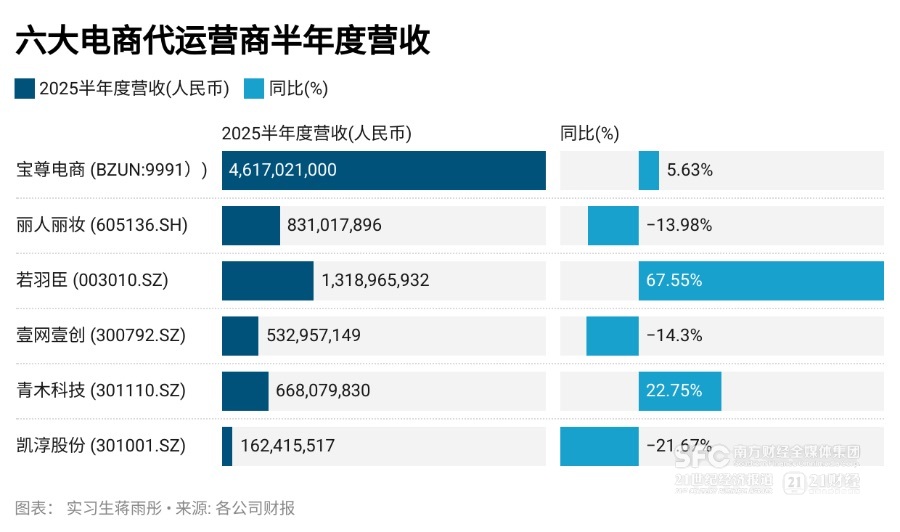
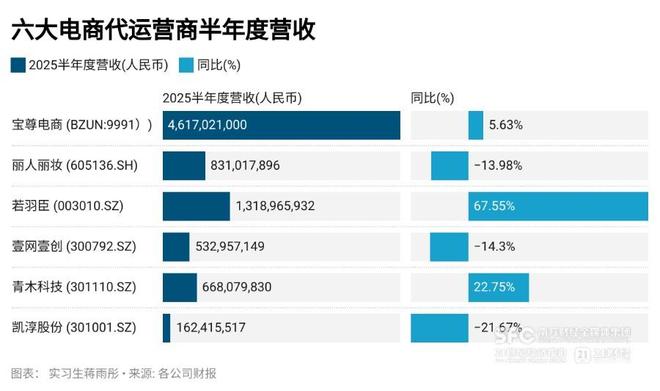
Core Insights - The e-commerce agency industry is experiencing a "polarized" development trend in the first half of 2025, with significant performance disparities among listed companies [1][2] - Companies like Ruoyuchen have shown remarkable growth, while others like Liren Lizhuang and Baozun E-commerce are facing severe losses [1][8] Company Performance - Ruoyuchen reported a revenue growth of 67.55% year-on-year, reaching 1.319 billion yuan, with a net profit increase of 85.60% to 72 million yuan [10] - Liren Lizhuang's revenue fell by 13.98% to 830 million yuan, with a net loss of approximately 33 million yuan, marking a staggering decline of 1315.98% [7][8] - Baozun E-commerce achieved a revenue of about 4.6 billion yuan, a 5.63% increase, but reported a net loss of 97 million yuan, widening from a loss of 87 million yuan in the previous year [8] - Yiwang Yichuang's revenue decreased by 14.3% to 530 million yuan, while its net profit increased by 5.83% to 71 million yuan [11] - Qingmu Technology's revenue grew by 22.75% to 668 million yuan, but its net profit fell by 22.96% to 51.7 million yuan due to increased marketing expenses [11] - Kaichun's revenue dropped by 21.67% to 162 million yuan, with a net profit decline of 16.17% to 300,890 yuan [11] Industry Trends - The e-commerce user growth rate is slowing, leading to intensified competition for traffic and rising customer acquisition costs [2][12] - The fragmentation of traffic sources, with the rise of platforms like Douyin and Xiaohongshu, is impacting traditional e-commerce models [2][12] - Companies that fail to adapt to the shift towards comprehensive operations may struggle to survive in the evolving market landscape [2][12] Strategic Shifts - The transition from traditional e-commerce to a focus on self-owned brands is becoming crucial for survival and growth [13][16] - Ruoyuchen's self-owned brand business saw a significant revenue increase of 242.42%, contributing to 45.75% of its total revenue [10][13] - Liren Lizhuang's reliance on traditional e-commerce platforms has hindered its ability to innovate and grow, with over 91% of its revenue still tied to platform sales [13][14] Market Outlook - The overall online retail sales in China reached 74.295 billion yuan in the first half of 2025, growing by 8.5%, indicating that e-commerce still plays a vital role in the consumer market [14] - The future competitive edge will rely on enhancing operational efficiency through digital means and building strong brand management capabilities [16]






代运营商半年报扫描:过半净利下滑,红海存量厮杀
2 1 Shi Ji Jing Ji Bao Dao· 2025-09-04 15:10
Core Viewpoint - The e-commerce operation industry is experiencing a stark contrast in performance in the first half of 2025, with significant disparities among listed companies, highlighting the need for transformation and adaptation in a competitive landscape [1][15]. Group 1: Company Performance - Ruoyuchen achieved a remarkable revenue growth of 67.55%, with total revenue reaching 1.319 billion yuan and a net profit increase of 85.60% to 72 million yuan, driven by strong performance in its self-owned brand business [10][15]. - Liren Lizhuang reported a revenue decline of 13.98% to 830 million yuan and a net loss of approximately 33 million yuan, marking a staggering 1315.98% drop in profit, attributed to weak consumer demand and the termination of partnerships with key brands [5][6]. - Baozun, despite a revenue increase of 5.63% to around 4.6 billion yuan, faced a net loss of 97 million yuan, which is a 6.23% increase in losses compared to the previous year [6][10]. - Yiwang Yichuang experienced a revenue decline of 14.3% to approximately 530 million yuan, but managed to increase its net profit by 5.83% to around 71 million yuan [10][11]. - Qingmu Technology reported a revenue increase of 22.75% to 668 million yuan, but its net profit decreased by 22.96% to approximately 51.7 million yuan due to increased marketing expenses [11]. - Kaichun's revenue fell by 21.67% to 162 million yuan, with a net profit of 300,890 yuan, down 16.17% [11]. Group 2: Industry Trends - The e-commerce user growth rate is slowing, and competition for traffic within platforms is intensifying, leading to rising customer acquisition costs and squeezing profit margins for operation companies [2][12]. - The fragmentation of traffic sources, with the rise of platforms like Douyin and Xiaohongshu, has contributed to the challenges faced by traditional e-commerce operators [2][12]. - Companies that fail to adapt to full-domain operations and continue relying on traditional "shelf e-commerce" models are likely to struggle in the evolving market [3][12]. - The shift towards a "stock era" in e-commerce necessitates a focus on transformation and innovation to survive and thrive in a competitive environment [15][17]. - The overall online retail sales in China reached 74.295 billion yuan in the first half of 2025, growing by 8.5%, indicating that e-commerce still plays a crucial role in the consumer market [16].
代运营商半年报扫描:过半净利下滑,红海存量厮杀丨电商财报观察
2 1 Shi Ji Jing Ji Bao Dao· 2025-09-04 15:09
Core Insights - The e-commerce operation industry is experiencing a "ice and fire" development trend in the first half of 2025, with significant performance differentiation among listed companies [1] - Companies like Ruoyuchen show remarkable growth, while others like Liren Lizhuang face severe revenue decline and substantial losses [1][6] - The overall e-commerce user growth is slowing, leading to increased customer acquisition costs and fragmented traffic patterns [2] Company Performance - Ruoyuchen achieved a revenue growth of 67.55% year-on-year, with a net profit increase of 85.60% [8] - Liren Lizhuang reported a revenue of 830 million yuan, down 13.98% year-on-year, and a net loss of approximately 33.76 million yuan, a staggering decline of 1315.98% [5][6] - Baozun maintained revenue growth of 5.63% year-on-year, but reported a net loss of 97.04 million yuan, widening from a loss of 87.28 million yuan in the previous year [6] - Yiwang Yichuang's revenue decreased by 14.3% to approximately 530 million yuan, while net profit increased by 5.83% to about 71 million yuan [8] - Qingmu Technology's revenue grew by 22.75% to 668 million yuan, but net profit fell by 22.96% to 51.66 million yuan [9] - Kaichun's revenue dropped by 21.67% to 162 million yuan, with a net profit decline of 16.17% to 3.01 million yuan [9] Industry Trends - The e-commerce operation industry is transitioning from a focus on traditional "shelf e-commerce" to a more comprehensive operational model [2][10] - The rise of content and interest-based e-commerce platforms like Douyin and Xiaohongshu is fragmenting traffic, impacting traditional e-commerce operators [2] - The overall online retail sales in China reached 74.295 billion yuan, growing by 8.5% year-on-year, indicating the continued importance of e-commerce in the consumer market [11] Strategic Insights - Companies that successfully innovate and extend their business models beyond traditional operations are more likely to survive and thrive [10][12] - Ruoyuchen's self-owned brand business saw a significant revenue increase of 242.42%, indicating a successful pivot towards brand management [10] - Liren Lizhuang's heavy reliance on platform sales (91.12% of revenue) highlights the risks of not diversifying revenue streams [11]
兴业证券:个护增长确定性强 关注技术壁垒与全域运营能力突出头部企业
智通财经网· 2025-07-30 07:32
Core Insights - The personal care industry is experiencing a structural shift driven by rising national income and health demands, leading to market expansion and increased market share for domestic brands due to national confidence and technological innovation [1][2] Group 1: Industry Trends - The personal care sector is undergoing a structural transformation, with online development and technological breakthroughs providing growth certainty [1][2] - The overall growth rate of the personal care industry is slowing, with a projected market size of 2,925 billion yuan in 2024, reflecting a CAGR of 5.52% from 2010 to 2024 [3] - The online sales of personal care products are significantly increasing, with Douyin's GMV expected to reach 41.178 billion yuan in 2024, showing a year-on-year growth of 38.86% [1][3] Group 2: Competitive Landscape - Domestic white-label and emerging brands are rapidly gaining market share, forcing traditional offline leaders to reassess their survival strategies [2] - The competition is intensifying as traditional personal care brands must invest deeply in online operations to adapt to the changing market dynamics [2] - The future competition in the personal care industry will hinge on the combination of "overall operational efficiency and the height of technological barriers" [2][4] Group 3: Key Players and Innovations - Companies like Dengkang Oral Care are leveraging patented technologies to capture significant market shares, with their product Cold Acid Spirit holding 64.72% of the anti-sensitivity market [4] - LaFang JiaHua has seen a dramatic increase in GMV on Douyin, with a year-on-year growth of 1,033.89% in Q1 2025, driven by marketing strategies and technological upgrades [4] - Brands with strong patent portfolios and operational capabilities are expected to lead the restructuring of the market [4]

芝麻租赁升级全域运营、AI智能经营两大核心能力,平台95后用户占比超6成
news flash· 2025-07-23 09:02
Core Insights - The company plans to upgrade its capabilities in full-domain operations and AI-driven management, investing 10 billion resources to support merchant operations [1] - The rental market is experiencing significant growth driven by the surge in experiential consumption among young consumers, necessitating collaboration with ecosystem partners to meet the rising demand [1]