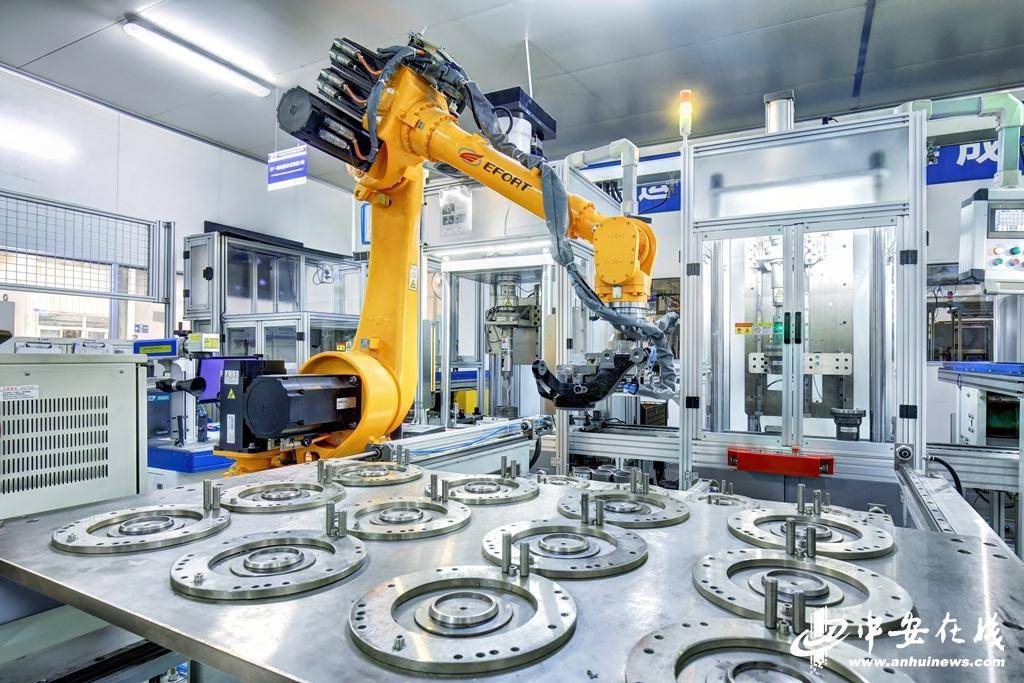
全面注册制

Search documents
一签赚近30万!沐曦股份刷新A股纪录,成全面注册制以来最赚钱新股
Ge Long Hui A P P· 2025-12-17 02:38
Group 1 - The core viewpoint is that Muxi Co., Ltd., known as the "second domestic GPU stock," successfully listed on the STAR Market, opening with a 568% increase to 700 yuan, resulting in a total market capitalization of 280 billion yuan [1] - The issuance price for Muxi Co., Ltd. was set at 104.66 yuan per share, indicating a potential maximum profit of 297,700 yuan for investors who subscribed to one lot, surpassing the recently listed Moer Thread and becoming the most profitable new stock since the full registration system was implemented in A-shares [1]
别被“上市陪跑”割韭菜:我们不画饼,只帮你把IPO的坑填平(附7步落地清单)
Sou Hu Cai Jing· 2025-11-30 05:24
Core Insights - The article emphasizes the importance of having a solid technical foundation and a stable team for companies aiming for an IPO, especially under the new registration system [3][9][32] - It highlights the pitfalls of relying on superficial plans and the necessity of actionable strategies to navigate the IPO process successfully [27][30] Group 1: Technical Foundation - Companies must ensure their technology has a sustainable competitive advantage that cannot be easily replicated by competitors [4][5] - Original patents are crucial; companies should focus on deep, innovative technologies rather than superficial improvements [6][7] - The emphasis is on aligning technology with market needs and ensuring adequate R&D investment to support ongoing innovation [6][12] Group 2: Team Stability - A strong and stable team is essential; companies should implement measures to retain key personnel and ensure knowledge is not lost [10][11] - Core team members should have equity stakes to foster a sense of ownership and commitment to the company's success [10][11] - Companies should proactively plan for future talent needs to avoid disruptions during critical growth phases [10][11] Group 3: Customer Stability - Customer diversification is vital; companies should avoid over-reliance on a few large clients to mitigate risks [18][19] - High customer retention rates are necessary; companies should focus on enhancing customer relationships and providing value-added services [19][20] Group 4: Financial Planning - Companies should accurately assess their funding needs to avoid over-dilution of equity while ensuring sufficient capital for growth [20][22] - A clear understanding of financial projections and the underlying assumptions is critical for gaining investor confidence [15][16] Group 5: Execution and Accountability - The article stresses the importance of actionable plans over theoretical frameworks; companies should focus on specific, measurable actions to achieve their goals [27][30] - Continuous monitoring and accountability are necessary to ensure that plans are executed effectively and adjustments are made as needed [27][30] Group 6: Long-term Perspective - The article concludes that IPOs should be viewed as a new beginning rather than a quick financial gain; companies should prioritize sustainable growth over short-term revenue boosts [32][33]

“515问问投资人”系列活动走进东莞城市学院:探索“校企协同”投教,构建金融素养提升生态
2 1 Shi Ji Jing Ji Bao Dao· 2025-11-19 09:25
Core Viewpoint - The event "515 Ask Investors" focuses on enhancing financial literacy and investor protection among students, aligning with China's comprehensive registration system reform and the need for rational decision-making in capital markets [3][4]. Group 1: Event Overview - The event was held at Dongguan City College, attracting over 100 students, and aimed to improve their understanding of financial products and investment concepts [3]. - It was organized by Southern Finance Media Group, 21st Century Business Herald, China Merchants Fund, and Dongguan Securities, with support from the college [3][4]. - The initiative is part of a broader "National Financial Literacy Improvement Plan" guided by the Guangdong-Hong Kong-Macao Greater Bay Area Development Plan [4]. Group 2: Educational Focus - The event featured expert discussions and interactive Q&A sessions to bridge the gap between theory and practice in financial education [4][5]. - Topics included macroeconomic analysis, investment strategies, and the impact of macro indicators on the stock market, aimed at helping students develop a rational investment mindset [6][7]. - The event emphasized the importance of risk awareness and self-responsibility in investment decisions [6]. Group 3: Institutional Collaboration - The collaboration between Southern Finance Media Group and financial institutions aims to create a sustainable ecosystem for enhancing financial literacy [7]. - Future initiatives will include course development, internships, and community outreach to further promote financial education [7].
深交所发行上市审核问答汇总(最新)
Sou Hu Cai Jing· 2025-10-30 06:07
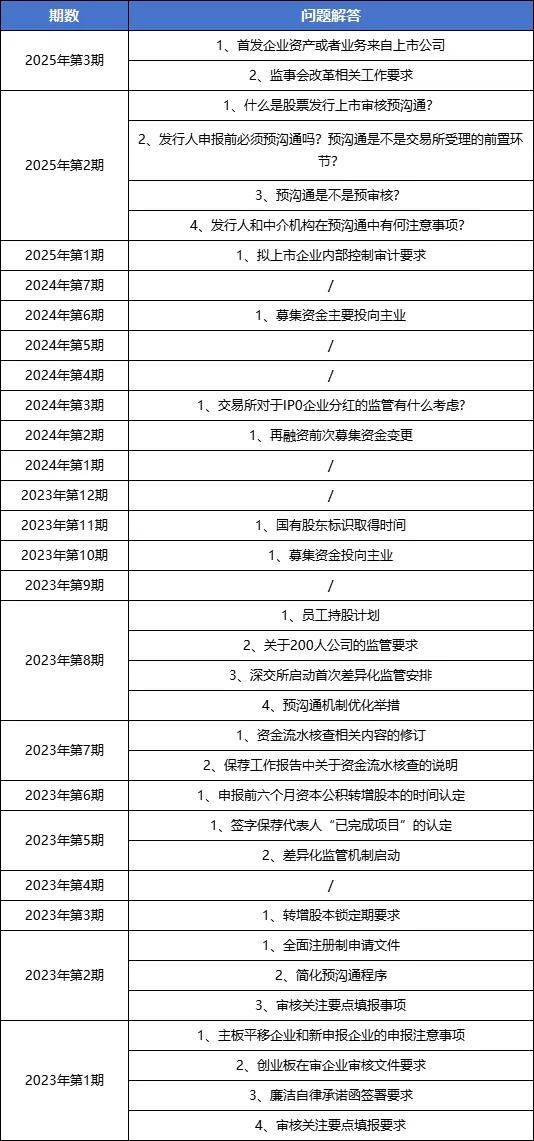
Core Points - The Shenzhen Stock Exchange has issued the 2025 3rd edition of the "Shenzhen Stock Exchange Issuance and Listing Review Dynamics," which has transitioned from the previous "ChiNext Registration System Issuance and Listing Review Dynamics" following the implementation of the comprehensive registration system in February 2023 [1] Group 1: Issuance and Listing Review Dynamics - The document has published 22 editions since 2023, addressing 29 common business issues [1] - Key issues addressed include the requirements for companies whose assets or business originate from listed companies and the reform requirements for supervisory boards [4][7] - The document emphasizes the importance of pre-communication before submitting IPO applications, clarifying that it is not a prerequisite for project acceptance [12][13] Group 2: Key Issues in Review - For companies with assets or business from listed companies, transactions must be legal and fair, ensuring no harm to the rights of listed companies and minority shareholders [5][6] - The supervisory board reform requires companies to adjust their internal supervisory structures by January 1, 2026, ensuring compliance with governance requirements [7][8] - The document outlines the necessity for companies to provide internal control audit reports when submitting their applications, enhancing the quality of internal control systems [17][18] Group 3: Fundraising and Investment - Companies must ensure that the funds raised are primarily directed towards their main business, with clear definitions of existing main businesses and the rationale for any new projects [19][27] - The document specifies that any fundraising projects involving new products must demonstrate a clear connection to existing business operations to avoid being classified as cross-industry investments [21][27] Group 4: Regulatory Compliance - The document highlights the need for companies to avoid "clearing-style" dividends before listing, with specific thresholds set for cumulative dividends relative to net profits [24] - Companies must disclose any changes in the use of previously raised funds, ensuring compliance with relevant regulations [25] Group 5: Pre-communication Mechanism - The pre-communication mechanism has been optimized to enhance transparency and efficiency, allowing for direct communication with the review center [32][40] - The document encourages companies to focus on significant issues during pre-communication to improve the quality of consultations [16][32]
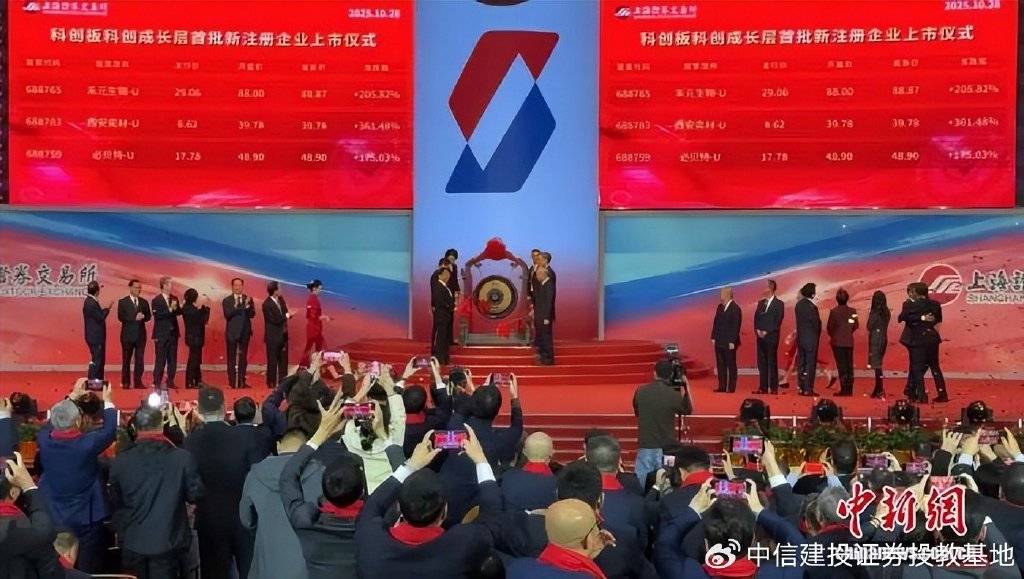
媒体视角 | 科创板科创成长层首批新注册企业上市
Sou Hu Cai Jing· 2025-10-29 01:05
Core Points - The first three newly registered companies in the Sci-Tech Innovation Board's growth tier were listed on October 28 at the Shanghai Stock Exchange [1][3] - These companies, Wuhan Heyuan Biotechnology Co., Ltd., Xi'an Yisiwei Material Technology Co., Ltd., and Guangzhou Bibete Pharmaceutical Co., Ltd., are all in the unprofitable stage and have entered the growth tier of the Sci-Tech Innovation Board [3][5] - The growth tier is designed for technology companies with significant breakthroughs, broad commercial prospects, and substantial ongoing R&D investments [3] Industry Developments - The China Securities Regulatory Commission (CSRC) has introduced significant policy measures, including the "Eight Articles for the Sci-Tech Innovation Board" and "Six Articles for Mergers and Acquisitions," to support the growth of the Sci-Tech Innovation Board [5] - The implementation of the "1+6" reform in June has progressed smoothly, establishing the growth tier and introducing pilot programs for professional institutional investors and pre-review systems [5] - The Sci-Tech Innovation Board has become the preferred venue for domestic "hard technology" companies, supporting the listing of 592 companies in high-tech and strategic emerging industries, with a total market capitalization exceeding 9 trillion yuan [6]
只差临门一脚!沪指冲刺4000点,你的账户跑赢指数了吗?ETF助力把握大行情!
Sou Hu Cai Jing· 2025-10-28 02:23
Market Overview - The A-share market experienced a strong upward trend, with the Shanghai Composite Index approaching 4000 points, closing up 1.18%, marking a 10-year high [1] - The recent strength in the index is attributed to favorable macro policies announced on October 23, which are expected to provide clearer market direction and facilitate a rally [1][3] External Factors - Short-term external risks have eased, boosting market risk appetite. Recent economic discussions between China and the U.S. in Malaysia resulted in constructive exchanges on key trade issues, including maritime logistics and tariff suspensions [3] Market Dynamics - Despite the index reaching a new high, nearly 70% of individual stocks underperformed the Shanghai Composite Index, leading to investor concerns about the disparity between index performance and individual stock gains [4] - The market is characterized by a structural trend where quality stocks are favored, resulting in a more concentrated performance rather than a broad market rally [4][6] Investment Strategies - Given the challenges for individual investors to outperform the index, especially for newcomers lacking experience, investing in index ETFs is recommended as a more effective strategy [6][7] - ETFs provide lower investment thresholds, high liquidity, and the ability to trade throughout the day, enhancing capital efficiency [7] Notable ETFs - The ChiNext 50 Index ETF (588870) has shown a cumulative increase of 50.08% year-to-date, outperforming 74% of its constituent stocks, with a low fee rate of 0.15% [8] - The MSCI China A50 ETF (560050) has achieved a year-to-date increase of 25.5%, outperforming 76% of its constituent stocks, providing a solution for investors looking to access leading Chinese assets [9] - The CSI A500 Index ETF (563880) has recorded a year-to-date increase of 22.78%, outperforming 60% of its constituent stocks, while maintaining a lower volatility compared to 94% of its peers [11] Sector Performance - Key sectors such as cloud computing, semiconductor, and battery industries are highlighted as areas of potential growth, driven by technological advancements and market trends [11][12][13] - The Cloud Computing ETF (159273) has outperformed 92% of its constituent stocks, while the Semiconductor ETF (588750) has shown a 66.5% increase, outperforming 74% of its peers [12][13]
“515问问投资人”系列活动之走进暨南大学
2 1 Shi Ji Jing Ji Bao Dao· 2025-10-25 13:24
Core Viewpoint - The event "515 Q&A for Investors" aims to enhance financial literacy and investor protection among students, aligning with China's comprehensive registration system reform and the goal of integrating investor education into the national education system [2][4][6]. Group 1: Event Overview - The event was held at Jinan University, attracting over 120 students from the Economics School, featuring theme sharing and interactive Q&A sessions to strengthen anti-fraud awareness and rational investment concepts [2][4]. - The initiative is part of a broader "National Financial Literacy Improvement Plan" guided by the "Guangdong-Hong Kong-Macao Greater Bay Area Development Plan," with previous events held at multiple universities, engaging over 6,000 students [4][6]. Group 2: Key Speakers and Topics - Keynote speakers included industry representatives from Southern Finance Media Group,招商基金, and东莞证券, who provided insights into market trends and investment strategies [6][7]. - The first presentation by招商基金's邓和权 focused on fund investment logic in the new economic cycle, emphasizing three core characteristics and the importance of rational investment [7]. - The second presentation by东莞证券's曾浩 discussed macroeconomic analysis frameworks and key economic indicators, highlighting the significance of GDP data and potential risks in the global market [9]. Group 3: Future Initiatives - Southern Finance Media Group plans to continue collaborating with financial institutions and universities to develop courses, internships, and community outreach programs, aiming to create a sustainable ecosystem for enhancing financial literacy [9].

A股:券商股不涨的原因找到了,股民可能还没有想到!
Sou Hu Cai Jing· 2025-10-19 13:09
Group 1 - The core viewpoint is that despite a bullish market sentiment, brokerage stocks have not performed well, leading to questions about their lagging performance compared to other financial sectors like banks and insurance [1][6]. - Dongwu Securities' third-quarter earnings forecast indicates a profit of 2.748 billion to 3.023 billion yuan, with a significant portion already earned in the first half, suggesting only 810 million to 990 million yuan in the third quarter, which is a stagnation compared to the second quarter's 952 million yuan [3][5]. - The year-on-year profit growth of 25% to 50% compared to last year's 666 million yuan appears decent, but it pales in comparison to the substantial growth seen in the first half of the year, indicating a lack of momentum [5][6]. Group 2 - The brokerage sector is not entirely stagnant, but its growth has not kept pace with major indices, leading to a perception of underperformance [6][8]. - The market's outdated view of brokerages as merely dependent on market conditions is shifting, with upcoming reforms and increased demand for wealth management providing new growth opportunities [6][8]. - Brokerages that have strong compliance, innovation capabilities, and early wealth management strategies are evolving from traditional service providers to comprehensive financial service firms, positioning themselves as key players in the capital market [8].
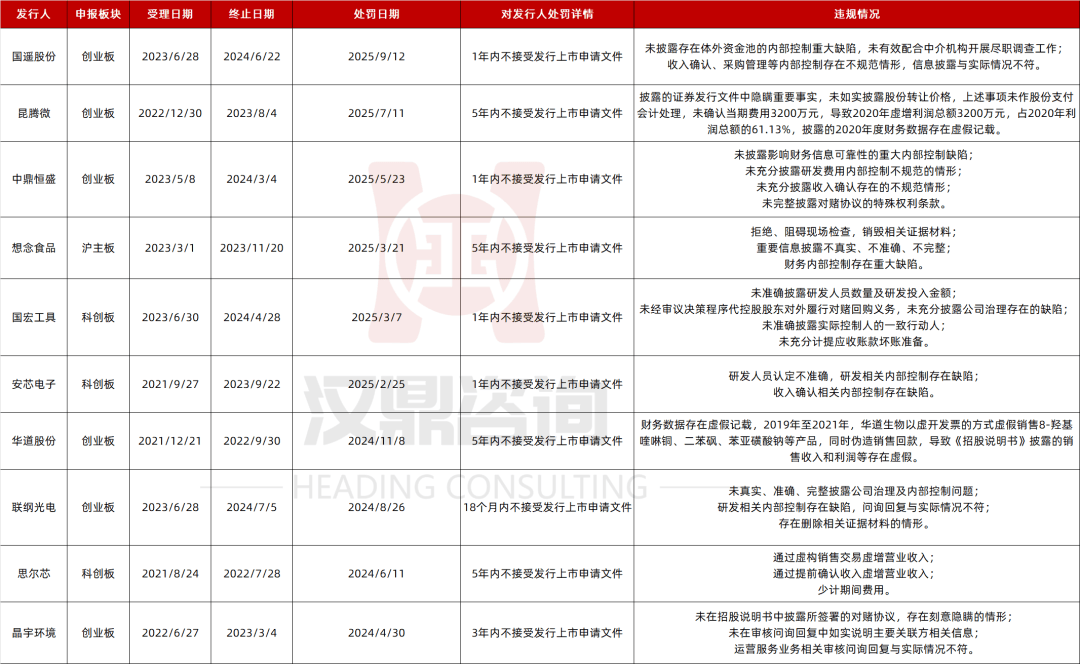
1-5年内不接受IPO申报!全面注册制以来10家企业被“资格罚”,存在哪些典型违规事项?
Sou Hu Cai Jing· 2025-10-15 07:25
Core Viewpoint - Since the implementation of the comprehensive registration system, 10 IPO applications have been penalized with disqualifications ranging from 1 to 5 years due to violations during the review process, primarily involving false financial data and internal control issues [1][2] Group 1: Regulatory Environment - The current regulatory environment in the A-share market emphasizes strict supervision and enforcement, particularly under the leadership of the current chairman of the China Securities Regulatory Commission (CSRC), Wu Qing [1] - The CSRC has intensified its enforcement efforts in key areas such as issuance and listing, information disclosure, mergers and acquisitions, and delisting, focusing on fraudulent issuance and financial fraud [1][2] Group 2: Violations and Penalties - A total of 10 companies have received disqualifications for their IPO applications due to various violations, including false financial records and issues related to internal controls and R&D personnel recognition [1][2] - Specific cases include: - **Sierxin**: Received a 5-year disqualification for fabricating significant false content in its securities issuance documents, inflating revenue by 1,536.72 million yuan, which accounted for 11.55% of its total revenue for the year [5][6] - **Huadao**: Also received a 5-year disqualification for falsifying sales through fake invoices, inflating sales revenue by 25.6 million yuan in 2019, which was 10.87% of the reported sales for that year [10][11] - **Kuntengwei**: Received a 5-year disqualification for failing to disclose important facts regarding share transfer prices, leading to a profit inflation of 3,200 million yuan, which was 61.13% of its total profit for 2020 [14] Group 3: Specific Violations - Violations related to financial data falsification and internal control issues have been identified in 7 of the penalized companies, with significant penalties imposed [4] - Companies like **Xiangnian Food** faced severe penalties for obstructing on-site inspections and destroying evidence, resulting in a 5-year disqualification [21][23] - **LianGang Optoelectronics** and **Guohong Tools** faced penalties for issues related to R&D personnel recognition and internal control deficiencies, with LianGang receiving an 18-month disqualification [15][19]
中安观察|增速196%!安徽再融资“杀疯了”
Sou Hu Cai Jing· 2025-09-25 03:06
Core Viewpoint - The article highlights the significant growth of refinancing activities among listed companies in Anhui province, with a notable increase in scale and speed, driven by supportive policies and professional services [1][2][10]. Group 1: Policy Guidance - The Anhui provincial government initiated the "Welcoming Pine Action Plan" in 2022 to expand the refinancing scale of listed companies, utilizing various financing tools for mergers and acquisitions [2]. - As of August 2023, Anhui has 186 listed companies, ranking 7th nationally, reflecting the effectiveness of policy support in enhancing market participation [2]. Group 2: Service Empowerment - The Anhui Provincial Financial Management Bureau has implemented a comprehensive service mechanism to address the needs of listed companies, facilitating smoother refinancing processes [4]. - Securities firms have evolved from mere intermediaries to providing tailored refinancing solutions based on the specific needs of companies, enhancing their operational capabilities [5]. Group 3: Corporate Strategy - Refinancing is viewed as a strategic tool for companies to achieve upgrades rather than just a means to raise funds, exemplified by Anhui Fulede's record-breaking 73.3 billion yuan refinancing for a major acquisition [7]. - Companies like Wuhu Berteli are leveraging refinancing to expand production capacity and enhance R&D capabilities in response to industry transformations [7][8]. Group 4: Ecological Resonance - The explosive growth in Anhui's refinancing activities is attributed to the alignment of policy incentives with corporate needs, alongside broader capital market reforms and regional development strategies [10][11]. - The establishment of collaborative platforms, such as "Hui Keting," aims to connect Anhui enterprises with resources in major financial hubs, fostering a supportive ecosystem for innovation and growth [12].