制造业升级

Search documents
欧科亿:收监管工作函,董秘韩红涛年薪62万前日拟千万增持且不设价格区间
2 1 Shi Ji Jing Ji Bao Dao· 2026-01-21 02:55
Core Viewpoint - The company, 欧科亿, is actively engaging in share buyback plans and has released a positive earnings forecast for 2025, indicating strong growth driven by market demand and operational efficiency [1][2]. Group 1: Regulatory and Management Actions - On January 20, 2026, the company received a regulatory work letter concerning various matters involving the company, its controlling shareholders, and senior management [1]. - The company's Vice President and Board Secretary, 韩红涛, announced a share buyback plan on January 19, 2026, intending to purchase shares worth between 10 million to 20 million yuan within six months, without a set price range [1]. - 韩红涛's current shareholding is 617,163 shares, and his salary for 2024 was reported at 624,000 yuan [1]. Group 2: Financial Performance and Projections - The company forecasts a net profit attributable to shareholders for 2025 between 96 million to 110 million yuan, representing an increase of 38.7 million to 52.7 million yuan compared to the previous year's profit of 57.3 million yuan, which translates to a year-on-year growth of 67.53% to 91.96% [2]. - The expected net profit, excluding non-recurring gains and losses, is projected to be between 62 million to 75 million yuan, indicating a significant year-on-year increase of 135.83% to 185.28% [2]. - The growth in earnings is primarily attributed to the rising demand for CNC tools driven by manufacturing upgrades, price increases due to raw material costs, and higher-than-expected capacity utilization and project releases [2].

深度访谈邀请函:问道高端制造业,对话在场企业家
Sou Hu Cai Jing· 2026-01-20 10:47
Core Insights - Emerging technologies are increasingly integrated into manufacturing processes, moving from theoretical concepts to practical applications in design, processing, testing, assembly, and management [2] - The "DeepTalk" initiative aims to systematically document and analyze the experiences of entrepreneurs driving manufacturing upgrades, capturing their decision-making processes and practical paths [2] Group 1: Purpose of the Initiative - Manufacturing upgrades consist of numerous specific challenges, such as transforming AI from demonstration projects into stable production tools, which can only be addressed by those directly involved [3] - There is a lack of serious discussion around the slow, complex, and long-term breakthroughs in manufacturing, as public attention often focuses on business model innovations and trending opportunities [3] Group 2: Target Participants - The initiative seeks to engage individuals who provide value to the supply chain through technologies or products that enhance efficiency or facilitate transformation in other manufacturing enterprises [4] - Participants with practical experience in green manufacturing, particularly in energy efficiency and sustainable production, are also encouraged to join [5] Group 3: Benefits of Participation - Participants will engage in deep discussions with the research and content teams of DeepTech, resulting in comprehensive written content and high-quality podcast episodes that accurately present complex issues [6] - The initiative offers a platform for participants to connect with a professional community that understands the complexities and long-term nature of manufacturing, including industry practitioners, engineers, researchers, investors, and policy analysts [6] Group 4: Key Discussion Topics - The initiative will explore whether new materials and processes can be effectively implemented in existing production lines and the timeline for seeing returns on investments in cutting-edge technologies [7] - It will also address the challenges of achieving high precision and consistency, determining whether these issues stem from equipment, software, or organizational methods [7] Group 5: Networking and Knowledge Sharing - Participants will have the opportunity to join a continuous research and innovation network, collaborating with entrepreneurs and researchers focused on AI, robotics, and manufacturing upgrades [8] - The initiative aims to document experiences and insights from discussions, culminating in the publication of an "Intelligent Manufacturing Deep Technology Transformation White Paper" to serve as an industry reference [8] Group 6: Participation Process - The initiative accepts applications year-round without a deadline, encouraging those with significant contributions to manufacturing to share their stories [9] - Interested parties can apply by providing project details and contact information, followed by a preliminary communication and potential formal interview [10]


2026答案秀·思想者春晚| 姚洋:十五五规划中,为什么要把这两项放在首要位置?
Xin Lang Cai Jing· 2026-01-20 04:32
Core Viewpoint - The "14th Five-Year Plan" has re-emerged as a central document for defining China's economic direction, emphasizing manufacturing upgrades and technological innovation as key supports for high-quality development [1][2]. Group 1: Manufacturing Investment - The first priority of the "15th Five-Year Plan" is to continue investing in manufacturing to create a more complete industrial system [2][4]. - Manufacturing's contribution to GDP is currently around 25%, with employment in manufacturing accounting for approximately 15%-17% of total non-agricultural employment, both of which are expected to decline [4]. - Investment in manufacturing will focus on improving efficiency and addressing shortcomings, particularly through the application of AI and automation [4]. Group 2: Technological Innovation - The second priority is to invest in new productive forces, emphasizing original innovation and technological self-reliance [2][5]. - China's R&D expenditure as a percentage of GDP has reached 2.7%, which is significantly higher than many comparable countries [5][7]. - Chinese R&D investment is approximately three times that of Japan and has reached about 50%-60% of the U.S. level in nominal terms, with purchasing power parity suggesting it could be as high as 70%-80% [7]. Group 3: Domestic Demand and Economic Stability - The "15th Five-Year Plan" acknowledges the need to address insufficient domestic demand, primarily due to declining real estate values and heavy local government debt [15][16]. - Central policies are being implemented to stabilize the real estate market and enhance local government spending, which together account for about 50% of total demand [16]. - Increasing social security, particularly in rural areas, is seen as crucial for boosting domestic demand, as lower-income individuals tend to have a higher marginal propensity to consume [16].
A股稳守4100点与港股回调:2026年初结构性分化行情下的市场逻辑
Sou Hu Cai Jing· 2026-01-19 10:09
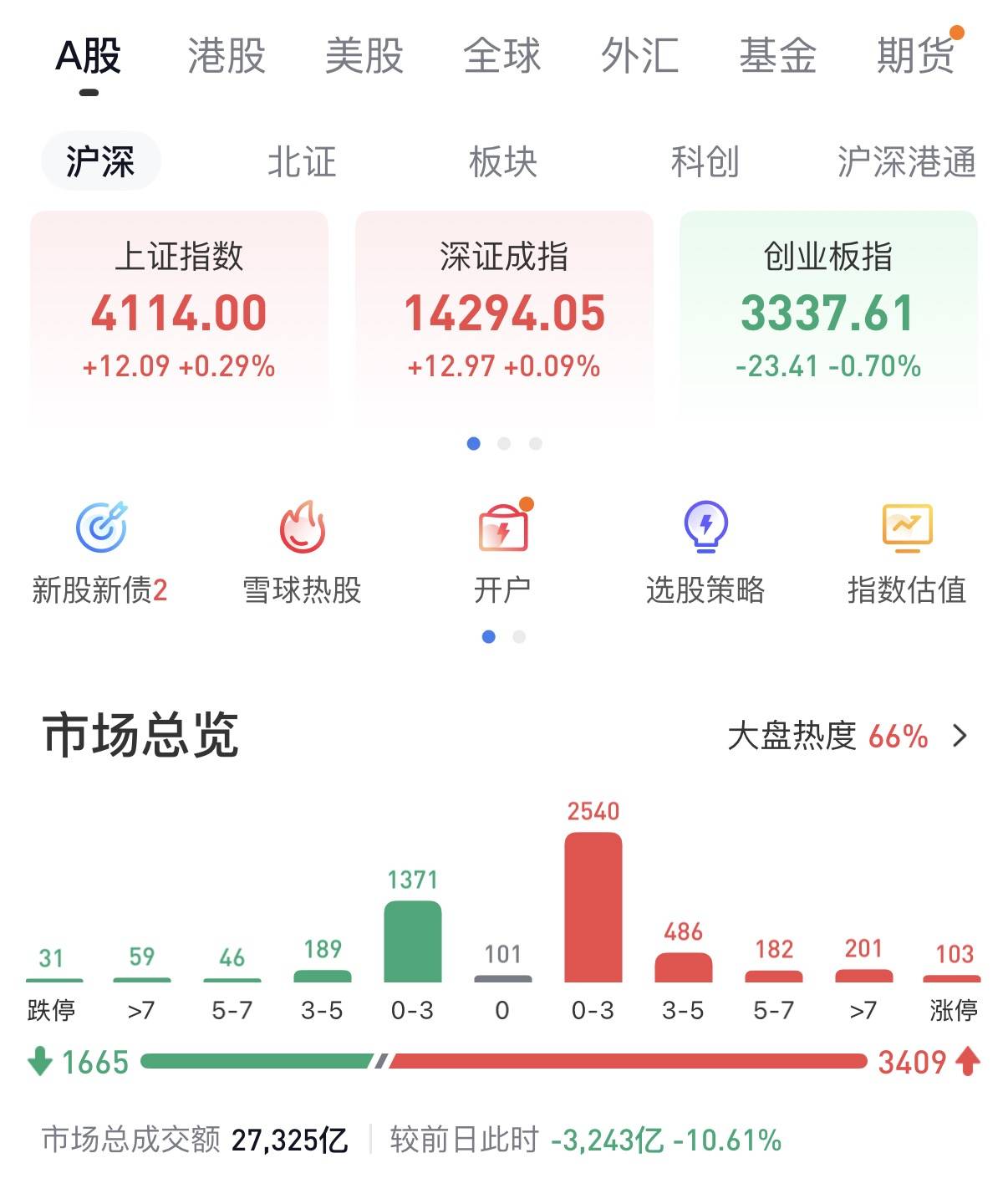
Core Viewpoint - The Chinese capital markets are exhibiting divergent trends, with A-shares showing resilience while Hong Kong stocks are under pressure, reflecting significant changes in capital flows and market sentiment at the start of 2026 [3][4]. A-Share Market Performance - The A-share market demonstrated a mixed performance with the Shanghai Composite Index rising by 0.29% to close at 4114.00 points, while the Shenzhen Component Index increased by 0.09% and the ChiNext Index fell by 0.70% [3]. - Over 3500 stocks in the A-share market rose, indicating a positive earning effect despite a significant decrease in trading volume to 2.71 trillion yuan, suggesting cautious entry of new funds [4]. - The electric grid equipment sector showed strong performance due to a projected investment of 4 trillion yuan during the 14th Five-Year Plan, a 40% increase from the previous plan, providing robust support for the entire industry chain [4][5]. Sectoral Analysis - The commercial aerospace sector is gaining momentum as several companies initiate IPO processes, indicating a shift towards capitalized and scaled development [5]. - The robotics sector is closely linked to the global AI wave and domestic manufacturing upgrades, while the tourism and hotel sectors are benefiting from anticipated consumer recovery during the Spring Festival [5]. - Conversely, previously popular themes, particularly AI applications, are experiencing a significant decline due to regulatory warnings against excessive speculation, leading to a market shift towards performance-driven and value investments [5][6]. Hong Kong Market Dynamics - The Hong Kong market is facing greater pressure, with the Hang Seng Index dropping by over 1%, primarily due to weak performances in major technology and financial stocks [6][7]. - The decline in technology stocks may be attributed to global valuation adjustments and investor reassessment of growth prospects for major internet companies, while financial stocks are under pressure due to concerns about macroeconomic recovery and interest rate environments [6][7]. - Despite the downturn, some sectors like aviation stocks are performing well, with China Eastern Airlines seeing a price increase of over 9% due to optimistic expectations regarding supply-demand dynamics in the aviation industry [6]. Market Outlook and Investment Strategy - Analysts suggest that the current market environment is characterized by a transition towards a "slow bull" market, with regulatory measures aimed at curbing excessive speculation and leveraging risks [8][9]. - The A-share market is expected to experience structural differentiation as it moves towards a phase where company performance and industry trends become the primary focus for investment selection [9]. - For the Hong Kong market, internal recovery momentum and external factors such as U.S. monetary policy and geopolitical risks will continue to influence its performance, with long-term investors finding value in its low valuation despite short-term pressures [9].
佳鑫国际20260118
2026-01-19 02:29
Summary of the Conference Call for Jiaxing International Resources Company Company Overview - Jiaxing International Resources Company is a Chinese tungsten mining enterprise listed on both the Hong Kong Stock Exchange and the Astana Exchange in Kazakhstan. The company benefits from the "Belt and Road" initiative and has significant investments in the Bakuta Tungsten Mine project, which is expected to commence commercial production in April 2025 [2][5]. Industry Insights - Tungsten is classified as a strategic metal, with global resources being scarce. Although China's tungsten reserves are declining, its production remains high, leading to supply pressures. The demand for tungsten is expected to grow due to emerging industries and infrastructure projects, driven by geopolitical conflicts that increase overseas demand [2][6][7]. Key Points from the Conference Call Bakuta Tungsten Mine Project - The Bakuta Tungsten Mine has a JORC-compliant resource of 107.5 million tons, with an average tungsten trioxide grade of 0.2%, translating to 230,000 tons of tungsten trioxide resources. The project has a planned processing capacity of 3.3 million tons and 4.95 million tons per year for its first and second phases, respectively [2][3]. - The mine's mining rights are valid until 2040, allowing for a mining depth of 300 meters [4]. Production Capacity and Growth - The company anticipates that by the first quarter of 2027, it will achieve a production capacity of over 10,000 tons annually. The processing capacity is expected to increase to 4.95 million tons per year by 2026 [2][8]. - The compound annual growth rate (CAGR) for China's hard alloy and tungsten material consumption over the past five years has been 6.5% and 5.8%, respectively [3][9]. Market Demand and Supply Dynamics - The global tungsten supply-demand gap is projected to be between 10,000 to 20,000 metal tons, accounting for approximately 18% to 20% of the market. As of November last year, inventories of APT producers and carbide producers in China had decreased by 61% and 17%, respectively, indicating a tight supply situation [3][14]. - The overseas consumption of tungsten is expected to grow at a CAGR of 2.9% from 2023 to 2028, driven by increased military spending and large infrastructure projects [11][13]. Financial Projections - Jiaxing International's revenue is projected to reach RMB 1 billion, RMB 2.3 billion, and RMB 4.5 billion in 2025, 2026, and 2027, respectively, with corresponding growth rates of 221% and 38%. The expected tungsten concentrate production is forecasted to increase from 5,292 tons in 2025 to over 11,000 tons by 2027 [17]. - The average price of tungsten concentrate is expected to stabilize around RMB 450,000 per ton by 2026, with a decrease in production costs from RMB 136,000 to RMB 98,500 per ton [17]. Competitive Advantages - The Bakuta Tungsten Mine project has several competitive advantages, including rich resources, low costs, and favorable geographical location, benefiting from the "Belt and Road" initiative. The project is positioned to become a leading player in the Central Asian mining sector [15][16]. Pricing and Valuation - The initial coverage pricing for Jiaxing International is set at HKD 95, with a target valuation of RMB 38.9 billion or HKD 43.3 billion, based on a PE ratio of 22.6 times. The valuation considers comparable companies and a DCF analysis [18]. Market Price Trends - The market is closely monitoring future price trends, with expectations of a sustained bull market in prices due to supply constraints and increased demand from emerging industries and geopolitical tensions [19][20]. This summary encapsulates the key insights and projections discussed during the conference call, highlighting the strategic positioning of Jiaxing International Resources Company within the tungsten industry and its growth potential.
制造业升级推动数控刀具需求攀升 欧科亿2025年净利预增67.53%—91.96%
Zheng Quan Shi Bao Wang· 2026-01-18 12:29
Core Viewpoint - The company, Okoyi (688308), anticipates significant growth in its 2025 annual performance, projecting a net profit attributable to shareholders between 96 million to 110 million yuan, representing a year-on-year increase of 67.53% to 91.96% [1] Group 1: Financial Performance - The expected net profit for 2025 is between 96 million to 110 million yuan, with a year-on-year growth of 67.53% to 91.96% [1] - The projected net profit after deducting non-recurring items is estimated to be between 62 million to 75 million yuan, indicating a year-on-year increase of 135.83% to 185.28% [1] Group 2: Market Demand and Product Performance - The growth in 2025 is attributed to the accelerated transformation and upgrading of the manufacturing industry, leading to increased demand for CNC tools as essential precision processing tools [2] - The prices of key raw materials for hard alloy tools, such as tungsten carbide and cobalt powder, have risen significantly, allowing the company to increase product prices and achieve a rise in both volume and price [2] - In Q3 2025, the company reported CNC tool product revenue of 243 million yuan, with a sales volume of 29.8 million pieces, reflecting a 53% quarter-on-quarter increase and an average price increase of 15% [3] Group 3: Strategic Initiatives and Future Outlook - The company has laid out plans for new markets, including robotics and aerospace, indicating a shift towards high-demand sectors [4] - The CNC tool market is expected to present opportunities driven by the continuous upgrade of high-end manufacturing and the growing demand for smart manufacturing [4] - The company has developed capabilities for producing ultra-fine nano hard alloy materials and is expanding its production capacity for PCB drill rod materials [4] - The company has made significant advancements in producing tools for robotic components and has validated its products for use in high-precision applications [5] - In the aerospace sector, the company is focusing on high-temperature alloys and titanium alloys, developing specialized tools to meet the increasing demands for material quality and precision [5]
美国“电荒”,中国“电卷”
创业邦· 2026-01-18 03:48
Core Viewpoint - The article contrasts the electricity pricing dynamics in the United States and China, highlighting the stark differences in how each country manages electricity supply and demand, leading to divergent pricing trends. Group 1: U.S. Electricity Market Dynamics - In the U.S., electricity shortages manifest through immediate price increases, reflecting a brutal pricing mechanism that signals supply constraints to consumers [10][12]. - The average electricity price in the U.S. has been rising over the past two years, driven by necessary infrastructure upgrades and capital expenditures [11]. - The pricing mechanism in the U.S. is designed to encourage investment in power generation and to prompt consumers to reduce usage during shortages [10][12]. Group 2: Chinese Electricity Market Dynamics - In contrast, China's electricity prices are experiencing a downward trend, with a reported 10% year-on-year decrease in purchasing prices as of early 2025 [6]. - The Chinese electricity market is characterized by a "passive clearing" process, where supply outpaces demand, leading to lower prices despite increasing electricity consumption from data centers and manufacturing [15][18]. - The integration of renewable energy sources in China has not raised costs as seen in Europe; instead, it has driven prices down due to near-zero marginal costs [16]. Group 3: Implications of Pricing Mechanisms - The U.S. model places the burden of rising costs on end-users, resulting in visible public discontent and protests against high electricity bills [20]. - Conversely, in China, the costs are absorbed by the supply side, with power generation companies and equipment manufacturers facing pressure to maintain low prices, leading to reduced profitability [21][22]. - The article suggests that the different approaches to electricity pricing reflect broader economic strategies, with the U.S. focusing on market-driven solutions and China prioritizing stability and accessibility [22].
工业机器人净出口国带来的启示 | 每周经济观察
Xin Lang Cai Jing· 2026-01-17 11:32
Core Insights - China's industrial robot exports surpassed imports for the first time in 2025, with a year-on-year growth of 48.7%, marking the country as a net exporter of industrial robots [1] - This shift signifies a substantial change in China's manufacturing competitiveness and its ascent in the global value chain, moving from being the largest consumer to a net exporter [1][2] - The rise of China's industrial robot industry is attributed to a comprehensive optimization of the manufacturing ecosystem rather than a single technological breakthrough [2] Group 1 - The industrial robot sector is recognized as a key indicator of China's manufacturing strength and global competitiveness, reflecting advancements in technology, branding, and supply chain management [1][3] - China's complete and self-controlled supply chain allows for the provision of standardized products and tailored smart manufacturing solutions, enhancing its export capabilities [2] - The diverse application scenarios within China contribute to the rapid technological iteration of industrial robots, making them more appealing in international markets [2] Group 2 - The rapid development of China's industrial robot industry is a result of collaborative innovation across the industry chain, achieving a balance between performance enhancement and cost control [3] - The emergence of China as a net exporter of industrial robots is a reflection of the foreign trade sector's efforts to cultivate new competitive advantages [3][4] - The global trade environment is becoming increasingly complex, necessitating a transformation in China's foreign trade strategy towards high-quality development and innovation [4]


工业机器人净出口国带来的启示:产业竞争力发生本质变化
Xin Lang Cai Jing· 2026-01-17 00:13
海关总署日前发布的数据显示,2025年我国工业机器人出口首次超过了进口,同比增长48.7%,成为工 业机器人的净出口国。 工业机器人被誉为"制造业皇冠上的明珠",具有广泛的产业带动效应。长期以来,日本、德国等国家凭 借多年的技术积累和品牌优势,处于全球工业机器人产业链的高端,是工业机器人的主要净出口国。 中国作为"世界工厂",一直以来都是全球工业机器人市场的最大"进口消化器"。如今,中国逆势而上, 从最大的工业机器人消费国转变为"净出口国",不仅反映出中国制造业整体实力的提升,更是对中国工 业机器人产业在技术、品牌以及产业链掌控能力上的认可,表明中国在工业机器人领域已达到世界领先 水平。 "净出口国"是常见的国际贸易术语,在我国对外贸易中出口超进口的商品不在少数,为何"工业机器人 净出口国"会引发如此关注?一个主要原因在于,它超越了普通商品贸易数据的统计学意义,成为中国 制造业向全球价值链上游攀升、产业竞争力发生本质变化的关键标志。 中国工业机器人产业的逆袭与崛起,并非来自单一的技术突破,而是制造业全生态系统优化升级的结 果。我们知道,一个成熟的工业机器人产品不仅涉及核心零部件研制、整机系统集成等环节,还与软 ...
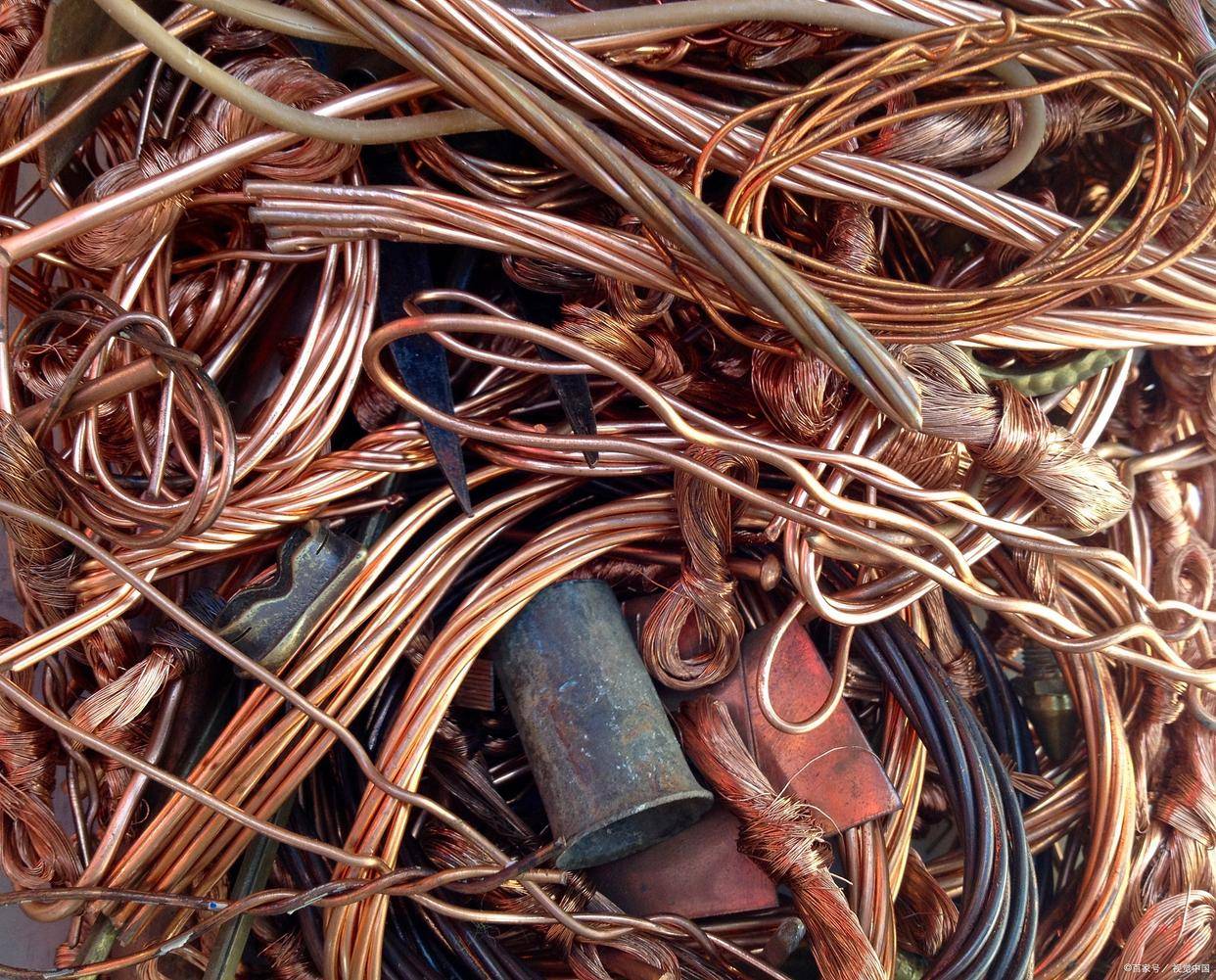
破碎黄铜、火烧线价格跟涨,长三角一体化下的废铜流动新机遇
Sou Hu Cai Jing· 2026-01-15 14:45
Group 1 - The recent surge in scrap copper prices is driven by multiple factors, including strong international copper prices and increased domestic demand from industries such as electric vehicles and electronics [1][3] - Scrap copper prices in various regions of China, such as Anhui, Jiangsu, Zhejiang, and Shanghai, have all risen significantly, indicating a collective upward trend rather than isolated incidents [1][3] - The price increases range from 1,500 to 2,400, reflecting a robust demand across the Yangtze River Delta region [1] Group 2 - Different regions exhibit unique market dynamics; for instance, Anhui has a strong manufacturing base but faces intense competition among recyclers, while Jiangsu benefits from stable demand but has strict environmental regulations affecting supply [3][5] - Zhejiang's flexible and responsive market allows for quick adjustments to international price fluctuations, while Shanghai's prices reflect overall market sentiment but have seen slower increases due to rising inventory pressures [5][7] - Companies should focus on gathering comprehensive market information across regions to identify price differences and trends, which can lead to profitable opportunities [7] Group 3 - Businesses need to assess their operational strategies based on their financial capabilities; those with strong capital can focus on stable markets like Anhui and Jiangsu, while those adept at quick turnover may find more opportunities in Zhejiang and Shanghai [7] - The current high price environment necessitates caution, as market conditions can change rapidly due to various external factors, emphasizing the importance of profit locking and maintaining healthy cash flow [7]