
技术自立自强

Search documents
中国如何面对美国突然的放松对华出口管控?
日经中文网· 2026-01-23 03:08
Core Viewpoint - The U.S. Department of Commerce has relaxed its export policy for NVIDIA's AI semiconductor "H200" to China, shifting from a ban to a licensing system, raising questions about China's previous "self-reliance" strategy under restrictions [2][4]. Group 1: U.S. Policy Changes - The U.S. has allowed the export of the H200 semiconductor, which has led to a rise in Chinese tech stocks, indicating market optimism about these companies accelerating their AI development [5]. - NVIDIA's CEO Jensen Huang noted strong demand from Chinese customers for the H200, highlighting the importance of this product for AI model training [4]. Group 2: China's Response and Strategy - China has not officially responded to the U.S. policy change but is reportedly developing import acceptance rules, including total procurement amounts [4]. - Experts suggest that China may be reluctant to approve imports of U.S. products, as the government aims to promote "self-reliance" in high-tech sectors and reduce dependency on American supply chains [6]. Group 3: Domestic Developments in China - China is making strides in achieving self-reliance in the AI supply chain, particularly in semiconductor technology, with ongoing efforts to develop domestic EUV lithography equipment [7]. - The stock market has reacted positively to the prospects of semiconductor self-sufficiency, with companies like SMIC and Hua Hong Semiconductor seeing significant stock price increases [7].



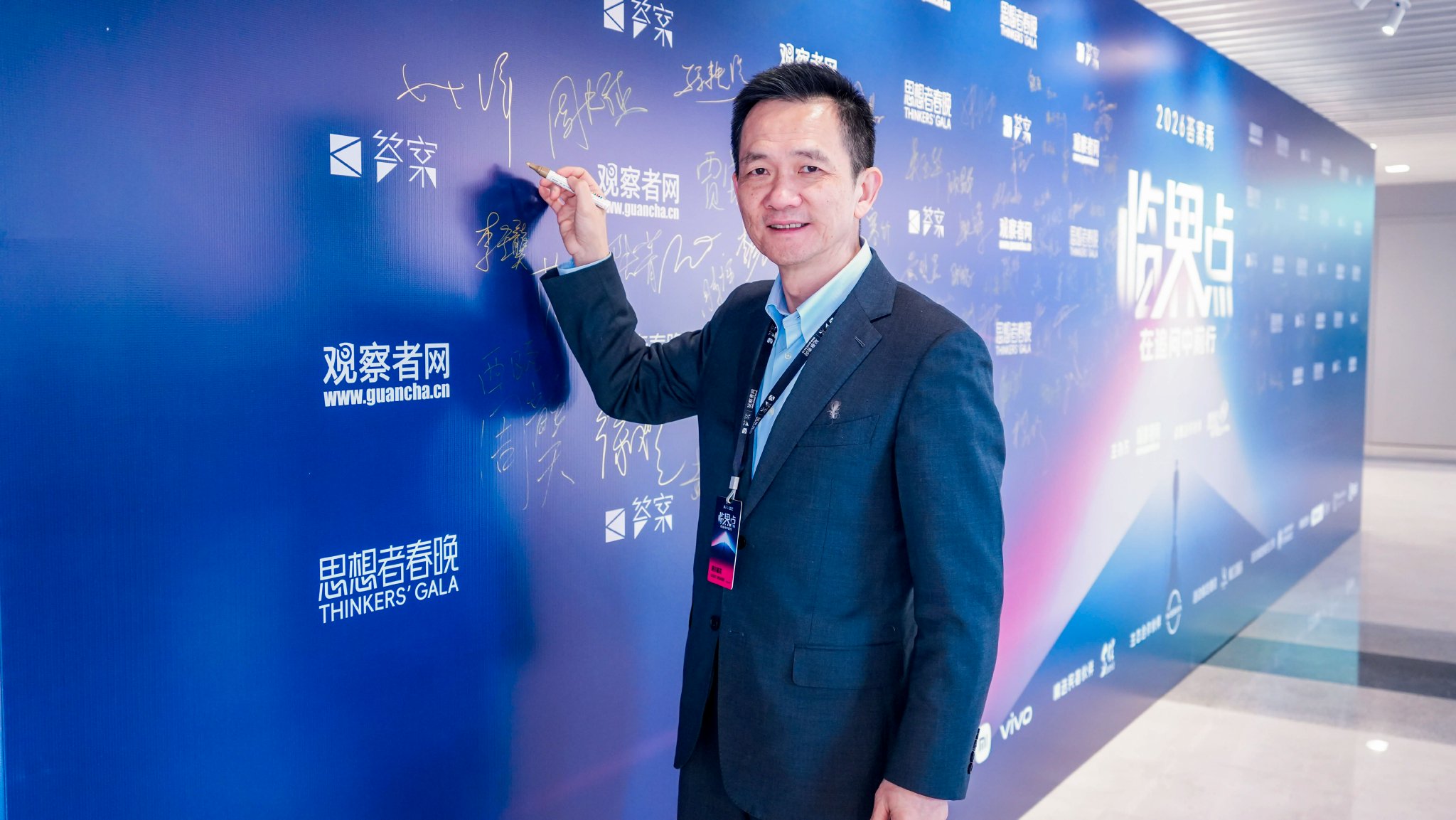
2026答案秀·思想者春晚| 姚洋:十五五规划中,为什么要把这两项放在首要位置?
Xin Lang Cai Jing· 2026-01-20 04:32
Core Viewpoint - The "14th Five-Year Plan" has re-emerged as a central document for defining China's economic direction, emphasizing manufacturing upgrades and technological innovation as key supports for high-quality development [1][2]. Group 1: Manufacturing Investment - The first priority of the "15th Five-Year Plan" is to continue investing in manufacturing to create a more complete industrial system [2][4]. - Manufacturing's contribution to GDP is currently around 25%, with employment in manufacturing accounting for approximately 15%-17% of total non-agricultural employment, both of which are expected to decline [4]. - Investment in manufacturing will focus on improving efficiency and addressing shortcomings, particularly through the application of AI and automation [4]. Group 2: Technological Innovation - The second priority is to invest in new productive forces, emphasizing original innovation and technological self-reliance [2][5]. - China's R&D expenditure as a percentage of GDP has reached 2.7%, which is significantly higher than many comparable countries [5][7]. - Chinese R&D investment is approximately three times that of Japan and has reached about 50%-60% of the U.S. level in nominal terms, with purchasing power parity suggesting it could be as high as 70%-80% [7]. Group 3: Domestic Demand and Economic Stability - The "15th Five-Year Plan" acknowledges the need to address insufficient domestic demand, primarily due to declining real estate values and heavy local government debt [15][16]. - Central policies are being implemented to stabilize the real estate market and enhance local government spending, which together account for about 50% of total demand [16]. - Increasing social security, particularly in rural areas, is seen as crucial for boosting domestic demand, as lower-income individuals tend to have a higher marginal propensity to consume [16].
解决思想问题和解决实际问题相结合(人民论坛)
Ren Min Ri Bao· 2026-01-07 00:37
Group 1 - The core idea emphasizes the importance of ideological transformation for driving enterprise development and transformation, as exemplified by Chuyuan Group's shift from a "polluting enterprise" to a "national carbon trading pilot enterprise" [1] - The article highlights the integration of new development concepts in Jiangsu province, aiming for all 13 cities to rank among the top 100 in the nation by 2025, showcasing a commitment to high-quality development [2] - The article discusses the significant advancements in China's electric vehicle industry, achieving global leadership in production and export, driven by a shift in mindset towards self-reliance and strong national brands [3] Group 2 - The article notes the strategic shift in Beijing and Tianjin towards high-precision industries, while Hebei focuses on upgrading its industrial capabilities, illustrating regional collaboration for mutual benefits [3] - It emphasizes the importance of adapting to local conditions to develop new productive forces, as seen in Inner Mongolia's transition from traditional resources to a comprehensive clean energy and computing industry [3] - The article concludes that the resilience and vitality of China's economy stem from the guiding principles of Xi Jinping's economic thought, which facilitates profound changes necessary for high-quality development [3]
【新思想引领新征程·非凡“十四五”】从跟跑到领跑 中国新能源汽车迈上新台阶
中汽协会数据· 2025-09-19 04:22
Core Insights - The development of new energy vehicles (NEVs) is essential for China to transition from a major automotive country to a strong automotive nation, as emphasized by General Secretary Xi Jinping [1] - During the 14th Five-Year Plan period, China's automotive industry has made significant innovations, achieving breakthroughs in NEV production and sales scale, core technologies, and industrial chain ecology, leading to China becoming the world's largest automotive exporter [1][3] Industry Developments - China's latest NEV battery technology allows for charging in five minutes with a range exceeding 500 kilometers, with the global market share of Chinese power batteries increasing from over 40% in 2021 to around 70% [3] - The 14th Five-Year Plan identifies NEVs as a strategic emerging industry, aiming to break through key technologies such as high-safety power batteries and efficient drive motors by 2025 [3] - Over the past five years, the charging efficiency of power batteries has improved by more than four times, with the domestic production rate of complete vehicles exceeding 95% [3] Policy Support and Investment - The Chinese government has introduced over 70 industrial policy measures and more than 100 national and industry standards to support the NEV sector during the 14th Five-Year Plan [5] - Local governments have established special funds exceeding 200 billion yuan for NEV industry development, and initiatives have been launched to enhance charging infrastructure and promote NEVs in rural areas [5] Market Performance - NEV sales in China reached 3.521 million units in 2021, with an average annual growth rate exceeding 50%, projected to surpass 12 million units by 2024 [7] - The market penetration rate of NEVs reached 45.5% in the first eight months of the current year, up from just 5.4% in 2020 [7] - The NEV sector has become a significant economic pillar, contributing approximately 10% to the national GDP [7] Future Directions - China aims to accelerate breakthroughs in smart connected NEV technologies and promote integration with energy, transportation, and information communication sectors [9]
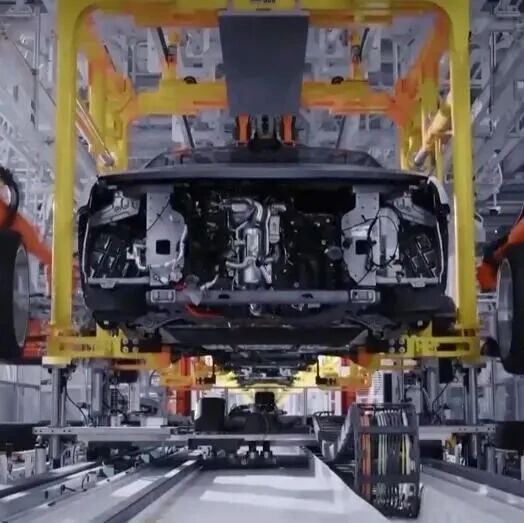
人民日报海外版聚焦中国一汽:累计突破关键核心技术1559项
Ren Min Wang· 2025-08-05 01:17
Core Viewpoint - China FAW Group has made significant advancements in automotive technology, achieving breakthroughs in 1559 key core technologies and obtaining 12728 patents over the past five years, emphasizing innovation as the driving force for the company’s growth [15][19]. Group 1: Technological Advancements - The company has developed a fully autonomous intelligent chassis with zero tilt during turns and zero pitching during braking, showcasing its commitment to high-end technology [17]. - China FAW has successfully reduced the cost of air springs from approximately 15,000 yuan to about 2,000 yuan through domestic development, breaking foreign monopolies [17]. - The company has achieved 100% localization of core systems and components in its new energy vehicles, including electric drive systems and shock absorbers [17][19]. Group 2: Production Efficiency - The production line at the Red Flag manufacturing center can assemble a complete vehicle in as little as 54 seconds, with an automation rate of 71.4% in the stamping production line [16]. - The welding workshop utilizes over 739 robots, achieving a 100% automation rate in welding processes, which enhances production efficiency [16]. Group 3: Market Performance - In the first half of the year, China FAW's total vehicle sales reached approximately 1.57 million units, marking a year-on-year increase of 6.2% [19]. - Sales of the company's self-owned brands exceeded 450,000 units, reflecting an 8.5% increase, while new energy vehicle sales surged by 95.5% to over 145,000 units [19].

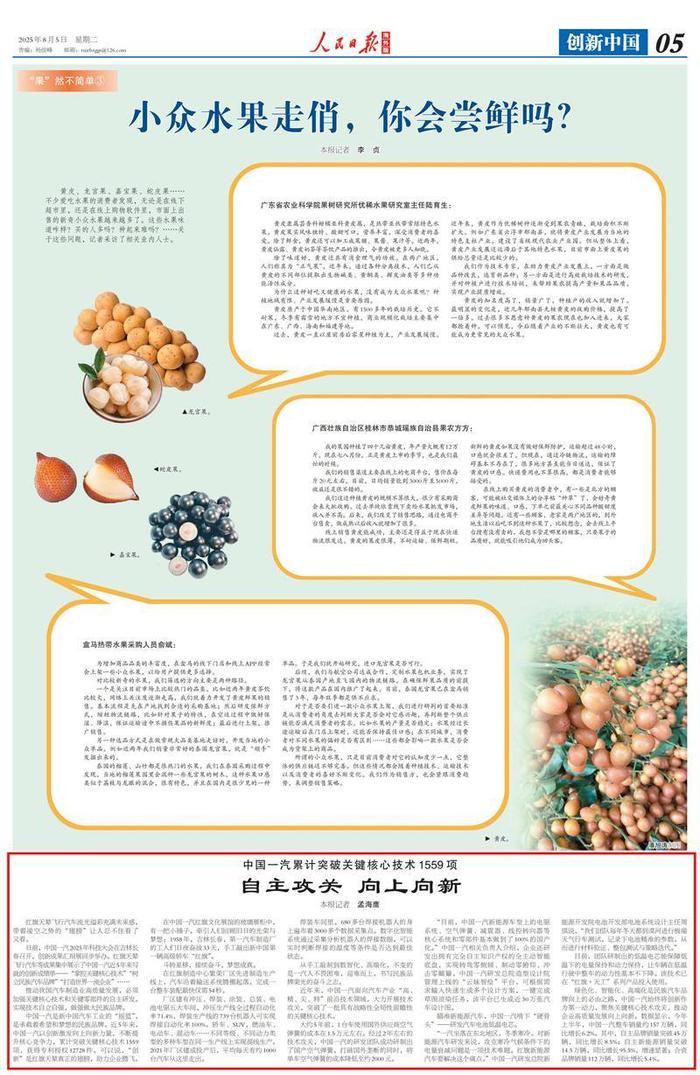
自主攻关 向上向新(创新故事)
Ren Min Ri Bao· 2025-08-03 22:10
Core Insights - China FAW Group is showcasing its innovative achievements at the 2025 Technology Conference, emphasizing the importance of mastering key core technologies and strengthening national automotive brands to drive high-quality development in the automotive manufacturing industry [1][5] - Over the past five years, China FAW has made significant strides in innovation, achieving breakthroughs in 1,559 key core technologies and obtaining 12,728 patent authorizations, positioning innovation as the driving force behind its growth [1][3] Manufacturing Capabilities - The Red Flag manufacturing center features an advanced production line where a complete vehicle can be assembled in as little as 54 seconds, with an automation rate of 71.4% in the stamping production line and 100% in the welding production line [2] - The facility produces approximately 1,000 vehicles daily, utilizing a mixed production line for various vehicle types, including sedans, SUVs, fuel vehicles, electric vehicles, and hybrids [2] Technological Advancements - China FAW has successfully developed domestic air springs, reducing the cost from approximately 15,000 yuan to about 2,000 yuan, breaking the foreign monopoly on this technology [3] - The company has achieved 100% localization of core systems and components in its new energy vehicles, including electric drive systems and air springs, and has developed a fully autonomous intelligent chassis [3][4] New Energy Initiatives - China FAW is addressing the challenges of low-temperature performance in electric vehicle batteries, conducting extreme weather tests to ensure battery efficiency in cold climates [4] - The newly developed low-temperature battery cells maintain vehicle performance in cold conditions and have been implemented in the "Red Flag·Tiangong" series [4] Sales Performance - In the first half of the year, China FAW's total vehicle sales reached approximately 1.57 million units, a year-on-year increase of 6.2%, with self-owned brand sales exceeding 450,000 units, up 8.5%, and new energy vehicle sales soaring by 95.5% [5]
中国一汽累计突破关键核心技术1559项 自主攻关 向上向新(创新故事)
Ren Min Ri Bao· 2025-08-03 21:53
Core Insights - China FAW Group is showcasing its innovative achievements at the 2025 Technology Conference, emphasizing the importance of mastering key core technologies and enhancing national automotive brands to drive high-quality development in the automotive manufacturing industry [1][5] - Over the past five years, China FAW has made significant strides in innovation, achieving breakthroughs in 1,559 key core technologies and obtaining 12,728 patent authorizations [1][3] - The production efficiency at the Hongqi manufacturing center is notable, with a complete vehicle assembly time of just 54 seconds and an automation rate of 71.4% in the stamping production line [2][5] Innovation and Technology - China FAW has transitioned from manual production to a highly automated and intelligent manufacturing process, with 100% automation in the welding production line using 739 robots [2][3] - The company has successfully developed domestic air springs, reducing the cost from approximately 15,000 yuan to about 2,000 yuan per vehicle, breaking the foreign monopoly [3][4] - The development of low-temperature battery cells addresses the challenges of battery performance in cold climates, ensuring that the vehicles maintain their power and performance in low temperatures [4][5] Market Performance - In the first half of the year, China FAW's total vehicle sales reached approximately 1.57 million units, representing a year-on-year increase of 6.2% [5] - The sales of its self-owned brands exceeded 450,000 units, with an 8.5% increase, while the sales of new energy vehicles surged by 95.5% to over 145,000 units [5]