
劳动力市场状况

Search documents
见证历史,美股深夜全线爆发
Zheng Quan Shi Bao· 2025-09-18 23:55
Market Overview - US stock market experienced a strong rebound, with major indices reaching all-time highs, driven by a surge in semiconductor stocks and positive market sentiment following anticipated interest rate cuts by the Federal Reserve in 2025 [1][3][6] Economic Data - The US Department of Labor reported that initial jobless claims for the week ending September 13 were 231,000, lower than the expected 240,000, indicating a return to a normal range after a spike [4] - Despite the drop in initial claims, the number of continuing claims remains above 1.9 million, highlighting challenges in the labor market, with the average duration of unemployment rising to 24.5 weeks, the longest since April 2022 [4] Federal Reserve's Monetary Policy - Analysts predict that the Federal Reserve will continue its easing cycle, with expectations of two additional 25 basis point rate cuts in October and December, as labor demand cools and core inflation slows [5][6][7] - Goldman Sachs and other financial institutions emphasize that the Fed's current stance reflects concerns over the labor market and inflation trends, suggesting a gradual approach to monetary policy easing [6][7] Sector Performance - Semiconductor stocks saw significant gains, with the Philadelphia Semiconductor Index rising by 3.6%, and Intel's stock soaring over 22%, marking its largest single-day gain since October 1987 [3] - Cryptocurrency-related stocks also performed well, with Bullish rising over 20% after reporting a profitable quarterly result, indicating a positive trend in the sector [3]


今晚非农将定调美联储降息节奏!黄金能否再次起飞?
Jin Shi Shu Ju· 2025-09-05 06:26
Group 1 - The upcoming US non-farm payroll report is expected to confirm a weak labor market, with an estimated addition of 75,000 jobs in August, slightly above July's 73,000 [1] - The unemployment rate is projected to rise from 4.2% to 4.3%, marking the highest level since 2021, while average hourly earnings are expected to remain flat month-over-month and slow down year-over-year from 3.9% to 3.7% [1] - An ideal job addition range of 70,000 to 95,000 is suggested to balance investor concerns and support the rationale for a Federal Reserve rate cut in September [1] Group 2 - Wall Street is eager to understand whether the labor market is in a "low hiring, low firing" stagnation or showing signs of genuine deterioration, as historical trends indicate rapid worsening once labor market conditions begin to decline [2] - The market has fully priced in a 25 basis point rate cut by the Federal Reserve in September, but a significantly lower non-farm payroll figure could reignite expectations for a more aggressive rate cut [2] - Standard Chartered notes that the median forecast for job additions is 75,000, with a concentration of predictions between 60,000 and 100,000, suggesting that a figure below 40,000 could lead to pricing in a 50 basis point cut [2] Group 3 - The unemployment rate's expected rise to 4.3% does not indicate a significant spike, and unless job additions are exceptionally weak or the unemployment rate exceeds 4.4%, it may not prompt aggressive rate cuts from the Federal Reserve [3] - The August employment report is particularly scrutinized due to the recent firing of the Bureau of Labor Statistics director by Trump, raising concerns about government interference and the credibility of federal economic data [3] - Trump's nomination of E.J. Antoni as the new director may further influence perceptions of labor statistics [3] Group 4 - Recent data highlights increasing employment downside risks, with the ADP report showing only 54,000 job additions in August, significantly below expectations, and initial jobless claims rising to 237,000 [4] - Job openings in July fell to 7.18 million, the lowest in ten months, indicating weak labor demand [4] Group 5 - Federal Reserve officials have adopted a more dovish tone, with New York Fed President Williams noting a "gradual cooling" in the labor market and suggesting that the absence of inflationary pressures may clear the way for rate cuts [5] - Other Fed officials have indicated that a rate cut may be appropriate in the near future, with some suggesting multiple cuts within six months [5] Group 6 - Market expectations for a rate cut have suppressed the dollar, providing support for non-yielding precious metals like gold, although traders are cautious ahead of key data releases [6] - Analysts suggest that gold prices may face resistance around $3,560, with potential for further gains if new highs are reached [6] Group 7 - Concerns arise that the low expectations for the employment report may lead to stronger-than-expected data, which could push interest rates higher and limit the Federal Reserve's rate cut options [7] - Many traders anticipate three rate cuts by the end of the year [7]
非农或定调美联储降息节奏,黄金能否再次起飞?
Jin Shi Shu Ju· 2025-09-05 06:00
Group 1 - The upcoming U.S. non-farm payroll report is expected to confirm a weak labor market, with an anticipated addition of 75,000 jobs in August, slightly above July's 73,000 [1] - The unemployment rate is projected to rise from 4.2% to 4.3%, marking the highest level since 2021, while average hourly earnings are expected to remain flat month-over-month and slow down year-over-year from 3.9% to 3.7% [1] - A "sweet spot" for job additions is identified between 70,000 and 95,000, which could allow stock investors to overlook a weak report if it supports the rationale for a Federal Reserve rate cut [1][2] Group 2 - There is a concern among market participants regarding whether the labor market is in a "low hiring, low firing" stagnation or showing signs of genuine deterioration, as historical trends indicate that labor market declines can accelerate [2] - The market has fully priced in a 25 basis point rate cut by the Federal Reserve in September, but a significantly lower-than-expected non-farm payroll could reignite expectations for a more aggressive cut [2] - Standard Chartered notes that the median forecast for job additions is 75,000, with a concentration of predictions between 60,000 and 100,000, suggesting that a report showing fewer than 40,000 jobs added could lead to pricing in a 50 basis point cut [2] Group 3 - The unemployment rate's expected rise to 4.3% does not indicate a significant risk of a spike unless job additions are exceptionally weak or the unemployment rate exceeds 4.4% [3] - To eliminate the possibility of a September rate cut, non-farm payrolls would need to exceed 130,000, along with an upward revision of previous figures [3] - The recent weak employment data has led to concerns about government interference in economic statistics, highlighted by the dismissal of the Bureau of Labor Statistics director by President Trump [3] Group 4 - Recent data indicates increasing risks to employment, with the ADP report showing only 54,000 new private sector jobs in August, significantly below expectations, and initial jobless claims rising to 237,000 [4] - Job openings in July fell to 7.18 million, the lowest in ten months, indicating weak labor demand [4] Group 5 - Federal Reserve officials have adopted a more dovish tone, with indications that the labor market is "gradually cooling," and there are no signs of tariffs exacerbating inflation trends [5] - Some officials suggest that a rate cut of around 25 basis points may be appropriate this year, while others warn that continued labor market cooling could necessitate policy changes [5] Group 6 - Market expectations for a rate cut have supported gold prices, with analysts noting potential resistance around $3,560 and a target of $3,600 if new highs are reached [6] - Conversely, if gold prices fall below $3,500, it could indicate a bearish trend, with further declines possible [6] - Economic data surprises, whether positive or negative, could impact stock market performance, with predictions of potential job growth turning negative later in the year [6] Group 7 - Concerns exist that the low expectations for the employment report could lead to stronger-than-expected data, which might push interest rates higher and limit the Federal Reserve's rate cut options [7]
DLS MARKETS:7月JOLTS职位空缺降至718万,美元会否进一步承压?
Sou Hu Cai Jing· 2025-09-04 10:54
Core Insights - The JOLTS report indicates a decrease in job vacancies to 7.18 million in July, down from a revised 7.43 million in June, which was below market expectations of 7.4 million [1][3][4] - The total number of hires and separations remained unchanged at 5.3 million, with resignations at 3.2 million and layoffs at 1.8 million [1] - Job vacancies in healthcare and social assistance decreased by 181,000, while arts, entertainment, and recreation saw a reduction of 62,000 [1] Market Reaction - Following the JOLTS report, the USD faced selling pressure, with the dollar index dropping 0.2% to 98.10 [1] - The market is closely monitoring JOLTS data ahead of the upcoming non-farm payroll report, as labor market conditions are crucial for Federal Reserve interest rate decisions [3][4] Labor Market Trends - Job vacancies have been steadily declining since peaking at 12 million in March 2022, indicating a cooling labor market [3][4] - The Federal Reserve is expected to lower interest rates by 25 basis points in September, with a 92% probability according to CME FedWatch Tool, influenced by the weak labor market report [4]

分析师:澳大利亚8月就业数据将影响澳元走势
Xin Hua Cai Jing· 2025-09-03 13:57
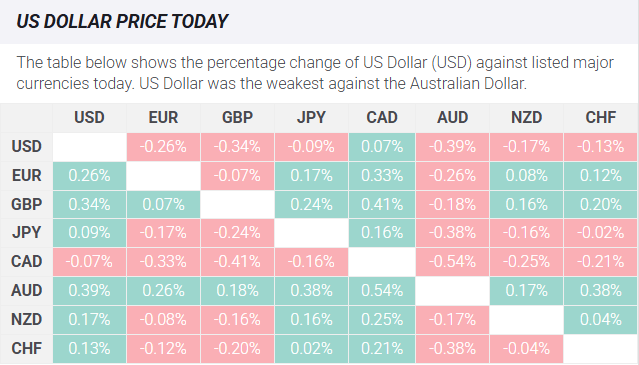
Core Viewpoint - The Australian dollar (AUD) is currently fluctuating around 0.6520 against the US dollar (USD), with upcoming employment data expected to significantly influence interest rate expectations from the Reserve Bank of Australia (RBA) [1] Economic Indicators - Australia's GDP growth rate for the second quarter exceeded expectations, indicating a stronger economic performance [1] - The employment data for August, to be released on September 18, is anticipated to be a critical factor affecting RBA's interest rate decisions [1] Labor Market Insights - The RBA has indicated that the pace of cash rate cuts will largely depend on the labor market conditions [1] - The July labor market report showed robust growth in full-time employment, supporting a gradual rate cut path by the RBA [1] Currency Fluctuation - The AUD/USD exchange rate has remained anchored within a narrow range of 0.6400 to 0.6600 for several months [1]
美联储会议纪要 :劳动力市场状况依然稳健
Sou Hu Cai Jing· 2025-08-20 18:13
Core Viewpoint - The Federal Reserve's July meeting minutes indicate that the labor market remains robust, with recent data reflecting steady employment conditions [1] Labor Market Conditions - The unemployment rate in June was 4.1%, a decrease of 0.1 percentage points from May [1] - The labor force participation rate slightly declined by 0.1 percentage points, while the employment-population ratio remained unchanged [1] - Non-farm payroll employment showed steady growth, but the increase in private sector jobs significantly slowed [1] - The ratio of job openings to unemployed individuals was 1.1, remaining within a narrow range observed over the past year [1] Wage Growth - Over the 12 months leading up to June, the average hourly earnings for all employees increased by 3.7%, which is slightly lower than the growth rate from the previous year [1]
【央行圆桌汇】就业报告增强美联储降息预期 理事辞职留下政策悬念(2025年8月4日)
Xin Hua Cai Jing· 2025-08-04 08:20
Federal Reserve Insights - The Federal Reserve maintained the federal funds rate target range at 4.25%-4.5% with a vote of 9 in favor and 2 against, indicating internal divisions among officials regarding interest rate adjustments [1][2] - Fed officials Waller and Bowman expressed concerns that delaying interest rate cuts could harm the labor market, advocating for a 25 basis point reduction [2] - Fed Chairman Powell emphasized the need for patience in assessing the impact of tariffs on inflation and the economy, despite signs of a slowing labor market [2] Employment and Economic Data - The U.S. job report indicated a slowdown, with only 73,000 jobs added in July, raising concerns about the labor market's strength [2] - Fed official Williams noted significant downward revisions in employment data for May and June but maintained that the labor market remains solid [3] - The U.S. economy is expected to grow at approximately 1% this year, with a potential rebound in 2026 [3] Global Central Bank Actions - The Bank of Canada held its interest rate steady at 2.75%, indicating a possibility of future cuts if economic conditions weaken [6] - The European Central Bank (ECB) is not in a hurry to lower borrowing costs unless significant economic changes occur, with inflation remaining stable at 2.0% in July [5][6] - The Bank of Japan maintained its rate at 0.5% and raised its 2025 core CPI forecast to 2.7%, indicating a cautious approach to inflation management [7] Market Reactions and Predictions - The market is divided on the U.S. economic outlook, with some believing in its resilience while others see emerging cracks, particularly in consumer spending [9] - The potential for a rate cut by the Federal Reserve in September has increased following the recent employment data, despite missing the opportunity in July [10] - Barclays economists predict the ECB may cut rates by 25 basis points in December, citing easing inflation pressures by year-end [10]
9月降息概率骤降!鲍威尔“鹰爪”撕裂市场
美股研究社· 2025-07-31 12:40
Core Viewpoint - The Federal Reserve Chairman Jerome Powell indicated that the current interest rate levels are sufficient to address the ongoing uncertainties related to tariffs and inflation, dampening market expectations for a rate cut in September [3][4]. Summary by Sections Federal Reserve's Decision - The Federal Open Market Committee (FOMC) voted 9-2 to maintain the federal funds rate in the range of 4.25%-4.5%, continuing the decision from previous meetings this year [4][6]. - The dissenting votes from Governors Waller and Bowman marked the first instance since 1993 where two governors opposed the committee's decision [9]. Market Reactions - Following Powell's remarks, traders reduced their bets on a rate cut, with the probability of a September cut dropping from about 60% to nearly 50%, and the October cut probability falling to approximately 85% [4][5]. - The U.S. dollar surged to its highest level since May, while the S&P 500 index declined, and gold prices fell to a one-month low due to panic selling triggered by the dollar's rapid appreciation [5][10]. Economic Assessment - Powell acknowledged a slowdown in consumer spending but emphasized that consumers remain in a "robust state" [6]. - The FOMC downgraded its assessment of the U.S. economy, stating that recent indicators show a slowdown in economic activity growth during the first half of the year [7][8]. - The committee maintained that the labor market is "strong" and inflation remains "elevated," while reiterating that uncertainties are still high [8]. Future Outlook - Several policymakers believe the Fed should pause rate cuts to assess the impact of tariffs on inflation, with a consensus that the current economic performance does not reflect undue pressure from restrictive policies [6][10]. - The upcoming economic data will be crucial, as a lower-than-expected inflation from tariffs or signs of labor market weakness could lead the Fed to resume easing in the fall [10].
美联储9月会降息吗?中金两个团队意见相反
Hua Er Jie Jian Wen· 2025-07-31 01:27
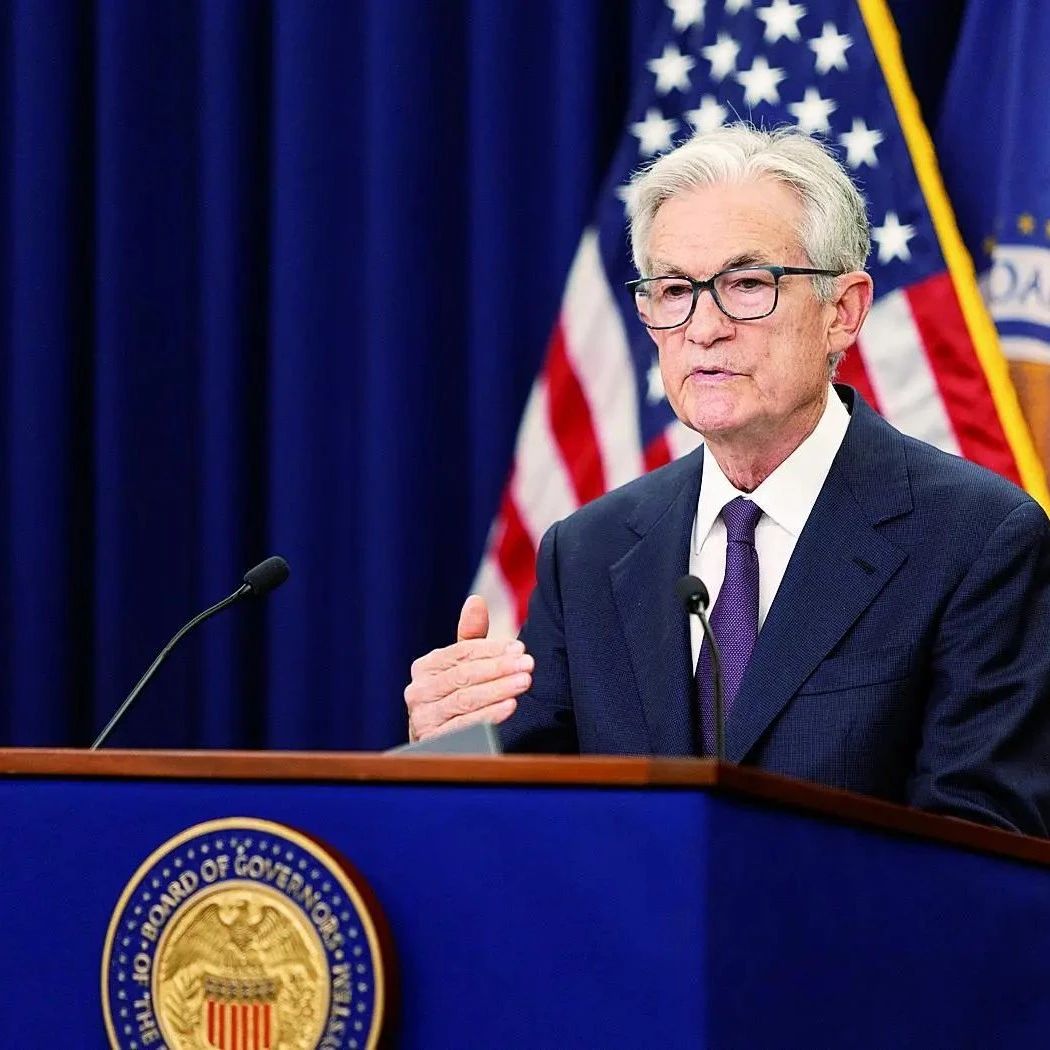
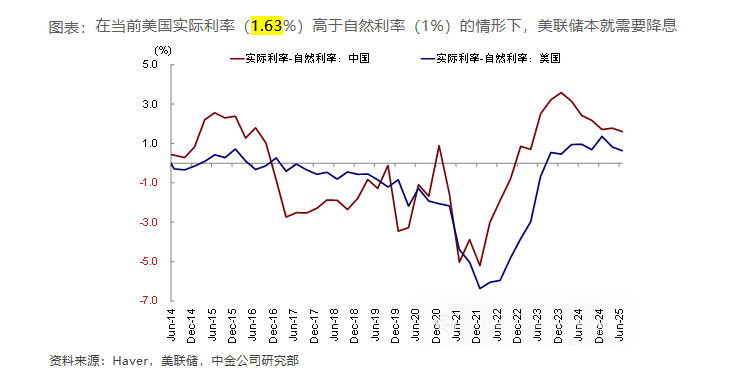
Core Viewpoint - The debate over whether the Federal Reserve will cut interest rates in September is intensifying, with differing opinions on the conditions for such a move [1][8]. Group 1: Conditions for Rate Cut - Analysts from CICC believe that the conditions for the Federal Reserve to take action are maturing, arguing that a rate cut does not need to wait for a clear decline in inflation data [2][3]. - Current U.S. real interest rates at 1.63% are significantly higher than the natural rate of about 1%, indicating a restrictive monetary policy that could necessitate a rate cut [2][3]. - Economic growth and employment indicators are showing signs of moderate weakening, with the average growth rate over the past two quarters being around 1.5% when excluding tariff-related fluctuations [2][3]. Group 2: Tariff Impact on Inflation - The impact of tariffs on inflation is becoming clearer, with recent agreements with multiple trade partners leading to a more predictable path for inflation [3][6]. - Effective tariff rates are expected to stabilize around 15%-16% after August 1, which will primarily affect inflation in the third and fourth quarters, with year-end CPI projected at 3.3% and core CPI at 3.4% [3][6]. - The misconception in the market is that the Federal Reserve must wait for inflation to decline before cutting rates, but if the tariff impact is understood as "one-time," the Fed could act sooner [3][6]. Group 3: Federal Reserve's Independence - CICC analysts argue that the Federal Reserve is unlikely to cut rates due to political pressure from President Trump, emphasizing the Fed's commitment to its independence [8][9]. - Recent statements from Fed Chair Powell and other officials indicate a preference for maintaining a tightening stance, citing unresolved inflation risks from tariffs and a stable labor market [8][9]. - The Fed's decision-making process involves a committee of 12 members, making it difficult for any single political figure to significantly alter the policy direction [8][9].
机构:8月1日新关税可能给美联储带来压力
news flash· 2025-07-09 19:00
Core Viewpoint - The potential increase in tariffs on August 1 may create pressure on the Federal Reserve, leading to hesitation in their upcoming meeting [1] Group 1: Economic Outlook - The Federal Reserve's meeting minutes indicate that officials expressed constructive views on the economy during the June meeting, feeling reassured about the economic outlook compared to the high tariffs announced in April [1] - Participants in the meeting unanimously agreed that the risks of rising inflation and weakening labor market conditions have decreased, although they remain at elevated levels [1] Group 2: Tariff Impact - The anticipated path of tariffs is lower, and recent data on inflation and inflation expectations has been encouraging [1] - The upcoming tariff increase on August 1 is expected to complicate the Federal Reserve's decision-making process in their meeting later this month [1]