
化债政策

Search documents
建筑材料行业周报:需求仍疲软,关注政策发力情况-20251207
GOLDEN SUN SECURITIES· 2025-12-07 12:56
Investment Rating - The report maintains a rating of "Buy" for several key stocks in the construction materials sector, including Yao Pi Glass, Yinlong Co., Puxin Co., San Ke Shu, and Wei Xing New Materials, while recommending "Hold" for Bei Xin Materials [8]. Core Insights - The construction materials sector is experiencing weak demand, with a focus on the impact of government policies to stimulate growth. The report highlights the potential for recovery in municipal engineering projects and the importance of monitoring the government's debt management strategies [1][2]. - The cement market is characterized by a slight increase in prices and production, but overall demand remains weak, particularly in residential construction. The report suggests that a more robust macroeconomic support is needed for a significant recovery [17][28]. - The glass manufacturing sector is facing supply-demand imbalances, but self-regulated production cuts in photovoltaic glass may alleviate some pressure. The report emphasizes the need to watch for price stability in this segment [1][5]. - The fiberglass market shows signs of bottoming out, with price wars ending and demand from wind power projects expected to rise. The report indicates a positive outlook for high-end electronic fiberglass products [6][7]. - Consumer building materials are benefiting from improved second-hand housing transactions and consumption stimulus policies, with a recommendation to focus on companies with strong market share potential [1][7]. Summary by Sections Cement Industry Tracking - As of December 5, 2025, the national cement price index is 352.47 CNY/ton, with a week-on-week increase of 1.77%. Cement output reached 2.971 million tons, up 0.2% from the previous week [17]. - The utilization rate of cement clinker production lines is 39.65%, reflecting a 1.21 percentage point increase week-on-week. However, the overall demand remains in a year-on-year contraction phase [17][28]. Glass Industry Tracking - The average price of float glass as of December 4, 2025, is 1163.86 CNY/ton, with a week-on-week increase of 1.40%. Inventory levels are high, with a total of 56.75 million weight boxes reported [2][5]. - The report notes that while northern regions are experiencing reduced demand, southern regions are seeing price adjustments as manufacturers attempt to balance supply and demand [5][6]. Fiberglass Industry Tracking - The market for fiberglass remains stable, with limited demand recovery. The report indicates that electronic fiberglass prices have seen a slight increase, suggesting a tightening supply situation [6][7]. Consumer Building Materials Tracking - The demand for consumer building materials continues to show weak recovery, with upstream raw material prices fluctuating. The report highlights the importance of monitoring these price changes for investment decisions [7]. Carbon Fiber Industry Tracking - The carbon fiber market remains stable, with production increasing by 25.83% week-on-week. However, the report indicates that profitability remains under pressure due to high production costs [7].


宏观专题分析报告:2026年财政政策展望:投资于人
SINOLINK SECURITIES· 2025-11-23 08:50
Economic Growth and Policy Focus - The economic growth target for 2026 is set around 5%, emphasizing the shift towards domestic demand, particularly in the areas of livelihood and consumption[2][9]. - The "14th Five-Year Plan" aims for a per capita GDP growth rate of approximately 4.4% annually, with a potential GDP growth rate of around 5% during this period[8]. Fiscal Policy and Budget - The general public budget deficit rate for 2026 is projected to be 4.2%, with a deficit scale of 6.18 trillion yuan, an increase of 520 billion yuan from 2025[3][15]. - In a more optimistic scenario, the deficit rate could rise to 4.5%, with a total deficit of 6.62 trillion yuan, reflecting an increase of 960 billion yuan[16]. Social Welfare and Consumer Support - Fiscal spending on child-rearing subsidies is expected to be between 100 billion to 120 billion yuan in 2026, alongside an expansion of free preschool education costing over 50 billion yuan[3][10]. - The increase in urban and rural residents' basic pensions is anticipated to exceed 1,000 billion yuan, with a minimum increase of 50 yuan per person[11]. Investment and Infrastructure - Effective investment will be expanded, focusing on urban renewal and basic public service construction, with an estimated 200 billion yuan allocated for urban renewal projects[4][28]. - The issuance of special bonds for equipment upgrades is expected to remain at 200 billion yuan, supporting the modernization of key industries[5][34]. Debt Management and Corporate Support - The issuance of special refinancing bonds is projected to reach 2 trillion yuan in 2026, aimed at alleviating debt pressure on local governments[35]. - The new local government special bond limit is expected to reach 5 trillion yuan, with 1.6 trillion yuan allocated for debt repayment and 2.9 trillion yuan for project construction, marking an increase of 1 trillion yuan from 2025[36].
新冠核酸检测应收账款坏账何时出清?有企业给出时间表
第一财经· 2025-11-14 03:29
Core Viewpoint - The article highlights the financial struggles faced by medical testing companies in China, particularly due to increased accounts receivable and the impact of the COVID-19 pandemic on cash flow and profitability [2][4]. Group 1: Legal and Financial Issues - Capbio (300639.SZ) has disclosed a lawsuit regarding overdue payments, with claims amounting to 357 million yuan related to unpaid goods and services from 2020 to 2022 [2]. - A total of seven medical testing companies in the A-share market reported net losses attributable to shareholders in the first three quarters of this year, with six of them expected to continue facing losses in 2024 [3]. Group 2: Profitability Decline - Dean Diagnostics (300244.SZ) reported a net profit of 56.70 million yuan for the first three quarters, a decline of 56.67% year-on-year, attributed to price reductions in testing services [4]. - Gold Domain Medical (金域医学) recorded a provision for asset impairment of 345 million yuan, primarily due to accounts receivable impairment losses, significantly impacting its consolidated profit [5]. Group 3: Accounts Receivable Management - Medical testing companies are experiencing longer collection periods from public hospitals, leading to increased credit impairment [7]. - Recent government debt reduction policies have reportedly accelerated the collection of accounts receivable from public hospitals, particularly noted in the third quarter [7]. - Companies like Dean Diagnostics and Puni Testing are implementing stricter accounts receivable management strategies, including tailored collection plans for major clients [8].


前10月地方政府发债超9万亿
Di Yi Cai Jing· 2025-11-04 11:29
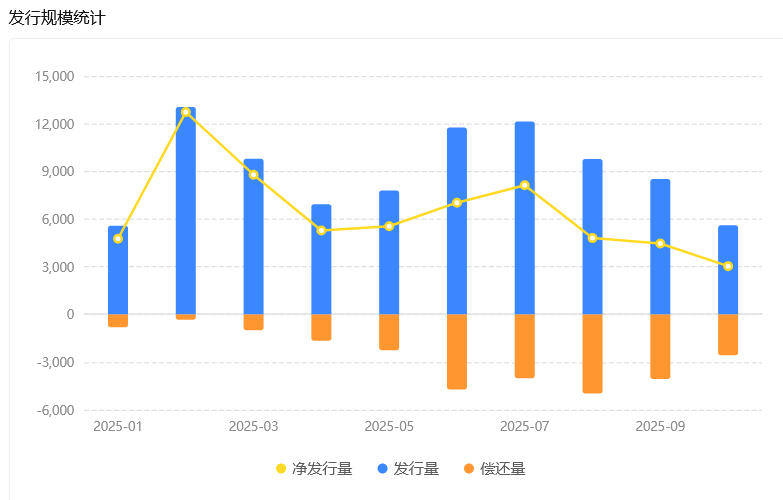
Core Insights - Local governments in China have significantly increased their borrowing through the issuance of bonds, with a total of approximately 91,062 billion yuan issued in the first ten months of the year, representing a year-on-year growth of about 23% [1][5] - The issuance of local government bonds has accelerated, particularly in the first half of the year, but has shown a downward trend since July, with October's issuance at approximately 5,600 billion yuan, slightly above January's level [1][4] Bond Issuance and Utilization - In the first ten months, about 60% of the funds raised by local governments were used to repay old debts, while around 40% were allocated for major project construction [4][5] - The issuance of new local government bonds totaled approximately 47,000 billion yuan, a year-on-year increase of about 2%, while refinancing bonds reached 44,000 billion yuan, marking a significant year-on-year growth of 58% [5][6] - The refinancing bonds are primarily aimed at repaying maturing government bonds and replacing hidden debts, which helps to optimize the debt structure and alleviate repayment pressure [5][6] Special Bonds and Project Funding - Approximately 12,500 billion yuan of special new bonds were issued, specifically aimed at resolving hidden debts and settling overdue payments to enterprises [5][6] - Of the new special bonds issued, about 90% of the annual quota has been utilized, with 27% allocated to municipal and industrial park infrastructure, 18% to transportation infrastructure, and 16% to land reserves [6][7] Debt Management and Risk Control - The overall risk of local government debt is considered manageable, with the total debt balance as of September 2025 being 536,995 billion yuan, well within the approved limit of 579,874.3 billion yuan [7] - In the first three quarters, local governments repaid 23,863 billion yuan in principal and paid 11,191 billion yuan in interest on bonds [7]

建筑装饰 2025Q1-3 财报综述:收入降幅收窄,现金流改善明显
Shenwan Hongyuan Securities· 2025-11-04 09:15
Investment Rating - The report maintains an "Optimistic" rating for the construction industry [2][3]. Core Insights - The construction industry faced revenue and profit pressures in Q1-Q3 2025, with total revenue of 5.52 trillion, down 5.2% year-on-year, and net profit of 118.9 billion, down 9.0% year-on-year [2][3]. - The decline in revenue has narrowed, and cash flow has shown significant improvement, attributed to local government debt resolution policies and enhanced cash flow management by companies [2][5]. - The industry’s gross margin remained stable at 9.8%, with a net margin of 2.16%, indicating effective cost control despite external pressures [2][10]. Summary by Sections 1. Financial Overview of the Construction Industry - In Q1-Q3 2025, major listed companies in the construction sector reported a total revenue of 5.52 trillion, reflecting a year-on-year decrease of 5.2%, and a net profit of 118.9 billion, down 9.0% [3][9]. - Quarterly revenues were 1.84 trillion, 1.91 trillion, and 1.76 trillion, with respective year-on-year declines of 6.2%, 5.2%, and 4.3% [3][9]. 2. ROE Analysis - The overall Return on Equity (ROE) for the industry in Q1-Q3 2025 was 3.36%, a decrease of 0.53 percentage points year-on-year [17]. - The decline in ROE is attributed to reduced investment and increased cost pressures, impacting profitability [17][28]. 3. Cash Flow Improvement - The industry’s operating cash flow showed improvement, with a net outflow of 404.7 billion, which is 70.7 billion less than the previous year [4][14]. - The cash collection ratio improved to 103%, 87%, and 108% across the three quarters, indicating better cash management [4][14]. 4. Investment and Profitability Trends - The construction sector is experiencing a shift towards cash management and asset quality improvement, with companies focusing on reducing ineffective assets [5][26]. - Investment net income in Q3 2025 decreased by 39.4 billion year-on-year, reflecting the ongoing challenges in the sector [26]. 5. Market Perception and Opportunities - The report suggests that the market underestimates the potential for investment in the construction and real estate sectors, which remain crucial to the economy [6]. - The emphasis on quality over growth by state-owned enterprises is expected to create new opportunities for sustainable growth [6].





前10月地方政府借钱超9万亿
第一财经· 2025-11-04 03:36
Core Insights - Local governments in China have significantly increased their borrowing to stabilize the economy and mitigate risks, with a total issuance of approximately 91,062 billion yuan in local government bonds in the first ten months of the year, marking a year-on-year increase of about 23% [3][5]. Group 1: Bond Issuance and Utilization - The issuance of local government bonds has accelerated, particularly in the first half of the year, with a notable decline in issuance from July onwards, culminating in approximately 5,600 billion yuan in October, slightly above January's issuance [3][5]. - Of the 91,062 billion yuan borrowed, around 60% was allocated to repay old debts, while approximately 40% was directed towards major project construction [5][7]. - The new local government bonds issued included about 47,000 billion yuan in new bonds (up 2% year-on-year) and 44,000 billion yuan in refinancing bonds (up 58% year-on-year), primarily aimed at repaying existing debts [5][7]. Group 2: Special Bonds and Project Funding - A total of approximately 12,500 billion yuan in special new bonds was issued, specifically for resolving local government hidden debt and settling overdue payments to enterprises, indicating a focus on debt repayment [7][8]. - The majority of new special bonds were utilized for significant public projects, with about 27% allocated to municipal and industrial park infrastructure, 18% to transportation infrastructure, and 16% to land reserves [8]. Group 3: Debt Management and Risk Control - As of September 2025, the total local government debt stood at 536,995 billion yuan, remaining within the approved debt limit of 579,874.3 billion yuan, indicating that local government debt risks are generally manageable [9]. - In the first three quarters of the year, local governments repaid 23,863 billion yuan in principal and paid 11,191 billion yuan in interest on bonds, demonstrating the ability to meet debt obligations [9].
前10月地方政府借钱超9万亿 5000亿增量预计年底前落地
Di Yi Cai Jing· 2025-11-04 03:20
Core Viewpoint - Local governments in China have significantly increased their borrowing through the issuance of bonds, reaching a record high of approximately 9.1 trillion yuan in the first ten months of the year, reflecting a proactive fiscal policy aimed at stabilizing the economy [1][4]. Group 1: Bond Issuance and Trends - In the first ten months of this year, local government bond issuance totaled about 91,062 billion yuan, marking a year-on-year increase of approximately 23% [1]. - The issuance of local government bonds accelerated notably in the first half of the year, but began to decline after July, with October's issuance at around 5,600 billion yuan, slightly above January's level [1][4]. - An additional 500 billion yuan in local government bonds has been authorized for issuance in mid-October, with 300 billion yuan aimed at enhancing local government financial capacity and 200 billion yuan for supporting key projects in major economic provinces [4]. Group 2: Use of Borrowed Funds - Approximately 60% of the funds raised through local government bonds in the first ten months were used for repaying old debts, while about 40% were allocated for major project construction [4][6]. - Of the 9.1 trillion yuan in bonds issued, around 4.7 trillion yuan were new bonds (up 2% year-on-year) and 4.4 trillion yuan were refinancing bonds (up 58% year-on-year) [4][6]. - The refinancing bonds are primarily used to repay maturing government bond principal and to replace hidden debts, thereby optimizing the debt structure and alleviating repayment pressure [5][6]. Group 3: Special Bonds and Project Allocation - In the first ten months, local governments issued approximately 1.25 trillion yuan in special new bonds specifically for resolving hidden debts and settling overdue payments to enterprises [6]. - The total scale of "borrowing new to repay old" is about 5.65 trillion yuan, accounting for approximately 62% of the total bond issuance during this period [6]. - The newly issued special bonds mainly focus on major public welfare projects, with about 27% allocated to municipal and industrial park infrastructure, 18% to transportation infrastructure, and 16% to land reserves [6]. Group 4: Debt Management and Safety - The overall risk of local government debt is considered manageable, with the total debt balance as of September 2025 being 53,699.5 billion yuan, well within the approved debt limit [7]. - In the first three quarters, local governments repaid 23,863 billion yuan in principal and paid 11,191 billion yuan in interest on bonds [7].
前10月地方政府借钱超9万亿,5000亿增量预计年底前落地
Di Yi Cai Jing· 2025-11-04 03:15
Core Viewpoint - Local governments in China have significantly increased their borrowing to stabilize the economy and mitigate risks, with a record issuance of local government bonds reaching approximately 9.1 trillion yuan in the first ten months of the year, marking a year-on-year increase of about 23% [2][6]. Group 1: Bond Issuance and Utilization - Approximately 60% of the funds raised through local government bonds are allocated for repaying old debts, while around 40% are directed towards major project construction [6][7]. - In the first ten months, the issuance of new local government bonds totaled about 4.7 trillion yuan, reflecting a year-on-year growth of approximately 2%, while refinancing bonds amounted to 4.4 trillion yuan, showing a significant year-on-year increase of about 58% [6][7]. - The rapid growth in local government bond issuance is primarily driven by the increase in refinancing bonds, which are used to repay existing debts and optimize the debt structure [7]. Group 2: Special Bonds and Project Funding - Local governments issued approximately 1.25 trillion yuan in special new bonds specifically aimed at resolving existing hidden debts and settling overdue payments to enterprises, which contributes to the overall debt repayment strategy [7][8]. - The total scale of "borrowing new to repay old" is approximately 5.65 trillion yuan, accounting for about 62% of the total bond issuance in the first ten months [7]. - Among the newly issued special bonds, about 27% is allocated for municipal and industrial park infrastructure, 18% for transportation infrastructure, and 16% for land reserves, with additional allocations for social projects such as healthcare and education [8]. Group 3: Debt Management and Risk Control - The overall risk of local government debt is considered manageable, with the total debt balance as of September 2025 being 53.7 trillion yuan, well within the approved debt limit of 57.9 trillion yuan [9]. - In the first three quarters, local governments repaid approximately 23.9 billion yuan in principal and paid 11.2 billion yuan in interest on their bonds [9].
股市必读:蒙草生态(300355)11月3日董秘有最新回复
Sou Hu Cai Jing· 2025-11-03 17:51
Core Viewpoint - The company is experiencing improvements in cash flow and accounts receivable management, driven by government debt resolution policies, although concerns remain regarding the collection of long-term receivables from PPP projects [3][4][7]. Financial Performance - As of November 3, 2025, the company's stock price was 4.2 yuan, with a 0.72% increase and a trading volume of 320,500 shares, amounting to a turnover of 134 million yuan [1]. - The company reported a significant increase in cash inflows from receivables, with collections of 3.282 billion yuan and 3.022 billion yuan expected in 2023 and 2024, respectively, marking a 54% increase compared to previous years [3][4][7]. - Operating cash flow has improved, with net cash flow from operating activities turning positive, achieving 1.699 billion yuan and 1.578 billion yuan in 2023 and 2024, respectively, which is significantly higher than historical levels [3][4][7]. Debt Management - The company has actively repaid high-interest loans, resulting in a decrease in interest expenses from 386 million yuan in 2019 to 302 million yuan in 2024, a reduction of 21% [3][4][7]. - The total long-term receivables reached 3.5 billion yuan by the third quarter of 2025, an increase from 3.3 billion yuan in the second quarter [7]. Strategic Focus - The company maintains a core focus on the grass seed industry, aligning with national ecological strategies and emphasizing technological innovation [3][4][7]. - The management is optimistic about the gradual improvement of accounts receivable issues in light of the government's efforts to alleviate local government debt [3][4][7]. Market Sentiment - On November 3, 2025, there was a net outflow of 14.0168 million yuan from major funds, indicating a short-term reduction in holdings by institutional investors [8].

地产压力下政策出台概率逐步提升
GOLDEN SUN SECURITIES· 2025-11-02 12:45
Investment Rating - The report maintains an "Accumulate" rating for the construction materials sector [3]. Core Views - The construction materials sector is experiencing a mixed performance, with cement prices under pressure while glass and fiberglass manufacturing show positive trends. The overall sector has outperformed the CSI 300 index by 1.75% during the week [1][12]. - Government policies aimed at alleviating financial pressures on local governments are expected to improve the fiscal environment, potentially accelerating municipal engineering projects [1]. - The glass market is facing supply-demand imbalances, but self-regulation among photovoltaic glass manufacturers may help ease these tensions [1]. - Consumer building materials are recommended due to their potential benefits from second-hand housing transactions and consumption stimulus policies [1]. - The cement industry is still in a demand bottoming phase, with production adjustments being made to stabilize prices [1][17]. Summary by Sections Cement Industry Tracking - As of October 31, 2025, the national cement price index is 347.34 CNY/ton, up 1.07% week-on-week. Cement output reached 2.8265 million tons, an increase of 8.05% from the previous week [17]. - The cement market is characterized by stable growth in infrastructure, while residential construction lags behind [17]. Glass Industry Tracking - The average price of float glass is 1202.68 CNY/ton, down 3.30% from the previous week. Inventory levels have decreased, indicating some recovery in demand [2][5]. Fiberglass Industry Tracking - Fiberglass prices have stabilized, with demand for high-end products remaining strong. The market is expected to see price increases in the medium to long term [5]. Consumer Building Materials - The demand for consumer building materials is showing signs of weak recovery, influenced by fluctuations in upstream raw material prices [6]. Carbon Fiber Industry Tracking - The carbon fiber market remains stable, with production costs reported at 106,100 CNY/ton, leading to negative margins for many producers [6]. Key Stocks - Recommended stocks include: - North New Building Materials (Buy) - Weixing New Materials (Accumulate) - Sankeshu (Buy) - China Jushi (Buy) - Yinlong Co. (Buy) - Puyang Refractories (Buy) [7].
