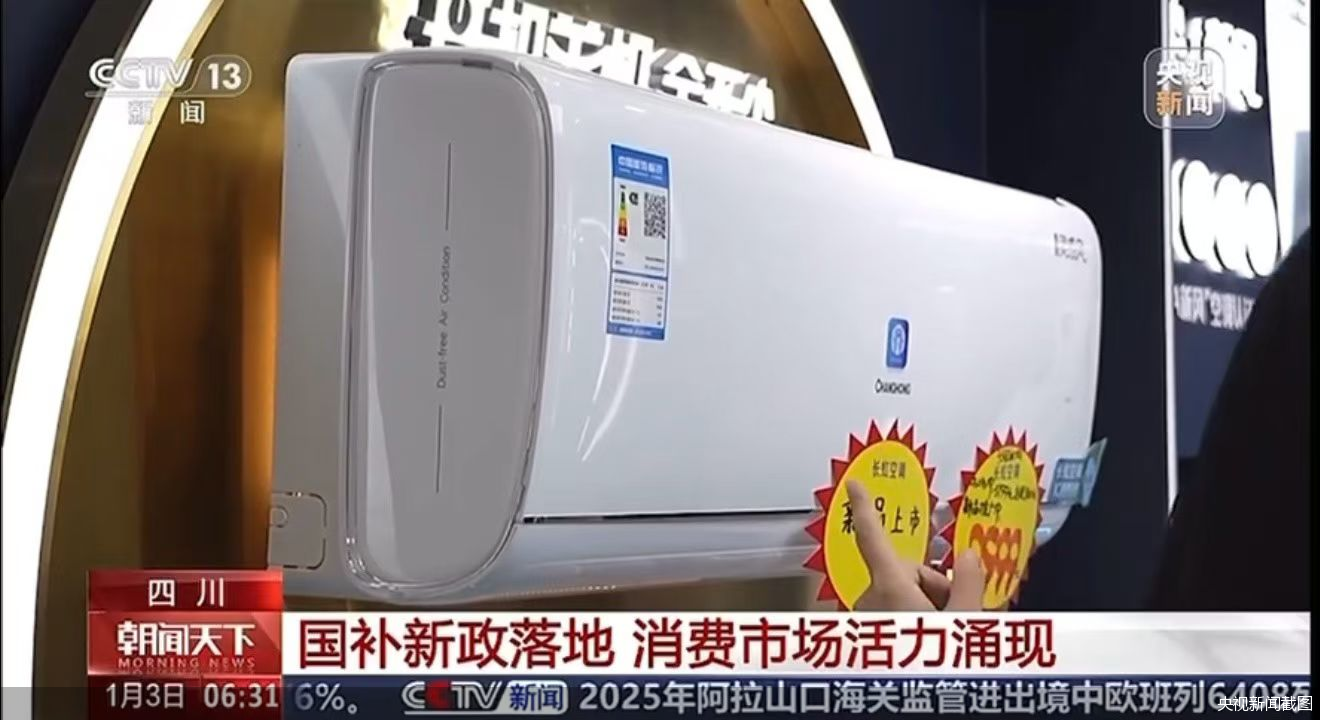
国补

Search documents
【好评中国】“两新”政策撬动的不只是消费更是升级
Xin Lang Cai Jing· 2026-01-13 09:25
Group 1 - The core viewpoint of the articles highlights the acceleration of China's new "Two New" policy, which focuses on large-scale equipment updates and the replacement of consumer goods, stimulating market vitality and driving a consumption boom in 2026 [1][2][3] - The "Two New" policy is shifting from a focus on scale to a more precise allocation of resources, emphasizing intelligent and green consumption trends, including the addition of smart glasses to the subsidy list for consumer goods [1] - The policy aims to enhance economic growth and promote social health, with local governments actively utilizing central policy tools to support the implementation of the "Two New" policy, resulting in a significant increase in sales volume of covered products [1][2] Group 2 - Data shows that from January to October 2025, rural consumer goods retail sales reached 5.5 trillion yuan, growing by 4.6%, which is 0.4 percentage points higher than urban growth [2] - The "Two New" policy is designed to benefit both consumers and enterprises, with a focus on improving the quality of life and enhancing consumer experience, particularly among younger demographics who value emotional and cultural connections [3] - The optimization of the "Two New" policy is expected to further invigorate market vitality, contributing to a robust and diverse economic landscape in China [3]
视频丨“新国补”落地近两周 各地消费市场迎来“换新”热潮
Yang Shi Xin Wen Ke Hu Duan· 2026-01-13 03:44
Core Viewpoint - The implementation of the "old-for-new" national subsidy policy has sparked a surge in consumer spending across various sectors, including automobiles, home appliances, and digital products. Group 1: Automotive Sector - In Jiangsu Province, the subsidy for purchasing new vehicles is calculated based on a percentage of the vehicle price, with electric vehicles receiving a 12% subsidy (up to 20,000 yuan) and traditional fuel vehicles receiving a 10% subsidy (up to 15,000 yuan) under scrapping scenarios [3] - The "new national subsidy" has been in effect for nearly two weeks, leading to a "replacement" boom in the consumer market [4] Group 2: Home Appliances and Digital Products - The subsidy policy for home appliances requires participating products to meet "first-level energy efficiency" standards, covering six categories such as refrigerators and washing machines, with a subsidy of 15% of the final price, capped at 1,500 yuan per item [6][12] - Digital products like smartphones and tablets priced under 6,000 yuan are eligible for a 15% subsidy, with a maximum of 500 yuan per item [12] - The implementation of the "old-for-new" policy has significantly increased consumer purchasing intent, as evidenced by consumer feedback on discounts received [6][10] Group 3: Market Impact and Consumer Behavior - In Shanxi, the subsidy program for home appliances and digital products commenced on January 9, 2023, further boosting sales in these categories [10] - In Hebei Province, the new subsidy policy has led to over 130 million yuan in subsidies utilized from January 1 to 9, driving sales exceeding 920 million yuan [15]

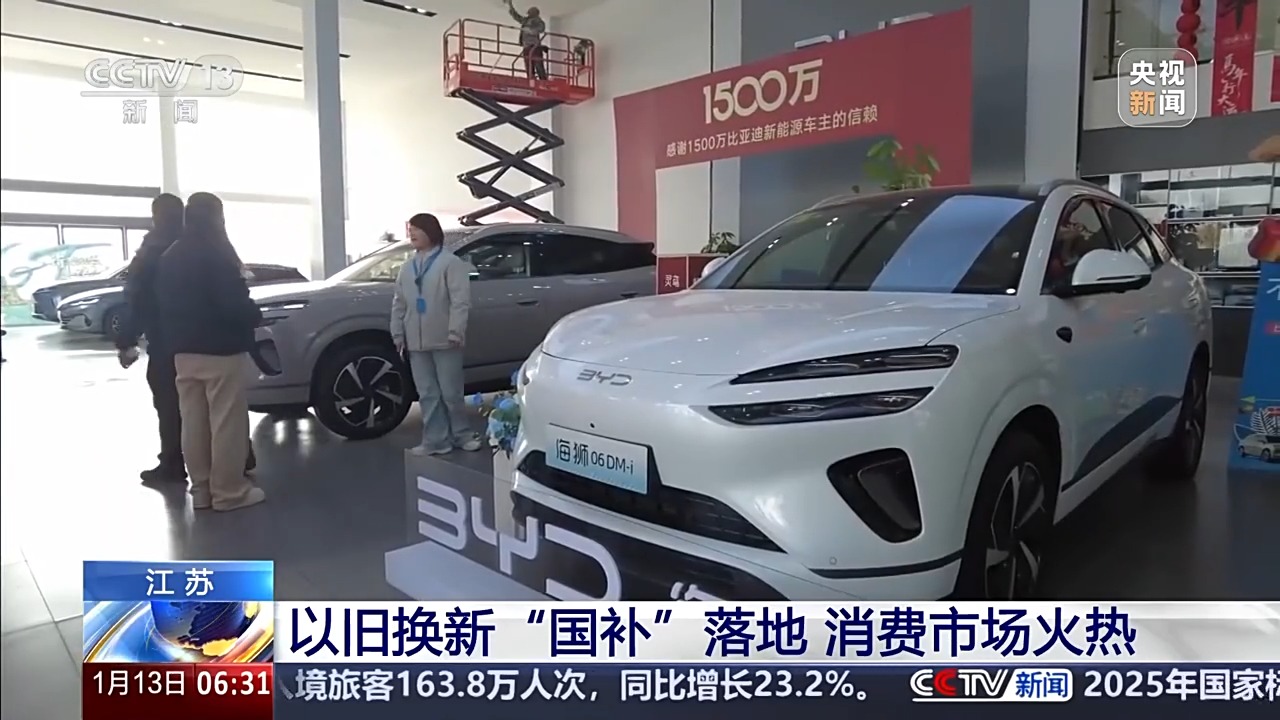
“国补”落地 买新能源车省多少钱
Xin Lang Cai Jing· 2026-01-11 22:25
Group 1 - The new round of automobile consumption subsidy policy will be implemented in 2026, allowing consumers to save up to 35,000 yuan when purchasing new energy vehicles through various subsidies and tax reductions [1][2] - Consumers can receive a subsidy of 12% of the new car sales price (up to 20,000 yuan) for scrapping old cars and purchasing eligible new energy passenger vehicles, or 8% (up to 15,000 yuan) for replacing old cars [1] - The full vehicle purchase tax is calculated as the car price divided by 1.13 multiplied by 10%, with a maximum reduction of 15,000 yuan due to a half tax collection policy this year [1] Group 2 - Not all new energy vehicles are eligible for subsidies; only those listed in the Ministry of Industry and Information Technology's directory can enjoy both national subsidies and vehicle purchase tax reductions [2] - Starting in 2026, the technical standards for eligible models will change, with the pure electric range requirement for plug-in hybrid vehicles increasing from 43 kilometers to 100 kilometers, potentially disqualifying some entry-level models [2] Group 3 - The application processes for national subsidies and vehicle purchase tax reductions differ, but consumers can apply for both simultaneously [3] - To apply for the national subsidy, consumers must submit materials through the "National Automobile Circulation Information Management System" or the "Car Trade-in" WeChat mini-program, while the vehicle purchase tax reduction is automatically processed through local tax systems without a separate application [3]
九部门联合发文实施绿色消费推进行动,提升绿色服务消费
Huan Qiu Wang· 2026-01-09 00:48
Group 1 - The core viewpoint of the article highlights the Chinese government's initiative to promote green consumption through a series of measures aimed at enhancing the supply of green products, improving green service consumption, and innovating green consumption models [1][4] - The Chinese government plans to allocate 300 billion RMB in special long-term bonds by 2025 to support the "trade-in" policy for consumer goods, which is expected to stimulate domestic demand [1] - The "trade-in" policy has reportedly driven sales of related goods exceeding 2.6 trillion RMB and benefited over 360 million people throughout the year [1] Group 2 - Since the full implementation of the "trade-in" policy in September 2024, over 480 million subsidies have been distributed directly to consumers [4] - For every two new household cars sold in 2025, one will benefit from the automobile trade-in subsidy, encouraging more consumers to experience in-store shopping [4] - The policy has led to a more than 30% increase in consumer spending in areas with concentrated physical stores for home appliance trade-ins within a 1-kilometer radius [4]
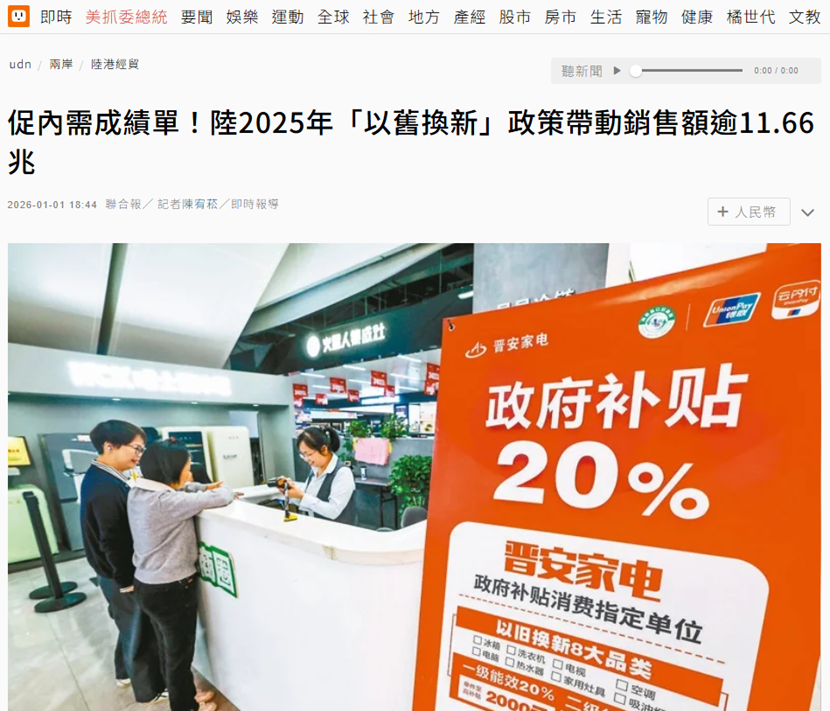
2026版“国补”,三类人最省钱
Xin Lang Cai Jing· 2026-01-08 23:24
Core Viewpoint - The newly revised national subsidy policy for 2026 aims to enhance consumer safety and promote green transformation in the home appliance industry, with a total of 625 billion yuan allocated for subsidies to encourage the replacement of old products with new ones [3][5]. Group 1: Subsidy Implementation and Scope - The 2026 subsidy program includes support for various sectors such as automobiles, home appliances, digital products, and smart devices, with specific categories like refrigerators, washing machines, televisions, air conditioners, computers, and water heaters eligible for subsidies [7][8]. - Consumers purchasing energy-efficient home appliances will receive a subsidy of 15% of the product price, capped at 1,500 yuan per item, with a limit of one item per category per consumer [7][8]. - The subsidy for digital and smart products, including smartphones, tablets, smartwatches, and smart glasses, is also set at 15% of the product price, with a maximum subsidy of 500 yuan per item for products priced under 6,000 yuan [7][8]. Group 2: Market Impact and Consumer Behavior - The launch of the subsidy policy has invigorated the consumer market, with significant sales recorded during the New Year holiday, including 26.86 million yuan in home appliance sales and nearly 10 million yuan in communication equipment sales in Henan province [5][6]. - Despite the increase in vehicle purchase tax for new energy vehicles, the overall market did not experience a decline in consumer interest due to the offsetting effect of the subsidy program [5][6]. - The new policy is expected to benefit specific consumer groups, particularly those in rural areas, families seeking home modifications, and individuals planning to purchase new appliances or vehicles [10]. Group 3: Changes and Optimizations in the Subsidy Policy - The 2026 subsidy policy has optimized its scope, standards, and implementation mechanisms, focusing on high-efficiency products and including new categories like smart glasses [8][9]. - The policy emphasizes a unified implementation mechanism while allowing local adaptations, ensuring that the subsidy distribution is fair and effective across different regions [9]. - The subsidy program is designed to be more targeted, benefiting consumers who truly need assistance rather than promoting impulsive buying behaviors [10].
“国补”的意义不止于“买买买”
Sou Hu Cai Jing· 2026-01-07 04:04
Group 1 - The core viewpoint of the article emphasizes that the "National Subsidy" policy is not just about encouraging consumer spending but also serves as a catalyst for industrial upgrading and a barometer for economic development [1][3] - The "National Subsidy" has led to significant consumer engagement, with over 2.6 trillion yuan in sales from trade-in programs benefiting more than 360 million people in 2025 [1] - The policy has been dynamically optimized to align with consumption trends, expanding support to include smart glasses and smart home products for the elderly, while also focusing on energy-efficient products [1] Group 2 - The article highlights past issues with the implementation of similar policies, such as fraud and unclear return policies, and emphasizes the need for strict monitoring to ensure effective use of subsidies [2] - It stresses the importance of supply-side factors in sustaining consumer enthusiasm, urging platforms and companies to focus on quality products and services rather than engaging in cutthroat competition [2] - The article concludes that adapting to personalized and diverse consumption trends will provide lasting momentum for economic growth and enhance the quality of life for consumers [2]
锐评|“国补”的意义不止于“买买买”
Sou Hu Cai Jing· 2026-01-06 09:56
新年伊始,"国补"上线,2026年第一批625亿元超长期特别国债已向地方下达。随着"两新"政策落地, 叠加假期、跨年消费等因素,多地门店销售火热,不少消费者果断出手"清空购物车"。 "有补贴还不买,那不就是亏了?"消费者的心声,道出了政策"四两拨千斤"的激励作用。2025年数据显 示,全年以旧换新相关商品销售额超2.6万亿元,惠及超3.6亿人次。前11个月,社会消费品零售总额同 比增长4%,以旧换新带动社零总额增长超1个百分点。一子落,满盘活,"国补"的带动效果持续显现, 为广大消费者带来了实实在在的获得感。 当然,"国补"的意义远不止于让大家"买买买",更是产业升级的催化剂、经济发展的风向标。事实上, 自相关政策推行以来,已多次进行动态优化,很多升级都与消费趋势环环相扣。比如,随着数码消费成 为新的增长点,今年"国补"在手机、平板、智能手表等产品之外,将智能眼镜和包括适老化产品的智能 家居纳入支持范围;再如,在突出节能降碳核心导向的基础上,加大对高效产品设备的支持力度……精 准力量倒逼市场向绿色、智能方向转型,推动了消费结构从"基础需求"向"品质需求"迈进。 从过往经验来看,相关政策涉及范围广、主体多,实施 ...
比依股份:目前可确定公司自主品牌露茉咖啡机可享受2026年“国补”
Zheng Quan Ri Bao Zhi Sheng· 2026-01-05 13:09
Core Viewpoint - The company, Biyi Co., focuses on smart home appliances, with its main products including air fryers, coffee machines, and water purifiers. The company confirmed that its proprietary brand, Lumo coffee machine, will benefit from the national subsidy until 2026, while the subsidy status for air fryers and water purifiers remains uncertain due to regional policy variations [1]. Group 1 - The main products of the company include smart home appliances such as air fryers, coffee machines, and water purifiers [1]. - The Lumo coffee machine is confirmed to receive national subsidies until 2026 [1]. - The subsidy status for air fryers and water purifiers is still under review due to differing regional policies [1].

元旦假期消费开门红:国内出游1.42亿人次 总花费847.89亿元
Yang Guang Wang· 2026-01-05 00:55
Group 1 - The Ministry of Culture and Tourism reported that during the New Year's holiday, there were 142 million domestic trips in China, with total spending reaching 84.789 billion yuan [1] - The restaurant sector saw a 2.8% increase in consumption during the holiday, with key pedestrian streets and business districts experiencing a daily foot traffic and revenue increase of 5.9% and 4.9% respectively compared to last year [1] - Hainan province welcomed 2.1716 million tourists during the holiday, marking a 25.2% increase compared to the same period in 2025, with total tourism spending of 3.136 billion yuan, up 28.9% [1] Group 2 - The government has continued to allocate long-term special treasury bond funds to support the "trade-in" policy for consumer goods, leading to increased sales of green and smart products during the New Year's holiday [2] - Sales of smart health devices and smart wearable devices grew by over 20% and 15% respectively, while sales of first-level energy-efficient appliances increased by over 10% [2] - The "trade-in" policy, combined with national subsidies and local government incentives, has resulted in a doubling of sales for certain domestic electric vehicle brands during the holiday [2]
2026年新一轮“国补”正式开始
Bei Jing Shang Bao· 2026-01-04 14:18
Group 1 - The new round of "National Subsidy" officially starts on January 1, 2026, with the first batch of 62.5 billion yuan allocated to support the replacement of old consumer goods and enhance support for equipment upgrades [1] - The subsidy program includes a unified standard across the country for personal consumers in Beijing, covering six categories of home appliances and four categories of digital and smart products, with a subsidy of 15% of the final sales price after discounts [3] - The subsidy allows for a maximum of 1 item per person per category, with home appliances capped at 1,500 yuan and digital products at 500 yuan [3] Group 2 - The "National Subsidy" is driving increased consumer activity in various markets, with reports of high foot traffic in major appliance stores in cities like Chengdu, where consumers are upgrading their home appliances during the holiday period [3] - Companies like Changhong are responding to the subsidy by upgrading their products to first-level energy efficiency and implementing extended warranty policies, indicating a shift in product offerings to meet consumer demand [3] - The launch of the new subsidy policy has sparked a fresh wave of "renewal" in the home appliance, digital, and automotive markets in cities such as Guangzhou and Nanjing [3]