国际科技创新中心建设

Search documents
打造智造人才愿意来、留得住、发展好的创新高地
Xin Lang Cai Jing· 2026-01-26 16:55
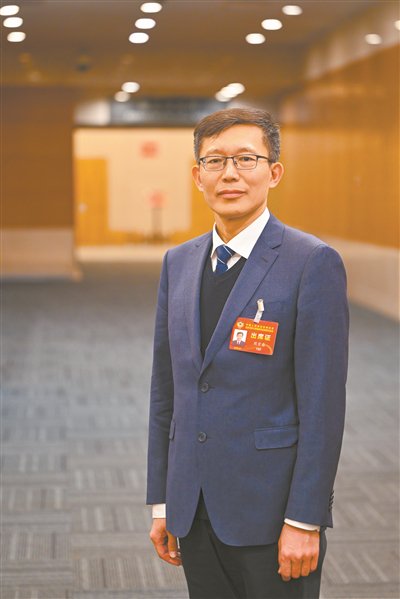
Group 1 - The core viewpoint emphasizes the importance of the intelligent manufacturing industry as a key driver for Beijing's development of high-tech industries and its goal to become an international center for technological innovation [3] - A proposal is made for a "High-tech Intelligent Manufacturing Talent Housing Special Plan" to enhance the attraction and retention of top talent in the sector, addressing the urgent needs of key personnel and young scientists [3][4] - The proposal aims to create a supportive environment for high-level innovative talent, ensuring they are willing to come, stay, and thrive in Beijing, thereby strengthening the city's competitive edge in high-tech industries [3] Group 2 - Recommendations include optimizing talent evaluation policies for strategic emerging industries, focusing on innovation value and contributions, and establishing a green channel for professional title evaluations [4] - The aim is to recognize outstanding talents who have made significant breakthroughs in key technologies, moving beyond traditional academic qualifications to emphasize practical contributions [4] - There is a call for strengthening the integration of industry and education, promoting the establishment of "modern industry colleges" in collaboration with key enterprises, and increasing targeted training in critical fields like integrated circuits and artificial intelligence [5]

北京房山团初步形成43件议案建议
Xin Lang Cai Jing· 2026-01-24 18:35
Core Viewpoint - The Fangshan delegation at the Beijing Municipal People's Congress has proposed 43 suggestions and proposals focusing on technology, transportation, culture, and public welfare to contribute to the modernization of the capital [1] Group 1: Proposals and Suggestions - The delegation includes 40 representatives, with a diverse composition of 26 party members, 16 women, and 7 representatives from the non-public economy sector [1] - Among the 43 proposals, 38 are formal proposals and 5 are suggestions [1] - Key areas of focus include: - Suggestions for accelerating the transformation of technological achievements in the Beijing-Tianjin-Hebei international technology innovation center [1] - Recommendations for enhancing road connectivity across the Yongding River with Fengtai and Daxing to support resilient city construction [1] - Proposals aimed at strengthening the protection and utilization of historical and cultural heritage in the capital's cultural center [1] - Suggestions to improve public service supply to enhance the well-being of residents [1]
加紧培育壮大新动能——访科技部党组书记、部长阴和俊(权威访谈·开局“十五五”)
Ren Min Ri Bao· 2026-01-14 23:04
Group 1 - The core viewpoint emphasizes the importance of technological innovation as a driving force for economic development and the need to cultivate new industries and future industries to gain a competitive edge internationally [1][2] - The Central Economic Work Conference has identified "innovation-driven development and the cultivation of new driving forces" as one of the eight key tasks for economic work in 2026, highlighting the strategic importance of technology [2][3] - The Ministry of Science and Technology plans to implement a comprehensive approach to enhance the national innovation system, focusing on strategic planning, policy measures, and regional innovation to support high-quality development [2][3] Group 2 - The Ministry will accelerate the formulation of the "14th Five-Year" National Science and Technology Innovation Plan to ensure a systematic approach to key tasks and major initiatives over the next five years [3] - There will be a focus on deep integration of technological innovation and industrial innovation, with an emphasis on addressing urgent economic and social needs through major national science and technology projects [3][4] - The establishment of international technology innovation centers in Beijing, Shanghai, and the Guangdong-Hong Kong-Macao Greater Bay Area aims to enhance original innovation capabilities and attract top talent [6][7] Group 3 - The Ministry will implement a coordinated mechanism to promote the integrated development of education, technology, and talent, ensuring that technological innovation drives educational and talent development [4][5] - Measures will be taken to strengthen the role of enterprises in technological innovation, including enhancing their decision-making and R&D investment capabilities [8][9] - The Ministry aims to improve the conversion of technological achievements into practical applications, particularly for small and medium-sized technology enterprises [9]
打造全球科创集群“样板间”
Ke Ji Ri Bao· 2026-01-05 10:12
Core Insights - The construction of international technology innovation centers in Beijing, Shanghai, and the Guangdong-Hong Kong-Macao Greater Bay Area has entered a new phase of expansion and upgrade, as highlighted by the Central Economic Work Conference [1] - The strategic vision and guidance from General Secretary Xi Jinping have been pivotal in the development of these centers, marking significant milestones since 2013 [2] - The construction of these centers reflects a shift from isolated breakthroughs to a new stage of regional collaborative development, enhancing their global influence and competitiveness [3] Group 1: Development and Achievements - The three international technology innovation centers have shown remarkable progress over the past 12 years, with Beijing's original innovation capacity continuously strengthening, maintaining annual R&D expenditure intensity above 6% during the 14th Five-Year Plan [4] - Shanghai's global influence has rapidly increased, with R&D expenditure accounting for approximately 4.4% of the city's GDP during the same period, and the scale of leading industries like integrated circuits and biomedicine surpassing 1.8 trillion yuan [5] - The Guangdong-Hong Kong-Macao Greater Bay Area has seen significant industrial and technological collaboration, with over 250 companies listed in Hong Kong and a total market value exceeding 11 trillion yuan [5] Group 2: Collaborative Framework - The success of these centers is attributed to high-level cooperation between central and local governments, facilitating cross-regional collaboration and resource sharing [6] - Initiatives such as the "One Network for All" service in the Yangtze River Delta have streamlined processes for projects and enterprises, enhancing the efficiency of innovation [6] - The Ministry of Science and Technology is actively promoting regional innovation linkages, focusing on collaborative research and technology resource sharing among key city clusters [6][8] Group 3: Future Directions - The Ministry of Science and Technology is developing plans for the construction of international technology innovation centers in Beijing and Shanghai, aiming to optimize regional innovation layouts and strengthen cross-regional collaboration [8] - The expansion of these centers is expected to include practical support measures related to strategic technology deployment and industrial cluster cultivation [8][10] - The emphasis on creating a favorable social environment and cultural soil for sustainable development of these centers is crucial for their integration with modern industrial systems [10][11]
2026:26个关键词里的未来(三)
Di Yi Cai Jing· 2025-12-30 13:14
Group 1: State-Owned Enterprise Reform - The central economic work conference emphasized the need to deepen state-owned enterprise (SOE) reform, focusing on optimizing the layout of state-owned economy, improving modern enterprise systems, and enhancing state asset supervision efficiency [1][2] - Key areas of reform include functional, structural, and institutional reforms, with a focus on better utilizing market forces to fulfill national strategic missions and improving the evaluation system for SOEs [2][3] Group 2: Urban and Rural Resident Income Increase Plan - The central economic work conference proposed a new income increase plan for urban and rural residents, transitioning from a focus on low-income groups to a broader approach covering all residents [3][4] - The plan aims to enhance consumer spending and stabilize the middle-income group while addressing income disparities and illegal income [3][4] Group 3: Investment Stabilization - The conference highlighted the need to stabilize investment, suggesting an increase in central budget investment and optimizing the use of local government special bonds [6][7] - Investment growth has been declining due to various factors, including real estate market adjustments and competition, with fixed asset investment down by 2.6% year-on-year [6][7] Group 4: Education Resource Allocation - The "14th Five-Year Plan" suggests improving education resource allocation in response to demographic changes, particularly by expanding ordinary high school enrollment to address the shortage of high school places [8][9] - The number of ordinary high school enrollments is set to exceed 10 million in 2024, with a recorded admission rate of over 60% [8][9] Group 5: Long-Term Care Insurance Implementation - Long-term care insurance (LTCI) is set to be implemented nationwide in 2026 after a decade of trials, aiming to cover nearly 3 billion people and provide equal protection for all disabled individuals [16][17] - The LTCI is expected to inject significant funds into the market, potentially exceeding 100 billion annually, thus stimulating the long-term care service industry [17] Group 6: Birth Policy Optimization - The central economic work conference stressed the need for a comprehensive optimization of birth policies to stabilize the declining birth rate, with a focus on financial support and service system improvements [18][19] - New measures include expanding maternity insurance coverage to flexible workers and enhancing public services for early childhood care [19][20]
“这是一个重大任务”,如何落实推进(创新谈)
Ren Min Ri Bao· 2025-12-28 22:17
Core Viewpoint - The construction of three major international technology innovation centers in Beijing (Jing-Jin-Ji), Shanghai (Yangtze River Delta), and the Guangdong-Hong Kong-Macao Greater Bay Area is a significant strategic task aimed at enhancing the overall efficiency of the national innovation system and facilitating the flow of innovative resources [1][2]. Group 1: Strategic Importance - The establishment of these centers is a major task personally planned and promoted by General Secretary Xi Jinping, emphasizing its large scale and profound impact on international competition [1]. - The centers are expected to serve as critical points for innovation-driven development strategies, concentrating advantageous resources and enhancing the flow of innovative elements across a broader area [2]. Group 2: Regional Advantages and Collaboration - The expansion of the Beijing international innovation center to the Jing-Jin-Ji region and the Shanghai center to the Yangtze River Delta will accelerate the formation of China's primary sources of original innovation, with Beijing's research resources, Tianjin's manufacturing base, and Hebei's land and cost advantages playing key roles [2]. - Each region has distinct advantages: Jing-Jin-Ji focuses on original innovation breakthroughs, the Yangtze River Delta aims to enhance technology transfer and high-end industrial clusters, and the Greater Bay Area emphasizes cross-border collaborative innovation [2]. Group 3: Methodology and Implementation - The construction of the three centers requires adherence to the inherent laws of technological innovation, emphasizing patience and long-term investment rather than short-term metrics [3]. - There is a need for practical actions, including reforms in research management, talent evaluation, and the transformation of results, to promote a virtuous cycle among technology, industry, and finance [3]. - Maintaining strategic determination is crucial for the successful completion of this significant task, which will enhance the momentum for high-quality development and solidify the technological support for China's modernization [3].
长三角打造世界级创新雁阵:上海领头,多极点支撑
2 1 Shi Ji Jing Ji Bao Dao· 2025-12-19 12:39
Core Insights - The article emphasizes the strategic importance of the Yangtze River Delta (YRD) as a hub for innovation and technology development in China, highlighting the collaborative efforts of cities within the region to enhance their competitive edge in the global market [1][2]. Group 1: Innovation Ecosystem - Companies like Ku Fei (Zhejiang) Aircraft Technology Co., Ltd. and Jiaxing Enhe Information Technology Co., Ltd. are establishing a presence in multiple cities within the YRD, indicating a trend of regional collaboration for innovation [1]. - The central government's economic work conference has outlined plans to develop international technology innovation centers in key regions, including the YRD, which is expected to enhance the area's innovation capabilities [2]. Group 2: R&D Investment - In 2024, Shanghai's R&D expenditure is projected to reach 234.37 billion yuan, with an R&D intensity of 4.35%, placing it among the top in the nation [3]. - Jiangsu's R&D investment is expected to hit 459.75 billion yuan in 2024, with an R&D intensity of 3.36%, indicating a strong commitment to innovation [3]. Group 3: Higher Education and Research Institutions - The YRD is home to 37 universities included in China's "Double First Class" initiative, accounting for a quarter of the total, with significant funding allocated to institutions like Zhejiang University and Shanghai Jiao Tong University [4][5]. - New research universities are emerging in the YRD, contributing to the region's innovation landscape, with institutions like Westlake University focusing on cutting-edge scientific research [5]. Group 4: Strategic Science and Technology Infrastructure - The YRD has over 40 major scientific facilities, making it the most concentrated area for large scientific installations in China, which supports both academic research and industrial innovation [6][7]. - Notable projects include the completion of the Future Network Experimental Facility in Jiangsu, which enhances capabilities in information and communication technology [8]. Group 5: Policy and Collaborative Framework - The "expansion and quality improvement" strategy aims to facilitate the efficient flow of innovation resources within the YRD, promoting the application of research outcomes in industry [9][10]. - The establishment of the G60 Science and Technology Innovation Corridor exemplifies a collaborative approach to integrate technology transfer and industrial development across multiple cities in the YRD [11].
三大国际科技创新中心建设扩围提质
Ke Ji Ri Bao· 2025-12-18 03:10
Core Viewpoint - The Central Economic Work Conference has outlined the overall requirements and policy direction for next year's economic work, emphasizing "innovation-driven development" and the establishment of international technology innovation centers in Beijing (Jing-Jin-Ji), Shanghai (Yangtze River Delta), and the Guangdong-Hong Kong-Macau Greater Bay Area as one of the eight key tasks [1][2]. Group 1 - The expansion of international technology innovation centers aims to enhance global influence and competitiveness, with specific plans to extend Beijing's center to Jing-Jin-Ji and Shanghai's to the Yangtze River Delta [1][2]. - The construction of the three major centers has significantly contributed to improving China's innovation capabilities, resulting in original innovations and advanced manufacturing clusters [2]. - Research and development (R&D) investment intensity for Beijing, Shanghai, and Guangdong is projected to reach 6.58%, 4.35%, and 3.6% respectively by 2024, with Shenzhen-Hong Kong-Guangzhou, Beijing, and Shanghai-Suzhou ranked 1st, 4th, and 6th in the 2025 global top 100 innovation clusters [2]. Group 2 - The expansion and enhancement of the three major centers are seen as crucial strategic support for China's goal of becoming a technology powerhouse, with practical measures being developed around strategic technology deployment and industry cluster cultivation [3]. - The integration of innovation resources through the expansion of international technology innovation centers is expected to foster a synergistic relationship between technological and industrial innovation, thereby supporting high-quality development [2][3].
国际科技创新中心建设扩围提质
Ke Ji Ri Bao· 2025-12-18 01:20
Core Viewpoint - The Central Economic Work Conference has outlined the overall requirements and policy direction for next year's economic work, emphasizing "innovation-driven development" and the establishment of international technology innovation centers in Beijing (Jing-Jin-Ji), Shanghai (Yangtze River Delta), and the Guangdong-Hong Kong-Macau Greater Bay Area [1][2]. Group 1: Policy Direction - The expansion of international technology innovation centers aims to enhance global influence and competitiveness, with specific focus on integrating innovation resources and promoting the synergy between technological and industrial innovation [1][2]. - The construction of these centers is seen as a significant strategic move towards establishing China as a technology powerhouse, with practical measures being developed to support this initiative [3]. Group 2: Achievements and Future Goals - The three major centers have shown significant results in recent years, contributing to the enhancement of China's innovation capabilities, with R&D investment intensities projected to reach 6.58% in Beijing, 4.35% in Shanghai, and 3.6% in Guangdong by 2024 [2]. - In the 2025 global ranking of innovation clusters, Shenzhen-Hong Kong-Guangzhou, Beijing, and Shanghai-Suzhou are expected to rank 1st, 4th, and 6th respectively, highlighting the effectiveness of these centers [2].
中央财办有关负责同志详解2025年中央经济工作会议精神,扩大内需是明年排在首位的重点任务|宏观经济
清华金融评论· 2025-12-17 10:41
Core Viewpoint - The 2025 Central Economic Work Conference emphasizes the need for a stable economic environment while addressing challenges and opportunities for growth, focusing on a resilient and high-quality development path for the economy [4][5]. Economic Performance and Outlook - The overall economic operation is stable, with a projected GDP growth of around 5% for 2025, leading to an economic total of approximately 140 trillion yuan [5]. - Employment remains stable, with significant growth in foreign trade and diversified exports [5]. - The economy is expected to face challenges, including external environmental changes and domestic supply-demand imbalances, but the long-term positive trends and advantages of the Chinese economy remain intact [8]. Modern Industrial System and Innovation - Continuous progress in building a modern industrial system is noted, with advancements in new productive forces and significant achievements in technology innovation, particularly in AI, biomedicine, and robotics [6]. Reform and Opening Up - New steps in reform and opening up are highlighted, including the deepening of the national unified market and active capital market [7]. - Positive progress in risk resolution in key areas, such as local government debt management and the completion of housing delivery tasks, is acknowledged [7]. Social Welfare and Employment - Enhanced social welfare measures, including childcare subsidies and free education for one year before primary school, are being implemented [8]. - The employment situation is stable, with over 12 million new urban jobs created by November, achieving the annual target ahead of schedule [29]. Macroeconomic Policy - The continuation of a proactive fiscal policy and a moderately loose monetary policy is planned for the next year, focusing on maintaining fiscal sustainability and enhancing the effectiveness of financial support for the real economy [9][12]. - Emphasis on expanding domestic demand as a priority task, with measures to boost consumption and investment [13][14]. Regional Development and Coordination - The conference outlines strategies for promoting regional coordinated development, focusing on the integration of urban and rural areas and enhancing the development capabilities of major economic provinces [24][26]. Green Transition and Carbon Neutrality - The commitment to achieving carbon neutrality is reinforced, with plans to advance carbon peak strategies and develop a new energy system [27][28]. Real Estate Market Stability - The need for a stable real estate market is emphasized, with strategies to balance supply and demand, support enterprise transformation, and establish a new development model for the sector [31][33].