
基金调仓

Search documents
调仓!百余“基金买手”出手
天天基金网· 2025-08-07 05:02
Core Viewpoint - The article highlights the increasing trend of equity fund advisors actively adjusting their portfolios, favoring growth sectors like technology, despite recent market fluctuations [3][4]. Group 1: Fund Performance and Adjustments - Over 100 fund advisory combinations have completed adjustments since the second half of the year, with a notable increase in equity asset allocations [3]. - In July, the average return of stock advisory products reached 5.12%, outperforming the CSI 300 index's 3.54% [3]. - Many advisory combinations have seen year-to-date gains exceeding 20%, with specific examples like the Jiashi Bailin All-Weather Strategy and China Europe Advantage Industry All-Star [3]. Group 2: Portfolio Strategies - Fund advisors are increasingly replacing passive funds with active management funds due to improved performance in active equity funds [4]. - For instance, the ICBC Credit Suisse Balanced Allocation Combination reduced its index fund holdings by 15 percentage points while increasing its allocation to mixed funds [4]. - The article notes a shift in focus towards sectors such as pharmaceuticals, cyclical industries, and technology, while reducing exposure to consumer sectors [6]. Group 3: Tactical Adjustments - Some advisory combinations are optimizing their portfolio structures by taking profits and reallocating funds to more promising sectors [8]. - The "交银全明星" combination adjusted its holdings by decreasing the weight of value funds and increasing its offensive positioning [8]. - Advisors maintain a positive outlook on the A-share market's upward trend, suggesting that short-term adjustments should be leveraged for strategic accumulation in sectors with stable long-term fundamentals [8].


基金早班车丨基金“买手”越跌越买,成长科技成调仓主线
Sou Hu Cai Jing· 2025-08-07 00:45
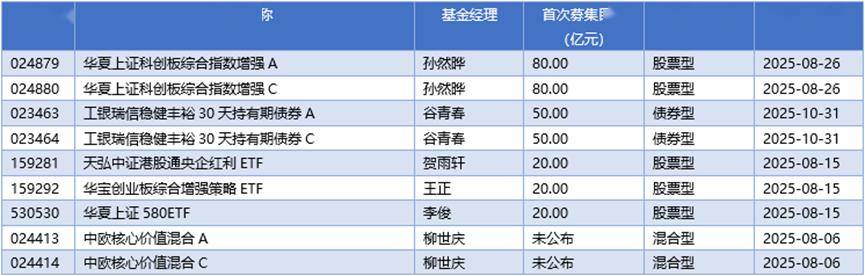
Market Overview - In the second half of the year, fund advisory portfolios have been actively rebalanced, with equity advisors continuing a "buy the dip" strategy, particularly increasing positions in hard technology and high-end manufacturing sectors, which are seen as having long industry cycles [1] - On August 6, A-shares showed an upward trend, with the Shanghai Composite Index rising by 0.45% to 3633.99 points, the Shenzhen Component Index increasing by 0.64% to 11177.78 points, and the ChiNext Index up by 0.66% to 2358.95 points. The total trading volume in the Shanghai and Shenzhen markets reached 17340.68 billion yuan, with over 3300 stocks rising, and nearly 100 stocks gaining over 9% [1] Fund News - On August 6, nine new funds were launched, primarily equity and mixed funds, including the Huaxia SSE Sci-Tech Innovation Board Composite Index Enhanced A, which has a fundraising target of 8 billion yuan. Five funds announced dividends, with the highest being 1.5 yuan per 10 fund shares for the Yinhua Huixiang Three-Year Regular Open Mixed Securities Investment Fund [2] - Following the recent issuance of QDII quotas, six products have announced the suspension of subscriptions or reduced quotas in August. Several ETFs linked to overseas broad-based indices continue to trade at significant premiums, indicating strong investor interest [2] - Convertible bonds have gained attention as the market recovers, with the China Convertible Bond Index rising by 10.09% year-to-date, compared to a 3.58% increase in the CSI 300 Index and a slight decline of 0.59% in the China Bond Composite Index, showcasing significant excess returns [2] Fund Performance - The top-performing funds on August 6 included the Zhonghai Charm Yangtze River Delta Flexible Allocation Mixed Fund, with a daily growth rate of 5.8049%, followed by Hengyue Smart Technology Mixed C at 5.3508% and Hengyue Smart Technology Mixed A at 5.3482% [3][4] - In the stock fund category, the top performer was the Huaan National Robot Industry Index C, with a daily growth rate of 3.5701%, while the bond fund champion was the Wanji Convertible Bond D, with a growth rate of 1.6761% [4][5] - The top five ETFs included the Sichuan Robot Industry ETF, which achieved a daily growth rate of 4.1435%, and the LOF fund champion was the Guotai National Aerospace Military Industry Index (LOF) A, with a growth rate of 3.0963% [4][5]
华宝基金丁靖斐:频繁调仓,在管产品年内跑输业绩基准逾6个百分点
Sou Hu Cai Jing· 2025-07-30 02:00
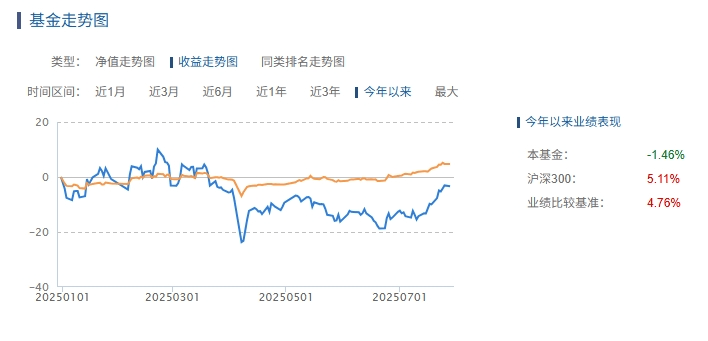
Core Viewpoint - The Huabao Multi-Strategy A fund has underperformed its benchmark by over 6 percentage points year-to-date as of July 28, 2025, with a net asset value decline of 1.46% [1][5]. Group 1: Fund Performance - The Huabao Multi-Strategy A fund was established in May 2004 and currently has an asset size of approximately 650 million yuan [2]. - The fund has experienced cumulative declines of 14.18% during the tenure of its current manager, Ding Jingfei, who has been in charge since October 2022 [6][9]. - In 2023 and 2024, the fund reported losses of 15.57% and 2.83%, respectively [5]. Group 2: Portfolio Management - The fund's stock holdings accounted for 78.11% of total assets as of the end of Q2 2025, with the top ten holdings representing 40.32% of net asset value [7]. - The fund has a high turnover rate, with stock turnover rates of approximately 468.23% and 614.88% in 2023 and 2024, respectively [7]. - More than half of the top ten holdings were replaced in Q2 2025, indicating a strategy focused on structural adjustments in response to external factors [7]. Group 3: Key Holdings - The top holdings as of Q2 2025 included Jack Shares, Naipu Mining Machinery, and Yonghui Supermarket, with significant declines in the values of Xianglou New Materials and Honglu Steel Structure, both dropping over 15% [8].
2025Q2基金仓位解析:二季度基金调仓五大看点
GOLDEN SUN SECURITIES· 2025-07-24 00:13
Group 1: Fund Positioning Insights - In Q2 2025, the scale of actively managed funds declined again, with redemption pressure remaining high [3] - Hong Kong stock positions reached a new high, but the pace of increase slowed and divergences emerged [3] - The configuration of innovation and entrepreneurship showed a reversal, with the ChiNext index's position regaining upward momentum [3] - There was a noticeable increase in allocation towards growth sectors and large financials, while dividend configurations narrowed [3] - The trend of diversification and market capitalization sinking continued [3] Group 2: Industry Performance - The steel industry showed a performance increase of 34.0% over the past year, leading among industries [1] - The communication sector experienced a significant annual growth of 51.5%, indicating strong market dynamics [1] - The banking sector lagged with a slight decline of -0.2% in January, but showed a recovery of 30.3% over the year [1] Group 3: Company-Specific Insights - Kuaishou (01024.HK) is expected to achieve revenues of 140.6 billion, 154.5 billion, and 166.6 billion RMB from 2025 to 2027, with a net profit growth of 11%, 27%, and 14% respectively [5] - Bilibili (09626.HK) is projected to generate revenues of 30 billion, 32.9 billion, and 36.2 billion RMB from 2025 to 2027, with a year-on-year growth of 12%, 9%, and 10% [8] - GoerTek (002241.SZ) plans to acquire two precision manufacturing companies for approximately 95 billion RMB, enhancing its vertical integration capabilities [9] - Kingsoft (03888.HK) is forecasted to have revenues of 11.4 billion, 12.9 billion, and 14.6 billion RMB from 2025 to 2027, driven by dual growth from office and gaming sectors [10] - Chow Tai Fook (01929.HK) reported a 1.9% decline in same-store sales for FY2026Q1, with expectations for improvement due to strong e-commerce growth [11]




“国家队”斥资超2000亿增持ETF,知名基金经理调仓路径各异
第一财经· 2025-07-23 15:01
Core Viewpoint - The "national team" has significantly increased its investment in ETFs and equity assets, with an estimated total investment exceeding 207 billion yuan in the first half of the year, reflecting a strategic response to market volatility and a focus on structural opportunities [2][3][5]. Group 1: National Team's Investment Actions - In April, amidst increased volatility in the A-share market, the "national team" including Central Huijin and China Reform Holdings began to increase their holdings in ETFs and other equity assets [3]. - Central Huijin Asset Management has become the largest institutional investor in the Huatai-PineBridge CSI 300 ETF, increasing its holdings from 26.62 billion shares at the end of last year to 37.86 billion shares, representing a rise in shareholding ratio from 29.78% to 40.26% [3][4]. - The total estimated investment by the "national team" in ETFs for the first half of the year reached approximately 207.27 billion yuan, with significant contributions from various ETFs [5][6]. Group 2: Fund Managers' Adjustments - In the second quarter, over 57% of active equity funds increased their stock positions, with some funds raising their equity allocation by more than 30% [8]. - Notable fund managers like Zhang Kun have adjusted their portfolios, increasing their holdings in liquor stocks despite a general reduction in the food and beverage sector [9]. - Liu Gesong has focused on increasing allocations to Hong Kong stocks and non-bank financials, with significant investments in companies like Xiaomi and New Oriental Education [9]. Group 3: Sector Focus and Trends - The innovative drug sector has seen increased interest from fund managers, with significant allocations to companies involved in cutting-edge technologies and international collaborations [10]. - Fund managers are optimistic about the potential for domestic innovative drugs to gain international recognition and market share, driven by ongoing clinical trials and partnerships with multinational pharmaceutical companies [10].
“国家队”扫货ETF逾2000亿元,知名基金经理调仓路径各异
Di Yi Cai Jing· 2025-07-23 12:54
Core Viewpoint - The "national team" has significantly increased its investment in ETFs and equity assets, with an estimated total investment exceeding 207 billion yuan in the first half of the year, reflecting a strategic move to stabilize the A-share market amid increased volatility [1][2][4]. Group 1: National Team's Investment Actions - In response to market fluctuations, the central financial institutions, including Central Huijin and China Guoxin, have actively increased their holdings in ETFs and other equity assets since April [2][3]. - Central Huijin Asset Management has become the largest institutional investor in the Huatai-PB CSI 300 ETF, increasing its holdings from 26.62 billion shares at the end of last year to 37.86 billion shares, raising its shareholding ratio from 29.78% to 40.26% [2][3]. - The total investment in ETFs by the national team in the first half of the year reached approximately 207.27 billion yuan, with significant contributions from various ETFs, including Huatai-PB, China Southern, and E Fund [4][3]. Group 2: Fund Managers' Adjustments - In the second quarter, over 57% of active equity funds increased their stock positions, with some funds raising their equity exposure by more than 30% [5][6]. - Notable fund managers, such as Zhang Kun, have adjusted their portfolios by increasing holdings in liquor stocks despite a general market downturn in the food and beverage sector [6][7]. - Liu Gesong has focused on increasing allocations to Hong Kong stocks and non-bank financials, while fund manager Ge Lan has concentrated on innovative pharmaceuticals, reducing exposure to traditional Chinese medicine and medical devices [7][8]. Group 3: Focus on Innovative Pharmaceuticals - The innovative pharmaceutical sector has attracted significant interest from fund managers, with many increasing their stakes in leading companies within this field [8]. - Ge Lan highlighted the ongoing advancements in innovative drug technologies and the increasing collaboration between domestic companies and multinational pharmaceutical firms, indicating a positive outlook for the sector [8].
公募基金二季度规模增长2万亿,主动权益基金A股持仓占比连续三个季度下滑,二季度大手笔加仓通信、军工、金融、医药
Ge Long Hui A P P· 2025-07-23 08:50
Overview of Public Fund Market - As of June 30, the total net asset value of the public fund market reached 33.72 trillion yuan, with money market funds accounting for 14.23 trillion yuan, representing 42.2% of the total [1] - Bond funds totaled 10.91 trillion yuan, making up 32.36%, while equity funds reached 4.27 trillion yuan, accounting for 12.66% [1] - Mixed funds stood at 3.21 trillion yuan, representing 9.51%, and QDII funds totaled 590.2 billion yuan, or 1.75% [1] - The total net asset value of public funds grew by 1.42 trillion yuan in the first half of the year, with a share increase of 763.6 billion units [1] Fund Performance and Changes - In the first half of the year, equity funds saw a net asset value increase of 201.7 billion yuan, with a share increase of 85.5 billion units [1] - Mixed funds experienced a net asset value growth of 31.8 billion yuan but faced a net redemption of 116.4 billion units [1] - Bond funds increased by 376.2 billion yuan in net asset value, with a share growth of 127.7 billion units [1] - Money market funds grew by 622.6 billion yuan in net asset value, with a share increase of 622.7 billion units [1] Active Equity Fund Dynamics - As of the end of Q2 2025, the number of active equity funds totaled 4,582, with a combined net asset value of 34.65 trillion yuan, a decrease of 211.8 billion yuan from the previous quarter [7] - Active equity funds held stocks valued at 2.94 trillion yuan, with stock positions rising to 84.24%, the highest level since 2005 [10] - The proportion of A-shares in active equity fund asset allocation continued to decline, dropping from 70.80% to 70.05% [10] Sector Allocation Insights - In Q2 2025, the top sectors by holding value included electronics (18.67%), pharmaceuticals (10.91%), and electric equipment (9.89%) [17] - The allocation to the technology growth sectors, including communications and defense, saw significant increases, while financial sectors remained under-allocated [20] - The semiconductor, chemical pharmaceuticals, and battery industries ranked high in terms of holding value among active equity funds [20] ETF Market Expansion - By June 30, 2025, the total net asset value of domestic non-money ETFs reached 4.15 trillion yuan, with stock ETFs accounting for 3.04 trillion yuan [22] - The stock ETF market grew by 203.7 billion yuan in Q2 2025, driven by significant capital inflows [25] - The net inflow for stock ETFs was 103.3 billion yuan, with new ETF establishments contributing 38.4 billion yuan [25]

金工李倩云:主动权益基金二季度如何调仓?
ZHONGTAI SECURITIES· 2025-07-22 12:20
Group 1: Overall Market Overview - The overall fund market is dominated by mixed funds, totaling 4,702, followed by bond funds and equity funds. The growth rate for equity funds in the current quarter is the highest at 7.45%, followed by REITs at 6.15%. The largest scale is in money market funds, reaching 142,311.36 billion yuan [3][4] - As of the end of Q2 2025, there are 581 ordinary equity funds, 1,359 flexible allocation funds, 26 balanced mixed funds, and 2,613 equity mixed funds. The number of equity mixed funds increased by 41 compared to Q1 2025 [3][4] Group 2: Active Equity Fund Positioning - The highest equity position is in ordinary equity funds at 89.61%, followed by 88.19% in equity mixed funds. The stock positions of various active equity funds are close to historical highs since 2015, with flexible allocation funds reaching their highest ever [4] - The highest industry allocation for active equity funds is in Hong Kong Stock Connect at 19.91%, followed by electronics at 15.07%. The allocation to Hong Kong Stock Connect has reached its highest level since Q1 2015 [4][5] Group 3: Stock and Individual Stock Configuration - The highest valued stock held by active equity funds is Tencent Holdings. Among the top twenty holdings, six are from Hong Kong Stock Connect, accounting for 33.79% of the total value of the top 20 stocks. The food and beverage and electronics sectors each have three stocks in the top holdings, accounting for 12.44% and 11.72%, respectively [4][5] - The stock with the highest increase in holdings is Zhongji Xuchuang, with an increase of 139.45 billion yuan. Other stocks with increases exceeding 100 billion yuan include Xinyi and Shunfeng Holdings, all from the communication sector [5]



市场表现强势,可是我持有基金表现很一般,怎么办?
天天基金网· 2025-07-22 11:02
Core Viewpoint - The article discusses the performance of various funds in the context of market trends, emphasizing the importance of understanding both long-term and short-term performance metrics when considering whether to adjust fund allocations [1]. Group 1: Fund Performance Analysis - Long-term performance of a fund may be strong while short-term performance appears weak, suggesting that if the fund manager's strategy and the investor's goals remain unchanged, it may be wise to hold the position [7]. - For funds with poor long-term performance and average short-term results, a thorough analysis is necessary to determine the reasons behind the lackluster performance, which may warrant a change in investment [10]. - Funds that have performed poorly over the long term but show better short-term results require careful evaluation to ascertain whether the performance is due to market trends or the fund manager's strategy [11]. Group 2: Reasons for Poor Fund Performance - A mismatch between the fund's style and current market trends can lead to underperformance, necessitating a review of asset allocation rather than hasty adjustments [12]. - Investors may find themselves in a position of loss if they purchase funds at market peaks, highlighting the importance of timing in investment decisions [14]. - Fund managers may underperform due to lack of diligence or poor stock selection, which can be identified through regular review of fund reports [16][17]. Group 3: Recommendations for Adjusting Fund Allocations - Investors should focus on overall portfolio allocation rather than individual fund performance, as market trends can shift rapidly [24]. - Future potential of investments should be prioritized over past performance when considering adjustments to fund allocations [27]. - Gradual adjustments to fund positions are recommended, allowing for flexibility based on market conditions [30].

基金新建仓股票曝光 26股获高比例持有
Zheng Quan Shi Bao Wang· 2025-07-21 01:47
Group 1 - A total of 413 stocks have been newly added to the fund's heavy holdings list, with 26 stocks having a new position ratio exceeding 1% [1] - Among the newly added stocks, 241 are from the Shanghai and Shenzhen main boards, 112 from the ChiNext, 40 from the Sci-Tech Innovation Board, and 18 from the Beijing Stock Exchange [1] - The industries with the highest concentration of newly added stocks are basic chemicals, electronics, and power equipment, with 46, 39, and 35 stocks respectively [1] Group 2 - The stock with the highest new holding ratio is Youfang Technology, which was included in 14 fund heavy holdings with a total holding of 6.4711 million shares, accounting for 7.05% of its circulating shares [2] - Other notable stocks with high new holding ratios include Guangxin Materials at 6.38%, Haotong Technology at 5.67%, Zhidema at 4.51%, and Runong Irrigation at 4.48% [2] - The average increase of high new holding stocks since the second quarter is 50.14%, with notable gainers including Shutaishen at 544.63% and Sifang Jichuang at 189.92% [2][3] Group 3 - Four stocks have released mid-year performance forecasts, with two expecting profit increases; the highest expected net profit growth is from Lvtian Machinery, projected at 137 million yuan, a year-on-year increase of 60% [2] - The stock with the most fund holders among high new holdings is Yingshi Innovation, held by 162 funds, followed by Shutaishen and Sifang Jichuang with 19 and 16 funds respectively [2][3]


