
宏观政策协同

Search documents
中央定调2026年货币政策适度宽松,什么信号
21世纪经济报道· 2025-12-12 01:56
Core Viewpoint - The Central Economic Work Conference emphasizes the importance of financial support for expanding domestic demand, technological innovation, and small and micro enterprises, indicating a clear direction for financial work in 2026 [1][3]. Financial Policy Direction - The conference highlights the need for a proactive fiscal policy, maintaining necessary fiscal deficits and total debt levels, while optimizing fiscal expenditure structure and addressing local fiscal difficulties [5][6]. - It is projected that the new government debt scale for 2026 may increase to approximately 12.5 trillion yuan, with a deficit rate maintained at around 4.0%, reflecting an increase of about 200 billion yuan from the previous year [6]. Monetary Policy Approach - A moderately loose monetary policy will continue, focusing on stabilizing economic growth and ensuring reasonable price recovery, with flexible use of various policy tools such as reserve requirement ratio cuts and interest rate reductions [6][7]. - The emphasis on price levels has increased, with the Consumer Price Index (CPI) showing a year-on-year increase of 0.7% in November, indicating a potential for further monetary easing [6]. Key Economic Tasks - The conference identifies eight key tasks for economic work, with a focus on domestic demand as the primary driver for economic growth in 2026 [10]. - Specific actions include implementing measures to boost consumption, such as increasing funding for consumption from 300 billion yuan to 500 billion yuan, and expanding support for service consumption [11]. Investment and Innovation - The conference aims to stabilize investment by increasing central budget investment and optimizing the use of special bonds, which is expected to enhance market expectations and restore overall investment willingness [11]. - Emphasis is placed on innovation-driven growth, with a focus on developing a technology finance system that supports technological innovation and industry development [12]. Financial Institution Reform - The conference calls for deepening the reform of small and medium financial institutions to enhance their competitiveness and mitigate risks, which is a crucial part of the financial supply-side structural reform [12][13]. - Specific measures include promoting mergers and restructuring of rural small and medium banks to improve their service adaptability and competitiveness [13].


2026年经济工作重磅定调!最新解读来了
Zhong Guo Ji Jin Bao· 2025-12-11 22:42
Core Insights - The Central Economic Work Conference held from December 10 to 11 in Beijing summarized the economic work for 2025 and outlined the tasks for 2026, emphasizing a steady approach to economic growth while addressing current challenges [1][2]. Economic Performance and Policy Effectiveness - The conference acknowledged the economic performance and policy effectiveness during the "14th Five-Year Plan" period, highlighting that despite multiple pressures, the economy has shown resilience and is on track for a good start to the "15th Five-Year Plan" [2][3]. - GDP growth for the first three quarters of this year reached 5.2%, surpassing the annual target of around 5.0% [2]. Macroeconomic Policy Direction - The macroeconomic policy for 2026 will maintain three key principles: a more proactive fiscal policy, an appropriately loose monetary policy, and a consistent macro policy approach [4][5]. - The fiscal deficit rate is expected to remain stable, while the scale of special bonds and long-term bonds will increase to support infrastructure and innovation projects [4][5]. Domestic Demand and Consumption - The conference emphasized the importance of domestic demand, with a focus on enhancing consumer capacity and willingness through initiatives like the implementation of a plan to increase urban and rural residents' income [7]. - Policies will prioritize consumption over investment, indicating a shift towards demand-side strategies to stimulate economic growth [7]. Technological Innovation - The conference reiterated the significance of technological innovation, aiming to cultivate new growth drivers and enhance competitive advantages [8]. - Key initiatives will include developing a comprehensive plan for education and technology talent, establishing international innovation centers, and optimizing the industrial structure [8]. Real Estate Market Stability - The conference addressed the need to stabilize the real estate market and manage local government debt risks, with a focus on high-quality transformation in the real estate sector [10][11]. - Policies will aim to support the construction of quality housing and reform the housing provident fund system to aid market stability [10]. Foreign Trade and Investment - The conference shifted its focus from merely stabilizing foreign trade and investment to promoting win-win cooperation across multiple fields [12][13]. - Future efforts will include expanding service sector openness, fostering new trade dynamics, and enhancing bilateral and multilateral cooperation [12][13].
专访中信证券首席经济学家明明:预计政策落地成效将是下一阶段央行等宏观政策部门主要关注对象│解读中央经济工作会议
Sou Hu Cai Jing· 2025-12-11 13:44
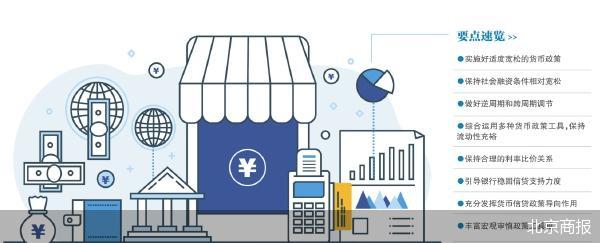
Core Viewpoint - The Central Economic Work Conference emphasizes the continuation of a moderately loose monetary policy, focusing on stabilizing economic growth and ensuring reasonable price recovery through various policy tools such as reserve requirement ratio (RRR) cuts and interest rate reductions [1][3]. Monetary Policy - The conference highlights the need for "flexible and efficient" use of monetary policy tools, indicating a shift from last year's focus on "timely" adjustments to a more proactive and efficient approach [3][4]. - The policy direction for the upcoming year will prioritize long-term economic development over short-term stimulus effects, integrating both new and existing policies to enhance macroeconomic governance [2][4]. Financial Sector - The conference introduces the initiative to deepen the reduction and quality improvement of small and medium-sized financial institutions, aiming to enhance the efficiency of the financial system in supporting technological innovation and the real economy [5].

中信证券明明:苦练内功强根基 政策协同启新程
Zhong Zheng Wang· 2025-12-11 13:42
Group 1 - The core viewpoint of the article emphasizes that the Central Economic Work Conference will focus on balancing short-term effectiveness with long-term planning for the 14th Five-Year Plan, highlighting the importance of policy implementation and consistency [1] - Fiscal policy will continue to adopt a more proactive stance, maintaining a fiscal deficit rate of around 4% and a deficit scale of approximately 6 trillion yuan by 2026, while optimizing fiscal management and addressing local fiscal difficulties [1] - Monetary policy will remain moderately loose, utilizing various tools such as reserve requirement ratio cuts and interest rate reductions to enhance efficiency and adapt to long-term economic cycles [1] Group 2 - Expanding domestic demand is identified as the primary task for the coming year, with initiatives aimed at boosting consumer spending and increasing residents' income through targeted actions [2] - Innovation and reform are highlighted as dual engines for high-quality development, with a focus on enhancing corporate innovation, protecting intellectual property, and fostering collaboration between industry, academia, and research [2] - The overall policy deployment aims to stabilize growth in the short term while laying a solid foundation for long-term development, supporting the objectives of the 14th Five-Year Plan [2]
金融数据保持合理增长 宏观政策协同助力实体经济转型
Jin Rong Shi Bao· 2025-11-14 02:04
Core Viewpoint - The People's Bank of China reported that the growth rates of broad money (M2) and social financing remain high, creating a favorable monetary environment for economic recovery [1][2]. Monetary Supply and Social Financing - As of the end of October, M2 reached 335.13 trillion yuan, with a year-on-year growth of 8.2%, which is 0.8 percentage points higher than the same period last year [1][4]. - The total social financing stock was 437.72 trillion yuan, growing by 8.5% year-on-year, supported by rapid issuance of government bonds and corporate bonds [2][3]. - Government bond issuance has accelerated, with approximately 22 trillion yuan issued from January to October, nearly 4 trillion yuan more than the previous year [2][4]. Policy Coordination - The collaboration between monetary and fiscal policies has effectively stabilized market liquidity and provided funding for major projects [3][4]. - The central bank's liquidity support through various operations has facilitated smooth government bond issuance, demonstrating the importance of policy coordination [3][4]. Economic Impact and Debt Management - Increased government bond issuance is aimed at supporting major projects and national strategies, helping to expand demand and stabilize the economy [4]. - The leverage ratio of the government sector increased by 8.8 percentage points to 67.5%, while the leverage ratios of non-financial enterprises and households rose by 4.5 percentage points and slightly decreased by 1.2 percentage points, respectively [4]. Credit Structure Optimization - The credit market is characterized by total growth and structural optimization, reflecting changes in funding demands across different sectors of the economy [5][6]. - The shift in credit allocation towards emerging sectors such as technology innovation and green development indicates a transition in economic growth drivers [5][6]. - Financial institutions are adapting their products and services to better align with the structural transformation of the economy, enhancing the interaction between finance and the real economy [6].
央行:宏观政策取向需保持一致性
Bei Jing Shang Bao· 2025-11-11 15:49
Core Viewpoint - The People's Bank of China (PBOC) emphasizes the need for a balanced monetary policy that supports economic growth while managing risks, ensuring internal and external equilibrium, and maintaining the health of the banking system [1][4]. Group 1: Economic Performance - In the first three quarters of the year, China's GDP grew by 5.2%, demonstrating resilience and vitality in economic operations [3]. Group 2: Monetary Policy Strategy - The report outlines a monetary policy strategy focused on balancing short-term and long-term goals, stabilizing growth while preventing risks, and enhancing macroeconomic governance effectiveness [4][5]. - The PBOC plans to implement a moderately accommodative monetary policy to address external uncertainties and insufficient domestic demand, aiming to achieve the annual economic growth target of around 5% [4][5]. Group 3: Financial Market and Credit Policy - The report stresses the importance of maintaining reasonable growth in financial totals and social financing conditions, while closely monitoring changes in major foreign central banks' monetary policies [5][6]. - It highlights the need to enhance credit support for small and medium-sized enterprises (SMEs) and to stimulate consumption through financial measures [6]. Group 4: Financial Market Development - The report advocates for the development of a "technology board" in the bond market and the use of risk-sharing tools for technology innovation bonds to support private technology enterprises [7]. - It also emphasizes the importance of advancing the internationalization of the Renminbi and enhancing the openness of capital projects [7].
“十五五”规划前瞻:改革篇+民生篇
2025-10-19 15:58
Summary of Key Points from the Conference Call Industry or Company Involved - The discussion revolves around the "Fifteen Five" planning period in China, focusing on national policies regarding state-owned enterprises, private economy, and social welfare. Core Points and Arguments 1. **State-Owned Enterprises (SOEs) Reform** - The reform will categorize SOEs into commercial and public service types, clarifying the responsibilities of shareholders, boards, and management - Market-oriented operational mechanisms will be promoted, with a focus on innovation and increased R&D investment - A multi-faceted incentive system will be developed to attract top talent and enhance accountability [1][2][3] 2. **Private Economy Optimization** - The institutional environment will be improved to create a market-oriented, legal, and international business environment - Measures will include enhancing the modern market system and promoting financial services for technology innovation [2][3] 3. **National Unified Market Construction** - Strengthening regulatory frameworks and ensuring fair market supervision will be prioritized - A unified standard and regulatory system will be established, promoting data standardization and interconnectivity [1][3] 4. **Macroeconomic Policy Coordination** - Differentiated regulation will be implemented, granting greater operational autonomy to enterprises in competitive sectors while maintaining necessary controls in strategic or high-risk areas [1][3] 5. **Financial and Tax System Reforms** - The financial system will be modernized, focusing on risk prevention and international cooperation - Tax reforms will include simplifying VAT rates and expanding the scope of comprehensive income taxation [2][3] 6. **Social Welfare and Livelihood Policies** - Emphasis on enhancing the quality of life for citizens, with a focus on multi-level elderly care services and reducing family upbringing costs - Policies will include childcare subsidies and free preschool education to address challenges in childcare accessibility [4][8] 7. **Progress and Challenges in Social Policies** - Significant progress has been made in social welfare indicators, with some targets met ahead of schedule - However, challenges remain, particularly in achieving the target for childcare services, indicating a supply-demand imbalance [5][6] 8. **Consumer Potential and Social Security Issues** - Key issues include the negative wealth effect from real estate market adjustments and structural pressures in the job market - Disparities in public service access and bureaucratic inefficiencies in social assistance processes are also highlighted [7] 9. **Response to Aging Population and Low Birth Rates** - Policies will focus on developing community-based elderly care and reducing childcare costs - The government aims to enhance the availability of childcare services and improve the quality of elderly care [8][11] 10. **Opportunities in Capital Markets** - The capital market is expected to see new opportunities in sectors addressing aging and low birth rates, such as health care and childcare services - There will be increased demand for smart elderly care solutions and community services tailored to the elderly [11] Other Important but Possibly Overlooked Content - The historical context of social policy development in China shows a shift from reactive measures to proactive strategies aimed at economic and social development - The integration of social policies with economic strategies reflects a comprehensive approach to governance and development [4][5]
发行即将收官!如何用好1.3万亿超长期特别国债
Zhong Guo Jing Ji Wang· 2025-10-13 00:27
Core Viewpoint - The issuance of super long-term special government bonds in China is a key macroeconomic policy tool aimed at expanding domestic demand and stimulating consumption, with a total issuance of 1.3 trillion yuan planned for the year [1][2]. Group 1: Bond Issuance and Allocation - The Ministry of Finance has scheduled the issuance of 50-year and 20-year super long-term special government bonds on October 10 and October 14, respectively, marking the conclusion of the 1.3 trillion yuan issuance for the year [1]. - The fourth batch of 690 million yuan in funding for consumer goods replacement has been allocated to local governments, aimed at boosting consumption during the holiday season [1][2]. Group 2: Impact on Investment and Consumption - The super long-term special government bonds have effectively supported infrastructure investment, with over 8,400 projects in key sectors such as energy, transportation, and environmental infrastructure, leading to a total investment exceeding 1 trillion yuan [2]. - The consumer goods replacement initiative has seen 330 million participants in the first eight months, generating over 2 trillion yuan in related sales, demonstrating the effectiveness of the policy in stimulating consumer demand [2]. Group 3: Future Policy Directions - To sustain economic recovery, it is essential to continue leveraging super long-term special government bonds to enhance investment and consumption, with a focus on effective fund management and project oversight [3]. - There is a need to optimize the implementation of consumer goods replacement subsidies, potentially expanding the subsidy range and increasing standards to better meet diverse market demands [3]. Group 4: Structural Benefits of Bonds - Super long-term special government bonds are designed to optimize the debt structure between central and local governments and align with the funding needs of long-cycle projects, thereby enhancing the overall effectiveness of fiscal and monetary policies [4].
报告建议强化政策协同,推动“十五五”时期价格合理回升
Zhong Guo Xin Wen Wang· 2025-09-21 15:28
Group 1 - The overall Consumer Price Index (CPI) in China has been operating at a low level this year, with a core CPI increase of 0.9% year-on-year in August, driven by policies aimed at expanding domestic demand and promoting reasonable price recovery [1] - The report emphasizes the need for a coordinated macro policy system to achieve price stability, suggesting a combination of fiscal, monetary, industrial, and regulatory policies [2] - The report recommends setting a long-term average inflation target of 2% for CPI growth, aligning with global standards for price stability and reflecting China's transition from an industrial to a consumer economy [1][2] Group 2 - The "anti-involution" policy has shown initial effectiveness, becoming a key measure for structural adjustment in the Chinese economy, with expectations for policy continuity during the 14th Five-Year Plan period [2] - Structural reforms in income distribution, social security, and the establishment of a unified market are proposed to release institutional dividends and enhance consumer expectations [3] - The report highlights the importance of aligning macro policies with reform plans to create a cohesive policy framework that supports market and price stability [3]
连平:下阶段财政政策和货币政策应协同发力促内需|全球财经连线
2 1 Shi Ji Jing Ji Bao Dao· 2025-09-10 11:51
Group 1: Economic Outlook and Challenges - The global economy in the second half of 2025 faces uncertainties from geopolitical tensions, tariff disputes, and shifts in monetary policy, which demand higher resilience and regulatory capacity from the Chinese economy [1][3] - Despite external pressures, China's foreign trade shows unexpected resilience, with expectations for stable performance in the second half of the year [1][6] - The U.S. tariff policies and industrial strategies remain uncertain, impacting global economic stability and potentially accelerating China's technological self-reliance [3][4] Group 2: Policy Coordination and Internal Demand - Coordinated fiscal and monetary policies are crucial for stimulating domestic demand, with fiscal spending increasingly directed towards consumption and social welfare [1][7] - The structure of fiscal spending is shifting, with a notable increase in support for consumption and livelihood sectors, reflecting the need for economic transformation [7][8] - Future fiscal policies are expected to enhance direct support for consumption, particularly in healthcare, education, and cultural sectors, to better match consumer demand [8] Group 3: Financial Support for Innovation - Strengthening financial support for technological innovation is urgent, requiring a multi-layered system that integrates direct and indirect financing with policy support [2][13] - Direct financing, such as venture capital, plays a critical role in early-stage technological investments, while capital markets provide long-term support for enterprise expansion [13][14] - Indirect financing through banks must innovate to better support technology enterprises, leveraging digital and AI advancements [13] Group 4: Regional Development and Financial Integration - The Guangdong-Hong Kong-Macao Greater Bay Area has unique advantages, including strong financial centers and an internationalized environment conducive to capital flow [15] - Future strategies should focus on directing investments towards technological innovation, ensuring financial support targets weak links in the industrial chain, and enhancing cross-border financial cooperation [15]