
就业友好型发展方式

Search documents
学习规划建议每日问答丨如何理解构建就业友好型发展方式
Xin Hua Wang· 2026-01-15 18:25
Group 1 - The core viewpoint emphasizes the importance of developing an employment-friendly development model to ensure high-quality and sufficient employment, which is crucial for economic and social coordination [1][2] - The employment-friendly development model focuses on creating positive employment opportunities while enhancing employment quality and capacity, opposing growth that neglects or excludes employment [1][2] - The model is essential for addressing the new demands of the workforce for higher quality jobs and ensuring stability in employment amidst economic uncertainties [2][3] Group 2 - Key policy measures to implement the employment-friendly development model include prioritizing high-quality employment in economic planning and aligning various policies to support this goal [3] - Strengthening the collaboration between industry and employment by developing new productive forces and optimizing traditional industries to create more high-quality job opportunities [3] - Supporting enterprises in maintaining and expanding jobs through financial and social support policies, while also monitoring employment impacts and risks associated with major policy decisions [3]
学习规划建议每日问答 | 如何理解构建就业友好型发展方式
Xin Hua She· 2026-01-15 09:44
Group 1 - The core viewpoint emphasizes that employment is fundamental to people's livelihoods and that solving employment issues fundamentally relies on development, advocating for an "employment-friendly development model" [1] - The "14th Five-Year Plan" period has seen significant achievements in employment, with a cumulative addition of 59.21 million urban jobs, exceeding the target of 55 million, and an average urban survey unemployment rate of 5.3%, below the expected control target of 5.5% [2] - The "15th Five-Year Plan" period presents both strategic opportunities and challenges, necessitating the construction of an employment-friendly development model to meet new employment quality and quantity demands from the populace [2] Group 2 - Key policy measures for constructing an employment-friendly development model include strengthening macroeconomic control with an employment-first orientation, ensuring that high-quality employment is a priority in national economic and social development planning [3] - There is a focus on enhancing the synergy between industry and employment by developing new productive forces and optimizing traditional industries to create more high-quality job opportunities [3] - The promotion of new professions and job roles is essential, with an emphasis on adapting to new economic and social development trends and fostering new business models to uncover new employment growth points [3]
2026年人社工作划重点:进一步扩大社会保险覆盖面
2 1 Shi Ji Jing Ji Bao Dao· 2025-12-31 07:10
Core Insights - The national human resources and social security work conference emphasized the importance of strengthening the party's leadership to ensure and improve people's livelihoods, aiming for common prosperity and high-quality employment [1][3] Employment and Labor Market - The central economic work conference identified the "stabilizing jobs, expanding capacity, and improving quality" action as the top priority for employment in 2026 [2] - The national human resources and social security work conference reported that from January to November 2025, 12.1 million new urban jobs were created, exceeding the annual target of 12 million, with an average urban survey unemployment rate of 5.2%, lower than the expected control target [3] - The "stabilizing jobs, expanding capacity, and improving quality" action will build on experiences from previous employment support plans, including loans, subsidies, and social security support [3] Skills Development and Training - The conference proposed a large-scale vocational skills enhancement training initiative, aiming to improve skills employment and income [4] - By the end of November 2025, 545 million people participated in urban employee basic pension insurance, 530 million in rural resident basic pension insurance, and 249 million in unemployment insurance [4] - The "skills illuminate the future" training action will focus on key sectors such as advanced manufacturing and digital economy, targeting groups like enterprise employees and college graduates [7] Social Security and Coverage - The conference highlighted the need to expand social insurance coverage, particularly for flexible and new employment forms, with over 200 million flexible workers in China [4][5] - The report indicated that by the end of 2024, only 70.57 million flexible workers participated in basic pension insurance, and 66.16 million in basic medical insurance [4] Income and Wage Policies - The central economic work conference called for a plan to increase income for urban and rural residents, emphasizing the need for wage growth to align with productivity [10] - The human resources department will enhance macro guidance on corporate wage distribution and publish wage information by profession and job level [10]
新华网评:让增长带动就业的链条更畅通
Xin Hua Wang· 2025-12-24 03:15
Core Viewpoint - The central economic work conference emphasizes the implementation of actions to stabilize, expand, and improve employment, highlighting the importance of quality employment alongside economic growth [1][2] Group 1: Employment Strategy - The conference proposes a "friendly employment development model" that focuses not only on economic data but also on the number of jobs created and the improvement of workers' sense of gain [1] - The goal is to stabilize employment for key groups such as college graduates and migrant workers, while encouraging flexible employment and new employment forms to participate in social insurance [1][2] Group 2: Employment Growth Potential - The new wave of technological revolution and industrial transformation is creating numerous new industries, business models, and job opportunities, indicating significant potential for employment growth [1][2] - The government aims to address structural employment issues by implementing targeted measures to match labor supply and demand, thereby resolving the mismatch between available jobs and job seekers [2] Group 3: Economic and Employment Link - The conference integrates "people's livelihood" into the main line of economic work, ensuring that economic growth translates into job creation and allows more individuals to realize their value through development [2]

新华鲜报·规划建议新看点丨扎根发展土壤 构建就业友好型发展方式
Xin Hua Wang· 2025-11-29 01:44
Group 1 - The core viewpoint emphasizes the need to establish an employment-friendly development model to enhance job quality and expand employment capacity, aligning with high-quality development goals [1][3] - The "14th Five-Year Plan" has introduced a comprehensive support system for employment, including social insurance fee reductions and unemployment insurance, resulting in 60.32 million new urban jobs created by September 2023 [3][5] - The emergence of new professions, such as digital economy roles and smart manufacturing positions, reflects the evolving job market and the increasing appeal of these roles among younger workers [5] Group 2 - Local initiatives, such as the establishment of training centers and labor supply chains, are being implemented to foster collaboration between industries and employment, thereby exploring the employment-friendly development model [3] - The ongoing economic growth and structural adjustments are expected to create new job opportunities, despite existing employment pressures and challenges posed by external factors [3][5] - The introduction of new technologies and market demands is anticipated to further open up employment spaces and generate high-quality job opportunities, contributing to economic dynamism [5]

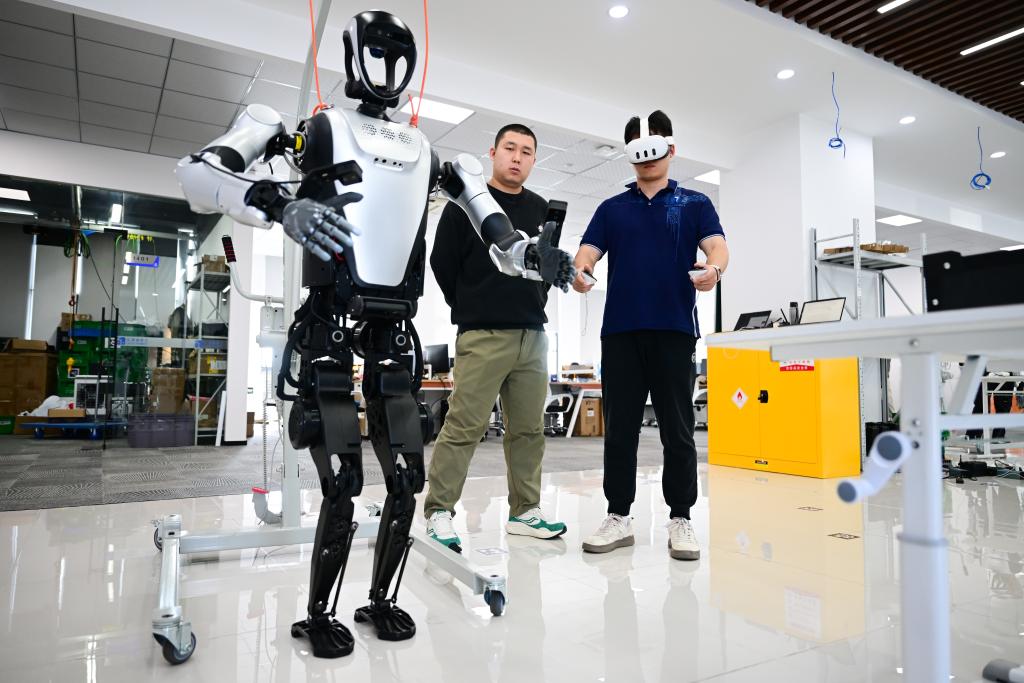
扎根发展土壤 构建就业友好型发展方式
Xin Hua Wang· 2025-11-29 01:32
Group 1 - The core viewpoint emphasizes the need to establish an employment-friendly development model to enhance job quality and expand employment capacity, aligning high-quality development with full employment [1] - The "14th Five-Year Plan" has introduced a comprehensive support system including social insurance fee reductions, unemployment insurance, and entrepreneurship subsidies, resulting in 60.32 million new urban jobs created by September this year [3] - The future economic outlook remains positive, with solid foundations for stable employment, although challenges such as structural employment issues and external environmental changes persist [3] Group 2 - Since 2019, the Ministry of Human Resources and Social Security has released 110 new occupations, attracting many young workers to roles such as homestay managers and online anchors, reflecting the evolving job market [5] - The integration of technology and new market demands is expected to create new employment opportunities, driving high-quality job creation and economic growth [5]
新华鲜报·规划建议新看点|扎根发展土壤 构建就业友好型发展方式
Xin Hua She· 2025-11-28 05:25
Group 1 - The core viewpoint emphasizes the construction of an employment-friendly development model, which aims to enhance employment quality and expand capacity while aligning with high-quality development [1] - The employment-friendly development model is expected to generate positive employment momentum, improve living standards, and help reduce income disparities, thereby maintaining social stability [1] - The "14th Five-Year Plan" has established a comprehensive support system for employment, including social insurance fee reductions and unemployment insurance, resulting in 60.32 million new urban jobs created by September 2023 [3] Group 2 - The introduction of 72 new professions during the "14th Five-Year Plan" period covers sectors such as the digital economy, modern services, and intelligent manufacturing, reflecting the evolving job market [3] - Local initiatives, such as the establishment of training centers and labor supply chains, are being implemented to support employment and skill development in various regions [3] - The emergence of new professions, such as homestay managers and online anchors, is attracting young workers, indicating a shift in job preferences driven by technological advancements and market changes [5]
21社论丨着眼于“就业友好”,在高质量发展中筑牢民生根基
21世纪经济报道· 2025-11-25 01:14
Group 1 - The core viewpoint emphasizes the importance of employment as the foundation of people's livelihood, highlighting the integration of high-quality development with employment enhancement in the national five-year plan [1] - The traditional growth model, which relied on high GDP growth to naturally drive employment through investment and consumption, is becoming less effective as the economy shifts towards structural adjustments and industrial upgrades [1][2] - There is a structural mismatch in the labor market, with traditional employment-absorbing sectors losing momentum while emerging industries face a talent shortage, leading to significant employment challenges [1][2] Group 2 - Constructing an employment-friendly development model requires a fundamental shift in development logic, focusing on "growth quality" rather than "growth speed," ensuring that economic benefits are equitably distributed among workers [2] - Employment policies must be actively integrated into macroeconomic policies, with the creation of high-quality jobs serving as a key reference for policy decisions and project approvals [2] - Strengthening the coordination between industry and employment is essential, with a focus on expanding high-quality job supply while dynamically optimizing higher education and skills training [2][3] Group 3 - The service industry, as the largest employment "absorber," should be developed alongside the transformation of traditional manufacturing into service-oriented manufacturing, creating more specialized positions [3] - Supporting private enterprises and entrepreneurship is crucial, as they are the main drivers of job creation, necessitating a favorable policy environment for job stability and expansion [3] - The challenges of constructing an employment-friendly development model include the complexity of policy coordination and the potential impact of technological changes on employment [3]

着眼于“就业友好”,在高质量发展中筑牢民生根基
2 1 Shi Ji Jing Ji Bao Dao· 2025-11-24 22:54
就业是民生之本。《中共中央关于制定国民经济和社会发展第十五个五年规划的建议》明确提出,深入 实施就业优先战略,健全就业促进机制,构建就业友好型发展方式。这是"构建就业友好型发展方式"首 次被写入国家五年规划,标志着高质量发展进程将与就业提质扩容紧密结合,不断增强经济发展对就业 的带动能力。 构建就业友好型发展方式,必须强化产业与就业协同,推动财政、货币、投资、消费、产业、区域等政 策与就业政策协调联动、同向发力。我国在因地制宜发展新质生产力、培育壮大新兴产业、布局未来产 业的过程中,应着力扩大高质量就业供给。同时,要科学研判人力资源发展趋势,动态优化高等教育专 业与资源结构,加大技术技能人才培养力度。 在推进制造业转型升级的同时,需大力发展服务业这一就业最大"容纳器"。应推动传统制造业向服务型 制造转型,通过提升产业价值链,在研发、设计、营销、售后等环节创造更多专业岗位。此外,为顺应 人民美好生活需要与消费升级趋势,应重点支持文旅康养等需求旺盛的服务业发展。 激发民间投资活力、发展壮大民营经济同样关键。企业是就业的基本载体,民营企业更是创造就业的主 力军。除营造有利于企业稳岗扩岗的政策环境外,还应加大对创业活 ...
健全就业促进机制 构建就业友好型发展方式
Jing Ji Ri Bao· 2025-11-24 01:52
Group 1 - The core viewpoint emphasizes the importance of employment for people's livelihoods and economic development, highlighting the need for high-quality and sufficient employment as outlined in the "15th Five-Year Plan" [1] - The Ministry of Human Resources and Social Security (MoHRSS) has initiated a pilot program for the integration of human resources services with the manufacturing industry, selecting 39 cities that are key to manufacturing and human resources services [1][2] - The human resources service industry has seen significant growth, with 74,000 institutions and 1.09 million employees by the end of 2024, providing services to 300 million laborers annually [2] Group 2 - Structural employment contradictions are highlighted, particularly the mismatch between industrial upgrades and talent supply, with a focus on the need for improved labor quality and skills training [4] - The "14th Five-Year Plan" has provided vocational skills training to over 42 million enterprise workers and 31 million migrant workers, promoting a model that integrates job demand, skills training, skills evaluation, and employment services [4] - The integration of education and industry is emphasized, with companies like GAC Group implementing dual education models to align training with industry needs, effectively addressing the skills gap [5][6] Group 3 - The need to stabilize employment for key groups, such as recent graduates, is stressed, with recommendations to expand market-oriented employment channels and guide employment attitudes [7] - The emergence of new professions due to traditional industry upgrades and new productivity is creating numerous job opportunities for youth [7] - The MoHRSS has developed 95 national occupational standards to meet the rapid development of new professions and urgent talent needs in key sectors [7][8]