
开源节流

Search documents
四洲集团(00374.HK)中期权益所有者应占期内溢利1308万港元
Ge Long Hui· 2025-11-28 12:18
Core Viewpoint - The company reported a decline in profit due to weak consumer confidence in Hong Kong and mainland China, leading to a challenging business environment, prompting the launch of new products and marketing activities to mitigate the impact [1][2] Financial Performance - The consolidated revenue for the six months ending September 30, 2025, was HKD 1.77 billion - Profit attributable to equity owners for the period was HKD 13.08 million, down from HKD 20.46 million in 2024 - The interim dividend declared for the six months ending September 30, 2025, remains at HKD 0.03 per share, consistent with 2024 [1] Market Environment - Global economic growth is gradually recovering under a more accommodative interest rate environment, but geopolitical factors continue to create uncertainty in trade, leading to fluctuating market performance [1] - The company is actively responding to changes by launching new products, expanding markets, acquiring new customers, and optimizing sales activities [1] Strategic Initiatives - The company is leveraging its flagship "Four Seasons Food Experience Hall" to enhance product promotion and attract consumer purchasing power, addressing changing consumer preferences [1] - Cost control measures are being implemented to maintain business stability without compromising quality, laying a solid foundation for future growth [1] Regional Development - The wholly-owned Miyata Corporation continues to contribute to the company's ongoing development, enhancing synergies between mainland China and Japan operations [2] - The company is introducing a variety of snack products from Hong Kong and mainland China into Japan, strengthening its competitive edge in the market [2]
最高 N+3.5 赔偿!某度大规模裁员,某些部门最多 30%,外包无赔偿
程序员的那些事· 2025-11-27 12:41
Core Insights - The article discusses a significant layoff event at a major internet company, marking the largest personnel adjustment since 2018, with a focus on optimizing workforce efficiency amid declining traditional business revenues and a strategic shift towards AI [2][4][11] Layoff Scale and Scope - The layoffs affect multiple business lines, with non-core departments experiencing cuts of 20%-30%. The mobile ecosystem group, responsible for core products, is particularly impacted, with the gaming department facing nearly total layoffs and the live streaming business seeing a 90% reduction [4][11] - The AI research teams remain relatively stable, indicating a strategic resource allocation towards AI development [4][11] Layoff Targets and Criteria - The layoffs primarily target two groups: new employees with less than one year of service and older employees over 35 years of age. Recent graduates are particularly affected, as they are seen as lower-cost and easily replaceable [5][11] - Employees with poor performance ratings over the past two years are also included in the layoff list, while those in maternity-related situations are exempt [5][11] Compensation Scheme - The compensation for laid-off employees varies based on tenure, with new hires receiving N+1.5 and long-serving employees potentially receiving up to N+3.5, reflecting a tiered approach to severance [6][8] Strategic Context - The layoffs are closely tied to the company's recent financial performance, which showed a 7% year-over-year revenue decline and significant losses, despite a 50% increase in AI-related business revenue. The traditional marketing business saw an 18% revenue drop [10][11] - The company is undergoing a strategic transformation, focusing on high-growth areas like AI while streamlining operations to cut costs and improve efficiency [10][11] Outsourcing and Business Focus - Concurrently, the company is implementing a "westward migration" plan for outsourced teams, requiring relocation to Xi'an, which has raised concerns about job security for those unwilling to move [10][11] - This approach highlights a disparity in treatment between full-time employees receiving generous severance packages and outsourced workers facing potential job loss without compensation [10][11]



外资在中国 小泽秀树:我们当前处于一个“乌卡时代” 将保持战略定力深耕中国市场
Zhong Guo Jing Ying Bao· 2025-11-16 11:52
Core Insights - Canon's commitment to the Chinese market is highlighted by its 20-year journey with the EOS 5 series digital cameras, emphasizing the company's growth alongside Chinese users [2] - The launch of the EOS R6 Mark III camera demonstrates Canon's understanding of local user needs and its confidence in leading the market [2] - Canon's long-term strategy includes a focus on deepening its presence in China, with a comprehensive sales and service network established across the country [5] Group 1: Company Strategy and Market Position - Canon's strategy in China has evolved since the 1970s, transitioning from technical cooperation to establishing production facilities and sales companies [5] - The company has built a robust network with 13 branches and various service centers, covering multiple business areas including imaging systems and IT solutions [5] - Canon's sales revenue in 2022 surpassed 4 trillion yen (approximately 200 billion RMB), with projections for 2024 to reach 4.5 trillion yen (about 230 billion RMB), indicating steady growth despite challenges [6] Group 2: Future Plans and Market Trends - Canon is currently concluding its first five-year plan, which has been marked by significant challenges but also by growth in its imaging business [7] - The company aims to create a new "golden era" for imaging products, targeting a large consumer base of approximately 600 million potential customers in China [8] - Canon's dual investment strategy for the next five years focuses on increasing investment in B2C imaging business while remaining cautious in B2B sectors, adapting to market opportunities [8]

研究显示全国范围受访的逾两千名在校大学生月均生活费1744元 在校大学生钱都花在哪?
Sou Hu Cai Jing· 2025-11-04 07:38
Core Insights - The average monthly living expenses for college students in China have increased significantly, reaching 1,744 yuan in 2025, a rise of 532 yuan or approximately 43.9% compared to 1,212 yuan in 2016 [2] Spending Patterns - The majority of surveyed students in Shenzhen have monthly living expenses ranging from 1,301 to 1,600 yuan, accounting for 22.3% of respondents, while 9.9% of students fall into the higher spending category of 2,501 yuan and above [2] - Individual spending varies widely, with some students managing on as little as 800 yuan per month, while others report needing up to 3,000 yuan to cover their expenses [3] Expense Allocation - A significant portion of student spending is allocated to dining, learning, and social activities, with 40.1% of students reporting educational expenses, 39.7% on entertainment, and 31.7% on socializing [5] - Online shopping is prevalent, with 98.5% of students having made purchases in the past six months, averaging over seven deliveries per month [5] Financial Management - A majority of students (71.7%) feel their living expenses meet or slightly exceed their needs, while 24.9% occasionally find their funds insufficient [5] - Students employ various strategies to manage finances, including using savings, cutting expenses, or taking on part-time jobs, with 15.1% opting for temporary work to supplement their income [5][6] Financial Literacy and Income Generation - Students in Shenzhen demonstrate a high level of financial literacy, with many balancing their living expenses with income from part-time jobs, allowing for additional spending on travel and electronics [6] - Some students report substantial side incomes, with monthly earnings ranging from 1,000 to 30,000 yuan, which they often save while managing their daily expenses effectively [6]

辽港股份:前三季实现净利润13亿元 同比增长37.51%
Shang Hai Zheng Quan Bao· 2025-10-30 13:32
Core Insights - Liaoport Co., Ltd. reported a revenue of 8.426 billion yuan for the first three quarters of 2025, representing a year-on-year growth of 5.99% [1] - The net profit attributable to shareholders reached 1.3 billion yuan, marking a year-on-year increase of 37.51% [1] - The company's net profit excluding non-recurring items was 1.285 billion yuan, reflecting a significant year-on-year growth of 65.18% [1] Revenue Growth Factors - The increase in total profit was primarily driven by growth in the company's grain and container business volumes, as well as increased revenue from oil storage, which effectively compensated for the decline in bulk cargo business such as ores [1] - The company has optimized its revenue structure to solidify its profit base, focusing on stabilizing its core business, competing for new market share, and innovating to drive growth in container, grain, and oil products [1] Cost Management Strategies - The company implemented cost reduction and efficiency enhancement measures, leading to a decrease in operating costs despite the increase in revenue, which in turn drove a year-on-year increase in gross margin [1] - Liaoport Co., Ltd. adopted lean operations to deepen cost control, utilizing a comprehensive management system to continuously optimize its cost structure [1]

伟星新材(002372):毛利率环比提升,静待行业格局改善
CAITONG SECURITIES· 2025-10-29 06:59
Investment Rating - The investment rating for the company is "Accumulate" (maintained) [2] Core Views - The company is experiencing a decline in revenue and net profit due to weak demand and intense competition, but it is maintaining a high-end positioning to stabilize retail product prices [8] - The company is expected to see a recovery in profitability in the upcoming quarters as the competitive landscape improves and cost control measures take effect [8] - The forecasted net profit for 2025-2027 is projected to be 864 million, 969 million, and 1.074 billion yuan respectively, with corresponding EPS of 0.54, 0.61, and 0.67 yuan [8] Financial Performance Summary - Revenue for 2023 is projected at 6,378 million yuan, with a decline of 8.27% year-on-year, and is expected to further decline to 6,267 million yuan in 2024 and 6,006 million yuan in 2025 [7][9] - The net profit for 2023 is estimated at 1,432 million yuan, with a significant drop of 33.49% in 2024 to 953 million yuan, followed by a slight recovery to 864 million yuan in 2025 [7][9] - The company's gross margin is expected to stabilize at around 40.6% in 2025, with a slight improvement in operating cash flow [8][9] Market Performance - The company's stock has underperformed compared to the market, with a decline of 31% over the past 12 months [4]

民生证券:特朗普的“生财之道”
智通财经网· 2025-10-19 00:02
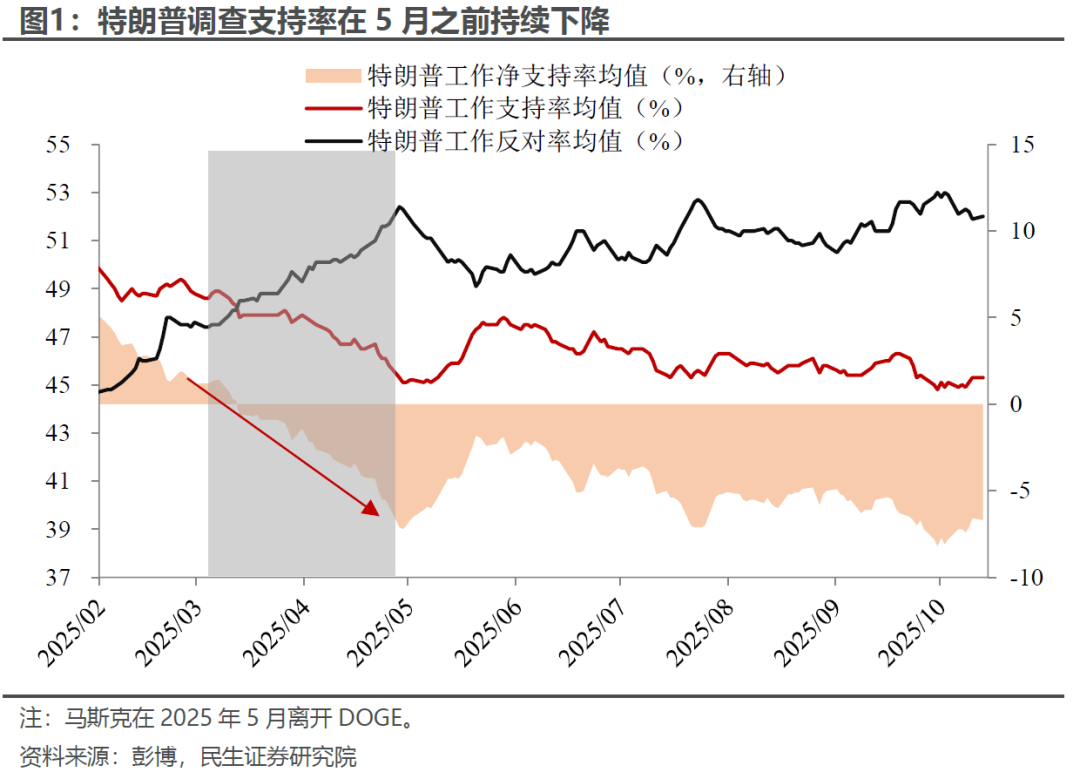
Core Insights - The article discusses the financial challenges faced by the U.S. government and the strategies employed by the Trump administration to increase revenue and manage debt [4][5][15] - It highlights the reliance on tariffs and other innovative revenue-generating methods as part of Trump's economic policy [8][9][10] Revenue Generation Strategies - The U.S. government is projected to have a fiscal revenue of $5.23 trillion for the fiscal year 2025, an increase of approximately $310 billion from 2024, largely due to a $120 billion increase in tariff revenue, which represents a 150% growth [4][5] - The government is struggling with expenditure, which has grown by 4%, with net interest payments exceeding $1 trillion for the first time [4][5] - The "OBBBA" tax reduction effects are expected to be tight in 2025, with significant impacts only materializing in 2026 [5] Innovative Revenue Mechanisms - The administration is adopting a "national capitalism" approach, converting government support into equity stakes in companies, as seen with Intel [9][10] - Export fees are being introduced, such as a proposed 15% revenue share on AI chip sales to China, which reflects a shift towards selective charging rather than blanket restrictions [10] - The government is also charging fees for transactions it facilitates, exemplified by the anticipated fees from the TikTok deal [10] Investment and Economic Growth - The article notes that the government is positioning itself as a strategic investor, particularly in the AI sector, with potential investments exceeding $4.7 trillion from international commitments [12][13] - The U.S. government is expected to leverage its financial power to stabilize cash flows in strategic industries, thereby extending capital expenditure cycles [12][15] Summary of Key Points - The Trump administration's financial strategy is characterized by a focus on increasing revenue through tariffs and innovative financial mechanisms [4][8][15] - The government is exploring various avenues for revenue generation, including equity stakes in companies and export fees [9][10] - The potential for significant government-led investments in AI and other strategic sectors is highlighted, with international commitments already in place [12][13]
高德“杀入”餐饮业:会边缘化预制菜吗?
Sou Hu Cai Jing· 2025-09-30 01:02
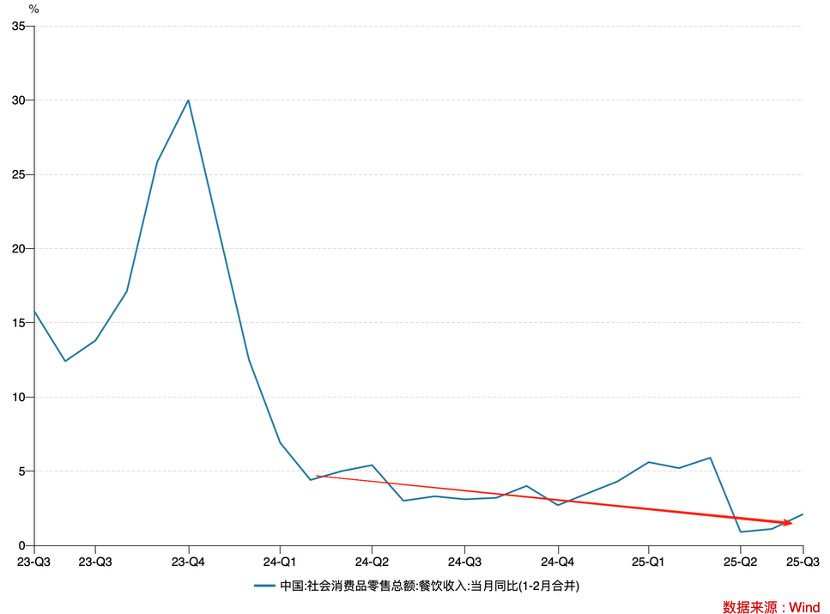
Core Viewpoint - The restaurant industry is currently in a period of internal competition, with the rise of chain operations increasing operational difficulties, leading to the adoption of "pre-made dishes" as a reluctant choice [1][2] - The influence of online marketing on the restaurant industry is weakening, and the trust between users, platforms, and merchants is diminishing [1] - To marginalize pre-made dishes, it is essential to rebuild the trust chain, which is a critical issue that companies like Gaode are addressing [1] Industry Analysis - The restaurant industry has faced significant challenges in recent years, particularly since 2024, with monthly revenue growth lagging behind GDP growth, indicating a period of internal competition [2] - The capital influx into the restaurant sector has led to a significant increase in chain operation rates, from 15% in 2020 to 23% in 2024, which has improved standardization but also increased financial burdens on businesses [5] - Despite high levels of investment, the number of business cancellations and closures has reached new highs, indicating a growing pessimism within the industry [6] Financial Performance - Companies often resort to price reductions as a means of counter-cyclical adjustment, but in the current environment, this strategy may not effectively resolve operational challenges and could worsen financial performance [4][6] - The focus has shifted to "cost-cutting," with pre-made dishes being a method to enhance operational efficiency through modern preservation technologies [7] Trust and Marketing Dynamics - The reliance on online platforms for driving traffic to physical restaurants has not yielded the expected results, as evidenced by the stagnation in growth for companies like Jiumaojiu, which saw only a 1.5% revenue increase despite a nearly 25% rise in marketing expenses [11] - Trust is a critical factor in the restaurant industry, and the erosion of trust due to conflicts of interest and biased reviews has led to inefficiencies in advertising and a mismatch in consumer needs [12] Future Expectations - In the short term, the restaurant industry can leverage trust to improve profitability and emerge from the current competitive downturn, with expectations for significant gains during the upcoming holiday season [14] - In the medium term, there is an anticipated decrease in the proportion of pre-made dishes as the industry refocuses on quality and taste [15] - In the long term, the goal is for consumers to enjoy quality food while businesses concentrate on culinary excellence [15]
伟星新材(002372) - 2025年9月17日投资者关系活动记录表
2025-09-18 09:10
Group 1: Business Operations - The company's business is primarily divided into retail and engineering operations, with retail adopting a distribution model and engineering combining distribution and direct sales [2] - The pricing strategy follows a cost-plus principle, maintaining stable prices for retail products while engineering prices are market-driven and set per order [2] - Accounts receivable showed a year-on-year decrease in the first half of 2025, indicating good operational quality [2] Group 2: Production and Market Conditions - The company follows a "sales-driven production" principle and maintains some inventory for standard products [2] - In the first half of 2025, retail product prices stabilized due to improvements in product and service quality [2] - Current market demand remains weak, with no significant improvement observed [3] Group 3: Business Development and Industry Outlook - The waterproof business is expanding through a "product + service" model, while the water purification business is undergoing adjustments to its business model [3] - The plastic pipe industry is closely tied to the macroeconomic environment, with retail demand influenced by economic conditions and consumer confidence, while engineering demand is more affected by government policies [3] - The company is responding to the current industry environment by enhancing product and service capabilities, upgrading business models, and focusing on cost control to improve efficiency and reduce costs [3]
创投管理费改革步入深水区,中小GP加速向“轻资产、重绩效”转型
Zheng Quan Shi Bao Wang· 2025-09-18 01:45
Core Insights - The management fee reform in the domestic venture capital industry is entering a "deep water zone," with a general decline in fee rates and a trend towards linking fees to fund performance [1][3] - The shift in management fee structures is forcing the industry, especially small and medium-sized fund managers (GPs), to adjust their operational strategies from relying on management fees to focusing on investment capabilities [1][6] Management Fee Trends - Management fees are now commonly set between 1% and 1.5%, with 2% becoming increasingly difficult to achieve, particularly for funds backed by guiding government funds [1][2] - Some government guiding funds have introduced multiple conditions for management fee payments, leading to increased cash flow pressure for GPs [1][2] - The introduction of annual performance evaluations by government and state-owned LPs has made management fee payments stricter, with penalties for underperformance [2][3] Policy Changes - Recent policies have clarified that management fees for government investment funds should be based on actual contributions or investments [3] - New regulations in various regions have set management fees to not exceed 2% of actual investments per year, with adjustments based on performance evaluations [3] - Some regions require management fees to be paid from fund earnings or interest, not from principal, further tying fees to GP performance [3] Operational Adjustments - GPs are adopting "cost-cutting" measures, including reducing fixed costs and outsourcing non-core functions to lower labor costs [3][4] - Investment strategies are also shifting towards a "lightweight" approach, with GPs minimizing travel expenses and collaborating with other GPs to share project sources and investment teams [4][5] - The stability of core teams and project reserves is crucial for GPs to meet performance standards and ensure investment progress [5][6] Long-term Industry Implications - The tightening of management fee mechanisms is seen as a long-term opportunity for the venture capital industry to refocus on core business activities, such as identifying quality projects and enhancing post-investment management [6] - The industry is transitioning from a focus on fundraising capabilities to investment strength, where successful project outcomes can compensate for lower management fees through carry [6]