
数字生命

Search documents
京东集团入驻横琴;新东方泽凯布局科技教育丨横琴财报
2 1 Shi Ji Jing Ji Bao Dao· 2025-10-28 15:42
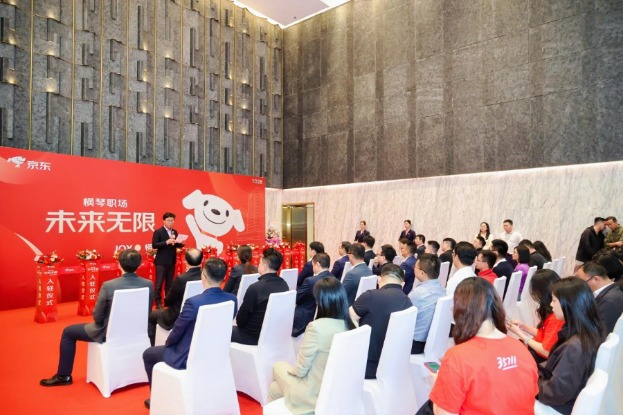
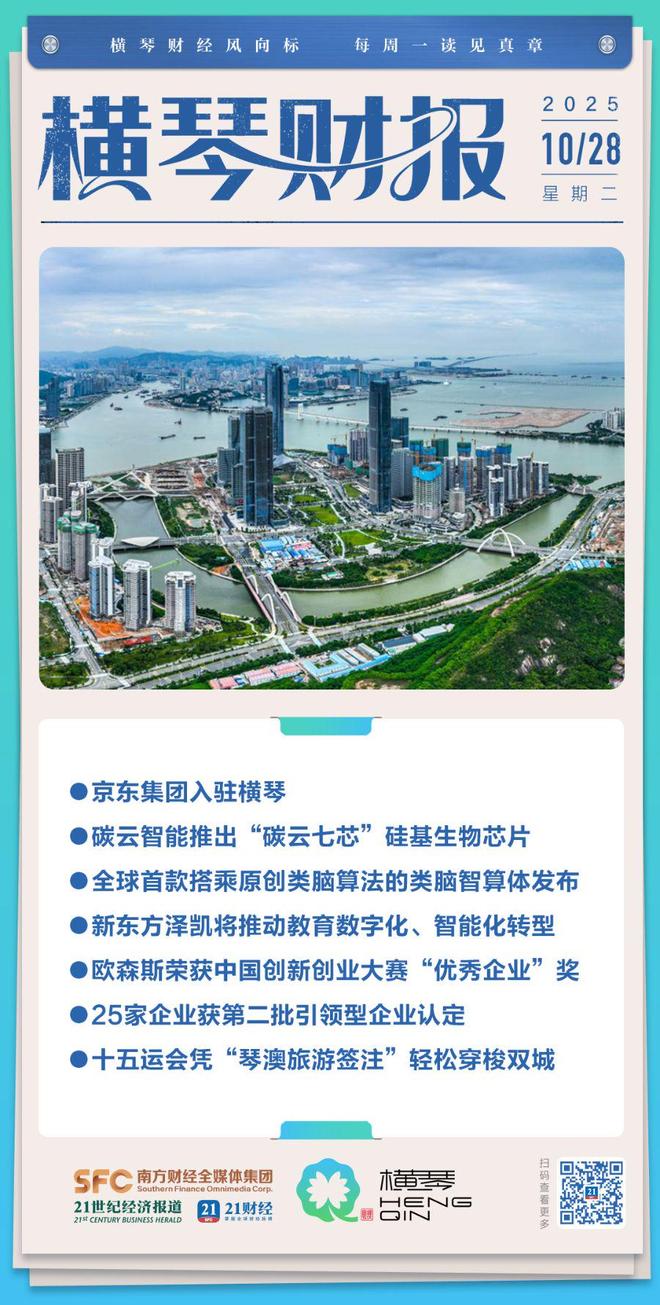
Group 1: JD Group's Entry into Hengqin - JD Group has officially established a workplace in Hengqin, aiming to leverage the region's strategic location and policy advantages to enhance its retail, logistics, and investment operations [1] - The company plans to deepen its integration into the development of the Hengqin Guangdong-Macao Deep Cooperation Zone, contributing to industrial upgrades and high-quality economic development [1] - Hengqin officials view JD Group's entry as a significant opportunity for industrial development, anticipating collaboration in retail ecosystem construction and modern supply chain system development [1] Group 2: Carbon Cloud Intelligence's New Product Launch - Carbon Cloud Intelligence launched the "Carbon Cloud Seven Core" silicon-based biological chip, which utilizes proprietary chip production technology to develop AI models for various applications [3] - The new chip technology allows for the in-situ synthesis of up to 168 million different probes on an 8-inch silicon wafer within 15 hours, reducing detection costs by over 90% and significantly increasing detection throughput and coverage [3] - Founded in 2019, Carbon Cloud Intelligence focuses on digital life research and application, establishing a leading technology platform for unbiased protein binding analysis [3] Group 3: Brain Computing Agent Release - The world's first Brain Computing Agent (BCA), "Wise One" (BIE-1), has been launched, featuring an innovative brain-like algorithm for efficient model training and inference [5] - This platform aims to advance intelligent computing towards general, generative, specialized, and explainable brain-like intelligence, enabling broader participation in the BI ecosystem across various industries [5] Group 4: New Oriental Zekai's Digital Transformation - New Oriental Zekai Software Technology Co., Ltd. is enhancing its focus on AI and IoT technologies in the education sector following its relocation to a new site in Hengqin [7] - The company aims to deepen the application of technology in educational scenarios, promoting digital and intelligent transformation in education [7] Group 5: Osen's Award Recognition - Osen Sensor Technology Co., Ltd. received the "Outstanding Enterprise" award at the 14th China Innovation and Entrepreneurship Competition for its "Sub-micron High-speed Low-dose Online Industrial CT" project [10] - This technology represents a breakthrough in real-time comprehensive detection, moving away from traditional sampling methods in high-end manufacturing [10] - Established in 2015, Osen specializes in high-end testing equipment development and solutions across various sectors, including consumer electronics and renewable energy [10] Group 6: Leading Enterprises Recognition - The Hengqin Guangdong-Macao Deep Cooperation Zone has announced the recognition of 25 enterprises as leading enterprises for 2024, including 2 comprehensive leading enterprises and 23 growth leading enterprises [12] - The criteria for recognition include revenue and economic contribution thresholds, with various support measures provided to the recognized enterprises [12][13] Group 7: Tourism Facilitation between Hengqin and Macau - The 15th National Games will feature events in Hengqin and Macau, with the "Hengqin-Macao Tourism Visa" facilitating easy travel between the two locations [14] - The visa allows for multiple entries within a 7-day period, promoting tourism and participation in events [14][15]


京东集团入驻横琴;新东方泽凯布局科技教育丨横琴财报?
2 1 Shi Ji Jing Ji Bao Dao· 2025-10-28 15:22
Group 1: JD Group's Entry into Hengqin - JD Group has officially entered Hengqin, leveraging the region's strategic location and policy advantages to enhance its retail, logistics, and investment operations [1] - The company aims to integrate deeply into the development of the Hengqin Guangdong-Macao Deep Cooperation Zone, contributing to industrial upgrades and high-quality economic development [1] - Hengqin leaders view JD Group's entry as a significant opportunity for industrial development, anticipating collaboration in retail ecosystem construction and modern supply chain systems [1] Group 2: Carbon Cloud Intelligence's New Product Launch - Carbon Cloud Intelligence launched the "Carbon Cloud Seven Core" silicon-based biological chip, which utilizes advanced in-situ synthesis technology on 8-inch silicon wafers [2] - This technology allows for the in-situ synthesis of up to 168 million different probes within 15 hours, reducing detection costs by over 90% and significantly increasing detection throughput and coverage [2] - The company focuses on digital life research and applications, establishing a technology platform capable of unbiased protein binding analysis [2] Group 3: Launch of Brain Computing Agent - The world's first Brain Computing Agent, "Wise One" (BIE-1), has been released, featuring an innovative brain-like algorithm for efficient model training and inference [3] - This platform aims to advance intelligent computing towards general, generative, and specialized brain-like intelligence, enabling broader participation in the BI ecosystem [3] Group 4: New Oriental Zekai's Digital Transformation - New Oriental Zekai is enhancing its investment in AI and IoT technologies to drive digital and intelligent transformation in the education sector [4] - The company aims to deepen the application of technology in educational scenarios following its relocation to a new site [4] Group 5: Osen's Recognition in Innovation and Entrepreneurship - Osen's Technology has been awarded the "Outstanding Enterprise" title at the 14th China Innovation and Entrepreneurship Competition for its online industrial CT project [5] - The technology represents a breakthrough in real-time comprehensive detection, moving away from traditional sampling methods [5] - Osen's focuses on high-end testing equipment development in various sectors, including consumer electronics and renewable energy [5] Group 6: Recognition of Leading Enterprises in Hengqin - The Hengqin Guangdong-Macao Deep Cooperation Zone has announced the second batch of leading enterprises for 2024, including 2 comprehensive leading enterprises and 23 growth leading enterprises [6] - The criteria for recognition include revenue and economic contribution thresholds, highlighting the importance of substantial operational performance [6]
京东集团入驻横琴;新东方泽凯布局科技教育丨横琴财报⑯
2 1 Shi Ji Jing Ji Bao Dao· 2025-10-28 15:19
Group 1: JD Group's Entry into Hengqin - JD Group has officially entered Hengqin, leveraging the region's strategic location and policy advantages to enhance its retail, logistics, and investment operations [4] - The company aims to integrate deeply into the development of the Hengqin Guangdong-Macao Deep Cooperation Zone, contributing to industrial upgrades and high-quality economic development [4] - Hengqin leaders view JD Group's entry as a significant opportunity for industrial development, anticipating collaboration in retail ecosystem construction and modern supply chain systems [4] Group 2: Carbon Cloud Intelligence's New Chip Launch - Carbon Cloud Intelligence launched the "Carbon Cloud Seven Core" silicon-based biological chip, which utilizes advanced in-situ synthesis technology on 8-inch silicon wafers [5] - This technology allows for the in-situ synthesis of up to 168 million different probes within 15 hours, reducing detection costs by over 90% and significantly increasing detection throughput and coverage [5] - The company focuses on digital life research and applications, establishing a technology platform capable of unbiased protein binding analysis [5] Group 3: Brain Computing Agent Release - The world's first Brain Computing Agent (BCA), named "Wise One" (BIE-1), has been launched, featuring an original brain-like algorithm [6][7] - This ultra-compact mobile intelligent supercomputing platform is designed to efficiently run various AI models, including large models [7] - The BCA aims to advance intelligent computing towards general, generative, and specialized brain-like intelligence, enabling broader participation in the BI ecosystem [7] Group 4: New Oriental Zekai's Digital Transformation - New Oriental Zekai Software Technology Co., Ltd. is enhancing its investment in AI and IoT technologies to promote digital and intelligent transformation in the education sector [8] - The company aims to deepen the application of technology in educational scenarios following its relocation to a new site [8] Group 5: Osons' Award Recognition - Osons Technology Co., Ltd. won the "Excellent Enterprise" award at the 14th China Innovation and Entrepreneurship Competition for its online industrial CT project [9] - The technology represents a breakthrough in real-time comprehensive detection, moving away from traditional sampling methods in high-end manufacturing [9] - Osons specializes in high-end testing equipment development and solutions across various sectors, including consumer electronics and renewable energy [9] Group 6: Recognition of Leading Enterprises - The Hengqin Guangdong-Macao Deep Cooperation Zone announced the second batch of leading enterprises for 2024, with 25 companies recognized [10] - The classification includes comprehensive leading enterprises and growth leading enterprises based on revenue and economic contributions [10] - The recognition aims to support substantial operational development for these enterprises within the cooperation zone [10]
覆盖四大场景降低90%检测成本 碳云智能2025发布会释放数字生命新势能
Zheng Quan Shi Bao Wang· 2025-10-27 11:17
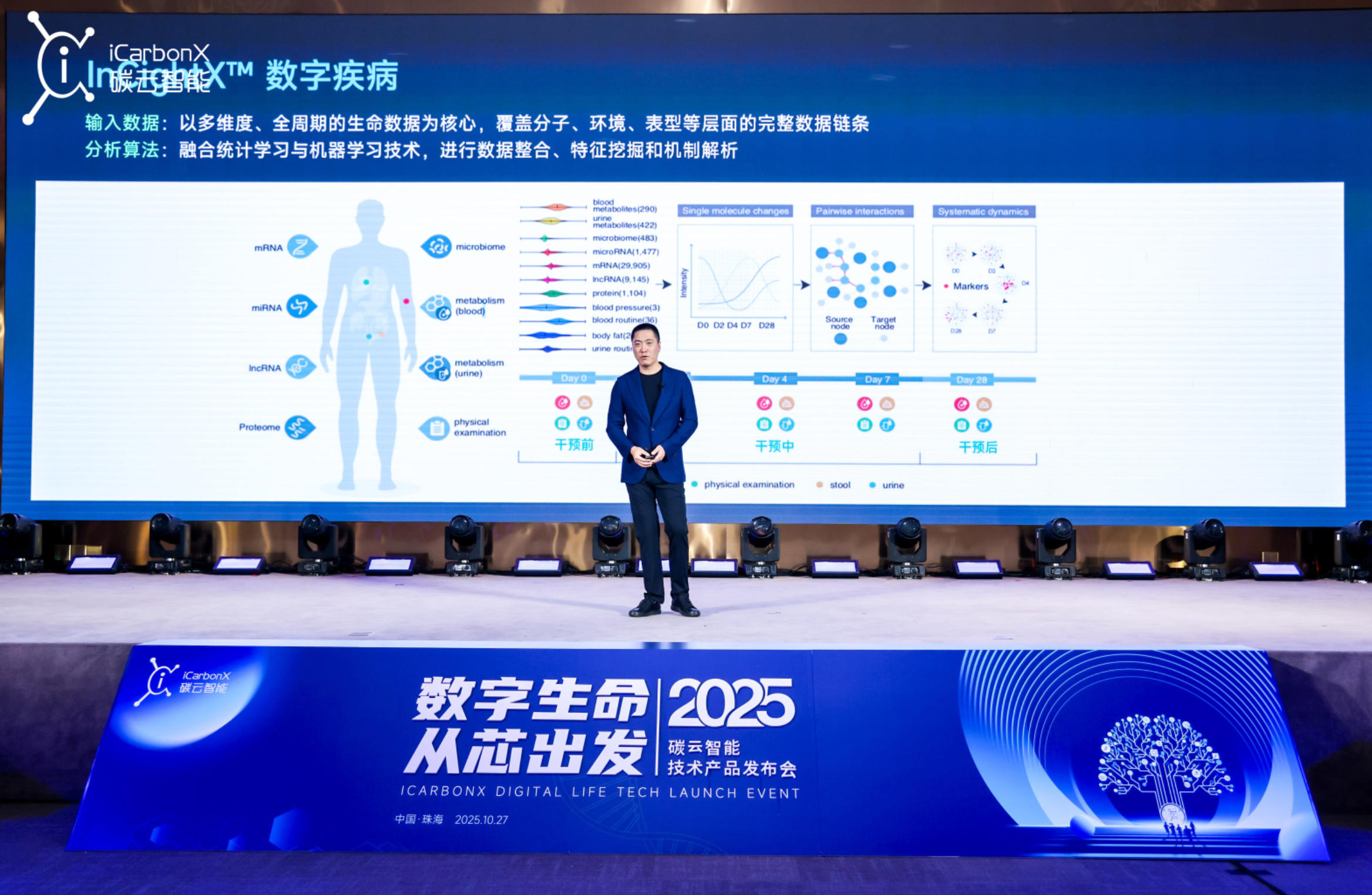
Core Insights - Carbon Cloud Intelligent, a unicorn in the life sciences sector, celebrated its 10th anniversary and outlined its vision for the digital life industry ecosystem at a product launch event in Zhuhai [1][3] - The company introduced its groundbreaking "Carbon Cloud Seven Core" silicon-based biochip technology, which is expected to revolutionize life sciences research and applications [3][4] Technology and Product Launch - The "Carbon Cloud Seven Core" series of biochips utilizes advanced "photolithography-in-situ synthesis technology" to manufacture on 8-inch silicon wafers, allowing for the synthesis of up to 168 million different probes within 15 hours [4] - This technology reduces detection costs by over 90% while significantly enhancing detection throughput and coverage [4] - The biochips cover seven core dimensions including genes, transcription, methylation, microbiomes, proteins, antibodies, and molecular interactions, enabling the creation of high-resolution digital life profiles from a single sample [4] Market Applications - For research institutions and pharmaceutical companies, Carbon Cloud Intelligent's "Carbon Cloud Smart Peptide" platform transforms drug development by utilizing peptide chips and AI models to generate high-quality candidate molecules, improving research efficiency [4] - In clinical diagnostics, the "Carbon Cloud Crystal Core" enhances cfDNA tumor mutation detection sensitivity to a low frequency of 1 in 100,000, with minimal sample requirements [5] - The "Carbon Cloud Health" division offers a digital health management platform that provides personalized health assessments and interventions, along with 24/7 health consulting services [5] Strategic Initiatives - The company announced plans to build and open a "Global Digital Life Ecosystem," aiming to collaborate with various partners including insurance companies, health check centers, traditional Chinese medicine, cell therapy, and pet healthcare sectors [5]
微信不再回收停用账号,留下尊重生命完整叙事
Qi Lu Wan Bao· 2025-10-17 03:29
Core Points - The WeChat public relations director announced that starting from September, inactive accounts will no longer be recycled, reflecting respect for digital life and humanistic care [1][2] - The decision highlights the importance of digital identity as a significant part of human existence, with social media serving as a repository for memories and emotions [1][3] - The move is seen as a response to societal needs and a demonstration of technology serving humanity, emphasizing the protection of digital heritage [1][2] Summary by Sections - **Digital Identity and Memory** - Social media platforms are not just communication tools but also serve as containers for human memories and emotions, with data acting as a "diary" of digital life [1] - Users have shared experiences of "communicating" with deceased loved ones through their accounts, indicating the emotional significance of these digital identities [1] - **Operational Logic and Resource Management** - Traditionally, platforms recycle inactive accounts to avoid resource waste and reduce operational costs [1] - However, the recognition of digital identity as an essential part of human existence marks a shift in perspective towards preserving digital legacies [1][2] - **Social Progress and Humanistic Values** - The decision to protect digital memories reflects social progress, as platforms begin to view accounts as narratives of individual lives rather than mere resources [1][2] - This approach underscores the importance of respecting each unique individual and their digital footprint [1] - **Future Considerations** - There is a need to further define the boundaries between privacy and remembrance, ensuring respect for the deceased's wishes [2] - Establishing a legal framework for digital heritage is necessary for societal consensus [2] - **Significance of the Policy Change** - This policy adjustment is not just a change in platform policy but also a precursor to the evolution of digital civilization [3]
找搭子也玩抽象,00后已经不需要和人做朋友了
3 6 Ke· 2025-09-28 01:53
Group 1 - The concept of "搭子" (partner) reflects a modern social principle where individuals seek functional yet lightweight intimate relationships, desiring closeness while remaining emotionally distant [1] - The rise of AI has shifted perceptions, with humans increasingly forming attachments to non-human entities, as they appreciate the unique qualities that these entities possess [1][2] - Plush toys have significant emotional, social, and collectible value, with a survey indicating that nearly 70% of both children and adults carry plush accessories for comfort [3][5] Group 2 - Birdwatching is becoming more popular among young people, with a report indicating that discussions related to birdwatching on social media have exceeded 7 million, and the number of related posts in the past year is 1.2 times that of the previous decade [6] - The hobby of birdwatching is becoming more accessible and enjoyable, allowing individuals to connect with nature without the need for complex equipment [6][9] - The market for figurines, particularly hand-made models, remains stable, with enthusiasts actively purchasing and collecting various styles, indicating a strong emotional connection to these items [10][12] Group 3 - The concept of "digital life" has evolved since its introduction by pioneers like Alan Turing, suggesting that digital entities may soon possess self-replicating capabilities, leading to a new era of digital existence [19] - Virtual YouTubers (VTubers) have gained immense popularity, creating significant business opportunities and blurring the lines between virtual and real-life influencers [21][23] - The term "virtual idol" has evolved over time, with the year 2020 marking a significant rise in their popularity, as they provide a stable presence in the entertainment industry [24][26]

首发首秀“迷人眼” 数贸会展现中国数字生产力
Zheng Quan Shi Bao· 2025-09-26 17:23
Core Insights - The fourth Global Digital Trade Expo, themed "Seeing the Innovative Future at the Digital Trade Expo," took place in Hangzhou from September 25 to 29, focusing on the core advantages of digital trade and the cultivation of emerging industries [1] Group 1: Digital Healthcare Innovations - The expo featured over a hundred products making their debut in China, Asia, and globally, particularly in the digital healthcare sector, showcasing advanced medical technologies and immersive interactive medical devices [1] - GE Healthcare introduced two first-of-their-kind products: the E影 digital ecosystem platform and the Vscan Air+V影+AI solution, which leverage 5G technology and AI to enhance remote diagnostics and training [1] Group 2: Artificial Intelligence and Robotics - The AI exhibition area attracted significant attention, featuring various robots, including a spatially aware cleaning robot capable of performing multiple cleaning tasks in different environments [2] - The cleaning robot, described as an "intelligent cleaning master," can seamlessly switch between scheduled and on-demand tasks, enhancing efficiency during non-peak hours [2] Group 3: Digital Entertainment and Interactive Technology - The digital entertainment section presented an immersive experience with high-tech displays, including an interactive AI-driven dinosaur exhibit that responds to audience interactions [3] - The exhibit, developed by the China Academy of Art, features an "AI biological brain" that allows the dinosaur to perceive its environment and interact with viewers, showcasing advancements in AI and interactive technology [3] Group 4: Expo Structure and Scale - The total exhibition area of the event was 155,000 square meters, organized under a "1+5+7" structure, which includes one main theme area and five major segments of digital trade, highlighting cutting-edge technologies such as generative AI and multimodal sensory interaction [3]
有多少PVP游戏玩家,是AI假扮的
3 6 Ke· 2025-08-28 01:17
Core Viewpoint - The article discusses the ongoing debate regarding the matchmaking algorithms in popular games like "Honor of Kings," highlighting player suspicions about manipulated win rates and the implications of such practices on player experience and game longevity [3][19][27]. Group 1: Matchmaking Controversy - Players have raised concerns about the fairness of matchmaking systems, suspecting that algorithms may intentionally manipulate win rates to maintain player engagement [3][19]. - A lawsuit was filed against Tencent, demanding transparency regarding the matchmaking mechanism of "Honor of Kings," citing consumer rights to know the true nature of services [3][5]. - The official defense from Tencent included player win rates as evidence, suggesting that not all players experience the same outcomes, but this did not alleviate widespread skepticism among the gaming community [5][11]. Group 2: Player Experiences - Many players report experiencing streaks of losses after winning several matches, leading to beliefs that the system punishes successful players [7][9]. - Observations indicate that players who perform poorly or return after a long absence are often matched with stronger opponents or weaker enemies, suggesting a potential manipulation of matchmaking to balance player experiences [9][11]. - The article mentions specific players who have exploited the matchmaking system to their advantage, creating strategies that allow them to win consistently by appearing less skilled [13][15]. Group 3: Broader Implications in Gaming - The suspicion of manipulated win rates is not limited to "Honor of Kings" but is a common theme across various PVP games, including "World of Tanks" and "Overwatch," where players feel that their experiences are artificially controlled [19][20][24]. - The article discusses the potential motivations behind such manipulations, including maintaining player engagement and prolonging game life by keeping win rates around 50% [27]. - The lack of transparency in game algorithms contributes to player distrust, as companies often cite proprietary technology as a reason for not disclosing details [27][29]. Group 4: AI and Player Interaction - The introduction of AI-controlled characters in games has raised questions about the authenticity of player interactions, with some players suspecting they are competing against AI rather than real opponents [34][44]. - The article suggests that the use of AI can help balance games by providing less skilled players with easier matches, thus enhancing their gaming experience [46][50]. - As AI technology advances, the line between human and AI players may blur, leading to new challenges in how players perceive competition and fairness in gaming [55][53].

95后“长沙马斯克”:AI创业遇冷开烧烤店,双线并行年入千万
Sou Hu Cai Jing· 2025-08-18 15:22
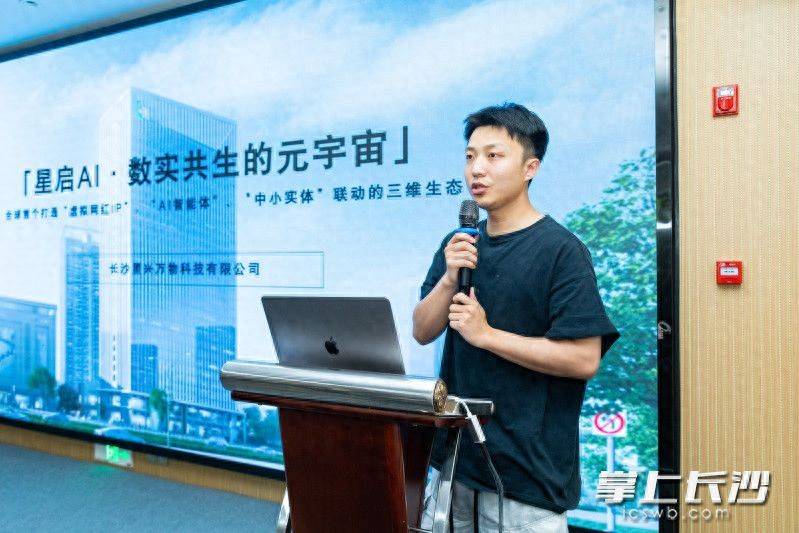
Core Insights - The article highlights the entrepreneurial journey of He Xu, a recent graduate leveraging AI technology to create a successful business in Hunan, China [1][3] - The company, Xingxing Wanshu Technology, has attracted attention from investors, including Wu Shichun, chairman of Meihua Venture Capital, indicating strong market interest in its innovative approach [1][3] Group 1: Entrepreneurial Strategy - He Xu's entrepreneurial strategy focuses on "proximity to the scene and stable survival," utilizing AI technology to win multiple awards and over 4 million yuan in prize money from various competitions [3][5] - The initial software-only approach faced limitations, leading to the establishment of a physical barbecue restaurant to create a "software + entity" ecosystem, which has shown significant revenue growth [5][7] Group 2: Market Demand and Product Development - The company identified a pressing need among small and medium-sized enterprises (SMEs) for effective customer acquisition, prompting a pivot towards developing AI marketing products [7][8] - The AI marketing products have been upgraded to include features such as automatic video generation and customer interaction, enabling SMEs to utilize AI without needing specialized teams [7][8] Group 3: Future Aspirations - He Xu aims to position the company as a leader in the AI marketing sector while planning to expand into the digital life domain within the next 3 to 5 years [8] - The company currently serves over a thousand clients and anticipates a transaction volume exceeding 10 million yuan by 2025, with ongoing discussions for further investment to support national and international expansion [8]

北京加快建设国际科技创新中心
Jing Ji Ri Bao· 2025-06-24 22:11
Core Viewpoint - Beijing is accelerating the construction of an international science and technology innovation center, which is a significant strategic task assigned by the central government, with notable achievements in innovation-driven development during the 14th Five-Year Plan period [1] Group 1: Innovation Capability Enhancement - Major scientific infrastructure is crucial for advancing basic research and original innovation, with four out of six large facilities in the Huairou Science Center already completed and open to global access [2] - Beijing has maintained a research and development investment intensity of over 6% for six consecutive years, ranking among the top global innovative cities [3] - The city has established a robust policy framework to support the transformation of scientific achievements and intellectual property protection, contributing to its rising original innovation capabilities [3] Group 2: New Quality Productivity - Beijing is promoting the transformation of scientific achievements, exemplified by the air delivery of an autonomous delivery vehicle to Dubai [4] - The city has established a significant number of intelligent connected vehicle enterprises, with over 120 companies in the Beijing Economic-Technological Development Area [4] - Beijing is focusing on key areas such as artificial intelligence, digital economy, and new energy vehicles to accelerate technological breakthroughs and the transformation of results [4] Group 3: Future Industry Development - The city is enhancing the integration of advanced manufacturing and modern service industries, with several demonstration parks and enterprises established to promote a full industrial chain development model [6] - Beijing is actively fostering new industries, new models, and new driving forces through technological innovation, with significant achievements in element aggregation and technological breakthroughs [6] Group 4: Innovation Ecosystem Improvement - Beijing is continuously optimizing its innovation ecosystem, integrating technology innovation into urban operation mechanisms and economic development logic [7] - The city has implemented various supportive policies for foreign-funded R&D centers and unicorn enterprises, enhancing the innovation and entrepreneurial environment [7] - The establishment of government investment funds targeting artificial intelligence and biomedicine is part of the efforts to strengthen the innovation ecosystem [7] Group 5: Financial Support for Innovation - Beijing has established several government industry investment funds to channel capital into high-growth sectors such as hard technology and green economy [8] - The financial environment in the Changping District has improved significantly, with government investment funds exceeding 42 billion yuan and nearly 40 listed companies [8] Group 6: Regional Collaboration and Output - The collaboration between Beijing and the surrounding regions has led to a significant increase in technology contract transaction amounts, growing from over 7 billion yuan in 2013 to over 84 billion yuan in 2024 [9] - The number of branches established by Beijing enterprises in the Tianjin and Hebei regions has more than doubled from 3,500 to over 10,000 between 2013 and 2024 [9] - The establishment of a financing service mechanism among the three regions has facilitated deeper integration of capital, innovation, and industry chains [9]