新型基础设施建设

Search documents
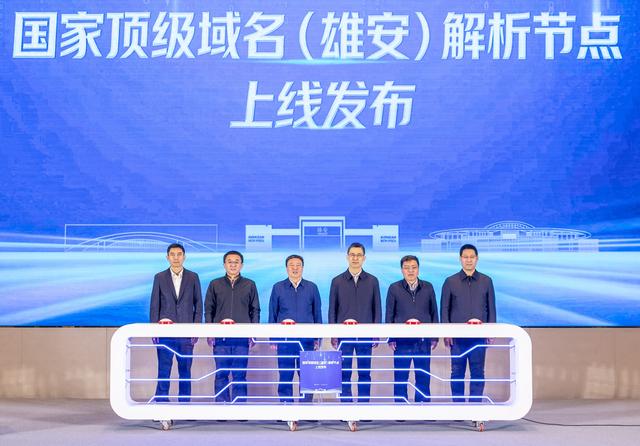
雄安移动网络实现国际一流可靠性和毫秒级响应能力
Bei Jing Ri Bao Ke Hu Duan· 2026-01-22 08:39
Core Viewpoint - The launch of the national top-level domain (Xiong'an) resolution node marks a significant step in China's internet infrastructure, enhancing user experience and empowering industry development in the Xiong'an New Area, which aims to become a global leader in digital city construction [1][4]. Group 1: Infrastructure and Performance - The Xiong'an resolution node will provide 24/7 stable, efficient, and secure ".CN" domain resolution services for internet users in Hebei Province, reducing the average resolution time from 26.25 milliseconds to 9.08 milliseconds, representing an improvement of over 65% in service response speed [4][6]. - The node is part of a national strategy to build a self-controlled network system, with its deployment in the Xiong'an Smart City Innovation Center, reflecting the area's strategic importance [4][5]. Group 2: Technological Advantages - The node employs advanced technologies such as multi-link redundancy, load balancing, and intelligent scheduling, which enhance internet service stability and availability, ensuring seamless user experience even during network fluctuations [7]. - The system's architecture is designed to strengthen network sovereignty and attack resistance, reducing reliance on foreign services and providing robust DDoS protection [7]. Group 3: Economic and Social Impact - The average daily access volume to the Xiong'an node has reached 33.44 million times, indicating a large user base and active online behavior, which reflects the region's digital economy growth [8]. - The node supports the integration of high-performance networks with cloud computing, artificial intelligence, and other digital enterprises, positioning Xiong'an as a hub for digital economic development [9].


2025年全社会用电量首超10万亿千瓦时:彰显中国经济发展韧性与活力
Ren Min Ri Bao Hai Wai Ban· 2026-01-19 02:46
Core Insights - China's total electricity consumption is projected to reach 10,368.2 billion kilowatt-hours by 2025, marking the first time a single country surpasses the 10 trillion kilowatt-hour threshold globally [1][2] - The growth in electricity consumption is driven by the tertiary sector and urban-rural residential electricity use, contributing to 50% of the overall increase [1] Industry Analysis - The first industry electricity consumption is expected to be 149.4 billion kilowatt-hours, with a year-on-year growth of 9.9% [1] - The second industry will consume 6,636.6 billion kilowatt-hours, showing a year-on-year growth of 3.7% [1] - The third industry is projected to consume 1,994.2 billion kilowatt-hours, with a year-on-year growth of 8.2% [1] - Urban and rural residential electricity consumption is anticipated to reach 158.8 billion kilowatt-hours, growing by 6.3% year-on-year [1] Growth Drivers - High-end manufacturing is expected to become a key growth point for electricity consumption, with electric vehicle and wind power equipment manufacturing sectors seeing growth rates exceeding 20% and 30%, respectively [2] - The rapid development of the digital economy and emerging technologies is driving a significant increase in electricity demand, with new infrastructure such as charging stations and 5G base stations contributing to over 30% growth in internet and related services electricity consumption [2] - The charging and swapping service industry is projected to see nearly 50% year-on-year growth in electricity consumption [2]
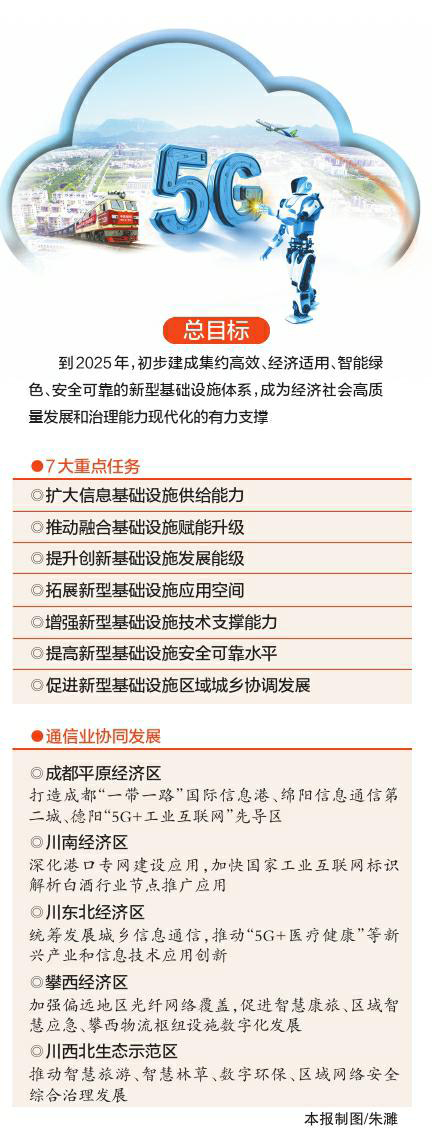
建成5G基站25万个、取消川渝座机通话长途费、已成功发射14颗AI卫星…… 四川“新基建”还有哪些大动作?
Si Chuan Ri Bao· 2026-01-04 03:58
Core Viewpoint - The Sichuan Provincial Government has issued the "14th Five-Year Plan for New Infrastructure Construction," aiming to establish a high-efficiency, economical, intelligent, green, safe, and reliable new infrastructure system by 2025, supporting high-quality economic and social development and modern governance capabilities [3][5][6]. Group 1: Key Tasks - The plan outlines seven key tasks, including expanding information infrastructure supply capacity, promoting integrated infrastructure upgrades, enhancing innovation infrastructure development capabilities, expanding application space for new infrastructure, strengthening technical support for new infrastructure, improving safety and reliability, and promoting coordinated urban-rural development [6][8]. - Specific focus areas include accelerating the construction of communication networks, data center systems, intelligent computing systems, industrial internet systems, and future networks, as well as smart transportation, smart energy, smart water conservancy, and smart logistics [6][9]. Group 2: Information Infrastructure Investment - Sichuan plans to invest a total of 100 billion yuan in building a leading information infrastructure, including the construction of 250,000 5G base stations to achieve widespread coverage in townships and administrative villages [8]. - The province aims to create a "Belt and Road" international information port in Chengdu, a second city for information communication in Mianyang, and a "5G + Industrial Internet" pilot area in Deyang [8]. Group 3: Industrial Internet Development - The plan emphasizes the construction of an industrial internet system as a crucial task, with Sichuan's data centers and 5G base stations ranking among the top in the country [9]. - The province has already established nearly 40 provincial-level industrial internet platforms and has facilitated over 240,000 enterprises to transition to cloud services [9]. Group 4: Innovation Infrastructure - The plan aims to enhance the development level of innovation infrastructure, focusing on source innovation and industrial innovation capabilities [11]. - Sichuan will create a world-class cluster of major scientific and technological infrastructure, including advanced nuclear energy, aerodynamics, and biomedical fields, and will establish a national laboratory base in Tianfu New Area [11].
深圳“十五五”规划建议:加快布局建设人工智能全域全时高水平应用需要的各种基础设施 建设与新兴产业未来产业发展相适应的无人驾驶、低空运营等设施
Mei Ri Jing Ji Xin Wen· 2025-12-29 08:20
Core Viewpoint - The Shenzhen Municipal Committee has proposed a comprehensive plan for the 15th Five-Year Plan, focusing on building a modern infrastructure system that is strategic, foundational, and pioneering [1] Group 1: Infrastructure Development - The plan emphasizes the need for integrated planning of infrastructure, optimizing layout structures, and enhancing safety resilience and operational sustainability [1] - There is a push to accelerate the construction of comprehensive backbone nodes that integrate transportation, information services, and technological innovation [1] - The proposal includes a thorough assessment and upgrade of traditional infrastructure while promoting the proactive development of new infrastructure [1] Group 2: New Infrastructure Focus - The plan aims to establish various infrastructures necessary for high-level applications of artificial intelligence, including facilities for autonomous driving, smart transportation, and low-altitude operations [1] - It highlights the importance of building and operating national-level data infrastructure in Shenzhen and accelerating the construction of public infrastructure for cross-border data flow [1] Group 3: Transportation and Logistics - The plan calls for the improvement of external passage systems and the development of multimodal transport mechanisms, including sea-rail, road-rail, water-water, and air-land transport [1] - There is an intention to expand the coverage of combined ports and create a modern, efficient, green, and intelligent comprehensive transportation network [1] - The proposal includes the construction of logistics, warehousing, distribution, sorting, and transfer centers both domestically and internationally [1] Group 4: Energy and Sustainability - The plan stresses the need for enhanced infrastructure in water, electricity, gas, and oil transportation, as well as the development of a modernized water network [1] - It advocates for the scientific and orderly development of new energy storage solutions and the acceleration of smart grid and microgrid construction [1] - The proposal includes the construction of facilities for parking and driving that align with the growing number of electric vehicles, as well as charging stations and centralized cooling facilities to support the green and low-carbon transition of the economy and society [1]
资金面保持宽松态势,配置盘入场提振债市震荡走强
Dong Fang Jin Cheng· 2025-12-26 00:20
Report Summary 1. Report Industry Investment Rating No relevant information provided. 2. Core Viewpoints - On December 23, the liquidity remained loose; the entry of allocation funds boosted the bond market to strengthen with fluctuations; the convertible bond market adjusted, with most convertible bond issues declining; yields of U.S. Treasuries across maturities generally rose, while yields of 10 - year government bonds in major European economies generally fell [1] 3. Summary by Directory 3.1 Bond Market News 3.1.1 Domestic News - President Xi Jinping emphasized that central enterprises should serve the overall situation, optimize the layout of the state - owned economy, strengthen R & D of key core technologies, deepen reforms, and balance development and security [3] - Premier Li Qiang pointed out that during the "15th Five - Year Plan" period, central enterprises should play a key role in infrastructure construction, ensure the autonomy and controllability of the industrial chain, support technological self - reliance, serve national strategies, and deepen state - owned enterprise reforms [4] - The National Housing and Urban - Rural Development Work Conference stated that during the "15th Five - Year Plan" period, the real estate market has great potential. It is necessary to establish a new development model, implement city - specific policies, and promote the healthy development of the real estate market [6] 3.1.2 International News - The U.S. GDP in Q3 grew at an annualized quarterly rate of 4.3%, exceeding expectations. Consumer spending was strong, while investment performance was divided, with non - residential investment slowing and residential investment dragging down the economy [7] - In October, U.S. durable goods orders decreased by 2.2% month - on - month, worse than expected. However, the year - on - year growth rate remained positive, and core orders showed resilience [8] 3.1.3 Commodities - On December 23, international crude oil futures prices continued to rise, and international natural gas prices rose by over 10%. Gold futures also saw an increase [9] 3.2 Liquidity 3.2.1 Open Market Operations - On December 23, the central bank conducted 593 billion yuan of 7 - day reverse repurchase operations at a fixed interest rate of 1.40%. With 1353 billion yuan of reverse repurchases maturing, the net capital withdrawal was 760 billion yuan [11] 3.2.2 Funding Rates - On December 23, the liquidity remained loose. DR001 decreased by 0.14bp to 1.269%, and DR007 decreased by 2.32bp to 1.411%. Other funding rates also showed various changes [12][13] 3.3 Bond Market Dynamics 3.3.1 Interest - Bearing Bonds - On December 23, the bond market strengthened with fluctuations due to the obvious entry of allocation funds. Yields of 10 - year Treasury and China Development Bank bonds both decreased by 0.85bp. Yields of bonds across other maturities also generally declined [14][15] - There were no Treasury or China Development Bank bond issuances on that day [16] 3.3.2 Credit Bonds - On December 23, the trading prices of two industrial bonds deviated by over 10%, with "21 Vanke 06" falling by over 10% and "23 Vanke MTN001" rising by over 23% [17] - Multiple companies announced important events, including cancellations of proposals, legal disputes, disciplinary actions, and the completion of restructuring plans [20] 3.3.3 Convertible Bonds - On December 23, the three major A - share indices rose. The convertible bond market adjusted, with major indices falling. The trading volume increased. Most convertible bond issues declined, with some issues rising or falling significantly [19] - Jin 05 Convertible Bond will start online subscription on December 25. Some convertible bonds announced early redemptions or were about to trigger early redemption conditions [25] 3.3.4 Overseas Bond Markets - On December 23, yields of U.S. Treasuries across maturities generally rose. The yield spread between 2 - year and 10 - year U.S. Treasuries narrowed by 3bp, and the 10 - year inflation - protected Treasury (TIPS) break - even inflation rate rose by 1bp [22][23][24] - Yields of 10 - year government bonds in major European economies generally fell [26] - The prices of some Chinese - funded U.S. dollar bonds changed. The top 10 gainers and losers had different price movements [28]
前11月全社会用电量近9.5万亿千瓦时
Mei Ri Jing Ji Xin Wen· 2025-12-24 14:03
Core Viewpoint - The National Energy Administration reported that China's total electricity consumption reached 9.46 trillion kilowatt-hours from January to November, with a year-on-year growth of 5.2%, indicating a robust energy demand and a projected increase to over 10 trillion kilowatt-hours by 2025, surpassing the total consumption of the EU, Russia, India, and Japan combined in the previous year [1] Group 1: Electricity Consumption Data - From January to November, the total electricity consumption in the first industry was 1.374 trillion kilowatt-hours, growing by 10.3% year-on-year; the second industry consumed 60.436 trillion kilowatt-hours, with a growth of 3.7%; and the third industry consumed 1.8204 trillion kilowatt-hours, increasing by 8.5% [2] - The high-tech and equipment manufacturing sectors led the growth in electricity consumption, with a year-on-year increase of 6.4% from January to November, signaling the rise of new economic drivers [2] - In November, electricity consumption in high-tech and equipment manufacturing grew by 6.7%, exceeding the average growth rate of the manufacturing sector by 2.5 percentage points, with the automotive manufacturing sector seeing a growth rate of 10% [2] Group 2: Investment and Industrial Activity - Increased investment in equipment updates has led to a surge in orders for equipment manufacturing companies, resulting in higher operational activity and electricity consumption [3] - The government has approved over 8,400 projects in industrial and energy equipment sectors, driving total investments exceeding 1 trillion yuan [3] Group 3: Growth in Charging Services - The electricity consumption in the charging and swapping service industry grew significantly, with a year-on-year increase of 48.3% from January to November, and a notable 60.2% growth in November alone [4] - The rapid development of new infrastructure such as 5G, big data, and cloud computing has contributed to the substantial increase in electricity consumption in these sectors [4] - The average annual growth rate of electricity consumption in internet data services, driven by internet technology, was 28.0% from 2018 to 2023, with a projected growth of 30.9% in 2024 [4] Group 4: Electric Vehicle Market Impact - The increase in electric vehicle sales has driven the demand for charging infrastructure, with November sales of new energy vehicles reaching 1.823 million units, accounting for 53.2% of total vehicle sales [5] - As of November 2025, the total number of electric vehicle charging facilities reached 19.322 million, marking a 52% year-on-year increase [6] - The growth of charging infrastructure is also seen in heavy-duty electric trucks, particularly in logistics hubs, prompting a new wave of investment in grid upgrades [6]
前11月高技术及装备制造业合计用电量增速领先 中电联专家:11月汽车制造业用电量增速保持两位数增长
Mei Ri Jing Ji Xin Wen· 2025-12-24 09:20
Core Insights - The National Energy Administration reported that the total electricity consumption in China reached 9.46 trillion kilowatt-hours from January to November, marking a year-on-year growth of 5.2% [1] - In November alone, electricity consumption was 835.6 billion kilowatt-hours, with a year-on-year increase of 6.2%, which is 3.4 percentage points higher than the same month last year [1] - The 2026 National Energy Work Conference projected that total electricity consumption in China is expected to exceed 10 trillion kilowatt-hours by 2025, which is approximately double the total for 2015 [1] Industry Breakdown - The electricity consumption in the primary industry reached 137.4 billion kilowatt-hours, growing by 10.3% year-on-year; the secondary industry consumed 6,043.6 billion kilowatt-hours, with a growth of 3.7%; and the tertiary industry consumed 182.04 billion kilowatt-hours, increasing by 8.5% [2] - High-tech and equipment manufacturing industries saw a combined electricity consumption growth of 6.4% year-on-year, indicating a rise in new economic momentum [2] - In November, electricity consumption in high-tech and equipment manufacturing grew by 6.7%, surpassing the average growth rate of the manufacturing sector by 2.5 percentage points [2] Investment and Production - Increased investment is leading to a surge in orders for equipment manufacturing companies, which in turn drives up electricity consumption as factories operate more intensively [3] - The National Development and Reform Commission has approved over 8,400 projects to support equipment upgrades, leading to total investments exceeding 1 trillion yuan [2][3] Sector-Specific Growth - The electricity consumption for internet data services surged by 43.3% year-on-year from January to November, with November alone seeing a 43.1% increase [4] - The charging service industry experienced a 48.3% growth in electricity consumption, with November's growth rate reaching 60.2%, significantly higher than the previous year [4] - The rapid development of new infrastructure such as 5G networks, big data, and cloud computing has contributed to the substantial increase in electricity consumption in these sectors [4] Electric Vehicle Impact - The rise in electricity consumption in the charging service sector is closely linked to the rapid expansion of electric vehicle ownership and supporting infrastructure [5] - In November, 1.823 million electric vehicles were sold, accounting for 53.2% of total vehicle sales, indicating a significant shift towards electrification in the automotive market [5] - As of November 2025, the total number of electric vehicle charging facilities reached 19.322 million, a year-on-year increase of 52% [6]
中国期货每日简报-20251224
Zhong Xin Qi Huo· 2025-12-24 00:46
1. Report Industry Investment Rating - No information provided in the given content. 2. Core Viewpoints - On December 23, equity index and CGB futures increased, and most commodities rallied, with platinum, palladium, and lithium carbonate leading the gains. China's financial futures showed IH rising by 0.2%, IM falling by 0.2%, and TL rising by 0.9%. In commodity futures, platinum, lithium carbonate, and palladium were the top gainers, while ethylene glycol, liquefied petroleum gas (LPG), and log were the top decliners [10][11][12]. - The current supply and demand of lithium carbonate are both strong, and the long - term demand expectation is robust. In the short term, downside risks are limited, and prices are expected to be range - bound with an upward bias. The Indonesian government's nickel ore policy adjustments have triggered market expectations of tight global nickel supply in 2026, which is expected to support nickel prices. Gold prices are well - underpinned by rising market expectations of a Fed interest rate cut in 2026, increased geopolitical uncertainties, and approaching holidays [17][23][28]. 3. Summary by Directory 3.1 China Futures 3.1.1 Overview - On December 23, equity index futures and CGB futures edged higher, and most commodities rallied. Platinum, palladium, and lithium carbonate led the gains. In financial futures, IH rose by 0.2%, IM fell by 0.2%, and TL rose by 0.9%. In commodity futures, the top - three gaining commodities were platinum, lithium carbonate, and palladium, while the top - three declining commodities were ethylene glycol, LPG, and log [10][11][12]. 3.1.2 Daily Raise - **Lithium Carbonate**: On December 23, it rose 5.7% to 120360 yuan per ton. The market is focused on the resumption timeline of production at "Jianxiawo" and off - season demand. Currently, the delayed production resumption expectation is a major positive driver, and there is a divergence in market views on January demand. In the short term, prices are expected to be range - bound with an upward bias [16][17][18]. - **Nickel**: On December 23, it rose 3.9% to 123440 yuan per ton. The Indonesian government's three major nickel ore policy adjustments have triggered market expectations of tight global nickel supply in 2026, and cost - side increases are expected to support price increases [21][22][23]. - **Gold**: On December 23, it rose 2.7% to 1014.24 yuan per gram. Spot gold surged above $4400 per ounce for the first time in history. Rising market expectations of a Fed interest rate cut in 2026, increased geopolitical uncertainties, and approaching holidays support gold prices [27][28][29]. 3.2 China News 3.2.1 Macro News - Xi Jinping issued important instructions on the work of central state - owned enterprises, emphasizing their backbone and pillar role in the national economy since the 18th National Congress of the Communist Party of China [32][35]. - Li Qiang pointed out that central SOEs should provide strong support for major infrastructure construction, accelerate the upgrading and digital - intelligent transformation of traditional infrastructure, and carry out new infrastructure construction in a moderately proactive way. He also emphasized formulating major projects and carriers to drive overall development [33][34][35]. 3.2.2 Industry News - As of December 8, the client equity of futures companies exceeded 2 trillion yuan, a year - on - year increase of over 30% compared with the end of 2024, and medium - and long - term capital inflows optimized the investor structure [36].
螺纹热卷日报-20251223
Yin He Qi Huo· 2025-12-23 10:08
Group 1: Market Information - Spot prices: Shanghai Zhongtian rebar is 3290 yuan (+20), Beijing Jingye is 3130 yuan (-), Shanghai Angang hot-rolled coil is 3270 yuan (-), and Tianjin Hegang hot-rolled coil is 3180 yuan (-) [4] Group 2: Market Analysis Core View - Steel prices are expected to show a volatile trend. Although there is support from manufacturing demand and raw material replenishment expectations, the seasonal decline in building material demand and potential production resumption at the end of the month will suppress the upward space of steel prices [5] Transaction Strategies - Unilateral: Maintain a range-bound volatile trend [6] - Arbitrage: Suggest shorting the hot-rolled coil to coking coal ratio on rallies, and continue to hold the short position on the hot-rolled coil to rebar spread [7] - Options: Suggest waiting and seeing [8] Important Information - Li Qiang stated that central enterprises should carry out new infrastructure construction moderately ahead of schedule and play a leading role in achieving self - controllability of the industrial chain and supply chain [9] - The National Housing and Urban - Rural Development Work Conference proposed to promote the stabilization of the real estate market, win the battle of ensuring the delivery of buildings, continue to implement the policy "combination punch", and other measures [9][10] Group 3: Related Appendices - The appendices include various charts such as those related to rebar and hot - rolled coil prices, basis, spreads, and profit margins from 2021 - 2025, with data sources from Galaxy Futures, Mysteel, and Wind [11][13][14]
建筑工程业:政策支持新型基础设施,推进新型城镇化和智能建造
GUOTAI HAITONG SECURITIES· 2025-12-21 09:47
Investment Rating - The report rates the industry as "Overweight" [7] Core Insights - The potential for investment growth in new infrastructure remains significant, with a focus on expanding effective investment space and enhancing private investment vitality [2][3] - Central enterprises are encouraged to identify new growth areas, particularly in renewable energy, aerospace, and low-altitude economy sectors [4] - The government is increasing support for capital in key infrastructure projects, including railways and smart construction initiatives [5] Summary by Relevant Sections Recent Key Reports - The report highlights the importance of strategically expanding investment in new infrastructure and emphasizes the need for a coordinated approach to urbanization and rural revitalization [3][4] Key Company Recommendations - Recommended companies include China Railway, China Communications Construction, and China State Construction, all of which are expected to benefit from high dividend yields and stable growth [8][11] - Specific sectors such as clean rooms, commercial aerospace, and controlled nuclear fusion are highlighted for their growth potential, with recommended stocks including Yaxiang Integration and Shanghai Port [6][10] Macro/Meso/Micro Data - The report indicates a projected increase in broad infrastructure funding by 7.3% in 2025, driven by enhanced fiscal policies and the issuance of special bonds [31][32] - It also notes that the construction industry is experiencing a decline in net profit margins, with a 10% year-on-year decrease in net profit reported [14][15]