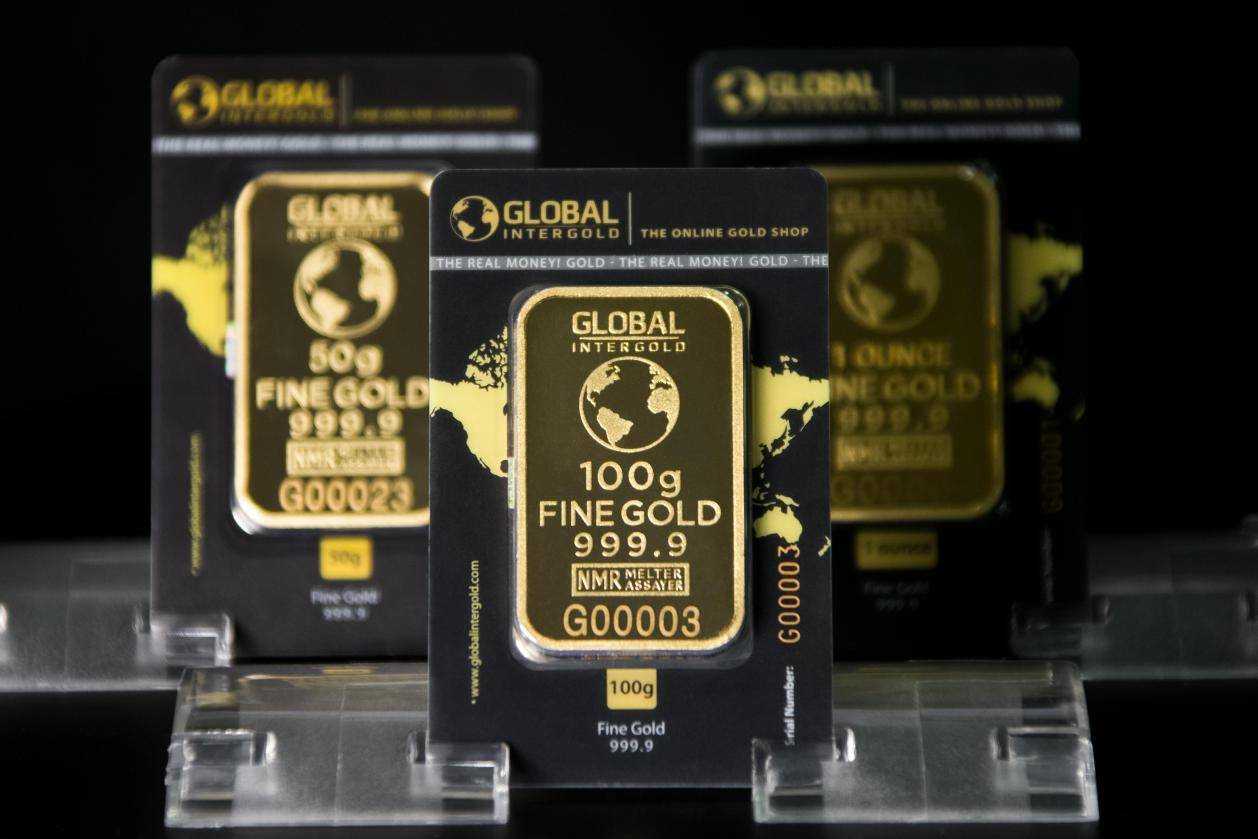
杠杆交易

Search documents
有色金属股跌幅居前 黄金、白银今早突发跳水 有色市场近期波动加剧
Zhi Tong Cai Jing· 2026-02-05 03:39
Group 1 - The article highlights a significant decline in the prices of non-ferrous metal stocks, with Tianqi Lithium Industries (002466) dropping by 12.73% to HKD 43.2, and other companies like Minmetals Resources (01208) and Jiangxi Copper (600362) also experiencing notable losses [1][1][1] - On February 5, the international precious metals market saw a downturn, with spot gold falling below USD 4,800 per ounce and spot silver experiencing a drop of 15%, falling below USD 75 [1][1][1] - Domestic commodity futures markets reflected this trend, with lithium carbonate futures hitting a daily limit down and copper futures dropping nearly 4% [1][1][1] Group 2 - According to a report from Guotai Junan Securities, the gold and silver markets are expected to become increasingly volatile, influenced by long-term factors such as the credibility of the US dollar and shifting asset preferences [1][1][1] - The report suggests that the frequency of global black swan events may lead to a temporary reduction in risk appetite, alongside rising inflationary pressures in the US that could tighten interest rate expectations [1][1][1] - It is noted that the historical volatility of gold and silver may also manifest in other major asset classes [1][1][1]
港股异动 | 有色金属股跌幅居前 黄金、白银今早突发跳水 有色市场近期波动加剧
智通财经网· 2026-02-05 03:38
Group 1 - The article highlights a significant decline in the prices of various metal stocks, with Tianqi Lithium Industries (09696) dropping by 12.73% to HKD 43.2, and other companies like Minmetals Resources (01208) and Jiangxi Copper (00358) also experiencing notable losses [1][1][1] - On February 5, the international precious metals market saw a downturn, with spot gold falling below USD 4,800 per ounce and spot silver experiencing a drop of 15%, falling below USD 75 [1][1][1] - The domestic commodity futures market reflected this trend, with lithium carbonate futures hitting a daily limit down and copper futures dropping nearly 4% [1][1][1] Group 2 - According to a report from Guotai Junan Securities, the gold and silver markets are expected to become increasingly volatile, influenced by long-term dollar credit dynamics and shifting asset preferences [1][1][1] - The report suggests that the frequency of global black swan events is leading to a temporary reduction in risk appetite, while rising inflationary pressures in the U.S. are tightening expectations for interest rate cuts [1][1][1] - The potential for a confluence of these factors may lead to significant historical volatility in gold and silver, which could also affect other major asset classes [1][1][1]
金价暴跌、白银遭收割、水贝“消失”133亿!这些钱究竟去了哪?
Sou Hu Cai Jing· 2026-02-03 12:15
Group 1 - The core issue is the unprecedented drop in silver prices, with a single-day decline exceeding 36%, marking the largest drop in history [1][3] - The recent volatility in gold and silver prices has left many investors confused, particularly following the collapse of a private gold platform that failed to repay 13.3 billion yuan [3][4] - The collapse of the platform is attributed to a high leverage model of 40 times, which is significantly higher than regulated futures markets, leading to inevitable failure [4][6] Group 2 - The platform's operational logic involved locking in gold prices with a small deposit, allowing for high leverage, which ultimately resulted in massive losses when gold prices fluctuated [4][6] - The funds that were supposed to be available for redemption likely never existed, as the platform operated on a model that relied on new investors to cover previous losses [8][10] - The recent drop in gold prices has not resulted in a loss of money but rather a transfer of wealth to short-sellers and those who exited the market at high prices [10][12] Group 3 - The significant volatility in silver prices is primarily due to "margin calls," where falling prices force investors to liquidate positions, creating a domino effect [13] - The Shanghai Futures Exchange has a leverage limit of 7 times for gold and 5 to 6 times for silver, while the private platform operated without regulation, increasing risk [15] - Recent trading activity has led to the suspension of certain silver and gold-themed funds due to extreme price discrepancies and regulatory constraints on buying limits [17][19] Group 4 - There is a common misunderstanding between gold jewelry and gold bars, contributing to poor sales in jewelry stores, as consumers are hesitant to purchase at high prices [19][21] - The profit margins for jewelry retailers are low, with major companies reporting net profit margins of only 6.4% for Chow Tai Fook and 3.4% for Lao Feng Xiang, leading to cash flow pressures [21] - The market dynamics indicate that investors should engage with regulated channels for gold purchases to avoid high-risk platforms and ensure better investment security [23]

血崩!比特币一夜暴跌超6%,7700亿市值蒸发,42万人爆仓归零!真相太扎心
Sou Hu Cai Jing· 2026-02-03 01:50
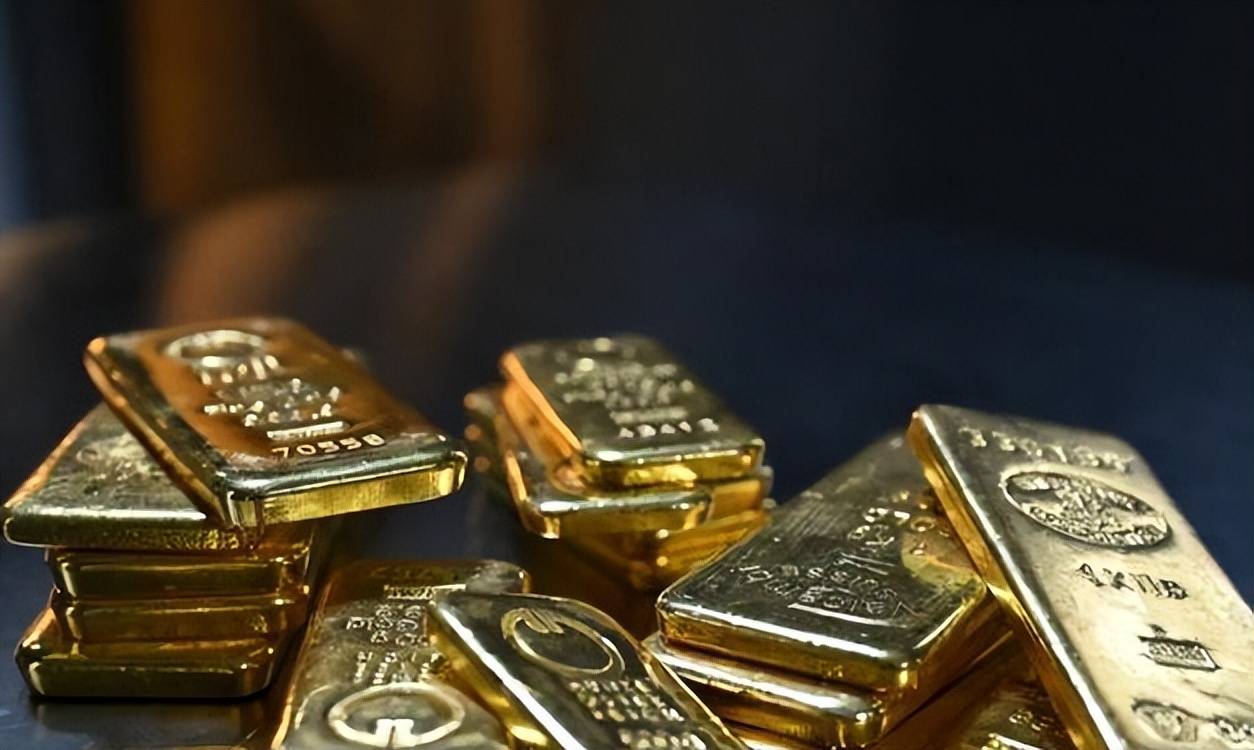
大家好,我是风音,一家四百多人技术开发软件公司的商业模式设计师。 2026年2月1日凌晨,币圈彻底炸了锅,一场史诗级暴跌突然来袭! 龙头币种比特币带头跳水,价格一度跌破76000美元/枚,创下近10个月来的新低——要知道,1月初它还站在9.7万美元的高位,短短一个月,价格跌去近 2万美元,开年至今累计跌幅已经达到10%。 截至目前,比特币勉强回弹到78500美元左右,但颓势根本挡不住,市场恐慌情绪已经拉满。 这不是比特币孤军奋战的暴跌,而是整个加密货币市场的"集体翻车"。 以太坊单日最大跌幅超11%,最低跌到2202美元;Solana、狗狗币等热门币种跌幅全超10%,一些小市值币种更是跌得离谱,跌幅直接突破14%,相当于 投10万,一天就亏1.4万。 更惨的是无数加杠杆的投资者,一夜之间从"奔富"变"返贫"。 据数据统计,24小时内全球加密货币总市值蒸发超1100亿美元,折合人民币约7700亿元——相当于10个顶级上市公司的市值一夜归零; 全网合约爆仓金额高达25.61亿美元,超42.35万名投资者惨遭爆仓,其中九成以上都是看涨的投资者,最大一笔爆仓单更是高达2.22亿美元,有人加50 倍、100倍杠杆追高, ...
四大利空来袭!30只龙头股开盘直接跌停,无量跌停,谁在疯狂出逃?
Sou Hu Cai Jing· 2026-02-02 17:00
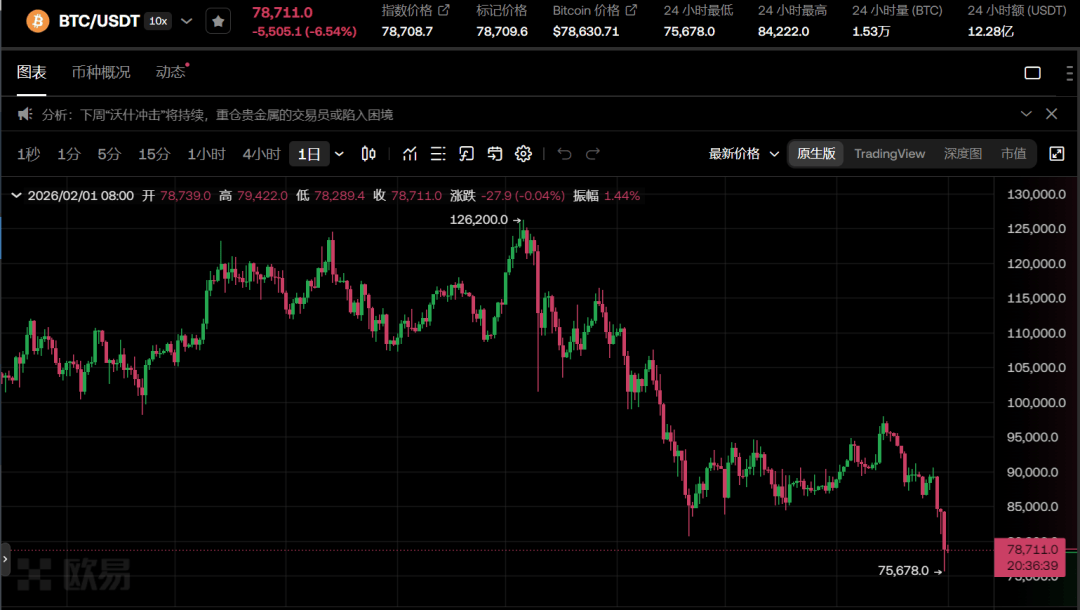
Core Viewpoint - The A-share market experienced a significant decline in the gold and non-ferrous metal sectors, with over 30 leading stocks hitting the daily limit down of -10% following a sharp drop in international gold prices [1][3][4]. Market Reaction - The gold concept sector saw 81 stocks, with notable declines including Xiaocheng Technology down 19.97% and Tongling Nonferrous Metals down 10.04% [2][3]. - The sell-off was characterized by a lack of buying interest, leading to a situation of "no volume limit down," indicating that investors were unable to sell their holdings, resulting in asset depreciation [3][4]. External Factors - The decline was triggered by a sudden drop in international gold prices, with London spot gold falling nearly 9% in a single day, marking the largest daily drop in years [3][4]. - The Federal Reserve's decision to maintain high interest rates and signals of prolonged high rates contributed to the bearish sentiment in the gold market, as higher rates increase the opportunity cost of holding non-yielding assets like gold [5][6]. Internal Market Dynamics - The gold sector had previously seen a significant increase of over 30% since the beginning of the year, attracting substantial short-term and leveraged funds, which led to an overbought condition [7][8]. - As the market sentiment shifted, a massive outflow of over 8.5 billion yuan from the gold sector occurred, leading to a panic sell-off [8][10]. Industry Challenges - Rising mining costs due to increased expenses for labor, energy, and equipment have raised concerns about profit margins for gold mining companies, despite high gold prices [10]. - The presence of "pseudo-gold stocks" in the sector, which lack solid fundamentals, has led to severe declines as funds exited these stocks when the market turned [10][11]. Broader Market Impact - The sharp decline in gold and silver prices negatively affected the overall commodity market and risk asset sentiment, with significant capital flows shifting towards defensive sectors and technology growth areas [12][21]. - The retail gold market also reflected this disparity, with physical gold prices remaining high while international prices plummeted, highlighting the disconnect between market prices and consumer prices [12][13]. Investor Sentiment - The market reaction has led to a divide among analysts, with some viewing the decline as a healthy correction while others express caution about the long-term trend and potential further declines in gold prices [21][22].




金价暴跌9%!同一天有人赚30万,有人17万归零:黄金世界的两种命运
Sou Hu Cai Jing· 2026-02-02 11:10
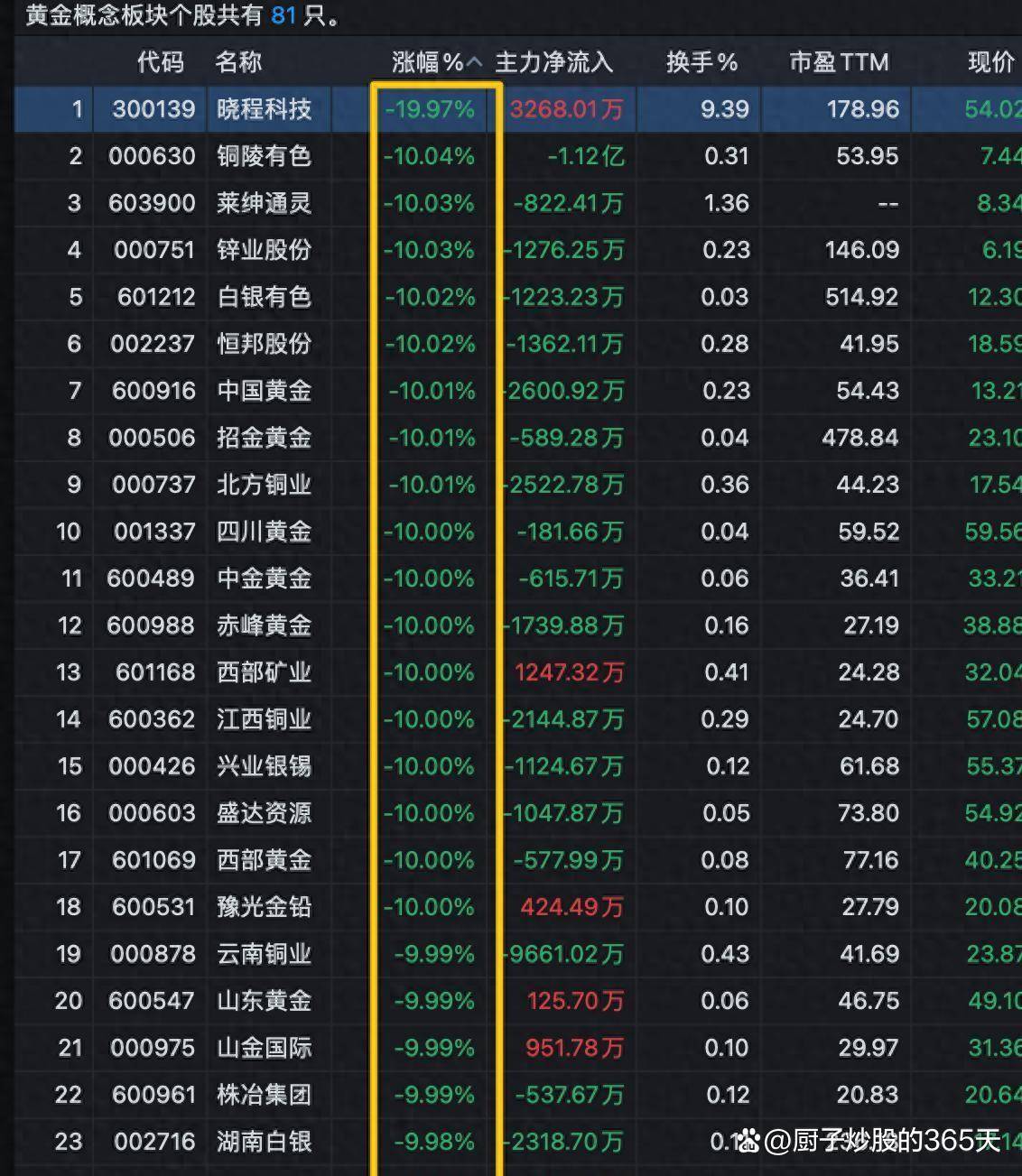
Group 1 - The article discusses the contrasting behaviors of older and younger investors in the gold market, highlighting that older individuals view gold as a stable asset for long-term holding, while younger investors engage in speculative trading [4][6]. - Older investors prefer physical gold for its tangible value and are less affected by price fluctuations, often holding onto their investments regardless of market volatility [4][8]. - In contrast, younger investors are more inclined to use leverage and react emotionally to market changes, leading to higher risks and potential losses [6][10]. Group 2 - The article differentiates between physical gold and leveraged gold, stating that physical gold is a stable investment with no risk of liquidation, suitable for long-term holding [8][10]. - Leveraged gold trading is characterized by rapid price fluctuations, which can lead to quick profits but also significant losses, making it more suitable for experienced traders [10][12]. - The long-term trend for gold prices from 2023 to 2026 is expected to show an overall upward movement, with potential short-term volatility, indicating that long-term holding can yield positive returns despite market dips [12][14]. Group 3 - Financial experts suggest that long-term holding of gold is ideal for risk-averse individuals and those seeking stability in their asset allocation, particularly retirees and older investors [18][19]. - Short-term trading is recommended for experienced investors who can handle high volatility and have strict risk management practices in place [21]. - The article concludes that while gold itself is a reliable asset, the approach to investing in it can significantly impact outcomes, emphasizing the importance of strategy over emotional decision-making [23].

资金“踩踏式”出逃,国际金银史诗级暴跌,后市怎么走?
Di Yi Cai Jing· 2026-02-01 23:37
编者注:2月2日,现货白银延续跌势,日内跌幅扩大至10%,报76.89美元/盎司。现货黄金向下跌破4700美元,日内下跌3.33%。 1月的最后一个交易日,金银价格发生史诗级暴跌。 现货黄金盘中最大跌幅突破12%,击穿5000美元/盎司大关;现货白银盘中最大跌幅超35%,为近40年最大单日跌幅。 这场始于美联储主席提名的多米诺骨牌,在24小时内接连推倒对冲基金、高杠杆资金,恐慌情绪迅速蔓延至工业金属、加密货币等领域。与此同时,国内金 饰价格两日内每克最高回调超200元,引发零售端退货争议。 "这不是简单的回调,而是一场由政策预期突变引发的流动性踩踏。"交易人士告诉记者,"前期芝加哥商品交易所(CME)及国内的上海期货交易所已持续 上调黄金、白银交易保证金比例,交易者在黄金、白银上积累了过多杠杆,断崖式暴跌触发了大规模的保证金追缴(margin call),被迫抛售成为压垮骆驼 的最后一根稻草。" 沃什提名引爆金银创纪录重挫 消息面上,美国总统特朗普于当地时间周五(1月30日)通过社交媒体宣布,提名美联储前理事凯文・沃什接替杰罗姆・鲍威尔,出任美联储新一任主席。 美元指数瞬间被点燃,现货黄金价格如自由落体般从5 ...

刚刚,官宣了!这家黄金平台,已启动兑付
Zhong Guo Ji Jin Bao· 2026-01-31 11:16
(原标题:刚刚,官宣了!这家黄金平台,已启动兑付) 【导读】罗湖区工作专班:水贝黄金平台杰我睿公司已启动兑付 中国基金报 晨曦 综合整理 企查查信息显示,杰我睿成立于2014年,主营业务为有色金属及矿石批发。该公司原为水贝地区黄金原 料交易商,从上游供货方采购、回收黄金原料,向下游小商户供货。近年来,杰我睿业务逐步转向贵金 属零售,并向散户开放黄金预定价交易,也因此扩大了风险敞口。 多名投资者称,自2026年1月20日起,杰我睿线上平台就已无法正常提现。自2026年1月21日起,平台将 每日提现额度限制为500元人民币与1克黄金,至今仍无法提取任何资金。 据红星新闻,有用户介绍称,杰我睿预定价最低时,仅需20余元,就可锁定一克黄金,杠杆高达40倍左 右。而同期上海黄金交易所黄金合约保证金比例约为14%,期货公司还要额外加收2%—5%的手续费, 同样锁定一克黄金所需保证金至少需要144元。 另外,杰我睿在平台停止正常兑付前的1月17日还推出了优惠活动,声称1月24日举行"一年一次免工费 活动",吸引了大量用户提前寄送黄金或充值购买黄金。杰我睿相关交易平台关闭前,还曾显示有5万多 名用户排队等待打款。 1月28日 ...
40倍杠杆断裂?一黄金预定价平台被曝兑付困难,当地通报
Guan Cha Zhe Wang· 2026-01-28 05:58
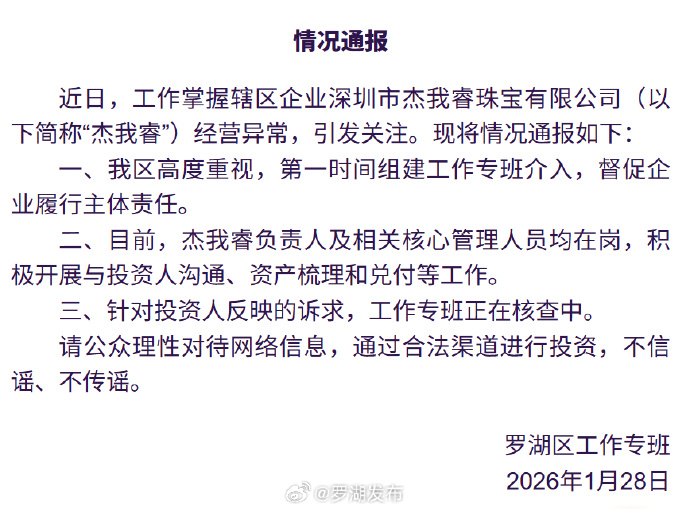
近期,有消息称深圳市杰我睿珠宝有限公司疑似爆雷,有指涉款过百亿元,超十万客户蒙受损失,引发关注。 据微博@罗湖发布 消息,1月28日,深圳市罗湖区工作专班发布情况通报称,杰我睿负责人及相关核心管理人员均在 岗,积极开展与投资人沟通、资产梳理和兑付等工作。 通报全文如下: 一、我区高度重视,第一时间组建工作专班介入,督促企业履行主体责任。 二、目前,杰我睿负责人及相关核心管理人员均在岗,积极开展与投资人沟通、资产梳理和兑付等工作。 三、针对投资人反映的诉求,工作专班正在核查中。 请公众理性对待网络信息,通过合法渠道进行投资,不信谣、不传谣。 罗湖区工作专班 2026年1月28日 1月21日至今,超过30名投资者告诉第一财经,杰我睿及多个关联的线上平台出现兑付困难,波及全国多地投资者。 根据投资者自行统计的数据,未兑付资金已超过百亿元。另据一份投资者提供的呈报书,截至1月27日,仅初步实名 统计,涉案未结算金额达到2.46亿元。 企查查信息显示,杰我睿成立于2014年,主营业务为有色金属及矿石批发。该公司原为水贝地区黄金原料交易商,从 上游供货方采购、回收黄金原料,向下游小商户供货。与此前暴雷的粤宝鑫等料商不同, ...
现货黄金投资全攻略:秒懂和实物黄金、纸黄金的五大区别!
Sou Hu Cai Jing· 2026-01-16 00:48
Core Insights - The article emphasizes the growing interest in spot gold due to its unique trading mechanism, which allows for margin-based, two-way trading without the need for physical gold bars [1] Group 1: Spot Gold Trading Characteristics - Spot gold trading is characterized by two main features: leverage, allowing investors to trade full contracts with only a small margin (e.g., 2% of contract value), and two-way trading, enabling profit opportunities regardless of market direction [3] - The trading is nearly continuous, which differentiates it from long-term holding strategies and focuses on price trend analysis and short-term trading opportunities [3] Group 2: Comparison with Other Gold Investment Options - Other gold investment methods include: - Physical gold (bars, coins): Tangible assets suitable for long-term holding but with higher premiums and lower liquidity [4] - Paper gold/gold savings accounts: Low entry barriers and simple operations but typically only allow for one-way trading without leverage, limiting profit potential [5] - Gold ETFs: Traded like stocks on exchanges, offering good liquidity and transparency, suitable for medium to long-term investors [6] - Gold futures/T+D: Standardized contracts with high leverage and complexity, more suited for experienced investors [7] - Spot gold offers advantages in trading flexibility, capital efficiency, and short-term opportunity capture compared to other methods, albeit with higher potential risks [7] Group 3: Key Factors Influencing Gold Prices - Understanding gold price movements requires attention to several core variables, including global central bank gold purchases and geopolitical tensions as long-term support factors [8] - Short-term fluctuations are closely tied to the strength of the US dollar, US inflation, and employment data, which influence market expectations of Federal Reserve interest rate policies [8] Group 4: Cautions for New Investors - New traders should prioritize selecting a safe and reliable trading platform, being wary of exaggerated claims of guaranteed profits [9] - It is crucial to verify the regulatory credentials of the platform, ensuring it is licensed by authoritative financial regulators [10] - Investors should confirm the security of their funds, ensuring that client funds are kept separate from operational funds and are held in third-party banks [10] - Transparency in costs, including spreads and fees, is essential for identifying reputable platforms [10] - Testing the trading environment through demo accounts can help assess the stability and reliability of the trading software [10]