杠铃策略

Search documents
浦银国际港股市场情绪指数:乐观情绪冲高回落,弱势短期或将持续
SPDB International· 2026-02-05 10:55
Core Insights - The report indicates that the sentiment index for the Hong Kong stock market is currently at 72.9, having dropped from a high of 87.8 on January 29, suggesting a shift from extreme optimism to a more cautious outlook [1][3] - The report highlights that liquidity factors continue to dominate market sentiment, with a forecasted price-to-earnings ratio for the Hang Seng Index at 13.1, reflecting a 4% decline from its peak in January [3] - The report suggests that the market is expected to maintain a volatile stance in the short term, with a focus on dividend value stocks as part of a barbell strategy [3] Market Sentiment Analysis - As of February 3, the sentiment index is still in the optimistic range, but historical data indicates a high probability of a short-term weakening when the index reaches extreme levels [1][3] - Various trading indicators have shown weakening momentum since January 30, with increased risk premiums, short-selling ratios, and put/call ratios indicating rising bearish sentiment [1][3] - The report notes that out of 13 indicators contributing to the sentiment index, 4 have shown strong improvement, while 7 have weakened, indicating mixed signals in market dynamics [3][6] Investment Strategy - The report recommends a short-term investment strategy focusing on dividend value stocks, particularly in sectors such as banking, insurance, telecommunications, public utilities, and energy, while also considering consumer sectors [3] - It emphasizes the importance of monitoring foreign capital inflows, especially from active foreign investors, as external liquidity factors may influence market performance [3] - The report suggests that the "technology + dividend" barbell strategy remains effective, with a recommendation to increase the weight of dividend stocks in the portfolio [3]
消费破局、制造业突围,全球经济动荡中,中国资产被不断重估
Sou Hu Cai Jing· 2026-02-01 03:50
Group 1 - The core logic of global capital reallocation has shifted, with a growing consensus that "the next China" is still China, as highlighted by Estee Lauder's CEO at the Davos Forum [1] - Morgan Stanley's report indicates that in 2025, the US dollar index depreciated by 10%, while foreign capital inflow into the Chinese stock market reached $50.6 billion, significantly surpassing the total of $11.4 billion for 2024 [2] - The geopolitical landscape in 2026 shows a stark contrast, with the East stabilizing as China engages in trade agreements and the West facing challenges such as tariff threats and leadership disputes [2] Group 2 - The "East stable, West shaky" situation is prompting a reevaluation of capital allocation strategies, as traditional safe-haven assets like the US dollar are losing appeal, while gold's share in global reserves has risen to about 25% [4] - Central banks are increasingly favoring gold, reflecting concerns over the erosion of trust in fiat currencies, with the share of the renminbi in bilateral trade settlements rising and offshore renminbi bond issuance hitting record highs [6] - China's economy is experiencing a dual-track development, with traditional sectors adjusting and new productivity rapidly growing, despite a 30% decline in housing prices [8][10] Group 3 - In 2026, macroeconomic policies are set to be "moderately expansive," focusing on targeted measures rather than broad stimulus, with a consumer spending stimulus of no less than 300 billion yuan [10] - The new energy vehicle sector has seen monthly sales surpassing 50% of total new car sales for the first time in October 2025, indicating a significant shift in the automotive market [12] - Investment focus is shifting towards AI and green transformation, with AI applications expected to accelerate commercialization in 2026, while China's strengths lie in effectively translating technology into productivity [14][16] Group 4 - The investment demand for achieving carbon peak and carbon neutrality is projected to exceed 2% of GDP, creating substantial investment opportunities, particularly in energy storage [18] - The aerospace sector is highlighted as a future competitive field, suggesting a need for investors to adopt a "barbell strategy" that balances high-growth stocks with stable dividend assets [18] - China's innovation clusters, particularly in Beijing, Shanghai, and the Guangdong-Hong Kong-Macau Greater Bay Area, are positioned to drive future economic growth, attracting capital that aligns with technological innovation and green transformation [20]


塔勒布的黑天鹅捕猎术
Cai Jing Wang· 2026-01-28 07:13
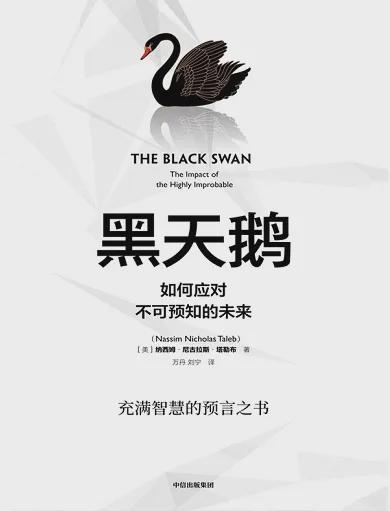
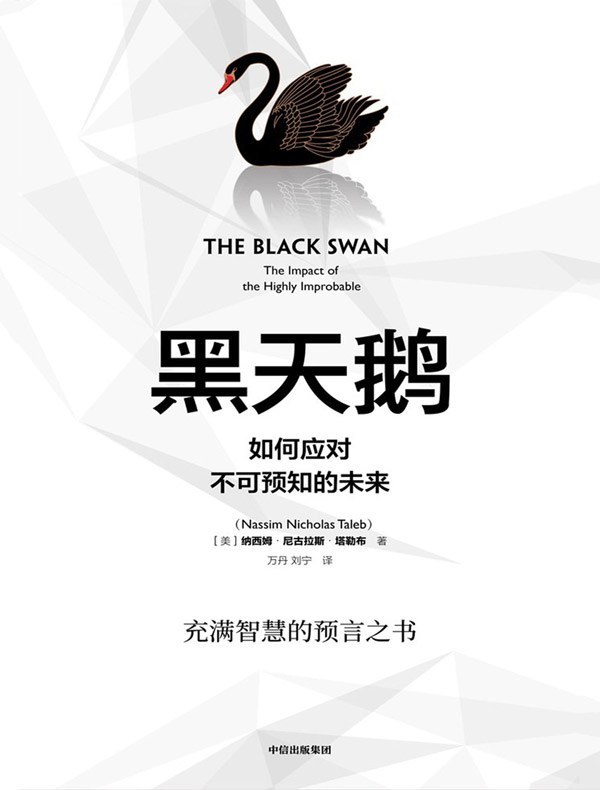
Core Insights - The article discusses the concept of "Black Swan" events, which are unpredictable and have significant impacts, as exemplified by Nassim Nicholas Taleb's experiences during the 1987 stock market crash [8][10][26] - Taleb's investment philosophy emphasizes the importance of recognizing uncertainty and leveraging it to create opportunities, rather than attempting to predict specific outcomes [26] Group 1: Taleb's Background and Philosophy - Nassim Nicholas Taleb was born in Lebanon and experienced the instability of the Lebanese Civil War, which shaped his understanding of risk and uncertainty [4][5] - His fascination with options trading stems from their non-linear nature, where limited losses can lead to disproportionate gains, reflecting the hidden dangers in seemingly safe situations [5][6] - Taleb's successful bet on deep out-of-the-money put options during the 1987 crash illustrates his ability to capitalize on extreme events that others deemed impossible [2][3] Group 2: Key Concepts in Taleb's Framework - The concept of "Black Swan" refers to rare events that are unpredictable but can be rationalized in hindsight, such as financial crises and pandemics [8][10] - Taleb introduces the idea of "Antifragility," which describes systems that benefit from chaos and volatility, contrasting with fragile systems that break under stress [11][26] - The "Barbell Strategy" is proposed, where 85-90% of resources are allocated to extremely safe investments, while 10-15% are placed in high-risk, high-reward opportunities, avoiding the mediocre middle ground [12][11] Group 3: Practical Applications and Challenges - Taleb emphasizes the principle of "Skin in the Game," advocating that decision-makers should bear the consequences of their choices, enhancing accountability [13] - The investment strategy employed by Taleb and his followers involves consistently purchasing cheap deep out-of-the-money options, which may lead to short-term losses but can yield substantial returns during market crashes [15][17] - The psychological challenge of maintaining patience and resisting the urge to conform to prevailing market trends is highlighted, as investors often struggle with the discomfort of short-term losses [17][19]
风暴越大,塔勒布越兴奋
Feng Huang Wang Cai Jing· 2026-01-28 07:05
Core Insights - The article discusses the concept of "black swan" events and how Nassim Nicholas Taleb capitalized on unpredictable market crashes, particularly during the 1987 stock market crash, to achieve financial freedom [2][3][4][5] Group 1: Black Swan Concept - "Black swan" events are defined as unpredictable occurrences with significant impact that can be rationalized after the fact [13][16] - Historical examples of black swan events include the 1987 stock market crash, the 1997 Asian financial crisis, the 2008 global financial crisis, and the 2020 COVID-19 pandemic [16] Group 2: Taleb's Investment Philosophy - Taleb emphasizes the importance of recognizing and benefiting from volatility, coining the term "antifragility" to describe systems that thrive on chaos [16][18] - The "barbell strategy" is proposed, where 85%-90% of resources are allocated to extremely safe investments, while 10%-15% are placed in high-risk, high-reward opportunities [16] Group 3: Practical Application and Challenges - Taleb's investment strategies are tested through the Empirica Capital hedge fund, which focuses on buying cheap deep out-of-the-money options as insurance against market crashes [18][19] - The fund experiences consistent small losses during stable market periods, leading to client withdrawals, but ultimately reaps significant rewards during market downturns [19][20] Group 4: Life Philosophy - Taleb's approach extends beyond finance to life, advocating for mental exercises that prepare individuals for worst-case scenarios to reduce anxiety [23] - He promotes a lifestyle that embraces physical challenges and limits information intake to enhance decision-making and resilience [32][34] Group 5: Relevance of Taleb's Insights - In an era where uncertainty is prevalent, Taleb's insights on constructing systems that benefit from volatility are increasingly valuable for both individual investors and institutions [38] - The article concludes that true resilience lies not in avoiding fluctuations but in effectively responding to them, reinforcing the idea of building "arks" to navigate through storms [38]
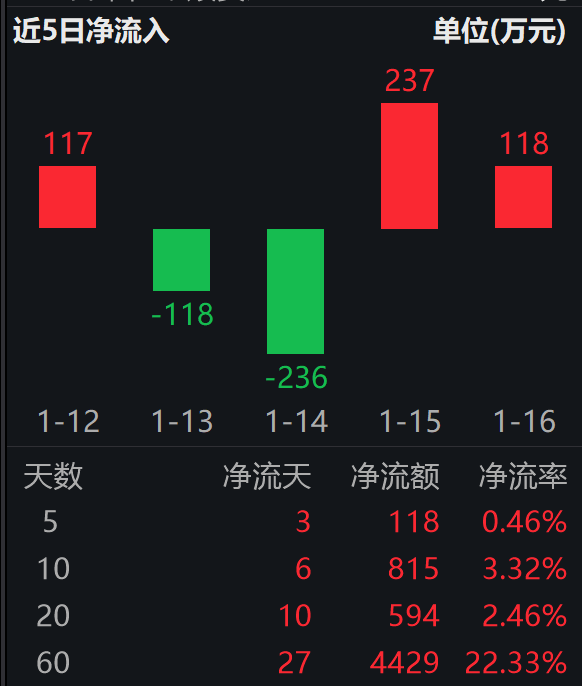
目前唯一一只跟踪500现金流指数的现金流500ETF(560120)盘中涨超3%,连续10个交易日“吸金”
Mei Ri Jing Ji Xin Wen· 2026-01-28 06:44
Group 1 - The core viewpoint of the article highlights the strong performance of the CSI 500 Free Cash Flow Index, which rose by 3.05%, with significant gains in stocks such as Silver Nonferrous and Zhejiang Longsheng, and a notable increase in the Cash Flow 500 ETF, which is up 3.21% and has achieved an 8-day consecutive rise [1] - The Cash Flow 500 ETF has seen active trading with a turnover rate of 17.9% and has attracted a net inflow of over 79.9 million yuan in the past 10 days, indicating strong investor interest [1] - Huachuang Securities suggests that in a low-interest-rate environment, the compounding effect of stable free cash flow is a cornerstone for a long-term bull market, shifting the focus from front-end expansion to back-end prudent management and cash flow accumulation [1] Group 2 - The Cash Flow 500 ETF closely tracks the CSI 500 Free Cash Flow Index, selecting 50 stocks with positive and high free cash flow after liquidity, industry, and ROE stability screening, characterized by small to mid-cap market value, lower valuations, and higher ROE [1] - The industry distribution of the index is balanced, primarily focusing on nonferrous metals, basic chemicals, steel, pharmaceutical biology, and machinery equipment, with no allocation to the financial and real estate sectors [1]
2026年全球医疗健康行业私募股权报告(英文版)
Sou Hu Cai Jing· 2026-01-25 02:40
Core Insights - The global healthcare private equity market is experiencing a significant recovery and record growth, with total deal value expected to exceed $191 billion in 2025, marking a historical high [11][12][16] - The market shows clear regional differentiation, with Europe leading in biopharma and healthcare services, North America maintaining stability despite policy impacts, and Asia-Pacific demonstrating broad growth resilience [11][25][27] Market Performance - In 2025, healthcare private equity saw a record performance with disclosed deal value surpassing $191 billion and 445 buyouts, making it the second-highest annual total on record [11][12] - The exit value surged from $54 billion in 2024 to an expected $156 billion in 2025, driven by an increase in large deals [15][16] Regional Analysis - Europe experienced a doubling of deal value to approximately $59 billion, primarily driven by biopharma and healthcare provider deals [25] - North America faced a temporary pullback in the second quarter but still achieved a healthy year with an expected exit activity of $90 billion, significantly higher than 2024 [26] - Asia-Pacific set a record for deal value, exceeding 2021's high by over 30%, with notable growth in biopharma, medtech, and healthcare IT [27][28] Sector Trends - Biopharma remains a cornerstone of investment, with deal value rising from $55 billion in 2024 to an estimated $80 billion in 2025, accounting for about 30% of overall deal volume [33] - Provider and related services deal value increased by 57% to an estimated $62 billion, driven by technology-enabled assets and healthcare IT [38] - Medtech is emerging as a new growth engine, with investors focusing on revenue growth and margin expansion [39] Investment Strategies - The investment logic in healthcare IT is shifting towards revenue and profit expansion through refined pricing and generative AI applications, with the "60 rule" becoming a new performance benchmark [3] - Investors are adopting a "barbell strategy" in pharma services, focusing on high-quality assets with scale advantages and potential operational improvements [3]
姜诚:价值投资不是策略而是理念,它回答的是“我们的收益来源是什么”
中泰证券资管· 2026-01-23 05:02
Core Viewpoint - The market is experiencing significant volatility, and the pressure in investment comes from the continuous tracking, dynamic assessment, and evaluation of portfolio status rather than the relative performance of net asset value [2][3]. Group 1: Market Dynamics and Investment Pressure - The pressure faced by the company is primarily due to the downward pressure on fundamentals in cyclical industries, which has been a consistent challenge over the past two to three years [3]. - The company emphasizes that the performance of net asset value is not the main source of pressure; rather, it is the ongoing need to dynamically assess new fundamental facts, including changes in demand and supply [3][4]. - The company does not focus on how much others are earning compared to them; the key is whether they can earn money themselves, which is the main source of investment pressure [4]. Group 2: Value Investment Philosophy - Value investment is not merely a strategy but a philosophy that addresses the source of returns, focusing on long-term value creation rather than short-term market performance [5][6]. - The company argues that the performance of the CSI 300 index does not necessarily reflect the effectiveness of value strategies, as the index's style can shift due to periodic adjustments [5][6]. - The company believes that the current weakness in the value strategy does not imply its failure; rather, it is a reflection of market dynamics and should not deter long-term value investment [7][8]. Group 3: Long-term Value Assessment - The company highlights the importance of assessing whether a company's long-term competitive advantage and governance can sustain good dividend returns, which is a core source of pressure [11][12]. - It is noted that identifying companies with sustainable competitive advantages is challenging, leading to a concentrated investment strategy due to the scarcity of such opportunities [12]. - The company emphasizes that the assessment of long-term value is complex and cannot be simplified into a one-size-fits-all approach, especially in a market with over 5,000 stocks [12][13]. Group 4: Industry Trends vs. Market Performance - The company distinguishes between market style performance and actual industry trends, asserting that the two are not synonymous [15][16]. - It is stated that while certain industries may show strong performance, this does not necessarily correlate with sustainable investment opportunities [15][16]. - The company advocates for a focus on genuine industry trends and competitive landscapes rather than being swayed by short-term market fluctuations [16]. Group 5: Investment Strategy and Risk Management - The company discusses the concept of a "barbell strategy," which depends on the investor's ability circle and the clarity of investment goals [20][21]. - It is acknowledged that while short-term performance may be slow, the focus should remain on avoiding permanent capital loss and aligning with investor expectations [21]. - The company emphasizes that the ability to assess long-term value is crucial, and the risk of "value traps" must be carefully managed [13][21]. Group 6: Valuation Models and Cash Flow - The company asserts that valuation models are fundamentally based on cash flow discounting, with current cash returns holding more weight in valuations [26][27]. - It is noted that while growth companies may have high valuations, their long-term value assessment remains complex and requires careful consideration of future cash flows [23][24]. - The company stresses that reasonable valuation levels are determined by long-term value rather than short-term profit performance or market style [27]. Group 7: Knowledge and Information Sources - The company advocates for a balanced approach to learning, emphasizing the importance of both reading financial reports for information and engaging with broader literature to build analytical skills [29][30]. - It is highlighted that understanding financial reports is essential for making informed investment decisions, but this should be complemented by a well-rounded knowledge base [29][30].

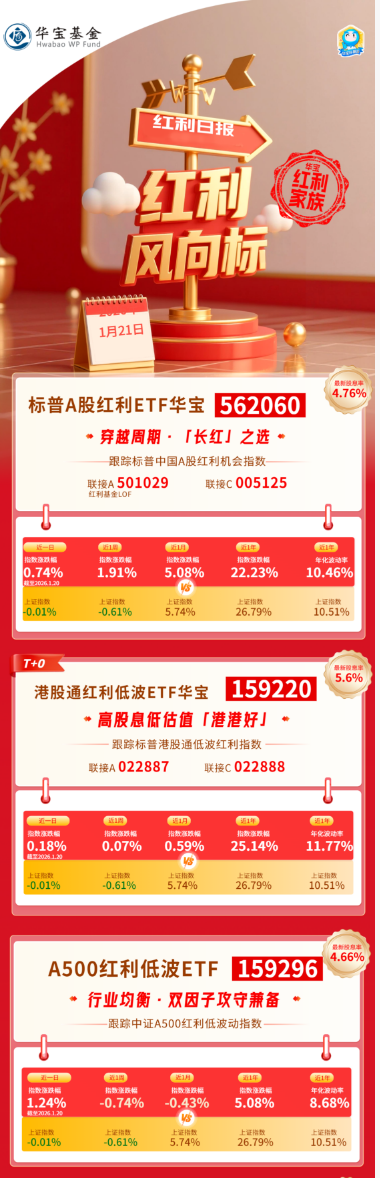
红利风向标 | 红利风格小幅回调,港股红利走强
Xin Lang Cai Jing· 2026-01-22 01:18
Core Viewpoint - The report highlights various ETFs managed by Huabao Fund, focusing on dividend yields and performance metrics, indicating a potential investment strategy in the current market environment. Group 1: Dividend Yields and ETF Performance - The latest dividend yield for the S&P A-Share Dividend ETF is 4.76% [1] - The S&P A-Share Dividend ETF has shown a 22.7% increase over the past year, while the Shanghai Composite Index has increased by 26.96% [1] - The Hong Kong Stock Connect Low Volatility Dividend ETF has a dividend yield of 5.6% and a 26.18% increase over the past year [7] - The A500 Low Volatility Dividend ETF has experienced a 4.77% increase over the past year [7] - The 300 Cash Flow ETF has shown a 16.33% increase over the past year [8] Group 2: Market Strategy and Investment Recommendations - The current market is experiencing moderate recovery, suggesting a potential "spring market" for investment [8] - Investors are advised to adopt a "barbell strategy," balancing high dividend and quality cash flow assets with high-growth assets aligned with industry trends [8] - The report emphasizes the importance of dividend mechanisms and the potential for consistent income generation from these ETFs [7][8]

红利风向标 | 三大指数集体回调,红利风格逆市走强
Xin Lang Cai Jing· 2026-01-21 01:04
Group 1 - The A-share market experienced a pullback on January 20, with growth sectors adjusting while dividend sectors showed resilience [3][7] - GF Securities predicts that A-share valuations may break historical patterns and increase for three consecutive years by 2026 [3][7] - Investors are advised to adopt a "barbell strategy," balancing high dividend and quality cash flow assets with high-growth assets aligned with industry trends and policy directions [3][7] Group 2 - The S&P A-share Dividend ETF (华宝 562060) tracks the S&P China A-share Dividend Opportunities Index, showing a 4.76% return over the past year [1] - The Hong Kong Stock Connect Low Volatility Dividend ETF (华宝 159220) tracks the S&P Hong Kong Stock Connect Low Volatility Dividend Index, with a return of 5.08% over the past year [1] - The CSI 800 Low Volatility Dividend ETF (华宝 159355) focuses on large and mid-cap stocks, with a return of 8.43% over the past year [7]
一键捕捉市场“现金奶牛”!现金流ETF汇添富(159276)收涨1.71%,创上市以来新高,连续三日获资金加仓
Sou Hu Cai Jing· 2026-01-19 09:33
Group 1 - The cash flow ETF Huatai Securities (159276) closed up 1.71%, with constituent stocks such as CNOOC rising 0.34%, SAIC Motor up 1.73%, Gree Electric up 0.45%, China Aluminum up 0.53%, Shanghai Electric up 1.53%, Chint Electric up 7.25%, and Xiamen International Trade up 1.16% [1] - The fund has seen a net inflow of over 44 million yuan in the past 60 days, marking three consecutive days of net inflow [1] Group 2 - The Guozhen Free Cash Flow Index has achieved a cumulative increase of 698% from 2014 to September 2025, with an annualized return of 20%, significantly outperforming mainstream broad-based, dividend indices, and similar cash flow strategy indices [3] - Dongwu Securities' strategy research report indicates that the current market trading activity is gradually recovering, entering a "spring market" layout window [3] - Investors are advised to adopt a "barbell strategy," combining high dividend and quality cash flow assets as a stabilizing force while also investing in high-growth assets aligned with industry trends and policy directions to capture market opportunities [3] - The cash flow ETF Huatai Securities (159276) closely tracks the Guozhen Free Cash Flow Index, focusing on companies' ability to sustain dividends, aiding investors in efficiently allocating quality free cash flow assets from the Shanghai and Shenzhen stock exchanges [3] - The off-site linked funds for the cash flow ETF Huatai Securities include Huatai Guozhen Free Cash Flow ETF Linked A (024002.OF) and Huatai Guozhen Free Cash Flow ETF Linked C (024003.OF) [3]