欧洲一体化

Search documents
金荣中国:世界秩序或发生改变,金价持续走高维持涨势
Sou Hu Cai Jing· 2026-01-21 01:28
Market Overview - International gold prices rose significantly, opening at $4,674.22 per ounce and closing at $4,737.51 per ounce, with a high of $4,751.33 and a low of $4,659.49 [1] - The largest gold ETF, SPDR Gold Trust, saw a decrease in holdings by 4.01 tons, bringing the total to 1,081.66 tons [6] Geopolitical Insights - Ray Dalio, founder of Bridgewater Associates, indicated a shift from a multilateral to a unilateral world order, reminiscent of pre-1945 norms, suggesting that the current global dynamics are characterized by power struggles among nations [3] - European Central Bank President Christine Lagarde noted that political tensions are eroding trust between Europe and the U.S., which may accelerate the long-stalled European integration process [3] - Canadian Prime Minister Justin Trudeau highlighted Russia as a potential threat in the Arctic, emphasizing the need for Canada to enhance its military capabilities in response [5] U.S. Political Developments - President Trump expressed the need for Greenland to ensure global security and mentioned the possibility of reclaiming the Panama Canal [4] - Two Democratic senators are demanding records related to a criminal investigation of Federal Reserve Chairman Jerome Powell, marking a formal response to earlier subpoenas [5] Technical Analysis - Gold prices have shown a strong upward trend, with significant gains over the past two trading days, indicating a stable bullish trend [8] - The daily and hourly RSI indicators are showing overbought conditions, suggesting a potential need for price adjustments despite the strong bullish trend [8]

摩尔多瓦启动退出独联体法律程序,俄罗斯回应称表示遗憾
Huan Qiu Shi Bao· 2026-01-20 23:21
Group 1 - Moldova's government has initiated the process to terminate several agreements that form the legal basis for its membership in the Commonwealth of Independent States (CIS) [1] - The termination of these agreements is seen as a significant step towards Moldova's integration into Europe, as the country actively seeks EU membership and has been granted candidate status in 2022 [1] - Russian officials expressed regret over Moldova's decision, highlighting that Moldova's participation in the CIS has been frozen for a long time and that the organization serves as a valuable platform for integration [1] Group 2 - The CIS was established in December 1991, initially signed by Russia, Belarus, and Ukraine, with 11 other countries joining later [2] - Currently, there are 9 member states in the CIS, including Moldova, while Georgia exited in 2008 and Ukraine is set to withdraw in May 2024 [2]
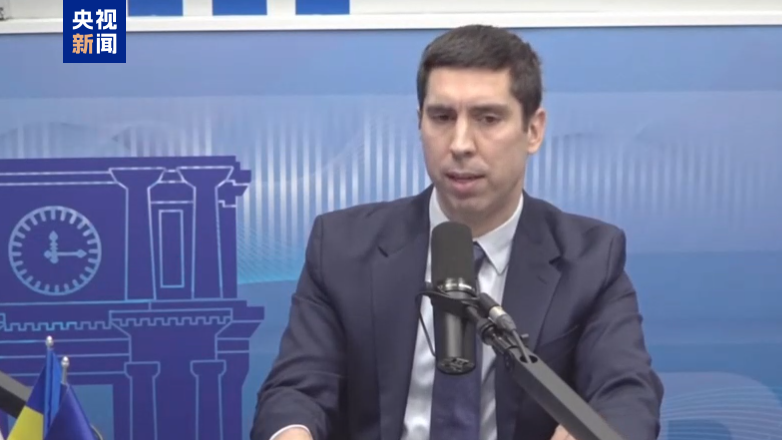
摩尔多瓦启动退出独联体法律程序
Jing Ji Guan Cha Wang· 2026-01-19 22:45
Core Viewpoint - The government of Moldova has officially initiated the process to terminate several core agreements that form the legal basis for its membership in the Commonwealth of Independent States (CIS) [2] Group 1 - Moldova's Deputy Prime Minister and Foreign Minister, Popsoi, announced the government's decision to start the procedure for withdrawing from the CIS [2] - After completing internal government processes, the draft proposal will be submitted to the parliament for review [2] - If the legislative body approves the termination of the agreements and the president signs it, Moldova will no longer be a member of the CIS after completing subsequent technical steps [2] Group 2 - Moldova became a member of the CIS in December 1991, shortly after declaring independence in August of the same year [2] - In recent years, Moldova has gradually reduced its participation in activities within the CIS framework and has accelerated its European integration process [2]
法国斯特拉斯堡:在欧盟权力与童话古城之间
Xin Lang Cai Jing· 2026-01-15 02:45
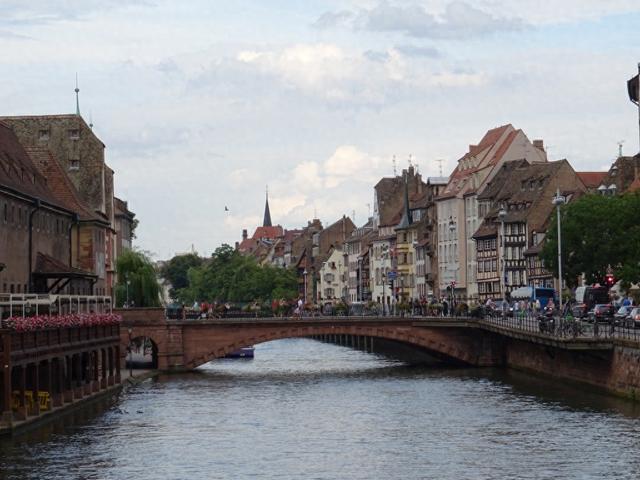
在各种国际事件中,欧盟作为世界重要一环,出场频率极高。日前,欧盟成员国经过投票,初步同意签 署欧盟-南方共同市场贸易协定,这也是迄今为止欧盟达成的最大规模贸易协定。投票结果显示,在欧 盟27个成员国中,虽然法国等少数国家表示反对,但大多数国家选择支持该协定,符合欧盟通过投票的 基本要求:需有合计覆盖欧盟65%以上人口的至少15个国家支持。这一投票结果还需要欧洲议会批准方 可生效,法国官方也表示争取要让欧洲议会否决该协定。 欧盟作为一个国家联盟组织,内部并不强调也不可能存在完全统一的声音,每件事情都少不了谈判、投 票和博弈,欧洲议会就是最重要的博弈场域。 欧盟总部位于布鲁塞尔,但欧洲议会则在法国斯特拉斯堡。 拥有二十多万人口的斯特拉斯堡,是法国东北部人口最多的城市,也是法国人口排名前十的城市之一。 虽然城市体量远远无法与中国城市相比,但在欧洲绝对是大城市级别。除了欧洲议会之外,斯特拉斯堡 还驻有欧洲人权法院、欧洲委员会反腐败国家集团和欧洲视听观察组织等多个机构。它与国际清算银行 所在的巴塞尔、联合国驻地日内瓦、国际法院驻地海牙和联合国总部所在地纽约一起,是世界上少数几 个拥有一级国际组织的非首都城市之一。 斯特 ...
【环时深度】“欧盟增长最快的大型经济体”,波兰靠的是什么
Huan Qiu Shi Bao· 2026-01-04 23:00
Core Insights - Poland is projected to be the fastest-growing large economy in the EU, with a GDP growth rate of 3.5% by 2026, significantly higher than the EU average of approximately 1.4% [1][3] - The country is expected to become the largest economy in Central and Eastern Europe and the sixth largest in the EU, with a GDP of $1.04 trillion by 2025 [2] - Poland's economic growth is driven by a diverse industrial base and a strong domestic market, with significant contributions from sectors such as services, industry, and IT [5][6] Economic Performance - Poland's GDP growth rates are forecasted at 2.9% for 2024, 3.2% for 2025, and 3.5% for 2026, with inflation expected to decrease to 2.8% and unemployment remaining low at around 5% [3] - The country has seen a substantial increase in GDP per capita across various provinces, with some regions surpassing Germany's least developed areas [4] Industrial Structure - The economy is characterized by a diverse range of industries, including agriculture, mining, automotive, electronics, and IT, with services accounting for about 60% of GDP [5] - Poland's export-to-GDP ratio has increased from 27% in 2000 to 63% in 2022, indicating a strong reliance on exports, although this is expected to decrease to 52% in 2024 [5][6] Domestic Market and Labor Force - Poland benefits from a large, well-educated workforce, with over 44% of young adults holding higher education degrees, contributing to a robust domestic market [6] - The economy is less dependent on exports compared to smaller economies, allowing it to better withstand global economic shocks [7] Foreign Investment and EU Integration - Poland has attracted significant foreign investment due to its stable economic environment and favorable business conditions, being one of the largest beneficiaries of EU funding [8][9] - The integration into the EU has facilitated trade and investment, creating a large economic zone that enhances Poland's growth prospects [9] Trade Relations with China - Poland is the largest trading partner of China in Central and Eastern Europe, with increasing cooperation in various sectors, including automotive and electronics [10][11] - The presence of Chinese brands in Poland is growing, with significant exports of automotive parts and consumer electronics [11] Future Challenges - Despite its strong economic performance, Poland faces challenges such as potential economic repercussions from Germany's economic slowdown and demographic issues related to an aging population [13][14] - However, Poland's balanced approach to exports, domestic consumption, and EU-funded investments is expected to sustain its economic growth [14]
外交活跃经济尚待复苏,专家:这届德国政府希望重振“欧盟领头羊”地位
Di Yi Cai Jing· 2025-12-22 06:58
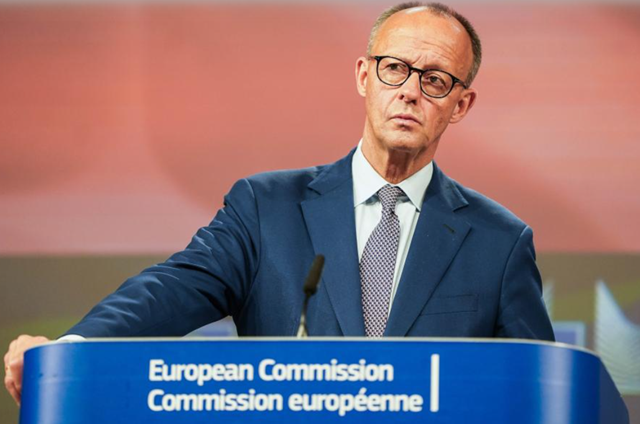
伍慧萍表示,默茨外交政策一个非常重要的原则,就是要做强做大德国和欧洲,使德国在其中发挥领导 作用,承担更多责任。 从"'美国治下的和平'落幕"到"德国不是'大国博弈中的棋子'",年末德国总理默茨在国际舞台上频频发 声,试图为欧洲在地缘政治的迷雾中指明方向。 2月大选、5月新政府组建,作为欧洲最大经济体,从对美欧关系的强势回应,到组局欧洲为乌克兰在俄 乌冲突解决中出谋划策,默茨新政府半年多来在外交舞台上的表现可圈可点。 但反观德国经济,在德国联邦统计局公布本年度经济增速前,德国经济已在2023年和2024年连续下滑, 国内生产总值(GDP)分别缩水0.3%和0.2%。今年12月中旬,德国多家重要经济研究机构分别发布的 冬季预测报告显示,受对美国出口明显下滑等因素影响,2025年德国经济预计仅增长0.1%,较秋季预 测的0.2%增幅再度下调。 缘何当前的德国在政治与经济领域出现如此"温差"?在同济大学德国研究中心副主任伍慧萍教授看来, 这背后恰恰折射出当前德国的内政外交正处于冷战结束以来前所未有的转型中。 近日,在德国蓝皮书《德国发展报告(2025):政治"右转"背景下的德国》发布会现场,伍慧萍在接受 第一财经采 ...
马克龙在一场采访中,罕见地提及了货币政策和美国
凤凰网财经· 2025-12-08 14:15
Group 1 - Macron calls for a shift in the European Central Bank's (ECB) monetary policy to focus on economic growth and employment alongside inflation control, breaking the norm of leaders avoiding comments on central bank policies [1][3] - The ECB's current core mission is to maintain medium-term inflation close to 2%, differing from the dual mandate of the Federal Reserve which includes maximizing employment [1] - Macron has previously suggested broadening the ECB's policy objectives to include economic growth and decarbonization goals [1] Group 2 - Macron highlights financial stability risks due to the U.S. relaxing regulations on crypto assets and stablecoins, urging Europe to maintain its status as a stable and credible investment zone [2] - He supports the issuance of European common debt to create more high-liquidity, safe assets, thereby enhancing the euro's status as an international reserve currency [2] - Macron criticizes the ECB's ongoing policy of selling government bonds, suggesting it could lead to higher long-term interest rates, suppress economic activity, and strengthen the euro [3]

波黑联邦雇主协会举行专题会议,探讨2026年波黑经济面临的挑战与机遇
Shang Wu Bu Wang Zhan· 2025-11-19 17:22
Core Viewpoint - The meeting organized by the Employers' Association of the Federation of Bosnia and Herzegovina focused on the challenges and opportunities facing the Bosnian economy in 2026, emphasizing the need for economic reform and industrial prospects [1] Group 1: Economic Challenges and Opportunities - The meeting discussed the challenges and opportunities for the economy in 2026, including the introduction of suitable labor, EU regulations, and green transition [1] - The Vice President of the Employers' Association highlighted the importance of finding solutions to enhance the competitiveness of Bosnian companies and reduce their financial burdens [1] Group 2: Industrial Development - The Chairman of the Federation's Economic and Social Council pointed out that deindustrialization policies have led to the destruction of many economic entities, and privatization processes have caused further losses [1] - There is a pressing need to redevelop the industrial production sector in Bosnia, with government action required to improve the business environment and accelerate infrastructure development [1] Group 3: Stakeholder Involvement - The meeting brought together employers, government representatives, unions, and academic figures to coordinate future development directions in the context of European integration and reindustrialization [1] - The meeting also included an assessment report on the implementation of the UN Guiding Principles on Business and Human Rights in the Bosnian business sector [2]
他能成为荷兰最年轻的首相吗
Qi Lu Wan Bao· 2025-11-09 17:42
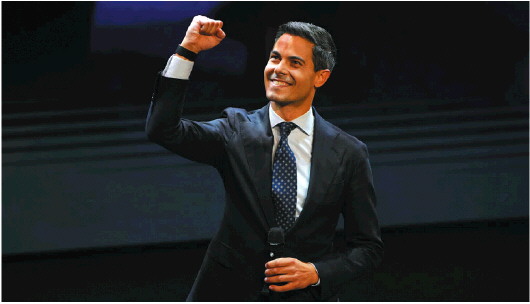
Core Points - The recent Dutch parliamentary elections resulted in the unexpected rise of the Six Six Party, which became the largest party, with Rob Jetten as a leading candidate for Prime Minister [2][3] - Jetten's party gained significant seats compared to the previous election, increasing from 9 to an expected 27 seats, while traditional parties faced setbacks [3][4] - The political landscape in the Netherlands has shifted, with voters expressing fatigue over political polarization and seeking solutions to pressing issues like housing and immigration [5][6] Election Results - The Six Six Party, led by Jetten, is projected to win 27 seats, narrowly ahead of the Freedom Party with 25 seats, and the People's Party for Freedom and Democracy with 23 seats [2][3] - The total votes for the Six Six Party were approximately 1.77 million, while the Freedom Party received around 1.75 million votes [2] Political Context - The previous coalition government, which included the Freedom Party, collapsed due to disagreements over immigration policies, leading to the early elections [4][5] - Jetten's rise is attributed to a combination of factors, including public dissatisfaction with extreme political views and a focus on more moderate, centrist policies [6][7] Jetten's Leadership - Rob Jetten, at 38, represents a new generation of centrist leadership, combining elements from both left and right policies [6][8] - His campaign effectively addressed key voter concerns, particularly housing shortages, proposing the construction of new cities and significant government investment in housing [6][9] Coalition Formation Challenges - Forming a stable coalition will be a significant challenge, as it is anticipated that at least four parties will need to collaborate, with Jetten reaching out to potential allies [10] - The Freedom Party is likely to be excluded from the new coalition, as other parties have expressed unwillingness to partner with them [10]
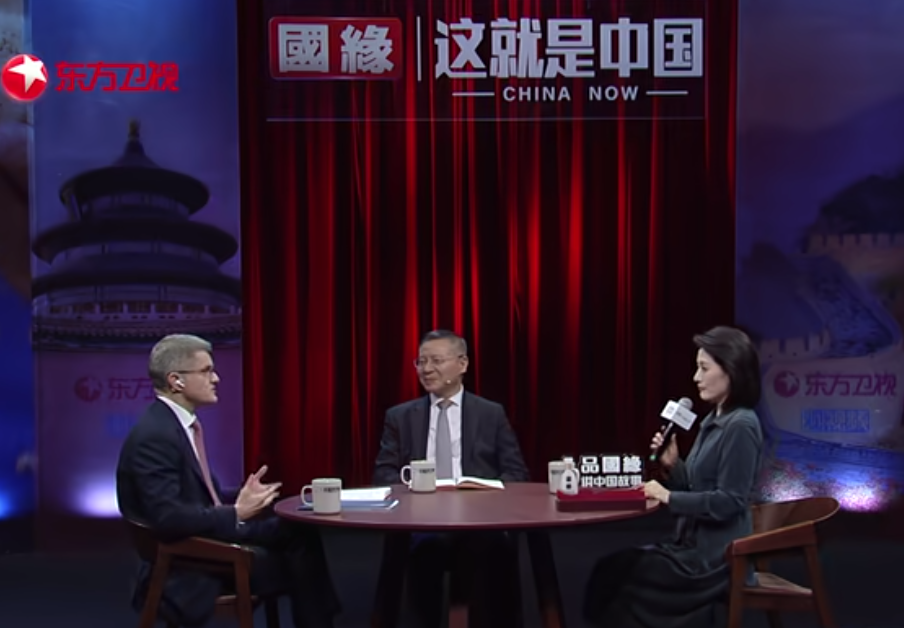
张维为《这就是中国》第307期:欧洲的未来
Guan Cha Zhe Wang· 2025-11-09 00:45
Core Views - The future of the European Union (EU) is uncertain, facing multiple crises and challenges that threaten its unity and effectiveness [3][11][18]. Group 1: Historical Context and Current Challenges - The EU was established to promote peace and cooperation among European nations after World War II, particularly between France and Germany [2][3]. - The end of the Cold War initially led to optimism within the EU, but subsequent crises, including the global financial crisis, the refugee crisis, Brexit, and deteriorating relations with Russia, have exposed significant weaknesses [3][11]. - Europe is currently grappling with demographic issues, economic stagnation, and a lack of technological competitiveness, leading to social divisions and strained relations with major geopolitical players, including the US and Russia [3][11][18]. Group 2: Serbia's EU Membership Prospects - Serbia's EU accession process has stalled, primarily due to demands from EU member states regarding territorial integrity, particularly concerning Kosovo [6][7][22]. - Despite being surrounded by EU countries, Serbia's path to membership remains uncertain, and the EU is not prepared to expand its membership in the near future due to internal challenges [6][22]. Group 3: Economic and Technological Challenges - Europe has missed opportunities in the Fourth Industrial Revolution, with no major internet companies emerging from the region, leading to a reliance on US technology [12][13]. - The energy crisis, exacerbated by political decisions such as Germany's nuclear phase-out and reliance on Russian energy, has significantly increased production costs in Europe [13][14]. - Regulatory burdens and high taxation have driven innovation and talent away from Europe, further hindering its economic growth [13][14]. Group 4: Geopolitical Dynamics and Future Cooperation - The ongoing Ukraine conflict has intensified perceptions of a security threat from Russia, compelling Europe to seek protection from the US, which complicates its relations with China [18][19]. - There is a recognition of the need for Europe to engage with China for mutual benefits, particularly in technology and sustainable development, despite political hesitations [24][25][29]. - The internal political landscape in Europe complicates the establishment of a unified stance towards global challenges, including cooperation with China [25][29].