灰犀牛

Search documents
两头“灰犀牛”来袭,350000亿美元蒸发?
Hu Xiu· 2025-10-20 09:47
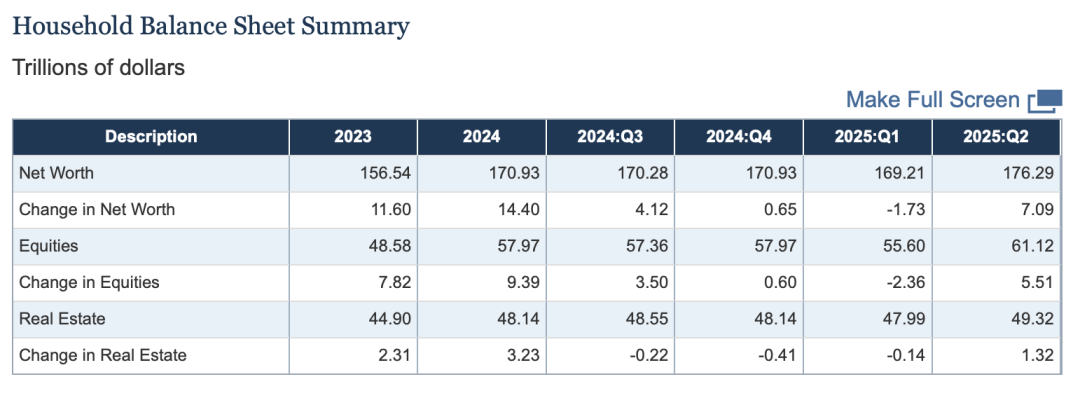
Core Insights - The International Monetary Fund (IMF) has raised alarms about the fragility of the global financial system, highlighting risks from the private credit market and potential stock market crashes [1][2][3] Group 1: Private Credit Market Risks - IMF President Kristalina Georgieva warned that the private credit market has surpassed $2.3 trillion, exceeding regulatory and monitoring capabilities, which poses a significant risk [1] - The high leverage and low transparency of private credit funds could trigger the next round of credit tightening [1] Group 2: Stock Market Crash Implications - Gita Gopinath, the IMF's First Deputy Managing Director, stated that a U.S. stock market crash could lead to losses exceeding $20 trillion for American households and around $15 trillion for foreign investors, surpassing the impact of the 2000 internet bubble [2][4] - If a market correction similar to the internet bubble occurs, it could erase over 70% of the projected 2024 U.S. GDP in household wealth [4] Group 3: Historical Context and Comparisons - The internet bubble burst (2000-2002) saw the NASDAQ index drop approximately 78% and the S&P 500 index decline about 49% [7] - The potential losses from a 35% market correction today would be significantly larger due to the increased market size and global exposure to U.S. assets compared to 2000 [6][12] Group 4: Economic Impact and Consumer Spending - A significant stock market decline could severely impact consumer spending, which has been growing at a slower rate compared to the late 1990s [15][19] - The top 10% of income earners, who are most sensitive to stock market fluctuations, account for nearly half of U.S. consumption, indicating a potential for substantial economic repercussions [17][18] Group 5: Challenges in Crisis Recovery - Unlike previous crises, the current economic environment may not support a quick recovery due to various factors, including high government debt and trade tensions [24][26] - The potential for a more severe and prolonged economic downturn is heightened by the lack of coordinated global responses and diminished trust in U.S. financial assets [22][25][26]

两头“灰犀牛”来袭!350000亿美元蒸发?
华尔街见闻· 2025-10-20 09:24
Core Viewpoint - The International Monetary Fund (IMF) has issued warnings about the increasing fragility of the global financial system, highlighting the risks posed by the private credit market and the potential consequences of a stock market crash in the U.S. [6][7] Group 1: IMF Warnings - IMF President Kristalina Georgieva expressed concerns that the private credit market has surpassed $2.3 trillion, exceeding regulatory and monitoring capabilities, which could trigger a credit tightening [6]. - Gita Gopinath, the IMF's First Deputy Managing Director, indicated that a stock market crash in the U.S. could lead to losses exceeding $20 trillion for American households and around $15 trillion for foreign investors, potentially resulting in a more severe global economic crisis than the 2000 dot-com bubble [6][9]. Group 2: Historical Context and Comparisons - The potential losses from a stock market downturn today would be significantly larger than those experienced during the 2000-2002 internet bubble, where foreign losses were approximately $2 trillion, equivalent to about $4 trillion in today's value [10][11]. - The analysis suggests that a 35% market correction, representative of the internet bubble's impact, could erase $20 trillion in U.S. household wealth, which is about 70% of the projected 2024 U.S. GDP [9][14]. Group 3: Economic Implications - The current economic environment shows that U.S. consumer spending growth is already weak, with real personal consumption expenditures (PCE) expected to grow at around 2.5%-2.6%, compared to 4%-5% during the late 1990s [20][21]. - A significant decline in the stock market could lead to a substantial drop in consumer spending, which constitutes about 70% of U.S. GDP, potentially lowering GDP growth by at least 2 percentage points [22][23]. Group 4: Recovery Challenges - Historical patterns of "safe-haven" investments during crises may not hold in the next downturn, as recent political actions have raised doubts about the Federal Reserve's independence and effectiveness [25][26]. - The current geopolitical landscape and high levels of government debt limit the U.S.'s ability to implement fiscal stimulus measures similar to those used in past crises, making recovery more challenging [26].

灰犀牛来了!史诗级大爆仓
格隆汇APP· 2025-10-12 10:00
Core Viewpoint - The article discusses the significant impact of recent market events on ETFs, highlighting a major sell-off and the implications for investors and the industry as a whole [2] Group 1: Market Impact - A historical sell-off in the ETF market has been observed, with losses reaching unprecedented levels, indicating a potential shift in investor sentiment [2] - The article notes that the total assets under management in ETFs have decreased significantly, reflecting a broader trend of capital outflows from the sector [2] Group 2: Investor Behavior - Investors are increasingly cautious, leading to a rise in volatility and a reevaluation of investment strategies within the ETF space [2] - The article emphasizes the importance of understanding the underlying risks associated with ETFs, particularly in times of market stress [2] Group 3: Future Outlook - The potential for further declines in ETF performance is discussed, with analysts suggesting that the current environment may lead to a prolonged period of underperformance for certain funds [2] - The article calls for a reassessment of ETF investment strategies, urging investors to consider more traditional asset classes as a hedge against market volatility [2]

国金证券:中国人口老龄化将进入加速阶段,人口“灰犀牛”的影响将愈发不可忽视
Xin Lang Cai Jing· 2025-08-26 00:07
Core Viewpoint - The report from Guojin Securities indicates that China's population aging will accelerate, making the impact of the "gray rhino" increasingly significant [1] Supply Side Analysis - Population aging will lead to a shrinkage of the working-age population, exerting downward pressure on potential growth rates [1] Demand Side Analysis - Population aging will exacerbate insufficient total demand, reflected in a negative output gap, while also increasing the proportion of service consumption [1] Short-term and Long-term Implications - In the short term, deepening aging will suppress inflation, but in the long term, it may drive inflation upward [1]

美股怎么了? 三大“灰犀牛”正在逼近
Qi Huo Ri Bao Wang· 2025-07-17 00:46
Group 1: Market Reactions and Economic Indicators - On July 7, Trump announced a new round of tariff measures, leading to a muted reaction in financial markets, with the S&P 500 and Nasdaq indices down by only 0.79% and 0.92% respectively [1] - The U.S. stock market rebounded in the first half of the year due to factors such as TACO trading, fiscal expansion, resilient job market, and stock buybacks, despite facing four instances of simultaneous declines in stocks, bonds, and currencies [1] - Historical data suggests that U.S. monetary tightening or economic stagflation poses the greatest threat to the stock market, although the potential for the Federal Reserve to restart rate cuts may provide support [1] Group 2: Liquidity and Debt Issuance - The U.S. Treasury's resumption of debt issuance in Q3 is expected to create a "drain" effect on dollar liquidity, potentially forcing the Federal Reserve to release liquidity by slowing down quantitative tightening or cutting rates [2] - The net debt issuance by the U.S. Treasury is projected to be around $1 trillion in Q3, partly to refinance maturing debt and meet other financing needs [2] Group 3: Inflation and Tariff Impact - Recent tariff threats from the Trump administration could raise the effective tariff rate from 13.4% to 14.9%, with a potential increase to 18%-20% in a "no deal" scenario, raising concerns about stagflation risks in the U.S. economy [5][6] - There are indications that inflationary pressures from tariffs are beginning to manifest, with a survey showing the highest percentage of small businesses planning to raise prices since March 2024 [6] Group 4: Corporate Earnings and Market Volatility - The second quarter earnings season for U.S. stocks has begun, with expectations of a significant slowdown in profit growth, largely influenced by tariff uncertainties [9] - According to FactSet, S&P 500 companies are expected to see only a 5% profit growth in Q2, marking the slowest growth since Q4 2023, with six out of eleven sectors projected to grow year-over-year [9] - The technology sector, particularly large tech companies, is expected to drive earnings growth, but any decline in tech stock performance could lead to increased pressure on the broader market [9][10]
3500点重临,稳字当头下的攻守道
格隆汇APP· 2025-07-15 09:45
Group 1 - The core viewpoint of the article emphasizes that the market is unlikely to collapse, supported by a balance between expectations and reality, with several positive signals emerging globally [2][3] - The recent market movements indicate a rotation among sectors, with real estate stocks showing unusual activity and new infrastructure targets gaining attention, suggesting a buildup for policy support [4][5] - The current macroeconomic stance is focused on stability, and while there may be opportunities for investment ahead of high-level meetings, caution is advised against overreacting to policy expectations [5] Group 2 - The short-term outlook suggests that the index is expected to maintain a strong oscillation around the 3500-point mark, with banking stocks still presenting a solid investment rationale due to high dividends and improving asset quality [6][7] - The banking and securities sectors are likely to alternate in driving market performance, supported by management's careful adjustments, which may provide opportunities for re-entry during market corrections [7][8] - The recommended strategy focuses on a balanced approach of "defensive" investments in high-dividend assets and "offensive" selections in technology growth areas, allowing for flexibility in capturing excess returns [8][9]

美国遭遇股债汇“三杀”,美债“灰犀牛”或冲击全球金融市场
Sou Hu Cai Jing· 2025-05-22 08:44
Group 1 - The U.S. financial market experienced significant turmoil on May 21, with U.S. Treasuries, equities, and the dollar all declining sharply [1][3] - The auction results for the 20-year Treasury bond revealed a yield of 5.047%, a 24 basis point increase from the previous month, marking the second highest level in history [1][3] - The downgrade of the U.S. sovereign credit rating by Moody's from Aaa to Aa1 has put additional pressure on U.S. Treasuries, leading to a rise in long-term bond yields [3][4] Group 2 - The 10-year Treasury yield rose by 12 basis points to 4.56%, while the 30-year yield surpassed 4.7% [3] - The dollar index (DXY) fell by 0.8% to 104.2, reaching its lowest point in a month [3] - Major U.S. stock indices saw significant declines, with the Dow Jones Industrial Average dropping 800 points (1.91%), and the Nasdaq and S&P 500 also experiencing notable losses [3] Group 3 - The U.S. federal government debt-to-GDP ratio has reached 97.8%, with projections indicating it will exceed 107.2% by 2029 [4] - Concerns regarding the sustainability of U.S. debt are growing, potentially increasing the risk premium on long-term U.S. Treasuries [4]