科学养宠

Search documents
为了卖一根“草”,他辞职去加拿大买地,如今年销数百吨
3 6 Ke· 2026-01-03 02:57
2015年冬天,Steven推开门,发现一只兔子在看着他。 晨光熹微,一人一兔四目相对,吴淞江的水滔滔流去。当时31岁的Steven没有想到,这一幕将会改变自己此后十年的人生。 为了救助这只流落到家门口的宠物兔,Steven花了上万元钱求医问药,也在手忙脚乱中慢慢学习兔子的食谱。但在给兔子选购口粮的过程中,Steven却犯 了难:当时中国小宠市场极不成熟,市场上很难找到可靠的干草和兔粮。 和许多创业者那样,他决定亲身入局,做一个养宠人信得过的小宠品牌。Steven辞去了新浪微博的工作,创立了"童话世界牧场"品牌,并在抖音等内容平 台开设账号,解答一些新手的养兔问题:兔子到底吃鲜草还是吃干草?能不能吃胡萝卜?软便怎么办?…… 为了找一根草,走遍全世界 "兔子爱吃胡萝卜",其实是一个流传已久的错误认知。 但在2015年,很少有人关注兔子的饮食习性。Steven购买兔粮时,时常遇到各种千奇百怪的配料:玉米干、胡萝卜干,"打开就是一股怪味"。还有人推荐 他买"磨牙石",买回去发现毫无用处,兔子根本不碰。 踩过的坑多了,Steven终于掌握了基础的养宠知识:兔子的主食是提摩西草,辅食是兔粮。这是因为兔子的牙齿终生生长, ...


猫狗的世仇其实早就开始?从《猫狗大战》解析背后的温暖
Nan Fang Nong Cun Bao· 2026-01-02 08:03
Core Insights - The article discusses the evolving relationship between pets and humans, highlighting the themes of love and guardianship as depicted in the film "Cats & Dogs" [12][19] - It emphasizes the shift in perception of pets from mere tools for utility to beloved family members, reflecting deeper emotional needs in modern society [22][30] Group 1: Film Analysis - "Cats & Dogs" presents a humorous yet profound narrative about the rivalry between cats and dogs, ultimately revealing their capacity for cooperation in times of crisis [4][18] - The film uses anthropomorphism to challenge stereotypes about pets, portraying cats as strategic and dogs as loyal guardians, thus breaking the "cute pet filter" [16][19] - The underlying message of the film suggests that love and protection between pets and humans transcend biases and misunderstandings [19] Group 2: Industry Trends - The pet industry has undergone a significant transformation, with pets now regarded as integral family members rather than just tools for protection or pest control [22][26] - The upcoming first Greater Bay Area Pet Industry Annual Ceremony in January 2026 aims to promote scientific pet care and foster innovation in the pet sector [48][50] - The event will feature academic forums and competitions, showcasing new technologies and medical equipment that address pet owners' concerns, while also promoting respect for different species [49][51] Group 3: Emotional Connection - The article highlights the dual nature of the pet-human relationship, where both parties provide emotional support and companionship, addressing loneliness and anxiety in modern life [30][34] - It points out that the care for pets has evolved from basic survival needs to a focus on their well-being, reflecting societal progress in understanding animal welfare [39][40] - The emotional bond between pets and humans is characterized by non-verbal communication, where pets can sense their owners' feelings and provide comfort [36][38]

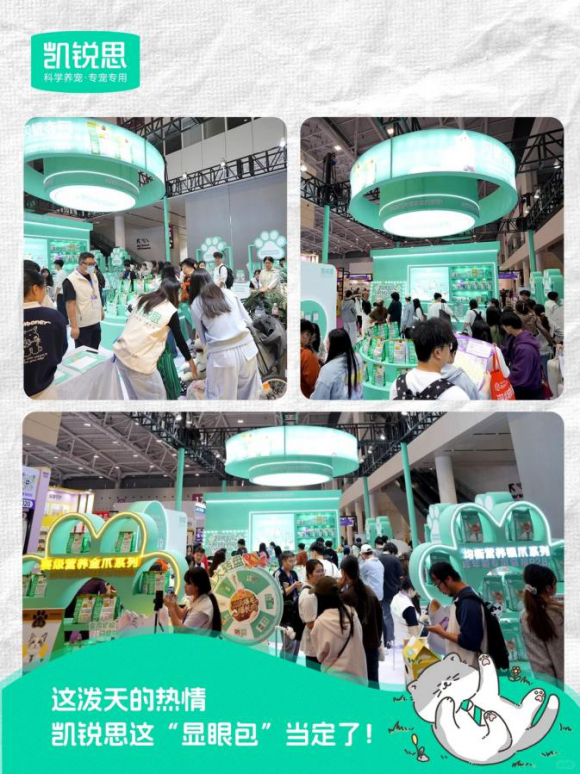
从产品到生态:凯锐思华南展构建“科学养宠”引力场,诠释国牌进阶新范式
Jin Tou Wang· 2025-12-31 04:26
Core Insights - The article highlights the innovative approach of the domestic pet brand KaiRuiSi at the 9th Asia Pet South China Expo, showcasing a comprehensive "scientific pet care" ecosystem that aims to transform the pet industry amidst a competitive landscape valued at 300 billion yuan [1] Group 1: User Experience and Engagement - KaiRuiSi's core strategy at the expo focuses on making the abstract concept of "scientific pet care" tangible and interactive for users [3] - Personalized nutrition consultation stations provide one-on-one dietary diagnostics and feeding plans based on specific pet characteristics, enhancing user trust through professional guidance [3] - A "transparent traceability" interactive screen allows users to visualize the entire production process of pet food, reinforcing consumer confidence through transparency [4] - The "exclusive nutrition passport" generated for pet owners extends the interaction beyond the event, offering tailored feeding advice and health management tips [4] Group 2: Emotional Connection and Brand Warmth - The brand differentiates itself by combining professionalism with emotional warmth, creating a lively atmosphere at the expo [6] - Fun games tailored for specific breeds, such as Ragdoll cats and Corgis, engage participants and deepen their understanding of breed characteristics while promoting product trials [6] - An art workshop where pet owners can paint their pets fosters emotional bonding and aligns with the brand's mission of enhancing companionship [7] Group 3: Systematic Competitive Advantage - KaiRuiSi's competitive edge is built on a solid pyramid structure comprising precise research and development, transparent supply chains, and market validation [9] - Research and development focus on specific nutritional needs for different breeds and life stages, ensuring tailored product offerings [9] - The brand plans to further open its supply chain to users, enhancing traceability through digital means [9] - Market validation shows that KaiRuiSi's "exclusive pet-specific" product line leads in multiple niche categories, serving over 15 million pet-owning families and receiving multiple authoritative certifications [10] Group 4: Long-term Vision and Market Positioning - The CEO of KaiRuiSi emphasizes that the ultimate competition among brands is based on values, advocating for a long-term approach that prioritizes genuine care for pets [12] - The brand's presentation at the expo goes beyond product offerings, showcasing a market-validated, replicable model for brand advancement [12] - As the pet industry shifts from "traffic competition" to "value creation," KaiRuiSi redefines itself from a "transactional entity" to a "health partner," positioning itself as a leader in the global market [12]
北交所消费服务产业跟踪第四十五期(20251228):宠物市场规模持续扩张,关注北交所路斯股份自主品牌发展和出口情况
Hua Yuan Zheng Quan· 2025-12-29 02:08
Investment Rating - The report indicates a focus on the pet market's continuous expansion and highlights the development of self-owned brands and export situations of the company listed on the Beijing Stock Exchange [1] Core Insights - The pet market in China is experiencing significant growth, with consumers shifting from "exquisite pet care" to a more advanced "scientific pet care" approach. The overall terminal sales in the pet market reached 108.5 billion yuan in the first three quarters of 2025, reflecting a year-on-year growth of 4.5% [2][7] - The report emphasizes the importance of online retail channels, which dominate pet product sales, accounting for 59% of the market share in 2025, while offline retail is recovering and contributing 41% [24] - The company listed on the Beijing Stock Exchange, Lusi Co., has launched a new brand "Miaoguan" focusing on high cost-performance products, while its main brand "Lusi" is innovating to upgrade to high-value-added product series [35] Summary by Sections Pet Market Expansion - The pet market is growing, with significant sales on platforms like Taobao and Douyin, where pet transaction volumes during the Double 11 shopping festival accounted for 64% of mainstream e-commerce [2][5] - The demographic of pet owners is shifting, with a notable increase in younger consumers aged 26-30, who now represent 32.7% of pet owners [17] Financial Overview - The median stock price change for consumer service stocks on the Beijing Stock Exchange was -2.97% during the week of December 22 to December 26, 2025, with 24% of companies experiencing an increase [37] - The median price-to-earnings ratio (P/E) for the consumer service sector decreased from 51.8X to 46.8X, indicating a shift in market valuation [39][41] Industry Valuation - The median TTM P/E ratio for the broader consumer sector is reported at 51.3X, down from 53.1X, reflecting a general decline in market valuations [47] - The food and beverage sector's median P/E ratio has also decreased from 53.4X to 49.7X, indicating a trend across various consumer industries [49] Company Announcements - Lusi Co. is focusing on enhancing its brand presence and product offerings, with a notable increase in export revenue by 19.25% year-on-year in the first half of 2025 [35] - Jinbo Biological announced a capital increase of 165 million yuan to support its subsidiary, indicating strategic growth initiatives within the company [55][57]
头豹词条报告系列:毛孩子营养革命:宠物营养品赛道功能细分与国牌崛起的双轮驱动
Tou Bao Yan Jiu Yuan· 2025-12-02 12:24
Investment Rating - The report rates the pet nutrition industry as a high-growth sector with a compound annual growth rate (CAGR) of 28.3% from 2020 to 2024, expected to continue growing at a CAGR of 14.21% from 2025 to 2029 [5][41]. Core Insights - The pet nutrition industry is experiencing rapid growth driven by increasing pet ownership, changing consumer attitudes towards pet care, and a shift towards premium, functional products. The market size is projected to grow from 31 billion RMB in 2020 to 84 billion RMB in 2024, and further to 164.7 billion RMB by 2029 [5][41]. - The industry is characterized by product functionalization and segmentation, the rise of domestic brands, and diversified sales channels, particularly online [5][10][13]. Summary by Sections Industry Definition - The pet nutrition industry focuses on developing and selling nutritional supplements tailored to pets' various life stages and physiological needs, including products like pastes, fish oil, probiotics, and vitamins [6]. Industry Characteristics - The industry is moving from basic nutrition to functional and segmented products, with a strong preference for gastrointestinal and immune-boosting products [11]. - Domestic brands have gained significant market share, accounting for 61% of the market by 2024, surpassing foreign brands [12]. - Sales channels have diversified, with e-commerce platforms dominating, accounting for 50% of sales [13]. Development History - The industry has evolved through three stages: initial awareness (2001-2010), rapid growth (2011-2020), and maturity with diversification (2021-present) [14][16]. Industry Chain Analysis - The industry chain consists of upstream raw material suppliers, midstream brand manufacturers, and downstream sales channels [17]. - Upstream suppliers are increasingly focusing on quality and innovation in response to consumer demands for safety and transparency [23][24]. Market Dynamics - The pet nutrition market reached 84 billion RMB in 2024, with a CAGR of 28.3% from 2020 to 2024, indicating strong demand [19][37]. - The leading brand, RedDog, dominates the market with significant sales in key segments, reflecting a concentrated competitive landscape [21][40][56]. Future Growth Trends - The market is expected to grow to 185.9 billion RMB by 2030, with a CAGR of 13.9% from 2025 to 2030, driven by consumer demand for high-quality, functional products [47][49]. - The pet paste market is projected to reach 50.7 billion RMB by 2030, with significant growth in specific categories like hairball pastes and fish oil [45][49].
“宠物经济”持续升温 头部公司自主品牌业绩迎突破
Zheng Quan Shi Bao Wang· 2025-11-18 06:30
Core Insights - The pet consumption market in China continues to thrive, with significant sales growth reported during the 2025 "Double 11" shopping festival, particularly for domestic brands like Guibao Pet and its brands Maifudi and Fleagart [1][2] - The overall pet market in China is projected to exceed 811.4 billion yuan by 2025, with pet food being the largest segment, indicating strong demand and growth potential in the pet economy [3] Company Performance - Guibao Pet's self-owned brand sales reached nearly 1.1 billion yuan during the 2025 "Double 11," with Maifudi and Fleagart achieving sales of 688 million yuan and 335 million yuan, respectively, marking year-on-year growth of 35% and 51% [1] - Other leading companies like Zhongchong Co. and Petty Co. also reported strong sales growth during the same period, confirming the robust demand in the pet food market [1][2] - Guibao Pet maintained its leading position in the domestic pet food market, with a strong brand presence and high user recognition [2] Market Trends - The consumer base for pet products is increasingly favoring online purchasing, particularly through short videos and social media, reflecting a shift towards more informed and quality-focused buying decisions [3] - The pet industry is transitioning from basic feeding to a more refined approach, with consumers seeking higher quality and brand reputation in their purchases [3] Global and Local Strategies - Zhongchong Co. has established over 22 modern production bases globally and is actively promoting its brands internationally, achieving significant market recognition [4] - Petty Co. is focusing on the pet baking food segment and is investing in product innovation and supply chain collaboration to ensure quality and stability in new product offerings [4] - The industry is witnessing a shift from price competitiveness to technological advantages, with companies leveraging digitalization across their operations to enhance user insights and product iterations [4]
进博首开“萌宠赛道”,“它经济”成消费升级新信号|聚焦2025进博会
Hua Xia Shi Bao· 2025-11-10 06:17
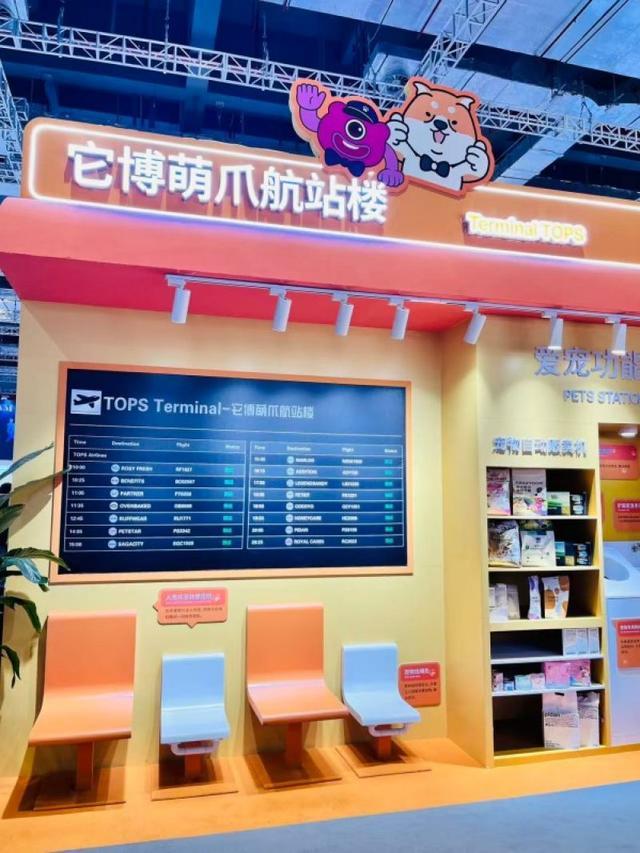
Core Insights - The pet economy has evolved from a niche hobby to a significant market force, with a projected scale exceeding 300 billion yuan in urban dog and cat markets by 2024, and expected to surpass 400 billion yuan by 2027 [10][12] Industry Trends - The pet industry is experiencing a shift towards younger and more educated pet owners, with individuals born in the 1990s and 2000s accounting for over 60% of pet owners, driving a transition from quantity to quality in consumption [10][12] - The rise of emotional consumption and the companionship economy is transforming pets from functional companions to family members, increasing the demand for pet-related travel and services [7][10] Market Dynamics - The 2025 China Pet Industry Market Report indicates that the pet food sector remains the largest market share, driven by essential needs, while segments like pet healthcare and services are also growing rapidly [12] - The competitive landscape is intensifying, with a continuous rise in new registrations of pet-related businesses, and local pet food companies are increasing R&D investments to develop competitive brands [12] Consumer Behavior - Consumers, particularly those from the post-80s and post-90s generations, prefer online channels for purchasing pet products, with a notable trend towards using short videos and social media for information and purchases [10][11] - The ongoing "Double Eleven" shopping festival has seen a surge in pet product sales, indicating a growing trend towards high-end pet consumption [11][12] Event Highlights - The inaugural "Pet Theme Exhibition Area" at the Import Expo showcased numerous global pet brands, including innovative products like automatic pet toilets and specialized pet strollers, reflecting the industry's focus on smart and health-oriented solutions [4][6][9] - The event also facilitated one-on-one matching services for brands, enhancing the connection between international products and Chinese consumers, while providing local brands with opportunities for global trade [9][10]
宠物经济热度攀升,进博会首设宠物主题展区 |聚焦进博
Guo Ji Jin Rong Bao· 2025-11-09 10:17
Core Insights - The pet economy in China is becoming a representative field of "emotional consumption" due to changes in family structure and consumption concepts [1] - The pet market is expected to exceed 300 billion yuan in 2024 and 400 billion yuan by 2027, driven by the transformation of pets from "functional companions" to "family members" [1][2] - The pet market is projected to surpass 811.4 billion yuan by 2025, with pet food being the largest segment and a core driver of the industry [2] Market Trends - The pet economy is experiencing robust growth, with a significant increase in the number of new registered enterprises and local pet food companies enhancing R&D to develop competitive brands [2] - Consumers, particularly those born in the 80s and 90s, prefer online channels for purchasing pet products, with a notable rise in live e-commerce [2] - The report identifies eight core trends driving the industry, including supply chain restructuring, consumption upgrades, and the integration of the "silver economy" with the pet economy [2]
融资丨Rowen母公司主公及祥获千万级天使轮融资
Sou Hu Cai Jing· 2025-10-13 10:49
Financing Event - Rowen's parent company, 主公及祥宠物用品(上海)有限公司, has completed a 15 million yuan angel round financing, with investor details undisclosed [2] - The funds will primarily be used for product development and market expansion [4] Product Development Strategy - Rowen plans to deepen the development of cat-specific products, expanding from cat clothing to include cat litter, cat food, and cat houses, aiming to create a comprehensive product matrix for cats [4] - The brand emphasizes practicality and safety in its products, integrating animal behavior science into product design [4] Market Strategy - Rowen will adopt a dual-channel strategy, focusing on both online and offline sales to enhance customer conversion and brand value [4] - The company aims to differentiate itself by learning from successful overseas brands, avoiding direct competition with industry giants, and focusing on unique brand characteristics [4] Brand Overview - Rowen is an emerging brand in the Chinese pet supplies industry, initially focusing on cat clothing and gradually expanding its product range [4] - The brand is driven by innovation and aims to provide safe and practical solutions for cat care, promoting healthy industry development [4]
2025年宠物行业消费趋势洞察报告
Sou Hu Cai Jing· 2025-09-07 07:23
Market Overview - The pet consumption market in China is projected to exceed 300 billion yuan by 2024, reaching 300.2 billion yuan with a year-on-year growth of 7.5% [1][14] - The dog consumption market is expected to reach 155.7 billion yuan, growing by 4.6%, while the cat consumption market is anticipated to reach 144.5 billion yuan, with a significant growth rate of 10.7% [1][15] Pet Population - The total number of pet dogs and cats in urban areas is expected to rise to 124.11 million by 2024, marking a 2.1% increase from 2023 [2][17] - The number of pet dogs is projected to be 52.58 million, growing by 1.6%, while pet cats will reach 71.53 million, increasing by 2.5% [2][17] - Pet cats now account for 57.63% of the total pet population, indicating a growing preference for cats among households [2][19] Market Penetration - The penetration rate of pet ownership in China is still low compared to developed countries, with an estimated dog ownership rate of 17.8% in 2023, expected to rise to 19.4% by 2026 [2][18] - This suggests significant potential for growth in the Chinese pet market as pet ownership becomes more widespread [2][18] Consumption Structure - The overall consumption structure in the pet market remains stable, with slight fluctuations in specific segments. Categories such as pet staple food, nutritional products, pet boarding, and pet insurance are seeing a small increase, while pet snacks, supplies, medical services, vaccines, and grooming are experiencing slight declines [2][23] - Pet staple food continues to dominate the market, reflecting the importance of core consumption categories [2][23] Consumer Demographics - Female pet owners constitute 60.5% of the pet-owning population, while males account for 39.5% [3] - The primary pet-owning demographic is the post-90s generation, making up over 60%, indicating a higher emotional investment in pets among younger consumers [3] - Pet owners generally have higher education levels, with 67.8% holding a bachelor's degree or higher, and they tend to have strong purchasing power [3] Regional Distribution - Pet ownership is most prevalent in third-tier cities, which account for over 30% of pet owners, while first and second-tier cities have similar ownership rates [4] - Major cities like Beijing, Hebei, and Shanghai are the top regions for pet ownership, driven by economic development and widespread pet care services [4] Consumer Preferences - The average monthly expenditure per pet has shifted towards more rational spending, with a decrease in high spenders (over 500 yuan) and an increase in mid-range spenders (100-500 yuan) [5] - Pet food remains the most significant expense, accounting for 44.7% of total spending, followed by pet medical care at 20.7% [5] Online and Offline Channels - Online shopping is preferred for pet food, snacks, and deworming products, with 83.9%, 73.6%, and 53.7% of pet owners purchasing these items online, respectively [5] - Conversely, offline channels dominate for services requiring personal interaction, such as pet medical care and grooming, where over 40% of purchases occur in physical stores [5] Trends in Pet Products - The preference for domestic pet food has surged, with 57.7% of pet owners choosing local brands in 2024, a significant increase from previous years [6] - Functional pet food and health products are gaining traction, with probiotics, vitamins, and calcium supplements being the most popular categories [6] Future Outlook - The pet consumption market is expected to evolve with a focus on functional, intelligent, and personalized products, driven by the increasing awareness of pet health and well-being [8] - The market for pet services is also anticipated to grow, with online consultations and niche services like pet photography gaining popularity [9]