
经济绿色转型

Search documents
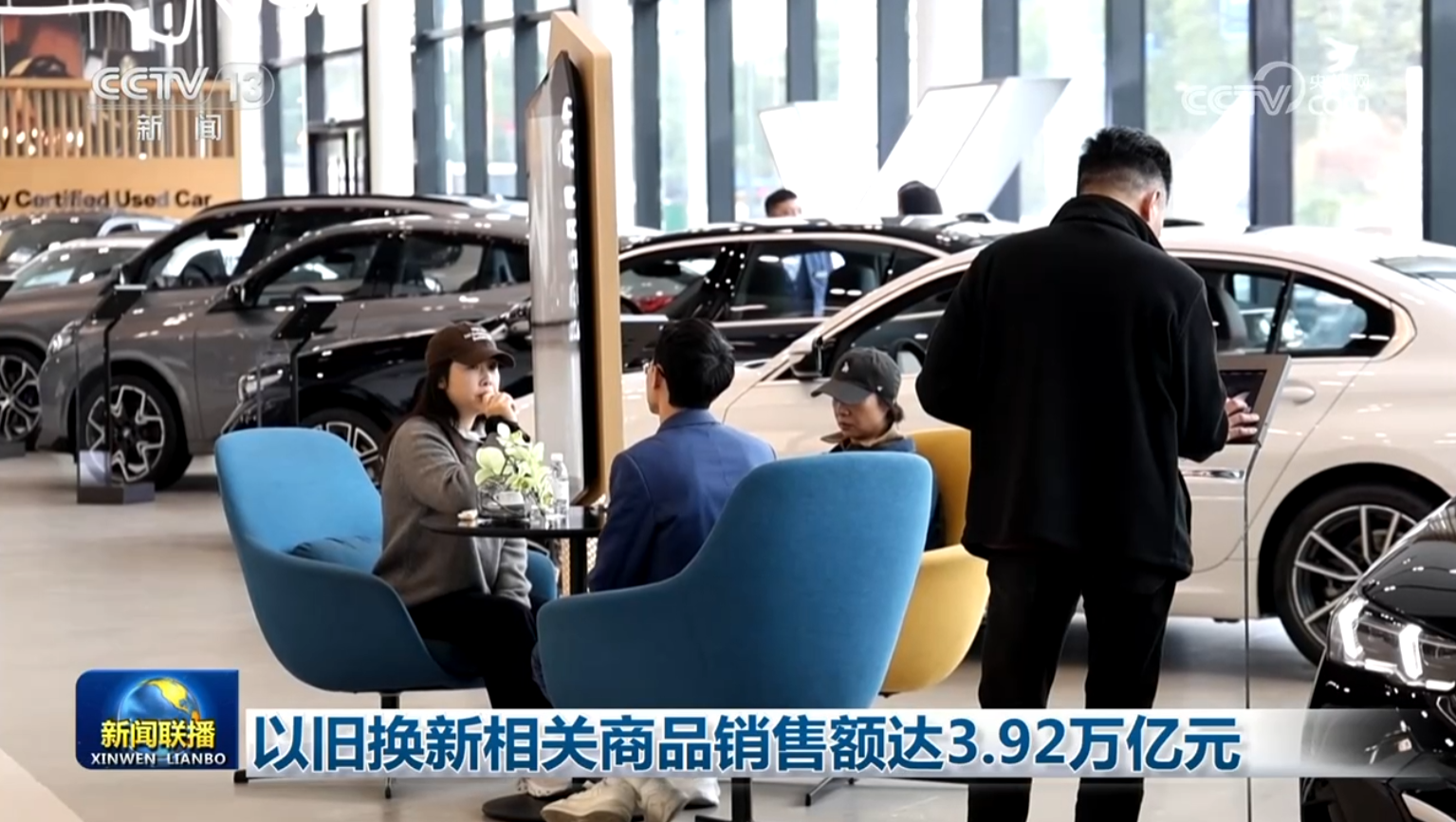
以旧换新相关商品销售额达3.92万亿元
Yang Shi Wang· 2026-01-08 12:38
Core Insights - The implementation of the old-for-new consumption policy in 2024 has resulted in a total sales volume of 3.92 trillion yuan, benefiting 494 million people [1] - The policy has significantly boosted the sales of various products, including over 18.3 million vehicles, more than 192 million home appliances, and approximately 91 million mobile and digital products [1] Group 1: Automotive Industry - In the old-for-new vehicle exchange, nearly 60% of the exchanged vehicles are new energy vehicles, leading to a doubling of sales in the domestic new energy passenger car market [2] - The average growth rate of scrapped vehicle recovery over the past two years has exceeded 45%, resulting in a reduction of carbon emissions by approximately 44 million tons [5] Group 2: Home Appliances - In the home appliance sector, over 90% of exchanged products are of first-level energy efficiency, indicating a strong shift towards energy-efficient products [3] - The presence of old-for-new home appliance stores in densely populated commercial areas has led to a more than 30% increase in consumer spending within a 1-kilometer radius [7] Group 3: Digital Products - Among mobile and digital products, mid-to-high-end models account for 72.5% of new purchases, reflecting a consumer preference for higher quality and advanced technology [3] Group 4: Economic Impact - The introduction of green, low-carbon, and smart new products is enhancing the quality of life for consumers while promoting a green economic transition [5] - Increased consumer engagement in physical stores for product experiences and subsidies is driving cross-scenario consumption in leisure, entertainment, and dining sectors [7]

2025年以旧换新相关商品 销售额超2.6万亿元
Xin Lang Cai Jing· 2026-01-02 23:43
Core Insights - The sales of products related to the "trade-in for new" policy are expected to exceed 2.6 trillion yuan by 2025, benefiting over 360 million people [1][2] Group 1: Sales Projections - By 2025, the trade-in for new policy is projected to result in the following sales: over 11.5 million cars, 129 million home appliances, 9.1 million digital products, 120 million home renovation items, and 1.25 million electric bicycles [1] - The retail sales of consumer goods from January to November increased by 4.0% year-on-year, with the trade-in policy contributing over 1 percentage point to this growth [1] Group 2: Industry Upgrades - In the automotive sector, nearly 60% of trade-ins involve new energy vehicles, leading to a retail market share for new energy passenger cars exceeding 50% for nine consecutive months, reaching 59.4% in November [1] - In the home appliance sector, over 90% of traded-in products are first-class energy efficiency (water efficiency) products [1] - Sales of communication equipment have shown continuous growth for 11 months [1] Group 3: Economic and Environmental Impact - By 2025, the volume of scrapped cars is expected to increase by 24.5%, resulting in the recycling of approximately 9.6 million tons of steel and 1.3 million tons of non-ferrous metals, thereby reducing carbon emissions by about 24.5 million tons [1] - Since the full implementation of the policy in September 2024, over 480 million direct subsidies have been issued to consumers, facilitating the entry of numerous green, low-carbon, and smart products into daily life [2] - For every two new household cars sold, one will benefit from the trade-in subsidy, and the number of old electric bicycles being replaced has exceeded nine times that of 2024 [2]
去年以旧换新商品销售额超2.6万亿元
Xin Lang Cai Jing· 2026-01-02 22:39
Group 1 - The core viewpoint of the articles highlights the significant impact of the "trade-in for new" policy on consumer spending and economic growth, projecting a sales volume exceeding 2.6 trillion yuan by 2025, benefiting over 360 million people [1][2] Group 2 - In the automotive sector, over 11.5 million vehicles are expected to be traded in, with nearly 60% being new energy vehicles, contributing to a retail market share of over 50% for new energy passenger cars for nine consecutive months [1] - The home appliance sector anticipates over 129 million units to be traded in, with over 90% of new products being first-class energy efficiency [1] - The retail sales of consumer goods increased by 4.0% year-on-year in the first eleven months of the previous year, with the trade-in policy contributing over 1 percentage point to this growth [1] Group 3 - The policy is expected to promote a green economic transformation, with a projected 24.5% increase in scrapped vehicle recovery by 2025, leading to the recycling of approximately 9.6 million tons of steel and 1.3 million tons of non-ferrous metals, while reducing carbon emissions by about 24.5 million tons [1] - Since the full implementation of the policy in September 2024, over 480 million direct subsidies have been issued to consumers, facilitating the entry of numerous green, low-carbon, and smart products into daily life [2] Group 4 - The trade-in policy has stimulated offline retail, with consumers increasingly opting for in-store experiences, leading to a 30% increase in consumer spending in areas with concentrated home appliance trade-in stores [2]
以旧换新相关商品销售额超2.6万亿元
Xin Lang Cai Jing· 2026-01-01 21:51
Core Insights - The sales volume of products related to the trade-in program is expected to exceed 2.6 trillion yuan by 2025, benefiting over 360 million people [1] Group 1: Trade-in Program Impact - By 2025, over 11.5 million vehicles will be traded in, along with more than 129 million home appliances, 91 million digital products, 12 million home renovation items, and 1.25 million electric bicycles [1] - The trade-in program is projected to contribute over 1 percentage point to the growth of total retail sales of consumer goods, which increased by 4.0% year-on-year from January to November [1] Group 2: Industry Upgrades - Nearly 60% of traded-in vehicles will be new energy vehicles, with the retail market share of new energy passenger cars exceeding 50% for nine consecutive months, reaching 59.4% in November [1] - Over 90% of home appliances traded in will be first-class energy efficiency products, indicating a significant upgrade in product quality [1] - Sales of communication equipment have maintained growth for 11 consecutive months [1] Group 3: Economic and Environmental Benefits - The volume of scrapped vehicles is expected to increase by 24.5% year-on-year by 2025, leading to the recycling of approximately 9.6 million tons of steel and 1.3 million tons of non-ferrous metals [1] - The program is anticipated to reduce carbon emissions by approximately 24.5 million tons, promoting a green economic transition [1]
惠及超3.6亿人次!2025年以旧换新相关商品销售额超2.6万亿元
Xin Hua Wang· 2026-01-01 08:42
Core Insights - The article highlights the significant impact of the "trade-in" policy on consumer spending and economic growth, projecting a sales volume of over 2.6 trillion yuan by 2025, benefiting more than 360 million people [1] Group 1: Trade-in Policy Impact - By 2025, the trade-in program is expected to result in the sale of over 11.5 million cars, 129 million home appliances, 9.1 million digital products, 120 million home renovation items, and 1.25 million electric bicycles [1] - The retail sales of consumer goods increased by 4.0% year-on-year from January to November, with the trade-in program contributing over 1 percentage point to this growth [1] Group 2: Industry Upgrades - Nearly 60% of traded-in cars are new energy vehicles, leading to a continuous market share of over 50% for new energy passenger cars for nine consecutive months, reaching 59.4% in November [1] - Over 90% of traded-in home appliances are first-class energy efficiency products, indicating a trend towards higher quality and energy-efficient products [1] Group 3: Economic and Environmental Benefits - The recycling of scrapped cars is projected to increase by 24.5% by 2025, resulting in the recycling of approximately 9.6 million tons of steel and 1.3 million tons of non-ferrous metals, which will reduce carbon emissions by about 24.5 million tons [1] - The policy has led to the issuance of over 480 million direct subsidies to consumers since its full implementation in September 2024, promoting the adoption of green, low-carbon, and smart products [2] Group 4: Consumer Behavior and Retail Growth - The trade-in policy has encouraged more consumers to shop in physical stores, leading to increased cross-scenario consumption in leisure, entertainment, and dining [2] - In areas with concentrated home appliance trade-in stores, consumer spending within a 1-kilometer radius has increased by over 30% [2]
2025年消费品以旧换新成效显著
Shang Wu Bu Wang Zhan· 2026-01-01 08:35
Core Insights - The implementation of the old-for-new consumption policy since 2025 has significantly boosted sales and consumer engagement, with over 2.6 trillion yuan in sales benefiting more than 360 million people [1][2] Group 1: Economic Impact - The policy has supported continuous expansion in consumption, with a 4.0% year-on-year growth in social retail sales from January to November, accelerating by 0.5 percentage points compared to the previous year, and contributing over 1 percentage point to total retail sales [1] - The retail sales of home appliances have surpassed 1 trillion yuan, achieving a historical high [1] Group 2: Industry Upgrades - In the automotive sector, nearly 60% of old vehicles replaced were new energy vehicles, leading to a retail market share of over 50% for new energy passenger cars for nine consecutive months, reaching 59.4% in November [1] - Over 90% of home appliances replaced were first-class energy efficiency products, indicating a significant upgrade in product quality [1] - Sales of communication equipment have maintained growth for 11 consecutive months [1] Group 3: Environmental Benefits - The recycling of scrapped vehicles increased by 24.5% in 2025, resulting in the recycling of approximately 9.6 million tons of steel and 1.3 million tons of non-ferrous metals, while reducing carbon emissions by about 24.5 million tons [1] Group 4: Quality of Life Improvement - Since the full implementation of the policy in September 2024, over 480 million direct subsidies have been issued to consumers, facilitating the entry of numerous green, low-carbon, and smart products into daily life [2] - For every two new household cars sold, one has benefited from the old-for-new subsidy, and the replacement of old electric bicycles has exceeded nine times that of 2024 [2] Group 5: Boosting Offline Retail - The policy has led to increased consumer preference for in-store shopping experiences, which in turn has stimulated cross-scenario consumption in leisure, entertainment, and dining [2] - In areas with concentrated home appliance replacement stores, consumer spending within a 1-kilometer radius has increased by over 30% [2]
印度经济将面临显著短期风险
Jing Ji Ri Bao· 2025-12-15 08:42
Core Viewpoint - The International Monetary Fund (IMF) report indicates that the Indian economy is performing well, supported by improving domestic conditions, with a projected growth rate of 6.5% for FY2024-2025 and 7.8% year-on-year GDP growth for Q1 FY2025-2026, despite facing significant short-term risks [1][2]. Economic Growth Projections - For FY2025-2026, India's actual GDP is expected to grow by 6.6%, with inflation projected to decrease to 2.8% [2] - By FY2026-2027, GDP growth is anticipated to slow to 6.2%, with inflation rebounding to 4% [2] Trade and External Debt - Commodity trade exports are projected to reach $416.3 billion, a year-on-year decline of 5.8%, while imports are expected to rise to $746.6 billion, a growth of 2.4% [2] - External debt is forecasted to increase to $791 billion, accounting for 19.2% of GDP [2] Structural Reforms - The implementation of the Goods and Services Tax (GST) on September 22, 2025, is expected to simplify the tax structure, stimulate domestic consumption, and mitigate the adverse effects of high tariffs [2][3] - Continuous structural reforms and fiscal consolidation are deemed crucial for achieving fiscal deficit targets and enhancing economic resilience [3] Risks and Challenges - The report highlights significant short-term risks, including potential tightening of financial conditions due to geopolitical fragmentation and unpredictable climate change impacts on agriculture, which could elevate inflation pressures [3] - The need for ongoing financial structural reforms and careful monitoring of non-bank financial institutions is emphasized to mitigate associated risks [3] Recommendations for Sustainable Growth - The Indian government is advised to enhance human capital accumulation, increase female labor participation, and optimize the business environment to attract foreign direct investment [4] - There is a call for increased R&D investment and innovation to support green economic transformation and ensure sustainable growth [4]
京津冀绿色转型深入推进
Ren Min Ri Bao Hai Wai Ban· 2025-11-24 10:11
Core Insights - The green transformation in the Beijing-Tianjin-Hebei region during the "14th Five-Year Plan" period is a significant representation of China's economic green transition [5] Group 1: Green Tax System and Economic Development - The green tax system in China has been continuously improved, incorporating various taxes such as environmental protection tax, resource tax, and others to promote green development [2][6] - From 2021 to June 2025, specialized green taxes generated a revenue of 2.5 trillion yuan, while tax reduction policies contributed to a decrease of 1.5 trillion yuan [6] - The environmental protection tax burden for enterprises decreased from 18.6 yuan to 17.6 yuan per 10,000 yuan of GDP, incentivizing companies to optimize processes and reduce emissions [2] Group 2: Industry and Energy Transition - The sales revenue from high-energy-consuming and high-emission industries in the Beijing-Tianjin-Hebei region dropped from 40.6% in 2021 to 34.4% in the first nine months of 2025 [2] - The share of clean energy generation sales revenue increased from 47.1% in 2021 to 56.5% in the first nine months of 2025, indicating a reduced reliance on fossil fuels [3] - The proportion of new energy vehicles in total vehicle sales surged from 13% in 2021 to 45.8% in the first nine months of 2025 [3] Group 3: Air Quality Improvement - The main air pollutants in the Beijing-Tianjin-Hebei region saw a reduction of 47.2% from 2021 to 2024, reflecting effective air pollution control measures [4] - The number of urban and rural sewage and waste treatment plants benefiting from environmental tax exemptions increased from 5,589 in 2021 to 6,218 by the end of 2024, with a total tax exemption of 39.8 billion yuan [6] Group 4: Future Directions and Policy Recommendations - The tax authorities aim to enhance the green tax system to better support ecological civilization and high-quality development [8] - Future efforts should focus on transitioning tax reductions from quantity-based to efficiency-based, particularly in environmental taxes that minimally impact ordinary residents but significantly promote green development [8]
【环球财经】巴中企业界携手推动绿色转型与创新合作
Xin Hua She· 2025-10-14 14:21
Core Points - The Brazil-China Entrepreneurs Committee held its 2025 annual meeting in São Paulo, focusing on deepening cooperation in innovation, clean energy, and climate financing to promote green economic transformation and high-quality development [1][2] - The meeting's theme was "Creating Synergy in a Transformative World," emphasizing the strategic and long-term partnership between Brazil and China, with China being Brazil's largest trading partner since 2009 [1] - Chinese investments are increasingly directed towards high-value sectors such as sustainable mining and industrial innovation [1] - The Chinese Ambassador to Brazil highlighted the global uncertainties caused by unilateralism and protectionism, stressing the shared goals of peace, development, cooperation, and mutual benefit between the two countries [1] - Brazil's National Bank for Economic and Social Development noted the alignment of financing concepts for low-carbon economic transformation between Brazil and China, with ongoing collaboration on projects like green hydrogen, biofuels, electric mobility, and energy storage [1] Industry Insights - The Brazilian Minister of Development, Industry, Trade, and Services stated that Chinese investments in sectors like automotive and energy will inject new momentum into sustainable development for both countries [2] - The meeting was supported by the Chinese Embassy in Brazil and the Brazil-China Enterprises Association, with participation from representatives of companies such as Embraer, Vale, and the National Confederation of Industry of Brazil [2]
中华人民共和国政府与波兰共和国政府间合作委员会第四次全体会议共同文件
Xin Hua She· 2025-09-15 15:05
Group 1 - The fourth plenary session of the China-Poland Intergovernmental Cooperation Committee was held in Warsaw on September 15, 2025, co-chaired by Chinese Foreign Minister Wang Yi and Polish Deputy Prime Minister and Foreign Minister Sikorski [1] - Both parties agreed to deepen bilateral cooperation within the framework of the China-Poland comprehensive strategic partnership and to regularly hold meetings of the intergovernmental cooperation committee [1][2] - The year marks the 50th anniversary of the establishment of diplomatic relations between China and the EU, providing an important opportunity for developing bilateral relations with EU member states [1] Group 2 - Both parties emphasized the importance of developing an efficient and economically competitive Eurasian transport corridor, recognizing Poland's key role in this regard [2] - The establishment of trade facilitation and investment promotion working groups by the Polish Ministry of Economic Development and Technology and the Chinese Ministry of Commerce was welcomed, aiming to enhance bilateral economic dialogue [2][3] - Both parties expressed a commitment to expand bilateral investment and recognized Poland's ambition to become Europe's largest lithium battery exporter, encouraging cooperation in the electric vehicle industry [3] Group 3 - The two sides decided to further promote tourism cooperation, highlighting the significance of China's visa-free policy for sustainable tourism development [3] - Both parties reviewed the bilateral consultation mechanisms established between their foreign ministries, including the vice-ministerial strategic dialogue [3] - The next plenary session of the China-Poland Intergovernmental Cooperation Committee is scheduled to be held in Beijing in 2027, where the implementation of the action plan for strengthening the comprehensive strategic partnership will be evaluated [3]