
货币供应量

Search documents
2025年11月沙特国内货币流动性增长6.6%
Shang Wu Bu Wang Zhan· 2026-02-12 15:46
(原标题:2025年11月沙特国内货币流动性增长6.6%) 沙通社2月8日报道,根据沙特中央银行(SAMA)发布的月度统计公报,截至2025年11月底,沙特 阿拉伯经济的国内流动性(货币供应量)总额超过3.138万亿沙特里亚尔,同比增长6.6%。 对M3构成进行分析后发现,活期存款占比最大,达45.2%,金额约为1.418万亿沙特里亚尔;其次 是定期存款和储蓄存款(savings deposits),金额约为1.170万亿沙特里亚尔,占比37.3%。其他准现金 存款约达3103.11亿沙特里亚尔,占比近10%;银行外流通货币为2395.24亿沙特里亚尔,约占8%。 ...
2026楼市迎来史诗级反转!全国普涨来袭,买房窗口进入倒计时
Sou Hu Cai Jing· 2026-02-05 13:47
Core Viewpoint - The current assessment suggests that housing prices in major cities like Beijing, Shanghai, and Shenzhen are expected to double, reaching 100,000 yuan per square meter, with a long-term recovery anticipated for housing prices across the country [2][4]. Group 1: Market Dynamics - The long-term average price increase in first-tier cities aligns closely with the M2 money supply, indicating that as the money supply increases, property values in core cities will also rise [4]. - Shanghai's current housing prices have reverted to levels seen at the end of 2015, indicating a need to recover the price increase gap caused by excessive money supply over the past eight years [6]. - Historical data shows that from March 2015 to 2017, housing prices in Beijing, Shanghai, and Shenzhen doubled, suggesting a strong correlation between monetary supply and housing price surges [9]. Group 2: Market Sentiment and Behavior - The relationship between housing price increases and purchasing power is straightforward; as prices rise, purchasing power follows, indicating confidence in the market [11]. - Recent trends in the gold and silver markets show that many speculators are entering the market by selling properties, reflecting the "buy high, sell low" mentality prevalent among investors [13]. - Current data indicates that the average housing price has only decreased by 15% from its peak, which lacks persuasive power in supporting claims of a market downturn [17]. Group 3: Transaction Trends - The transaction structure in the housing market is undergoing a shift, with a significant increase in the proportion of low-priced properties sold, which is misleadingly lowering the average price [24]. - In January, transaction volumes in major cities like Beijing and Shanghai were substantial, indicating that market confidence remains intact despite claims of a downturn [21]. - The increase in the proportion of transactions involving properties priced below 3 million yuan is a result of high-priced properties being withdrawn from the market, not a genuine decline in demand [24]. Group 4: Policy and Future Outlook - The real estate market is showing signs of recovery, supported by clear policy signals aimed at stabilizing the market [27]. - Adjusting the transaction structure to increase the proportion of high-priced properties sold could lead to a rapid increase in average housing prices, potentially achieving double-digit growth [28]. - Recent policy developments indicate a commitment to maintaining a moderately loose monetary policy, which is expected to inject further momentum into the housing market [34][36].

如何看待M2与M1增速“剪刀差”
Sou Hu Cai Jing· 2026-02-03 22:40
Group 1 - The latest financial data shows that by the end of December 2025, the broad money supply (M2) reached 340.29 trillion yuan, with a year-on-year growth of 8.5%, while the narrow money supply (M1) was 115.51 trillion yuan, growing by 3.8% [1] - M1's increase indicates that residents and businesses have more money readily available for spending, suggesting enhanced consumer capacity and active market transactions, while M2's growth signals an increase in overall money supply and liquidity in the economy [2] - The "scissor difference" between M2 and M1 has been a focal point for the market; an expanding gap suggests that businesses are choosing to deposit funds rather than invest, reflecting a decline in investment willingness amid economic pressures [2] Group 2 - The Central Economic Work Conference emphasized the importance of promoting stable economic growth and reasonable price recovery as key considerations for monetary policy, advocating for flexible and efficient use of various policy tools to maintain ample liquidity [3] - The current social financing scale and M2 balance have both surpassed 440 trillion yuan and 340 trillion yuan respectively, with the RMB loan balance exceeding 270 trillion yuan, indicating a substantial financial total [3] - As high-quality economic development progresses, there is a need to optimize the structure of financial supply, directing more financial resources to areas of national economic need to promote positive interaction between finance and the real economy [3]
香港金管局:2025年12月份港元货币供应量M2及M3均同比上升4.2%
智通财经网· 2026-01-30 09:05
Group 1: Monetary Supply and Deposits - In December 2025, the Hong Kong dollar money supply M2 and M3 both increased by 0.4%, with a year-on-year increase of 4.2% [1] - The total money supply M2 and M3 rose by 1.2% in December, with year-on-year increases of 11.6% [1] - Total deposits in recognized institutions increased by 1.2% in December, with Hong Kong dollar deposits and foreign currency deposits rising by 0.4% and 1.7% respectively [1] - For the entire year of 2025, total deposits and Hong Kong dollar deposits increased by 11.8% and 3.8% respectively [1] - Renminbi deposits in Hong Kong fell by 4.2% in December, totaling 960.1 billion yuan, reflecting corporate fund flows [1] Group 2: Loans and Advances - Total loans and advances increased by 1.3% in December, with a full-year increase of 2.3% for 2025 [2] - Loans used in Hong Kong (including trade financing) and loans used outside Hong Kong rose by 1.2% and 1.8% respectively in December [2] - The loan-to-deposit ratio for Hong Kong dollars decreased from 73.2% at the end of November to 72.9% at the end of December due to a larger increase in deposits compared to loans [2] - Residential mortgage loans increased, while loans for construction, property development, and investment decreased [2]
马斯克称未来擎天柱和太空AI的产出可能超过目前全球商品和服务产出
Xin Lang Cai Jing· 2026-01-30 00:04
Core Viewpoint - Elon Musk suggests that the U.S. government could distribute money directly to citizens using a "magic currency computer" to achieve "universal high income," contingent on the output of goods and services exceeding the money supply due to the large-scale application of AI robots [1][1]. Group 1 - Musk emphasizes that with the advancement of AI, the production capabilities of entities like Optimus and space AI could significantly surpass the current output of goods and services on Earth [1][1].
如何看待M2与M1增速“剪刀差”?
Sou Hu Cai Jing· 2026-01-23 08:40
Group 1 - The latest financial data shows that by the end of December 2025, the broad money supply (M2) reached 340.29 trillion yuan, an increase of 8.5% year-on-year, while the narrow money supply (M1) was 115.51 trillion yuan, up 3.8% year-on-year [1] - M1 represents the money that is readily available for spending, indicating an increase in consumer spending power and market activity, while M2 reflects the overall increase in money supply and liquidity in the economy [2] - The "scissor difference" between M2 and M1 has been a focal point for the market; a widening gap suggests that businesses are opting to deposit funds in banks rather than invest, indicating a decline in investment willingness amid economic pressures [3] Group 2 - The narrowing of the "scissor difference" observed since last year indicates a reduction in corporate demand for liquid deposits, suggesting increased investment activities and a positive economic outlook [3]
2025年国内金融数据概览
Sou Hu Cai Jing· 2026-01-16 02:34
Group 1: Monetary Supply and Growth - As of the end of December, the broad money supply (M2) reached 340.29 trillion yuan, reflecting a year-on-year growth of 8.5% [1] - The narrow money supply (M1) stood at 115.51 trillion yuan, with a year-on-year increase of 3.8% [1] - The currency in circulation (M0) amounted to 14.13 trillion yuan, showing a year-on-year growth of 10.2% [1] - A net cash injection of 1.31 trillion yuan was recorded for the year [1] Group 2: Social Financing and Loans - The total social financing scale for the year 2025 is projected to reach 35.6 trillion yuan, an increase of 3.34 trillion yuan compared to the previous year [2] - By the end of 2025, the total social financing stock is expected to be 442.12 trillion yuan, marking a year-on-year growth of 8.3% [3] - The balance of loans to the real economy is anticipated to be 268.4 trillion yuan, with a year-on-year increase of 6.3% [3] - In 2025, the total increase in RMB loans is expected to be 16.27 trillion yuan, with household loans rising by 441.7 billion yuan and corporate loans increasing by 15.47 trillion yuan [4] Group 3: Deposits and Interest Rates - The total increase in RMB deposits for the year is projected to be 26.41 trillion yuan, with household deposits rising by 14.64 trillion yuan [5] - The weighted average interbank lending rate in December was 1.36%, down 0.21 percentage points from the same period last year [6] - The loan market quotation rate for one-year loans was reported at 3.0%, and for loans over five years at 3.5%, both lower by 0.1 percentage points compared to the end of the previous year [7] Group 4: Currency Exchange Rates - By the end of December, the CFETS RMB exchange rate index was at 97.99, a decrease of 3.43% compared to the end of the previous year [8] - The RMB to USD exchange rate was 7.0288, appreciating by 2.27% year-on-year, while the RMB to Euro rate depreciated by 8.62% [8]
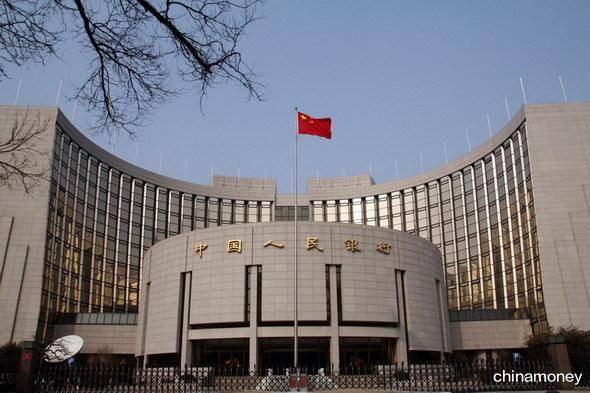
2025全年金融数据出炉!人民币贷款增加16.27万亿元,全年人民币存款增加26.41万亿元
Jin Rong Jie· 2026-01-15 07:24
Group 1: Financial Data Overview - In December, the total RMB loans increased by 16.27 trillion yuan for the year, with household loans rising by 441.7 billion yuan and corporate loans increasing by 15.47 trillion yuan [1][8] - The broad money supply (M2) reached 340.29 trillion yuan at the end of December, reflecting an 8.5% year-on-year growth [5] - The total social financing scale stock at the end of 2025 was 442.12 trillion yuan, showing an 8.3% year-on-year increase [2] Group 2: Loan Composition - By the end of 2025, the balance of RMB loans to the real economy was 268.4 trillion yuan, up 6.3% year-on-year, while foreign currency loans decreased by 18% [2][3] - The increase in RMB loans to the real economy for the year was 15.91 trillion yuan, which was a decrease of 1.13 trillion yuan compared to the previous year [4] - The corporate bond balance reached 34.24 trillion yuan, marking a 6% year-on-year increase [2] Group 3: Deposits and Currency - The total deposits in both RMB and foreign currencies reached 336.14 trillion yuan at the end of December, with RMB deposits increasing by 26.41 trillion yuan for the year [6][7] - The foreign currency deposit balance was 1.07 trillion USD at the end of December, reflecting a 25% year-on-year growth [7] - The net cash injection for the year was 1.31 trillion yuan [5] Group 4: Interest Rates and Market Activity - The average weighted interest rate for interbank RMB market lending was 1.36% in December, lower than the previous month and the same period last year [9] - The total transaction volume in the interbank RMB market reached 218.03 trillion yuan for the year, with daily average transactions increasing by 2.1% year-on-year [8]
央行:广义货币M2余额340.29万亿元,同比增长8.5%
Xin Lang Cai Jing· 2026-01-15 07:24
Key Points - The total social financing scale at the end of 2025 is 442.12 trillion yuan, with a year-on-year growth of 8.3% [1] - The balance of RMB loans to the real economy is 268.4 trillion yuan, increasing by 6.3% year-on-year [1] - The balance of foreign currency loans to the real economy, converted to RMB, is 1.05 trillion yuan, showing an 18% decline year-on-year [1] - The balance of entrusted loans is 11.35 trillion yuan, with a year-on-year increase of 1.3% [1] - The balance of trust loans is 4.67 trillion yuan, reflecting an 8.6% year-on-year growth [1] - The balance of corporate bonds is 34.24 trillion yuan, increasing by 6% year-on-year [1] - The balance of government bonds is 94.92 trillion yuan, with a significant year-on-year growth of 17.1% [1] - The balance of non-financial corporate domestic stocks is 12.2 trillion yuan, showing a 4.1% year-on-year increase [1] Financing Structure - RMB loans to the real economy account for 60.7% of the total social financing scale, down by 1.1 percentage points year-on-year [2] - The proportion of foreign currency loans to the real economy is 0.2%, down by 0.1 percentage points year-on-year [2] - The proportion of entrusted loans is 2.6%, down by 0.1 percentage points year-on-year [2] - The proportion of trust loans remains stable at 1.1% [2] - The proportion of corporate bonds is 7.7%, down by 0.2 percentage points year-on-year [2] - The proportion of government bonds is 21.5%, up by 1.6 percentage points year-on-year [2] Annual Financing Increment - The total annual increment of social financing is 35.6 trillion yuan, which is 3.34 trillion yuan more than the previous year [11] - RMB loans to the real economy increased by 15.91 trillion yuan, which is a decrease of 1.13 trillion yuan compared to the previous year [11] - The net financing of corporate bonds is 2.39 trillion yuan, an increase of 482.5 billion yuan year-on-year [11] - The net financing of government bonds is 13.84 trillion yuan, which is 2.54 trillion yuan more than the previous year [11] - Non-financial corporate domestic stock financing reached 476.3 billion yuan, an increase of 186.3 billion yuan year-on-year [11] Monetary Growth - The balance of broad money (M2) is 340.29 trillion yuan, with a year-on-year growth of 8.5% [3] - The balance of narrow money (M1) is 115.51 trillion yuan, increasing by 3.8% year-on-year [3] - The balance of currency in circulation (M0) is 14.13 trillion yuan, reflecting a year-on-year growth of 10.2% [3] Deposit Growth - The total balance of deposits in RMB and foreign currencies is 336.14 trillion yuan, with a year-on-year growth of 9% [12] - The balance of RMB deposits is 328.64 trillion yuan, increasing by 8.7% year-on-year [12] - The annual increase in RMB deposits is 26.41 trillion yuan, with household deposits increasing by 14.64 trillion yuan [12] Loan Growth - The total balance of loans in RMB and foreign currencies is 275.74 trillion yuan, with a year-on-year growth of 6.2% [14] - The annual increase in RMB loans is 16.27 trillion yuan, with corporate loans increasing by 15.47 trillion yuan [14] - The balance of foreign currency loans is 545 billion USD, showing a year-on-year increase of 0.5% [15] Foreign Exchange Reserves - The national foreign exchange reserves stand at 3.36 trillion USD [16] Cross-Border RMB Settlement - The total amount of cross-border RMB settlements under current accounts is 17.86 trillion yuan [17] - The direct investment cross-border RMB settlement amount is 8.46 trillion yuan [17]
和讯投顾刘阳:短期仍然不要看空行情,坐稳扶好即可
Sou Hu Cai Jing· 2026-01-14 11:35
Core Viewpoint - The adjustment of margin requirements for margin trading from 80% to 100% has led to significant fluctuations in the stock market, indicating a reduction in leverage for financing participants [1] Group 1: Market Reaction - The stock market experienced a sharp decline at the opening, attributed to the new margin requirement adjustments [1] - Despite the volatility, the overall upward trend of the market remains intact, supported by strong buying interest as evidenced by high trading volumes and more stocks closing in the green than in the red [1] Group 2: Futures Market Insights - The recent rapid increases in the futures market have prompted regulatory measures such as position limits and increased margin requirements to curb excessive speculation and reduce volatility [1] - These regulatory actions are seen as protective mechanisms that do not alter the underlying market trends, which are driven by cyclical industries, company fundamentals, and monetary supply [1] Group 3: Investment Outlook - The strong market support suggests that short-term bearish views should be avoided, and investors are encouraged to maintain their positions [1]